Showing posts with label Flotilla. Show all posts

Saturday, 30 March 2013

Obama's Israeli Triumph

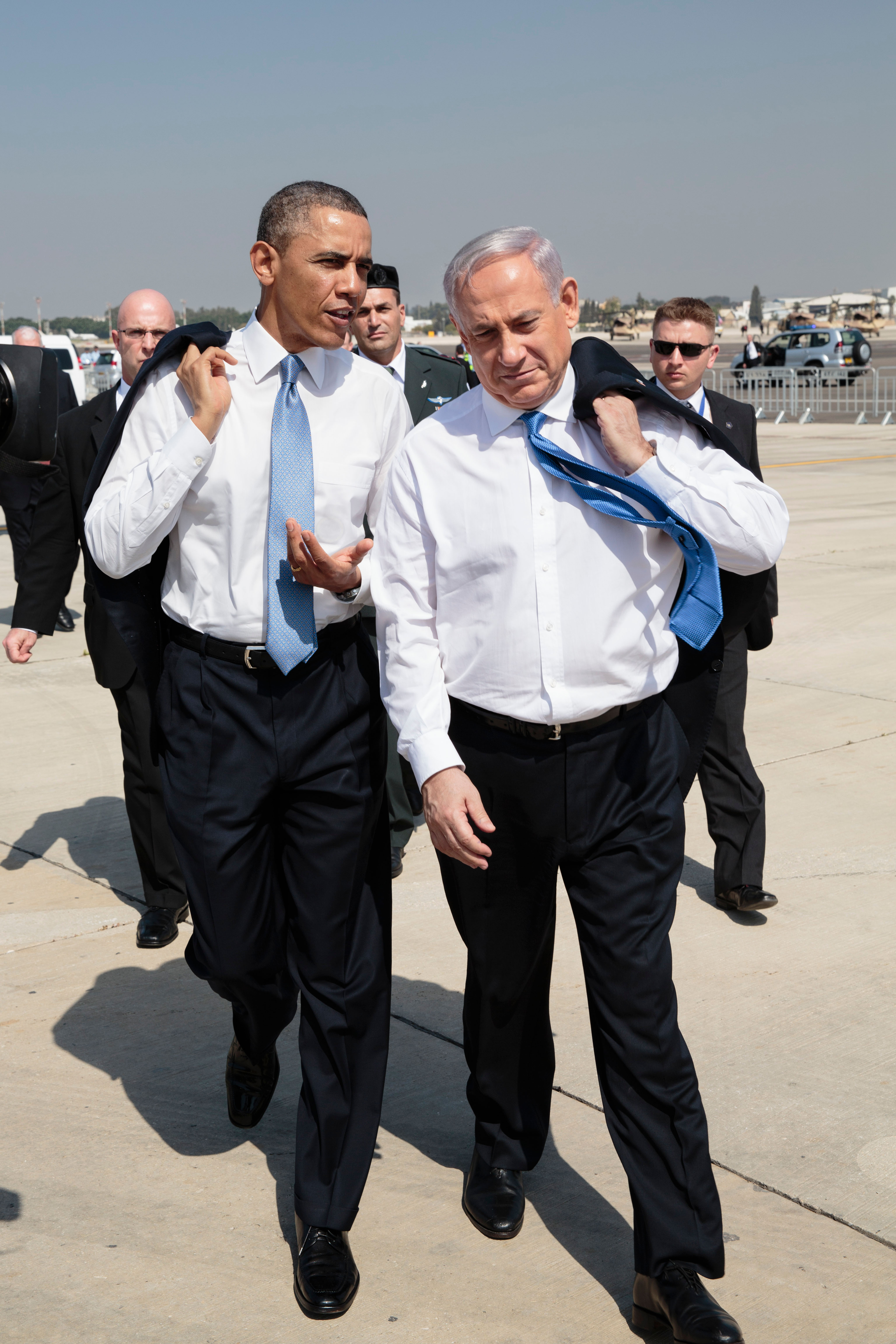
US President Barack Obama has concluded his trip to Israel after an intensive few days in the Holy Land.  Prior to this visit, Obama was perceived by a majority of the Israeli public as being unsympathetic and unhelpful to Israel's cause in the international community.  Some believe that a US president with the Muslim heritage that Obama has, can never be good for Israel.  Expectations that Obama's visit to Israel would dramatically change his attitude towards Israel were extremely low.

Now that he has been and gone, and we have had the chance to view the course of the visit's events in hindsight (albeit a very close hindsight), I believe that Obama has almost managed to pull off the impossible.  It was a very different Obama who was in Israel from the one who has spent the past four years taking neutral positions on matters which affect Israel.  From the moment that he stepped onto the tarmac at Ben Gurion airport and said in Hebrew that he was happy to be back in Israel, Obama seemed not to put a foot wrong.  He managed to say all the right things to help reverse the negative sentiments towards him.  He paid tribute to Israeli technology and military strength when inspecting the Iron Dome battery at the airport.  He reiterated his intention to continue to fund this program, despite the budget cuts in the US.  He paid tribute to Israeli fallen heroes during his visit to the Mount Herzl cemetery, and paid his tribute to the six million at Yad Vashem.  He met with Israeli students to relate his view of the future to them, and to listen to the things that they had to say.

On the pressing issue of Iran, the US president was eager to reiterate the points of common understanding rather than the differences.  He said that there was little daylight between the Israeli and US positions.  In truth, I think that he refers more to the assessment of what is happening in Iran, rather than the view as to how to deal with it.  Even though nobody expected that there would be a great deal of public discourse on the Iran issue, it was easy to read between the lines that Obama and Netanyahu are not precisely on the same page where this is concerned.  The Israeli public would like to know if Obama will be prepared to sanction military action in sufficient time to prevent the final steps being taken for the construction of an Iranian nuclear bomb.  It is also important to know whether the US commander-in-chief is prepared to commit his forces to be in the front line, or if they will be watching from a distance while Israeli forces are required to do the hard work.  Answers to these questions were not forthcoming in public, and we have the impression that the US answers to these questions are probably not the ones that Israel would prefer to hear.

It was important to hear Obama say that Israel's continued strength will ensure that a Holocaust does not happen in the future.  As much as it is a stark admission to make that it is not the free world and the powers of the UN that will prevent such a genocide in future, it was equally important for him to publicly recognise the central role that Israel plays in the future of Jewish survival.  It was also important to hear him say that being on friendly terms with Israel is in the US national security interest.  Relationships between countries are built on necessity and mutual-dependence, and not on sentiments.  As much as there are some in the US who do feel some sentimental attachment towards Israel, the only thing that will ensure that the US will continue to support Israel in the future, is a national security interest that drives this friendship.
President Obama's trip to Israel was a public relations triumph that saw him win over many Israeli sceptics.  He managed to convince some that America is indeed there to support Israeli, despite the many instances over the past four years when Israel felt isolated by the contrary view adopted by the Obama administration.  Could it be that the next four years will be different, and that there will be more help forthcoming from Obama and his friends in support of Israel?  Only time will tell.  Many feel that the president's appointment of Chuck Hagel to the position of US Secretary of Defense is more reminiscent of the old Obama, rather than a new one.
Hagel is perceived to unsupportive and unsympathetic to Israel's cause.  I do believe that most Israelis are prepared to give Obama the opportunity to prove his credentials again.  His actions over the coming months, particularly with regard to Iran, will be highly influential in convincing people of his true allegiance.

As a parting gift, Obama brokered an apology to be delivered by Prime Minister Netanyahu to Turkish Prime Minister Erdogan over the deaths of Turkish activists in the Gaza Flotilla incident three years ago.  While it is clear to see why a united Israel and Turkey serves US national security interests as a buffer against Syria, it is still unclear whether this is good for Israel's interests or not.  This apology by Israel represents a major climb-down on a point of principle, while the benefits sufficient to outweigh this concession are not immediately obvious.

A good relationship with the USA is certainly in Israel's best interests.  But this is not at any price.  Israel wishes to see the US being prepared to speak out and take actions on matters which would benefit Israel in the international community.  With the constant threats that Israel is facing, this is of importance to Israel's future surivival and that of the Jewish people.  Over the course of the next year, this will manifest itself in the support that Israel receives to counter the Iranian threat.  The clock is ticking.......

Tuesday, 19 June 2012

Airing the Dirty Laundry in Public

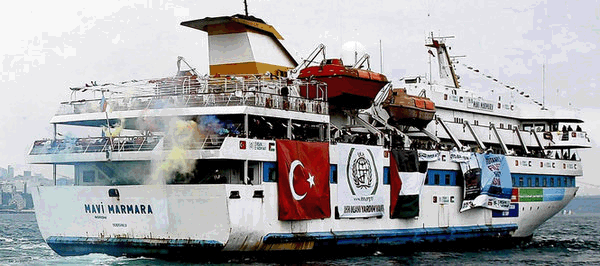
During the course of last week, the Israeli State Comptroller published his report into the events that took place when the IDF halted the entry of the Gaza Flotilla into Israeli territorial waters in May 2010.  The State Comptroller is answerable only to the Knesset, and has the responsibility to supervise and review government policies and operations.  He has looked at the Gaza Flotilla incident by examining the planning and decision-making by the government and the defence establishment in the period leading up to the incident.  The actual military operation mounted, and the unfortunate events that took place on that fateful day when an IDF boarding party was lynched by the activists on the Mavi Marmara, did not form part of the report.  The resulting defensive actions taken by the IDF soldiers on the ship resulted in the deaths of nine Turkish activists.  These events have been the subject of investigations and well-documented reports published by the United Nations, by Turkey and by the IDF itself.  The State Comptroller has a free hand in Israel to examine and report on all actions taken by the government, and related organisations, and the report into the Gaza Flotilla incident is an excellent example of the extent to which this free hand is exercised.

The report is filled with criticisms of the way in which the Israeli government handled the incident.  Although the actual decision to board the ships to stop them entering Israeli waters is not specifically addressed or criticised, the way in which the decision was reached comes in for a great deal of condemnation.  Even the prime minister is not beyond reproach in the report.  Amongst its many criticisms, the report mainly criticises the prime minister.  He is taken to task for holding informal and undocumented meetings that discussed how to deal with the flotilla in the period leading up to the incident.  It is reported that government officials who should have attended these meetings were frequently not in attendance.  Special mention is made of the fact that the National Security Council, a body established by the government especially to deal with situations like this, was essentially kept in the dark in the lead-up to the incident.  The report is quite clear in holding the prime minister responsible for these failings.  He was personally involved in many of the discussions and much of the planning surrounding the incident, and the buck stops with him as far as overseeing legal and effective preparations for events like these.  No punches are spared in the 153 page report.  Every misstep in the process is laid out in black and white, and has been extensively reported in the international press.

It is common knowledge that Israel has come in for much international criticism regarding the events of the Gaza Flotilla.  International relations between Israel and Turkey are at a low point, and Turkey is determined to extract an official apology from Israel for the deaths of the 9 activists.  Israel has expressed regret for their deaths, but is refusing to issue an official apology.  Israeli soldiers have been cited in a Turkish court action, charging with them crimes relating to the deaths.  In light of these and other international condemnations of Israel, there is a real question as to why the Israeli government has permitted the State Comptroller and the international press to publicise the severe criticism of the senior government officials?  Surely, this can only fan the flames of the international disapproval that Israel continues to experience in relation to this issue.  It may even strengthen any legal cases in Turkish law courts or other international law courts against individual Israelis who were involved in the events.  What is the value of airing all Israel's dirty laundry in public?

The answer to these questions lies in Israel's democracy and democratic process.  As the only democracy in the Middle East, Israel often finds herself behaving in ways that are alien to those countries that surround her.  This even applies to Turkey, which was held out for a long time as the only Muslim democracy in the world.  We have yet to see a state comptroller's report into the actions of Turkish Prime Minister Recep Tayyip Erdogan prior to the Gaza Flotilla, and we are also highly unlikely to ever see one.  In Israel's democracy, however, this is standard practice.  The public demands to know the truth about the behaviour of politicians and leaders, and holds them accountable for their actions.  The role of the State Comptroller is to provide the public with the information that it needs for its evaluation.  This information could potentially be vital ahead of general elections now slated for later during 2013 (the truth is that I don't believe that the criticism of the prime minister has done his election prospects any damage at all).  Although the state's national security is of paramount importance and there are numerous laws that prevent publication of sensitive information, this cannot and does not come at the expense of Israel's democracy.  This is a pillar of strength in the State of Israel in that it is vital for citizens to know that bad leaders and leadership will be publicly identified, and we need only wait until the next general election for them to be jettisoned.  The price of this democracy is that we may be  forced to air our dirty laundry in public from time to time.

If there is any consolation for the Israeli voting public, it is that the examples of poor governance displayed by Netanyahu and his colleagues and discussed in the report, seem not to be uncommon elsewhere in the democratic western world.  In an article published in the Jerusalem Post over the weekend, former White House deputy national security advisor Elliott Abrams revealed that similar problems exist in the hallowed halls and corridors of power in the USA.  He said that some of the best meetings held in the White House were informal and not documented.  On the other hand, a formal decision-making process that complies with all governance requirements does not necessarily result in the correct decision being taken.  He used the example of the decision taken by former US President George W. Bush not to take any decisive military action against the Syrian nuclear reactor.  He claims that the wrong decision was taken despite impeccable reports and intelligence having been presented, and all the correct procedural steps having been followed. In this case, Israel was left to destroy the Srian nuclear reactor, an act which is particularly apprecicated these days during the unrest in Syria.  Abrams claims that the most important thing in such situations, is having the right decision-maker, and not relying too much on the process.

The case against any Israelis relating to the nine Turkish activists will surely firstly need to examine the role played by the Turkish prime minister in allowing the flotilla to set out from Turkish ports.  The Greek government demonstrated in a subsequent attempt to convene a flotilla from Greek ports, that it was possible to prevent the flotilla from sailing and avoid confrontation.  Once the boats were already on the water and approaching Israeli territorial waters with hostile intentions, the Israeli government's only decision was how to stop them from proceeding rather than whether to stop them from continuing.  The combination of boats approaching Israel, hostile activists on board armed with all manner of weapons and the IDF determined not to allow the flotilla to enter Israeli waters was always going to be recipe for disaster.  One did not need any special intelligence to work this out, and the Turkish prime minister must surely have known this.  Prime Minister Netanyahu made reference to this fact by saying that, despite the extensive preparations made by the Israeli government and the IDF for the arrival of the flotilla, he was convinced that the Turkish prime minister would not allow the ships to set sail.  He was wrong, and the rest is now history.

As a concerned citizen of Israel, I feel assured by the State Comptroller's report, and by the fact that this has been made public.  We have a right to know, even if we decide not to punish the guilty parties.  Those who have erred also know that they will be held to public account in all that they do.  This is an important tool of a democratic state.  We will need to overcome the public humiliation of the dirty laundry having been aired, but this is a small price to pay for the defence of our democratic rights.  Well done to the State Comptroller.

Sunday, 4 September 2011

What Are Turkey's Real Intentions?

Events in the relationship between Israel and Turkey moved very quickly on Friday after the publication of the Palmer Report which is the UN sponsored investigation into the Gaza Flotilla incident.  The Palmer Report had been scheduled for release a number of weeks ago.  Its release was delayed in order to facilitate efforts to try to reconcile the opposing positions that have been adopted by Israel and Turkey on the issue of the Gaza Flotilla incident.  Ultimately, no real progress was evident in reconciling the opposing camps, and the report was formally released.

The release of the report did not reveal anything new due to the fact that most of the report's contents had been leaked to the press in the weeks leading up to its formal release.  So, it would have been known that the report supports Israel's right to impose the Gaza blockade in order to counter the threat posed by terror groups in the strip.  Palmer recognises both the extent of the threat that these groups represent to the safety of the State of Israel, and also the fact that the Gaza blockade is a legitimate and legal way of preventing the flow of arms that feed these terror activities.  More than this, the Palmer report also recognises Israel's legal right to defend her territorial waters from those who seek to compromise her security in any way.

The report did reserve some criticism for Israel, for the way in which her security forces dealt with the protestors who mobbed them after they boarded the Marvi Marmara.  Palmer decided that the response of the Israeli soldiers was "excessive" and "unreasonable". Although I don't agree with Palmer's conclusion when considering the type of attack that these soldiers came under when they boarded the ship, I do agree that the soldiers should have considered the tactics used to board the ship more carefully, given the level of threat that was already evident from the protestors on the ship.

In view of the conclusions reached by the Palmer report, the response by the Turkish government on Friday took many people by surprise.  No longer had the report officially been released, and the announcement came from Ankara that the Israeli ambassador was to be expelled from Turkey.  This was accompanied by a downgrade of diplomatic relations to the lowest possible level, and the cancellation of all military agreements in place between the two countries.  Many have asked what justification Turkey has for this extreme response to the Palmer report, when the bulk of the report actually supports Israel's position.

Ever since the events of the Marvi Marmara which resulted in the death of 9 Turkish activists after they attacked the Israeli boarding party, Turkey has insisted that Israel issues a formal apology to Turkey for the deaths.  Turkey has also insisted that Israel pays compensation to the families of the 9 victims.  Israel has refused to issue a formal apology, even though the Israeli government did express regret for their deaths.  There are those, even senior Israeli government officials, who hold the view that it would be best for Israel to issue an apology in the interests of preserving the relationship between Israel and Turkey.  I believe that Prime Minister Netanyahu has made the correct choice not to issue a formal apology, even if this means the deterioration of diplomatic relations between the two countries.

The main reason that I support Netanyahu's position not to issue a formal apology, is because I feel that this would admit guilt on Israel's part.  The only thing that Israel was guilty of, was protecting its territorial waters and enforcing the Gaza blockade.  The Palmer report has already confirmed Israel's rights to these two activities.  Additionally, issuing an apology would conceal the role of the Turkish government in the Marvi Marmara incident.  The Gaza Flotilla was largely facilitated by a Turkish NGO known by the acronym IHH.  This was the organisation that purchased the Marvi Marmara with the intention of sailing to Gaza to break the Israeli blockade.  There are those who have accused the Turkish government of providing at least some of the financing to the IHH for the purchase of the Marvi Marmara.  Even if this was not the case, there can be no doubt that the IHH had the support of the Turkish government in its quest to confront the Israeli government over the Gaza blockade.  A year later, the efforts that the Greek government made to prevent the flotilla from departing Piraeus were in stark contrast to the tacit (or even active) support given by the Turkish government to the first flotilla.  It seems only logical that the Turkish government be held responsible for its role in facilitating the fiasco.  The truth remains that the Turkish government should have prevented the confrontation from taking place in the first place by preventing the flotilla from departing its shores.  Placing the entire blame of the confrontation on Israel is a gross misrepresentation of the truth.

The speed with which the Turkish government moved to expel the Israeli the envoy, and the manner in which the demand was made for a formal apology without any option of a compromise, has made me wonder whether the Turks were not simply looking for an excuse to downgrade their relations with Israel.  The Marvi Marmara incident may have given them the perfect pretext to do so.  One could possibly even trace the start of the downward trend in relations between the two countries to the re-election of Prime Minister Erdogan and his (Islamic) Justice and Development Party in 2007.  Turkey has come under greater influence of the Islamists, and this is clearly not compatible with close relations with Israel.  The Gaza flotilla incident is simply one significant point along a line that has been sloping downward for some time.  Could it be that Turkey's newest ally, Iran, has demanded that it break ties with Israel because Iran is unable to contemplate close relations with a country that counts Israel as one of its strategic friends?  This is certainly not inconceivable.

Turkey's behaviour in the Gaza flotilla affair, starting with its support for the flotilla through its demands of Israel for a formal apology, and now ending with its rejection of many of the conclusions of the Palmer Report risks alienating Turkey.  Whereas it had the chance to try to seek a compromise solution, there now seems to be no way down from its current position.  In downgrading its diplomatic relations with Israel, Turkey also risks damaging any relationship that it has with the USA and other European countries.  This is not because these countries are so concerned about Turkey's relations with Israel, but because it seems as though this decision pushes Turkey into the firm clutches of Iran. 

Having recovered from being the "sick man of Europe", a term attributed to the Ottoman Empire around the time of the First World War, Turkey has succeeded in achieving unparalleled economic and cultural development over the past twenty years.  It has also suffered disappointment, particularly in connection with its efforts to be accepted for membership to the European Union.  Any step, however, that takes it nearer to Iran and alienates it from the west will, in my estimation, be extremely damaging for Turkey in the longer term.  It also makes Turkey a much less attractive friend for Israel.  If Turkey continues to court Iran as a friend, Turkey is not an ally that Israel would wish to keep.

Sunday, 10 July 2011

Why Turkey and Israel Still Wish to be Friends

It is exactly a year ago that relations between Israel and Turkey hit one of their all-time lowest points. This was caused by the events of the first Gaza flotilla, which left 9 Turkish citizens dead aboard the Marvi Marmara protest ship. Turkey pointed a finger at Israel and the IDF accusing them of the death of its citizens, and demanded an apology. The apology was not forthcoming, and Turkey promptly withdrew its ambassador from Israel. Diplomatic relations between the two countries went into a serious decline impacting on military, economic and political cooperation.

In the space of one short year, the situation has changed quite dramatically. The demand for the apology over the deaths of its citizens has not been dropped by Turkey (yet). A dialogue has been taking place between the two countries over the past few weeks that indicates a serious intent to somehow find a way to get the diplomatic relations back on track. To some, it may seem strange that things can change so radically over the short space of 12 months. There are, however, a number of strong drivers behind each country's intention to repair the damaged relationship.

Turkey's relationship with Israel has been driven to a great extent by its relationships with other countries, particularly those in the west. Turkey has had a somewhat ambivalent relationship with the west. On the one hand, Turkey has been castigated by the west over its actions in northern Cyprus and has also been frustrated in its efforts to join the European Union over many years. On the other hand, Turkey has been an important ally for the USA and NATO in maintaining a military counter-balance to the Soviet Union and Warsaw Pact in former times. More recently, Turkey has provided the USA with assistance in countering the new threat from Afghanistan, Iraq and Iran. Like in days of old when the Ottomans were able to capitalise on the critical location of Constantinople as a bridge between east and west, so it is that the modern-day Turks are able to take advantage of their strategic location to good effect in order to create and maintain key relationships.

For Israel, relations with Turkey have an equal level of ambivalence. Turkey, with its population of over 70 million, is one of the largest countries in the Eastern Mediterranean. Although Turkey has no official state religion, over 97% of its citizens are Muslims. As a result, when it comes to matters relating to Israel in the international community, there is always a very good chance that Turkey will side with other Muslim countries in their opposition to Israel. It is notable that Turkey is not an Arab country. Despite their common religion, there are many cultural differences and clashes between Turkey and Middle Eastern Arab countries. It is these cracks which Israel has exploited to good effect in the past, to build economic, political and military relations with Turkey.

Following numerous unsuccessful attempts on Turkey's part to gain entry to the Europe Union, the country's government decided to seek friendships elsewhere. This happened at a time when there was a huge upsurge in Islamic religious fundamentalism in Turkey, along with similar trends elsewhere in the Islamic world. This pushed Turkey's attentions eastward and southward towards its Islamic friends and neighbours. It has spent much time over the past few years building stronger ties with Syria, and particularly with Iran. This all seemed like a solid strategic step to take until the "Arab Spring" swept through the Middle East. Turkey has been forced to all but abandon its ties with Syria and, with it, its friendly links with Iran. Once again, Turkey is looking for friends. Under this set of circumstances, repairing its damaged links with Israel appear an attractive option. Not only is there a solid economic and political advantage for Turkey in bilateral links with Israel, there is also the important link that Israel has to the USA. This could, in turn, help to build bridges to other western countries. Closer links with Turkey could equally be an advantage for Israel. Turkey presents Israeli goods and services with an economic opportunity. In addition, Turkey could act as a bridge between Israel and the Islamic world.

Events over the past few months have weakened Turkey's position, and possibly forced the Turks to be more flexible in backing down from established positions in order to repair its relationship with Israel. The commission appointed by UN Secretary-General Ban Ki Moon to examine the events of the Gaza flotilla, is ready to report its findings. Former New Zealand prime minister Geoffrey Palmer and his colleagues on the commission have had access to a great deal of material, including video footage taken by both sides, which is connected to the events that took place on the Marvi Marmara. Palmer's report strongly supports Israel's rights under international law to defend her sea borders. Although criticising the IDF for excessive violence on the Marvi Marmara, Palmer does not support Turkey's demand for an apology from Israel. Palmer additionally praises Israel's internal investigation into the events as being independent and professional. On the contrary, Turkey's investigation is criticised for being politically motivated and unprofessional. The points in the report which do not support Turkey's claims and positions are effectively forcing Turkey to compromise to a greater degree than Israel in the negotiations to reach agreement.

It was hoped that the two sides would have reached agreement by the end of last week to allow Palmer to publish his report against the backdrop of two countries having reconciled. The agreement was not reached, and the publication of the report has been delayed in the hope that agreement can still be reached in the near future. The longer it takes to reach the agreement, the more likely it is that Turkey will be forced to compromise even further. For Turkey, not reaching agreement is probably less attractive than having to make the painful concessions necessary to reach the agreement.

Although I cannot envisage thousands of Israeli tourists filling Turkish holiday resorts in the near future as once was the case, this prospect does not seem very far away. Both countries have substantial interest to repair the damage done, and to renew their relationship to mutual advantage. I find it difficult to contemplate the possibility that either of the countries will not do almost all that is required to bring things back from the brink. Having said that, I believe that Turkey will be forced to back down from its demand for an apology. This will almost definitely not be delivered by Israel.

Sunday, 3 July 2011

Gaza Flotilla is Running Out of Wind

The events of last year's Gaza flotilla left Israel reeling in a public relations disaster. After the IDF intercepted the flotilla to prevent it from entering Gaza and boarded one of the vessels, 9 of the activists were dead and many others (including soldiers of the IDF) were injured. So it has been no surprise that activists have been desperately trying to gather together a follow-up flotilla in the hope that they can again depict Israel as some type of monster in the international press. Despite numerous failed attempts to put together a fleet of ships together over the past year, the activists finally seemed to have succeeded in mustering sufficient support for a flotilla to sail again over the course of this summer. As hundreds of activists are waiting dockside in the Greek port of Piraeus, the flotilla is looking increasingly less likely to get on its way as each day passes.

In the year that has followed the incidents of the 2010 flotilla, much has changed. In the days following the flotilla incident, the Turkish government withdrew its ambassador from Tel Aviv in a show of anger. Relations between Israel and Turkey went into freefall as military exercises were cancelled and Israeli tourism to Turkey all but evaporated. The reaction by the Turkish government was largely as a result of the support that it provided to the IHH, the main Turkish organisation that backed the flotilla. Now, more than 12 months later, the situation is very different. The report by the UN Secretary-General into the flotilla incident has confirmed that Israel and the IDF acted lawfully in preventing the flotilla from entering Gaza. Despite criticising the IDF for excessive use of force, this report is one of a number of events that have left Turkey isolated internationally. Another contributing factor to its isolation are the events in Syria over the past few months. Turkey has been forced to re-examine its relationship with Syria (and Iran) in light of the Arab spring uprisings. Rather than being in a situation to flex its muscles against Israel, Turkey is suddenly looking again for a way to normalise relations in order to find its way back into the international fold.

Under the circumstances, it came as no surprise when the Turkish government did not jump at the opportunity to support flotilla II. This also meant that the Turkish ports, which were used last year for the fleet to set sail from, had effectively been withdrawn from the flotilla's use. Other governments, most notably Ireland, Cyprus and France, have also come out with statements that withdraw their support from the flotilla. The decision by the flotilla to gather in Greece as an alternative, has proven to be fraught. Greece is going through its worst economic crisis in decades, and general strikes have crippled the country's ports. Not only has it been completely impossible for the flotilla's activities to squeeze a mention in the Greek press, they will need to be very lucky to find a way to set sail from Piraeus at all.

Buoyed by the support offered to its activities by the UN Secretary-General's report, the Israeli government has set about planning its response to the arrival of the next flotilla. The navy has been using its experience of flotilla I to work out a more precise plan of action to prevent flotilla II from nearing the coast of Gaza. There is a much clearer understanding of what may await the navy in the event that the ships reach the edge of Israeli territorial waters, and they have a plan to quietly guide the ships into the Israeli port of Ashdod without any loss of life, injuries or screaming international headlines.

The propaganda war has already begun, with Israeli intelligence announcing that those who are gathering in Greece are not only those with humanitarian objectives on their minds. A number of well-known names who have been involved in pro-Palestinian and anti-Israeli activities, have already been identified amongst the participants. Concerns have also been raised about cargo which has been loaded onto some of the ships, and some of it seems to have a militant rather than humanitarian purpose. Israel has been accused of sabotaging two of the vessels by damaging their propellers, and rendering them unable to sail. Unconfirmed reports have suggested that some Israeli lawyers have tied the flotilla up in legal red tape by issuing legal suits against the insurers of the flotilla, and the providers of satellite information to the flotilla's ships. It is hoped that this may result in these providers withdrawing their services from the flotilla, thereby preventing the fleet from being able to sail.

In the latest move, the Greek government has issued a legal order preventing the flotilla ships from leaving Greek ports. One ship that tried to defy the ban was firmly but politely escorted back to port by the Greek coastguard. It seems that it will now take a super-human effor to get this flotilla onto the high seas. The activists have vowed to set sail tomorrow with whichever vessels they can muster together. Even the most optimistic scenario does not show that this flotilla will be any sort of success story.

Perhaps this is the ultimate justice. One has to question the intentions of the 350 activists who finally gathered in Piraeus, after initial estimates that 1,500 would join this flotilla. Conditions in Gaza are far from ideal, but the situation is also not what is presented by the flotilla members. Recently, the deputy director of the Red Cross in Gaza was quoted as saying that there is no humanitarian crisis in Gaza. Although many people are dependent upon international aid, the aid is getting to the people who need it. This is in stark contrast to many other parts of the world where needy people are not getting access to the aid. One can, therefore, only assume that these activists have the intention of making a political statement against Israel rather than coming to truly help needy people. Under the circumstances, it is hardly surprising that the Israeli government will do all that it can not to allow these people to approach the coast of Gaza. If anybody is to address the real cause of the poverty and misery in Gaza, the protest would be directed at Hamas. For it is Hamas, more than the Israeli government, that truly has the well-being of the citizens of Gaza in their control.

It seems as though the flotilla may be thwarted if it cannot depart within the next two or three days. Mounting frustration on the part of the activists, caused by wasted time and dwindling funds, may ultimately prevent the sailing from going ahead. With the lack of real positive intention on the part of many of the flotilla participants, there will be few people mourning the death of this flotilla. Like any sovereign country, Israel has the right to protect her territorial waters from both the infiltration of weapons that are designed to murder her innocent civilians, and from those who wish to create heroes out of murderers. If this is all about humanitarian aid, Israel has already agreed to pass the humanitarian goods to the people in Gaza. The truth is that this is an attack on Israel hiding behind the guise of humanitarian aid. Under these circumstances, Israel will never allow these vessels near Gaza.