Showing posts with label UN. Show all posts

Sunday, 7 January 2018

My Person of 2017

I have never really been a fan of the whole idea of nominating "people of the year".  I know that it has been popular and common-place for all respectable publications and newspapers to choose their person of the year.  Time Magazine's annual choice of person of the year is a highly anticipated occasion, with the chosen person given the privilege of gracing the publication's cover.  Is it really possible to choose one person who epitomises the year, and who can lay claim to having had the largest influence on events in that year?  I am not sure about that.  For some reason, however, this year I feel differently.  For me, there is one person who has emerged from the shadows during 2017 and truly stood out on the international stage.  That person is US Ambassador to the UN Nikki Haley.

Before even talking about Haley's achievements in her role as US Ambassador the UN, it is interesting to know a little more about the person behind the ambassadorial figure.  She is the daughter of immigrants from India, who came to the US after her father travelled from India to complete his PhD in Canada.  Nikki's parents are Sikhs, with all the visible differences that are associated with being a Sikh in a western environment.  It seems to me that growing up as a child in a minority family in a southern US state has given Haley the character and skills to be a leader who is sensitive to others, particularly minority groups.  After graduating from Clemson University and a short career in business, Haley began her political career in the South Carolina House of Representatives in 2004.  In 2010, she was elected Governor of South Carolina, and served in this capacity until she resigned early in 2017 to take up her new role as ambassador to the UN.

Over the years, the USA's  position at the UN has become a little confused.  There can be no doubt that the US was by far the strongest power and influencer when the UN was originally set up, and has continued to be the most powerful nation on earth during the years of the UN's existence until today.  The main organs of the UN are based in the US, and the US is also by far the most substantial financial contributor to the UN.  In its position as one of the permanent members of the UN Security Council, the UN also has the ability to veto any resolution that is brought before the Security Council.  All of this bears testament to the US being the most powerful country amongst the community of nations.  In the General Assembly and in other UN organ bodies, however, the US is an equal member like every other nation with much less power to influence.  As a result of this, there are many examples where US interests (and those of US allies) have been trodden on.  Israel, as an ally of the US and as the favourite target of many UN organisations, has suffered more than its fair share of unwarranted negative attention and condemnation.  Of late, the UN has become a tool for local interest groups to gang up on individual countries for the purpose of furthering personal political agendas.  Israel is certainly a victim of this.  And this unfortunately detracts substantially from the main reason why the UN was established in the first place.

Nikki Haley appeared to understand all of this very well from the first day that she stepped foot into her office at the UN.  Not only did she understand this, she has been willing to stand up for what she believes to be just and equitable.  It was clear to her that the US was being asked to contribute far more to the UN than it was receiving in return.  It was also clear to her that Israel, a key ally of the US, was being unjustly bullied at every opportunity by UN organisations.  She has been prepared to take on the world at the UN to put this right.  In the process, I believe that she has brought some respectability to America's status at the UN and in the international arena in general.  She has also been willing to tackle the unfair treatment of Israel by the UN.

Undoubtedly, Haley has been given the drive and incentive by President Trump, who seems determined to redress the imbalance of the US position at the UN.  But there is also little doubt that she has taken her role seriously, and has been prepared to take on the powers at the UN.  She has shown the willingness to say and do the difficult things required to reinforce the US position at the UN.  Last month, she was prepared to exercise the US veto at the Security Council to vote down another anti-Israel resolution, after a lengthy period of time during which the US veto was not exercised.  Not only that, but she was vocal in threatening those who voted in favour of the US-critical resolution at the General Assembly of the risk that they would lose funding that they receive from the US.  The way in which she has been supportive of Israel's position at the UN is very much recognised and appreciated.  She has shown the guts to swim against the tide, and take actions which are roundly criticised by the majority.

There is no doubt that international politics and diplomacy these days is a game of interests rather than having for consideration for what is just and right.  And, while this contradicts the original intention that lay behind the UN when it was first set up, we see this permeating through all parts of the UN.  The Arab lobby at the UN has been used very effectively to make Israel the bad guy of the UN.  No other single country has had more resolutions and condemnations against them than Israel.  Surely this says it all.

Nikki Haley has been prepared to take on the world in defense of the US position at the UN, and also in defense of Israel's position.  Her passion in doing this, and her unwillingness to compromise her beliefs stands out against the background of mediocrity that is evident in international diplomacy.  Her heroic acts in sticking up for what she believes in makes her, in my opinion, the stand-out person of 2017.  Nikki Haley will be a voice to be heard on the international stage for some time, and I am looking forward to following her activities.

Friday, 2 June 2017

Trump - Saviour or Poison Chalice

The visit to Israel by US President Donald Trump has come and gone, and the analysts will undoubtedly still spend some time considering their verdicts dissecting each aspect of the visit.  At first glance, the visit appears to have been filled with symbolism but short on substance.  Following a turbulent first few months in office for the US president, there are many who wonder whether his support for Israel is welcome, or whether it is turning out to be more of a poison chalice than a helping hand.

Trump has been openly and publicly supportive of Israel's position, even from before he was elected.  His high profile campaign promise to move the US embassy from Tel Aviv to Jerusalem has been the subject of much debate and controversy.  When his victory in the presidential election was revealed, the Israeli government (and many other Israelis) welcomed his election with the hope and expectation that this would change the anti-Israel bias within the US government and elsewhere that was such a feature of the Obama administration.  And changes have certainly been felt since his election.

The current atmosphere at the United Nations is entirely different from the one that ruled during 2016 and before.  Part of this change can be attributed to new UN Secretary General António Guterres, who is much less inclined to entertain the constant barrage of anti-Israel sentiment that prevailed under Ban Ki Moon.  Much of the change is, however, thanks to new US ambassador to the UN Nikki Haley and the change in policy that she represents.  She has imposed the Trump administration's support for Israel at the UN in the strongest possible terms.  The days of raising frivolous anti-Israel resolutions at the UN Security Council are over for now.  The international community has understood that these will be vetoed by the US, and that there is little point in raising them under the current administration.  Haley has been vociferous in her condemnation of the constant attempts to paint Israel in a negative light.  There can be little doubt that the changes at the UN have a great deal to do with the new man in the White House.

President Trump's visit to Israel was highly symbolic.  He made Israel one of the stops on his maiden foreign tour since becoming president.  He visited the Western Wall in Jerusalem during his visit, becoming the first US president to make this visit while in office.  He emphasized to Palestinian Authority President Mahmoud Abbas that funding terror is not acceptable.  He reinforced the support that Israel will always enjoy from his administration.  In spite of this, he stayed clear of the key substantive issues confronting Israel and the region now.  He did not raise the move of the US embassy to Jerusalem.  No mention was made of the constant accusations against Israel regarding construction in Judea and Samaria.  Nothing was said about Palestinian claims to Jerusalem, or accusations regarding Israel's claims to Jerusalem as its capital.  His outward shows of support were all seized upon, recognised and appreciated by the majority of Israelis.  The lack of meaningful progress in getting Israelis and Palestinians to sit down around the peace table is what the international community has seized upon.

The issue that Israel needs to consider is Trump's overall standing within the USA and further afield.  It was clear before he arrived in Israel that Trump has many enemies at home, and that they are determined to keep him on the back foot by levelling all types of accusations against him.  Trump's own conduct in defending these accusations has certainly not helped his cause.  And Israel was dragged into the crossfire when Trump was accused of sharing secret intelligence received from Israel with Russia.  If true, this would be a serious violation of trust, and norms associated  with the sharing of intelligence information.

Distrust for Trump appears to be spreading rapidly within the international community as well.  Trump's recent appearances at the G7 and NATO meetings did not show him to be in accord with any of the other western leaders.  On the contrary, there are indications that Trump is being sidelined from the key international organisations.

Winston Churchill famously said, “Diplomacy is the art of telling people to go to hell in such a way that they ask for directions.”  This is an art that Trump has clearly not yet mastered.  Even though Trump frequently says things that many people are thinking, he has not yet discovered how to say it in a way that does not create enemies.  While Israel has no particular issue with Trump's popularity (or lack of it) in the international community, there is a danger that Israel will be tarred with the same negative brush if she is seen to be too closely associated with Trump.

There is no doubt that Israel has already gained a great deal from the change of administration in the White House.  Trump's influence over US domestic and international policy towards Israel, and his influence over proceedings at the UN cannot be under-estimated.  Israel will certainly wish to see more of that in the future.  There is a danger, however, that the association with Trump could prove to be negative in Israel's relationships with other countries around the world.  If Trump continues to completely ignore the accepted rules of international engagement while representing his contrary views, he will quickly became a pariah in the international community.  And, even if Israel wishes to stay close to Trump to benefit from his supportive views and actions, the association with him may proved negative. 

The prime minister and the Israeli government has a tough job to navigate a careful path to take advantage of the emerging situation, without losing too much in the process.  Will Trump prove to be the good things for Israel that were predicted, or a poison chalice?  Only time will tell.

Wednesday, 15 March 2017

Israel Apartheid Week - A Contradiction in Terms

Source; Haaretz
Every year, many universities around the world hold an event on their campuses know as "Israel Apartheid Week".  The event is justified by the fact that it brings the so-called discriminatory behaviour of Israel to the attention of the general public to allow people to know "what is really happening in Israel and the Palestinian Territories".  There could be no greater contradiction in terms than this.

I am trying to work out why the focus is on Israel's reportedly discriminatory behaviour in particular?  Why Israel, as opposed to discrimination by the Turks against the Kurds, or discrimination by the Chinese against the Nepalese, or by the Russians against the Ukrainians in Crimea and other former Soviet countries, or the discrimination in many African countries, or discrimination by many Muslim countries against their minorities and foreign workers, and even their own citizens?  There are surely so many countries on the list of those behaving badly, that universities could mark some country's discriminatory behaviour every week of the year.  While one form of discrimination does not justify another, the question is why Israel is singled out for an apartheid week of its own?  Surely this is discriminatory in itself?  It brings into question the real motivations of those who are the main instigators behind this highly questionable event, and how come it has gained so much traction around the world that it is repeated on an annual basis?

The first question that arises, is whether Israel really behaves in the discriminatory manner that is alleged by so many in the international community?  Given the level of threat and violence that is a constant in and around Israel, it is easy to conclude that Israel discriminates against Arabs.  News broadcasts frequently show IDF soldiers in action against those who are presented as innocent civilians.  Israeli is constantly engaged in one military operation or another.  This supports the easy conclusion about Israel being discriminatory against Arabs.  This conclusion, however, would be misguided.  Instead, it would be more accurate to say that Israel discriminates against the threat of terror and violence that she has to deal with.  And judging Israel's actions using a standard for a western country, that is not subject to the same risks and terror attacks, is not an even playing field.  It would be interesting to see how other peace-seeking countries would respond to the set of circumstances that Israel finds herself in.  I suspect that Israel's so-called "discrimination" would be seen in an entirely different light.  Using the term "apartheid" to describe Israel is simply an emotive term trying to play on the ultimate success of the anti-Apartheid movement in South Africa.  There is no link between what is happening in Israel today, and Apartheid South Africa.

Many people try to put constant attacks on Israel in the international community simply down to Israel-hating and Jew-hating.  It is easy to say that these are anti-Semitic activities dressed up with a political justification, and leave it at that.  And, even though much of that is probably true, I don't feel satisfied with leaving the explanation there.  It is important for me to put this into greater context.  I wish to understand where this comes from, and why it is rearing its head at this time and in this way.

The anti-Israel activities that have become common around the world, and which are epitomised in Israel Apartheid Week, bear resemblance to the wave of anti-Semitism that was in evidence in the years leading up to the Second World War.  We know that anti-Semitism is an age-old phenomenon that has no real explanation or justification.  We know that it has been allowed to rise and fall, largely by the general tolerance and acceptance of the general community.  It increased in its intensity when leaders in the international community have encouraged it, or tolerated it.  Hitler's Germany is the best example when the state encouraged anti-Semitism on an industrial scale at the highest levels.  The man in the street needed little further encouragement, and the results are one of the most shameful periods in history.  It is my contention that the constant criticism of Israel at the highest echelons of the international community, is effectively encouraging the man in the street to believe that his hatred towards Israel and Jews is justified and consistent with public opinion.  It is inconceivable that Israel justifies being the one country in the world with more negative resolutions against her at the UN Security Council, or having a permanent agenda item to answer to at the UN Human Rights Council.  These unjustified actions are encouraging anti-Semitism on the streets of Europe, the USA and around the world.

We have just celebrated the Jewish festival of Purim, that marks victory over unjustified anti-Semitism in Persia more than 2,000 years ago.  It seems that little has changed since then.  Not in the modern-day Persian country of Iran, and not elsewhere around the world.  People are taking their cue from international leaders who find it acceptable to spew venom against Israel at every chance.  And to turn international institutions, particularly those connected to the UN, into tools of anti-Semitism and anti-Israel sentiment.  This provides the green light for people around the world to feel that it is politically correct and acceptable to focus their hatred towards Israel.  This is clearly a form of anti-Semitism, in the same way as much of the anti-Israel activity is simply anti-Semitism dressed up to look politically acceptable.

Surely the time has come for international leaders to show true leadership and stop the discrimination once and for all.

Sunday, 25 December 2016

Obama's Final Act of Betrayal

Image courtesy of www.politico.com
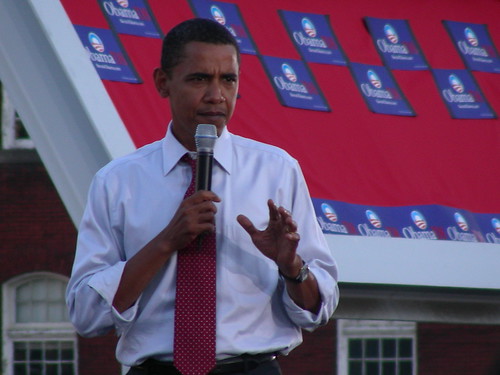
After weeks of speculation as to how the US will vote at the UN Security Council when presented with the resolution condemning Israel's policy regarding the so-called "settlements", we now have a clear and unequivocal answer.  In the vote held on Friday, Barack Obama instructed his ambassador to the UN to abstain from the vote at the Security Council.  This action allowed the motion to be carried, with 14 countries voting in favour and 1 country (the USA) abstaining.  Had Obama decided to vote against the resolution, it would not have been carried despite the majority voting in favour.  Because the USA has a veto right at the UN Security Council, it had the power to defeat the motion on its own.  This veto right was not exercised on Friday.

The decision by the USA delegation to abstain from Friday's vote flies in the face of USA policy at the UN Security Council in recent years on the subject of resolutions condemning Israel.  In the words of outgoing UN Secretary-General Ban Ki Moon, Israel has been the victim of a disproportionate number of resolutions condemning her actions at the hands of various UN organisations.  One could interpret this to mean that Israel has been unfairly targeted by the UN, and unjustifiably singled out for constant criticism and condemnation.  The USA has somewhat redressed this imbalance by exercising its right of veto at the Security Council over the years, and has ensured that the unfair condemnations of Israel are not allowed to stand, at least in that forum.  The most recent example of this was in 2011, when the Obama administration vetoed a resolution that condemned Israel's settlement activity.  The resolution on that occasion was remarkably similar to the one passed by the Security Council on Friday by virtue of the US abstention.  So what has changed in 5 short years, that justified the US turning its back on Israel at this time?

In 2011, there was a great deal more at stake for President Obama.  He had been in office for approximately 3 years, and was already eyeing his re-election with the hope of returning to the White House for 4 more years.  His decision to veto the resolution on that occasion was all about serving his interest at that time, rather than showing what he genuinely felt and believed.  Fast-forward 5 years, and Obama has no political capital to win or lose from the Security Council vote.  He will vacate the Oval Office in less than a month, and this vote has no bearing on his future whatsoever.  The only reason that he would vote in one direction or another, is to reflect his genuine view on the matter.  This view is shown loudly and clearly in a resolution that is one-sided and false in its depiction of the reality.  This is the legacy that Obama and Kerry are leaving on their peace-making efforts over the years, that were presented as being fair and even-handed.

This act puts an entire 8 year presidency into context.  There were many conspiracy theories about what Obama's true position on Israel was.  Was he influenced by the fact that he comes from Muslim heritage?  Was he genuinely sympathetic to Israel's struggle for survival?  Did he understand that the obstacles to peace are numerous, and not only the fault of one party or the other?  He tried to cloud the answers to these questions, and presented himself as a friend of Israel throughout his term in office.  This single act at the end of his presidency, however, has clarified all that has gone before.    While Israel would never wish to oppose the possibility of reaching a genuine agreement with the Palestinians, it has always been important to Israel that any agreement be reached on the basis of mutual respect and recognition between the parties.  This respect and recognition has been sorely missing from the Palestinian side.

The only real purpose that this resolution serves, is to continue to perpetrate the view that Israel is solely to blame for the lack of progress towards peace.  And Israel's policy on settlements is an easy scapegoat to use to illustrate why Israel should be blamed.  If it was true that the settlements are the main obstacle to peace, why was peace not achieved in the period from 1948 to 1967, when there were no settlements to blame.  Not only was peace not achieved, the Arabs were hell-bent on destroying Israel at any and every opportunity.  But now, the settlements are being presented as the only reason for the lack of a peace agreement.  Where is the criticism of the fact that the Palestinians refuse to recognise Israel as a Jewish state, that has a right to live in peace and security?  Or of the fact that the PLO charter continues to call for the destruction of the State of Israel?  Or the continuous terror attacks that Israelis are forced to endure?  These were conveniently ommitted from the UN Security Council resolution, and this emphasizes how one-sided how this resolution really is.

If the resolution served to somehow move the peace process forward or to make a positive contribution the situation, I would be able to understand Obama's decision to allow it to stand on the record.  Unfortunately, this is not the case.  Instead, it is a pointless finger-pointing exercise that makes little contribution to the creation of a positive environment for peace-making.  And now, it is clearer as to who is pointing at whom.  Obama, your true colours have been revealed.  Shame on you.

Tuesday, 25 October 2016

The UNESCO Fiasco That Could Help Israel's Cause

The United Nations Educational, Scientific and Cultural Organisation (UNESCO) decided last week to pass a vote on the issue of the Old City of Jerusalem, and the Western Wall and Al Aqsa Mosque in particular.  This was not the first time that such a vote has been passed by UNESCO, and it is unlikely to be the last.  If it was not for the fact that the vote was passed by an organisation that has such broad international representation, and a remit that has an important role in the preservation and advancement of education, science and culture around the world, it would be laughable and difficult to take seriously.

The resolution runs into five pages of condemnations, disapprovals, regrets and deprecations about how Israel (referred to repeatedly in the document as the "occupying power") has violated the "historic status quo" under which the Waqf (referred to in the document as the Awqaf) governs the holy sites.  Israel is accused of using aggression and illegal measures against the Waqf and its personnel, civilians and religious figures, and of using force against and damaging the Al Aqsa Mosque, restricting access to the Temple Mount (not the words of the resolution) via the Mughrabi Gate and preventing the reconstruction of the Al Rahma Gate building.  And, for good measure, there are some condemnations thrown in about military confrontations in and around Gaza and excavations at the Tomb of the Patriarchs in Hebron and Rachel's Tomb in Bethlehem.  The resolution fails to make mention of any Jewish connection to Jerusalem, the Old City and the Temple Mount that is is the holiest site in Judaism.  Instead, it is mentioned purely in Islamic terms.  None of this comes as any surprise to anybody who has been following the votes by UN organisations over the past decade.  They have objectively been very biased against Israel at every level, including the General Assembly, Security Council and other related UN bodies.  Many words of condemnation of this UNESCO resolution have been written, and the Jewish people around the world have demonstrated their disapproval in many different ways.  The thousands who turned up the Western Wall for the Priestly Blessing during the festival of Succot was a sure sign of defiance against the resolution.

In a strange sort of way, I sense that reaction to this resolution may end up helping Israel's cause in the international community, and at UN-related bodies in particular.  Despite the outrage of this vote being passed by 24 votes to 6, with a massive 26 countries abstaining, there are a few positives to be taken from the vote.  While these positive points change nothing about this vote, they do send a message that things could be different in the future.  There are indications that this is the vote that may have broken the camel's back.

Even before the result of the vote was announced,  UNESCO's director-general Irina Bokova was forced to make a statement about how she believes that denying Judaism's connection to Jerusalem (along with the two other monotheistic faiths) harms UNESCO.  The head of UNESCO's executive board, Michael Worbs, said that he hoped that the resolution would not go to a vote.  Clearly, the executive team of UNESCO was embarrassed by the vote of the members of the organisation, and was happy to show this embarrassment in public.  Even the Secretary-General of the UN, who has not necessarily been a great friend to Israel or the Jews during his term, felt the need to speak out against the resolution.  This is a first.  But the positive signs run even deeper than that.

At a previous similar vote in April 2016, the number of countries that voted in favour of the anti-Israel resolution was 33.  Over the course of about 6 months, there were 9 fewer votes in support of a resolution that was substantively the same as the previous one.  This represents progress for Israel, albeit not quite a victory.  The Mexican government decided to fire its ambassador after he refused to obey their orders to support the resolution.  Despite this debacle, the Mexican government stood up after the vote to withdraw its support for the resolution.  The ambassador remained fired, but the u-turn was highly unexpected.

Brazil, which supported the original vote and then spoke out saying that support of the vote was a mistake, chose to support the second vote as well.  They then spoke out again saying that a future similar vote would not be supported by Brazil.  Brazil's actions, and contrary statements are impossible to understand.  It is unclear why the Brazilian government considered that, if the resolution is not worthy of support in the future, it should be worthy of support now.  Brazil's ambivalence, however, is noted with some satisfaction.  There are many theories circulating about why governments like Brazil would choose to support this resolution.  Especially those governments who seemingly do not have an entrenched interest in this matter.  Was money changing hands behind the scenes?  Were political favours being traded?  Are the pro-Palestinian voting trends so entrenched in the international community, that breaking them is almost impossible?  We will probably never know the answer to this question, although speculation is rife.  The thing that has become clear, is that even those countries who supported the vote feel some need to show regret in an attempt to make their public position a little more acceptable.

The resolution in its current wording, not only ignores the Jewish connection to Jerusalem and the Temple Mount, it ignores the Christian connection too.  The Christian countries which voted in favour of the resolution were effectively supporting this world view as well.  It is inconceivable that Christian countries would promote exclusive Muslim rights to the this holy city and its holy sites.  Perhaps their eagerness to condemn Israel caused them to lose sight of this?  It is no coincidence that it has only been under Israeli rule over Jerusalem that all three monotheistic religions have been allowed free access to their holy sites.  History has shown that Arab or Muslim rule over Jerusalem is tantamount to denying the rights of other religions to their holy sites.  How ironic it is that UNESCO has chosen to castigate Israel for its rule over Jerusalem, when this is the one period in Jerusalem's history that has ensured free access to all who come in peace and security to worship.

We can take some comfort from the fact that fewer countries supported the most recent resolution than the one before.  And also from the fact that some of the thinking personalities in leadership positions spoke out against the senselessness of the rhetoric.  I sense that the tide of opinion against Israel could be turning.  Whereas supporting anti-Israeli resolutions has always seemed easy to do by many in the international community, irrespective of how ridiculous the text was, it appears as though people are now thinking a little more before giving blind support against Israel.  That is an optimistic sign.  The battle is, however, far from won, and many more similar resolutions are expected in the future.  Perhaps members of the international community will see more and more what the truth of the anti-Israel campaign is truly about.

Israel could be standing on the threshhold of a new period in international politics and diplomacy.  A new secretary-general is due to take over leadership at the UN in 2017 that could signal a change in some attitudes.  If organisations like UNESCO are going to insist upon passing ridiculous resolutions like the one discussed above, it may also assist in bring the attention of the international community to the single-minded bias against Israel that exists in UN organisations.  The next organisation on the list would be the UNHRC, which has the dubious distinction of isolating Israel as the only country forced to appear as an item on the agenda of all its meetings to explain its actions.

Dreaming costs nothing.

Wednesday, 18 May 2016

Lies, Damn Lies and Deligitimisation

"The creation of the State of Israel was fundamentally wrong,  because there had been a Palestinian community there for 2000 years".

"The creation of the State of Israel was a great catastrophe.  We should have absorbed the post World War II Jewish refugees in Britain and America".

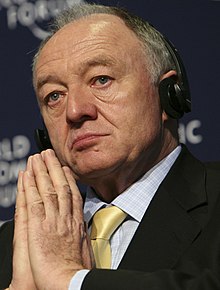
These are the words of former London mayor and UK Labour Party member and activist, Ken Livingstone in a recent interview that he conducted with Arabic station Al Ghad Al Arabi.  The fact that Livingstone, or "Red Ken" as he is known by the British establishment, is anti-Israel and anti-Semitic is not new to most of us.  His own Labour Party recently suspended him on accusations of anti-Semitism, along with more than 50 other members of the party.   What is surprising is the fact that a former mayor of a capital city of one of the world's leading and progressive nations, can utter such factual inaccuracies in support of his anti-Semitic rant.  What is perhaps even more astonishing is that so many around the world accept these inaccuracies as fact. and find his open anti-Semitism (dressed up as anti-Zionism) to be perfectly acceptable.

Even though Red Ken was only a babe at the time that the State of Israel came into existence and will probably not be able to remember its details, it is incumbent on a man in his position and who is as outspoken as he is, to get the facts right before taking strong public positions.  Instead, he is using inaccuracies to justify his bias.  If he had learnt the facts, he would know that there was no Palestinian community in 1948, and so there could not have been a Palestinian community for 2000 years.  The concept of a "Palestinian people" or community only arose after the 1967 Six Day War when the Arab countries lost control of the West Bank, Gaza Strip, Golan Heights and East Jerusalem after trying to drive the Jews into the sea once more.  After they realised that they had little chance of defeating Israel militarily in order to gain control over the land held by the Jews, the notion of a "Palestinian people" was born as a tactic to beguile the world into feeling sympathy for their cause.  This has now translated into an "occupation" of their land, a misconception believed by a vast majority of the world's citizens and used endlessly at the UN and other international bodies to criticise Israel.

It is ironic that he makes a statement that the creation of the State of Israel was a catastrophe.  Why a catastrophe?  Does he believe that peace would have prevailed in this region had the State of Israel not come into being?  In the same interview, Livingstone refers to Libya and Iraq.  In those cases, he tries to blame western intervention for the conflicts that arose in those, and other Middle Eastern countries.  He claims that the west is equally to blame for the rise of Islamic terrorism, which has come about because of western double standards in the Middle East in Livingstone's opinion.  According to him, this is what has been encouraging angry youth to fight alongside ISIS and other terror groups.  Even he is smart enough to recognise that Arab and Muslim groups have fought amongst each other for hundreds of years., and that western intervention was not required to trigger terrorist activities.  We only need to witness the most basic split between Sunni and Shia Muslims to understand this, not to speak of the numerous tribal and political splits in evidence around the Middle East.  Does Livingstone believe that the Middle East would have been more enlightened and more developed without the existence of the State of Israel?  Once again, we have numerous examples to cite where Muslims have failed to capitalise on opportunities to enlighten and develop their countries and their people.  Should this be blamed on Israel?  Can we blame the terror state that has been constructed in Gaza, and funded by foreign aid, on Israel?  The catastrophe that Ken talks about is the same catastrophe that the Palestinians speak about.  It is the catastrophe of the Jews have a free homeland in which they can find self-determination.

It is ironic that Mr. Livingstone thinks that Britain and America should have absorbed all the post World War II Jewish refugees, and their failure to do so caused the "catastrophe" of the creation of the State of Israel.  In reality, it was exactly because of bigoted anti-Semites like Red Ken, that these countries and others refused to accept Jewish refugees, both during the war (when they really needed place to go) and in its aftermath.  Even those who were allowed to escape to western countries were made to feel like they were "guests", who may be sent out at any moment.  The exposure of endemic anti-Semitism in the Labour Party in Britain is not as a result of a recent development.  This manifests itself as a result of decades of institutionalised anti-Semitism in many areas of British society.  Who would believe that, even as recently as the 1980's, some large government-owned companies in the UK had a policy of not employing Jews?  This anti-Semitism has been cleansed by the political acceptability of being anti-Israel.  The anti-Semites finally found a legitimate cause that allows them to openly express their anti-Semitism in the public arena.  Even if they claim to oppose Israel's actions and policies while being Jew lovers.  

It should be clear that anybody who denies the right of the State of Israel to exist, or supports groups who seek Israel's destruction, is an anti-Semite.  This has little to do with the so-called occupation or the rights of the Palestinian people.  There are millions of Palestinians in refugee camps in the region, whose human rights are being denied in a much more systematic way than anything that Israel has ever done.  No criticism is issued about these human rights abuses, or about the abuses by the Palestinian leadership of its own people.  Instead, this has everything to do with the right of the Jews to be masters of their own destiny, and to have the right to protect themselves and their  Jewish homeland.  It can be dressed up as anti-Zionism or support for the Palestinian people, but the real root cause is well understood, and will not hidden from sight.

UK Labour leader Jeremy Corbyn is on record calling Hamas and Hezbollah his friends.  And he is the one who has suspended more than 50 members of his party for their anti-Semitic behaviour.  This is evidence of how deep the anti-Semitism in the Labour Party runs.  The fact that those who support groups calling for Israel's destruction are the ones suspending the anti-Semites is ironic.  The anti-Semites have succeeded in galvanising support for hating the Jews and Israel around the issue of human rights abuses against the Palestinians.  This has filtered into the left-wing arm of the Jewish community, giving even greater strength to the mantra that being anti-Israel does not necessarily equal being anti-Jewish.  Each meeting of the UNHRC is forced to discuss agenda item 7 covering human rights violations by Israel.  How does it transpire that, amongst all human rights violators in the world (of which there are many), Israel is the one and only country that is forced to endure a torrent of criticism and abuse at each and every UNHRC meeting?  My contention is that it is rooted in institutionalised anti-Semitism at this organisation, and many others.

Although Red Ken is a classic example of anti-Semitism in its ugliest form, he is unfortunately not the only example.  And he is sufficiently unashamed to be prepared to make public statements in support of his argument that are factually inaccurate and incorrect.  The problem is that, when senior leaders like Livingstone make such statements and contentions, many of their followers believe it without any doubt and this perpetuates the unbridled hatred without cause.

When Livingstone refers to the "catastrophe", we understand what he truly means.  It has nothing to do with the so-called "nakba" or catastrophe that has befallen the Palestinian people.  This could easily have been avoided if they had accepted the Palestine Partition Plan agreed by the UN in 1947, instead of choosing to try to destroy the Jews.  The two-state solution that we continue to fight over today, could already have been implemented at that time.  If this is indeed what the true desire is.  Instead, Livingstone is referring to the catastrophe of the Jews having their right to independence and self-determination, and how much this has served to strengthen the cause and the presence of Jews around the world.  I imagine that he may have described it as an even greater catastrophe had the UK absorbed more Jews in the period after the Shoa as he suggests, and had a greater presence and influence in the UK today.  The mix of strong Jewish presence and influence, along with virulent anti-Semitism was exactly the recipe that brought the Nazis to power, and led to the Shoa and the massacre of 6 million people.  So, while I don't tolerate this form of bigotry from Livingstone and I am happy that there is a State of Israel to call him out and provide protection to Jews against his ilk, I still prefer this form of a catastrophe to the alternatives that Livingstone suggests.

Saturday, 17 October 2015

Palestinian Actions Speaking as Loudly as Words

Israeli Prime Minister Benjamin Netanyahu  delivered  another triumphant speech at the United Nations General Assembly meeting.  He seems to be at his best when standing at the UN podium and presenting Israel's case to the world.  His speech came only a day after the one delivered by Palestinian Authority President Mahmoud Abbas, and it was noticeable how Netanyahu's speech contained much optimism in stark contrast to Abbas's words.  Since these speeches were delivered, a number of innocent Israelis have been murdered and many more injured in Palestinian terror attacks in the city of Jerusalem, in the West Bank and elsewhere in Israel.  It frequently seems as though nobody in the UN General Assembly is really listening to the speeches, as most people come there with their positions firmly entrenched.  The speeches are heard by audiences outside of the General Assembly chamber in New York, particularly by the electorate of the leader concerned.  Abbas's speech appears to have been very much directed at the Palestinian people.  There also seems to be a strong link between the tone of the messages delivered, and the actions that have taken place on the ground in Israel since the speech.

Those close to Abbas had warned for many months prior to this UN General Assembly meeting, that Abbas's speech was going to contain a "bombshell".  This expectation was set, not only amongst the international community, but also amongst the Palestinians who are looking to Abbas for leadership.  There was speculation about what it could be.  Most of the ideas that were put forward as possibilities were along a negative theme.  Some thought that Abbas would resign or dismantle the Palestinian Authority.  Those people who were hoping for something positive that could somehow contribute to the situation in the Middle East, and possibly move the peace process forward, were drowned out.  After the speech, the so-called "bombshell" was described by one Israeli newspaper as more of a stink bomb than a bombshell.  There was nothing dramatic that one could point to in his speech that could be termed a "bombshell".  Perhaps, more importantly, there was certainly no hint of anything positive to give one a feeling that a way forward can be found.  Instead, there was evidence of frustration that the Palestinian issue has been replaced on the front pages of the international press by the ISIS threat and by the Syrian refugee crisis.  There was an appeal for governments around the world not to forget that they should continue to pursue foreign policies that criticise Israel's behaviour and actions, while heaping sympathy on the Palestinian "victims" in the conflict.  The message, however, was received loudly by the Palestinian people, while not registering any response on the agendas of foreign governments.  The clear message sent by Abbas and received by the Palestinians, was one of hopelessness and lack of optimism for the future.

It should, therefore, come as no surprise that the Palestinians have heard the message from the UN, and have embarked upon a spree of terror attacks across Israel that have killed and injured innocent people.  In the process, children have been orphaned, parents have lost children, and wives have lost their husbands.  Even though the wave of violence has been blamed by Palestinian leaders on events that have recently taken place on the Temple Mount in Jerusalem, the violence cannot be attributed to these events in any way.  The events on the Temple Mount are simply part of this violence that we have seen elsewhere, rather than a cause of it.  The cause of the violence can be traced back to the words in the UN General Assembly Hall that reflect the general message that has been in evidence for the Palestinians for some time.  A lack of hope and optimism, and a feeling that there is little to lose, can cause people to behave in extreme and sometimes illogical ways.  This is clearly the case with Palestinian people right now.  It is too simplistic to explain the current events as simply arising spontaneously out of a lack of hope.

It is frequently the case that the actions of the government serve to give their people the optimism that drives them to feel motivated or not.  Actions by a national government can easily trigger a positive feeling and spirit amongst its populace, and equally cause it to dry up as a result of actions that drain their mood.  This can sometimes be triggered by relatively mall things that are of greater concern to people. It seems to me that the spirit of the Palestinian people has been drained by the negative actions of Mahmoud Abbas.  How can a nation feel motivated when your leader stands up in front of the international community and expresses views that are completely devoid of any optimism for the future?

The Palestinian Authority is not only guilty of milking their people of any optimism to the point that they have effectively given cause to this cycle of violence, they are also guilty of inciting them to continue this violence.  The word "intifada" has been mentioned many times in relation to this cycle of violence.  For those of us who lived through the previous 2 intifadas, this cycle of violence looks remarkably like an intifada.  We are told, however, that this is not an intifada.  The most commonly quoted reason is that the previous 2 intifadas were actively supported by the Palestinian Authority, with weapons, money and specific instructions being given by the authority.  On this occasion, according to what we are being told, the authority is not actively supporting the violence.  It is noticeable, however, that they are also not speaking out against this violence in any way.  This can surely be considered and interpreted to be support.  Those who are not speaking out against this wave of violence, are clearly seen to support it.  In my view, and according to the official definition, this is an intifada.

The involvement of the Palestinian Authority in previous intifadas was described as a "guiding hand" behind the scenes.  The Israeli government is telling us that, on this occasion, there is no guiding hand.  Having said that, there are some hallmarks of the current wave of violence that seem to be part of an orchestrated strategy.  The fact that the weapons of choice being used in the current round of attacks are stones that are being thrown, and knives being used for stabbing attacks, is different from intifadas in the past.  And it is also noticeable that many of those involved in attacks in the current wave of violence are youths and minors.  This certainly tells a better story for putting on social media.  Minors are clearly problematic from a prosecution perspective under Israel law, when the perpetrators are arrested.  They cannot be treated in the same way as adults are treated under the law, and this may be one of the reasons why this strategy is being employed.  As much as we are being told that the violent attacks are spontaneous actions by individuals on the ground, it seems that the attacks are coordinated and part of a strategy.

A recent development in the wave of violence, is the involvement of Israeli Arabs.   Some of the attacks carried out in Jerusalem, have been undertaken by Arabs who are citizens of Israel.  Over the past few days, protests have been seen in Israeli Arab cities up and down Israel.  These are protests in support of the wave of violence directed against Jewish Israelis.  The involvement of Israeli Arabs is a dangerous development, and creates a dilemma for the Israeli government.  The interior minister has threatened to withdraw Israeli citizenship from any Israeli found to be involved in the violence.  Even this is more of a knee-jerk response, and not necessarily a longer-term solution.

The responsibility for this wave of violence falls directly on the Palestinian Authority.  And this is not only because of their responses (or lack of responses) over the past few weeks.  This responsibility goes back many years during the time that they have educated their children for conflict and violence against Israel and Jews.  Such education takes a long time to undo, perhaps even a number of generations.  Of course, this is not aided by staying silent when their people carry out heinous attacks on innocent people, and by blaming Israel for a change in status on the Temple Mount.  This is an outrageous accusation, that is simply designed to get support from fellow Muslims around the world, and to return the Palestinian issue back to the front pages of the newspapers.

Despite the fact that the support and the "guiding hand" of the Palestinian Authority is different from what it has been in the past, this is an intifada in definition and action.  The authority has adopted a policy of maintaining a feeling of hopelessness amongst its people, in order to build hatred and despondency that is being channelled against Israel and Israelis.  It continues to educate its children for hatred, war and conflict rather than education for peace and coexistence.  The speeches at the United Nations showed clearly that Israel stands for all that is positive and optimistic, while the Palestinian Authority stands for the opposite.  Until this is rectified, there can never be peaceful coexistence in this land.

Saturday, 30 March 2013

Obama's Israeli Triumph

US President Barack Obama has concluded his trip to Israel after an intensive few days in the Holy Land.  Prior to this visit, Obama was perceived by a majority of the Israeli public as being unsympathetic and unhelpful to Israel's cause in the international community.  Some believe that a US president with the Muslim heritage that Obama has, can never be good for Israel.  Expectations that Obama's visit to Israel would dramatically change his attitude towards Israel were extremely low.

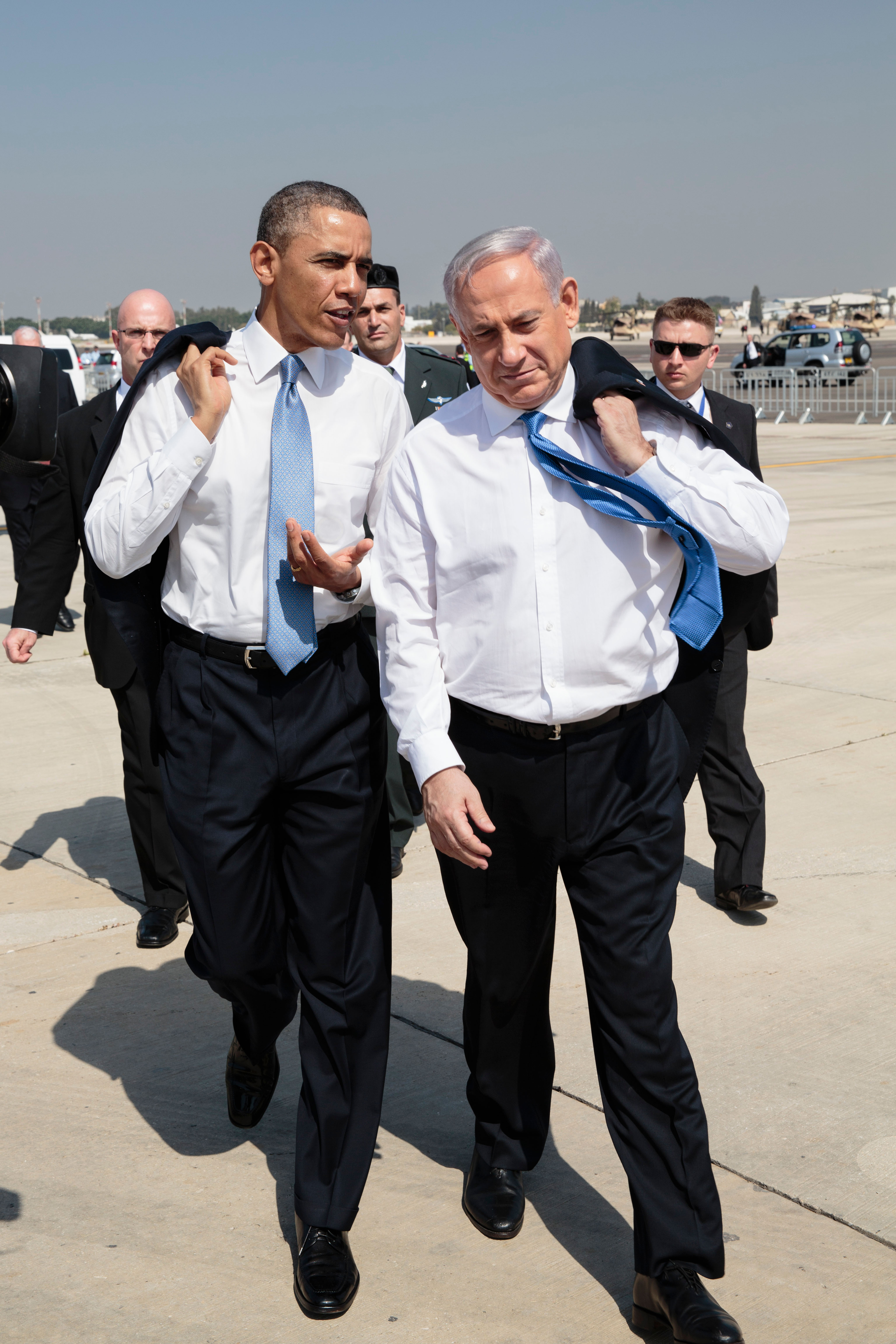
Now that he has been and gone, and we have had the chance to view the course of the visit's events in hindsight (albeit a very close hindsight), I believe that Obama has almost managed to pull off the impossible.  It was a very different Obama who was in Israel from the one who has spent the past four years taking neutral positions on matters which affect Israel.  From the moment that he stepped onto the tarmac at Ben Gurion airport and said in Hebrew that he was happy to be back in Israel, Obama seemed not to put a foot wrong.  He managed to say all the right things to help reverse the negative sentiments towards him.  He paid tribute to Israeli technology and military strength when inspecting the Iron Dome battery at the airport.  He reiterated his intention to continue to fund this program, despite the budget cuts in the US.  He paid tribute to Israeli fallen heroes during his visit to the Mount Herzl cemetery, and paid his tribute to the six million at Yad Vashem.  He met with Israeli students to relate his view of the future to them, and to listen to the things that they had to say.

On the pressing issue of Iran, the US president was eager to reiterate the points of common understanding rather than the differences.  He said that there was little daylight between the Israeli and US positions.  In truth, I think that he refers more to the assessment of what is happening in Iran, rather than the view as to how to deal with it.  Even though nobody expected that there would be a great deal of public discourse on the Iran issue, it was easy to read between the lines that Obama and Netanyahu are not precisely on the same page where this is concerned.  The Israeli public would like to know if Obama will be prepared to sanction military action in sufficient time to prevent the final steps being taken for the construction of an Iranian nuclear bomb.  It is also important to know whether the US commander-in-chief is prepared to commit his forces to be in the front line, or if they will be watching from a distance while Israeli forces are required to do the hard work.  Answers to these questions were not forthcoming in public, and we have the impression that the US answers to these questions are probably not the ones that Israel would prefer to hear.

It was important to hear Obama say that Israel's continued strength will ensure that a Holocaust does not happen in the future.  As much as it is a stark admission to make that it is not the free world and the powers of the UN that will prevent such a genocide in future, it was equally important for him to publicly recognise the central role that Israel plays in the future of Jewish survival.  It was also important to hear him say that being on friendly terms with Israel is in the US national security interest.  Relationships between countries are built on necessity and mutual-dependence, and not on sentiments.  As much as there are some in the US who do feel some sentimental attachment towards Israel, the only thing that will ensure that the US will continue to support Israel in the future, is a national security interest that drives this friendship.
President Obama's trip to Israel was a public relations triumph that saw him win over many Israeli sceptics.  He managed to convince some that America is indeed there to support Israeli, despite the many instances over the past four years when Israel felt isolated by the contrary view adopted by the Obama administration.  Could it be that the next four years will be different, and that there will be more help forthcoming from Obama and his friends in support of Israel?  Only time will tell.  Many feel that the president's appointment of Chuck Hagel to the position of US Secretary of Defense is more reminiscent of the old Obama, rather than a new one.
Hagel is perceived to unsupportive and unsympathetic to Israel's cause.  I do believe that most Israelis are prepared to give Obama the opportunity to prove his credentials again.  His actions over the coming months, particularly with regard to Iran, will be highly influential in convincing people of his true allegiance.

As a parting gift, Obama brokered an apology to be delivered by Prime Minister Netanyahu to Turkish Prime Minister Erdogan over the deaths of Turkish activists in the Gaza Flotilla incident three years ago.  While it is clear to see why a united Israel and Turkey serves US national security interests as a buffer against Syria, it is still unclear whether this is good for Israel's interests or not.  This apology by Israel represents a major climb-down on a point of principle, while the benefits sufficient to outweigh this concession are not immediately obvious.

A good relationship with the USA is certainly in Israel's best interests.  But this is not at any price.  Israel wishes to see the US being prepared to speak out and take actions on matters which would benefit Israel in the international community.  With the constant threats that Israel is facing, this is of importance to Israel's future surivival and that of the Jewish people.  Over the course of the next year, this will manifest itself in the support that Israel receives to counter the Iranian threat.  The clock is ticking.......

Sunday, 10 February 2013

Israel Providing a Service to the World

The world has been observing the events in Syria, particularly over the period of the civil war that has raged there for the past two years.  Syria has long presented a threat to the international community because of two main factors.  The first factor is its substantial arsenal of conventional, biological and chemical weapons which President Bashar al-Assad appears to have no reluctance to use.  The second factor is its close links to Iran in the sponsorship of international terror.  During the course of the civil war, the threat has escalated even further with numerous international terror groups using the instability created by the war to take up camp in Syria.  This increases the possibility that dangerous weapons could fall into renegade terror groups around the world.  The world has been observing these events from a safe distance without taking any action at all to prevent the strengthening of international terror.

Israel's proximity to Syria, and the fact that a border is shared by the two countries, has always meant that all that happens in Syria is of significant interest to the Israeli security services.  Syria has been an enemy of the State of Israel from the moment Israel came into existence in 1948, a situation that has not changed until the present day.  The period during which the civil war has been fought in Syria is no exception, and has added further instability to the region due to the lack of predictability as to how the Syrian authorities and the rebels may direct their forces towards Israel.  A few isolated missiles have already landed in Israeli territory from Syria, but these have been regarded having crossed the border in error rather than having been deliberately directed towards Israel.  The truth is that the Syrian forces and their rebel enemies are too busy fighting against each other to spend much time worrying about launching an attack against Israel.  While this presents a source of comfort for Israel on one hand, it also presents a real threat on the other hand.

The war has led to the general opening up of Syria's arms and ammunitions depots for the Syrian army to use against the rebels.  Some reports suggest that it has even made use of chemical weapons in this war.  The opening of missile storage facilities means that these arms and missiles are also more easily available to other renegade groups who may wish to snatch them from the Syrians.  This has resulted in the Syrians trying to move some of their most strategic missiles to be under the care of its allies and friends, most notably Hezbollah in southern Lebanon. 

These movements undoubtedly lie behind recent reports coming from Syria that a convoy of weapons was attacked while in transit from Syria to Lebanon.  Israel has been accused of the attack, even though there is no formal word from the Israeli government or army on the matter.  Another attack was also reported, nearer to Damascus, at around the same time.  Syrian TV reported that Israeli jets attacked an army facility, widely rumoured to be a research centre involved in the production of chemical and biological weapons.  Once again, the Israelis have remained silent on the matter.  Even though there is no official word on whether Israel was involved in either or both of these incidents, the pinpoint accuracy with which they were carried out does bear the hallmark of operations that Israel could have been involved in.  Hints have come out of the US government to confirm this, and remarks made by Israel Defense Minister Ehud Barak also seem to support Israel's involvement.

While these attacks were clearly carried out in the interests of Israel's own safety, she is doing the world a huge service in the process.  The threat presented by the axis of Iran, Syria and Hezbollah, and their links to other terror organisations, is one that is not solely directed towards Israel.  The Bulgarian government confirmed that the attack against Israeli tourists in Burgas on the Black Sea in the summer of 2012, was carried out by Hezbollah.  In addition to the 5 Israelis who were killed in the attack in Bulgaria, there was also a Bulgarian tour guide who was a casualty.  The Bulgarian economy was also affected as a result of the decision made by tourists to stay away from the area while international terror organisations were operating there.  Attacks on targets in the US, Far East and across Europe which have escalated over the past 10 or 15 years, show clearly that terror that was once aimed solely at Israel or limited to the Middle East, has now become a global threat.  Any activities carried out by Israel against these terror organisations, even if it is solely in the pursuit of securing her own safety, represents a huge favour to the wider international community.

The unfortunate part of this is that Israel seldom, if ever, receives help, support and assistance in these activities.  At best, Israel may receive a "green light" in the form of an agreement not to resist or oppose the attack.  More likely, Israel is subject to international condemnation in the international press, and in bodies like the UN.  An example of this is the reaction that was received to Israel's bombing of Iraq's Osirak nuclear facility back in 1981.  Israel was roundly condemned by the international community, and resolutions were passed by the UN Security Council and by the UN General Assembly criticising Israel's actions.  It took until 2005 for US President Bill Clinton to finally admit in public that " I think, in retrospect, that it was a really good thing".  Clearly, the path of the Gulf Wars in Iraq would have looked completely different had Israel not been bold enough to carry out this attack.  A similar assessment could be made of Israel's attack on the Syrian nuclear reactor in 2007.  Even though the world condemnation was not quite as vociferous on this occasion, there was no other country lining up to challenge Syria's development of nuclear weapons, or to help Israel in destroying it.  As the Syrian civil war continues, a heavy sigh of relief is being breathed by the world that there is no nuclear option available to the Syrian government.

As in the past, Israel's strikes on the weapons convoy being sent to Hezbollah and the Syrian weapons research centre comes as a gift to the free world.  This is a further service provided by the Israeli military, which seems at times to be the only force in the world that is ready to do the impossible.  This impossible is frequently done on its own steam, and in the face of international condemnation.  Although Israel is not necessarily seeking thanks and recognition for these efforts, many of which place the lives of our young soldiers on the line, it would be a welcome change to receive some support for these audacious actions. 

Even if this is not forthcoming, I feel good to live in a country that is prepared to take the tough decisions to do the dirty work to secure the safety of its citizens, and has young men and women who are willing to put their lives on the line in the interests of executing it.  This is a source of immense pride, and source of great comfort to me.  It is a pity that the rest of the world gets a free ride in the process.

Sunday, 11 November 2012

Barack is Back - The Aftermath for Israel

While half of America celebrates the results of the presidential election, many Israelis will be feeling quite depressed about the results.  It would be safe to say that most of Israel was rooting for Romney (or whoever would have opposed Barack Obama).  In four short years, Obama succeeded in alienating much of the Israeli public, and there is a fairly flat feeling about the prospect of Obama continuing similar Middle East policies over the next four years.

Of course, it is true that Israelis have very different interests than Americans have when viewing the presidential election.  Americans are justifiably mostly concerned about economic issues, and about domestic issues such as universal health care.  These are issues which are of much less interest to the average Israeli, even though the man on the street in Tel Aviv or Jerusalem still cares a great deal about who will govern from the White House.  The reason for this is quite simple.  The White House has historically had a substantial impact on events in the Middle East in the past, and this is likely to continue for the foreseeable future.  People are clearly hoping that this influence will be exerted to help the security of the Jewish people in Israel, and also to advance the cause of peace in the Middle East.  The experience of how this influence has been exerted over the past four years does not engender any feeling of confidence that the current status quo is likely to change, or that the current situation will move in a positive direction over the next four years.  Even though life for Jews in Israel has been far worse in the past, people continue to live in hope that it will be a lot better with the help and influence of the White House in the future.

When Barack Obama came to power four years ago, there was a great deal of scepticism in Israel about how a president with such close family links to Islam, could be good for the Jews in Israel.  The euphoria and excitement that swept through the USA, however, convinced many to give Obama the benefit of the doubt and the chance to prove himself one way or the other.  Now, four years later, many believe that he has proved himself, and that their initial scepticism was fully justified.  In President Obama's first presidential visit to the Middle East, he made a point of stopping in Egypt to lay out his policy for the region.  Since then, he has not stepped foot in Israel nor shown himself to be particularly engaged in Middle Eastern issues.  He has waged a battle against policies that Prime Minister Netanyahu has pursued to secure the safety of Israel as a Jewish state, and has allowed Iran to reach the verge of producing a nuclear weapon by not being prepared to support the required military action to remove this threat.  Even though not all Israelis are supporters of Netanyahu and his policies, Obama's opposition to these policies have been viewed as unhelpful to Israel's cause and her security.  Obama has not been sufficiently willing to speak out against the continued missile fire under which so many communities in the south of Israel have been forced to live under, and to make clear to the perpetrators of these attacks how unacceptable this situation is.

Obama's predecessor, George W. Bush was the one who coined the phrase "if they are not with us, they are against us", in the context of the war on terror following the 9/11 attacks.  Israel has been fighting a war on terror for much longer than this, and understands very well the fact that there can be no "abstentions" in this important issue.  Those who do not strongly support the fight and help to take steps to assist in eradicating terror, effectively enable it by their lack of action.  Those who do not actively work to eradicate the nuclear threat from Iran, are those who enable it.  Responsibility for this extremely worrying situation will fall to all of those who were happy to be spectators while it was clear that a nuclear weapon was being constructed by a rogue regime with full knowledge and in full sight of the world.  The UN was set up in the wake of the Second World War with a brief of preventing conflicts and avoid future wars.  This type of activity is surely exactly what the UN has been set up to act against.  Even though the clear understanding is that Iran's nuclear program has the worst of intentions, it is being allowed by the world, and by Barack Obama in particular, to proceed almost unimpeded.

With this background, it is hardly surprising that Obama doesn't have a place in the hearts of many Israelis.  There are those who claim that the Obama administration has done more than any other US administration to provide arms and funding for weapons to Israel.  It is also clear that a strong US economy is good for Israel's economy in many respects.  So, action taken by Obama to strengthen the US economy is good and extremely important for Israel's continued well-being.  But these are indirect, and often invisible to the Israeli eye.  The most public and obvious matters, being the Iran nuclear issue and the continued conflict with the Palestinians, particularly Hamas in Gaza, are always going to be the issues that grab the headlines.  These are also the things that will capture the attention of the Israeli public, and by which Obama's success and failure with regard to his policy on Israel will be measured.

What remains unclear, is the extent to which the personal lack of agreement between Netanyahu and Obama may affect Obama's Israel policy.  Netanyahu is reported to have got on the wrong side of Obama on more than one previous occasion, and was extremely clear in his support for Romney in the presidential election campaign.  Indications from the White House are, that this will not influence Obama's attitude towards Israel, but this remains to be seen.  Despite the lurch towards democracy by some Middle Eastern countries as a result of the Arab Spring, Israel is still the only truly democratic country in the Middle East that the US can truly rely upon as an ally.  Their partnership in the war on terror is also a critical for both the US and Israel.

Perhaps its a good thing that Israelis have a very low expectation of the support that Israel will get from the new Obama administration.  At least, this means that the chances for disappointment are much lower than was the case four years ago when he took office for the first time.  Of course, we would all like to be pleasantly surprised, but there is no expectation that this will be the case.  The real fear is that we will wake up one day during the course of the next few years, and find that Iran has a nuclear bomb.  This will change the shape of the Middle East, and of the world.  It is our hope that Obama will at least take action to prevent this nightmare becoming reality.  Even though Israel is known for acting independently where required, and is not bound to US agreement or support on these matters in any way, the problem is a global one and not one which is only a threat to Israel.  While Israel is clearly one of the main targets of the Iranian aggression, this issue should not be left entirely to Israel to take care of.  The US and other countries around the world have a clear share of responsibility.  The time to act is now.

Monday, 1 October 2012

Red Lines and Green Lines

As is the usual practice at this time of year, the world's focus turned last week to the hallowed halls of the General Assembly of the United Nations.  The events there have, by now, become an annual ritual.  Eyes became trained upon Iranian President Mahmoud Ahmadinejad as his travelling circus rolled into New York City.  Everybody was awaiting his next insult directed at Israel and other western countries.  He did not disappoint.  He did the rounds of the TV talk shows who were falling over themselves to get him on their stages.  He poked his finger in the eye of his American hosts and continuously threatened Israel's existence and place in the community of nations.  US President Barack Obama made his speech at the General Assembly, and left town as soon as he possibly could.  Palestinian Authority President Mahmoud Abbas pleaded for the establishment of a Palestinian independent state, without addressing any of the main sticking points that are preventing him from achieving this objective.  Prime Minister Netanyahu put on his usual show, defending the rights of the Jewish nation to exist in peace and security (for his speech to the UN click here).  All of these actions have become fairly well-rehearsed over the past few years.  This year, however, there were some subtle differences.

The assessment of one of the Israeli newspapers was spot-on when it wrote that the international leaders seemed to be talking straight past each other, and aiming their addresses at people who were a long way from the General Assembly halls.  The newspaper decided that Obama aimed his address at his Jewish voters in Florida, who he hopes will help to swing the vote to re-elect him for a further presidential term in November.  They thought that Abbas was aiming his speech at Hamas leaders who, he hopes, will find a way to further Palestinian unity and implement the agreement that was signed some time ago.  It was decided that Netanyahu aimed his speech at the central committee of his ruling Likud party in his attempt to convince them that he is not compromising his red lines on Iran's nuclear weapons, nor his position regarding conditions under which he would reach an agreement with the Palestinians.  Despite the world leaders being in close proximity to one another, nobody seemed to be talking to each other.

Illustration by Eran Wolkowski courtesy of Haaretz
Another newspaper described the Netanyahu and Abbas speeches as "one talking about green lines and the other talking about red lines".  The green lines refer to the borders originally drawn up for the State of Israel, and in effect until the Six Day War in 1967.  In his speech to the UN, Abbas again complained that the Israeli settlements are the main obstacle to peace.  With the support of many in the international community, Abbas believes that a future Palestinian state should be established on the borders of the "green line".  Netanyahu is firmly opposed to returning to the green line, and has made this clear on a number of occasions.  In an attempt to bring the international community around to his way of thinking, his government continues to act against settlers trying to establish new outposts in the West Bank, in places which are not properly authorised and legal.  The steps that Netanyahu has taken against these new and illegal settlements have gained the wrath of many in his Likud party.

Photo by Reuters
The red lines refer to the fact that Netanyahu feels that Iran is being allowed to behave with a free hand while the international community waits for the sanctions to take effect.  He is insistent that red lines should be drawn, which would create limits on Iran's behaviour.  The clear implication is that the international community should be prepared to draw these red lines, and should also be prepared to take military action against Iran in the event that it transgresses the red lines.  At the UN General Assembly on Thursday, Netanyahu made his point about red lines on Iran very explicitly using a prop showing a neatly-drawn nuclear bomb (in the shape of a hand grenade).  On this sketch, he used a red marker to add where he thought  the red line should be drawn.

There can be no clearer indication that the these  leaders are on completely different pages, and thinking about completely different things.  There appears to be no common purpose or urgency about what needs to be achieved next, in order to bring about the much sought-after peace in the Middle East.  Abbas is enjoying a period of stability within his West Bank stronghold.  A routine of some sort has been established for daily life within his constituency.  Few attacks on Israel have been perpetrated by Palestinians, and this has resulted in far less intervention by Israeli troops in Palestinian society.  Quality of life has been improved by the relative stability.  Abbas has greater support of his people (as evidenced by the lack of any real shows of dissatisfaction), and he has no interest at the moment to be put under pressure to call an election.  Hamas is weakened by its leadership struggle for somebody to replace the outgoing Khaled Meshal, and this has substantially reduced the tension between Abbas and his Hamas rivals.  It seems as though Abbas has little intention or reason to upset this situation.

Netanyahu's attention and focus is almost entirely devoted to Iran's nuclear program, when he is not stealing time for domestic matters.  Between Iran and working on his campaign for elections currently scheduled for 2013, Netanyahu seems to have little time or inclination to deal with Palestinian matters.  The same is true for President Obama, who has not shown any inclination to spend much time on the Middle East conundrum in his four years in office to date.  Although all the speeches referred to work that needs to be done on the "peace process", actions speak louder than words.  The actions indicate that all three leaders are not unhappy with the status quo, and that none of them are poised to do anything dramatic to change it.  This perhaps explains the lack of coordination in the various speeches.  It almost appears as if the lack of coordination was coordinated!

The Ahmadinejad show at the UN is extremely unfortunate.  It seems as though the world has come to accept that this is the way that things are, and is prepared to tolerate his bad behaviour.  It is OK for him to bash Israel from the UN podium (and anywhere else), despite prior warnings by the UN and the USA for him to tone down his rhetoric.  The USA and Canada were the only two countries to walk out of the General Assembly when he rose to speak.  All of this bodes extremely badly for the world's response to Iran's nuclear weapons.  Will this be taken for granted as well?  If so, it is entirely appropriate for Bibi to be focusing on red lines, even if the rest of the world prefers him to concentrate on green lines.

Tuesday, 28 August 2012

Non-Aligned, But Extremely Maligned

Iran is playing host to the meeting of the Non-Aligned Movement (NAM) during the course of this week.  The meeting sees 120 developing nations of the world attend, with special attendance by the UN Secretary-General, Ban Ki Moon.  Although the original intention of the NAM was to provide a home for countries who were not formally aligned with or against any major power bloc, it has always represented something of a political hot potato.  This is because its membership includes the so-called "axis of evil" countries, and many other pariah states of the world.  The NAM has, perhaps unwittingly, acted as a club for countries that are persona non grata in the developed world.  The best example is the the host of the 16th meeting of the NAM this week, Iran.

Since the NAM was established in 1961, a great deal has changed in the make-up of the world's power blocs.  Despite this fact, it seems as though many of the original members of the NAM remain members to this day.  The changes in the political power blocs have not succeeded in changing  the countries that are aligned with them.  The term "non-aligned", while accurately reflecting the fact that the member countries are not part of any major international power bloc, conceals the fact that many of the member states are aligned with each other in different ways.  It seems as though being non-aligned is not sufficiently compelling to link the NAM countries.  Even these countries need a common cause to create a more substantial link between themselves.  Iran has succeeded in creating a common issue for the NAM countries to rally around, and this is the issue of hating Israel and bringing into question her right to continue to exist.

Iran's policy of publicly humiliating and deligitimising Israel is already not a new phenomenon.  Iranian President Ahmadinejad has been allowed to get away with behaving like a thug on this issue for many years.  He has stood at international gatherings at every opportunity, and ranted against Israel's right to existence amongst the family of nations.  The international community has silently sat back and watched the spectacle without taking action.  This has even been the case when Ahmadinejad has had the audacity to stand up at the United Nations General Assembly, the place that is supposed to protect the rights of nations to exist in peace and harmony, and spew vitriol about the destruction of Israel.   Once again, the UN stands accused of failing to protect the basic rights of member nations by allowing UN Secretary-General Ban Kim Moon to travel to Tehran to attend the NAM.  In so doing, he has legimitised the attendance of all the other countries at the meeting, all of whom will be subject to tirades promoting the destruction of the State of Israel in the usual Iranian way.

Surely, this enough to convince the world of Iran's ban intentions regarding its nuclear program?  The evidence that Iran intends to construct a nuclear weapon is irrefutable.  The subject of Iran's wrath and aggression is equally irrefutable.  The fact that the world allows Iran to threaten Israel in every public forum in the most unashamed manner, is now supported by the world's unwillingness to take tougher action against the nuclear program.  Instead, the world has decided to hide behind the sanctions to defer action on this matter.  It has been clear for some time that the sanctions will neither prevent the countries of the world from buying oil from Iran, nor prevent Iran from continuing to build a nuclear bomb.  Once again, it seems as though it will be left to Israel to take on the world's responsibility in acting against a tyrant.  It is true that Israel is at the front of the line of countries at risk by Iran's aggression, but it is also true that Israel is not the only country at risk.  It is clear that any action by Iran to construct a nuclear weapon will place all of the western world, and beyond, in the firing line.  Perhaps the threat to these countries is not sufficiently pressing now to force them into action.  As has been the case a few times in the past, it will be Israeli soldiers whose lives will be risked to clean up the mess that others are not prepared to take care of.

Israel has acted in the past without the blessing of its allies to take care of problems.  Twice before, Israeli aircraft have destroyed nuclear reactors under construction.  It was notable that the US government opposed Israeli action against both the Iraqi reactor and the Syrian one under construction.  We now know that Israeli action saved some extremely nasty situations from arising, and history books could have looked extremely different had the timely and brave action not been taken in the nick of time.  Fortunately, all Israeli soldiers and equipment was returned to base safely on both previous occasions.  Where Iran is concerned, the operation looks to be infinitely more complicated and risky.  This is partially because the world has failed to take timely action to destroy the threat at a much earlier stage.  Any operation that Israel will mount against Iran is likely to be extremely risky, and will almost certainly result in Israeli loss of life.

In the interests of international diplomacy and world peace, the UN Secretary-General will appear alongside the world's thugs including Ahmadinejad, Zimbabwe's President Mugabe and others.  Instead of protecting the interests and the freedom of the democratic world, he has chosen to legitimise the unacceptable behaviour of those countries who present the greatest threat to world peace.

The NAM conference has given Ahmadinejad the perfect opportunity to stand up in front of the non-aligned, and malign them against Israel and the west.  In a few weeks' time, we will expect to see another of his tirades at the UN General Assembly in New York.  All of the actions that turn a blind eye to Ahmadinejad's bad behaviour, simply empower him even further.  He understands that the world does not set any limits in terms of acceptable behaviour, and will exploit this to the maximum extent possible.  As before, it will be left to Israel to draw the line and to take the required action.  It is my hope and prayer that our soldiers and our civilians will not be endangered in the process.

Sunday, 25 September 2011

Palestinian Attempt to Hijack the UN Leads Nowhere

All eyes were focused last week on the opening of the 66th session of the UN General Assembly in New York.  For weeks prior to this event, the Palestinians had dominated the international press with stories of taking a unilateral declaration of independence to the UN for a vote.  Even though the events of last week turned many minds back to the fateful vote by the same organisation in 1947 which paved the way for the establishment of the State of Israel as the Jewish homeland, the two situations could not be more stark in their differences.

After the build-up that took place to last week's meetings, it all ended with something of an anti-climax.  There was no vote on the unilateral declaration of a Palestinian state.  There was not even a vote to admit the Palestinians as full members of the UN.  Ultimately, the best that Palestinian Authority President Mahmoud Abbas was able to do, was to submit his application to UN Secretary-General Ban Ki Moon for full membership of the UN by the Palestinians.  This application will need to be approved by the UN Security Council, and US President Barack Obama has already said that the USA will veto this vote if necessary.  As a compromise, the Palestinians may be able to upgrade their current status of membership of the UN from an "entity" to a "non-member state" in UN speak.  This requires only a vote by the general assembly without the need for approval by the Security Council, and is likely to be approved with some ease.  The benefits of this upgrade for the Palestinians, however, seem marginal.

Despite the fact that all of the hype resulted in very little action, there were a few important results that came out of the events of last week.  The first major outcome was the way in which President Barack Obama behaved when he was truly put on the spot.  Obama has distanced himself from the peace process since assuming office nearly 3 years ago.  He has yet to pay a visit to Israel or to the Palestinian Authority area, and has preferred to focus his time and energies on the many other issues currently confronting the USA.  Despite his statements about the importance of resolving Middle East conflict, and his attempts to set timetables within which this issue should be resolved, he has yet to devote any significant chunk of his time to make this happen.  When he was backed into a corner last week and forced to decide whether the Security Council should approve full membership for the Palestinians, he knew that exercising the USA's veto is the only answer.  This was accompanied by a speech which was one of the most pro-Israeli addresses made by a US president at the UN for many years, and which surprised supporters and detractors alike.  In his speech, he told the story of the terror and hatred that Israelis have been forced to live with over many years, and he recognised Israel's right to exist as the Jewish homeland.  This was perhaps the most critical statement, as it is the point which currently presents the main stumbling block to renewing peace talks.

The address to the general assembly by Israeli Prime Minister Benjamin Netanyahu was equally an important event during the week.  Despite his many faults, Netanyahu has consistently shown his ability to present Israel's position on the international stage.  Once again, he did this with great confidence and conviction.  In particular, he addressed those people who feel that Israel should show greater flexibility in its negotiating position.  There are those who believe that Israel should be playing to the "Palestinian moderates", by making concessions to give them greater position and power amongst their Palestinian colleagues.  In theory, these moderates will lead the peace agreement with Israel, and lead the Palestinians to a more moderate position.  In refuting this position, Netanyahu reminded the general assembly of the many concessions that Israel has already made in the interests of pursuing peace.  The most substantial of these concessions, a unilateral withdrawal from Gaza with all the implications of uprooting the lives of many thousands of people, has served to distance peace rather than bring it closer.  After handing the keys of Gaza to PA President Abbas, he proceeded to lose control of it to the radicals of Hamas.  Israel has been forced to endure constant rocket fire from the areas which were previously under Israeli control ever since.  If this is a model for making concessions, it is not particularly successful and does create much of a precedent for future concessions.

Overall, the right conclusion was reached at the UN.  This conclusion is that the UN cannot act as a replacement for the peace process.  The UN cannot grant a state to people who are unwilling to come to the negotiating table, because they refuse to recognise the most fundamental rights of their neighbour.  Until the Palestinians recognise the rights of Israel to exist, and to exist as a Jewish state, there can be no further discussion.  Without this recognition, there will always be the suspicion (or maybe a confirmation) that the Palestinians seek a state of their own alongside Israel only in order to use this as a springboard to destroy the Jewish state completely.  Hamas, along with their Hezbollah and Iranian friends, have not been shy to make this point clear in public.  Perhaps this is Mahmoud Abbas's little secret.

The difference between the UN vote of 1947 and the UN non-vote of 2011 is perhaps best reflected by the responses of the general public awaiting the outcomes.  Jews were dancing in the streets of Jerusalem, across then-Palestine and around the world.  In contrast, Palestinians lined up across the West Bank with stones which were thrown at Israeli security patrols, and burning posters of President Barack Obama and Israeli flags.  Israeli military was on high alert in the south of the country after a concrete threat of a terror attack in the area.

While the UN has in the past been a very unhappy hunting ground for Israel and Jews around the world, these two occasions stand out as crucially arriving at the correct conclusion.  Each, for its own different reason, will take its place in Jewish history as a critical moment in time.