Showing posts with label UK. Show all posts

Sunday, 3 July 2016

Goodbye to EU

Image courtesy http://alexedmans.com.
It has come as a surprise to many, especially to me, that the UK has voted to leave the EU.  Apparently, I was not the only one to be surprised.  The UK government has been paralysed by the surprise of this vote.  Even though I knew that the outcome of the referendum was always going to be close, I thought that the undecided voters were more likely to take a conservative view and sway the overall result to opt for the status quo.  In spit of this, the decision to Brexit has been made in an unequivocal manner by a majority of more than a million votes.  The people of the UK have spoken.

Commentators in Israel have been analysing the consequences for Israel of the UK leaving the EU.  The assessments that I have seen have been fairly superficial, and there seems to be no consensus as to whether the UK leaving the EU will be a good or bad thing for Israel.  While the relationship between Israel and the UK is likely to remain unchanged for the foreseeable future, and the same can be said of the relationship between Israel and the EU, I hold the view that the UK's exit from the EU is a very good thing for Israel for a number of reasons.

It is well known and widely acknowledged that the UK and the EU have very different positions on Israel.  While the UK is a friend of Israel's and has done much in the international community to support Israel and encourage understanding towards Israel and the challenges that she faces, the same cannot be said of the EU.  It is somewhat ironic that, while some of Europe's strongest nations hold a supportive view towards Israel. the formal position adopted by the EU as an organisation is so negative.  This position silences the individual countries like the UK who are members of the EU, and whose view is contrary to that adopted by the EU.  As a respected country in the international community, we can expect to hear the UK's voice more loudly in the future.  This is not only on the matter of Israel, but potentially on many other matters as well.  From an Israeli point of view, we very much look forward to hearing an independent UK voice in the international community, rather than the muted and diluted voice that has been drowned out by the EU.

It seems clear to me that the UK vote was substantially influenced by the refugee crisis in Europe last summer, when Europe was overrun with refugees from Syria and north Africa.  While many of the migrants were escaping from war zones and could be classed as true refugees, there was a significant number who were really economic migrants trying to gain access to Europe for a better economic future for them and their families.  And, while this objective is one to be respected and supported wherever possible, it is clear that Europe does not have the ability or economic strength to absorb all of those economic migrants who would like to move there.  The UK has long ago discovered that it is almost impossible to preserve her borders as part of the EU, and to keep unwanted migrants out.  The EU has established EU-wide rules for admission of refugees, and has open borders within the union that allows the free flow of people from one EU member country to another.  What also became blatantly clear last summer, was that the EU rules for admitting refugees have a much greater impact on some member countries than others.  Most of the migrants swarming from Syria and elsewhere into Europe, were determined to make their way to the UK and Germany in particular.  This was not a new phenomenon, as is evidenced by the encampments near Calais in France containing thousands who are waiting for their opportunity to secret their way across the English Channel.  Many EU countries, who carry an equal vote when deciding on matters such as allowing refugees into the union, were not having to bear the consequences of their decision at all.  Instead, the refugees were heading straight to the UK and one or two other countries.  The citizens of the UK found that they had no way of securing their borders against unwanted migrants, while a member of the EU.  The EU was determining this on their behalf.  I see the vote to leave the EU as an exercise of the right to secure borders.  This position will certainly be one that Israel can identify with in the strongest terms.

The decision by the UK to leave the EU seems to be a slippery slope.  Reports suggest that another half a dozen EU members, emboldened by the British vote, are lining up to hold a similar referendum on continued membership of the union.  There can be no doubt that the Brexit decision has weakened the EU as an organisation, and that further referendums and decisions to leave will serve to weaken it even more.  This could perhaps be the beginning of the end of the EU.  If one of the other founding members decides to leave the EU, I predict that this could potentially be a trigger for the EU to disentigrate completely.  Israel will not be heartbroken over such a break-up, if it occurs.  While the EU is a significant trading partner for Israel, the EU has been a political thorn in Israel's side.  Israel would much prefer to allow each EU member to present its views in the international community on an individual basis, rather than have the EU present the view of the majority of members as one single European view.  The larger and more influential European countries are largely supporters of Israel.  Their view is diluted by other smaller and less influential European countries, but whose vote carries equal weight within the EU voting system in determining foreign policy.

Anything that weakens the EU and its standing in the international community, will help Israel's cause.  The EU has been critical of Israel's attempts to protect herself against terorism and attacks against her citizens.  The EU has a strong position within the UN, the Quartet and other international organisations that are active on the Israeli-Palestinian issue, but has constantly supported almost anything that the Palestinians say against Israel.  The union has placed significant pressure on Israel to take "confidence-building" steps by giving in to demands being made by the Palestinians.  When these demands are not matched by confidence-building steps by the Palestinians, it feels like Israel is being forced to take unilateral actions that ultimately weaken her position.  The EU has been at the forefront of forcing Israel to take such actions.

The more I think about the result of the Brexit vote, the more surprised I am about it.  And the more convinced I am that this will be good for Israel's situation in the international community.  I admire those UK citizens who made the difficult decision to follow this route, and feel confident that it will ultimately be good for their country, and good for ours.

Wednesday, 18 May 2016

Lies, Damn Lies and Deligitimisation

"The creation of the State of Israel was fundamentally wrong,  because there had been a Palestinian community there for 2000 years".

"The creation of the State of Israel was a great catastrophe.  We should have absorbed the post World War II Jewish refugees in Britain and America".

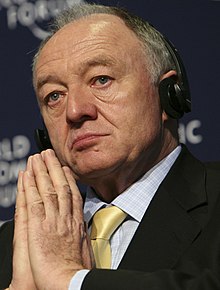
These are the words of former London mayor and UK Labour Party member and activist, Ken Livingstone in a recent interview that he conducted with Arabic station Al Ghad Al Arabi.  The fact that Livingstone, or "Red Ken" as he is known by the British establishment, is anti-Israel and anti-Semitic is not new to most of us.  His own Labour Party recently suspended him on accusations of anti-Semitism, along with more than 50 other members of the party.   What is surprising is the fact that a former mayor of a capital city of one of the world's leading and progressive nations, can utter such factual inaccuracies in support of his anti-Semitic rant.  What is perhaps even more astonishing is that so many around the world accept these inaccuracies as fact. and find his open anti-Semitism (dressed up as anti-Zionism) to be perfectly acceptable.

Even though Red Ken was only a babe at the time that the State of Israel came into existence and will probably not be able to remember its details, it is incumbent on a man in his position and who is as outspoken as he is, to get the facts right before taking strong public positions.  Instead, he is using inaccuracies to justify his bias.  If he had learnt the facts, he would know that there was no Palestinian community in 1948, and so there could not have been a Palestinian community for 2000 years.  The concept of a "Palestinian people" or community only arose after the 1967 Six Day War when the Arab countries lost control of the West Bank, Gaza Strip, Golan Heights and East Jerusalem after trying to drive the Jews into the sea once more.  After they realised that they had little chance of defeating Israel militarily in order to gain control over the land held by the Jews, the notion of a "Palestinian people" was born as a tactic to beguile the world into feeling sympathy for their cause.  This has now translated into an "occupation" of their land, a misconception believed by a vast majority of the world's citizens and used endlessly at the UN and other international bodies to criticise Israel.

It is ironic that he makes a statement that the creation of the State of Israel was a catastrophe.  Why a catastrophe?  Does he believe that peace would have prevailed in this region had the State of Israel not come into being?  In the same interview, Livingstone refers to Libya and Iraq.  In those cases, he tries to blame western intervention for the conflicts that arose in those, and other Middle Eastern countries.  He claims that the west is equally to blame for the rise of Islamic terrorism, which has come about because of western double standards in the Middle East in Livingstone's opinion.  According to him, this is what has been encouraging angry youth to fight alongside ISIS and other terror groups.  Even he is smart enough to recognise that Arab and Muslim groups have fought amongst each other for hundreds of years., and that western intervention was not required to trigger terrorist activities.  We only need to witness the most basic split between Sunni and Shia Muslims to understand this, not to speak of the numerous tribal and political splits in evidence around the Middle East.  Does Livingstone believe that the Middle East would have been more enlightened and more developed without the existence of the State of Israel?  Once again, we have numerous examples to cite where Muslims have failed to capitalise on opportunities to enlighten and develop their countries and their people.  Should this be blamed on Israel?  Can we blame the terror state that has been constructed in Gaza, and funded by foreign aid, on Israel?  The catastrophe that Ken talks about is the same catastrophe that the Palestinians speak about.  It is the catastrophe of the Jews have a free homeland in which they can find self-determination.

It is ironic that Mr. Livingstone thinks that Britain and America should have absorbed all the post World War II Jewish refugees, and their failure to do so caused the "catastrophe" of the creation of the State of Israel.  In reality, it was exactly because of bigoted anti-Semites like Red Ken, that these countries and others refused to accept Jewish refugees, both during the war (when they really needed place to go) and in its aftermath.  Even those who were allowed to escape to western countries were made to feel like they were "guests", who may be sent out at any moment.  The exposure of endemic anti-Semitism in the Labour Party in Britain is not as a result of a recent development.  This manifests itself as a result of decades of institutionalised anti-Semitism in many areas of British society.  Who would believe that, even as recently as the 1980's, some large government-owned companies in the UK had a policy of not employing Jews?  This anti-Semitism has been cleansed by the political acceptability of being anti-Israel.  The anti-Semites finally found a legitimate cause that allows them to openly express their anti-Semitism in the public arena.  Even if they claim to oppose Israel's actions and policies while being Jew lovers.  

It should be clear that anybody who denies the right of the State of Israel to exist, or supports groups who seek Israel's destruction, is an anti-Semite.  This has little to do with the so-called occupation or the rights of the Palestinian people.  There are millions of Palestinians in refugee camps in the region, whose human rights are being denied in a much more systematic way than anything that Israel has ever done.  No criticism is issued about these human rights abuses, or about the abuses by the Palestinian leadership of its own people.  Instead, this has everything to do with the right of the Jews to be masters of their own destiny, and to have the right to protect themselves and their  Jewish homeland.  It can be dressed up as anti-Zionism or support for the Palestinian people, but the real root cause is well understood, and will not hidden from sight.

UK Labour leader Jeremy Corbyn is on record calling Hamas and Hezbollah his friends.  And he is the one who has suspended more than 50 members of his party for their anti-Semitic behaviour.  This is evidence of how deep the anti-Semitism in the Labour Party runs.  The fact that those who support groups calling for Israel's destruction are the ones suspending the anti-Semites is ironic.  The anti-Semites have succeeded in galvanising support for hating the Jews and Israel around the issue of human rights abuses against the Palestinians.  This has filtered into the left-wing arm of the Jewish community, giving even greater strength to the mantra that being anti-Israel does not necessarily equal being anti-Jewish.  Each meeting of the UNHRC is forced to discuss agenda item 7 covering human rights violations by Israel.  How does it transpire that, amongst all human rights violators in the world (of which there are many), Israel is the one and only country that is forced to endure a torrent of criticism and abuse at each and every UNHRC meeting?  My contention is that it is rooted in institutionalised anti-Semitism at this organisation, and many others.

Although Red Ken is a classic example of anti-Semitism in its ugliest form, he is unfortunately not the only example.  And he is sufficiently unashamed to be prepared to make public statements in support of his argument that are factually inaccurate and incorrect.  The problem is that, when senior leaders like Livingstone make such statements and contentions, many of their followers believe it without any doubt and this perpetuates the unbridled hatred without cause.

When Livingstone refers to the "catastrophe", we understand what he truly means.  It has nothing to do with the so-called "nakba" or catastrophe that has befallen the Palestinian people.  This could easily have been avoided if they had accepted the Palestine Partition Plan agreed by the UN in 1947, instead of choosing to try to destroy the Jews.  The two-state solution that we continue to fight over today, could already have been implemented at that time.  If this is indeed what the true desire is.  Instead, Livingstone is referring to the catastrophe of the Jews having their right to independence and self-determination, and how much this has served to strengthen the cause and the presence of Jews around the world.  I imagine that he may have described it as an even greater catastrophe had the UK absorbed more Jews in the period after the Shoa as he suggests, and had a greater presence and influence in the UK today.  The mix of strong Jewish presence and influence, along with virulent anti-Semitism was exactly the recipe that brought the Nazis to power, and led to the Shoa and the massacre of 6 million people.  So, while I don't tolerate this form of bigotry from Livingstone and I am happy that there is a State of Israel to call him out and provide protection to Jews against his ilk, I still prefer this form of a catastrophe to the alternatives that Livingstone suggests.

Saturday, 22 May 2010

Israeli-Style Democracy for the UK

The long- awaited elections in the United Kingdom (UK) have taken place, and the electorate has spoken - or not. While politicians on both sides of the political divide have tried to convince us that the nation decided that it does not want any party to dominate the political scene for the next parliament, I find this explanation difficult to swallow. I am not sure how voters, when casting their votes, can have in mind that they do not wish one party or another to come out as a clear winner. Indeed, when I have cast my vote in the past, it has always been my hope that my chosen party will come out the clear winner, and I am sure that most other voters feel the same way. The more logical explanation to the outcome of the election is that none of the parties were able to convince sufficient numbers of voters to vote for them in order to gain the required majority. And so it is that the UK will have to live with the consequences of indecision for the life of the next parliament.

A coalition government is usually the territory of countries like Germany, Italy and Israel, and not the UK. In fact, it is quite seldom that a country with a first-past-the-post constituency electoral system has a coalition government. The countries who have become accustomed to operating with coalition governments on a regular basis are mostly those with proportional representation (PR) electoral systems. Living in a country whose elections over 60 years have never resulted in overall control being given to any party, I have found the confusion in the UK to be somewhat amusing. What is most amusing is that opinion polls have long predicted that an election would deliver no overall control, yet the public and the politicians seemed so unprepared for it when the result was delivered.

For a country which last had a situation of no overall control in 1974, and its last coalition government in 1945, the UK is into new political territory. As soon as the coalition discussions were initiated, we started to see the shuk-style negotiations that are only too familiar to Israelis. Nick Clegg and his Liberal-Democrats realised that they hold more power than their 62 seats or 22% of the national vote justify. He had no problem negotiating simultaneously with both the Tories and Labour to see where he could do better. Ultimately, it was the Tory leader David Cameron who seems to have come up with the goods for the Lib-Dems. So it is the leader of the party with 62 seats out of a total of 650 who is the UK's new Deputy Prime Minister. More than this, he has succeeded in ensuring that a number of policy issues, which are far from the Tory priorities, will be included in those matters to be addressed during the upcoming parliament. It feels so much like the minority religious parties in Israel who succeed in commanding way more than their support justifies, and have no qualms about going into a coalition with anybody who is prepared to pay a higher price.

It is perhaps ironic that the current electoral system will be one of the issues that will be up for discussion at the behest of the Lib-Dems. Had a PR electoral system been in place for the 2010 election, the Liberal Democrats would have gained closer to 145 seats rather than their current haul of 62. It is clear why they wish to reform the electoral system and implement PR as a matter of the highest priority. The implementation of this electoral system is, however, likely to create less stability rather than greater stability in future governments, as the prospect of no overall control under a PR system is far greater than under a constituency system.

For now, it appears to be "happy families" between the Tories and Lib-Dems. Smiling faces and presentation of agreements on coalition and government policies are the order of the day. I feel sure that this will all change when the first real test arises, and members of government are called upon to vote against their instinct and underlying beliefs in the interests of supporting the coalition agreement. I have a feeling that the issue of budget cuts will be the first one to rear the ugly head of the bad side of coalition agreements. Time will tell.

Despite the current positive appearance of the coalition government, it is my view that this coalition will go the way of many others before it. By this, I mean that it will not see out the full term of the parliament, or even near to the full term of the parliament. I predict that UK voters will be called to another general election before the end of 2011. If the Lib-Dems succeed in pushing through the adoption of a PR electoral system without special checks and balances by then, this will spell disaster for the stability of the UK electoral system.

The lesson is clear for the UK that can be passed on by other countries which have had years of coalition governments due to no overall control being achieved by one party or another. Be cautious not to allow small, niche-interest parties to extract more than their fair share in exchange for propping up a coalition government. These compromises have cost Israel dear in political and economic terms. The same is true of other countries, and there is the threat that the UK could also pay a heavy price if the government is forced to give in to its own niche-interest groups.

The UK is already reeling from the outfall of the expenses scandal which revealed the extent to which parliamentarians were abusing the expenses system. Perhaps a short parliament is what the UK needs right now to limit the damage that the coalition can cause. In this way, a new election can be called which will deliver the overall control needed to get back into the traditional style of Westminster governments.