More than a few Israelis have been taking perverse pleasure in
witnessing the struggles of the Argentinean football team in the world cup tournament in Russia. Considering their all-star line-up, the
Argentinians were expected to make easy progress to the last 16 of the
tournament. And yet, it was not quite how things turned out, even if
they did finally achieve this objective. A draw against lowly Iceland,
and a resounding loss to Croatia did not help their cause along the
way. And the unceremonious dumping of the Argentinean team out of the
tournament by France in the round of 16 has led many in Israel to
consider this to be karma.
The reason for the
pleasure taken by Israelis in Argentina's poor performances, is because
of the cancellation of the friendly warm-up match that was scheduled to
take place between the national teams of Israel and Argentina just prior
to the start of the world cup tournament. Even Israeli Defense
Minister Avigdor Liberman jumped on the bandwagon by tweeting to
congratulate Iceland on their efforts to restrict Argentina to a 1-1
draw. In this game, one of the world's most famous and decorated
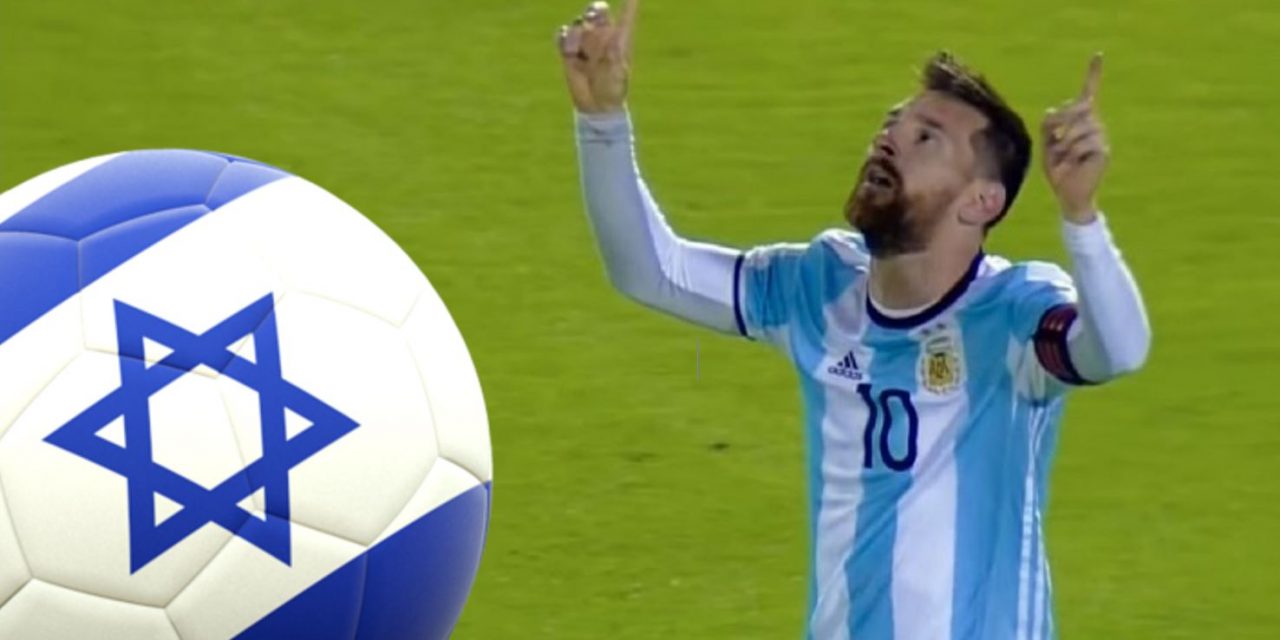
players, Lionel Messi, missed a penalty attempt for Argentina that could have won the game for his team. Liberman
found it appropriate to link the unsatisfactory result for Argentina
with the cancellation of their game against Israel.
While
Argentina's failures in this world cup tournament are difficult to
conceal, it is a little disingenuous to claim that their poor form can
be attributed to the cancellation of the warm-up game against Israel.
And it is even more disingenuous to blame the Argentineans for the
cancellation of this game. I believe that the blame for this can
be laid fimly at the feet of the Israeli government, led by Prime Minister
Netanyahu and Minister for Culture and Sport Miri Regev.
The
tradition of Argentina playing pre-world cup warm-up games against
Israel goes back to 1986. In fact, after a warm-up game against Israel
before the world cup tournament in 1986, Argentina went on to win the
tournament. After a warm-up game against Israel in 1990, the
Argentinean team faltered only at the final hurdle when losing to
Germany in the final match of the tournament. So there are some who
consider this warm-up game to be something of a lucky omen for the
Argentineans. And apparently some who consider the cancellation of the
game this year to be a poison chalice for Argentina's fortunes. In
spite of all of the emotions surrounding the cancellation of the game, I
consider the Argentineans to be entirely blameless for the fact that
the game against Israel ultimately did not take place.
The
game was set against the backdrop of great efforts on the part of the
Boycott, Divest, Sanctions movement (BDS) to bring discredit and damage
to Israel in a public way. It was clear that the BDS movement was going
to jump at this opportunity to put pressure on Argentina to cancel the
game in order to use the chance to show that there is public opposition
to Israel in every possible way. And BDS did not disappoint. What was
disappointing, however, was the response to this by the Israeli
government.
The game was originally scheduled to be
played in Haifa, and was billed as a friendly warm-up game. In
precisely the same way that previous games have been played before.
Sensing an opportunity to make something more of it, Minister of Culture
and Sport Miri Regev succeeded in convincing the Argentineans to agree
to move the game to the Teddy Stadium in Jerusalem, and to bill it as a
game that formed part of Israel's celebration of 70 years of
independence. Not only was this contrary to the original spirit of the
game, it was a big mistake on the part of the Israeli government. It
was essentially, the first step towards the ultimate cancellation of the
game. I believe that the Argentinean Football Association would have
been able and willing to withstand the pressure put on it by BDS and
other anti-Israel protesters to allow this game to go ahead as planned
in its original format. Once the game was given a much higher profile
and billing and moved to Jerusalem to be part of Israel's 70th
anniversary of independence, the Israeli government was inviting
attention and ultimate disaster. In the process, it created a very
difficult and unwelcome situation for the Argentinean Football
Association.
The record shows that so much pressure
was placed on the Argentinean Football Association and its players,
that they decided to call off the game. Players and their families were
threatened with death if they chose to go through with the game. I
condemn in the strongest terms the terrorists who think that it is OK to
make death threats against the families of football players who are
just doing their job in representing family, club and country. It is
clear that these terrorists will stop at nothing in their attempts to
bring about the destruction of Israel, even if it means threatening the
lives of innocent people. Of course, their efforts will not succeed.
My sympathy goes out to the Argentinean Football Association and players
who were willing to agree to the friendly game in the first place,
knowing full well that they would come under immense public pressure for
their decision. I am sure that I would have taken the same decision to cancel the game as
they took if I was in their shoes. Unfortunately, officials in the
Israeli government could not sufficiently recognise the effort that
friends of Israel are prepared to make by agreeing to play here, despite
the obvious negative reaction that they would have to endure. Instead
of lending a hand to support the Argentinean Football Association and
its players to feel justified in proceeding with the game, apparently
these same government officials felt that it would be appropriate to
place even more pressure on our Argentinean friends by moving the game
to Jerusalem, and giving it a profile that was never originally
intended.
Israel has every right and even a
responsibility to assert its sovereignty, and to assert sovereignty over
Jerusalem as its capital. But Israel also has the responsibility to
pick its fights, and to choose the appropriate moments to assert this
sovereignty. Israel also has the responsibility to support friends who
are prepared to swim against the tide in supporting Israel when popular
opinion may not necessarily do so. These things should not be taken
for granted. The unfortunate reality is that the rules that apply to
other countries do not necessarily apply to Israel. As much as it an
unacceptable situation and one that we should all fight against with
every fibre of our being, it is nonetheless the reality and cannot be
ignored. It would be negligent for the Israeli government to behave in a
way that simply ignores this reality.
The cancellation
of the football match was no victory for Israel, despite Miri Regev
feeling that she stood her ground and asserted Israel's sovereignty.
Besides denying Israel football fans the opportunity to watch talented
footballers like Messi and his teammates, it handed a public relations
victory to BDS. And it left the Argentinean Football Association
wondering whether it is worth considering playing against Israel in the
future given the unfortunate way in which the events unfolded. There
was a significant lack of support coming from the Israeli government for
them. Surely, the government has a responsibility to do what is
ultimately in Israel's best interests? Sometimes it is better to be
smart rather than to be right.
The next test for
the Israeli government is going to be the 2019 Eurovision song
competition that is due to be hosted by Israel. There is already a
strong body of international opinion that says that this competition
should not be held in Israel next year. And BDS have moved into high
gear to support them. On the other side, Miri Regev is on record saying
that she would prefer the Eurovision not to be held in Israel rather
than not hold it in Jerusalem. She may be granted her wish, in the same
way as her wish for the football game was granted. Again, this will
not be chalked up as a success for Regev nor for Israel.
Showing posts with label Sport. Show all posts
Thursday, 5 July 2018
Wednesday, 31 August 2016
The Unfortunate Olympic Legacy
The Israeli Olympic team has returned from Rio with two bronze medals, both for judo. This almost equals Israel's best medal haul in any Olympic Games to date. Twice before Israel has earned two medals although, on the previous occasions, one medal was either a silver or gold. Unfortunately, however, the most talked-about story in Israel relating to the games has nothing to do with the medals that were brought home. Instead, the legacy of the Rio Olympics in Israel will always be the handshake that never was.
This of course relates to the judo bout between Israel's Ori Sasson and Egyptian judoka Islam El Shehaby. The incident began long before the bout when, we are advised, El Shehaby indicated that he was not willing to fight an Israeli opponent. He had been encouraged by fans on social media not to fight the Israeli in this bout. Some reports suggest that the Egyptian authorities forced El Shehaby to partake in the bout, against his will. This all seems somewhat strange for an athlete at the peak of his career. It is assumed that the opportuntity to participate in, and excel at the Olympic Games is almost unrivaled as an ambition of any athlete. The story published in some media says that El Shehaby decided to retaliate against being forced to participate, and this came in the form of a refusal to shake hands with Ori at the end of the match. Sasson had been warned of this situation beforehand, but still approached his vanquished opponent at the end of the fight for a handshake that was rejected by the Egyptian.
The International Olympic Committee (IOC) intervened and found that the Egyptian athlete had acted contrary to the rules of fair play and against the spirit of friendship embodied in the Olympic Values. They issued the athlete with a reprimand. The Egyptian Olympic Committee punished the athlete by sending him home from the games. This incident followed the "scolding" issued to the head of the Lebanese Olympic delegation in Rio, after he refused to allow the Israeli team onto their bus that they were due to have shared on the way to the opening ceremony. And also came after the incident involving the Saudi Arabian judoka who withdrew from a bout, when it became clear that the winner of her bout would have to fight against an Israeli in the next round.
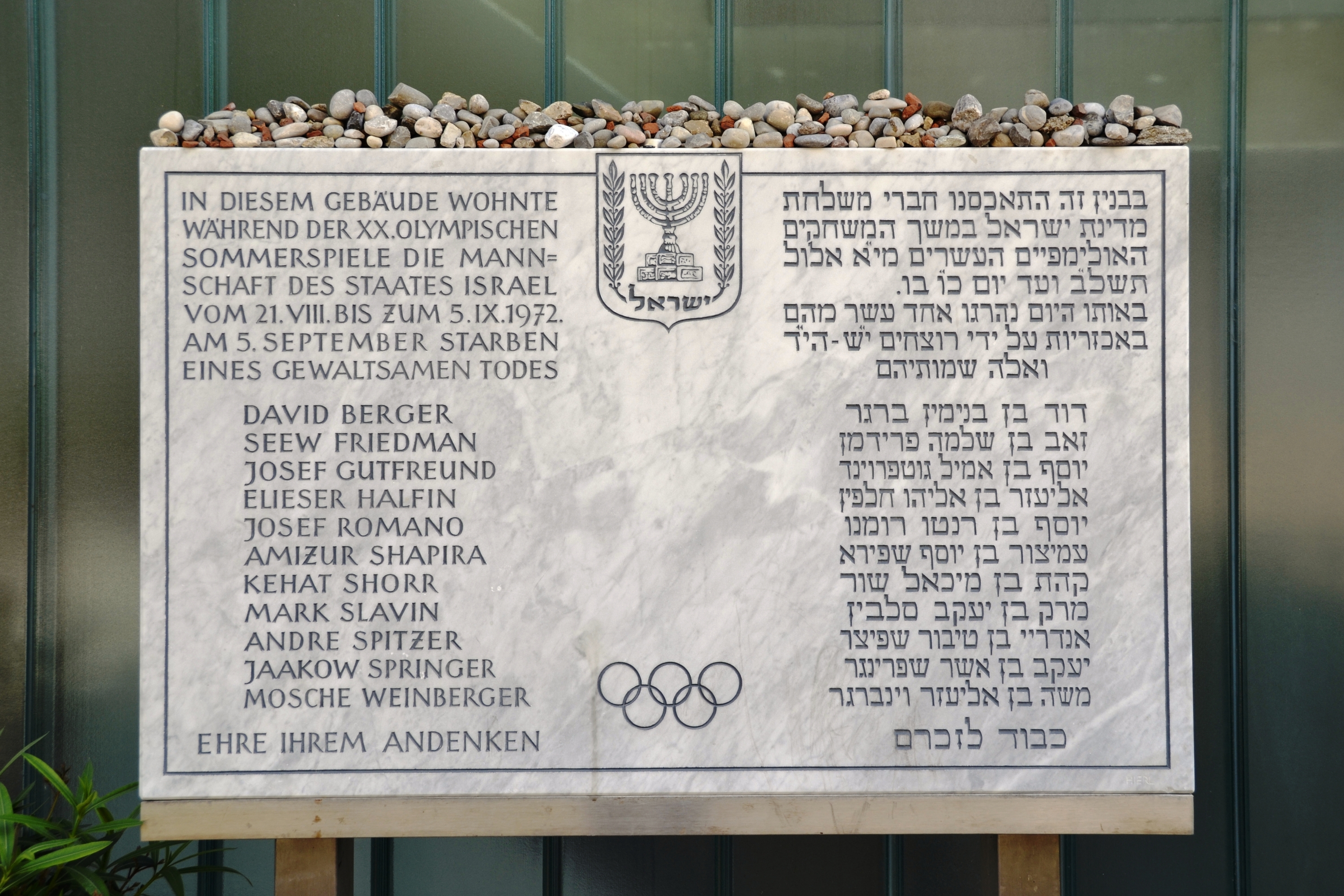
Even though these incidents, particularly the rejection of Ori Sasson's handshake, made news around the world especially on social media, none of them come as a huge surprise to Israelis. Despite the ideals of the Olympic Movement to promote peace and cooperation between peoples around the world, Israelis have always known that these ideals do not necessarily extend in equal measure to them. The terror attack at the Munich Olympic Games, in 1972 in which 11 members of the Israeli Olympic team and a German police officer were killed, is clear evidence of that. It is not so much about the terror attack itself - it is well known that terror groups around the world will use every possible way of getting to Israelis to sow fear amongst them. It is rather about the response by the IOC to this incident. It is inconceivable that it took until 2016 for the IOC to finally agree to officially honour the slain members of the Israeli Olympic team at a games in any way. Why would it take 44 years to do this? Who would have opposed the request made many years ago by the Israeli delegation to officially honour those who were killed? And why?
It is notable that the most prominent anti-Israel incident at the Rio Games, the incident with El Shehaby, came from an athlete representing a country with whom Israel does have diplomatic relations. Despite the concept and tradition of the "Olympic Truce" which calls for athletes to be allowed right of safe travel to and from the Games, Israel will expect representatives of countries like Lebanon and Saudi Arabia, with whom there are no diplomatic relations, not to agree to travel on the bus with her athletes. This is clearly in direct contravention of the Olympic ideals. But it is more surprising when the greatest protest comes from a so-called friendly country. While it is noted that the country's Olympic Committee and other official bodies came out against the actions of the individual athlete, it seems as though El Shehaby received a huge amount of unofficial support for his actions from fellow Egyptians.
Israel and Egypt signed their peace treaty 37 years ago. More than a generation has elapsed since then, and yet their athletes still refuse to shake hands with Israel's athletes at the Olympic Games. It is true that the peace has not been a truly warm peace, and there have been awkward times when the peace agreement looked like it was in grave danger. It is nevertheless a peace treaty between countries that are neighbours, and comes with full diplomatic relations. Was this refusal from an athlete who was born after the peace treaty was signed, a product of the education that he received? I cannot imagine one Israeli athlete who would refuse to shake the hand of any opponent, no matter which country they come from. Even from those countries that are insistent on wanting to destroy Israel.
It is ironic that the Israeli athletes travelling to the opening ceremony were willing to travel with the Lebanese delegation in the way that the organisers had intended. After all, Lebanon is a country that has been at constant war with Israel for the past 68 years, and has tried to destroy Israel on numerous occasions. It is even more ironic that the Israeli team had to refuse to be split up and reallocated onto a number of other buses due to security concerns associated with the team being split up. With the ramifications of Munich still resonating in their ears, the Israeli team was ordered by their security team to remain together until the organisers laid on an alternative bus in which the entire team could travel together along with their required security escort. Perhaps the greatest irony of all, is the fact that the security of the entire Olympic Games in Rio was left to a group of 36 Israeli companies to take care of.
With anti-Semitism and anti-Israel sentiment rife around the world, Israeli athletes went to the Olympic Games in Rio to find a relative safe haven from the turmoil. If everybody adhered to the ideals of the Olympic Movement, this is what they would have found in Rio. But this was not the case at all. They found in Rio the same anti-Semitic behaviour that has become openly acceptable in football stadiums in Europe, and in the General Assembly of the United Nations. And this from countries with whom Israel has diplomatic relations. This puts the achievement of our athletes in earning two bronze medals into the proper context. Kol hakavod!
Tuesday, 7 August 2012
Remembering the Munich 11
The start of the 2012 London Olympic Games has arrived with great excitement and expectation for thousands of athletes and coaches, and for millions of viewers around the world. For some, however, the Olympic Games represents negative feelings and bad memories. Chief amongst those are the families of the 11 Israelis who were killed 40 years ago at the Munich. For these people, the Olympic Games will always represent a reminder of the cruel way in which innocent lives were cut short in their prime.
With the passing of 40 years since those tragic events, has come a concerted effort by the bereaved families of the athletes and coaching staff to hold a formal commemoration at the London Olympic Games in memory of the victims. These efforts have been formally supported by millions around the world, including a number of national governments. Special resolutions and requests to hold a minute's silence at the London opening ceremony were adopted by governments in Australia, Canada and the USA amongst others. It is astonishing that the International Olympic Committee (IOC) and the London Organising Committee of the Olympic Games have opposed these efforts, and decided against holding a minute's silence in memory of the murdered athletes and coaches as well as the German police officer who was also killed by the terrorists.
This decision is almost tantamount to the IOC denying the link between the cruel loss of life, and the Olympic movement. There can be no denying that the athletes and coaches were in Munich, in the Olympic village, only for the purpose of competing in the games. They were kidnapped and killed on the watch of the IOC and the organising committee of the Munich Games. Nothing would be more appropriate, than for a minute's silence to be held at the biggest event of the games, which is undoubtedly the opening ceremony. This would allow the IOC to acknowledge the tragedy that was allowed to take place when the IOC was on duty, and also to memorialise the names of the innocent victims in the tragedy. The act of opposing a formal memorial at the opening ceremony is a way of denying responsibility for the event, and also serves to reduce the significance of this tragedy.
In response to the decision by the London organisers not to hold a formal memorial ceremony, chairman of the Palestinian Olympic Committee Jibril Rajoub has written to the IOC President to thank him. He wrote, "Sport is a bridge for love, unification and for spreading peace among the nations. It must not be a cause for divisiveness and for the spreading of racism'". Perhaps Mr Rajoub conveniently forgot that it was terrorists linked to his own organisation who carried out the heinous crime, murdering 11 innocent sportsmen and a police officer in cold blood. It is clear that Mr Rajoub didn't wish to miss an opportunity to make a fool of himself in writing such a ridiculous letter. It is fair to say, however, that the IOC invited such a response by behaving in a way that can be interpreted as denying the importance of such a commemoration.
Various commemorations which have been held on the fringe of the games, one at the Olympic village and one hosted by the Israeli ambassador to the UK, do not go far enough to formally respect the memories of innocent people who should have been protected by the IOC and games organisers. They were let down by these people who allowed them to be kidnapped from the campus of the games. The only crime that they committed which resulted in them being given the death sentence, was that they were Jews and Israelis. Surely, the least that the IOC can do is to allow their memories to be formally commemorated?
The English Football Association has provided a great example for the IOC in the way that the Hillsborough disaster, and the 96 Liverpool fans killed in 1989, continue to be commemorated. A minute's silence is held at every football ground across the country on the date that is the anniversary of this tragedy. This includes grounds which have nothing to do with either of the teams in the game on the day, or the ground where the game was held. It is a true mark of respect when even those unrelated to the event are able to stand silent for a minute in memory of the victims. It remains unclear to me why this was not possible at the opening ceremony.
While the memories of those who were killed will never be forgotten by their families and the people of Israel, the time has come for the IOC to memorialise the names as well. A minute's silence at the opening ceremony is the respectable and respectful way to do this.
Until such time as the victims get the public recognition that they deserve, we can each play our part in ensuring that their memories are not forgotten. The Chief Rabbi of the United Hebrew Congregations of the Commonwealth has written a prayer to commemorate the victims. This can be found using the following link. Please do read it, and encourage those around you to do the same.
May the memories of the 11 be for a blessing for their families, and for all Israeli sportsmen and women.
Subscribe to:
Posts (Atom)