Showing posts with label Anti-Semitism. Show all posts

Tuesday, 13 August 2019

Why Does Iran Wish to Destroy Israel?

Part of the paradigm of accepted international diplomacy as it is presented today, is that Iran wishes to destroy the State of Israel and her people.  This is reinforced by the Iranian regime threatening to do so at every opportunity.  It has become a given fact, and everybody knows and accepts this situation.  It seems strange that there is no significant attempt to question the right of a nation to threaten to destroy another sovereign nation.  But more than this, there appears to be no attempt to understand what drives Iran to wish to destroy Israel.  The desire to conquer another nation, or the land belonging to another nation, is relatively common and can be explained in a number of understandable ways.  The wish to destroy a nation is entirely different, and I cannot recall another case in history where a country has been singled out for destruction in the way that Israel has been in recent times.  The fact that the world seems to allow this, and the fact that there would appear to be no logical reason for it, troubles me a great deal.

It is said that, in order to present the most effective defence against enemies, it is important to understand your enemies, their thoughts and what drives and motivates them.  With that in mind, I have been wondering why it is that Iran wishes to destroy Israel.  Given how common it is to hear Iran's threats of destruction, I expected to find much written and said about this in the literature and the press.  It turns out that it is exactly the opposite, and that there is very little written on the subject.  And I could find no convincing argument that explains why the Iranian regime has the obsession to destroy Israel  So, I have tried to formulate my own views and theories that I am sharing here now.

Many believe that Iran's hatred for Israel forms part of the Arab-Israeli conflict that has typified relations between Israel and the Arab world since the State of Israel was declared in 1948.  Nothing could be further from the truth.  In spite of Iran being a Muslim country in common with the rest of the Arab world, it is certainly not an Arab country.  As opposed to the Arab world that immediately launched a war when Israel declared independence, Iran recognised the State of Israel immediately in 1948, and was the second Muslim country after Turkey to do so.  Iran and Israel maintained close diplomatic ties until the revolution in Iran and the fall of the Shah in 1979.

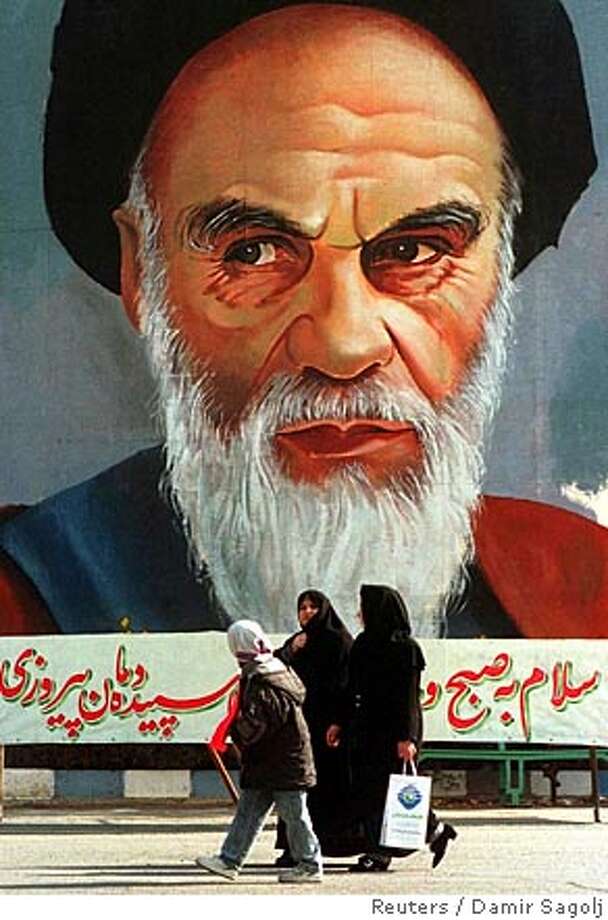
Diplomatic relations were immediately broken off by the Islamist regime of Ayatollah Khomeini after the revolution, and Israel was labelled as the "Little Satan" following in the footsteps of the "Great Satan" which was the USA.  This seems to be the point at which the hatred for Israel really began.  Ironically, and in spite of the hateful rhetoric that emanated from the regime at that time, behind the scenes there was a great deal of close cooperation between Iran and Israel.  Much of this was driven by the 8 year-long war between Iran and Iraq.  Iraq was a common enemy of both Israel and Iran, and this created unlikely ties and reasons to cooperate.  Israel sold Iran vast quantities of arms and ammunition, in return for which Israel received Iranian oil.  It is believed that the Iranian air force continued to operate, after it was initially attacked by Iraq, only because of the assistance received from Israel.  Iran was also delighted when Israel audaciously succeeded in destroying Iraq's nuclear reactor at Osirak in 1981 after the Iranians failed in their attempt to do the same.  The weekly insults and denunciations of Israel at Friday prayers by the Iranian leadership served conveniently to conceal the fact that there were no fewer than 100 carefully hidden Israeli advisers and technicians in Iran throughout the period of the war.

Since that time, Iran's leaders have continued to criticise, insult and threaten Israel at every opportunity.  And nobody has questioned for a moment why this is the case, and what justifies this vilification and extreme sentiment.  It has become a situation that simply forms part of the diplomatic landscape.  Can it be explained by Iran's hatred towards the USA, and the fact that the Israel is seen to be very close to the US?  It is difficult for me to accept that this explains all the public threats and the acts of terror that have been undertaken (and continue to be undertaken) against Israel.  Israel is not the USA's only close ally.  Why have other allies not been threatened for destruction in the halls of the United Nations in the way that Israel has been forced to endure?  And, while sentiment towards the US has wavered with different Iranian regimes (while always maintaining its negative bias), the hatred towards Israel seems unwavering no matter which Iranian president has been in power.  The threats against Israel have been the one pillar of consistency in Iranian foreign policy.  So I find it difficult to believe that this is purely driven by Israel's relationship and friendship with the USA.

The only explanation that I can offer to this extreme situation is the resurfacing of plain, old-fashioned anti-Semitism.  I use the term "resurfacing" because the Iranians/Persians do not have a long or consistent history of anti-Semitism.  The story of Purim that took place in Persia is a good representation of the relations that Jews and Iranians have enjoyed over the centuries.  While the king of Persia married a Jewess (Esther) and was prepared to take action to destroy Haman and his evil band for their anti-Semitism expressed against Mordechai, the fact was that anti-Semitism was clearly a common thing at that time.  In more recent times the Nazis declared Iranians immune to the Nuremburg Laws as they were considered to be pure Aryans.  In spite of this, the Shah and the Iranian government did not support the anti-Semitism of the Nazis.  With the rise to power of the Islamic extremists in Iran in 1979, we saw the rise to power of extreme anti-Semitism at a regime level.  Ironically, this anti-Semitism was not directed at Jews living in Iran as much as it was directed at Israel.  When Ayatollah Khomeini returned from exile in Paris to take up the leadership role immediately after the revolution, he declared, "We recognize our Jews as separate from those godless, bloodsucking Zionists" and he issued a fatwa decreeing that the Jews in Iran were to be protected.  This did not stop Iranian Jews from leaving Iran in large numbers.  The population of Iranian Jewry shrunk from around100,000 at the time of the revolution to around 50,000 in the mid-1980s, to around 25,000 in the mid-1990s.  Less than 10,000 Jews are left in Iran today.  Because of the "protection" afforded to Jews living in Iran, there are those who believe that the hatred that we see coming from Iran is not anti-Semitism, but anti-Zionism.  The problem is that the basis for this anti-Zionism is still unexplained.

In spite of the Iranians not being Arabs, they have enjoyed some ideals in common with the Arabs since the revolution in Iran.  The premise for the Arab-Israeli conflict is pure anti-Semitism.  The Arab world could not accept the notion of Jews living in the Middle East on their doorstep, and resolved to do all to destroy them and their state.  The holy city of Jerusalem has become embroiled in this war as a tool, rather than an end.  It is noticeable that no attempt was made to claim Jerusalem (and its Muslim holy sites) by the Arabs in the period prior to the establishment of Israel.  When the Jews took control of Jerusalem, and even in spite of granting control of the Muslim holy sites to the Waqf Council under the chairmanship of the King of Jordan, the Arab world and the Muslim world rose up to object.  Was their objection in favour of the Muslim holy sites, or was the objection against the presence of the Jews?  Everybody will reach their own conclusion.  What is clear is that Iran has firmly jumped on this anti-Semitic bandwagon.

Iran's brand of Shia Islam has been a huge source of conflict with the Sunni Islam practised by most of the Arab world.  In spite of this fundamental source of disagreement, they have found a common cause to fight against the Jews in Israel, to fight against the existence of the State of Israel and to use the claim of the holy city of Jerusalem for Islam as a means to their end.  The city of Jerusalem seems to be almost the only cause and rallying point that unites all different streams of Muslims around the world.  And, by extension, the fight against Israel, the Jews and the current regime in Jerusalem is equally a common point of agreement between them all.  Although distinct cracks are starting to show in this quest as individual Arab countries come to the realisation that Israel is going nowhere, and understand that cooperation with Israel may be a better option for them than fighting the futile battle of trying to destroy her.

The Iranians are, however, unwavering and unashamed in their battle against Israel and her people.  They continue to sponsor Hamas and Hezbollah, amongst other terrorist groups, that act as proxies for Iran to destroy Israel.  Iran is also responsible for numerous terror attacks orchestrated against Israeli and Jewish targets outside of Israel.  It's quest to build a nuclear weapon that could potentially be used against Israel is clearly a cause that any Israeli government will consider to be of highest priority.   So Iran has clearly not changed its mind, nor given up its desire to destroy Israel in any way.

My problem is that I am still not entirely clear why Iran wants to destroy Israel.

Friday, 29 March 2019

State Sponsored Anti-Semitism is Rife

Norwegian Attorney General Tor Aksel Busch last week decided that a comment cursing Jews, that was made by Norwegian Muslim rapper Kaveh Kholardi during a concert last year, is not anti-Semitic hate speech but rather legitimate criticism of Israel.  Kholardi made the comment "f*cking Jews" at a family-friendly concert in June 2018 to promote diversity.  It was not bad enough that Iranian-born Kholardi thought it was acceptable to make this comment at his concert.  This has been exacerbated by the fact that two different public officials in Norway have ruled that this comment does not constitute hate speech.  State Prosecutor Trude Antonsen found that,while derogatory and offensive, the remark did not constitute a criminal act.  This may well be the case under the laws of Norway, in which case the laws need some adjustment.  But the fact that the attorney general decided that this constitutes legitimate criticism of Israel, is perhaps more offensive than the original comment.

I am enraged by this decision for a number of reasons.  When a performing artist stands up at a public concert and says "f*cking Jews", it seems to me that his comment is clear and speaks for itself.  The fact that he may say afterwards that he was only joking does not unring the bell or make his statement any more acceptable.  Surely there can be no clearer example of anti-Semitic speech than this statement.  There is no interpretation required, and there can be no accusation that the statement was taken out of context.  Such a statement is anti-Semitic no matter what the context.  It is offensive, unacceptable and illegal in many countries around the world.

Why would anybody believe that this statement translates into criticism of Israel in any way?  Aside from the fact that Israel happens to be a Jewish state, and that many of the Jews there would be extremely offended by the statement, there is no link between this curse of Jews and criticism of Israel.  In my view, criticism of Israel may refer to particular policies of the government or actions of those acting on behalf of the state.  A blanket curse of all Jews in this way has surely nothing to do with legitimate criticism of Israel.  If, for one fleeting moment, I was to accept the fact that this curse was an act of criticism of Israel, could it in any way be considered to be legitimate?  I have my sincere doubts.  Just because I feel that the Norwegian attorney general has acted to embarrass his country and insult me and my people, I would not be justified to say "f*cking Norwegians" as a response.  And I would not do so.  Instead, I would be happier and more justified to say "f*ck Tor Aksel Busch for being an anti-Semite".

The notion that anti-Semitism can be justified and made politically correct by dressing it up as legitimate criticism of Israel needs to be opposed as strongly as possible.  It is becoming more and more accepted that anti-Jewish rhetoric and actions are OK because Israel is deserving of criticism.  It is equally common-place that anti-Semitism is expressed as criticism of Israel.  This legitmisation is reinforced when international bodies and representatives of national governments confirm its acceptability.  It should be clear that this is not acceptable, and that Jews and Israel will not tolerate it.  The fact that Israel gets involved in the protection of Jews and Jewish rights around the world, does not justify anti-Semitism being disguised as legitimate criticism of Israel.

Mr. Busch should be ashamed of his position and his statement on this matter.  He is clearly part of the problem, and not part of the solution.  It is shameful that people like him are left to be the guardians and judges of what is hate speech and what is acceptable.  This act requires the Norwegian government to fire him from his position without delay, and condemn him in the strongest possible terms.  The Norwegian government and Norwegian people should be embarrassed of this decision, and they become complicit by not acting to reverse it.

As Jews, we have come to expect anti-Semitic rhetoric from the general public, particularly those who come from backgrounds that typically hold an entrenched and natural hate towards Jews.  In recent years, laws have been enacted to protect us from having to tolerate hate speech, laws that also serve to protect other minority groups.  These laws become a joke if they are left under the auspices of people like Tor Aksel Busch to interpret and implement.  This effectively reinforces anti-Semitism at an institutional and governmental level.  The last time that this happened was in the lead-up to the annihilation of 6 million Jews as part of an anti-Semitic genocide sponsored by states and governments,  This will never be allowed to happen again, in spite of haters like Tor Aksel Busch.

Tuesday, 27 November 2018

Putting the Cart Before the Horse

There is a growing trend among Jews around the world, particularly within the younger generation, to feel some sort of lack of comfort and embarrassment about Israel's policy towards the Palestinians, and even towards Arab Israelis in general.  Their feeling stems from a view that Israel is responsible for human rights violations against the Palestinians, and they have not been shy to air their protest.  The recent "taking a knee" action by students at Herzliya School in Cape Town, South Africa, during the singing of Hatikva, is just the latest in a long line of incidents where Jewish youth have felt the need to to express the freedom of their choice to openly criticise Israel.  Other incidents have included the Palestinian flag being flown at a Jewish youth camp and the wearing of a "keffiya" Palestinian scarf to make a public protest.  Statistics show that Jewish youth in the US are feeling less connected with Israel than before, and that this disconnection is growing.  I find this a sad and unfortunate phenomenon, and have tried to understand the causes of it.

When the idea of the creation of the Jewish state was discussed and voted upon at the UN back in 1947, there was surprise in certain camps that the UN passed the resolution that effectively created Israel.  While there was clearly political motivation in the votes of some countries and financial motivation that drove others, there was almost certainly a sympathy factor that came into consideration.  In the wake of the Shoah that saw the annihilation of 6 million Jews, the Jewish people at that time were considered helpless victims.  Victims always seem to garner sympathy, no matter how it is that they became victims.  So the Jews were viewed as the victims, and the world did show some short-lived sympathy at that time.  Moreover, the world Jewish community was highly supportive of the Jews living in Israel.  Not only did Jews around the world give their unwavering support to Israel, Israel also allowed Jews around the world to feel a little more pride in being Jewish.

Israel and the Jews living in Israel were determined to shake off their label as victims as soon as possible.  The idea of being supported because of sympathy, rather being respected as equals, never sat comfortably with the Jewish culture.  Instead of waiting for Arabs and anti-Semites to attack and then being forced to respond, there was a determination to build a nation of proud people who were not simply going to wait for the enemy to attack and risk further annihilation.  Instead of a band of amateurs who relied upon the sympathy of others, Israel has built a professional army and built the country into one of the strongest and most respected.  No more victims, no more sympathy votes.  Now, a powerful army and a powerful country that could take on and beat the strongest.  And with it, we have managed to escape the label of victims.  We never wished to garner sympathy as victims.  Instead, we wanted to plant fear in the hearts of those who dare to attack us.  We have finally succeeded in this quest.

Unfortunately, the world seems to view situations in binary terms where conflicts are concerned.  Either you are the victim, or you are the perpetrator and the bully.  So, as we managed to escape the label of downtrodden victim, we have increasingly been painted as the bully.  This is in spite of the situation remaining essentially unchanged in that the same Arabs and anti-Semites are still trying to wipe us out only because we are Jews.  The fact that there would be no battle or conflict if they were prepared to live side-by-side in peace instead of trying to wipe us out, seems not to diminish our newly-acquired status as the bully.  And, even though our military activities are solely designed to protect us to allow our people live in peace, this seems not to help to present the situation in its truest light.  The real bullies are now considered to be the victims, even though they are the ones trying to drive the Jews into the sea.  And the real victims are now painted as bullies, even though their only wish is to live in peace and build a positive future for their children.

In order to offer maximum protection to Israelis and to secure the future of the Jewish state, Israel has been forced to be proactive in preventing terrorist activities being perpetrated.  Part of this involves sealing Gaza to prevent terror equipment from entering the area that presents a risk to the survival of Israel.  At the time that Israel withdrew from Gaza, the intention was to allow Gazans to get along with building a positive future for themselves.  Instead, Gaza has devoted its time to finding ways to destroy Israel.  The Israeli government cannot simply stand by and watch this happen, hence the "blockade" that has been imposed on Gaza.  Conveniently, the rhetoric has been twisted to reflect that Gaza justifiably launches attacks against Israel to protest against the blockade.  Apparently, according to a view accepted in international circles, launching hundreds of missiles randomly into populated areas is entirely justified by the need to break free from the "blockade".  The cart has truly been put before the horse.

Just as the world at large views the situation in a binary way, so our fellow Jews around the world are influenced to do the same.  Now, instead of Jews hanging their heads for fear of being singled out and attacked for being Jews, they choose to hang their heads in shame at Israel for being labelled as a bully and transgressor of human rights.  And they insist upon showing their shame in public places in order to be allowed to exercise their right to object to Israel and her policies.  The irony is that this shame is really imposed upon us by outsiders who view Israel as the transgressor, and has been absorbed by Jews who wish to fit in comfortably to their local environments,  Moreover, this view appears to have been adopted by many Jewish educational institutions around the world that have been blinded into accepting the contrary twisted rhetoric about Israel's position in the conflict.

I find it not only unfortunate that the story has been twisted to such a degree that the protagonists have switched roles, it hurts that diaspora Jews find it necessary to be so vocal and public in their criticism of Israel.  While I do not expect that all Jews should blindly support Israel under any circumstances, I do hope that they will express their criticism in a manner that is constructive and useful.  Just as in Israel where each person has more than one opinion on most subjects, I expect that diaspora Jews will also hold a variety of opinions of Israel, not all of them positive.  This is entirely within the realms of what is acceptable.  I don't accept, however, that "taking a knee" is constructive or useful.  And I don't believe that flying a Palestinian flag is constructive or useful.  Instead, it is important to promote the notion that Israel is fighting for its right to exist as a Jewish state, and to protect Jews around the world.  Support for Israel's tactics to survive, wherever it may come from, is welcome.

It may come as a great surprise to many to hear that most Israelis strongly support the idea of a creation of a Palestinian state alongside Israel.  And that most Israelis are very sensitive to the issue of acting humanely and the issue of human rights.  Most Israelis wish to see Palestinians living constructive lives with a great deal of hope for the future.  There is, however, a condition attached to the support for the Palestinians.  The condition is that the Palestinian state will promote peaceful co-existence with Israel, and allow Israel to survive as a Jewish state along the border of the Palestinian state.  Unfortunately, this condition has yet to be acknowledged and agreed upon.  In the absence of this acknowledgement, it is understood that the objective is to destroy Israel and the Jews.  Until this is agreed, Israel will continue to protect herself and the Jews.  Inevitably, the international community will conveniently use this to promote their criticism of Israel as a violator of human rights.  We should not be sucked into their point of view that is entirely without justification.


We cannot expect Israel's enemies and anti-Semites around the world to ensure that the rhetoric that they are promoting places the horse before the cart.  Their agenda means that this does not serve their purpose.  It would be welcome, however, if at least Jews around the world help to place the story in its correct order, without pandering to the views of those who wish to destroy us.

Wednesday, 3 October 2018

What is the Problem with the New Nationality Law?

The new Jewish nation-state law (also known as the nationality law) was passed by the Knesset into law before the summer break, and now forms part of Israel's "Basic Laws".  In the absence of a constitution, the Basic Laws act in the place of a constitution and are the most fundamental laws on Israel's statute book.  The new nationality law has caused a great deal of consternation amongst many Jewish Israelis as well as amongst Jews living outside Israel, and continues to occupy the pages of Israeli and international press in spite of the time that has passed since it was enacted.  There has also been a great deal of opposition coming from the Druze community in Israel which is an immensely loyal, law-abiding minority group living in Israel.  This Druze opposition has been used by Israel-haters to increase their verbal attacks on Israel.  The main charges against the nationality law are that it is undemocratic, and that it discriminates against non-Jewish citizens of Israel.

The crux of the new law is that it reaffirms a number of facts that are already in place and well known.  These include the fact that Israel is a Jewish state, that the united city of Jerusalem is the capital of Israel and confirms the flag and menorah emblem as being the symbols of the state.

Before examining the pros and cons of the nationality law, it is interesting to consider why there was even the need to enact it.  Some people consider the combination of the Declaration of Independence as well as the previous nationality law to have been enough to confirm the fact that Israel is a Jewish state for the Jewish people, that Jerusalem is the capital and to confirm the symbols of state.  In spite of this, there appear to be constant questions surrounding the right by the Jewish people to determine their own destiny in the State of Israel.  The most public of these questions comes in the form of the denial by the Palestinian Authority to acknowledge that Israeli is a Jewish state as part of the peace talks that have been in hiatus for the past few years.  This denial is part of a concerted campaign against Israel, but particularly against Jews.  This is the new form of anti-Semitism that is considered by many to be politically acceptable and correct, because it is directed against Israel rather than Jews.  The fact that the attack is in the form of a denial of the right of Israel to be a Jewish state seems somehow to be lost in the debate.  The status of the city of Jerusalem is also a very public battle in spite of it having served as the capital of Israel since 1948, and in its current form as the undivided city since 1967.

History has supported and recognised the right of Israel to be a Jewish state over many years.  The Balfour Declaration of 1917 spoke about the "establishment in Palestine of a national home for the Jewish people".  Of course, the Palestine referred to in the letter by Lord Balfour comprises, in a large part, modern-day Israel.  The Mandate for Palestine passed by the League of Nations in 1922 also spoke about the British government being responsible ".... for establishing in Palestine a national home for the Jewish people".  UN General Assembly resolution 181 (II) passed in November 1947 on the issue of the partition of Palestine spoke about an "Arab State and a Jewish State" being established in then Palestine.  Israel's Declaration of Independence  declared "the establishment of a Jewish State in Eretz Israel, to be known as the State of Israel".  In spite of this, the Palestinians under Mahmoud Abbas still have the audacity to refuse to acknowledge and recognise this.  And members of the international community signal their tacit support for this position by trying to force Israel to return to the negotiating table despite the unwillingness on the part of the Palestinians to give due recognition.  Surely, this is enough reason in itself to warrant Israel restating and emphasising these facts as some that are fundamental to Israel's existence and identity?

This new law changes nothing on the ground in Israel, and discriminates against nobody.  It seems quite normal for countries to have a strong religious basis for the identity and symbols adopted by their countries.  Around 20 countries around the world have crosses, crescents or other religious symbols on their flags and emblems of state.  Those countries are not accused of discrimination because of that.  We have not heard charges of being undemocratic levelled against them because of their flags or symbols of state.  So why should Israel be singled out again?  Because it is the only Jewish state?

The accusation that this law is undemocratic is entirely without basis. The principles of democracy require that each citizen has an equal right to express his free will in a national poll for government.  Once this has been adequately achieved, the majority is entitled to exert its will on the minority.  Israel goes a step further by also granting certain minority protection rights to ensure that the minorities are not entirely trodden on.  Even the new nationality law does not change the democracy of the State of Israel, nor its status as the only democracy in the Middle East.  In fact, aside from making a stronger statement of the obvious and what has been in situ for many years, the new nationality law changes nothing at all.  As Prime Minister Netanyahu pointed out in his recent address to the General Assembly of the United Nations, it is ironic that Israel is being accused when other nations have much more serious discriminatory actions to answer for.

Perhaps the strongest organ of Israel's democracy is its independent judiciary.  It seems almost certain that this body will be called in to adjudicate on the new law, and whether it transgresses Israel's democratic and other ideals.  I watch eagerly for this matter to be brought before Israel's Court of Appeal, and the outcome of this case.  I am not optimistic that the court's decision, whatever it may turn out to be, will necessarily change anything about the way in which Israel is viewed in the international community.

Work is still required to convince the Druze community (and other loyal minorities) that the new law does not affect them in any way.  I feel sure that, in time, they will understand this for themselves and that no further explanations will be necessary.

Monday, 18 December 2017

How Important is Trump's Recognition of Jerusalem?

President Donald Trump's announcement to recognise Jerusalem as Israel's capital, and his decision to instruct the US embassy to be moved to Jerusalem, have dominated world headlines in recent weeks.  Many have analysed what lies behind his decision, and why he chose to take these steps now.  Amidst the speculation about these points, there appear to be no clear answers to these questions.

The reaction from around the world has been almost universally critically.  Except, of course, Israel's reaction where Prime Minister Netanyahu has lauded Trump's announcement as courageous, just and historic.  It is interesting to understand why western countries have been so opposed to this announcement, and why so many countries have responded in criticising Israel when Israel was not party to this action at all.  Not to speak of the anger shown by the Arab world with riots being held in many countries.  And the launching of missiles towards Israel in a way that one may have viewed Israel to be the offending party here.

Why has there been such a huge reaction to this announcement?  Previous American presidents, most notably Democratic Presidents Clinton and Obama, are on record stating the Jerusalem is the capital of Israel. The Jerusalem Embassy Act has been on the US statue books since 1995, and dictates that the US embassy should be moved to Jerusalem.  In reality, Trump has said and done nothing new.  He has simply followed in the footsteps of others before him by reiterating the obvious. 

The fact that Jerusalem is Israel's capital cannot be disputed.  The decision as to which city is the capital city of any country, is one that is taken by the country itself.  It is almost unheard of for any country's choice of a capital city not to be recognised or respected by members of the international community.  Israel declared Jerusalem to be her capital in 1948, a fact that was entrenched in the Basic Law in Israel in 1980 with the Jerusalem Law.  The Knesset sits in Jerusalem as do all government ministries.  Both the prime minister and the president have their offices and residences in Jerusalem, and foreign dignitaries are received in Jerusalem as the nation's capital.  Trump's announcement, or lack of announcement, makes no difference at all to the situation.  The fact that Jerusalem functions as the country's capital cannot be denied even by the most anti-Israeli person.

So why the furore over Trump's announcement?  It stems back to 1947 when the Arabs refused to accept the UN Partition Plan for Palestine that envisaged the sharing of Palestine, as it was, between Jewish and Arab states.  It also envisaged Jerusalem being a city under international control that would be shared between the Jews and the Arabs.  When the Arabs rejected this plan and grabbed whatever they could for themselves (including East Jerusalem), one would have thought that the UN plan was effectively rejected and binned.  Following a number of wars in the intervening period which saw the Arabs trying to grab more for themselves, but ultimately losing ground, the Arabs ironically still reject this plan as being not enough for them.  Perhaps this is because the Arabs continue to plot for the takeover of the entire city of Jerusalem, and the expulsion of the Jews from all parts of it.  In spite of all of the history, the international community has continued to pressurise Israel to honour the plan, even though it was formally rejected by the Arabs.  In this context, the international community refuses to recognise Jerusalem as Israel's capital, believing instead that the Arabs have some right to it.  They continue to demand a piece of Jerusalem for an Arab country, that seems unlikely to arise in the near future.  What has suddenly changed since 1947 when the Arabs rejected the plan to share Palestine and Jerusalem?  I don't think that anything has changed since then, and I suspect that the same plan would be rejected today by the Arabs as it was then.

For those who continue to insist that the Arabs have some rights to Jerusalem, Trump's announcement has been interpreted as reducing the possibility of this becoming reality.  They consider that Trump effectively took Jerusalem off the table from any peace talks that may take place.  If they were more honest, I believe that they would acknowledge the fact that the Arabs have no current plan or intention to sit down in peace talks anytime soon.  In my view, this means that Jerusalem was never really on the table at all.

Jerusalem has never been freer, than since the city was unified under Israeli rule in 1967.  All religions are free to worship at their holy sites, providing that they come with intention of behaving respectfully and peacefully.  While Jews were denied the right to visit the holiest site in Judaism when it was under Arab rule, Muslims have been assured the rights to their holy sites under Israeli rule.  The Israeli government has rebuilt the city of Jerusalem, improved its infrastructure and made it more desirable for all those who wish to live in and visit the city.  This should surely be something that influences the views of the international community regarding the most appropriate entity to rule over Jerusalem.  The argument that many of the citizens of Jerusalem, particularly in East Jerusalem, are Arabs who have no desire to be citizens of Israel is also used as reason why this area of the city should be ruled by a future Palestinian state.  It should be known that these residents were offered the right to Israeli citizenship, and have many rights as permanent residents of Jerusalem and Israel in spite of their rejection.  Just because entire neighbourhoods of Paris are dominated by Muslim residents, does not mean that these neighbourhoods should form part of an Arab state. Why is this different in Jerusalem?

The Trump announcement is not a trailblazer, and changes nothing in reality.  It is essentially an insignificant act for Israelis, Arabs and the international community.  Israelis may appreciate the statements of support for the Jewish right to Israel and Jerusalem, but are essentially indifferent to Trump's announcement.  They care little about what was said, and would have cared the same if it was not said.  Israelis are determined that the united city of Jerusalem be the capital of Israel, and nothing has changed.

There can be no doubt that the announcement by Trump has been seized upon by those who are determined to destroy Israel.  They have taken the opportunity to further their aim of ultimately ridding Jerusalem and Israel of Jews.  Trump's announcement is being used to justify this in a manner that is politically correct.  It seems entirely acceptable to launch rockets into Israel, to attack Israeli soldiers and to riot in Bangladesh in response to the Trump announcement.  The announcement itself was of no consequence, and nothing has changed.  Jerusalem will continue to be the capital of Israel whether the world accepts this or not.  Perhaps this is what Trump came to realise.

Saturday, 15 July 2017

Stretching the Limits of Self-Hatred

This was a statement issued on 6 July 2017 in South Africa.  My response follows below.

South African Jews welcome downgrading of SA Embassy in Israel

We as Jewish South Africans warmly welcome the ANC National Policy Conference resolution and recommendation to downgrade the South African Embassy in Tel Aviv. This is a concrete step beyond rhetoric. Israel must be held accountable for its crimes against the Palestinian people and a clear message must be sent that there are no normal relations with an abnormal regime.
The ANC National Policy Conference, which ended yesterday, has called for “the downgrading of the SA Embassy in Israel to send a strong message about Israel’s continued illegal occupation of Palestine and the continued human rights abuses against the peoples of Palestine”.
We would like to draw attention to the letter that our Jewish Israeli counterparts sent to the ANC ahead of its recent National Policy Conference. In their letter supporting the call for a downgrade of relations and support of the BDS boycott of Israel, our Israeli friends explained that:
“After many years of trying to change our society from within, we have come to the conclusion that an international campaign, such as the boycott against apartheid South Africa, is necessary to change the situation here. We believe that the time has come for further measures. Governments including the South African government should be downgrading diplomatic relations and their embassies in Israel, to send a clear message to Israel that its violations of international law are unacceptable. Ultimately we call on the ANC to strengthen its support for the BDS movement and Palestinian struggle.”
We welcome the fact that the ANC has heeded the call by Palestinians as well as those progressive Israelis who are working towards a just peace in Israel-Palestine.
Finally we would like to add that we stand against all forms of racism and antisemitism and for the freedom, dignity and full human rights of all. To boycott Israel today is not antisemitic, it is an affirmation of these principles.
For more information please contact:
Allan Horwitz 0825128188
*South African Jews for a Free Palestine (SAJFP) is an organisation of South African Jews wishing to see a just resolution to the conflict in Historic Palestine. We strongly believe in the Jewish concept of Tikkun Olam, “Repairing the World” which embodies social action and the pursuit of social justice. Historically Jews have been involved struggles to achieve social justice and we are proud to continue this tradition. Furthermore, as Jews, we feel obliged to speak out against injustice purportedly carried out in our name.


Dear Allan and SAJFP members,

I was somewhat surprised to read your need to put out a statement, in which you expressed support for the resolution passed by the ANC National Policy Conference to downgrade the South African embassy in Tel Aviv.  This resolution was passed by the ANC conference "to send a strong message about Israel’s continued illegal occupation of Palestine and the continued human rights abuses against the peoples of Palestine".  According to your statement, "This is a concrete step beyond rhetoric. Israel must be held accountable for its crimes against the Palestinian people and a clear message must be sent that there are no normal relations with an abnormal regime".

There are a number of points in your statement that I feel need to be challenged.  Why do you consider Israel to be an "abnormal regime"?  Having lived in Israel for the past almost 20 years, and having travelled extensively to other countries during that time, I have no doubt that Israel is a perfectly normal regime forced to deal with an abnormal situation.  Israel is the only country in the world that constantly has its right to exist challenged unashamedly, and is frequently threatened with destruction.  This is abnormal.  Not only that, but the terror attacks and threats that Israel is subjected to on a daily basis can surely also not be considered normal.  Despite this patently abnormal situation, Israel has done a remarkable job of surviving and growing, even when compared to so-called normal regimes.  It seems unjust that Israel's actions to defend herself against the abnormal threats that she faces, are judged by normal countries according to scales that can only be relevant in their normal situations.  Surely the time has come for the international community, and Jews around the world like you, to recognise this fact and to give Israel the support that she needs to survive under the abnormal threat in which she finds herself?  It is disappointing that you choose not to recognise this in your statement, and fail to criticise those who have the audacity to threaten the existence of a sovereign nation.

I would like to pick up on your reference to "Israel’s continued illegal occupation of Palestine and the continued human rights abuses against the peoples of Palestine".  At the current time, Israel has ceded land in Judea and Samaria to be governed by the Palestinian Authority.  Additionally, Israel gave the entire Gaza Strip to the Palestinian Authority, which was later taken over by Hamas.  It is on record that Israel would have already given this to an internationally-recognised state of Palestine, as long as the Palestinians would recognise the right of Israel to exist as a Jewish state along its border.  This recognition has been withheld, and no peace agreement has been reached as a result.  Why do I not see any recognition by you of the ongoing attempts by Muslims to take over the entire State of Israel?  This is in the charter of both Hamas and Fatah, and is plain for anybody to see.  Where is the recognition of the fact that Israel has ceded land to be governed by the Palestinians, only to find that this land has been turned into a launchpad for missile attacks against Israel?  If it was your family living under this constant missile barrage, how likely would you be to give more land to them to be used in this way?  So please would you explain what you mean by "illegal occupation" and "human rights abuses".  How can Israel be guilty of human rights abuses against Palestinians when their own authorities govern over them?  I think that it would be more accurate for you to accuse the Palestinians of human rights abuses against Israelis for the constant terror attacks that Israelis are forced to endure.

I am not sure who the "progressive Israelis" are that would have sent the letter to the ANC ahead of the policy conference.  Why did you not say who they are?  What are their names?  How many Israelis are really represented by the letter?  I believe that you will find that all Israelis, and not only "progressive Israelis", are eager to work towards supporting a just peace.  But it needs to be that - a just peace.  Just for both sides.  This means recognising the right of Israel to exist as a Jewish state.  Failure to receive this formal recognition would be unjust.  And I cannot imagine any nation, that has its wits about them, that would agree to allow the formation of a country along its borders that has the intention of destroying it.  Why would you think that this ridiculous step would be OK for the Jewish state?

If you truly stand against all forms of racism and antisemitism, and for the freedom, dignity and full human rights of all, why is it that you do not support the rights of Jews and Israelis to live in freedom and with dignity?  Why do you choose to be self-hating and only find reasons to criticise Israel?  If you were not self-hating, I would expect you to call out acts of anti-Semitism and other abusers of human rights.  I did not notice you speaking out against anti-Semitism in Hungary and France and the UK?  Your silence on this is deafening.  And where is your criticism of human rights abuses in North Korea or Russia or China or Burma or Saudi Arabia or Zimbabwe or Soweto or Nkandla?  Why has Israel earned the special right to be singled out by you?  You claim to feel obliged to speak out against injustice purportedly carried out in your name.  I am sorry to burst your bubble, but none of this is carried out in your name.  It is carried out in the name of self-respecting Israelis who wish to survive as proud Jews.  You are just the fortunate beneficiary of these actions.  You are a just a lucky South African Jew, who has been gifted the opportunity to live in peace and security by virtue of the existence of a strong State of Israel, that is willing to defend and give power to Jews around the world, even the self-hating ones.

The anti-Semitic and anti-Israeli actions carried out by our enemies around the world, could be compared in many ways to the Shoah perpetrated against our people by the Nazis.  The fervour with which terrorists rise up to murder our people, with no qualms about risking their own lives in the process, surpasses anything that we saw during the Nazi regime.  The amount of money and the national resources of governments that are devoted to endeavours to murder Jews and destroy Israel as the Jewish state, are equivalent to those seen during the Nazi regime.  The national infrastructure that is being built in Gaza (and in other countries), with the sole purpose of destroying Israel, can be compared to the scale of the concentration camps, railway systems and crematoria built to destroy Jews in Europe.  There is only one key difference today, that makes all of what we are experiencing different from the terrible years of the Shoah.  That difference is the existence of the State of Israel and the Jewish army.  Without this, Jews would today be experiencing a Shoah of the proportions experienced during the time of the Nazis.  So you are extremely fortunate to benefit from this.  The State of Israel, that you so vociferously criticise, is exactly what gives you the freedom to live in safety in your comfortable existence South Africa and express your misguided opinions.  Where is your recognition of this fact?

I find it ironic that you choose to express your criticism of Israel, and your call for a boycott that is supposedly not anti-Semitic, by supporting the decision taken by the ANC National Policy Conference.  It is almost as if this is the body that represents the gold standard of upholding human rights.  We all know that nothing could be further from the truth, and the ANC representatives at the conference may be better advised to examine the situation nearer to home before choosing to criticise a country that only has the desire to defend itself to survive.  I would have thought that you, as a Jew in South Africa, would understand that.

I would like to conclude by recognising that the State of Israel is not beyond criticism, nor is every action that it takes worthy of support.  Like every country and every nation, Israel has its moments, both good and bad.  And she has a legal system and a judiciary that is designed to police this.  Feel free to say what you wish about that.  But please save your ill-considered criticisms of Israel's attempts to survive.  You place yourself firmly in the camp of those who are fighting for the destruction of Israel and the Jewish people.  Jews in the Shoah were forced to understand the hard way that criticising their fellow Jews would not save them from the hands of the Nazis, and from suffering the same fate as all the others.  You should learn from history, because you will not be saved from this fate either.

Yours
Anthony Reich

Wednesday, 15 March 2017

Israel Apartheid Week - A Contradiction in Terms

Source; Haaretz
Every year, many universities around the world hold an event on their campuses know as "Israel Apartheid Week".  The event is justified by the fact that it brings the so-called discriminatory behaviour of Israel to the attention of the general public to allow people to know "what is really happening in Israel and the Palestinian Territories".  There could be no greater contradiction in terms than this.

I am trying to work out why the focus is on Israel's reportedly discriminatory behaviour in particular?  Why Israel, as opposed to discrimination by the Turks against the Kurds, or discrimination by the Chinese against the Nepalese, or by the Russians against the Ukrainians in Crimea and other former Soviet countries, or the discrimination in many African countries, or discrimination by many Muslim countries against their minorities and foreign workers, and even their own citizens?  There are surely so many countries on the list of those behaving badly, that universities could mark some country's discriminatory behaviour every week of the year.  While one form of discrimination does not justify another, the question is why Israel is singled out for an apartheid week of its own?  Surely this is discriminatory in itself?  It brings into question the real motivations of those who are the main instigators behind this highly questionable event, and how come it has gained so much traction around the world that it is repeated on an annual basis?

The first question that arises, is whether Israel really behaves in the discriminatory manner that is alleged by so many in the international community?  Given the level of threat and violence that is a constant in and around Israel, it is easy to conclude that Israel discriminates against Arabs.  News broadcasts frequently show IDF soldiers in action against those who are presented as innocent civilians.  Israeli is constantly engaged in one military operation or another.  This supports the easy conclusion about Israel being discriminatory against Arabs.  This conclusion, however, would be misguided.  Instead, it would be more accurate to say that Israel discriminates against the threat of terror and violence that she has to deal with.  And judging Israel's actions using a standard for a western country, that is not subject to the same risks and terror attacks, is not an even playing field.  It would be interesting to see how other peace-seeking countries would respond to the set of circumstances that Israel finds herself in.  I suspect that Israel's so-called "discrimination" would be seen in an entirely different light.  Using the term "apartheid" to describe Israel is simply an emotive term trying to play on the ultimate success of the anti-Apartheid movement in South Africa.  There is no link between what is happening in Israel today, and Apartheid South Africa.

Many people try to put constant attacks on Israel in the international community simply down to Israel-hating and Jew-hating.  It is easy to say that these are anti-Semitic activities dressed up with a political justification, and leave it at that.  And, even though much of that is probably true, I don't feel satisfied with leaving the explanation there.  It is important for me to put this into greater context.  I wish to understand where this comes from, and why it is rearing its head at this time and in this way.

The anti-Israel activities that have become common around the world, and which are epitomised in Israel Apartheid Week, bear resemblance to the wave of anti-Semitism that was in evidence in the years leading up to the Second World War.  We know that anti-Semitism is an age-old phenomenon that has no real explanation or justification.  We know that it has been allowed to rise and fall, largely by the general tolerance and acceptance of the general community.  It increased in its intensity when leaders in the international community have encouraged it, or tolerated it.  Hitler's Germany is the best example when the state encouraged anti-Semitism on an industrial scale at the highest levels.  The man in the street needed little further encouragement, and the results are one of the most shameful periods in history.  It is my contention that the constant criticism of Israel at the highest echelons of the international community, is effectively encouraging the man in the street to believe that his hatred towards Israel and Jews is justified and consistent with public opinion.  It is inconceivable that Israel justifies being the one country in the world with more negative resolutions against her at the UN Security Council, or having a permanent agenda item to answer to at the UN Human Rights Council.  These unjustified actions are encouraging anti-Semitism on the streets of Europe, the USA and around the world.

We have just celebrated the Jewish festival of Purim, that marks victory over unjustified anti-Semitism in Persia more than 2,000 years ago.  It seems that little has changed since then.  Not in the modern-day Persian country of Iran, and not elsewhere around the world.  People are taking their cue from international leaders who find it acceptable to spew venom against Israel at every chance.  And to turn international institutions, particularly those connected to the UN, into tools of anti-Semitism and anti-Israel sentiment.  This provides the green light for people around the world to feel that it is politically correct and acceptable to focus their hatred towards Israel.  This is clearly a form of anti-Semitism, in the same way as much of the anti-Israel activity is simply anti-Semitism dressed up to look politically acceptable.

Surely the time has come for international leaders to show true leadership and stop the discrimination once and for all.

Saturday, 10 December 2016

The Real Obstacle to Peace

If one believes all that is written in the international media about the current state of the Middle East conflict, it would be easy to reach the conclusion that there is only one obstacle to peace - Israel's policy on the so-called settlements.  According to these accounts, if Israel agreed to uproot its citizens who are living in the disputed areas of Judea and Samaria,  peace would magically break out in the Middle East.  Nothing could be further from the truth.  And the fact that outgoing US Secretary of State John Kerry (amongst others) constantly uses the line that the Israeli policy on settlements is the obstacle to peace, is a shameful inaccurate depiction of the situation.

Before suggesting what I think the real obstacle to peace is, it is worth understanding the true legal standing of this disputed land.  Until 1948, the land in Judea and Samaria was under a British mandate in terms of the San Remo conference of 1920.  In 1947, the United Nations adopted a resolution to support the establishment of an Arab state and a Jewish state in the land under British mandate, then known as Palestine.  The Arab world rejected this idea, chiefly because they objected to the establishment of a Jewish state.  Ultimately, the Jewish state was established, and the Arab world declared war on it.  In the aftermath of this war, the area of Judea and Samara came under the rulership of the Jordanian government.  It remained like this for 19 years.  During the course of the Six Day War in 1967, Israel captured this land and put it under Israeli military rule.  This situation continued until 1982, when a semi-civil authority was appointed to oversee rulership of this area under the auspices of the Israeli ministry of defence.  This is the situation until the present day.  What is clear from history, is that Arabs were handed the opportunity to rule over this land on a golden platter in the UN partition plan for Palestine in 1947.  It was rejected by them.  Had it not been rejected, we would not still be arguing over ownership issues today.  In addition, had the Arab world not plotted to try to wipe Israel off the map in 1967, the land would probably still be under Jordanian control.  So now, that Israel has responded to protect the existence of the Israeli state, the complaints are too little, too late.

There is no doubt in my mind that the Arab world is using all at its disposal to bring Israel's name into disrepute in the international community, and to take advantage of the easiest argument to convince others that Israel is the evil ogre in the story.  This, it seems, is the argument of Israel's settlement policy which, according to the current rhetoric, is designed to scupper the prospects of peace ever being established in the region.  Memories are, however, short.  It is already long forgotten that it was the Arabs who rejected the opportunity of two states for two peoples in 1947, and it seems strange that questions are not being asked about why that was.

In my view, the real obstacle to peace is the same one that existed in 1947 when the Arab world rejected the UN partition plan, and the same obstacle that existed for many years before that.  The obstacle is the existence of the Jews, and now, the existence of the Jewish state.  Until this "problem" is resolved, there will never be peace in the Middle East.  And, judging by some of the things that are happening in Syria, there is unlikely to be peace in the Middle East even if the Arab world would succeed in removing Israel.  All actions that are undertaken by the Arabs in the context of "peace" discussions, are done with the intention of weakening Israel's position to the point of destroying her.  This is clearly evidenced by the response to Israel's unilateral withdrawal from Gaza.  Until that moment, Israel's rulership over Gaza was held up as an obstacle to peace.  Since Israel withdrew from Gaza, the area has become less peaceful than it was before.  Now it is being used as a springboard to launch further attacks into Israel.  As far as progress towards peace is concerned, nothing was achieved by withdrawing from Gaza.  So why should we believe that withdrawal from settlements in Judea and Samaria will be any different?  The truth is that most Israelis do not believe this, even though the desire by Israelis to achieve peace remains as strong as ever.

Over the years, Israel has made numerous unilateral gestures in an attempt to further the prospects for peace.  Terrorists have been released from prison, money has been paid to the Palestinian Authority, borders have been opened and concessions granted, all in the interests of showing goodwill and positive intention to reach a peace agreement.  In return, Israelis have been killed in terror attacks and Israel has had to fight numerous wars and protect her citizens from ongoing missile attacks.  No meaningful progress has been made towards achieving a peace, or towards peaceful co-existence.  It seems no wonder that the Israeli government is hesitant to make further concessions.  They seem to achieve nothing other than further weakening Israel's ability to protect her right to peaceful existence.

The time has come for the world to stop allowing the Arabs to hide behind the rhetoric that Israel's settlement policy is the obstacle to peace.  More than that, the time has come for the international community to stop repeating and validating this ridiculous position.  I feel sure that, if somebody could give a cast iron guarantee that reversing the settlement policy would allow peace to be reached, Israel would agree to it almost immediately.  It is clear to all concerned, however, even to most of those repeating this line in the international community, that Israel's settlement policy is only being used as an excuse to justify why there is no peace.  It is far from the obstacle that, if overcome, would allow peace to be achieved.

The peace agenda contains numerous points that require resolution before a peace can be achieved.  These include land borders, the rights of Palestinian refugees, the status of Jerusalem, the arming of a future Palestinian state and many others.  In my view,  however, there is only one point that is of any real significance in this discussion, and this is the recognition by the Arab world of Israel's right to exist as a Jewish state.  Until this is resolved, there is nothing further to talk about.

Tuesday, 25 October 2016

The UNESCO Fiasco That Could Help Israel's Cause

The United Nations Educational, Scientific and Cultural Organisation (UNESCO) decided last week to pass a vote on the issue of the Old City of Jerusalem, and the Western Wall and Al Aqsa Mosque in particular.  This was not the first time that such a vote has been passed by UNESCO, and it is unlikely to be the last.  If it was not for the fact that the vote was passed by an organisation that has such broad international representation, and a remit that has an important role in the preservation and advancement of education, science and culture around the world, it would be laughable and difficult to take seriously.

The resolution runs into five pages of condemnations, disapprovals, regrets and deprecations about how Israel (referred to repeatedly in the document as the "occupying power") has violated the "historic status quo" under which the Waqf (referred to in the document as the Awqaf) governs the holy sites.  Israel is accused of using aggression and illegal measures against the Waqf and its personnel, civilians and religious figures, and of using force against and damaging the Al Aqsa Mosque, restricting access to the Temple Mount (not the words of the resolution) via the Mughrabi Gate and preventing the reconstruction of the Al Rahma Gate building.  And, for good measure, there are some condemnations thrown in about military confrontations in and around Gaza and excavations at the Tomb of the Patriarchs in Hebron and Rachel's Tomb in Bethlehem.  The resolution fails to make mention of any Jewish connection to Jerusalem, the Old City and the Temple Mount that is is the holiest site in Judaism.  Instead, it is mentioned purely in Islamic terms.  None of this comes as any surprise to anybody who has been following the votes by UN organisations over the past decade.  They have objectively been very biased against Israel at every level, including the General Assembly, Security Council and other related UN bodies.  Many words of condemnation of this UNESCO resolution have been written, and the Jewish people around the world have demonstrated their disapproval in many different ways.  The thousands who turned up the Western Wall for the Priestly Blessing during the festival of Succot was a sure sign of defiance against the resolution.

In a strange sort of way, I sense that reaction to this resolution may end up helping Israel's cause in the international community, and at UN-related bodies in particular.  Despite the outrage of this vote being passed by 24 votes to 6, with a massive 26 countries abstaining, there are a few positives to be taken from the vote.  While these positive points change nothing about this vote, they do send a message that things could be different in the future.  There are indications that this is the vote that may have broken the camel's back.

Even before the result of the vote was announced,  UNESCO's director-general Irina Bokova was forced to make a statement about how she believes that denying Judaism's connection to Jerusalem (along with the two other monotheistic faiths) harms UNESCO.  The head of UNESCO's executive board, Michael Worbs, said that he hoped that the resolution would not go to a vote.  Clearly, the executive team of UNESCO was embarrassed by the vote of the members of the organisation, and was happy to show this embarrassment in public.  Even the Secretary-General of the UN, who has not necessarily been a great friend to Israel or the Jews during his term, felt the need to speak out against the resolution.  This is a first.  But the positive signs run even deeper than that.

At a previous similar vote in April 2016, the number of countries that voted in favour of the anti-Israel resolution was 33.  Over the course of about 6 months, there were 9 fewer votes in support of a resolution that was substantively the same as the previous one.  This represents progress for Israel, albeit not quite a victory.  The Mexican government decided to fire its ambassador after he refused to obey their orders to support the resolution.  Despite this debacle, the Mexican government stood up after the vote to withdraw its support for the resolution.  The ambassador remained fired, but the u-turn was highly unexpected.

Brazil, which supported the original vote and then spoke out saying that support of the vote was a mistake, chose to support the second vote as well.  They then spoke out again saying that a future similar vote would not be supported by Brazil.  Brazil's actions, and contrary statements are impossible to understand.  It is unclear why the Brazilian government considered that, if the resolution is not worthy of support in the future, it should be worthy of support now.  Brazil's ambivalence, however, is noted with some satisfaction.  There are many theories circulating about why governments like Brazil would choose to support this resolution.  Especially those governments who seemingly do not have an entrenched interest in this matter.  Was money changing hands behind the scenes?  Were political favours being traded?  Are the pro-Palestinian voting trends so entrenched in the international community, that breaking them is almost impossible?  We will probably never know the answer to this question, although speculation is rife.  The thing that has become clear, is that even those countries who supported the vote feel some need to show regret in an attempt to make their public position a little more acceptable.

The resolution in its current wording, not only ignores the Jewish connection to Jerusalem and the Temple Mount, it ignores the Christian connection too.  The Christian countries which voted in favour of the resolution were effectively supporting this world view as well.  It is inconceivable that Christian countries would promote exclusive Muslim rights to the this holy city and its holy sites.  Perhaps their eagerness to condemn Israel caused them to lose sight of this?  It is no coincidence that it has only been under Israeli rule over Jerusalem that all three monotheistic religions have been allowed free access to their holy sites.  History has shown that Arab or Muslim rule over Jerusalem is tantamount to denying the rights of other religions to their holy sites.  How ironic it is that UNESCO has chosen to castigate Israel for its rule over Jerusalem, when this is the one period in Jerusalem's history that has ensured free access to all who come in peace and security to worship.

We can take some comfort from the fact that fewer countries supported the most recent resolution than the one before.  And also from the fact that some of the thinking personalities in leadership positions spoke out against the senselessness of the rhetoric.  I sense that the tide of opinion against Israel could be turning.  Whereas supporting anti-Israeli resolutions has always seemed easy to do by many in the international community, irrespective of how ridiculous the text was, it appears as though people are now thinking a little more before giving blind support against Israel.  That is an optimistic sign.  The battle is, however, far from won, and many more similar resolutions are expected in the future.  Perhaps members of the international community will see more and more what the truth of the anti-Israel campaign is truly about.

Israel could be standing on the threshhold of a new period in international politics and diplomacy.  A new secretary-general is due to take over leadership at the UN in 2017 that could signal a change in some attitudes.  If organisations like UNESCO are going to insist upon passing ridiculous resolutions like the one discussed above, it may also assist in bring the attention of the international community to the single-minded bias against Israel that exists in UN organisations.  The next organisation on the list would be the UNHRC, which has the dubious distinction of isolating Israel as the only country forced to appear as an item on the agenda of all its meetings to explain its actions.

Dreaming costs nothing.

Friday, 30 September 2016

Open Letter to Maria

Dear Maria,

I have read what you wrote to Amnon when he sought to be your guest via airbnb.  I think that you have really lost a great opportunity to expand your knowledge and understanding of the issues that currently exist between Israel and the Palestinians.  I am sure that hosting Amnon would have been an eye-opener for you.  I wish to take the liberty to explain here what Amnon may have told you if you had been open-minded enough to have him as your guest.

Having followed the activities of the BDS movement over a number of years, I wonder whether the movement’s supporters like yourself really understand what BDS is about.  People like you appear to support BDS in the belief that isolating Israel will promote a peaceful solution between Israel and the Palestinians.  Even though your objective is honourable, you are bound to be disappointed by the achievements of BDS.  The BDS movement and its activities are first and foremost directed towards hurting and destroying Israel.  The BDS idea was originally to protest Israel’s presence in Judea and Samaria (the so-called “West Bank”) by exposing and boycotting Israeli products produced in these areas.  Instead, the organisation has been hijacked by anti-Israel and anti-Semitic individuals, who try to convince people like you that BDS is an honourable cause that promotes peace.  And this can be achieved by behaving in an anti-Semitic way, just like you did on airbnb.  But all that they are really doing is trying to promote anti-Semitism and hate towards Israel in a politically acceptable manner.

If you are prepared to examine the issue in greater depth, you will discover that the main obstacle to peace is the unwillingness of the Palestinians to recognise Israel’s right to exist as a Jewish state.  This is demonstrated by their refusal to remove from their charter, the objective to destroy the Jewish state. So, if BDS was really an organisation that promoted the idea of peace between Israel and the Palestinians, it would protest against the Palestinians’ stated objective, and against their continued attempts to destroy Jews and the Jewish state.

If you are looking for activists working towards a peaceful solution, you will find that the majority of Jews in Israel are activists working towards a peaceful solution.  There are few Israelis who do not yearn for a more peaceful environment to raise their children, and to find a peaceful way to co-exist with our neighbours.  Don’t forget that Israelis are happy to welcome Arabs, even so-called Palestinian Arabs, into their towns and cities to sit alongside them in coffee shops and restaurants.  As long as they come in peace.  You will find Arabs in every Israeli town and city, in malls up and down the country and working in Israeli businesses.  The same cannot be said for finding Jews in the Palestinian Authority area.  Their areas are “Judenfrei”.  And it is this type of behaviour that the international community and BDS reward by criticising and castigating Israel at every opportunity.  If you are indeed ready to make an exception for activists working for a peaceful solution, Amnon is probably the person that you should make your exception for.  Or any other Israeli who wishes to be your guest.  We all dream about peace, and are prepared to give a great deal to achieve it.

Don’t forget, however, that Israelis are not prepared to seek out peace at any price.  They are not prepared to do it in a way that ultimately ends up destroying the Jewish state.  After all, this is hardly peace.  If the Palestinians were prepared to recognise Israel’s right to exist as a Jewish state, they will find willing partners in Israelis to shake their hands and to find ways to co-exist in peace.  If not, Israelis are unafraid to fight for their rights and for their survival.  We are a tough bunch of people who never give up.

It is unfortunate that BDS has managed to convince people like you that it is fighting for peace, and to cause you to become anti-Semitic in your actions.  The people who are really fighting for peace are not the Palestinians, and not the BDS activists.  They are the Israelis.  If you give them a chance to prove it, you will never be disappointed.  I am sure that you will have the chance to discover this first-hand if you host Amnon as your guest.  And even though you may have been influenced by BDS and by the media in your thoughts and actions, you do need to take some responsibility for the way in which you have treated Amnon.  It is anti-Semitic, bigoted and unacceptable.

Regards
Anthony

Wednesday, 31 August 2016

The Unfortunate Olympic Legacy

The Israeli Olympic team has returned from Rio with two bronze medals, both for judo.  This almost equals Israel's best medal haul in any Olympic Games to date.  Twice before Israel has earned two medals although, on the previous occasions, one medal was either a silver or gold.  Unfortunately, however, the most talked-about story in Israel relating to the games has nothing to do with the medals that were brought home.  Instead, the legacy of the Rio Olympics in Israel will always be the handshake that never was.

This of course relates to the judo bout between Israel's Ori Sasson and Egyptian judoka Islam El Shehaby.  The incident began long before the bout when, we are advised, El Shehaby indicated that he was not willing to fight an Israeli opponent.  He had been encouraged by fans on social media not to fight the Israeli in this bout.  Some reports suggest that the Egyptian authorities forced El Shehaby to partake in the bout, against his will.  This all seems somewhat strange for an athlete at the peak of his career.  It is assumed that the opportuntity to participate in, and excel at the Olympic Games is almost unrivaled as an ambition of any athlete.  The story published in some media says that El Shehaby decided to  retaliate against being forced to participate, and this came in the form of a refusal to shake hands with Ori at the end of the match.  Sasson had been warned of this situation beforehand, but still approached his vanquished opponent at the end of the fight for a handshake that was rejected by the Egyptian.

The International Olympic Committee (IOC) intervened and  found that the Egyptian athlete had acted contrary to the rules of fair play and against the spirit of friendship embodied in the Olympic Values.  They issued the athlete with a reprimand.  The Egyptian Olympic Committee punished the athlete by sending him home from the games.  This incident followed the "scolding" issued to the head of the Lebanese Olympic delegation in Rio, after he refused to allow the Israeli team onto their bus that they were due to have shared on the way to the opening ceremony.  And also came after the incident involving the Saudi Arabian judoka who withdrew from a bout, when it became clear that the winner of her bout would have to fight against an Israeli in the next round.

Even though these incidents, particularly the rejection of Ori Sasson's handshake, made news around the world especially on social media, none of them come as a huge surprise to Israelis.  Despite the ideals of the Olympic Movement to promote peace and cooperation between peoples around the world, Israelis have always known that these ideals do not necessarily extend in equal measure to them.  The terror attack at the Munich Olympic Games, in 1972 in which 11 members of the Israeli Olympic team and a German police officer were killed, is clear evidence of that.  It is not so much about the terror attack itself - it is well known that terror groups around the world will use every possible way of getting to Israelis to sow fear amongst them.  It is rather about the response by the IOC to this incident.  It is inconceivable that it took until 2016 for the IOC to finally agree to officially honour the slain members of the Israeli Olympic team at a games in any way.  Why would it take 44 years to do this?  Who would have opposed the request made many years ago by the Israeli delegation to officially honour those who were killed?  And why?

It is notable that the most prominent anti-Israel incident at the Rio Games, the incident with El Shehaby, came from an athlete representing a country with whom Israel does have diplomatic relations.  Despite the concept and tradition of the "Olympic Truce" which calls for athletes to be allowed right of safe travel to and from the Games, Israel will expect representatives of countries like Lebanon and Saudi Arabia, with whom there are no diplomatic relations, not to agree to travel on the bus with her athletes.  This is clearly in direct contravention of the Olympic ideals.  But it is more surprising when the greatest protest comes from a so-called friendly country.  While it is noted that the country's Olympic Committee and other official bodies came out against the actions of the individual athlete, it seems as though El Shehaby received a huge amount of unofficial support for his actions from fellow Egyptians.  

Israel and Egypt signed their peace treaty 37 years ago.  More than a generation has elapsed since then, and yet their athletes still refuse to shake hands with Israel's athletes at the Olympic Games.  It is true that the peace has not been a truly warm peace, and there have been awkward times when the peace agreement looked like it was in grave danger.  It is nevertheless a peace treaty between countries that are neighbours, and comes with full diplomatic relations.  Was this refusal from an athlete who was born after the peace treaty was signed, a product of the education that he received?  I cannot imagine one Israeli athlete who would refuse to shake the hand of any opponent, no matter which country they come from.  Even from those countries that are insistent on wanting to destroy Israel.

It is ironic that the Israeli athletes travelling to the opening ceremony were willing to travel with the Lebanese delegation in the way that the organisers had intended.  After all, Lebanon is a country that has been at constant war with Israel for the past 68 years, and has tried to destroy Israel on numerous occasions.  It is even more ironic that the Israeli team had to refuse to be split up and reallocated onto a number of other buses due to security concerns associated with  the team being split up.  With the ramifications of Munich still resonating in their ears, the Israeli team was ordered by their security team to remain together until the organisers laid on an alternative bus in which the entire team could travel together along with their required security escort.  Perhaps the greatest irony of all, is the fact that the security of the entire Olympic Games in Rio was left to a group of 36 Israeli companies to take care of.

With anti-Semitism and anti-Israel sentiment rife around the world, Israeli athletes went to the Olympic Games in Rio to find a relative safe haven from the turmoil.  If everybody adhered to the ideals of the Olympic Movement, this is what they would have found in Rio.  But this was not the case at all.  They found in Rio the same anti-Semitic behaviour that has become openly acceptable in football stadiums in Europe, and in the General Assembly of the United Nations.  And this from  countries with whom Israel has diplomatic relations.  This puts the achievement of our athletes in earning two bronze medals into the proper context.  Kol hakavod!

Wednesday, 17 August 2016

The Historical Entitlement Argument Does Not Work

Image from worldcometomyhome.blogspot.co.il


The link between the Jews and the land of Israel is undeniable.  The extent to which Jewish history has played itself out in this land makes it inconceivable that a Jewish state could exist anywhere else in the world.  We feel this link every day as we pray to be in Zion and the rebuilt city of Jerusalem, and we experience it every week in our readings of the Torah that mention places that still carry the same names to this very day.  The festivals that we celebrate are frequently associated with particular places in this land, and the graves of our revered forefathers and mothers are within our borders.  Perhaps, most of all, the site of the holy Temple, destroyed almost 2,000 years ago in the city of Jerusalem, remains the holiest site in our religion and culture.  Despite offers to create a Jewish homeland in other parts of the world, Jews through the generations could never have accepted a  Jewish state anywhere other than in the land of Israel.
In spite of this, the international community continues to question the rights that Jews have to be in the land of Israel, and to have their own homeland there.  This forces Israelis into defending why they have the right to state in the land of Israel.  The main argument that Jews use to justify their right to be there, is on the basis of historical links and entitlement.  Typical justifications include the fact that it is written in the Old Testament about the borders of the Jewish state, or that there has been more then 2,000 years of continuous Jewish presence in the land.  This is true despite numerous attempts over the years to expel the Jews from the land of Israel.  It is my view, however, that the ongoing attempts to prove rights to the land by Jews via these avenues, serve to weaken the claim rather than to strengthen it.  Even the act of trying to justify the rights at all represents a weakness in my eyes.

Israel is the only member of the UN whose right to exist is continuously questioned, and whose future existence is openly threatened.  Other members of the UN have no qualms in calling for Israel's destruction, knowing full well that this comes without any consequences.  Without the support of the members of the international community who should speak up against such atrocious threats and behaviour, Israel is drawn into the vacuum and feels the need to defend herself.  While this is a natural response to such vile threats, the act of going on the defensive only goads the bullies into increasing their attacks.  This creates a vicious circle which has no end to it.

Under UN partition plan in 1947, independent Arab and Jewish states were approved to be established in the former British mandate of Palestine.   This was confirmed by a two-thirds majority of states present and voting at the UN General Assembly.  Despite the fact that 13 countries voted against the plan and a further 10 countries abstained, the will of the 33 countries who voted in favour of the resolution was implemented.  This concluded any questions about who would have the right to live in the land, and to set up their state there.  The fact that the Arabs rejected the plan and refused to establish their state as envisaged does not detract from their right to do so, nor from the right of the Jews to do the same.  This was clearly laid down in resolution 181(II) and passed on 29 November 1947.

The justification for a Jewish state in the land of Israel is embodied solely in the UN resolution that presented this right.  Since the moment that the resolution was passed, the arguments surrounding historical entitlement or continuous presence (or anything else) were effectively set aside and became less significant as points in order to prove entitlement.  Perhaps these matters were considered in the extensive work and report issued by the United Nations Special Committee on Palestine (UNSCOP).  Now that the recommendations of the committee have been accepted, the partition plan approved and the State of Israel established, there is no room to question this any further.  And it is certainly not acceptable to call for the destruction of the State of Israel, a country that was set up by a UN mandate with a two-thirds majority.

By continuing to put forward the argument of historical links and rights to the land, Israelis effectively give detractors justification to ignore the importance of the UN vote.  This negates the vote, and its legal significance.  It also gives  people the opportunity to open all types of debates to negate the historical rights arguments.  Not everybody believes what is written in the Bible, and it is almost impossible to conivince them otherwise.  Similarly, the debate whether or not Jews have really had a continuous presence in the land of Israel.  Facts of history are frequently difficult to prove unequivocally.  This is an argument that can never really be proved or won, in one direction or the other.  It is futile, and shows only that Israelis are happy to reopen this debate that cannot really prove anything in either direction.

The time has come to stop using arguments to justify Jewish presence in the land of Israel, that simply serve to weaken its right.  This is not to say that the historical link is unimportant to the Jewish soul.  On the contrary, this is what drove the Jews to fight so hard for their homeland in this place over so many years.  Now that this homeland is a reality, these arguments are no longer useful as political arguments, and are mostly unhelpful.  Instead, the vote by the international community that legitimised the Jewish homeland in Israel is the one and only relevant argument.  And, while it is true that the map of Israel today is not quite the map that was approved by the UN in 1947, it is equally true to note that the Arab state that was approved in that same UN vote was never accepted.  Instead, the land that was earmarked for the Arab state has simply been used as a springboard to try to destroy the Jewish state.

The Jewish state could never be anywhere else, other than in the historical Jewish homeland.  Now that this has been accepted by the UN and the international community in a legally binding vote, the argument about historical entitlement should be ceased.  It is simply no longer relevant as a political and legal argument, and not helpful to Israel's cause.

Saturday, 30 July 2016

The Legacy of Entebbe Lives On

Forty years have passed since the rescue of Jewish hostages was carried out by IDF soldiers at Uganda's Entebbe airport.  A number of events were held recently to mark the occasion, and to remember all that happened in the hijacking of the Air France plane, the separation of the Jewish hostages from the others and the ultimate rescue of the hostages in an astonishing operation by IDF troops.  With a heavy heart, the victims of this hijacking and rescue operation were also remembered and commemorated.  In total, 4 of the hostages were killed as well as the IDF commander of the operation, Lt. Col. Yonni Netanyahu.  Prime Minister Benjamin Netanyahu chose this opportunity to visit Entebbe for the first time, to personally witness the place where his older brother was killed.

Operation Thunderbolt  was renamed Operation Yonatan to commemorate its fallen commander.  With the luxury of hindsight to look back on this operation, the legacy that Operation Yonatan has left for Israel and its security establishment can be assessed.  This rescue mission was undoubtedly one of the most daring and audacious missions of its type during its day, and even since then.  It has been the subject of numerous books, movies and military case studies, such has been the level of interest into the operation.  Besides the audacity and sheer chutzpa involved in pulling off this operation, the tiny details that were taken into consideration and the very short period of time within which all the preparations were made, have served to elevate the mission to legendary status.

The ramifications of this operation in Israel, and in the Jewish world in general, have been profound.  The operation has elevated Israel's secret service, the Mossad, to be afforded greater respect and recognition by lay people and peers in a way that other secret service organisations do not enjoy.  Because much of the work undertaken by secret service organisations, particularly the Mossad, is secret by its nature and is seldom made public, it is difficult to measure the effectiveness and the successes of the organisation.  Operation Yonatan was a visible sign of success, not only for the IDF, but indeed for the Israeli secret service.  It was, after all, the Mossad who were responsible for much of the intelligence-gathering, and who were integrally involved in every step of the operation.  It was one of the few visible successes that the Mossad would be happy to be publicly associated with, and which served to demonstrate its amazing capabilities.  This operation (along with a few others), has given the Mossad the status of a legend in the secret service world.  Israel's enemies know that they should be on their guard to expect the unexpected.  They have learned from this that very little is beyond the Mossad's capabilities.  Not only does the Mossad have the ability to carry out these types of operations, it also has the audacity and fearlessness to do so.  That legend continues to the current day.  Frequently, when crazy and improbable "accidents" occur that impair the work being done by Israel's enemies, the Mossad is the first organisation suspected of involvement.  Despite the automatic suspicion of the Mossad and the close monitoring of its operations, it is extremely seldom that hard evidence can be brought to confirm involvement of Mossad agents in an operation.  Rather than causing the Mossad to operate with impunity or carelessness, it gives the Mossad the impetus to carry out more and greater operations in the protection of the State of Israel and Jews around the world.

The fact that Operation Yonatan rescued both Israeli and non-Israeli Jews has also left its mark.  There is no other country around the world, whose secret service operates to protect the citizens of countries that are not its own.  And yet, this is the hallmark of the Mossad, as borne out by Operation Yonatan, when it comes to the protection of Jews who are not citizens of Israel.  The reason that the hostages were separated in Entebbe as they were, had nothing to do with them being citizens of Israel.  Instead, they were separated on the basis of whether they were Jewish or not.  Exactly as was the case during the Shoah.  Clearly, the Israelis were automatically included in the group of Jews, but they were not alone.  When Operation Yonatan was carried out, it was carried out in the name of all the Jews in the group, whether they were Israeli or not.  This was further evidence from the government of Israel, and from the instruments of the government, that the country stands ready to help Jews from all corners of the earth.  This was cemented into law when the Law of Return was enacted to allow Jews to claim immediate citizenship of the State of Israel, and has been demonstrated in numerous rescue missions of Jews when they were considered to be in danger.  Operation Yonatan was another significant sign of this commitment.

Little has changed over the past 40 years in terms of the threat that confronts Jews, no matter where they happen to be in the world.  We have seen Jews establish a level of comfort in their host countries, only to come under threat again.  The latest wave of violence in Europe, and in France in particular, has certainly been directed against Jews.  It is with pride and confidence that the State of Israel reaches out to these Jews to offer them protection in their homes, but also to offer them a home with greater protection.  And we have seen these Jews take up on this in their droves.  This is, amongst other things, the legend of Operation Yonatan.  Wherever Jews are in the world, the Jewish state will protect them.

Perhaps the greatest legacy left by Operation Yonatan comes in a much more personal form.  The death of Yonni Netanyahu left a scar on his family, and left a profound mark on a 27 year-old MIT student.  This student was Benjamin Netanyahu, younger brother of Yonni.  In his own words, the death of his older brother, "changed my life and steered it to its current course".  It is tough to judge to what extent the death of Yonni really spurred Benjamin to achieve what he has achieved over the years.  It is possible that he would have risen to be prime minister of Israel and one of the most influential leaders on earth, even without the push that he received from Yonni's death.  But we know about what he has managed to do in rising to be one of the best known and most influential people, and the influence that he has exerted over the years.  And we know that much of this has been with Yonni in mind.  The visit to Entebbe by the prime minister was not only in his capacity as prime minister, but was intensely personal as he mourned at the location where  his older brother and hero met his death.  One could not help wondering what Yonni would be thinking as he looked down on the scene from his seat in heaven.

As we look at the events at Entebbe with the benefit of 40 years of hindsight, the legacy is probably stronger now than it was in the euphoric days that followed the operation.  The strong message sent out by the Israeli government regarding its commitment to protect Jews around the world, and the message sent out by the IDF and the Mossad regarding their ability to do so, are louder and clearer than before.  And the personal impact left on one young student who went on to be one of the world's most recognisable personalities is unquestionable.  If the same set of circumstances presented themselves again, I have no doubt that the response would be no different.  This ultimately proves the greatness of the operation.