Showing posts with label Zionism. Show all posts

Tuesday, 13 August 2019

Why Does Iran Wish to Destroy Israel?

Part of the paradigm of accepted international diplomacy as it is presented today, is that Iran wishes to destroy the State of Israel and her people.  This is reinforced by the Iranian regime threatening to do so at every opportunity.  It has become a given fact, and everybody knows and accepts this situation.  It seems strange that there is no significant attempt to question the right of a nation to threaten to destroy another sovereign nation.  But more than this, there appears to be no attempt to understand what drives Iran to wish to destroy Israel.  The desire to conquer another nation, or the land belonging to another nation, is relatively common and can be explained in a number of understandable ways.  The wish to destroy a nation is entirely different, and I cannot recall another case in history where a country has been singled out for destruction in the way that Israel has been in recent times.  The fact that the world seems to allow this, and the fact that there would appear to be no logical reason for it, troubles me a great deal.

It is said that, in order to present the most effective defence against enemies, it is important to understand your enemies, their thoughts and what drives and motivates them.  With that in mind, I have been wondering why it is that Iran wishes to destroy Israel.  Given how common it is to hear Iran's threats of destruction, I expected to find much written and said about this in the literature and the press.  It turns out that it is exactly the opposite, and that there is very little written on the subject.  And I could find no convincing argument that explains why the Iranian regime has the obsession to destroy Israel  So, I have tried to formulate my own views and theories that I am sharing here now.

Many believe that Iran's hatred for Israel forms part of the Arab-Israeli conflict that has typified relations between Israel and the Arab world since the State of Israel was declared in 1948.  Nothing could be further from the truth.  In spite of Iran being a Muslim country in common with the rest of the Arab world, it is certainly not an Arab country.  As opposed to the Arab world that immediately launched a war when Israel declared independence, Iran recognised the State of Israel immediately in 1948, and was the second Muslim country after Turkey to do so.  Iran and Israel maintained close diplomatic ties until the revolution in Iran and the fall of the Shah in 1979.

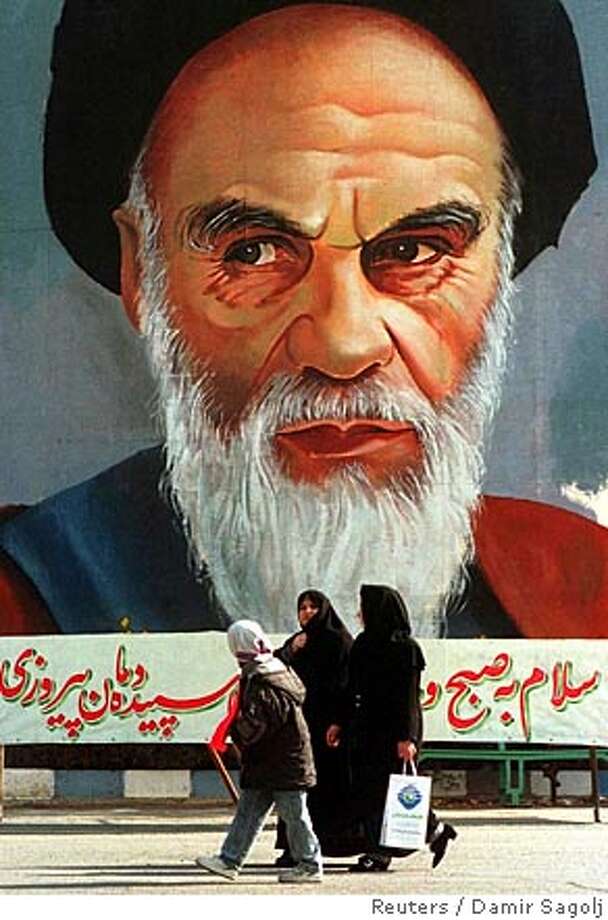
Diplomatic relations were immediately broken off by the Islamist regime of Ayatollah Khomeini after the revolution, and Israel was labelled as the "Little Satan" following in the footsteps of the "Great Satan" which was the USA.  This seems to be the point at which the hatred for Israel really began.  Ironically, and in spite of the hateful rhetoric that emanated from the regime at that time, behind the scenes there was a great deal of close cooperation between Iran and Israel.  Much of this was driven by the 8 year-long war between Iran and Iraq.  Iraq was a common enemy of both Israel and Iran, and this created unlikely ties and reasons to cooperate.  Israel sold Iran vast quantities of arms and ammunition, in return for which Israel received Iranian oil.  It is believed that the Iranian air force continued to operate, after it was initially attacked by Iraq, only because of the assistance received from Israel.  Iran was also delighted when Israel audaciously succeeded in destroying Iraq's nuclear reactor at Osirak in 1981 after the Iranians failed in their attempt to do the same.  The weekly insults and denunciations of Israel at Friday prayers by the Iranian leadership served conveniently to conceal the fact that there were no fewer than 100 carefully hidden Israeli advisers and technicians in Iran throughout the period of the war.

Since that time, Iran's leaders have continued to criticise, insult and threaten Israel at every opportunity.  And nobody has questioned for a moment why this is the case, and what justifies this vilification and extreme sentiment.  It has become a situation that simply forms part of the diplomatic landscape.  Can it be explained by Iran's hatred towards the USA, and the fact that the Israel is seen to be very close to the US?  It is difficult for me to accept that this explains all the public threats and the acts of terror that have been undertaken (and continue to be undertaken) against Israel.  Israel is not the USA's only close ally.  Why have other allies not been threatened for destruction in the halls of the United Nations in the way that Israel has been forced to endure?  And, while sentiment towards the US has wavered with different Iranian regimes (while always maintaining its negative bias), the hatred towards Israel seems unwavering no matter which Iranian president has been in power.  The threats against Israel have been the one pillar of consistency in Iranian foreign policy.  So I find it difficult to believe that this is purely driven by Israel's relationship and friendship with the USA.

The only explanation that I can offer to this extreme situation is the resurfacing of plain, old-fashioned anti-Semitism.  I use the term "resurfacing" because the Iranians/Persians do not have a long or consistent history of anti-Semitism.  The story of Purim that took place in Persia is a good representation of the relations that Jews and Iranians have enjoyed over the centuries.  While the king of Persia married a Jewess (Esther) and was prepared to take action to destroy Haman and his evil band for their anti-Semitism expressed against Mordechai, the fact was that anti-Semitism was clearly a common thing at that time.  In more recent times the Nazis declared Iranians immune to the Nuremburg Laws as they were considered to be pure Aryans.  In spite of this, the Shah and the Iranian government did not support the anti-Semitism of the Nazis.  With the rise to power of the Islamic extremists in Iran in 1979, we saw the rise to power of extreme anti-Semitism at a regime level.  Ironically, this anti-Semitism was not directed at Jews living in Iran as much as it was directed at Israel.  When Ayatollah Khomeini returned from exile in Paris to take up the leadership role immediately after the revolution, he declared, "We recognize our Jews as separate from those godless, bloodsucking Zionists" and he issued a fatwa decreeing that the Jews in Iran were to be protected.  This did not stop Iranian Jews from leaving Iran in large numbers.  The population of Iranian Jewry shrunk from around100,000 at the time of the revolution to around 50,000 in the mid-1980s, to around 25,000 in the mid-1990s.  Less than 10,000 Jews are left in Iran today.  Because of the "protection" afforded to Jews living in Iran, there are those who believe that the hatred that we see coming from Iran is not anti-Semitism, but anti-Zionism.  The problem is that the basis for this anti-Zionism is still unexplained.

In spite of the Iranians not being Arabs, they have enjoyed some ideals in common with the Arabs since the revolution in Iran.  The premise for the Arab-Israeli conflict is pure anti-Semitism.  The Arab world could not accept the notion of Jews living in the Middle East on their doorstep, and resolved to do all to destroy them and their state.  The holy city of Jerusalem has become embroiled in this war as a tool, rather than an end.  It is noticeable that no attempt was made to claim Jerusalem (and its Muslim holy sites) by the Arabs in the period prior to the establishment of Israel.  When the Jews took control of Jerusalem, and even in spite of granting control of the Muslim holy sites to the Waqf Council under the chairmanship of the King of Jordan, the Arab world and the Muslim world rose up to object.  Was their objection in favour of the Muslim holy sites, or was the objection against the presence of the Jews?  Everybody will reach their own conclusion.  What is clear is that Iran has firmly jumped on this anti-Semitic bandwagon.

Iran's brand of Shia Islam has been a huge source of conflict with the Sunni Islam practised by most of the Arab world.  In spite of this fundamental source of disagreement, they have found a common cause to fight against the Jews in Israel, to fight against the existence of the State of Israel and to use the claim of the holy city of Jerusalem for Islam as a means to their end.  The city of Jerusalem seems to be almost the only cause and rallying point that unites all different streams of Muslims around the world.  And, by extension, the fight against Israel, the Jews and the current regime in Jerusalem is equally a common point of agreement between them all.  Although distinct cracks are starting to show in this quest as individual Arab countries come to the realisation that Israel is going nowhere, and understand that cooperation with Israel may be a better option for them than fighting the futile battle of trying to destroy her.

The Iranians are, however, unwavering and unashamed in their battle against Israel and her people.  They continue to sponsor Hamas and Hezbollah, amongst other terrorist groups, that act as proxies for Iran to destroy Israel.  Iran is also responsible for numerous terror attacks orchestrated against Israeli and Jewish targets outside of Israel.  It's quest to build a nuclear weapon that could potentially be used against Israel is clearly a cause that any Israeli government will consider to be of highest priority.   So Iran has clearly not changed its mind, nor given up its desire to destroy Israel in any way.

My problem is that I am still not entirely clear why Iran wants to destroy Israel.

Sunday, 13 May 2018

Reflecting on Israel at 70

As the festivities of the celebration of the 70th anniversary of Independence die away, there is the inevitable return to the reality of everyday living.  Each of us returns to our daily chores of working, studying and taking care of our usual activities.  The threatening protesters are gathered once again on the Gaza border as before.  Iran still continues to threaten to annihilate Israel.  The usual attacks, both verbal and physical are again being perpetrated.  All continues as it was, and little changes.

And yet, this is the beauty of the reality.  Unlike a birthday when the special day lasts only 24 hours until next year at the same time, the celebration of 70 years of independence continues even after the festivities are gone and forgotten.  Because every day in Israel is a celebration of independence.  The reality of the daily grind of life in an independent country is a part of the success.  Not only that, but the 70 years becomes 70 years and a day, and another day, building steadily each moment with greater and greater independence and confidence.

This seems a good moment to reflect, not only on the past and the present, but also upon where things are leading in the future.  To consider that 70 years have not only brought massive growth, development and progress in Israel, but have also allowed for the rebuilding of a nation.  The population has grown from a little more than 800 thousand to almost 9 million in a short 70 years.  The country's infrastructure and economy has grown along with the population to support it, and it has been able to absorb and integrate the large numbers of Jews who have immigrated to Israel over the years.  This is a huge achievement, unrivalled in modern times.  In addition, these 70 years have brought Jewish growth and pride even outside of Israel.  The Jewish people are experiencing one of the greatest periods in Jewish learning in history, something that could not have been dreamt of 70 years ago.  All that Israel stands for and has achieved reaches every corner of the Jewish world, and the non-Jewish world.

The miracle of the survival of Israel against the odds, and against the will of the surrounding Arab countries and their armies has been recounted numerous times and is well documented.  Somehow, it seems that the enormity of this miracle can never be sufficiently emphasized.  There is no logic to explain how it is that the Israelis and Jews still have their state after so many attempts to wipe it off the map.  And this has not been only survival, the 70 years have been enormously productive in terms of the growth, development and ingenuity that have been brought to the state and the wider world.  So many technological advances have come out of Israel that have also made a huge contribution to people around the world.  These have come in so many different fields, including computing, telecommunications, medical, agriculture and many others.  So many Israeli inventions are incorporated into products that are used around the world as a matter of course.  Undoubtedly, one of Israel's greatest inventions has been the Iron Dome anti-missile system.  Not only is this a great military development in its own right, it has afforded Israel the protection that it needs to continue to build and innovate in safety.

The routine in Israel has proved to be part of the joy and success.  Whether it be the routine of another attack to take out weapons that threaten the safety of the state, or whether it be the routine of another Shabbat with the regular smells of chicken soup and the sight of white shirts.  There is also the routine of competing on the world stage in the blue and white in sporting and cultural events, and in showing presence and contribution in the international community in general.

The daily grind that we see in the Jewish state today would have been inconceivable to so many Jews who were sent to their deaths in the years that preceded the founding of the state.  And while the obvious fact that all young Israelis will be called to serve in the military to defend the state is just part of the daily routine, it remains a source of wonder and pride to so many who experienced being a Jew in a world without a Jewish army.  We think about so many who were not spared to see this routine, and who would have rejoiced in it.

Anti-Semitism is again on the rise in the most dramatic fashion.  It is well documented and accepted that Europe is now a hotbed of anti-Semitic activity.  The number of anti-Semitic incidents in Europe continues to rise each year, and Jews living there are feeling more at risk than ever before in the last 70 years.  The same is true of the USA where anti-Semitic sentiment is dramatically on the rise.  Shining through all of this is the fight by the Jewish state in defence of Jews around the world.

We feel comfort and security in the routine that Israel has developed.  Events are great to celebrate, but the greatest celebration is the return to the status quo.  The new status quo that has only become possible for Jews as a result of the founding of the Jewish state.  And despite all the threats against Israel, against Israelis and against Jews, the routine of Israel incorporates the defence of Jews and Jewish values around the world.  This gives much to celebrate.

As we look forward to the next 70 years, it seems that it will be difficult to rival the achievements of the last 70 years.  The development from almost zero seems astonishing due to the low starting point and lack of resources and support.  And yet, the achievements are clear for all to see.  This provides a huge incentive to achieve similar greatness in the years to come, this time starting from a much higher level.  The routine in Israel is encouraging this, and providing the platform to continue these phenomenal achievements.

Am Yisrael Chai.

Saturday, 10 December 2016

The Real Obstacle to Peace

If one believes all that is written in the international media about the current state of the Middle East conflict, it would be easy to reach the conclusion that there is only one obstacle to peace - Israel's policy on the so-called settlements.  According to these accounts, if Israel agreed to uproot its citizens who are living in the disputed areas of Judea and Samaria,  peace would magically break out in the Middle East.  Nothing could be further from the truth.  And the fact that outgoing US Secretary of State John Kerry (amongst others) constantly uses the line that the Israeli policy on settlements is the obstacle to peace, is a shameful inaccurate depiction of the situation.

Before suggesting what I think the real obstacle to peace is, it is worth understanding the true legal standing of this disputed land.  Until 1948, the land in Judea and Samaria was under a British mandate in terms of the San Remo conference of 1920.  In 1947, the United Nations adopted a resolution to support the establishment of an Arab state and a Jewish state in the land under British mandate, then known as Palestine.  The Arab world rejected this idea, chiefly because they objected to the establishment of a Jewish state.  Ultimately, the Jewish state was established, and the Arab world declared war on it.  In the aftermath of this war, the area of Judea and Samara came under the rulership of the Jordanian government.  It remained like this for 19 years.  During the course of the Six Day War in 1967, Israel captured this land and put it under Israeli military rule.  This situation continued until 1982, when a semi-civil authority was appointed to oversee rulership of this area under the auspices of the Israeli ministry of defence.  This is the situation until the present day.  What is clear from history, is that Arabs were handed the opportunity to rule over this land on a golden platter in the UN partition plan for Palestine in 1947.  It was rejected by them.  Had it not been rejected, we would not still be arguing over ownership issues today.  In addition, had the Arab world not plotted to try to wipe Israel off the map in 1967, the land would probably still be under Jordanian control.  So now, that Israel has responded to protect the existence of the Israeli state, the complaints are too little, too late.

There is no doubt in my mind that the Arab world is using all at its disposal to bring Israel's name into disrepute in the international community, and to take advantage of the easiest argument to convince others that Israel is the evil ogre in the story.  This, it seems, is the argument of Israel's settlement policy which, according to the current rhetoric, is designed to scupper the prospects of peace ever being established in the region.  Memories are, however, short.  It is already long forgotten that it was the Arabs who rejected the opportunity of two states for two peoples in 1947, and it seems strange that questions are not being asked about why that was.

In my view, the real obstacle to peace is the same one that existed in 1947 when the Arab world rejected the UN partition plan, and the same obstacle that existed for many years before that.  The obstacle is the existence of the Jews, and now, the existence of the Jewish state.  Until this "problem" is resolved, there will never be peace in the Middle East.  And, judging by some of the things that are happening in Syria, there is unlikely to be peace in the Middle East even if the Arab world would succeed in removing Israel.  All actions that are undertaken by the Arabs in the context of "peace" discussions, are done with the intention of weakening Israel's position to the point of destroying her.  This is clearly evidenced by the response to Israel's unilateral withdrawal from Gaza.  Until that moment, Israel's rulership over Gaza was held up as an obstacle to peace.  Since Israel withdrew from Gaza, the area has become less peaceful than it was before.  Now it is being used as a springboard to launch further attacks into Israel.  As far as progress towards peace is concerned, nothing was achieved by withdrawing from Gaza.  So why should we believe that withdrawal from settlements in Judea and Samaria will be any different?  The truth is that most Israelis do not believe this, even though the desire by Israelis to achieve peace remains as strong as ever.

Over the years, Israel has made numerous unilateral gestures in an attempt to further the prospects for peace.  Terrorists have been released from prison, money has been paid to the Palestinian Authority, borders have been opened and concessions granted, all in the interests of showing goodwill and positive intention to reach a peace agreement.  In return, Israelis have been killed in terror attacks and Israel has had to fight numerous wars and protect her citizens from ongoing missile attacks.  No meaningful progress has been made towards achieving a peace, or towards peaceful co-existence.  It seems no wonder that the Israeli government is hesitant to make further concessions.  They seem to achieve nothing other than further weakening Israel's ability to protect her right to peaceful existence.

The time has come for the world to stop allowing the Arabs to hide behind the rhetoric that Israel's settlement policy is the obstacle to peace.  More than that, the time has come for the international community to stop repeating and validating this ridiculous position.  I feel sure that, if somebody could give a cast iron guarantee that reversing the settlement policy would allow peace to be reached, Israel would agree to it almost immediately.  It is clear to all concerned, however, even to most of those repeating this line in the international community, that Israel's settlement policy is only being used as an excuse to justify why there is no peace.  It is far from the obstacle that, if overcome, would allow peace to be achieved.

The peace agenda contains numerous points that require resolution before a peace can be achieved.  These include land borders, the rights of Palestinian refugees, the status of Jerusalem, the arming of a future Palestinian state and many others.  In my view,  however, there is only one point that is of any real significance in this discussion, and this is the recognition by the Arab world of Israel's right to exist as a Jewish state.  Until this is resolved, there is nothing further to talk about.

Tuesday, 25 October 2016

The UNESCO Fiasco That Could Help Israel's Cause

The United Nations Educational, Scientific and Cultural Organisation (UNESCO) decided last week to pass a vote on the issue of the Old City of Jerusalem, and the Western Wall and Al Aqsa Mosque in particular.  This was not the first time that such a vote has been passed by UNESCO, and it is unlikely to be the last.  If it was not for the fact that the vote was passed by an organisation that has such broad international representation, and a remit that has an important role in the preservation and advancement of education, science and culture around the world, it would be laughable and difficult to take seriously.

The resolution runs into five pages of condemnations, disapprovals, regrets and deprecations about how Israel (referred to repeatedly in the document as the "occupying power") has violated the "historic status quo" under which the Waqf (referred to in the document as the Awqaf) governs the holy sites.  Israel is accused of using aggression and illegal measures against the Waqf and its personnel, civilians and religious figures, and of using force against and damaging the Al Aqsa Mosque, restricting access to the Temple Mount (not the words of the resolution) via the Mughrabi Gate and preventing the reconstruction of the Al Rahma Gate building.  And, for good measure, there are some condemnations thrown in about military confrontations in and around Gaza and excavations at the Tomb of the Patriarchs in Hebron and Rachel's Tomb in Bethlehem.  The resolution fails to make mention of any Jewish connection to Jerusalem, the Old City and the Temple Mount that is is the holiest site in Judaism.  Instead, it is mentioned purely in Islamic terms.  None of this comes as any surprise to anybody who has been following the votes by UN organisations over the past decade.  They have objectively been very biased against Israel at every level, including the General Assembly, Security Council and other related UN bodies.  Many words of condemnation of this UNESCO resolution have been written, and the Jewish people around the world have demonstrated their disapproval in many different ways.  The thousands who turned up the Western Wall for the Priestly Blessing during the festival of Succot was a sure sign of defiance against the resolution.

In a strange sort of way, I sense that reaction to this resolution may end up helping Israel's cause in the international community, and at UN-related bodies in particular.  Despite the outrage of this vote being passed by 24 votes to 6, with a massive 26 countries abstaining, there are a few positives to be taken from the vote.  While these positive points change nothing about this vote, they do send a message that things could be different in the future.  There are indications that this is the vote that may have broken the camel's back.

Even before the result of the vote was announced,  UNESCO's director-general Irina Bokova was forced to make a statement about how she believes that denying Judaism's connection to Jerusalem (along with the two other monotheistic faiths) harms UNESCO.  The head of UNESCO's executive board, Michael Worbs, said that he hoped that the resolution would not go to a vote.  Clearly, the executive team of UNESCO was embarrassed by the vote of the members of the organisation, and was happy to show this embarrassment in public.  Even the Secretary-General of the UN, who has not necessarily been a great friend to Israel or the Jews during his term, felt the need to speak out against the resolution.  This is a first.  But the positive signs run even deeper than that.

At a previous similar vote in April 2016, the number of countries that voted in favour of the anti-Israel resolution was 33.  Over the course of about 6 months, there were 9 fewer votes in support of a resolution that was substantively the same as the previous one.  This represents progress for Israel, albeit not quite a victory.  The Mexican government decided to fire its ambassador after he refused to obey their orders to support the resolution.  Despite this debacle, the Mexican government stood up after the vote to withdraw its support for the resolution.  The ambassador remained fired, but the u-turn was highly unexpected.

Brazil, which supported the original vote and then spoke out saying that support of the vote was a mistake, chose to support the second vote as well.  They then spoke out again saying that a future similar vote would not be supported by Brazil.  Brazil's actions, and contrary statements are impossible to understand.  It is unclear why the Brazilian government considered that, if the resolution is not worthy of support in the future, it should be worthy of support now.  Brazil's ambivalence, however, is noted with some satisfaction.  There are many theories circulating about why governments like Brazil would choose to support this resolution.  Especially those governments who seemingly do not have an entrenched interest in this matter.  Was money changing hands behind the scenes?  Were political favours being traded?  Are the pro-Palestinian voting trends so entrenched in the international community, that breaking them is almost impossible?  We will probably never know the answer to this question, although speculation is rife.  The thing that has become clear, is that even those countries who supported the vote feel some need to show regret in an attempt to make their public position a little more acceptable.

The resolution in its current wording, not only ignores the Jewish connection to Jerusalem and the Temple Mount, it ignores the Christian connection too.  The Christian countries which voted in favour of the resolution were effectively supporting this world view as well.  It is inconceivable that Christian countries would promote exclusive Muslim rights to the this holy city and its holy sites.  Perhaps their eagerness to condemn Israel caused them to lose sight of this?  It is no coincidence that it has only been under Israeli rule over Jerusalem that all three monotheistic religions have been allowed free access to their holy sites.  History has shown that Arab or Muslim rule over Jerusalem is tantamount to denying the rights of other religions to their holy sites.  How ironic it is that UNESCO has chosen to castigate Israel for its rule over Jerusalem, when this is the one period in Jerusalem's history that has ensured free access to all who come in peace and security to worship.

We can take some comfort from the fact that fewer countries supported the most recent resolution than the one before.  And also from the fact that some of the thinking personalities in leadership positions spoke out against the senselessness of the rhetoric.  I sense that the tide of opinion against Israel could be turning.  Whereas supporting anti-Israeli resolutions has always seemed easy to do by many in the international community, irrespective of how ridiculous the text was, it appears as though people are now thinking a little more before giving blind support against Israel.  That is an optimistic sign.  The battle is, however, far from won, and many more similar resolutions are expected in the future.  Perhaps members of the international community will see more and more what the truth of the anti-Israel campaign is truly about.

Israel could be standing on the threshhold of a new period in international politics and diplomacy.  A new secretary-general is due to take over leadership at the UN in 2017 that could signal a change in some attitudes.  If organisations like UNESCO are going to insist upon passing ridiculous resolutions like the one discussed above, it may also assist in bring the attention of the international community to the single-minded bias against Israel that exists in UN organisations.  The next organisation on the list would be the UNHRC, which has the dubious distinction of isolating Israel as the only country forced to appear as an item on the agenda of all its meetings to explain its actions.

Dreaming costs nothing.

Friday, 30 September 2016

Open Letter to Maria

Dear Maria,

I have read what you wrote to Amnon when he sought to be your guest via airbnb.  I think that you have really lost a great opportunity to expand your knowledge and understanding of the issues that currently exist between Israel and the Palestinians.  I am sure that hosting Amnon would have been an eye-opener for you.  I wish to take the liberty to explain here what Amnon may have told you if you had been open-minded enough to have him as your guest.

Having followed the activities of the BDS movement over a number of years, I wonder whether the movement’s supporters like yourself really understand what BDS is about.  People like you appear to support BDS in the belief that isolating Israel will promote a peaceful solution between Israel and the Palestinians.  Even though your objective is honourable, you are bound to be disappointed by the achievements of BDS.  The BDS movement and its activities are first and foremost directed towards hurting and destroying Israel.  The BDS idea was originally to protest Israel’s presence in Judea and Samaria (the so-called “West Bank”) by exposing and boycotting Israeli products produced in these areas.  Instead, the organisation has been hijacked by anti-Israel and anti-Semitic individuals, who try to convince people like you that BDS is an honourable cause that promotes peace.  And this can be achieved by behaving in an anti-Semitic way, just like you did on airbnb.  But all that they are really doing is trying to promote anti-Semitism and hate towards Israel in a politically acceptable manner.

If you are prepared to examine the issue in greater depth, you will discover that the main obstacle to peace is the unwillingness of the Palestinians to recognise Israel’s right to exist as a Jewish state.  This is demonstrated by their refusal to remove from their charter, the objective to destroy the Jewish state. So, if BDS was really an organisation that promoted the idea of peace between Israel and the Palestinians, it would protest against the Palestinians’ stated objective, and against their continued attempts to destroy Jews and the Jewish state.

If you are looking for activists working towards a peaceful solution, you will find that the majority of Jews in Israel are activists working towards a peaceful solution.  There are few Israelis who do not yearn for a more peaceful environment to raise their children, and to find a peaceful way to co-exist with our neighbours.  Don’t forget that Israelis are happy to welcome Arabs, even so-called Palestinian Arabs, into their towns and cities to sit alongside them in coffee shops and restaurants.  As long as they come in peace.  You will find Arabs in every Israeli town and city, in malls up and down the country and working in Israeli businesses.  The same cannot be said for finding Jews in the Palestinian Authority area.  Their areas are “Judenfrei”.  And it is this type of behaviour that the international community and BDS reward by criticising and castigating Israel at every opportunity.  If you are indeed ready to make an exception for activists working for a peaceful solution, Amnon is probably the person that you should make your exception for.  Or any other Israeli who wishes to be your guest.  We all dream about peace, and are prepared to give a great deal to achieve it.

Don’t forget, however, that Israelis are not prepared to seek out peace at any price.  They are not prepared to do it in a way that ultimately ends up destroying the Jewish state.  After all, this is hardly peace.  If the Palestinians were prepared to recognise Israel’s right to exist as a Jewish state, they will find willing partners in Israelis to shake their hands and to find ways to co-exist in peace.  If not, Israelis are unafraid to fight for their rights and for their survival.  We are a tough bunch of people who never give up.

It is unfortunate that BDS has managed to convince people like you that it is fighting for peace, and to cause you to become anti-Semitic in your actions.  The people who are really fighting for peace are not the Palestinians, and not the BDS activists.  They are the Israelis.  If you give them a chance to prove it, you will never be disappointed.  I am sure that you will have the chance to discover this first-hand if you host Amnon as your guest.  And even though you may have been influenced by BDS and by the media in your thoughts and actions, you do need to take some responsibility for the way in which you have treated Amnon.  It is anti-Semitic, bigoted and unacceptable.

Regards
Anthony

Wednesday, 31 August 2016

The Unfortunate Olympic Legacy

The Israeli Olympic team has returned from Rio with two bronze medals, both for judo.  This almost equals Israel's best medal haul in any Olympic Games to date.  Twice before Israel has earned two medals although, on the previous occasions, one medal was either a silver or gold.  Unfortunately, however, the most talked-about story in Israel relating to the games has nothing to do with the medals that were brought home.  Instead, the legacy of the Rio Olympics in Israel will always be the handshake that never was.

This of course relates to the judo bout between Israel's Ori Sasson and Egyptian judoka Islam El Shehaby.  The incident began long before the bout when, we are advised, El Shehaby indicated that he was not willing to fight an Israeli opponent.  He had been encouraged by fans on social media not to fight the Israeli in this bout.  Some reports suggest that the Egyptian authorities forced El Shehaby to partake in the bout, against his will.  This all seems somewhat strange for an athlete at the peak of his career.  It is assumed that the opportuntity to participate in, and excel at the Olympic Games is almost unrivaled as an ambition of any athlete.  The story published in some media says that El Shehaby decided to  retaliate against being forced to participate, and this came in the form of a refusal to shake hands with Ori at the end of the match.  Sasson had been warned of this situation beforehand, but still approached his vanquished opponent at the end of the fight for a handshake that was rejected by the Egyptian.

The International Olympic Committee (IOC) intervened and  found that the Egyptian athlete had acted contrary to the rules of fair play and against the spirit of friendship embodied in the Olympic Values.  They issued the athlete with a reprimand.  The Egyptian Olympic Committee punished the athlete by sending him home from the games.  This incident followed the "scolding" issued to the head of the Lebanese Olympic delegation in Rio, after he refused to allow the Israeli team onto their bus that they were due to have shared on the way to the opening ceremony.  And also came after the incident involving the Saudi Arabian judoka who withdrew from a bout, when it became clear that the winner of her bout would have to fight against an Israeli in the next round.

Even though these incidents, particularly the rejection of Ori Sasson's handshake, made news around the world especially on social media, none of them come as a huge surprise to Israelis.  Despite the ideals of the Olympic Movement to promote peace and cooperation between peoples around the world, Israelis have always known that these ideals do not necessarily extend in equal measure to them.  The terror attack at the Munich Olympic Games, in 1972 in which 11 members of the Israeli Olympic team and a German police officer were killed, is clear evidence of that.  It is not so much about the terror attack itself - it is well known that terror groups around the world will use every possible way of getting to Israelis to sow fear amongst them.  It is rather about the response by the IOC to this incident.  It is inconceivable that it took until 2016 for the IOC to finally agree to officially honour the slain members of the Israeli Olympic team at a games in any way.  Why would it take 44 years to do this?  Who would have opposed the request made many years ago by the Israeli delegation to officially honour those who were killed?  And why?

It is notable that the most prominent anti-Israel incident at the Rio Games, the incident with El Shehaby, came from an athlete representing a country with whom Israel does have diplomatic relations.  Despite the concept and tradition of the "Olympic Truce" which calls for athletes to be allowed right of safe travel to and from the Games, Israel will expect representatives of countries like Lebanon and Saudi Arabia, with whom there are no diplomatic relations, not to agree to travel on the bus with her athletes.  This is clearly in direct contravention of the Olympic ideals.  But it is more surprising when the greatest protest comes from a so-called friendly country.  While it is noted that the country's Olympic Committee and other official bodies came out against the actions of the individual athlete, it seems as though El Shehaby received a huge amount of unofficial support for his actions from fellow Egyptians.  

Israel and Egypt signed their peace treaty 37 years ago.  More than a generation has elapsed since then, and yet their athletes still refuse to shake hands with Israel's athletes at the Olympic Games.  It is true that the peace has not been a truly warm peace, and there have been awkward times when the peace agreement looked like it was in grave danger.  It is nevertheless a peace treaty between countries that are neighbours, and comes with full diplomatic relations.  Was this refusal from an athlete who was born after the peace treaty was signed, a product of the education that he received?  I cannot imagine one Israeli athlete who would refuse to shake the hand of any opponent, no matter which country they come from.  Even from those countries that are insistent on wanting to destroy Israel.

It is ironic that the Israeli athletes travelling to the opening ceremony were willing to travel with the Lebanese delegation in the way that the organisers had intended.  After all, Lebanon is a country that has been at constant war with Israel for the past 68 years, and has tried to destroy Israel on numerous occasions.  It is even more ironic that the Israeli team had to refuse to be split up and reallocated onto a number of other buses due to security concerns associated with  the team being split up.  With the ramifications of Munich still resonating in their ears, the Israeli team was ordered by their security team to remain together until the organisers laid on an alternative bus in which the entire team could travel together along with their required security escort.  Perhaps the greatest irony of all, is the fact that the security of the entire Olympic Games in Rio was left to a group of 36 Israeli companies to take care of.

With anti-Semitism and anti-Israel sentiment rife around the world, Israeli athletes went to the Olympic Games in Rio to find a relative safe haven from the turmoil.  If everybody adhered to the ideals of the Olympic Movement, this is what they would have found in Rio.  But this was not the case at all.  They found in Rio the same anti-Semitic behaviour that has become openly acceptable in football stadiums in Europe, and in the General Assembly of the United Nations.  And this from  countries with whom Israel has diplomatic relations.  This puts the achievement of our athletes in earning two bronze medals into the proper context.  Kol hakavod!

Wednesday, 17 August 2016

The Historical Entitlement Argument Does Not Work

Image from worldcometomyhome.blogspot.co.il


The link between the Jews and the land of Israel is undeniable.  The extent to which Jewish history has played itself out in this land makes it inconceivable that a Jewish state could exist anywhere else in the world.  We feel this link every day as we pray to be in Zion and the rebuilt city of Jerusalem, and we experience it every week in our readings of the Torah that mention places that still carry the same names to this very day.  The festivals that we celebrate are frequently associated with particular places in this land, and the graves of our revered forefathers and mothers are within our borders.  Perhaps, most of all, the site of the holy Temple, destroyed almost 2,000 years ago in the city of Jerusalem, remains the holiest site in our religion and culture.  Despite offers to create a Jewish homeland in other parts of the world, Jews through the generations could never have accepted a  Jewish state anywhere other than in the land of Israel.
In spite of this, the international community continues to question the rights that Jews have to be in the land of Israel, and to have their own homeland there.  This forces Israelis into defending why they have the right to state in the land of Israel.  The main argument that Jews use to justify their right to be there, is on the basis of historical links and entitlement.  Typical justifications include the fact that it is written in the Old Testament about the borders of the Jewish state, or that there has been more then 2,000 years of continuous Jewish presence in the land.  This is true despite numerous attempts over the years to expel the Jews from the land of Israel.  It is my view, however, that the ongoing attempts to prove rights to the land by Jews via these avenues, serve to weaken the claim rather than to strengthen it.  Even the act of trying to justify the rights at all represents a weakness in my eyes.

Israel is the only member of the UN whose right to exist is continuously questioned, and whose future existence is openly threatened.  Other members of the UN have no qualms in calling for Israel's destruction, knowing full well that this comes without any consequences.  Without the support of the members of the international community who should speak up against such atrocious threats and behaviour, Israel is drawn into the vacuum and feels the need to defend herself.  While this is a natural response to such vile threats, the act of going on the defensive only goads the bullies into increasing their attacks.  This creates a vicious circle which has no end to it.

Under UN partition plan in 1947, independent Arab and Jewish states were approved to be established in the former British mandate of Palestine.   This was confirmed by a two-thirds majority of states present and voting at the UN General Assembly.  Despite the fact that 13 countries voted against the plan and a further 10 countries abstained, the will of the 33 countries who voted in favour of the resolution was implemented.  This concluded any questions about who would have the right to live in the land, and to set up their state there.  The fact that the Arabs rejected the plan and refused to establish their state as envisaged does not detract from their right to do so, nor from the right of the Jews to do the same.  This was clearly laid down in resolution 181(II) and passed on 29 November 1947.

The justification for a Jewish state in the land of Israel is embodied solely in the UN resolution that presented this right.  Since the moment that the resolution was passed, the arguments surrounding historical entitlement or continuous presence (or anything else) were effectively set aside and became less significant as points in order to prove entitlement.  Perhaps these matters were considered in the extensive work and report issued by the United Nations Special Committee on Palestine (UNSCOP).  Now that the recommendations of the committee have been accepted, the partition plan approved and the State of Israel established, there is no room to question this any further.  And it is certainly not acceptable to call for the destruction of the State of Israel, a country that was set up by a UN mandate with a two-thirds majority.

By continuing to put forward the argument of historical links and rights to the land, Israelis effectively give detractors justification to ignore the importance of the UN vote.  This negates the vote, and its legal significance.  It also gives  people the opportunity to open all types of debates to negate the historical rights arguments.  Not everybody believes what is written in the Bible, and it is almost impossible to conivince them otherwise.  Similarly, the debate whether or not Jews have really had a continuous presence in the land of Israel.  Facts of history are frequently difficult to prove unequivocally.  This is an argument that can never really be proved or won, in one direction or the other.  It is futile, and shows only that Israelis are happy to reopen this debate that cannot really prove anything in either direction.

The time has come to stop using arguments to justify Jewish presence in the land of Israel, that simply serve to weaken its right.  This is not to say that the historical link is unimportant to the Jewish soul.  On the contrary, this is what drove the Jews to fight so hard for their homeland in this place over so many years.  Now that this homeland is a reality, these arguments are no longer useful as political arguments, and are mostly unhelpful.  Instead, the vote by the international community that legitimised the Jewish homeland in Israel is the one and only relevant argument.  And, while it is true that the map of Israel today is not quite the map that was approved by the UN in 1947, it is equally true to note that the Arab state that was approved in that same UN vote was never accepted.  Instead, the land that was earmarked for the Arab state has simply been used as a springboard to try to destroy the Jewish state.

The Jewish state could never be anywhere else, other than in the historical Jewish homeland.  Now that this has been accepted by the UN and the international community in a legally binding vote, the argument about historical entitlement should be ceased.  It is simply no longer relevant as a political and legal argument, and not helpful to Israel's cause.

Sunday, 5 June 2016

Staying Unified

Picture from aicvideo
Today is the day in the Jewish calendar that Israelis (and others) celebrate the reunification of the holy city of Jerusalem 49 years ago.  Jerusalem Day is celebrated widely, and nowhere more enthusiastically than in the city itself.

Not only is Jerusalem one of the oldest cities in the world, it is undoubtedly the most controversial city in history.  According to Wikipedia, the city has been destroyed twice, besieged 23 times, attacked 52 times, and captured and recaptured 44 times.  And these numbers do not include internal strife, intifadas and terror attacks which persist in the city until today.  Although these events have taken place over approximately 5,000 years, it still seems a great deal for any city to endure, and there are many who wonder why it is that one city should be so sought after that people are prepared to go to such extraordinary lengths to secure control over the city.

For the Jewish people, the answer is quite clear.  The belief is that the creation of the world emanated from the Foundation Stone on Mount Moriah.  This is also the same place that Jacob was ordered to sacrifice Isaac (and then stopped from doing so), and also coincides with the location of of the famous dream of Jacob's ladder.  So it comes as no surprise that King David chose this place to erect his City of David in approximately 1,000 BCE, and that Solomon's Temple was built on Mount Moriah soon after this.  From the moment that Solomon's Temple stood at this site (and possibly even from long before), it took on the undisputed position as the holiest place on earth to all Jews.  The city of Jerusalem is mentioned by name more than 600 times in the Jewish biblical texts, and thousands more times by other names and references.  The centrality of this location and this city to Jews is without rival.  It is highly likely that this centrality is the reason why Jesus, a Jewish boy from Nazareth, found himself in Jerusalem where he was crucified.  This established Jerusalem as a holy city for his followers, later to be known as Christians.  The holiness of Jerusalem to the third monotheistic religion, Islam, stems from an event that took place more than 600 years later.  The Quran tells us that the Prophet Mohammad was taken by Buraq to visit the "furthest mosque" (believed to mean the Al Aqsa Mosque in Jerusalem), from where Mohammad was taken to heaven.  This reference is the sole claim that Muslims have to Jerusalem as a holy city (although still not quite as holy as Mecca and Medina), and Jerusalem is not mentioned by name once in the entire Quran.  The scene was set for conflict, disagreement, war, death and destruction surrounding the control of this city, holy to three religions.

Today we celebrate 49 years of freedom of the city of Jerusalem.  This freedom extends not only to Jews and Israelis who have administrative control over the city.  It extends to all from the three religions, and others, who come in peace to worship, learn the history and pay respects to the holy city.  But this was not always the case, and is never taken for granted in this conflict-filled city.  Even as recently as 50 years ago, Jews were prevented from entering the Old City of Jerusalem, and approaching the holy site of the Western Wall.  This fact alone is justification for Israel to continue to exert control over the city and its holy sites.

Over the past few years, Jerusalem has put on an annual festival of light as part of the Jerusalem Day festivities.  It is highly symbolic that the city, with such a dark history, has a festival of light to emphasize all that is positive about the city.  I had the good fortune to participate in the festival this year, and it is an experience that has left an impression that will remain with me for a long time to come.  Not only were each of the exhibits creative and interesting, the atmosphere that could be felt around all parts of the city was electrifying (no pun intended).  Thousands of people formed a human chain following the different coloured tracks around the streets of the Old City, and around the walls.  People were drawn to parts of the Old City that they had never visited, perhaps because they were afraid or perhaps just because they were off the beaten track and unfamiliar.  I could not help noticing that people came from all parts of the country, from all walks of life and from all ethnic backgrounds.  Muslims joined with Christians and Jews in celebrating the light of this intriguing city.  I silently wondered as I walked around the thronging alleyways whether the Muslims were not enjoying more freedom now since the Old City is in Jewish hands, than they did when it was ruled by Jordan.  It could only happen under Jewish leadership that the King of Jordan, the same Jordan that denied Jews the right to access its holiest site for 19 long years years, is now the head of the Waqf religious council that has jurisdiction over Muslim holy sites in the city of Jerusalem.

Despite the conflicts and violence that continue in Jerusalem at the current time, the city of Jerusalem has undergone probably one of its most dramatic reconstruction periods in its history over the past 49 years.  While the integrity and the character of the original city has been preserved, the construction of infrastructure and residential and commercial buildings has been astonishing.  The light rail trundles over ancient cobblestones, and modern buildings are built in the Jerusalem stone in keeping with the rest of the architecture of the city, blending in with the ancient walls of the Old City.

Jews have maintained a continuous presence in the Jewish Quarter of the Old City of Jerusalem since the 8th century BCE, with the exception of the period between 1948 and 1967 when Jordan brutally forced Jews out.  There were periods when being Jewish in the Jewish Quarter was not easy, but Jews were never willing to give up on this despite any hardship.  The same tenacious spirit is in evidence today.  Jews will not give up on the presence in the Jewish Quarter, and Jews will not give up on the united city of Jerusalem as the capital of Israel.

Each time I visit Jerusalem, I wonder what my grandparents and great-grandparents would feel if they saw the ease with which I am able to visit the holiest city in Judaism, and its holiest site, the Western Wall.  I wonder what they would think to see me driving freely around the streets, walking in the market and viewing the Knesset building.  We are indeed a privileged generation to have the immense good fortune to live at this time when we are able to do the things that our forefathers prayed fervently to have the right to do, and who died fighting to do.  When we say Lshana habaa B'Yerushalayim at the end of the Pesach seder, it is not a pipe dream.  It is something that is absolutely achievable.

If the history of Jerusalem is anything to go by, we will be forced to continue to fight to retain Jerusalem as our eternal capital.  It is a fight that most Israelis are prepared to undertake, and a fight that many have already died for.  But this makes us stronger rather than weaker, and our resolve to retain Jerusalem will never diminish.  For now, we bask in the glory of Jerusalem, and we rejoice in our ability to be free as Jews in our holy city.

Wednesday, 18 May 2016

Lies, Damn Lies and Deligitimisation

"The creation of the State of Israel was fundamentally wrong,  because there had been a Palestinian community there for 2000 years".

"The creation of the State of Israel was a great catastrophe.  We should have absorbed the post World War II Jewish refugees in Britain and America".

These are the words of former London mayor and UK Labour Party member and activist, Ken Livingstone in a recent interview that he conducted with Arabic station Al Ghad Al Arabi.  The fact that Livingstone, or "Red Ken" as he is known by the British establishment, is anti-Israel and anti-Semitic is not new to most of us.  His own Labour Party recently suspended him on accusations of anti-Semitism, along with more than 50 other members of the party.   What is surprising is the fact that a former mayor of a capital city of one of the world's leading and progressive nations, can utter such factual inaccuracies in support of his anti-Semitic rant.  What is perhaps even more astonishing is that so many around the world accept these inaccuracies as fact. and find his open anti-Semitism (dressed up as anti-Zionism) to be perfectly acceptable.

Even though Red Ken was only a babe at the time that the State of Israel came into existence and will probably not be able to remember its details, it is incumbent on a man in his position and who is as outspoken as he is, to get the facts right before taking strong public positions.  Instead, he is using inaccuracies to justify his bias.  If he had learnt the facts, he would know that there was no Palestinian community in 1948, and so there could not have been a Palestinian community for 2000 years.  The concept of a "Palestinian people" or community only arose after the 1967 Six Day War when the Arab countries lost control of the West Bank, Gaza Strip, Golan Heights and East Jerusalem after trying to drive the Jews into the sea once more.  After they realised that they had little chance of defeating Israel militarily in order to gain control over the land held by the Jews, the notion of a "Palestinian people" was born as a tactic to beguile the world into feeling sympathy for their cause.  This has now translated into an "occupation" of their land, a misconception believed by a vast majority of the world's citizens and used endlessly at the UN and other international bodies to criticise Israel.

It is ironic that he makes a statement that the creation of the State of Israel was a catastrophe.  Why a catastrophe?  Does he believe that peace would have prevailed in this region had the State of Israel not come into being?  In the same interview, Livingstone refers to Libya and Iraq.  In those cases, he tries to blame western intervention for the conflicts that arose in those, and other Middle Eastern countries.  He claims that the west is equally to blame for the rise of Islamic terrorism, which has come about because of western double standards in the Middle East in Livingstone's opinion.  According to him, this is what has been encouraging angry youth to fight alongside ISIS and other terror groups.  Even he is smart enough to recognise that Arab and Muslim groups have fought amongst each other for hundreds of years., and that western intervention was not required to trigger terrorist activities.  We only need to witness the most basic split between Sunni and Shia Muslims to understand this, not to speak of the numerous tribal and political splits in evidence around the Middle East.  Does Livingstone believe that the Middle East would have been more enlightened and more developed without the existence of the State of Israel?  Once again, we have numerous examples to cite where Muslims have failed to capitalise on opportunities to enlighten and develop their countries and their people.  Should this be blamed on Israel?  Can we blame the terror state that has been constructed in Gaza, and funded by foreign aid, on Israel?  The catastrophe that Ken talks about is the same catastrophe that the Palestinians speak about.  It is the catastrophe of the Jews have a free homeland in which they can find self-determination.

It is ironic that Mr. Livingstone thinks that Britain and America should have absorbed all the post World War II Jewish refugees, and their failure to do so caused the "catastrophe" of the creation of the State of Israel.  In reality, it was exactly because of bigoted anti-Semites like Red Ken, that these countries and others refused to accept Jewish refugees, both during the war (when they really needed place to go) and in its aftermath.  Even those who were allowed to escape to western countries were made to feel like they were "guests", who may be sent out at any moment.  The exposure of endemic anti-Semitism in the Labour Party in Britain is not as a result of a recent development.  This manifests itself as a result of decades of institutionalised anti-Semitism in many areas of British society.  Who would believe that, even as recently as the 1980's, some large government-owned companies in the UK had a policy of not employing Jews?  This anti-Semitism has been cleansed by the political acceptability of being anti-Israel.  The anti-Semites finally found a legitimate cause that allows them to openly express their anti-Semitism in the public arena.  Even if they claim to oppose Israel's actions and policies while being Jew lovers.  

It should be clear that anybody who denies the right of the State of Israel to exist, or supports groups who seek Israel's destruction, is an anti-Semite.  This has little to do with the so-called occupation or the rights of the Palestinian people.  There are millions of Palestinians in refugee camps in the region, whose human rights are being denied in a much more systematic way than anything that Israel has ever done.  No criticism is issued about these human rights abuses, or about the abuses by the Palestinian leadership of its own people.  Instead, this has everything to do with the right of the Jews to be masters of their own destiny, and to have the right to protect themselves and their  Jewish homeland.  It can be dressed up as anti-Zionism or support for the Palestinian people, but the real root cause is well understood, and will not hidden from sight.

UK Labour leader Jeremy Corbyn is on record calling Hamas and Hezbollah his friends.  And he is the one who has suspended more than 50 members of his party for their anti-Semitic behaviour.  This is evidence of how deep the anti-Semitism in the Labour Party runs.  The fact that those who support groups calling for Israel's destruction are the ones suspending the anti-Semites is ironic.  The anti-Semites have succeeded in galvanising support for hating the Jews and Israel around the issue of human rights abuses against the Palestinians.  This has filtered into the left-wing arm of the Jewish community, giving even greater strength to the mantra that being anti-Israel does not necessarily equal being anti-Jewish.  Each meeting of the UNHRC is forced to discuss agenda item 7 covering human rights violations by Israel.  How does it transpire that, amongst all human rights violators in the world (of which there are many), Israel is the one and only country that is forced to endure a torrent of criticism and abuse at each and every UNHRC meeting?  My contention is that it is rooted in institutionalised anti-Semitism at this organisation, and many others.

Although Red Ken is a classic example of anti-Semitism in its ugliest form, he is unfortunately not the only example.  And he is sufficiently unashamed to be prepared to make public statements in support of his argument that are factually inaccurate and incorrect.  The problem is that, when senior leaders like Livingstone make such statements and contentions, many of their followers believe it without any doubt and this perpetuates the unbridled hatred without cause.

When Livingstone refers to the "catastrophe", we understand what he truly means.  It has nothing to do with the so-called "nakba" or catastrophe that has befallen the Palestinian people.  This could easily have been avoided if they had accepted the Palestine Partition Plan agreed by the UN in 1947, instead of choosing to try to destroy the Jews.  The two-state solution that we continue to fight over today, could already have been implemented at that time.  If this is indeed what the true desire is.  Instead, Livingstone is referring to the catastrophe of the Jews having their right to independence and self-determination, and how much this has served to strengthen the cause and the presence of Jews around the world.  I imagine that he may have described it as an even greater catastrophe had the UK absorbed more Jews in the period after the Shoa as he suggests, and had a greater presence and influence in the UK today.  The mix of strong Jewish presence and influence, along with virulent anti-Semitism was exactly the recipe that brought the Nazis to power, and led to the Shoa and the massacre of 6 million people.  So, while I don't tolerate this form of bigotry from Livingstone and I am happy that there is a State of Israel to call him out and provide protection to Jews against his ilk, I still prefer this form of a catastrophe to the alternatives that Livingstone suggests.

Saturday, 7 May 2016

Remembrance Day Reflections

When lighting the candle or listening to the siren on the day that commemorates the six million who were killed, and the heroes who survived the greatest genocide known to mankind, I find myself reflecting on so many different thoughts.  We are afforded a few minutes to think about what was, what is and what could be.

Amongst other thoughts, today I was struck by some of the similarities between Pesach and remembering the Shoah.  Jewish texts and prayers are littered with references to the exodus from Egypt, and the obligation on the Jewish people to remember it.  It is found necessary to remind Jews to remember this through the generations, despite it being regarded as probably the greatest miracle ever to happen to the Jewish people.  Memories can apparently be short, even when it comes to recalling miracles.  This is also reflected in the central mitzvah of the Pesach Seder, to tell one's children of the miracle of the exodus from Egypt.  In fact, the Haggadah tells us that, in each generation, we should immerse ourselves into the exodus from Egypt so deeply, that we should imagine that we actually experienced it ourselves.

In many ways, this is exactly what Holocaust Remembrance Day in Israel is about.  It is about never forgetting.  It is about being immersed in the events that led to the annihilation of 6 million of our people.  It is about recognising the bravery of those who stood up to the murderers despite the odds.  It is about standing to support and strengthen the survivors.  It is about never forgetting how evil people can be, and how Jews can be hated for no apparent reason.  It is about celebrating the survival of our people, and celebrating he Jewish state.  And it is about ensuring that the next generations know all of this so they will never forget.  Most of all, it is about preserving the State of Israel which is the only way to ensure that this never happens again.

In the months and years following the genocide, people could not believe that such an event had been allowed to take place without the intervention of the international community.  And yet, more than 70 years later, it is easy to see how it could have happened.  The United Nations organisation that was set up in the aftermath of the Second World War and the Shoa to ensure that it does not happen again, is exactly the organisation that gives a platform to those who wish for it to happen again.  Many of the events that precipitated the murder of millions of our people, and the thoughts, sentiments, views and actions are dangerously repeating themselves in our day.  It has become politically correct, acceptable and even desirable to be anti-Semitic, dressed up as being anti-Zionist or anti-Israeli.  The BDS movement is at the forefront of what could be likened to the Nazi Party in Germany in the early 1930s.  While they stop short of calling for the annihilation of the Jews, they are actively working to indelibly damage the State of Israel.  They realise, as many of us do, that a world without Israel is a smokescreen for a world without Jews.

While we unbelievably continue to witness the hatred towards Israel and Jews that was such a hallmark of the lead-up to the Shoa, there are a few things that have changed since then.  With the access that we have to news and events around the world brought about by the Internet and social media, nobody will be able to say that they were not aware that this was happening.  Some are in denial about the true intentions of the Palestinians, of BDS and of other anti-Israel activists.  There are those, many of them Jews, who think that this is ok in our democratic world.  It is their view that Israel deserves to be criticised and castigated for actions to defend her existence and that of her citizens and Jews around the world.  But they will never be able to deny that these events took place.

Perhaps the most important difference between then and now, is the existence of the State of Israel.  It is not only the existence of the state, but also the existence of leadership which is prepared to take the difficult decisions required to ensure our continued survival.  When considering this, along with a population of young and old who are willing to give all that they have to defend our rightful existence in our homeland, I am convinced that even the most determined anti-Semite will have no prospect of repeating the horrendous events of the Shoa.  The State of Israel and the proud Jews who live there are our strength that is insurmountable to all those who wish harm upon the Jews.

It has been amazing to see the evolution of the nervous, fearful yellow star into the strong, proud and determined blue star.  The same star, but two different worlds.  Whereas the yellow star was worn with shame and trepidation, the blue star stands for democracy, innovation, pride, determination and an attitude that will do everything to ensure that we never again return to the yellow star.

We mourn those millions who were lost in the Shoa, but we bask in the glory of the State of Israel, the victory that this represents over those who wished to destroy us.  We will never forget, and we will never return to those days.  Never again.

Am Yisrael Chai.

Monday, 30 November 2015

Double Entendre


Two weeks have now passed since the terror attacks were carried out in Paris.  They outraged people in Israel, as they did people in France and around the world.  Somehow, however, the people in Israel understand these attacks a little better and a little more intimately than many others around the world can do.  The personal experience that Israelis have of dealing with attacks of this type on their doorstep serves, not only to allow Israelis to have much greater empathy with the people of Paris, it also serves to bring focus to the real cause of international terror activities.

Parisians are wondering why France and Paris were chosen for the attacks.  The people of Brussels are wondering why their city has been in lock-down for days while the security services try to defuse a cell of terrorists who had plans to bring death and destruction in their neighbourhoods.  The people of Hanover in Germany are wondering why it was their city and their football stadium that was chosen for an attack that would have been carried out, had the security services not intervened and cancelled the game at the last minute.  What purpose do these attacks serve?  What objectives do the terrorists hope to achieve by carrying them out?  Some of the left-wing French press has been quoted as saying that they cannot understand what purpose the attacks in Paris had.  They claim that they could have understood if the attacks had been carried out against Israel, and against the Jews.  After all, they deserve to be the targets of such attacks!  So why should the rest of the world have to suffer as well?  The fact that one of the perpetrators of the attacks in Paris is quoted as saying that further attacks were planned against Jews and Jewish targets (again), has not served to help this rhetoric.  Perhaps Paris would be a better and safer city without the Jews?

Many Israelis have this notion that the rest of the world may feel a little more empathy and understanding towards the Jewish state, if they are subjected to the same terror and violence that Israel has been forced to endure for many years.  It is hoped that the international community may now be more inclined to support Israel's efforts in fighting the onslaught of terror, rather than continuing to preach to Israel about human rights violations committed while the Jewish state is forced to fight a constant struggle for survival.  Perhaps, if they experience terrorists shooting innocent civilians in restaurants or blowing up buses, Israel and Israelis will be viewed in a different light.  Maybe then they will understand what our young soldiers and innocent civilians are forced to confront on a daily basis in the fight against terrorists. Maybe our army may be given a little more credit and leverage to fight this battle.

Alas, this is not the situation at all.  Instead of being understood better, more blame is being laid at Israel’s doorstep for the terror attacks being committed elsewhere around the world.  There is the belief that, if the Palestinian issue was resolved, peace would break out in the world and there would be no further terror attacks committed.   There are those who believe that the terror wave that the world is experiencing now, is all caused by the lack of peace between Israel and the Palestinians.  What is more, the blame for the lack of peace is largely being placed on Israel.  The argument follows that, if Israel was more “reasonable” in dealing with the Palestinians, the problem of world terror would magically be eradicated.

Try as we might, it is tough to convince believers of this argument that it is fatally flawed.  How can we persuade them that Israel is not the source of world terror, but rather its key target?  The fact that terrorism in its current form arose only at the time of the establishment of the Jewish state convinces them that Israel is the source of the problem rather than the victim.  It is difficult for them to comprehend that it is precisely because of the establishment of Israel, that terrorism arose to try to eradicate her.  For some reason, these people also cannot see that radical Islam promotes terrorism around the world today to eradicate the “infidels”, whether or not Israel exists.  In reality, Israel is the greatest terror target, but not the only one.  All non-Muslims and all inhabitants of the free world are targets, and are at constant risk of attack.  How did the world reach a situation where the greatest victim of international terror, is the one being blamed as the cause of it?
Hatred against the Jews is certainly not a new concept.  There can be little doubt that the current view that Israel is the cause of much of the international terror being experienced, is based upon age-old anti-Semitism.  This has recently undergone a face-lift in the form of anti-Israel sentiment.  It is politically acceptable to be anti-Israel, and this provides a seemingly justifiable outlet for the anti-Semitic feelings that are otherwise much less acceptable.  When some of the world’s most influential leaders criticise Israel for disproportionate responses to attempts to annihilate her and her people, and when Israeli leaders are being accused of human rights atrocities by the most recognised international organisations in the world in their response to terrorism, it comes as no surprise that those with anti-Semitic sentiments are spurred on in their views.  When fighter planes from numerous countries have free reign to drop their bombs on targets in Syria and elsewhere despite “collateral damage”, while each bomb that Israel drops on Gaza is examined with a microscope, the anti-Jewish and the anti-Israel lobby is empowered.

There can be no doubt that criticism of Israel’s fight against Islamic terror is misplaced, wholly unjustified and smacks of ulterior motives.  Any country that fights a war will undoubtedly make mistakes – this is part and parcel of the territory.  This applies even more so to a country that has been forced to fight 68 years of wars.  This does not mean, however, that Israel warrants the hatred and boycotts that have been aimed against her.  Instead, those who are truly concerned about international atrocities and human rights violations should seek more carefully as to who is the real cause of these.  It is not Israel, nor her people.   Instead, Israel seeks only the right to live in peace to protect and to promote the best interests of her citizens and Jews around the world.  She has no desire or intention to harm others, especially not those who give her the respect and the right to take her fair place amongst the family of nations. 

The fact that terror attacks are taking place around the world may have enraged Israelis, but it has not shocked them.  Those Israelis who had hoped that the Paris attacks may change the world’s views of Israel’s terror-fighting activities, should not feel surprised or disappointed.  If views in the international community were not changed by the 9/11 attacks in the USA or by those in Madrid, London, Paris and elsewhere, it seems that there is nothing that can change these views.  Israel’s critics would be better off joining Israel’s efforts in the fights against international terrorism inspired by Islamic fundamentalism, as it is here to stay.  It requires a bold and coordinated response, as failure to respond in this way will surely result in death and destruction around the world.

In spite of ongoing international opposition, Israel will not be frightened off from the fight against terrorism and attempts to destroy her.  She will support those in Paris, Hanover, Brussels and elsewhere in their attempts to secure their citizens in the common fight, whether they choose to understand and acknowledge the link, or not.  The greatest irony will come when those using international terror as a pretext to display their blatant anti-Semitism, will find themselves forced to join with Israel and the Jews in a fight for their own survival in their lands.

Monday, 16 November 2015

The New Type of Jew is Here

The resilience and the toughness of the Israeli people never ceases to astonish me.  Even though I know that it exists and I have seen it many times before, I still feel a sense of surprise when it comes to the fore as has been the case over the past few months.

Zeev Jabotinsky wrote about the "new type of Jew" that he dreamed of seeing.  He was tired of witnessing the abuse that Jews in Europe were subjected to in the period prior to the Shoah, particularly in Europe.  He hoped to see a situation where Jews would walk with their heads held high, proud to be Jews and willing and able to stand up for their rights as Jews.  He wanted Jews to be more in the mould of Joseph Trumpeldor, after whom he also called his youth movement, Betar.  Jabotinsky hoped that those coming through the ranks of the movement, would emulate Trumpeldor's example of being proud, tough and willing to stand up for their rights.

When looking around Israel today, I frequently wonder what Trumpeldor and Jabotinsky would think of the type of Jew that this country has produced.  I wonder if they could have envisaged in their wildest dreams, the Jews that one sees in Israel today.  It is true to say that Israel is a mixing pot of Jews (and others) from all countries around the world.  Each person comes with their own unique character and style, which mixes into the pot to create many different types of people.  There are, however, some common characteristics that we see in the people living in Israel,  which have come out very strongly and positively during this period of violence that we are currently experiencing.  If adversity is what brings out the true character of the Jew, this true character has much to celebrate.

Despite the fact that the terror attacks have been carried out in a random and unexpected manner, the people of Israel are unafraid.  Not only are people unafraid, they are willing to stand up for their rights and for their safety.  The level of pride and resilience that we see coming out at this difficult time, is truly heart-warming.  It comes out from all types of people across the country, and often in the most unexpected ways.  The determination shown by our security services acts as a true example to the people of our country, and Jews around the world.  When the call went out for reservist border policemen to report for service to augment those who are doing their compulsory military service, there were more respondents to this call than ever before in the past.  The reserve community dropped what they were doing, and left their families and their home lives in order to come to the assistance of the Jewish state and her citizens.  All of this despite the obvious dangers that they are forced to confront every day while on duty.  The same can be said for all our IDF soldiers and private security guards.  They do their duty with full understanding of how important it is for the safety of our country.  They know that, while in uniform, they are the main target of the terrorists' knives, firebombs and of the vehicles that are being used to mow down pedestrians. This does not deter them, or stop from them from carrying out their important work.

This fighting spirit filters through to the civilians on the streets of Israel.  Everybody understands that Israel is under a concerted attack that could rear itself at any place and time.  And yet, people continue to go about their daily business, with the determination not to allow this to disrupt their lives in any way.  It is true that people are more cautious, perhaps even afraid of what can happen.  But this does not dilute their determination.  Instead of staying home in fear, they prefer to arm themselves with whatever they can in order to be ready for any eventuality.  Many women have purchased pepper spray and other personal protective devices in case they are attacked.  Some people are arming themselves with firearms, or simply walking around with a baseball bat to be ready for any situation. The picture shown here of a lady on a bus carrying a rolling pin in her bag has caused many people to
laugh, but it demonstrates the resilience shown by the new type of Jew.  Even this older lady will not be deterred from going about her business.  She has decided to take whatever she can find at home, that will help to protect her if she needs it.  This is her way of holding her head up high, being proud and not allowing anything or anybody to stand in her way.  We are proud of her, and of the wonderful example that she sets to those around her.  More importantly, she sends the clearest possible message to our enemies.  Our people will not be frightened off protecting and building our country.  Not even our senior citizens.

The expulsion of the Jews from their homeland in 70 CE was followed by almost 2,000 years during which Jews were forced to keep their heads down, and pander to their hosts around the world.  This engendered a general impression that Jews were timid, afraid and unable to stand up and fight for themselves.  Since the independence of the State of Israel in 1948, we have seen the creation of a new type of Jew.  The transformation has been led by our brave IDF soldiers, who have shown themselves willing to do all that it takes to defend their homeland and their people.  Regular civilians have followed their lead, and we see an amazing level pride and patriotism coming out of all citizens in Israel.

Some of the fighting spirit and determination to survive is sometimes interpreted as undesirable, particularly by those who do not know and understand the Israeli character.  They have a tough exterior that is, at times,  considered to be rude and inconsiderate.  There is a level of intolerance and impatience that is regarded by some to be synonymous with Israelis.  In reality, this is simply the external manifestation of the resilience and the fortitude that come with being as determined and proud as most Israelis are.  For those who are prepared to peel back the tough outer shell that so many Israelis have, they will be lucky to discover kind, considerate and caring people who are willing to look after their fellow-man as part of their survival instinct.  This the where the "sabra" or prickly pear label comes from, that describes Israelis.  Hard and resilient on the outside, but soft and sweet on the inside.

Perhaps more than being resilient and tough, Israelis are immensely patriotic and proud of their country.  Even while feeling dissatisfied with political leaders, and perhaps not agreeing with their policies and behaviour, Israelis are incredibly proud of Israel.  Finally, Jews have a place that they can truly call home, and nothing can break the bond that they have with their homeland, and the pride that they feel for Israel.  Nothing will stop Israelis from fighting for this.  Am Yisrael Chai!