Showing posts with label Diplomacy. Show all posts

Tuesday, 13 August 2019

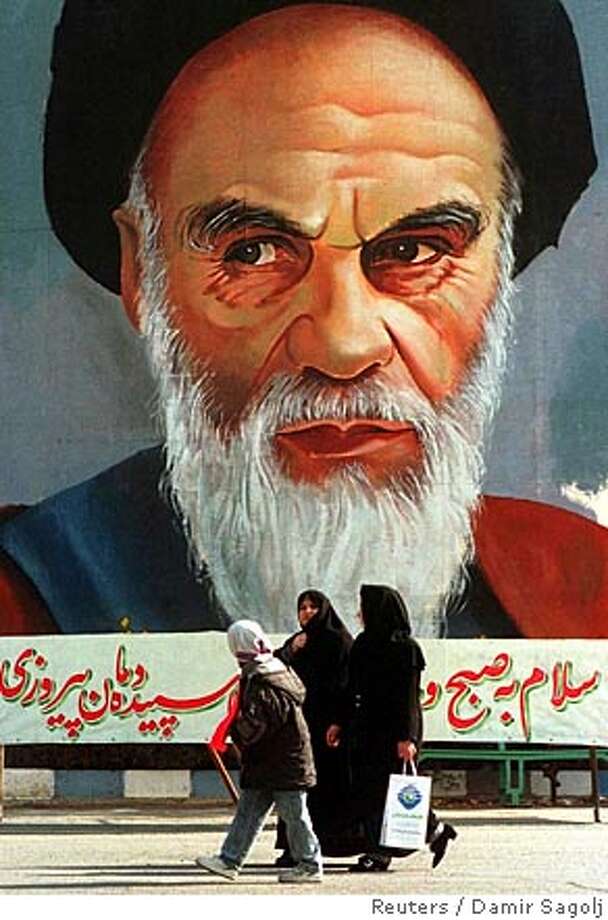
Why Does Iran Wish to Destroy Israel?

Part of the paradigm of accepted international diplomacy as it is presented today, is that Iran wishes to destroy the State of Israel and her people.  This is reinforced by the Iranian regime threatening to do so at every opportunity.  It has become a given fact, and everybody knows and accepts this situation.  It seems strange that there is no significant attempt to question the right of a nation to threaten to destroy another sovereign nation.  But more than this, there appears to be no attempt to understand what drives Iran to wish to destroy Israel.  The desire to conquer another nation, or the land belonging to another nation, is relatively common and can be explained in a number of understandable ways.  The wish to destroy a nation is entirely different, and I cannot recall another case in history where a country has been singled out for destruction in the way that Israel has been in recent times.  The fact that the world seems to allow this, and the fact that there would appear to be no logical reason for it, troubles me a great deal.

It is said that, in order to present the most effective defence against enemies, it is important to understand your enemies, their thoughts and what drives and motivates them.  With that in mind, I have been wondering why it is that Iran wishes to destroy Israel.  Given how common it is to hear Iran's threats of destruction, I expected to find much written and said about this in the literature and the press.  It turns out that it is exactly the opposite, and that there is very little written on the subject.  And I could find no convincing argument that explains why the Iranian regime has the obsession to destroy Israel  So, I have tried to formulate my own views and theories that I am sharing here now.

Many believe that Iran's hatred for Israel forms part of the Arab-Israeli conflict that has typified relations between Israel and the Arab world since the State of Israel was declared in 1948.  Nothing could be further from the truth.  In spite of Iran being a Muslim country in common with the rest of the Arab world, it is certainly not an Arab country.  As opposed to the Arab world that immediately launched a war when Israel declared independence, Iran recognised the State of Israel immediately in 1948, and was the second Muslim country after Turkey to do so.  Iran and Israel maintained close diplomatic ties until the revolution in Iran and the fall of the Shah in 1979.

Diplomatic relations were immediately broken off by the Islamist regime of Ayatollah Khomeini after the revolution, and Israel was labelled as the "Little Satan" following in the footsteps of the "Great Satan" which was the USA.  This seems to be the point at which the hatred for Israel really began.  Ironically, and in spite of the hateful rhetoric that emanated from the regime at that time, behind the scenes there was a great deal of close cooperation between Iran and Israel.  Much of this was driven by the 8 year-long war between Iran and Iraq.  Iraq was a common enemy of both Israel and Iran, and this created unlikely ties and reasons to cooperate.  Israel sold Iran vast quantities of arms and ammunition, in return for which Israel received Iranian oil.  It is believed that the Iranian air force continued to operate, after it was initially attacked by Iraq, only because of the assistance received from Israel.  Iran was also delighted when Israel audaciously succeeded in destroying Iraq's nuclear reactor at Osirak in 1981 after the Iranians failed in their attempt to do the same.  The weekly insults and denunciations of Israel at Friday prayers by the Iranian leadership served conveniently to conceal the fact that there were no fewer than 100 carefully hidden Israeli advisers and technicians in Iran throughout the period of the war.

Since that time, Iran's leaders have continued to criticise, insult and threaten Israel at every opportunity.  And nobody has questioned for a moment why this is the case, and what justifies this vilification and extreme sentiment.  It has become a situation that simply forms part of the diplomatic landscape.  Can it be explained by Iran's hatred towards the USA, and the fact that the Israel is seen to be very close to the US?  It is difficult for me to accept that this explains all the public threats and the acts of terror that have been undertaken (and continue to be undertaken) against Israel.  Israel is not the USA's only close ally.  Why have other allies not been threatened for destruction in the halls of the United Nations in the way that Israel has been forced to endure?  And, while sentiment towards the US has wavered with different Iranian regimes (while always maintaining its negative bias), the hatred towards Israel seems unwavering no matter which Iranian president has been in power.  The threats against Israel have been the one pillar of consistency in Iranian foreign policy.  So I find it difficult to believe that this is purely driven by Israel's relationship and friendship with the USA.

The only explanation that I can offer to this extreme situation is the resurfacing of plain, old-fashioned anti-Semitism.  I use the term "resurfacing" because the Iranians/Persians do not have a long or consistent history of anti-Semitism.  The story of Purim that took place in Persia is a good representation of the relations that Jews and Iranians have enjoyed over the centuries.  While the king of Persia married a Jewess (Esther) and was prepared to take action to destroy Haman and his evil band for their anti-Semitism expressed against Mordechai, the fact was that anti-Semitism was clearly a common thing at that time.  In more recent times the Nazis declared Iranians immune to the Nuremburg Laws as they were considered to be pure Aryans.  In spite of this, the Shah and the Iranian government did not support the anti-Semitism of the Nazis.  With the rise to power of the Islamic extremists in Iran in 1979, we saw the rise to power of extreme anti-Semitism at a regime level.  Ironically, this anti-Semitism was not directed at Jews living in Iran as much as it was directed at Israel.  When Ayatollah Khomeini returned from exile in Paris to take up the leadership role immediately after the revolution, he declared, "We recognize our Jews as separate from those godless, bloodsucking Zionists" and he issued a fatwa decreeing that the Jews in Iran were to be protected.  This did not stop Iranian Jews from leaving Iran in large numbers.  The population of Iranian Jewry shrunk from around100,000 at the time of the revolution to around 50,000 in the mid-1980s, to around 25,000 in the mid-1990s.  Less than 10,000 Jews are left in Iran today.  Because of the "protection" afforded to Jews living in Iran, there are those who believe that the hatred that we see coming from Iran is not anti-Semitism, but anti-Zionism.  The problem is that the basis for this anti-Zionism is still unexplained.

In spite of the Iranians not being Arabs, they have enjoyed some ideals in common with the Arabs since the revolution in Iran.  The premise for the Arab-Israeli conflict is pure anti-Semitism.  The Arab world could not accept the notion of Jews living in the Middle East on their doorstep, and resolved to do all to destroy them and their state.  The holy city of Jerusalem has become embroiled in this war as a tool, rather than an end.  It is noticeable that no attempt was made to claim Jerusalem (and its Muslim holy sites) by the Arabs in the period prior to the establishment of Israel.  When the Jews took control of Jerusalem, and even in spite of granting control of the Muslim holy sites to the Waqf Council under the chairmanship of the King of Jordan, the Arab world and the Muslim world rose up to object.  Was their objection in favour of the Muslim holy sites, or was the objection against the presence of the Jews?  Everybody will reach their own conclusion.  What is clear is that Iran has firmly jumped on this anti-Semitic bandwagon.

Iran's brand of Shia Islam has been a huge source of conflict with the Sunni Islam practised by most of the Arab world.  In spite of this fundamental source of disagreement, they have found a common cause to fight against the Jews in Israel, to fight against the existence of the State of Israel and to use the claim of the holy city of Jerusalem for Islam as a means to their end.  The city of Jerusalem seems to be almost the only cause and rallying point that unites all different streams of Muslims around the world.  And, by extension, the fight against Israel, the Jews and the current regime in Jerusalem is equally a common point of agreement between them all.  Although distinct cracks are starting to show in this quest as individual Arab countries come to the realisation that Israel is going nowhere, and understand that cooperation with Israel may be a better option for them than fighting the futile battle of trying to destroy her.

The Iranians are, however, unwavering and unashamed in their battle against Israel and her people.  They continue to sponsor Hamas and Hezbollah, amongst other terrorist groups, that act as proxies for Iran to destroy Israel.  Iran is also responsible for numerous terror attacks orchestrated against Israeli and Jewish targets outside of Israel.  It's quest to build a nuclear weapon that could potentially be used against Israel is clearly a cause that any Israeli government will consider to be of highest priority.   So Iran has clearly not changed its mind, nor given up its desire to destroy Israel in any way.

My problem is that I am still not entirely clear why Iran wants to destroy Israel.

Saturday, 3 March 2018

Whose Battle is This?

The recent interception of a unmanned aerial vehicle (UAV) that was launched into Israeli air space from Syria, and the events that followed this interception have brought into the open some serious questions about the threat against Israel along the northern border with Syria and Lebanon.  In particular, it has focused on the number of different players who are involved in the Syrian playing field, and the serious nature of the risk that Israel is forced to defend against from a variety of different sources.

The entry of the UAV into Israeli airspace had been anticipated for some time.  Israeli intelligence had identified the intention to send this from Syria, and it had a welcoming committee by the time it crossed the border into Israel.  Interestingly, it had taken a route from the Tiyas airbase (also known as T-4 airbase) in Syria where it was launched, through Jordanian air space and finally entering Israeli air space not far from Beit Shean in the upper Galilee.  The UAV was shot down after spending a little more than 90 seconds in Israeli air space, and this allowed for closer inspection of the vehicle.  It turns out that the UAV was a fairly substantial and serious piece of equipment.  Some have described the UAV as a drone, although I prefer the term UAV.  Somehow, the word drone implies something small and toy-like.  This is clearly not the case here.  The UAV has been identified as a Saeqeh or Thunderbolt from Iran.  This is a stealth model UAV modelled on the American RQ-170 Sentinel spy UAV, one of which was shot down and captured in Iran in 2011.  The launch of the UAV into Israeli air space was something that was clearly planned for some time before, and the type of vehicle that was used is highly sophisticated and shows serious intent on the part of those operating it.

After intercepting the UAV, Israel immediately carried out its stated policy of retaliating against each violation of her sovereignty and security.  Israeli Air Force F-16 fighters were deployed to launch attacks against 12 Syrian and Iranian targets in Syria.  These included aerial defense batteries, targets at the T-4 air base from which the UAV was launched, and positions of the Iranian military establishment in Syria.  The Israeli fighter jets were fired upon by Syrian forces.  The anti-aircraft fire that was directed against the Israeli aircraft was from a number of Russian air defense systems, including the SA-5, SA-17, SA-6 and SA-3 systems.  It was a Russian missile fired by the Syrian army that latched onto one of the Israeli F-16 jets, and exploded next to it causing irrecoverable damage to the aircraft.  The pilots ejected to safety, but not before sustaining injuries in the blast.  The F-16 crash landed in Israeli territory.

Despite the situation remaining tense but calm since this series of events, it has highlighted the complexity of the security situation that Israel faces, and the number of different players that are involved in the conflict.  The UAV that was initially launched into Israeli air space by the Syrian army was an Iranian-built vehicle employing American technology.  Israel finds itself fighting against American know-how,  Iranian production and financing and Russian weaponry launched by Syrian government forces.  More than this, Iran is now represented in the area near to the border in southern Syria, and Israel is being drawn into a direct conflict with Iranian forces.  This is something that is a relatively new development, as Israel's battles against Iran until now have all been via Iranian proxies in the form of Hezbollah, Hamas and others.

The relationships and conflicts with Syria, Iran and its proxies are clear.  These entities call for the destruction of Israel, and do all that they can to bring this about.  Israel will defend herself against them, and will use every effort to harm the interests and positions that these entities possess, no matter where they are situated in the world.  The threats against Israel from these sources are numerous and constant.  They manifest themselves all around the world - against Israeli embassies, airlines, businessmen, tourists and Jewish centres in any location.  All of this comes in addition to the threat along Israel's borders and even within the borders.  Iran has the intention, not only to destroy the Jewish state, but also to increase its sphere of influence in the Middle East and around the world.  It is promoting its brand of Shia Islam against all other religions, and against Sunni Islam.  Iran certainly has aspirations to be a controlling power in the region and around the world.  As part of this effort, Iran is cooperating with Russia and supporting Syria and other proxies in order to confront, the US, Israel and other regional and western powers.

The relationship with Russia is a little more complex.  Israel has found itself on the receiving end of Russian missiles and weaponry that have, not only shot down an Israeli F-16 fighter, but also threaten Israel's safety and security on a daily basis.  Major Russian weaponry systems are deployed in Iran and Syria, and most of these systems are aimed in a threatening way at Israel.  This is all in spite of the fact that Israel has full diplomatic relations with Russia, and Prime Minister Netanyahu and Russian President Vladimir Putin have met numerous times and spoken frequently on the phone in recent times.  Netanyahu's requests of Putin have fallen on deaf ears, and Putin continues to arm and finance organisations and governments that seek the destruction of the State of Israel and the murder of Jews.  Putin's interests are driven by increasing Russia's sphere of influence as much as possible, and by financial considerations.  Russia is making good money from the sale of arms and weapons.  Just as with his relationships with the USA and with Turkey, Putin seems to be playing both sides of the divide with Israel.  While Israel would wish to maintain cordial relations with Russia for a number of reasons, the fact that Russia is openly and unashamedly supporting Israel's enemies is clearly a very concerning situation.

What is clear from this situation is that Israel is fighting a survival battle, not only against enemies, but against "friends" as well.  I use the term friends in a loose way to include even those who are not quite so friendly, but with whom Israel has diplomatic ties.  Such as Russia.  In its fight against the Iranian UAV, Israel found itself battling its closest ally, the USA via the technology that Iran had taken to construct the UAV.  This regional war has a strong global element to it.  The strategic importance of maintaining influence over the Middle East seems not to have diminished over the years.

International diplomacy continues to be governed by interests rather than friendships.  This is very true of Israel's international relations.  The wars that Israel is fighting on her borders are highly complex with so many different parties involved.  It almost makes one wonder whose war this really is.  In reality, Israel is fighting wars with parties which come from much further away than those who reside on her borders.  This is a global war, and one which threatens to become broader and much more complex in the future.

Sunday, 7 January 2018

My Person of 2017

I have never really been a fan of the whole idea of nominating "people of the year".  I know that it has been popular and common-place for all respectable publications and newspapers to choose their person of the year.  Time Magazine's annual choice of person of the year is a highly anticipated occasion, with the chosen person given the privilege of gracing the publication's cover.  Is it really possible to choose one person who epitomises the year, and who can lay claim to having had the largest influence on events in that year?  I am not sure about that.  For some reason, however, this year I feel differently.  For me, there is one person who has emerged from the shadows during 2017 and truly stood out on the international stage.  That person is US Ambassador to the UN Nikki Haley.

Before even talking about Haley's achievements in her role as US Ambassador the UN, it is interesting to know a little more about the person behind the ambassadorial figure.  She is the daughter of immigrants from India, who came to the US after her father travelled from India to complete his PhD in Canada.  Nikki's parents are Sikhs, with all the visible differences that are associated with being a Sikh in a western environment.  It seems to me that growing up as a child in a minority family in a southern US state has given Haley the character and skills to be a leader who is sensitive to others, particularly minority groups.  After graduating from Clemson University and a short career in business, Haley began her political career in the South Carolina House of Representatives in 2004.  In 2010, she was elected Governor of South Carolina, and served in this capacity until she resigned early in 2017 to take up her new role as ambassador to the UN.

Over the years, the USA's  position at the UN has become a little confused.  There can be no doubt that the US was by far the strongest power and influencer when the UN was originally set up, and has continued to be the most powerful nation on earth during the years of the UN's existence until today.  The main organs of the UN are based in the US, and the US is also by far the most substantial financial contributor to the UN.  In its position as one of the permanent members of the UN Security Council, the UN also has the ability to veto any resolution that is brought before the Security Council.  All of this bears testament to the US being the most powerful country amongst the community of nations.  In the General Assembly and in other UN organ bodies, however, the US is an equal member like every other nation with much less power to influence.  As a result of this, there are many examples where US interests (and those of US allies) have been trodden on.  Israel, as an ally of the US and as the favourite target of many UN organisations, has suffered more than its fair share of unwarranted negative attention and condemnation.  Of late, the UN has become a tool for local interest groups to gang up on individual countries for the purpose of furthering personal political agendas.  Israel is certainly a victim of this.  And this unfortunately detracts substantially from the main reason why the UN was established in the first place.

Nikki Haley appeared to understand all of this very well from the first day that she stepped foot into her office at the UN.  Not only did she understand this, she has been willing to stand up for what she believes to be just and equitable.  It was clear to her that the US was being asked to contribute far more to the UN than it was receiving in return.  It was also clear to her that Israel, a key ally of the US, was being unjustly bullied at every opportunity by UN organisations.  She has been prepared to take on the world at the UN to put this right.  In the process, I believe that she has brought some respectability to America's status at the UN and in the international arena in general.  She has also been willing to tackle the unfair treatment of Israel by the UN.

Undoubtedly, Haley has been given the drive and incentive by President Trump, who seems determined to redress the imbalance of the US position at the UN.  But there is also little doubt that she has taken her role seriously, and has been prepared to take on the powers at the UN.  She has shown the willingness to say and do the difficult things required to reinforce the US position at the UN.  Last month, she was prepared to exercise the US veto at the Security Council to vote down another anti-Israel resolution, after a lengthy period of time during which the US veto was not exercised.  Not only that, but she was vocal in threatening those who voted in favour of the US-critical resolution at the General Assembly of the risk that they would lose funding that they receive from the US.  The way in which she has been supportive of Israel's position at the UN is very much recognised and appreciated.  She has shown the guts to swim against the tide, and take actions which are roundly criticised by the majority.

There is no doubt that international politics and diplomacy these days is a game of interests rather than having for consideration for what is just and right.  And, while this contradicts the original intention that lay behind the UN when it was first set up, we see this permeating through all parts of the UN.  The Arab lobby at the UN has been used very effectively to make Israel the bad guy of the UN.  No other single country has had more resolutions and condemnations against them than Israel.  Surely this says it all.

Nikki Haley has been prepared to take on the world in defense of the US position at the UN, and also in defense of Israel's position.  Her passion in doing this, and her unwillingness to compromise her beliefs stands out against the background of mediocrity that is evident in international diplomacy.  Her heroic acts in sticking up for what she believes in makes her, in my opinion, the stand-out person of 2017.  Nikki Haley will be a voice to be heard on the international stage for some time, and I am looking forward to following her activities.

Friday, 29 May 2015

Starting on the Wrong Foot

The entire process that led to the forming of Israel's 34th government in 68 years of independence was filled with drama and unexpected events.

Opinion polls in the weeks leading up to the election predicted that the two largest parties, the Likud and the Zionist Union (formed out of a pact between the Labour and Hatnua parties), would be fighting each other off to form the new government.  The feeling was that one or two seats would separate the parties.  Even the election's exit polls did not predict the extent to which voters ultimately favoured the Likud over Zionist Union.  When the election result was announced showing that the Likud won 6 seats more than the Zionist Union, it took everybody in the country by surprise.  Even the members of the Likud were shocked at the size of the victory, especially in view of the earlier predictions.

The pendulum of expectation swung in the opposite direction.  All of a sudden, there was the expectation that Prime Minister Netanyahu would form a broad-based, strong, right-wing coalition government in double quick time.  As it turned out, the formation of the government took way longer than expected, is the narrowest possible government and is not nearly as strong as people thought and hoped it would be.   With these fluctations came swings in the public's expectation about how long this government can reasonably survive, and whether it has the ability to govern and make the changes that are so needed in Israeli society.

If the lead-up to the new government contained its fair share of surprises, the process of forming the government has also been less than inspiring.  The prime minister has been forced to compromise on many fundamental ideas that his electorate stand opposed to, in the interests of attracting coalition partners into the government.  For example, he has been forced to go back on legislation, that was put in place during the previous government, to force ultra-Orthodox yeshivah boys to undertake military or national service like all others of their age.  He has also been forced to redirect huge sums of money to the ultra-Orthodox sector, at a time when the Israeli government has implemented large budget cuts as part of an austerity plan.  Many Likud voters are horrified at these and other concessions.

One of the persistent rumours that refuses to go away concerns the reported approach that Prime Minister Netanyahu made to Labour leader Isaac Herzog to join the coalition.  The prime minister is reported to have approached Herzog on condition that he agrees to abandon his pact with Tzipi Livni, and bring only the Labour faction into the new government while leaving Livni and her Hatnua members out of the coalition.  Herzog refused, thereby turning down the opportunity to be part of a national unity government, and provide Israel with a much more stable coalition.  Has he spited the people of Israel by preferring to see Prime Minister Netanyahu fail in his endeavours?  There are many who believe that he has chosen the egotistical path, rather than setting his ego aside in the interests of serving the Israeli electorate.

The make-up of the new cabinet is also not a huge source of inspiration.  For starters, there are a total of 21 ministers in the new government, surpassing the 18 ministers that were recently legislated as being the maximum allowed in any government.  Netanyahu was forced to pass an amendment law through the Knesset to allow him to appoint 21 ministers to have sufficient jobs to dish out to all coalition partners.  The important job of foreign minister has been left vacant and has been assumed by the prime minister.  He has also retained the communications ministry, ministry of health and ministry of regional cooperation for himself.  It seems as though Netanyahu may be reserving these in case he is able to convince Lieberman or others to join the coalition in the future.

Aryeh Deri, head of Shas, is the new economics minister.  He has recently served a jail sentence and now come out of an exclusion period, during which he could not serve in a public position, as a result of having been found guilty of taking bribes while a government minister.  Yoav Galant is the minister of construction.  This is highly controversial seeing as Galant was prevented from taking up his appointment as the IDF Chief of General Staff due to irregularities found in the construction of his personal residence on public property.  Miri Regev is the new minster for culture and sport, despite having made it quite clear that she really wanted to have the welfare portfolio.  Habayit Hayehudi's Ayelet Shaked is probably the most surprising and high profile appointment to the new government, having been appointed as the minister of justice.  In this position, she has a huge influence over the appointment of judges to the supreme court, as well as many other aspects of Israel's judicial policy and justice system.  She has also secured herself a seat in the security cabinet, the narrow inner cabinet that is responsible for formulating and implementing Israel's security, defense and foreign policy on a daily basis.  At 39 years-old, she is considered an extremely young appointment to a critical position, despite clearly being very capable.  It is reported that Likud old-timer Benny Begin only knew of his appointment to the cabinet, as minister without portfolio, at the moment that it was announced in the Knesset.

The Knesset session to present the new government was held on Thursday 14 May.  The session epitomised a circus more than a meeting of Israel's legislature.  At first, Arab members of Knesset created an intentional and sustained disruption during the prime minister's address, that resulted in  a number of them being evicted from the chamber.  A few other Arab members decided to leave of their own accord in sympathy, although they did return during the address by the leader of the opposition.  Miri Regev was also issued a warning for heckling and disruptive behaviour, although managed to survive without being ejected.  Leader of the opposition, Isaac Herzog, delivered a stinging rebuke and criticism of the prime minister and his new government.  He was heckled by members from the religious parties, who were also issued with warnings.  While the job of the official opposition (and its leader) is to ensure that the government is held to account, there are times when it is appropriate for the opposition to support the government and to show some unity in helping with its efforts.  There are many who feel that this occasion was the perfect opportunity to show some unity and support.

The inconspicuous start to the new government continued further with a reshuffle coming less than 10 days into the life of the new government.  Likud number 2, Gilad Erdan, decided that he would be better off working within the new government rather than from the back benches.  While his disagreement with Prime Minister Netanyahu has not been resolved, Erdan finally agreed to accept the ministries of public security, strategic affairs and public diplomacy.  Despite him trying to put a spin on why he changed his mind to justify his actions, it is clear to all that this is a big U-turn on Erdan's party.  Netanyahu was happy to reshuffle his new government in order to accommodate Erdan.  Benny Begin, who was asked to resign his position as minister without portfolio to accommodate Erdan joining the cabinet, was not happy to comply with the request.

Despite the problematic manner in which the government has finally come into office, it does not detract from the fact that new government has a lot of important work to do.  Israel is under much pressure on the international diplomatic front to move forward to a peace agreeement with the Palestinians.  It also has to maintain firm security against those who are determined to destroy her and her people while also addressing the social and welfare needs for the weakest members of society in a tough economic climate.  All of this needs to achieved in a climate of lower levels of government spending to manage the economy responsibly.  Israel needs a firm, stable and decisive government that can make the difficult decisions that confront it.  Even though the manner in which the new government has started out life does not seem to bode well for the future, we all hope that we will be confounded by the extent to which the government is able to achieve great things.  We wish them much success.

Wednesday, 2 April 2014

Recognising Israel as a Jewish State

In the context of the on-again off-again peace discussions between Israel and the Palestinians, one of the most public issues of disagreement surrounds the insistence by Israel that the Palestinians recognise Israel as Jewish state, and the Jewish homeland.  Is this a valid demand, or is Prime Minister Netanyahu simply using this demand as an excuse to create a roadblock in the process?  What advantage would such a recognition bring to Israel, and to its relationship with a future Palestinian state?

There seems to be much public disagreement over this demand, with most Israelis supporting the prime minister's insistence that our neighbours (and those around the world) be prepared to publicly acknowledge Israel as a Jewish state.  But how justified is Israel to demand that the international community should recognise it as a Jewish state.  Most countries around the world are happy to be simply recognised as a country by their name, with some adding the nature of the country's government to its name such as kingdom or republic.  Despite the opposition voiced by the Palestinians, there is a precedent for countries adding the predominant religion to their names as in "The Islamic Republic of Iran" or "The Islamic Republic of Pakistan".  Even though the international community has not always liked the activities of these Islamic republics, there has never been a question about recognising them as Islamic republics.  So why should there be any problem with recognising Israel as a Jewish state, even without adding this to its name?

The nature of Israel as a Jewish state has been a public matter since even before the State of Israel was established.  The Balfour Declaration, in which the British government ackowledged in 1917 that it viewed "with favour the establishment of Palestine as a national home for the Jewish people", was only one of many public statements made about the nature of Israel as a Jewish state.  Of course, the "Palestine" referred to by Balfour is modern-day Israel, Gaza, the West Bank and even includes Jordan.  UN General Assembly Resolution 181 was passed in November 1947, and includes reference in Part I A3 to independent Arab and Jewish states coming into existence in the area formerly known as Palestine.  Israel's Declaration of Independence was unequivocal in declaring Israel as the Jewish state  when it says, "... declare the establishment of a Jewish State in Eretz-Israel, to be known as The State of Israel".  It could not be much clearer.  So, what drives the Palestinians need to deny this, and what gives them the right to change a decades-old reality?

The Palestinians have never admitted publicly why they wish to deny Israel's right to exist as a Jewish state, but I speculate that it is connected to the issue of the return of the refugees.  This is a highly controversial matter that continues to be one of the points for discussion in the peace talks.  During the War of Independence in 1948, approximately 700,000 Arab residents of the nascent State of Israel fled their homes.  This was despite the invitation by the new Jewish government of the state for them to remain in their homes, and take up citizenship of the new state.  Those who chose to stay have enjoyed a relatively comfortable existence as citizens of Israel, with all democratic rights that flow from that.  Those who fled, on advice from the Arab leadership, were advised that they would have the opportunity to return triumphantly to reclaim their properties and to reclaim all the land which is the State of Israel.  That triumphant moment never came, and the refugees remain cooped up in refugee camps in countries on Israel's borders to this day.  Of the original generation of refugees, approximately 20,000 to 30,000 still remain.  The descendants of the refugees now number around 5 million.  They have been kept in these camps as a form of pressure on Israel and the international community to allow the refugees to return to their original homes.  With 5 million people now part of the discussion, there is clearly no prospect that Israel will admit them as citizens of the State of Israel.  There is a discussion, however, about how this problem will be resolved such that these people will be given permanent homes and citizenship.  It is likely to be a combination of some moving to the West Bank, with others being naturalised in the countries in which they currently live, and in which most of them were born.  The connection between this issue and the issue of recognising Israel as a Jewish state, is that the act of recognising Israel as a Jewish state effectively means that the Palestinians will give up on any claim to move refugees of any significant number into Israel itself to return to the  homes in which they once lived.  The Palestinian leadership does not seem to be ready for this yet.

There are those who ask why Israel continues to insist that the Palestinians formally recognise the right of Israel to exist as a Jewish state, when this same requirement did not form any part of the peace agreements with Jordan and Egypt.  I believe that the answer to this is that the Jordanians and the Egyptians never doubted this.  The reason why they were at war with Israel is because it is a Jewish state, and the reason that they were finally prepared to reach a peace agreement with Israel was because they were prepared to accept this fact.  The recognition of the Jewish nature of Israel was the fundamental basis of the peace agreements.  The agreement with the Palestinians is much more complex, and is based on many other substantial points that are yet to be agreed.  The reason why Prime Minister Netanyahu is making a big issue out of recognising Israel as a Jewish state, is exactly because the Palestinians deny it.  I believe that most citizens of Israel would support the position that he takes.

When countries are founded and nations created, there is usually a common bond that connects the people in that country.  The common thread that connects Israelis who have come from all four corners of the earth over the past 66 years, is the fact that they are Jewish.  The majority of the citizens in Israel identify themselves as Jewish, and there is no way of denying this.  This is the will of most of the citizens, and any national agreement entered into with a party that denies this fact will not have the support of the citizens of Israel.   Now that this issue has such a high public profile, with the Palestinians continuing to be ambiguous about their recognition of Israel's Jewish character, many citizens of Israel would demand that the Palestinians unequivocally acknowledge Israel as a Jewish state before any agreement is signed.

The issue of recognising Israel as a Jewish state has been brought to the forefront of the peace talks.  The reason for this is really not clear, as the Palestinians have not explained why they object to this recognition.  For Israelis, the fact that they are objecting is cause for concern, and reason to insist that no peace deal can be signed without it.  This is surely the most basic requirement for any neighbour of Israel which wishes to respect Israel's existence according to the will of the majority of her citizens.

Tuesday, 28 August 2012

Non-Aligned, But Extremely Maligned

Iran is playing host to the meeting of the Non-Aligned Movement (NAM) during the course of this week.  The meeting sees 120 developing nations of the world attend, with special attendance by the UN Secretary-General, Ban Ki Moon.  Although the original intention of the NAM was to provide a home for countries who were not formally aligned with or against any major power bloc, it has always represented something of a political hot potato.  This is because its membership includes the so-called "axis of evil" countries, and many other pariah states of the world.  The NAM has, perhaps unwittingly, acted as a club for countries that are persona non grata in the developed world.  The best example is the the host of the 16th meeting of the NAM this week, Iran.

Since the NAM was established in 1961, a great deal has changed in the make-up of the world's power blocs.  Despite this fact, it seems as though many of the original members of the NAM remain members to this day.  The changes in the political power blocs have not succeeded in changing  the countries that are aligned with them.  The term "non-aligned", while accurately reflecting the fact that the member countries are not part of any major international power bloc, conceals the fact that many of the member states are aligned with each other in different ways.  It seems as though being non-aligned is not sufficiently compelling to link the NAM countries.  Even these countries need a common cause to create a more substantial link between themselves.  Iran has succeeded in creating a common issue for the NAM countries to rally around, and this is the issue of hating Israel and bringing into question her right to continue to exist.

Iran's policy of publicly humiliating and deligitimising Israel is already not a new phenomenon.  Iranian President Ahmadinejad has been allowed to get away with behaving like a thug on this issue for many years.  He has stood at international gatherings at every opportunity, and ranted against Israel's right to existence amongst the family of nations.  The international community has silently sat back and watched the spectacle without taking action.  This has even been the case when Ahmadinejad has had the audacity to stand up at the United Nations General Assembly, the place that is supposed to protect the rights of nations to exist in peace and harmony, and spew vitriol about the destruction of Israel.   Once again, the UN stands accused of failing to protect the basic rights of member nations by allowing UN Secretary-General Ban Kim Moon to travel to Tehran to attend the NAM.  In so doing, he has legimitised the attendance of all the other countries at the meeting, all of whom will be subject to tirades promoting the destruction of the State of Israel in the usual Iranian way.

Surely, this enough to convince the world of Iran's ban intentions regarding its nuclear program?  The evidence that Iran intends to construct a nuclear weapon is irrefutable.  The subject of Iran's wrath and aggression is equally irrefutable.  The fact that the world allows Iran to threaten Israel in every public forum in the most unashamed manner, is now supported by the world's unwillingness to take tougher action against the nuclear program.  Instead, the world has decided to hide behind the sanctions to defer action on this matter.  It has been clear for some time that the sanctions will neither prevent the countries of the world from buying oil from Iran, nor prevent Iran from continuing to build a nuclear bomb.  Once again, it seems as though it will be left to Israel to take on the world's responsibility in acting against a tyrant.  It is true that Israel is at the front of the line of countries at risk by Iran's aggression, but it is also true that Israel is not the only country at risk.  It is clear that any action by Iran to construct a nuclear weapon will place all of the western world, and beyond, in the firing line.  Perhaps the threat to these countries is not sufficiently pressing now to force them into action.  As has been the case a few times in the past, it will be Israeli soldiers whose lives will be risked to clean up the mess that others are not prepared to take care of.

Israel has acted in the past without the blessing of its allies to take care of problems.  Twice before, Israeli aircraft have destroyed nuclear reactors under construction.  It was notable that the US government opposed Israeli action against both the Iraqi reactor and the Syrian one under construction.  We now know that Israeli action saved some extremely nasty situations from arising, and history books could have looked extremely different had the timely and brave action not been taken in the nick of time.  Fortunately, all Israeli soldiers and equipment was returned to base safely on both previous occasions.  Where Iran is concerned, the operation looks to be infinitely more complicated and risky.  This is partially because the world has failed to take timely action to destroy the threat at a much earlier stage.  Any operation that Israel will mount against Iran is likely to be extremely risky, and will almost certainly result in Israeli loss of life.

In the interests of international diplomacy and world peace, the UN Secretary-General will appear alongside the world's thugs including Ahmadinejad, Zimbabwe's President Mugabe and others.  Instead of protecting the interests and the freedom of the democratic world, he has chosen to legitimise the unacceptable behaviour of those countries who present the greatest threat to world peace.

The NAM conference has given Ahmadinejad the perfect opportunity to stand up in front of the non-aligned, and malign them against Israel and the west.  In a few weeks' time, we will expect to see another of his tirades at the UN General Assembly in New York.  All of the actions that turn a blind eye to Ahmadinejad's bad behaviour, simply empower him even further.  He understands that the world does not set any limits in terms of acceptable behaviour, and will exploit this to the maximum extent possible.  As before, it will be left to Israel to draw the line and to take the required action.  It is my hope and prayer that our soldiers and our civilians will not be endangered in the process.

Thursday, 23 August 2012

A Damaging Debate

The debate about whether Israel should or should not attack Iran's nuclear facilities has broken out into the public arena in the strangest possible way.  Over last weekend, the press reported a disagreement between the prime minister and the president over whether attacking Iran at this time is the correct course of action.

Indications are that Prime Minister Netanyahu is one of two lone voices calling for Israel to take military action to stop Iran building a nuclear bomb.  Ironically, his only supporter is Defense Minister Ehud Barak.  This is ironic due to the completely opposite ends of the political spectrum that these two politicians come from.  At the moment, however, they are bedfellows in calling for the IDF to act in the near future to strike at Iran's nuclear facilities.  President Shimon Peres is advocating a completely different approach.  He would prefer to allow America to take the lead, and is currently trusting President Barack Obama's approach in waiting to see whether the sanctions will bring the desired result.  Ultimately, Peres is opposed to Israel acting unilaterally against Iran.  Peres, always a dove in his approach over many years, was also opposed to the strike that Israel carried out on the Iraqi nuclear reactor in1981.  We know how crucial that operation ultimately proved to be.

Peres is not alone in Israel in his opposition to an attack on Iran.  From recent press reports, it is understood that the military leadership in the IDF is also opposed to such an attack.  This does not mean that they are not prepared to carry out such an attack, or that they would not do so if the government decided that this is the correct approach.  It is just that military leaders, in their individual and professional capacities, believe that this would not be the best approach.  In addition to this, it is reported from surveys undertaken, that most Israelis also do not support military action.  The Israeli public seems concerned about the safety of the home front in the event of an attack on Iran.  It is well understood that Iran will almost certainly take retaliatory action in the event that there are strikes on her nuclear facilities.  This puts the Israeli public at risk, as Iran's Shihab missiles are armed and ready to fire towards Israeli territory.  Clearly, this nervousness is influencing the view of the general public such that they are opposed to attacking Iran, even if this is by a slim majority.  Some Israelis feel so strongly that we should not be attacking Iran, that an online petition has been launched imploring Israeli air force pilots to reject orders to strike Iran if called upon to do so.  While the prospect of Israel's pilots not carrying out orders is something we could not contemplate, I guess that it does show the strength of the feelings.

The fact that this entire debate is being conducted via the press and in the public, is not positive.  While democratic principles are important in our society, and especially maintaining the right to freedom of speech, I believe that certain discussions are much better held out of the public domain.  This particularly refers to matters of national security, which this clearly is.  It may be true that President Peres should not be interfering in government business, and that he has previously made incorrect calls on whether the IDF should attack targets or not.  I feel, however, that these points should be made directly to him rather via articles in the weekend newspapers.  My choosing to use the media to canvass internal support for their respective positions, the prime minister and the president may have forgotten that our enemies (including Iran) have intelligence officers who are scrutinising every article that is published.  What sort of message are we sending to them?  I believe that sending a message which shows a lack of unity in our government potentially weakens our situation in  the eyes of the Iranians.  If we cannot even agree on the fundamental issue of whether we should be taking military action to protect Israeli sovereignty for ourselves and future generations, how are we expected to agree on more substantial matters?  Iran has reacted as we would expect, by making fun of our internal squabble, and by continuing at full steam to develop a nuclear weapon.

It is a good thing that we have an environment which supports internal debates and disagreements, and that we have the freedom to be able to express ourselves openly in the national media.  Better decisions are often made when there is a minority that disagrees, and that is strong enough to bring the majority to consider their view before the final decision is made.  Where issues relating to how we deal with Iran are concerned, the debate should be held in the well-secured hallowed halls of government and the IDF, and not in the press.  Although we are very used to playing out party political agreements in the media, there are times when this approach is not appropriate.  This is clearly one of those times, and the national security of the country must surely take preference over all other matters.

Monday, 5 March 2012

Netanyahu's Gamble

Picture courtesy The London Evening Post
Prime Minister Benjamin Netanyahu has travelled to the United States to address the annual conference of the American Israel Public Affairs Committee (AIPAC).  This is probably the largest and highest profile event on the US Jewish calendar, and it is no surprise that Bibi makes a special point of attending each year.  Continued support, both financially and politically, of the American Jews is key to Bibi.  One of the other keynote speakers at the event will be US President Barack Obama.  It is handy that the conference is being held in Washington DC this year, only a hop and a skip from the White House.  In this, an election year for Obama, he will not be missing out on the opportunity to pander to the highly influential “Jewish vote”.

On the fringes of the AIPAC conference, Obama and Netanyahu have scheduled a meeting.  This will be the 9th time that the two leaders have met since Obama came to office almost four years ago, despite the fact that Obama has yet to pay a visit to Israel during this time.  Even though this meeting is taking place as a secondary event around the AIPAC conference, the importance of this meeting should not be underestimated.   There is really only one topic on the agenda, and this is the huge issue of Iran and its nuclear activities.  Netanyahu has decided to go to the USA, and enter into a gamble with Obama.
Although both the USA and Israel agree that the Iranian nuclear program is building the capability of producing a bomb, it seems also to be agreed that a bomb has yet to be constructed.  This fact appears to make the issue less pressing for the US president and his men.  The Israeli team is far less relaxed about this situation and, for them, the fact that Iran is able to build a bomb is the equivalent of Iran having a bomb.   This is why Netanyahu has been pressing the international community for so long to take action against Ahmadinejad, and the dangers that are presented by the Iranian nuclear program.  Until now, the international community has been prepared only to impose economic sanctions on Iran and not take a stronger military stand as Netanyahu would have preferred.  While the sanctions do seem to be biting into the Iranian economy, the construction of the nuclear program appears to proceed without slowing down at all.

The last time this situation presented itself was less than 5 short years ago when the issue of the Syrian nuclear reactor came up for discussion between then Prime Minister Olmert and former President George W. Bush.  Acting on strong advice from his Secretary of State Condoleezza Rice, Bush decided that the right approach would be to make a public announcement about construction of a nuclear reactor in Syria, and harness the support of the international community to impose sanctions to make Syria toe the line.  In his book, Bush reveals that Olmert neither sought nor received US approval to bomb the Syrian reactor.  Instead, he instructed the Israeli Air Force to destroy the reactor after reacting to Bush’s recommendation by saying that he would be forced to do what is in the best interests of the security of the State of Israel.  With the benefit of hindsight, we have a few more pieces of information on this incident which may be guiding Netanyahu in the way that he wishes to deal with Ahmadinejad.  Firstly, we know that Assad was either unable or unwilling to respond militarily to this strike on his sovereign territory, which resulted in Olmert’s gamble paying off handsomely.  As such, the regional conflagration that was predicted would arise as a result of an Israeli strike never materialized.  Thanks to the current uprising in Syria, we now also know how Assad responds to pressure from the international community – with contempt.  Without the bold decision and unilateral action taken by Olmert 5 years ago, the international community may be viewing the uprising in Syria today in a completely different way.

Netanyahu is hoping to convince Obama to publicly state that the US is willing to consider the possibility of taking military action against Iran.  Although other US representatives, most notably military senior brass, have made statements along these lines, it has never come from the president himself.  Netanyahu regards a statement of preparedness to act militarily as a significant position from the US administration even if the Americans are not the ones who ultimately strike at Iran.  It will show that the military force is justified in dealing with this problem in the event that other actions are not effective, and it will also indicate a willingness on the part of the US administration to commit forces to the cause possibly as a back-up to Israel.  Netanyahu will be gambling on the fact that the AIPAC audience will want to hear this from Obama, and that Obama will be under huge election pressure to tell AIPAC what they wish to hear.  Even if the statement is made in their White House meeting which is due after Obama’s address to AIPAC, it will certainly be enough for Netanyahu.

The real problem for Netanyahu is that he is also in the midst of gearing up for an election of his own.  Israel will go to the polls within the next 12 months to choose a new government, and Netanyahu will wish to have the Iran problem safely behind him by then.  Any success that he achieves on this front will almost certainly guarantee him re-election.  Netanyahu would, of course, prefer for the US military to take care of the problem.  This seems highly unlikely as Obama will be looking for every excuse not to commit his military to action in Iran during the lead-up to the US election.

Behind all of this is Iranian President Ahmadinejad, who is playing things as cool as a cucumber.  His authority in Iran may be weakened as a result of this weekend’s elections which showed a substantial swing away from him.  He may be at loggerheads with Supreme Leader Khameini, and he may be persona non grata in much of the international community.  None of this, however, prevents him from bashing Israel at every opportunity in a way that is reminiscent of the public shows of anti-Semitism that preceded the Holocaust.  It also does not prevent him from continuing to build his nuclear capability, causing further instability to an already highly volatile region.

Netanyahu is often presented as being prepared to take decisions which fly in the face of the international community.  His ability to act boldly and smartly will be severely tested over the coming months as he battles with the correct course of action to bring the Iranian threat to a sensible conclusion.  He needs to be able to achieve this without bringing undue risk or harm to the citizens of Israel.  This will be a huge challenge when we know that the Iranian military has hundreds of Shihab missiles targeted at Israel, and would not hesitate to use them if the situation demanded it.  Netanyahu’s first step in achieving this is to bring off his gamble with Obama this week.

All the time that the Iranian saga drags on, oil prices are bound to increase exponentially.  Neither Obama nor Netanyahu will get any thanks for that, which makes their window of opportunity for action much tighter.   Netanyahu’s political and diplomatic skills will be tested to their maximum over the next few months as he makes critical decisions as to each action to be taken against Iran.  The stakes are high.  Success could elevate him to the upper echelons of international statesmanship. Failure could risk the very existence of the State of Israel.

Wednesday, 1 December 2010

WikiLeaks Heaven For Israel

We have only seen the tip of the WikiLeaks iceberg so far. The direction of the floe seems clear and there are already more than one or two embarrassed faces around. We have discovered from a 2009 cable released on WikiLeaks, that Libyan president Colonel Gadafi cannot manage to be away from his Ukrainian nurse, Galyna, described as a "voluptuous blonde". The US embassy staff in Tripoli speculated that she keeps him healthy in more than one way. We all know that diplomats like to gossip - is this not what they are paid to do? Perhaps some of us did not realise the extent to which they gossip, and what they are prepared to say in cables that were once assured of secrecy.

Having examined some of the recently released information from an Israeli perspective, I am fast coming to the conclusion that WikiLeaks is one of the best PR tools the Israeli government has accidentally come across. Almost all of the stories surrounding Israel, and particularly those connected to Iran, have served to substantially enhance Israel's world standing. The documents show that many countries are saying in private the things that only Israel has been brave enough to stand up and say publicly. More than this, it seems as though many countries are relying on Israel to undertake actions that will help them, without giving any public backing to Israel for these.

I was sure that Israel could not be the only country that recognised the threat presented by the Iranian nuclear program. I was astonished that, until quite recently, the USA seemed to be ambivalent about it, even going as far as supporting the Iranian claims that the program was intended for civilian purposes only. Finally, the Americans had the good sense to recognise the real threat that this Iranian development presents, not only to Israel, but to the entire free world. Perhaps it was the Saudi Arabians who convinced the Americans of the threat when calling on them to "cut off the head of the snake", as described in another WikiLeaks document. Not only has the USA finally recognised the threat publicly, Israel's position is further vindicated by the release of the WikiLeaks documents where some of the back channel information has been made public. The attitude of the Saudis, however, seems to the same as other countries in the region. Everybody appears to be waiting for Israel to do the dirty work on behalf of the rest of the world. Why should others risk their citizens and their army if Israel will do the work? Not only this, it is quite conceivable that the Saudis would come out publicly criticising such an attack, while privately thanking their lucky stars that there is a country like Israel which is prepared to stand up for what it truly believes.

The Emir of Qatar is quoted in a further WikiLeaks document as telling US Senator John Kerry that he can't blame Israel for mistrusting the Arabs. His sympathy for Israel is further supported by his privately-held (now publicly known) view that Israel has been under threat from the Arabs for so long, and this justifies Israel's lack of trust in the Arabs. This statement was made not long after he broke off what little ties there were between Israel and Qatar. Although no diplomatic relations exist between the two countries, there was an Israeli commercial mission in Qatar which was sanctioned by the Emir. He decided, however, to expel the mission when the Gaza War broke out.

These are only a few of the numerous examples of duplicity being shown towards Israel and now exposed by WikiLeaks. In public, Israel is forced to endure a great deal of criticism and humiliation. In private, many of those criticising Israel support the actions that Israel is taking against some of the world's bully-boys. The WikiLeaks revelations will go some way towards exposing these countries and their two-faced actions.

While the initial release of WikiLeaks documents seems to play into Israel's hands, it will be interesting to plot where this leads the future of information secrecy in the world of international politics. I wonder whether WikiLeaks will have the same impact on the world of international diplomacy that the Internet had on general information availability. Before the Internet revolution and the advent of search engines like Google, information was usually obtained by going to libraries or paying professionals to provide it. Now, it takes a few seconds via an Internet search. Will the release of documents by WikiLeaks ensure that diplomatic secrecy will be impossible to safeguard in the future? Will countries like Israel also come under pressure to make available political secrets? Probably not, but it may cause the whole secret world of international politics to become more transparent in the future.

For Israel, such a future is not very attractive. Particularly in its formative years, Israel was fortunate to be able to achieve a great deal using back channels. These dealings were only made possible by the secrecy with which such interactions were shrouded. Some of these back channels are still in operation today and will probably remain relevant as long as Israel continues to be in a situation where certain countries seek her destruction. This fact, along with the constant situation of war along her borders, necessitates secret dealings not visible to the general public in order to survive.

In the short-term, WikiLeaks has proved to be a gift from heaven for Israel. This benefit will be greatest if the established rules of international diplomacy do not change substantially in the future. If the world expects international politics to be played out more in the public eye in the future, the short-term gain for Israel may be translated into longer-term pain.