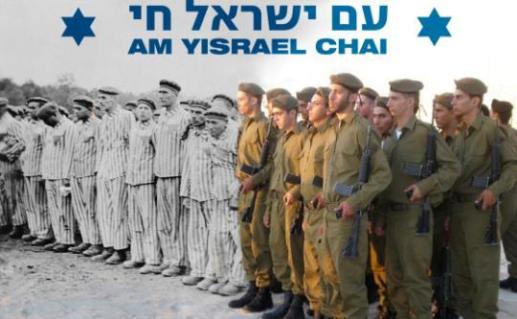
As the festivities of the celebration of the 70th anniversary of
Independence die away, there is the inevitable return to the reality of
everyday living. Each of us returns to our daily chores of working,
studying and taking care of our usual activities. The threatening
protesters are gathered once again on the Gaza border as before. Iran still continues to threaten to annihilate Israel. The
usual attacks, both verbal and physical are again being perpetrated.
All continues as it was, and little changes.
And yet,
this is the beauty of the reality. Unlike a birthday when the special
day lasts only 24 hours until next year at the same time, the
celebration of 70 years of independence continues even after the
festivities are gone and forgotten. Because every day in Israel is a celebration of independence. The reality of the daily grind of life in an independent country is a part of the success. Not only that, but the 70 years
becomes 70 years and a day, and another day, building steadily each
moment with greater and greater independence and confidence.
This
seems a good moment to reflect, not only on the past and the present,
but also upon where things are leading in the future. To consider that
70 years have not only brought massive growth, development and progress
in Israel, but have also allowed for the rebuilding of a nation. The
population has grown from a little more than 800 thousand to almost 9
million in a short 70 years. The country's infrastructure and economy
has grown along with the population to support it, and it has been able to
absorb and integrate the large numbers of Jews who have immigrated to
Israel over the years. This is a huge achievement, unrivalled in modern
times. In addition, these 70 years have brought Jewish growth and pride even outside of Israel. The Jewish people are experiencing one of the greatest periods in Jewish learning in history, something that could not have been dreamt of 70 years ago. All that Israel stands for and has achieved reaches every corner of the Jewish world, and the non-Jewish world.
The miracle of the survival of Israel against the
odds, and against the will of the surrounding Arab countries and their
armies has been recounted numerous times and is well documented.
Somehow, it seems that the enormity of this miracle can never be
sufficiently emphasized. There is no logic to explain how it is that
the Israelis and Jews still have their state after so
many attempts to wipe it off the map. And this has not been only
survival, the 70 years have been enormously productive in terms of the
growth, development and ingenuity that have been brought to the state
and the wider world. So many technological advances have come out of
Israel that have also made a huge contribution to people around the
world. These have come in so many different fields, including
computing, telecommunications, medical, agriculture and many others. So
many Israeli inventions are incorporated into products that are used
around the world as a matter of course. Undoubtedly, one of Israel's
greatest inventions has been the Iron Dome anti-missile system. Not
only is this a great military development in its own right, it has
afforded Israel the protection that it needs to continue to build and innovate in safety.
The routine in Israel has proved to be part of the joy and success. Whether it be the routine of another attack to take out weapons that threaten the safety of the state, or whether it be the routine of another Shabbat with the regular smells of chicken soup and the sight of white shirts. There is also the routine of competing on the world stage in the blue and white in sporting and cultural events, and in showing presence and contribution in the international community in general.
The daily grind that we see in the Jewish state today would have been inconceivable to so many Jews who were sent to their deaths in the years that preceded the founding of the state. And while the obvious fact that all young Israelis will be called to serve in the military to defend the state is just part of the daily routine, it remains a source of wonder and pride to so many who experienced being a Jew in a world without a Jewish army. We think about so many who were not spared to see this routine, and who would have rejoiced in it.
Anti-Semitism is again on the rise in the most dramatic fashion. It is well documented and accepted that Europe is now a hotbed of anti-Semitic activity. The number of anti-Semitic incidents in Europe continues to rise each year, and Jews living there are feeling more at risk than ever before in the last 70 years. The same is true of the USA where anti-Semitic sentiment is dramatically on the rise. Shining through all of this is the fight by the Jewish state in defence of Jews around the world.
We feel comfort and security in the routine that Israel has developed. Events are great to celebrate, but the greatest celebration is the return to the status quo. The new status quo that has only become possible for Jews as a result of the founding of the Jewish state. And despite all the threats against Israel, against Israelis and against Jews, the routine of Israel incorporates the defence of Jews and Jewish values around the world. This gives much to celebrate.
As we look forward to the next 70 years, it seems that it will be difficult to rival the achievements of the last 70 years. The development from almost zero seems astonishing due to the low starting point and lack of resources and support. And yet, the achievements are clear for all to see. This provides a huge incentive to achieve similar greatness in the years to come, this time starting from a much higher level. The routine in Israel is encouraging this, and providing the platform to continue these phenomenal achievements.
Am Yisrael Chai.
Showing posts with label Only in Israel. Show all posts
Sunday, 13 May 2018
Monday, 15 January 2018
Israel and Shabbat
The Knesset passed into law last week, the controversial so-called "Shabbat law", also labelled by some as the "minimarket law". This new law requires local municipalities to first get the approval of interior minister before allowing stores in their municipal area to open on Shabbat. Given the fact that the current interior minister is Shas leader Arye Deri, the immediate expectation is that such approval would generally be withheld, forcing stores across the country to be closed on Shabbat. And furthermore, the extent to which stores are allowed to be open on Shabbat or not, will seem to depend upon who occupies the seat of the interior minister at any moment in time.
The issue of Shabbat in the Jewish state is a complex one. The religious community will always wish to see the Shabbat respected to the fullest as set out by Jewish law. This dictates, amongst other things, that stores will be closed from sundown on Friday until sundown on Saturday each week, and similarly on religious holidays. Aside from the issue of violating Jewish law by opening stores on the holy Shabbat, the religious community also argues that the opening of stores on Shabbat forces people to work there on Shabbat. These workers, they believe, would be better off spending Shabbat at home with their families resting, rather than being forced to work. On the other hand, there is a substantial secular community living in Israel which prefers to have greater choice as to when they shop for their groceries and other items. Many of them work long hours during the week, and find it impossible, difficult or inconvenient to do their shopping after work during the week. For them, shopping on Shabbat is preferable. Why should they not have the right to choose for themselves when the best shopping time is for them? What about those people whose work during the week does not afford them enough to make a living, and who welcome the additional work hours at double time that the law allows on Shabbat?
Does Israel, as a democratic Jewish state, have the right to impose Jewish law on its citizens? Does it really want to impose Jewish law? How important is the observance of the Shabbat to the Jewish nature of Israel? Israel's Jews are a mixed bunch. Some are observant, and some are not. Most of them are fiercely proud to be Jewish and to live in the Jewish state, and each expresses their Jewish identity in a different way. The statistics show that between 20% and 30% of the Jews in Israel consider themselves to be ultra-Orthodox or Orthodox. On the other end of the spectrum, around 40% of Jewish Israelis consider themselves to be secular. So the balance of power rests with those who consider themselves to be traditional. From this, we can see that there is no obvious single view that emerges concerning the importance of Shabbat observance. This was reflected in the law that was in force until now, that allowed each municipality to choose for itself what its policy regarding store-opening on Shabbat would be. This was also borne out in the High Court decision that confirmed this method of deciding. Each municipality can decide, according to the demographics of its local area, whether stores will be open on Shabbat or not. Some decide yes, others decide no. Some have a mixed policy of forcing stores in certain areas to close, while allowing stores in other areas to be open. One thing that remains certain is that there will also be those who disagree with whatever happens in their local vicinity. There is no possible way of satisfying all the people in any particular locality.
The authorities have previously intervened in some ways in order to impose some element of Shabbat observance in Israel. El Al, Israel's national airline does not fly on Shabbat or on Jewish holidays. Banks, supermarkets and many other facilities are prohibited from opening on Shabbat. All hotels in Israel that wish to be certified by the Ministry of Tourism, are forced to serve food that is kosher. This requires a certain level of observance of Shabbat. Much of Israel's public transport does not operate on Shabbat. It seems to me, however, that this has extended a little too far with the government passing the recent Shabbat law.
It seems that Interior Minister Arye Deri also feels the same. Despite his personal views that Shabbat should be observed, he has pledged not to exercise the power that the new law gives him to enforce Shabbat observance. Instead, he has indicated that he will allow each municipality to decide for themselves as they have done before. This view does not, however, remove the possibility that a future interior minister may exercise his power under the law in one direction or the other. For this reason, the law seems to me to be a step too far.
Unfortunately and unsurprisingly, the law has become mixed up in Israeli party politics. Essentially, the enactment of this law has served to give Health Minister Yossi Litzman a path back to his ministerial position, after resigning from the government over his opposition to work being undertaken on Israeli railway infrastructure on Shabbat. Now that the new Shabbat law is on the statute books, he can prove to his party and electorate that he has forced a change to the government policy on Shabbat, and is justified in returning to the government. The illusion seems to hide the reality in this case.
The often remembered Ahad Ha'am quote says, "More than the Jews have kept the Shabbat, the Shabbat has kept the Jews". There is no doubt that Shabbat observance has been a central tenet around which Jews have focused during the thousands of years of exile, and which has helped to maintain some element of identity and unity. It is interesting that, during the years of exile, Shabbat was observed out of free will, and not out of being forced on anybody. It seems to me that it is desirable to continue the observance out of free will, now that we have a Jewish state that enables this more than at any time during Jewish history. Forcing it on anybody seems counterproductive.
The real question is whether Shabbat observance and the traditional Shabbat atmosphere in Israel can survive the law, or whether the law will potentially force people away from it. I have no doubt that free will is much stronger than laws that are imposed. The Shabbat is no exception.
The issue of Shabbat in the Jewish state is a complex one. The religious community will always wish to see the Shabbat respected to the fullest as set out by Jewish law. This dictates, amongst other things, that stores will be closed from sundown on Friday until sundown on Saturday each week, and similarly on religious holidays. Aside from the issue of violating Jewish law by opening stores on the holy Shabbat, the religious community also argues that the opening of stores on Shabbat forces people to work there on Shabbat. These workers, they believe, would be better off spending Shabbat at home with their families resting, rather than being forced to work. On the other hand, there is a substantial secular community living in Israel which prefers to have greater choice as to when they shop for their groceries and other items. Many of them work long hours during the week, and find it impossible, difficult or inconvenient to do their shopping after work during the week. For them, shopping on Shabbat is preferable. Why should they not have the right to choose for themselves when the best shopping time is for them? What about those people whose work during the week does not afford them enough to make a living, and who welcome the additional work hours at double time that the law allows on Shabbat?
Does Israel, as a democratic Jewish state, have the right to impose Jewish law on its citizens? Does it really want to impose Jewish law? How important is the observance of the Shabbat to the Jewish nature of Israel? Israel's Jews are a mixed bunch. Some are observant, and some are not. Most of them are fiercely proud to be Jewish and to live in the Jewish state, and each expresses their Jewish identity in a different way. The statistics show that between 20% and 30% of the Jews in Israel consider themselves to be ultra-Orthodox or Orthodox. On the other end of the spectrum, around 40% of Jewish Israelis consider themselves to be secular. So the balance of power rests with those who consider themselves to be traditional. From this, we can see that there is no obvious single view that emerges concerning the importance of Shabbat observance. This was reflected in the law that was in force until now, that allowed each municipality to choose for itself what its policy regarding store-opening on Shabbat would be. This was also borne out in the High Court decision that confirmed this method of deciding. Each municipality can decide, according to the demographics of its local area, whether stores will be open on Shabbat or not. Some decide yes, others decide no. Some have a mixed policy of forcing stores in certain areas to close, while allowing stores in other areas to be open. One thing that remains certain is that there will also be those who disagree with whatever happens in their local vicinity. There is no possible way of satisfying all the people in any particular locality.
The authorities have previously intervened in some ways in order to impose some element of Shabbat observance in Israel. El Al, Israel's national airline does not fly on Shabbat or on Jewish holidays. Banks, supermarkets and many other facilities are prohibited from opening on Shabbat. All hotels in Israel that wish to be certified by the Ministry of Tourism, are forced to serve food that is kosher. This requires a certain level of observance of Shabbat. Much of Israel's public transport does not operate on Shabbat. It seems to me, however, that this has extended a little too far with the government passing the recent Shabbat law.
It seems that Interior Minister Arye Deri also feels the same. Despite his personal views that Shabbat should be observed, he has pledged not to exercise the power that the new law gives him to enforce Shabbat observance. Instead, he has indicated that he will allow each municipality to decide for themselves as they have done before. This view does not, however, remove the possibility that a future interior minister may exercise his power under the law in one direction or the other. For this reason, the law seems to me to be a step too far.
Unfortunately and unsurprisingly, the law has become mixed up in Israeli party politics. Essentially, the enactment of this law has served to give Health Minister Yossi Litzman a path back to his ministerial position, after resigning from the government over his opposition to work being undertaken on Israeli railway infrastructure on Shabbat. Now that the new Shabbat law is on the statute books, he can prove to his party and electorate that he has forced a change to the government policy on Shabbat, and is justified in returning to the government. The illusion seems to hide the reality in this case.
The often remembered Ahad Ha'am quote says, "More than the Jews have kept the Shabbat, the Shabbat has kept the Jews". There is no doubt that Shabbat observance has been a central tenet around which Jews have focused during the thousands of years of exile, and which has helped to maintain some element of identity and unity. It is interesting that, during the years of exile, Shabbat was observed out of free will, and not out of being forced on anybody. It seems to me that it is desirable to continue the observance out of free will, now that we have a Jewish state that enables this more than at any time during Jewish history. Forcing it on anybody seems counterproductive.
The real question is whether Shabbat observance and the traditional Shabbat atmosphere in Israel can survive the law, or whether the law will potentially force people away from it. I have no doubt that free will is much stronger than laws that are imposed. The Shabbat is no exception.
Monday, 16 November 2015
The New Type of Jew is Here
Zeev Jabotinsky wrote about the "new type of Jew" that he dreamed of seeing. He was tired of witnessing the abuse that Jews in Europe were subjected to in the period prior to the Shoah, particularly in Europe. He hoped to see a situation where Jews would walk with their heads held high, proud to be Jews and willing and able to stand up for their rights as Jews. He wanted Jews to be more in the mould of Joseph Trumpeldor, after whom he also called his youth movement, Betar. Jabotinsky hoped that those coming through the ranks of the movement, would emulate Trumpeldor's example of being proud, tough and willing to stand up for their rights.
When looking around Israel today, I frequently wonder what Trumpeldor and Jabotinsky would think of the type of Jew that this country has produced. I wonder if they could have envisaged in their wildest dreams, the Jews that one sees in Israel today. It is true to say that Israel is a mixing pot of Jews (and others) from all countries around the world. Each person comes with their own unique character and style, which mixes into the pot to create many different types of people. There are, however, some common characteristics that we see in the people living in Israel, which have come out very strongly and positively during this period of violence that we are currently experiencing. If adversity is what brings out the true character of the Jew, this true character has much to celebrate.
Despite the fact that the terror attacks have been carried out in a random and unexpected manner, the people of Israel are unafraid. Not only are people unafraid, they are willing to stand up for their rights and for their safety. The level of pride and resilience that we see coming out at this difficult time, is truly heart-warming. It comes out from all types of people across the country, and often in the most unexpected ways. The determination shown by our security services acts as a true example to the people of our country, and Jews around the world. When the call went out for reservist border policemen to report for service to augment those who are doing their compulsory military service, there were more respondents to this call than ever before in the past. The reserve community dropped what they were doing, and left their families and their home lives in order to come to the assistance of the Jewish state and her citizens. All of this despite the obvious dangers that they are forced to confront every day while on duty. The same can be said for all our IDF soldiers and private security guards. They do their duty with full understanding of how important it is for the safety of our country. They know that, while in uniform, they are the main target of the terrorists' knives, firebombs and of the vehicles that are being used to mow down pedestrians. This does not deter them, or stop from them from carrying out their important work.
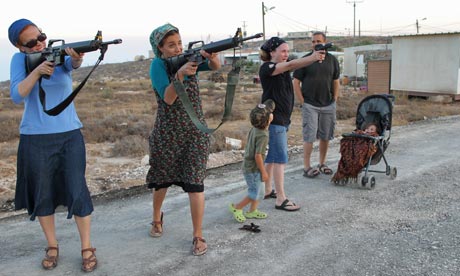
This fighting spirit filters through to the civilians on the streets of Israel. Everybody understands that Israel is under a concerted attack that could rear itself at any place and time. And yet, people continue to go about their daily business, with the determination not to allow this to disrupt their lives in any way. It is true that people are more cautious, perhaps even afraid of what can happen. But this does not dilute their determination. Instead of staying home in fear, they prefer to arm themselves with whatever they can in order to be ready for any eventuality. Many women have purchased pepper spray and other personal protective devices in case they are attacked. Some people are arming themselves with firearms, or simply walking around with a baseball bat to be ready for any situation. The picture shown here of a lady on a bus carrying a rolling pin in her bag has caused many people to
laugh, but it demonstrates the resilience shown by the new type of Jew. Even this older lady will not be deterred from going about her business. She has decided to take whatever she can find at home, that will help to protect her if she needs it. This is her way of holding her head up high, being proud and not allowing anything or anybody to stand in her way. We are proud of her, and of the wonderful example that she sets to those around her. More importantly, she sends the clearest possible message to our enemies. Our people will not be frightened off protecting and building our country. Not even our senior citizens.
The expulsion of the Jews from their homeland in 70 CE was followed by almost 2,000 years during which Jews were forced to keep their heads down, and pander to their hosts around the world. This engendered a general impression that Jews were timid, afraid and unable to stand up and fight for themselves. Since the independence of the State of Israel in 1948, we have seen the creation of a new type of Jew. The transformation has been led by our brave IDF soldiers, who have shown themselves willing to do all that it takes to defend their homeland and their people. Regular civilians have followed their lead, and we see an amazing level pride and patriotism coming out of all citizens in Israel.
Some of the fighting spirit and determination to survive is sometimes interpreted as undesirable, particularly by those who do not know and understand the Israeli character. They have a tough exterior that is, at times, considered to be rude and inconsiderate. There is a level of intolerance and impatience that is regarded by some to be synonymous with Israelis. In reality, this is simply the external manifestation of the resilience and the fortitude that come with being as determined and proud as most Israelis are. For those who are prepared to peel back the tough outer shell that so many Israelis have, they will be lucky to discover kind, considerate and caring people who are willing to look after their fellow-man as part of their survival instinct. This the where the "sabra" or prickly pear label comes from, that describes Israelis. Hard and resilient on the outside, but soft and sweet on the inside.
Perhaps more than being resilient and tough, Israelis are immensely patriotic and proud of their country. Even while feeling dissatisfied with political leaders, and perhaps not agreeing with their policies and behaviour, Israelis are incredibly proud of Israel. Finally, Jews have a place that they can truly call home, and nothing can break the bond that they have with their homeland, and the pride that they feel for Israel. Nothing will stop Israelis from fighting for this. Am Yisrael Chai!
Saturday, 13 December 2014
Apologetic No More
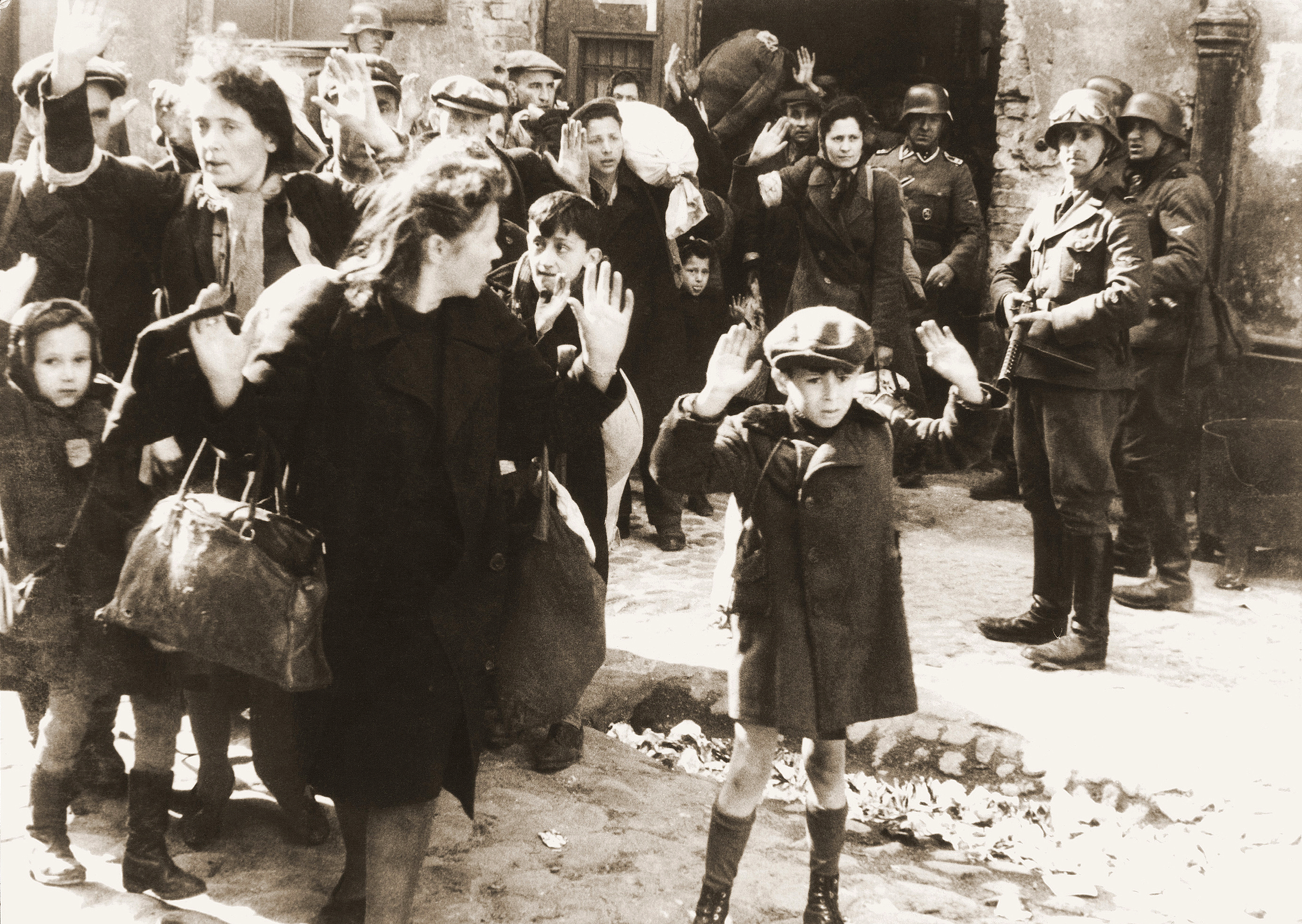
The most extreme manifestation of the apologetic Jew was seen during the tumultuous years of the 20th century, particularly in Eastern Europe. Jews were shipped from pillar to post without any regard for their humanity. This culminated in the biggest genocide known to mankind, the Shoa. It was contended by many, that Jews went to the gas chambers like "sheep to the slaughter', an accusation that does great injustice to the massive resistance that was instigated by Jews over the years of the Shoa. A picture that was widely distributed as representing the plight of the Jews at that time, has also contributed to the view of the apologetic Jew. The picture, believed to be of young Tsvi Chaim Nussbaum in the Warsaw Ghetto, tells a thousand words. This was the apologetic nature that many Jews such as Zeev Jabotinsky wished to try eradicate from the Jewish psyche. Jabotinsky used the example of Joseph Trumpeldor as the new type of Jew for his people to aspire to emulate.
The new type of Jew was born in 1948 with the declaration of independence of the State of Israel, the Jewish state. With the knowledge that Jews would never again be homeless, there was no longer the need to pander to the host countries in which Jews had lived in fear for so long. The Jewish army not only defended the safety and security of the Jewish state against the odds, it also protected and defended the rights and existence of Jews wherever they were around the world. Jewish confidence grew, and the need to be the weak and apologetic Jew was eradicated.
Despite 66 years having passed since this earth-shattering event in the Jewish world, and despite there being clear evidence that the Jewish state has truly given rise to a new type of Jew, we still find evidence of the apologetic Jew in our midst. Our brave IDF soldiers, true examples to Jews and non-Jews around the world, are the epitome of the new type of Jew. They volunteer to take on difficult and dangerous tasks to defend our state and our people, they are unafraid to go into battle when called upon to do so, they are as patriotic and proud as any Jew in history, while ensuring that they are humans at all times, even in the heat of battle. They are everything that Jabotinsky dreamed of, and more. And yet, this humanity has allowed the old, unpleasant apologetic characteristic to creep back into the psyche of our people.
Never before has an army been built with the strength and determination of the Israeli army. This army is considered to be one of the strongest in the world, and perhaps even the strongest on a man-for-man basis. And yet, one of the key characteristics that the army demonstrates, as part of the application of the Jewish values upon which it is built, is also regarded as a key weakness. The Israeli army has always gone out of its way to avoid civilian casualties, almost at any price. It is well documented that the Israeli army has called off important military strikes, and changed battle plans at the last minute, in order to avoid civilian casualties. The enemy has responded accordingly - by fighting entire wars in civilian clothing using civilian neighbourhoods to fire missiles from, and using civilians as human shields. All of this is done in the hope that Israel may be dissuaded from taking certain actions, due to its principle of avoiding civilian casualties. And if civilians become involved in the battle despite Israel's attempts to avoid this, the Palestinians stand ready with their access to the international media and social networks, to advertise that Israel targets innocent civilians. This has led Israel to adapt its way of engaging in battle, in order to be ready to justify every action that it takes and every attack that it launches.
Instead of using the obvious big picture that shows Palestinians using tactics to draw Israel into a battle involving civilians at every opportunity, Israel has become defensive and, dare I say it, somewhat apologetic. We see movies from the battleground showing pilots calling off critical attacks at the last minute due to the entry of a civilian to the area. We see Israel spending millions of dollars in developing defensive systems to shoot down missiles that are fired towards its own civilian population, instead of the easier and cheaper option of simply annihilating the location which is the source of the rocket fire. And when there is a necessity to attack areas that are known to house civilians, Israel uses personal telephone calls and SMS messages to warn civilians to leave the area. The fact that the Palestinian leadership forces civilians to remain in these areas despite Israel's warnings, never seems to be taken into serious consideration as a crime against civilians despite Israel having to endure huge criticism for its so-called targeting of civilians. Instead of being recognised for is efforts to act in a humanitarian way, it seems as though these actions attract more criticism. In turn, Israel has become increasingly defensive about the way in which it operates. Instead of being proud of what we have achieved on the battlefield and the humanity that we show, Israel is constantly trying to disprove the accusations that are levelled against it and is always concerned about the prospect of having to defend its accusations at the International Criminal Court. Entire teams of people are deployed to justify Israel's actions to the world in anticipation of the criticism after the fact. This would seem to be a very defensive position to take, and perhaps even invites criticism.
Israel is a democracy that allows people to use their seats in the Knesset to plot subversive activities against the security of the state, and gives citizenship and social benefits to the families of people who have carried out terror activities against innocent citizens of the country. It gives free access to religious sites, even to those who come to cause unrest and are open in their desire to eradicate the Jewish state and the Jews who live in it. The original concept of the Jewish state was to have a democracy, and to allow others to be welcome to live in it in the way that Jews were denied during the period of exile. Despite having achieved this and a great deal more, Israel is constantly being accused of being an apartheid state. Israel is the most criticised country at the United Nations Human Rights Council, and is forced to answer to human rights accusations posed by countries that are not democracies, and that kill hundreds of people each year as part of their policy of capital punishment. Israel finds itself treading carefully in the international community, almost apologetically, to avoid running the risk of being accused and singled out once again.
The unjustified attempts to make a scapegoat out of Israel are clearly fuelled by anti-Semitism. The plight of the innocent Palestinians, who suffer due to the policies and actions of their own leadership and not because of Israel, has served to effectively make anti-Semitism politically and socially acceptable. Left-wing groups around the world have united in support of the downtrodden Palestinians, something that is a worthy cause to support. The Palestinian leadership, who is to blame for this situation, conveniently deflects the blame onto Israel. This, in turn, provides an open season for those wishing to make anti-Israeli and anti-Semitic comments and actions politically acceptable and even correct.
I am concerned that Israel's over-sensitivity and apologetic response may well be further enabling those who seek to discredit and destroy her. I often wonder whether it would not be better for Israel to take a tough, unapologetic stand that shows pride in all her actions, while requiring to be held to the same standards as all others within the international community. Perhaps this would reduce the level of international attack that she is under. After all, Israel has every right to feel proud of what she has achieved. She has been at constant war and under constant attack for the 66 years of her existence. And yet, she remains concerned about not harming the innocent civilians of her enemies. This must surely be a first in international warfare. Let us not forget the bombings carried out over Dresden, Hiroshima and Nagasaki, to name but a few. Where were the recriminations for those actions, and the actions at the International Criminal Court? How would those who criticise Israel have responded to 66 years of constant warfare? I doubt that any other nation on earth would have acted with the same humanity as Israel has, given the same circumstances.
I believe that the time has come for Israel to change its approach in the international community, and for her to be prepared to stand more firmly behind her actions and behaviours. By being less apologetic, it is my view that the international community will also respond differently. Being nervous of the international reaction and showing even the slightest doubt about the justification of the actions simply invites attack and criticism. I hope that Israelis will continue to be very sensitive about all actions and responses to the threats to her security and existence, and will always behave with humanity. But Israel, and those who live here, should be apologetic no more.
Thursday, 4 December 2014
Is the "Jewish State" Bill Really Needed?
The Israeli government decided last week to submit the so-called
"Jewish State" bill for consideration to the Knesset to be incorporated
in the Basic Law. The decision by the government to approve this law
has proved to be enormously controversial, both within Israel as well as
by the international community. There are many questions about whether
the Jewish State bill is really needed in Israel at this time, whether
the bill is really required at all, and whether the introduction of such
a bill will make any difference to the facts on the ground in Israel?
The main purpose of the Jewish State bill is to enshrine in Israel's Basic Law (which acts as a type of constitution in the absence of an official constitution) that Israel is the national state of the Jewish people and that Israel is a Jewish state. Despite the fact that there are various references in different Israeli laws to the Jewish nature of Israel, and despite the fact that it is mentioned in the Declaration of Independence, members of the government have deemed it necessary and appropriate at this time to entrench it in the Basic Law.
While the proposed bill has yet to be passed into law, it seems as though the proposed bill in its current form will not make any difference to the way in which Israel operates. Israel has always been governed as a Jewish state. This manifests itself in a number of different aspects of Israeli everyday life. National holidays are according to the Jewish calendar, the day of rest is Saturday while Sunday is a regular school and working day, Jewish religious law is applicable in certain situations specifically those relating to family matters, and people with one Jewish grandparent are entitled to claim immediate citizenship of Israel under the Law of Return. None of these aspects of Israeli society will change as a result of the Jewish State bill. It is anticipated that all matters that relate to the Jewish nature of Israel will continue to apply in the same way as they have applied until now.
Some of the Jewish aspects of Israel have been controversial, in a country that prides itself on its democracy. There are those who believe that the Jewish nature of the state is a contradiction to democracy, due to the fact that these aspects disadvantage non-Jewish citizens of the state. Despite the fact that all Israelis, Jewish and non-Jewish, are entitled to vote, are entitled to be a member of Knesset, have the right to freedom of speech and receive state education and health, there are many who feel that the Jewish nature of the state discriminates against those who are not Jewish. As a counter-balance, non-Jewish citizens are not obliged to be conscripted to the army while young Jewish men and women are mostly required to sign up. Non-Jews are free to volunteer for military service, and many choose to do so. The question is whether these points of law, that favour Jews over non-Jews, result in a democracy that is not really democratic? How does this compare, for example, to affirmative action that has been employed in a number of democracies around the world. It is contended that favouring one group or race over another, even where this is designed to correct wrongs in the society, is an undemocratic policy. Does this make the entire country undemocratic? In cases outside of Israel, employing policies that may be considered questionable on a purely democratic scale, have not resulted in the country's democracy being called into question. By the same token, it is my view that the Law of Return and the Jewish nature of the state, do not change the fact that Israel is a real democracy, the only one in the Middle East.
If this is true, why would there be such opposition to formally adopting a Jewish State bill? Many people believe that the idea of reinforcing the Jewish nature of the state is, in itself, not objectionable. The problem for them is that the draft bill does not specifically balance this out against the democratic nature of the state. They object to the bill for its form rather than for its substance. These objectors wish to see some open statements in the draft bill to reinforce the democracy of the State of Israel, while also confirming the Jewish nature of the state. For other objectors, their opposition comes to the timing of the introduction of the bill. Israel is currently experiencing a wave of terror attacks that some are calling the start of the third Intifada. Israel has been criticised for events that have taken place on the Temple Mount in Jerusalem, and some have even accused Israel of attempting to change the current modus operandi of the Temple Mount. The situation is extremely sensitive, and there can be no doubt that the introduction of such a bill at this time contributes to stirring up this sensitive situation.
What is the reason behind Prime Minister Netanyahu's desire to introduce the Jewish state bill at this time? Perhaps it is about countering the current Palestinian violence and uprising that is being experienced in Jerusalem and other areas. The prime minister has been known to take unilateral steps against the Palestinians to counter the unilateral steps that the Palestinians take. I believe that it runs deeper than that. We know that the peace talks between the Palestinian Authority and Israel are currently stalled on the issue of the recognition of Israel as a Jewish state. Prime Minister Netanyahu has insisted that Palestinian Authority President Mahmoud Abbas acknowledges this fact before the talks can move forward. Abbas has failed to do this, and the talks are stalled. Netanyahu has come under criticism in the international community for this position, and it is presented that this is his own demand that has been made without justification. By passing this into law, Netanyahu can turn this argument around by saying that this fact is now in Israel's Basic Law. Failure to recognise this on the part of Abbas is tantamount to denying a fundamental tenet of the State of Israel. Have the Jewish State law on the books may cause further delays to the peace talks, but may also help to clear the logjam and progress the talks. Abbas will be forced to turn to his people to say that he has no choice where this is concerned because it is a law of the land, and not a whim of Netanyahu.
The Jewish nature of Israel is undeniable. This was clear to those who escaped the ashes of the Shoa and found Israel to be the only place that Jews can really feel safe, and it is clear now when anti-Semitism is rife around the world. Members of other religions have more than one country in which they can to choose to live, that will give them the religious freedom that they desire. Jews only have one. It is inconceivable that the Jewish nature of Israel can be denied, in the same way as the democracy of the State of Israel cannot be denied. The fact that some members of the international community are questioning the concept of the Jewish State bill, is perhaps enough reason to insist that it be passed into law. We have an obligation to future generations of Jews to ensure that the Jewish nature of Israel can never be denied, not by those who live here and not be those who do not. Israel will always be the safe haven for Jewish people, and placing this on the law books is a natural extension of the intentions of the founding fathers of our country as set out in the Declaration of Independence. It also reflects the views of the majority of those living in Israel, including many of those who are objecting to the introduction of the bill for technical reasons.
I do not believe that balancing the Jewish State bill with statements reinforcing Israel's democratic nature, dilutes the statement of the Jewish nature of Israel. As such, it seems sensible to balance the statement out in order to gain wider support in favour of the bill. Those non-Jews who wish to accept these principles upon which Israel is premised, are welcome to live here and enjoy our democracy. Despite the fact that the bill will change little or nothing on the ground about the way that Israel operates, I personally support having this on the statute books and including it in the Basic Law. After all, it is one of the fundamental premises upon which the State of Israel was built, and upon which the state continues to be built. And we should not be ashamed to say so.
The main purpose of the Jewish State bill is to enshrine in Israel's Basic Law (which acts as a type of constitution in the absence of an official constitution) that Israel is the national state of the Jewish people and that Israel is a Jewish state. Despite the fact that there are various references in different Israeli laws to the Jewish nature of Israel, and despite the fact that it is mentioned in the Declaration of Independence, members of the government have deemed it necessary and appropriate at this time to entrench it in the Basic Law.
While the proposed bill has yet to be passed into law, it seems as though the proposed bill in its current form will not make any difference to the way in which Israel operates. Israel has always been governed as a Jewish state. This manifests itself in a number of different aspects of Israeli everyday life. National holidays are according to the Jewish calendar, the day of rest is Saturday while Sunday is a regular school and working day, Jewish religious law is applicable in certain situations specifically those relating to family matters, and people with one Jewish grandparent are entitled to claim immediate citizenship of Israel under the Law of Return. None of these aspects of Israeli society will change as a result of the Jewish State bill. It is anticipated that all matters that relate to the Jewish nature of Israel will continue to apply in the same way as they have applied until now.
Some of the Jewish aspects of Israel have been controversial, in a country that prides itself on its democracy. There are those who believe that the Jewish nature of the state is a contradiction to democracy, due to the fact that these aspects disadvantage non-Jewish citizens of the state. Despite the fact that all Israelis, Jewish and non-Jewish, are entitled to vote, are entitled to be a member of Knesset, have the right to freedom of speech and receive state education and health, there are many who feel that the Jewish nature of the state discriminates against those who are not Jewish. As a counter-balance, non-Jewish citizens are not obliged to be conscripted to the army while young Jewish men and women are mostly required to sign up. Non-Jews are free to volunteer for military service, and many choose to do so. The question is whether these points of law, that favour Jews over non-Jews, result in a democracy that is not really democratic? How does this compare, for example, to affirmative action that has been employed in a number of democracies around the world. It is contended that favouring one group or race over another, even where this is designed to correct wrongs in the society, is an undemocratic policy. Does this make the entire country undemocratic? In cases outside of Israel, employing policies that may be considered questionable on a purely democratic scale, have not resulted in the country's democracy being called into question. By the same token, it is my view that the Law of Return and the Jewish nature of the state, do not change the fact that Israel is a real democracy, the only one in the Middle East.
If this is true, why would there be such opposition to formally adopting a Jewish State bill? Many people believe that the idea of reinforcing the Jewish nature of the state is, in itself, not objectionable. The problem for them is that the draft bill does not specifically balance this out against the democratic nature of the state. They object to the bill for its form rather than for its substance. These objectors wish to see some open statements in the draft bill to reinforce the democracy of the State of Israel, while also confirming the Jewish nature of the state. For other objectors, their opposition comes to the timing of the introduction of the bill. Israel is currently experiencing a wave of terror attacks that some are calling the start of the third Intifada. Israel has been criticised for events that have taken place on the Temple Mount in Jerusalem, and some have even accused Israel of attempting to change the current modus operandi of the Temple Mount. The situation is extremely sensitive, and there can be no doubt that the introduction of such a bill at this time contributes to stirring up this sensitive situation.
What is the reason behind Prime Minister Netanyahu's desire to introduce the Jewish state bill at this time? Perhaps it is about countering the current Palestinian violence and uprising that is being experienced in Jerusalem and other areas. The prime minister has been known to take unilateral steps against the Palestinians to counter the unilateral steps that the Palestinians take. I believe that it runs deeper than that. We know that the peace talks between the Palestinian Authority and Israel are currently stalled on the issue of the recognition of Israel as a Jewish state. Prime Minister Netanyahu has insisted that Palestinian Authority President Mahmoud Abbas acknowledges this fact before the talks can move forward. Abbas has failed to do this, and the talks are stalled. Netanyahu has come under criticism in the international community for this position, and it is presented that this is his own demand that has been made without justification. By passing this into law, Netanyahu can turn this argument around by saying that this fact is now in Israel's Basic Law. Failure to recognise this on the part of Abbas is tantamount to denying a fundamental tenet of the State of Israel. Have the Jewish State law on the books may cause further delays to the peace talks, but may also help to clear the logjam and progress the talks. Abbas will be forced to turn to his people to say that he has no choice where this is concerned because it is a law of the land, and not a whim of Netanyahu.
The Jewish nature of Israel is undeniable. This was clear to those who escaped the ashes of the Shoa and found Israel to be the only place that Jews can really feel safe, and it is clear now when anti-Semitism is rife around the world. Members of other religions have more than one country in which they can to choose to live, that will give them the religious freedom that they desire. Jews only have one. It is inconceivable that the Jewish nature of Israel can be denied, in the same way as the democracy of the State of Israel cannot be denied. The fact that some members of the international community are questioning the concept of the Jewish State bill, is perhaps enough reason to insist that it be passed into law. We have an obligation to future generations of Jews to ensure that the Jewish nature of Israel can never be denied, not by those who live here and not be those who do not. Israel will always be the safe haven for Jewish people, and placing this on the law books is a natural extension of the intentions of the founding fathers of our country as set out in the Declaration of Independence. It also reflects the views of the majority of those living in Israel, including many of those who are objecting to the introduction of the bill for technical reasons.
I do not believe that balancing the Jewish State bill with statements reinforcing Israel's democratic nature, dilutes the statement of the Jewish nature of Israel. As such, it seems sensible to balance the statement out in order to gain wider support in favour of the bill. Those non-Jews who wish to accept these principles upon which Israel is premised, are welcome to live here and enjoy our democracy. Despite the fact that the bill will change little or nothing on the ground about the way that Israel operates, I personally support having this on the statute books and including it in the Basic Law. After all, it is one of the fundamental premises upon which the State of Israel was built, and upon which the state continues to be built. And we should not be ashamed to say so.
Saturday, 26 November 2011
Message To My Son
My son,
For the past fourteen years, we knew that this day would eventually come. Somehow, I did not imagine that it would be like this. When we decided all those years ago to make our home in Israel, you were only 6 years old. The notion of you becoming a soldier in the Israel Defense Force (IDF) seemed so far removed from the reality of our everyday lives. We were living in the post-Oslo period, which gave us all a false sense of security that peace was about to break out in the Middle East. The advantages of moving our lives to the Jewish homeland, seemed to far outweigh the disadvantages. This was true even when we considered the fact that you would be obliged to serve in the Jewish army. Now that your draft date has arrived, I find myself revisiting those decisions taken on your behalf, and the events that have occurred since then.
Over the years, we have discovered that the hopes that we all had for peace, were simply a false facade for the duplicitous dealings of Palestinian leader Yasser Arafat. We have been forced to endure wars, terror attacks and continued threats to destroy Israel and the Jewish people. We have witnessed how any young man or woman in the IDF uniform has become a target for attack or kidnap by our enemies. All of these things contribute to making your service in the IDF a much more dangerous and risky prospect than was previously the case. In a perverse sort of way, it is also these events that make your service of greater value and importance to Israel and the Jewish people than before.
During the course of your schooling in Israel, you have learned about the numerous attempts to annihilate the Jewish people. You have visited Auschwitz and other death camps in Poland where millions of Jews were put to death, only because they were Jews. You understand very well, the context of the service that you are about to render in the IDF. You know that 6 million Jews would not have lost their lives in the Holocaust if a Jewish army had existed at that time. You also know that new Hitlers arise in every generation. Given the chance, Ahmadinejad, Nasrallah and others would follow in Hitler's footsteps to try to wipe the Jews off the earth, even in our day and age. There is only one thing that stops them from doing so, and this is the IDF. The IDF not only ensures the safety and survival of Israel and her citizens, it also gives freedom to Jews around the world to exist as Jews in relative safety, freedom and security. As a soldier in the IDF, you will continue to protect all Jews around the world against the numerous enemies that seek to destroy the Jews. You understand the importance of agreeing to serve in order to ensure that the IDF continues to be a strong force and protector of the Jewish people, even in the future.
Even though the big picture is clear and a great motivating force, it does not necessarily make the day-to-day realities of military life any easier. You feel unsure of what the future holds for you, and are not clear what your task in the IDF will be or where you will serve. We feel nervous with you and for you, as you contemplate this great unknown venture ahead of you. We all know that the army cannot necessarily accommodate every individual's needs and requests, and place each person in the position that is best suited to them personally. The army's needs come first, and you will be forced to undertake a role which is not one that you would have chosen for yourself. In spite of all of this, we have watched you approach your military service with tremendous maturity and a positive attitude. You have done all that you can to guarantee that your rights are protected, and to try to find your way to a role that will keep you interested and well-utilised. We have equally seen your willingness to do whatever is needed, even where this does not necessarily match what you want.
Today, as I watch these events before my eyes, and contemplate the next three years in which you will be a soldier in the IDF, I feel a tremendous pride. I am enormously proud of the fact that you and your friends are willing to sacrifice three years of your life to serve your country and your people. At a time when only one in two eligible Israelis are actually being drafted, every man and woman counts for a great deal. You have stood up and been counted. I am extremely proud of the fact that you are determined to undertake a role that will keep you challenged and allow you to make a real contribution. Many have decided that they prefer to lay low and do as little as possible to allow the three years to pass in any uneventful way. This is not for you. You are determined to have a job that will keep you interested, and will allow you to make some use of the tremendous talents and skills that you have. I am proud of the fact that you understand the necessity for you to play your role, at a time when many others are finding ways to escape this.
You have benefited over the past fourteen years from all the good things that Israeli society has to offer its children. You have had the opportunity to walk the streets in relative safety whenever you wish, and to learn the independence that is typical of Israeli youth. You have explored all corners of Israel, and connected to the Jewish homeland that was inhabited by your forefathers. You have celebrated Jewish festivals and Israeli national holidays amongst your fellow Jews. You have explored and developed your technical skills in an environment that is amongst the most technologically advanced in the world. You have represented your country in an international competition, bringing great credit to your country, city, school and family. You have volunteered to help underprivileged youth, and experienced the difficulties that so many people in Israel are suffering. And now you are ready to take this further in making a commitment to safeguard your country and your people.
We wish you success and happiness during the time that you will serve. We hope that you will find a way to make a meaningful contribution, and that will allow you to develop yourself in the process. We pray for your health and safety, in mind and in body, and for the safety of those serving alongside you. No matter where you are or what you are doing, we will be supporting you all the way, and eagerly awaiting the hours that you will be allowed to spend with us at home. May Hashem guide and protect you in all that you do, wherever you may be. I am extremely proud to be your father.
For the past fourteen years, we knew that this day would eventually come. Somehow, I did not imagine that it would be like this. When we decided all those years ago to make our home in Israel, you were only 6 years old. The notion of you becoming a soldier in the Israel Defense Force (IDF) seemed so far removed from the reality of our everyday lives. We were living in the post-Oslo period, which gave us all a false sense of security that peace was about to break out in the Middle East. The advantages of moving our lives to the Jewish homeland, seemed to far outweigh the disadvantages. This was true even when we considered the fact that you would be obliged to serve in the Jewish army. Now that your draft date has arrived, I find myself revisiting those decisions taken on your behalf, and the events that have occurred since then.
Over the years, we have discovered that the hopes that we all had for peace, were simply a false facade for the duplicitous dealings of Palestinian leader Yasser Arafat. We have been forced to endure wars, terror attacks and continued threats to destroy Israel and the Jewish people. We have witnessed how any young man or woman in the IDF uniform has become a target for attack or kidnap by our enemies. All of these things contribute to making your service in the IDF a much more dangerous and risky prospect than was previously the case. In a perverse sort of way, it is also these events that make your service of greater value and importance to Israel and the Jewish people than before.
During the course of your schooling in Israel, you have learned about the numerous attempts to annihilate the Jewish people. You have visited Auschwitz and other death camps in Poland where millions of Jews were put to death, only because they were Jews. You understand very well, the context of the service that you are about to render in the IDF. You know that 6 million Jews would not have lost their lives in the Holocaust if a Jewish army had existed at that time. You also know that new Hitlers arise in every generation. Given the chance, Ahmadinejad, Nasrallah and others would follow in Hitler's footsteps to try to wipe the Jews off the earth, even in our day and age. There is only one thing that stops them from doing so, and this is the IDF. The IDF not only ensures the safety and survival of Israel and her citizens, it also gives freedom to Jews around the world to exist as Jews in relative safety, freedom and security. As a soldier in the IDF, you will continue to protect all Jews around the world against the numerous enemies that seek to destroy the Jews. You understand the importance of agreeing to serve in order to ensure that the IDF continues to be a strong force and protector of the Jewish people, even in the future.
Even though the big picture is clear and a great motivating force, it does not necessarily make the day-to-day realities of military life any easier. You feel unsure of what the future holds for you, and are not clear what your task in the IDF will be or where you will serve. We feel nervous with you and for you, as you contemplate this great unknown venture ahead of you. We all know that the army cannot necessarily accommodate every individual's needs and requests, and place each person in the position that is best suited to them personally. The army's needs come first, and you will be forced to undertake a role which is not one that you would have chosen for yourself. In spite of all of this, we have watched you approach your military service with tremendous maturity and a positive attitude. You have done all that you can to guarantee that your rights are protected, and to try to find your way to a role that will keep you interested and well-utilised. We have equally seen your willingness to do whatever is needed, even where this does not necessarily match what you want.
Today, as I watch these events before my eyes, and contemplate the next three years in which you will be a soldier in the IDF, I feel a tremendous pride. I am enormously proud of the fact that you and your friends are willing to sacrifice three years of your life to serve your country and your people. At a time when only one in two eligible Israelis are actually being drafted, every man and woman counts for a great deal. You have stood up and been counted. I am extremely proud of the fact that you are determined to undertake a role that will keep you challenged and allow you to make a real contribution. Many have decided that they prefer to lay low and do as little as possible to allow the three years to pass in any uneventful way. This is not for you. You are determined to have a job that will keep you interested, and will allow you to make some use of the tremendous talents and skills that you have. I am proud of the fact that you understand the necessity for you to play your role, at a time when many others are finding ways to escape this.
You have benefited over the past fourteen years from all the good things that Israeli society has to offer its children. You have had the opportunity to walk the streets in relative safety whenever you wish, and to learn the independence that is typical of Israeli youth. You have explored all corners of Israel, and connected to the Jewish homeland that was inhabited by your forefathers. You have celebrated Jewish festivals and Israeli national holidays amongst your fellow Jews. You have explored and developed your technical skills in an environment that is amongst the most technologically advanced in the world. You have represented your country in an international competition, bringing great credit to your country, city, school and family. You have volunteered to help underprivileged youth, and experienced the difficulties that so many people in Israel are suffering. And now you are ready to take this further in making a commitment to safeguard your country and your people.
We wish you success and happiness during the time that you will serve. We hope that you will find a way to make a meaningful contribution, and that will allow you to develop yourself in the process. We pray for your health and safety, in mind and in body, and for the safety of those serving alongside you. No matter where you are or what you are doing, we will be supporting you all the way, and eagerly awaiting the hours that you will be allowed to spend with us at home. May Hashem guide and protect you in all that you do, wherever you may be. I am extremely proud to be your father.
Sunday, 19 December 2010
Playing Politics With the IDF Conversion Bill
With so many important matters confronting our government, I often feel really frustrated at the amount of time that seems to be wasted by politicians in playing needless political games. This is exactly the feeling that I have now watching the amount of time, effort and money that is being wasted in bringing the so-called IDF Conversion Bill through the Knesset.The background to the story begins with what seems to be one of the great anomalies of the modern State of Israel. The Law of Return was enacted soon after the independence of Israel. This law is designed to give Jews an automatic right to take up citizenship in Israel without any need for a period of naturalisation. This was a particularly urgent need in the years following the Holocaust when so many Jews were displaced without being a citizen of any country, or who were citizens of countries that they were eager to escape from. The Law of Return grants the right to immediate citizenship of Israel to those who have one Jewish grandparent. The definition of those who have entitlement under the law, comes from the one that Hitler applied to those who he decided should be put to death under the "Final Solution". The definition is, however, at odds with the definition of a Jew under Jewish law. Under Jewish law (halacha), any person who has a Jewish mother is Jewish. This results in thousands of Israeli citizens, who have obtained citizenship under the Law of Return, who are not Jewish according to halacha.
This phenomenon particularly affects many of the immigrants who came from the countries of the former Soviet Union, and who increasingly found themselves hitting their heads against a bureaucratic brick wall as a result of their status as non-Jewish Israeli citizens. To them, it seems absurd that they are granted citizenship of a country, only to find that they are not treated as "full Jews" under the law. The great melting pot of Israeli society is the Israel Defence Force (IDF) and, as the IDF has seen more and more of these people coming through their ranks, they have decided to implement a program to allow those who wish to convert to Judaism during the course of their military training. Over the past eight to ten years, almost 5,000 soldiers have been converted to Judaism under the auspices of the IDF and its Chief Rabbi.
Recently, these conversions were brought into question by Israel's Chief Rabbinate, in its capacity as the national authority over all conversions to Judaism in Israel. This means that all those who were converted to Judaism during their military service, may find themselves being declared not "properly" Jewish if this is what the Chief Rabbinate decides. The status of 5,000 people is suddenly brought into question, and their lives thrown into turmoil. It seems that the reason for the Chief Rabbinate questioning the conversions has nothing to do with the process followed or the way in which the conversions were undertaken. We are told that they have found this all to be entirely kosher ! The reason for reopening these cases is seemingly all about power. The Chief Rabbinate needs to exercise the power which it has been granted on these issues, to ensure that the IDF Rabbinate does not exceed its own powers. The lives of the individuals concerned is nothing when compared to the necessity for these organisations to assert their power and authority.
The issue was brought to the Knesset when the Yisrael Beiteinu party,which has many of the IDF converts in its constituency of supporters, introduced a bill that will legally confirm these conversions and not allow them to be reopened by the Chief Rabbinate. Although I can fully associate with the party and its desire to represent the interests of its voters, the truth is that this issue should never need to be raised by the Knesset. This is an issue which can easily be sorted out between the Chief Rabbinate and the IDF, without Israel's legislature being forced to intervene. What makes things worse is the fact that the Shas party actually opposed the bill. The Shas opposition arises from the desire to strengthen Israel's Sephardi Chief Rabbi, who is also head of the conversion court. It seems as though the introduction of this bill is seen to be weakening his authority on this matter.
The Knesset battle is all about power. On the one hand, the converts and Yisrael Beiteinu are seeking to undermine the powers vested in the Chief Rabbinate, while Shas and its supporters are desperately working to strengthen them. Caught in the middle of this all is Prime Minister Netanyahu who has been forced to intervene, as the two parties opposing each other on the matter are both members of his governing coalition. A serious split on this seemingly insignificant issue could bring down the narrow coalition, and the government with it.
Irrespective of how the Knesset ultimately votes on this matter, it is shameful that precious government and parliament time needs to be devoted to this power struggle. While it may be true that the Chief Rabbinate formally has a power of veto on matters relating to conversions, there seems to be no logical reason why they could not come to an arrangement with the IDF to ease the path and future lives of the converts in question. Reopening conversions going back ten years seems to be a price that is too high to pay for the benefit of reinforcing the power of the Chief Rabbinate. The decision to do this has clearly been the wrong one. This is a classic case of power incorrectly exercised for personal gain.
For the record, the prime minister agreed not to enforce the coalition agreement (which binds members of government to vote in the way that the prime minister prescribes) for the purpose of voting on the IDF Conversion Bill, and allowed all members of the coalition to vote according to their conscience. The preliminary Knesset reading of the bill was passed by a large majority of 74 votes to 18. The significant issue of wasting valuable Knesset time has, however, not yet debated.
The largest issue at stake is the lives of 5,000 converts and their families. These are individuals who have come to Israel as new immigrants, and who have served the country with distinction by serving in the armed forces. This is the army that defends not only Israelis, but Jews around the world. It is right that those who have converted to Judaism according to the rules laid down, should be allowed to be secure in the knowledge that they are fully accepted within the Jewish fold. With so many Jews being lost to assimilation around the world, we can ill afford to disrespect and disregard those who choose to join the ranks, and who are prepared to put their lives on the line in the defence of the Jewish state. Jewish law requires us to respect converts to Judaism even more than those who were born Jewish. These converts deserve the greatest respect that we can give them.
Sunday, 17 October 2010
Six Weeks Later and The Time Article Looks So Different
The article published in Time Magazine on the 2nd September 2010 went under the heading "Why Israelis Don't Care About Peace." The heading was not a question, it was a statement. The article tried to create the impression that Israelis have no interest in the peace talks with the Palestinians, or whether a peace agreement is achieved or not. After interviewing 3 or 4 Israelis who sent the message that the ongoing peace talks were not on the forefront of their minds, Time writer Karl Vick concluded that this attitude applies to all Israelis.The article was taken by many Jews around the world to be anti-Semitic, and as an unjustified criticism on Israelis and Israeli society. It is certainly a judgement on Israelis in the sense that it expects them (us) to be preoccupied with making peace with the Palestinians, instead of concerning ourselves with daily issues. Millions of citizens around the world are entitled to live their lives by worrying about their children, making a living, and other daily concerns. Israelis, however, are seemingly obliged to be preoccupied by peace-making. In the event that Israelis have the audacity to enjoy the "good life" and reap some of the benefits of 62 years of sweat and toil, does this mean that they are doing the wrong thing? Is it a requirement that Israelis not have fun or enjoy everyday activities until there is peace with the Palestinians? This could produce generations of very miserable people, as peace does not seem imminent.
The reality is that, when the article was written some 6 weeks ago, the prospects for peace were looking more optimistic. The Palestinians had decided, seemingly against their better judgement, to enter into direct peace talks with the Israelis. There was talk of peace within 12 months, which seemed to ignore the reality that, over decades and even hundreds of years, there has been an inability to reach a peace. There was the sense of being on the verge of a great achievement, which was particularly felt by the USA and other countries who were involved in attempts to bring Palestinians and Israelis to the negotiating table. Optimism was felt by many people around the world, and the impression was that it was only a matter of time before peace would suddenly break out. For Israelis, however, the same level of enthusiasm was not felt. After all, this is the nation that has been through similar events over many years at Wye Plantation, at Camp David and numerous other peace meetings. All of the previous peace-making attempts proved to be unsuccessful, even when it seemed as though many of the most important issues had already been agreed upon. It is surely unwise and inadvisable to begin to pop the champagne corks before even the first key meeting has taken place. History has made the Israelis realise that it is better to lower expectations until the final outcome is decided. This is the way to avoid feeling disappointed, and let down over and over again.
Now, 6 weeks later, with the Palestinians refusing to return to the negotiating table, it would seem as if the "lack of interest" in peace may have been justified. Whether the Israelis are to blame for not unilaterally agreeing to extend the construction moratorium, or whether the Palestinians are to blame for not agreeing to recognise Israel as a Jewish state is not really the issue here. The fact is that the peace process is, once again, in tatters. It is just as well that nobody raised their expectations or devoted too much of their time to it. Perhaps the optimism of a couple of months ago was simply an illusion created by the international community for public consumption, which was not necessarily felt by the parties to the discussions? I wonder whether Karl Vick would still be so critical of Israelis for not caring about peace under the current circumstances. The question that I ask is "what peace?"
Despite the impression that Vick left readers of his story with, Israelis do care about peace. They care very deeply about peace, due to the fact that each and every citizen has an interest in a peace agreement. The main reason for this is because a lack of peace continues to put Israel at war with its neighbours. This is a war that has lasted for 62 years and even longer. In order to fight this war, Israel has been forced to call upon every citizen of the country to participate in fighting the war. All the time that young men are conscripted for 3 years, and young women conscripted for 2 years in the defence of their country, Israelis are "forced" to care about peace. As the parent of conscription-age children, I know that any peace agreements will go some way towards creating a safer environment for my children during the time of their national service. There is no family in Israel that does not have some link to children currently serving in the army, or due to serve in the army in the near future. There can be no greater incentive to care about peace than this.
The colloquial term to describe an Israeli is a "Sabra", a prickly pear. The reason why Israelis are called Sabras is because they are believed to have a tough and prickly exterior to those who first meet them. The comparison continues in the contention that, once the thick exterior is peeled away, there is a soft and sweet interior which is only visible to those who care to delve deeply enough. The hard outer shell not only allows Israelis to somehow survive 62 years of incessant war, it also gives protection against the raising of expectations, which are largely dashed soon afterwards. After all, this seems to be part of the daily cycle of life in Israel. This may give the impression that Israelis don't care about peace, but nothing can be further from the truth. After all, their very existence and future is ultimately dependent upon finding a secure, just and lasting peace.
It may be that Karl Vick has not been able to see pass the outer shell of the prickly pears that he has met. His article shows an extremely superficial analysis of the way in which Israelis think, and sees past the things that truly affect their lives. The fact that the people that he interviewed succeeded in convincing him that they are able to continue with their lives despite the unstable political and security situation in which they are forced to live, is perhaps a tribute to the determination and the resilience of the Israeli spirit. But don't, for a moment, interpret this to mean that we do not care.
Sunday, 19 September 2010
Is Israel Really a Jewish Country?
The issue of Israel's right
to exist as a Jewish country has once again become an issue in the context of the current round of direct peace negotiations with the Palestinians. Israeli prime minister Benjamin Netanyahu has insisted that the Palestinians agree to recognise Israel's right to exist as a Jewish state in the proposed two-state solution. For some, however, it seems that this is a step too far.
What right does Israel have to define itself as a Jewish country? Even though the population register shows that 80% of its citizens are Jewish, is this enough? Brazil, Italy and The Philippines do not define themselves as Catholic countries despite significant Catholic majorities, so why should Israel insist on being recognised as a Jewish country? A recent survey in Israel showed that more than 40% of its citizens regard themselves as secular Jews. This is as opposed to those who consider themselves to be religious or traditional Jews. Does the fact that so many citizens are Jewish by birth, but don't participate in Jewish religious traditions and practices reduce Israel's right to be defined as a Jewish country? There seem to be many questions whose answers could have a significant impact on Israel's future, and on the shape of her future.
Israel was established as a homeland for the Jewish people, and nothing has changed during the course of the last 62 years. At the time of independence in 1948, Israel represented one of the only safe-havens for Jews to live free of persecution and anti-Semitism, irrespective of whether they wished to practice their Judaism or not. It is this principle which is still in force today. Israel remains a Jewish country, and being Jewish is part of its character and make-up. It is not coincidental that the only day in the week that schoolchildren have off from school is Saturday, the day of the Jewish Sabbath. It is not by accident that the Tel Aviv Stock Exchange trades on Christmas Day, but not on Yom Kippur (or any of the other Jewish religious holidays). These practices have been put in place because of the fact that Israel is a Jewish country, and not simply to be different from other countries. Jewish practices are applied uniformly to all who live in Israel whether they be religious, secular or somewhere in between. They also apply to non-Jews who make Israel their home.
Being Jewish is not governed by a person's level of religiosity, or the extent to which he or she observes Jewish law. A person is determined as being Jewish at birth if he or she is born to a Jewish mother. No further qualifications are required. Even though there are those who renounce their Judaism in favour of other religions or beliefs, Judaism does not really believe in the possibility of becoming non-Jewish at any time. It is true that non-Jews can convert to Judaism, but this is a one-way street which does not allow Jews to escape their roots entirely.
The most holy day in the Jewish calendar, Yom Kippur, was observed over the past weekend. It seems to me that this is one of the true tests of how Jewish Israel really is. A few facts about Yom Kippur really stand out for me, and I am reminded of them each year that I am in Israel. They seem to be highly relevant to the argument of whether Israel is truly a Jewish country or not. Somehow, Israelis across the political and religious divides seem to return to their roots on Yom Kippur day. It is interesting to me that a recent survey revealed that only 28% of all Israelis had decided that they would not fast on Yom Kippur. In addition to all religious respondents and the vast majority of traditional respondents saying that they would fast, the survey revealed that half of the secular respondents also said that they would fast. During the course of Yom Kippur, no vehicles can be found on the roads in the cities across Israel. Although Jewish law demands that vehicles not be driven on Yom Kippur, there are many secular people who do not subscribe to this law but still do not drive on Yom Kippur. It is part of the atmosphere and the tradition of the day that all Israelis choose not to drive their cars. The fact that children take advantage of the vehicle-free streets to ride their bicycles and scooters in large numbers does not, in my view, detract from the spirit of Yom Kippur. A really lovely tradition is for pedestrians to walk in the middle of the street while the cars stay away. It allows people to be outdoors together in an atmosphere of unity and togetherness, that is difficult to find anywhere else that I have been.
In the city of Ra'anana where I live, the municipality arranged religious services in school halls throughout the city. These services are directed at regular people who have no affiliation to a synagogue, but still wish to attend a Yom Kippur service. I attended one of these "Yom Kippur for all" services, and observed a basketball hall packed to capacity of people who otherwise do not attend religious services. This is in addition to the hundreds of synagogues across the city who were filled with regular members and visitors.
Immediately following the conclusion of the fast of Yom Kippur, sounds could be heard across the city of people constructing their temporary dwellings, Sukkot, for the festival of Sukkot (Tabernacles) that follows a few days after Yom Kippur. The construction of these temporary structures is a tradition followed by many secular Jews in addition to their religious and traditional brethren. Once again we have evidence that, no matter how secular the society is, there are certain traditions and practices of Judaism which are uniformly followed by a vast majority of Israeli Jewish citizens. These include the celebration of the Sabbath in some way each week, and celebrating the festival of Purim amongst other things.
If there is a requirement to prove that Israeli society follows Jewish practices, the evidence seems to me to be overwhelming. It is almost inconceivable that Israel's status as a Jewish country would not be respected and publicly recognised in a peace agreement. If Iran, Saudi Arabia and other countries can be a Islamic countries, there is no reason to prevent Israel from being a Jewish state, the only Jewish state. If this simple fact cannot be acknowledged and set in stone in an agreement, for me there can be no peace deal.
to exist as a Jewish country has once again become an issue in the context of the current round of direct peace negotiations with the Palestinians. Israeli prime minister Benjamin Netanyahu has insisted that the Palestinians agree to recognise Israel's right to exist as a Jewish state in the proposed two-state solution. For some, however, it seems that this is a step too far.What right does Israel have to define itself as a Jewish country? Even though the population register shows that 80% of its citizens are Jewish, is this enough? Brazil, Italy and The Philippines do not define themselves as Catholic countries despite significant Catholic majorities, so why should Israel insist on being recognised as a Jewish country? A recent survey in Israel showed that more than 40% of its citizens regard themselves as secular Jews. This is as opposed to those who consider themselves to be religious or traditional Jews. Does the fact that so many citizens are Jewish by birth, but don't participate in Jewish religious traditions and practices reduce Israel's right to be defined as a Jewish country? There seem to be many questions whose answers could have a significant impact on Israel's future, and on the shape of her future.
Israel was established as a homeland for the Jewish people, and nothing has changed during the course of the last 62 years. At the time of independence in 1948, Israel represented one of the only safe-havens for Jews to live free of persecution and anti-Semitism, irrespective of whether they wished to practice their Judaism or not. It is this principle which is still in force today. Israel remains a Jewish country, and being Jewish is part of its character and make-up. It is not coincidental that the only day in the week that schoolchildren have off from school is Saturday, the day of the Jewish Sabbath. It is not by accident that the Tel Aviv Stock Exchange trades on Christmas Day, but not on Yom Kippur (or any of the other Jewish religious holidays). These practices have been put in place because of the fact that Israel is a Jewish country, and not simply to be different from other countries. Jewish practices are applied uniformly to all who live in Israel whether they be religious, secular or somewhere in between. They also apply to non-Jews who make Israel their home.
Being Jewish is not governed by a person's level of religiosity, or the extent to which he or she observes Jewish law. A person is determined as being Jewish at birth if he or she is born to a Jewish mother. No further qualifications are required. Even though there are those who renounce their Judaism in favour of other religions or beliefs, Judaism does not really believe in the possibility of becoming non-Jewish at any time. It is true that non-Jews can convert to Judaism, but this is a one-way street which does not allow Jews to escape their roots entirely.
The most holy day in the Jewish calendar, Yom Kippur, was observed over the past weekend. It seems to me that this is one of the true tests of how Jewish Israel really is. A few facts about Yom Kippur really stand out for me, and I am reminded of them each year that I am in Israel. They seem to be highly relevant to the argument of whether Israel is truly a Jewish country or not. Somehow, Israelis across the political and religious divides seem to return to their roots on Yom Kippur day. It is interesting to me that a recent survey revealed that only 28% of all Israelis had decided that they would not fast on Yom Kippur. In addition to all religious respondents and the vast majority of traditional respondents saying that they would fast, the survey revealed that half of the secular respondents also said that they would fast. During the course of Yom Kippur, no vehicles can be found on the roads in the cities across Israel. Although Jewish law demands that vehicles not be driven on Yom Kippur, there are many secular people who do not subscribe to this law but still do not drive on Yom Kippur. It is part of the atmosphere and the tradition of the day that all Israelis choose not to drive their cars. The fact that children take advantage of the vehicle-free streets to ride their bicycles and scooters in large numbers does not, in my view, detract from the spirit of Yom Kippur. A really lovely tradition is for pedestrians to walk in the middle of the street while the cars stay away. It allows people to be outdoors together in an atmosphere of unity and togetherness, that is difficult to find anywhere else that I have been.
In the city of Ra'anana where I live, the municipality arranged religious services in school halls throughout the city. These services are directed at regular people who have no affiliation to a synagogue, but still wish to attend a Yom Kippur service. I attended one of these "Yom Kippur for all" services, and observed a basketball hall packed to capacity of people who otherwise do not attend religious services. This is in addition to the hundreds of synagogues across the city who were filled with regular members and visitors.
Immediately following the conclusion of the fast of Yom Kippur, sounds could be heard across the city of people constructing their temporary dwellings, Sukkot, for the festival of Sukkot (Tabernacles) that follows a few days after Yom Kippur. The construction of these temporary structures is a tradition followed by many secular Jews in addition to their religious and traditional brethren. Once again we have evidence that, no matter how secular the society is, there are certain traditions and practices of Judaism which are uniformly followed by a vast majority of Israeli Jewish citizens. These include the celebration of the Sabbath in some way each week, and celebrating the festival of Purim amongst other things.
If there is a requirement to prove that Israeli society follows Jewish practices, the evidence seems to me to be overwhelming. It is almost inconceivable that Israel's status as a Jewish country would not be respected and publicly recognised in a peace agreement. If Iran, Saudi Arabia and other countries can be a Islamic countries, there is no reason to prevent Israel from being a Jewish state, the only Jewish state. If this simple fact cannot be acknowledged and set in stone in an agreement, for me there can be no peace deal.
Saturday, 14 August 2010
When Israeli Youth Grow Up
Israeli youth generally have a bad name amongst their peers around the world for being undisciplined, for not showing respect to others and for generally lacking manners. This results from the laissez-faire manner in which Israeli society allows them to grow up. Children in Israel seem to be al
lowed to do almost as they please without any restrictions. There seem to be no boundaries or red lines drawn to provide these children with the framework that they require if we are to believe the child behaviour experts.
The attitude towards children in Israel, we are told, arises from historical events in the years immediately preceding the declaration of the State of Israel, and events since then. After the annihilation of 6 million Jews during the Second World War, children took on a much greater level of significance in the period following the Holocaust. The children were the future to rebuilding the gaping hole left by the victims of the Holocaust. They were all that was left of almost an entire generation destroyed. During the 62 years of the existence of the State of Israel, the daily threat to her very existence has forced Israel to act to defend herself and secure her continued presence in the community of nations. To achieve this, Israel has been forced to build an army made up of the youth of Israel. The responsibility that rests on the shoulders of these young men and women when they enlist in the IDF at the age of 18 or 19 years old is immense. These young people are forced to act in the heat of the battle, and are forced to witness things in a way which no young person of similar age should be forced to experience. This compels Israeli youth to grow up overnight to be able to cope with this, and put their childhood behind them very quickly. But this the reality of modern-day Israel.
The importance of these children to Israel and the Jewish people is reflected by the way in which they are treated in Israeli society. They are allowed to "be children" in every sense of the word. They have free reign to do as they please, and to experience anything and everything that they wish. Society bows down before them and makes no attempt to limit them or their behaviour in any way. After all, far too many of our children have had their lives cut short at an early age and we wish to allow them to do all that their heart desires for fear of the possibility that they may not have the chance to get older and experience these things later on. Even, though this approach goes against all the theories of good child-raising, these theories don't take into consideration the Israeli reality, or that such a situation could ever exist in the 21st century. Despite doing all the "wrong things" in raising our children, we see our young people enlist in the IDF and form one of the world's most effective fighting units. Who would ever think that Jewish kids raised in such circumstances could form such a formidable army? The reality is there for all to see.
I have been honoured to witness another impressive phenomenon that comes out of a country that raises its youth in all the "wrong ways". I was proud to be at the Nahal Memorial one evening last week to be present at the opening ceremony for the current year of voluntary service under the framework of Israel's Scouting movement. I saw 480 young men and women from the Scout movement across Israel complete their training seminar, and embark upon a year which will take them to needy and underprivileged communities in the heartland of Israel and in the outlying areas. Their task is to volunteer their year to helping needy Israeli youth. While they are, of course, also attempting to grow the Israeli Scout movement through their work, there is a clear brief to devote their time to the community at large. This represents an amazing resource to these communities, and to the State of Israel. In total, approximately 2,000 young men and women will be volunteering across Israel as part of a number of different programs. This represents an amazing resource to these communities, and to the State of Israel.
The decision by these young people to take this year off to volunteer their time is not trivial. They are all youth who still have compulsory military training ahead of them - 3 years for the boys and 2 years for the girls. Many of them will wish to attend institutions of higher education to earn university degrees, which means that they will be 25 or 26 years old before they can truly embark on their life journey. The year of voluntary service extends the process by a further year. And yet they have decided to this with huge energy and enthusiasm. They are so eager to make their contribution, and to make a difference to the communities in which they will live for the next year. The truth is that even those who do not undertake such voluntary work will go into the IDF to serve their country. Many of these young people volunteer for front-line positions and fighting units for the period of their national service. Considering the number of child-rearing mistakes made by Israeli parents, the children who come out of the system have some amazing qualities when it comes to serving the State of Israel. By contrast, countries that do stick to the recognised child-rearing rules don't necessarily seem to produce generations of children that are noticeably better than Israeli children.
As I scanned the scene at the Nahal Memorial and focused on the young volunteers, my pride was swelled even more when I saw my own son amongst their number. I have enormous respect for his decision to devote his year to this fantastic cause. When I saw the families and friends that had come to support these young men and women, I could not help thinking about the environment that they have grown up in, and all the things that are wrong with child-rearing in Israel. Somehow, however, these families and many others like them seem to have got it right.
It is my wish that the young volunteers will be successful in all their endeavours, and will inspire others to do the same. Their selflessness is to be admired and respected. We, the parents, and the State of Israel are immensely proud of them, and truly appreciate the spirit of volunteering and willingness to serve their greater community.
The attitude towards children in Israel, we are told, arises from historical events in the years immediately preceding the declaration of the State of Israel, and events since then. After the annihilation of 6 million Jews during the Second World War, children took on a much greater level of significance in the period following the Holocaust. The children were the future to rebuilding the gaping hole left by the victims of the Holocaust. They were all that was left of almost an entire generation destroyed. During the 62 years of the existence of the State of Israel, the daily threat to her very existence has forced Israel to act to defend herself and secure her continued presence in the community of nations. To achieve this, Israel has been forced to build an army made up of the youth of Israel. The responsibility that rests on the shoulders of these young men and women when they enlist in the IDF at the age of 18 or 19 years old is immense. These young people are forced to act in the heat of the battle, and are forced to witness things in a way which no young person of similar age should be forced to experience. This compels Israeli youth to grow up overnight to be able to cope with this, and put their childhood behind them very quickly. But this the reality of modern-day Israel.
The importance of these children to Israel and the Jewish people is reflected by the way in which they are treated in Israeli society. They are allowed to "be children" in every sense of the word. They have free reign to do as they please, and to experience anything and everything that they wish. Society bows down before them and makes no attempt to limit them or their behaviour in any way. After all, far too many of our children have had their lives cut short at an early age and we wish to allow them to do all that their heart desires for fear of the possibility that they may not have the chance to get older and experience these things later on. Even, though this approach goes against all the theories of good child-raising, these theories don't take into consideration the Israeli reality, or that such a situation could ever exist in the 21st century. Despite doing all the "wrong things" in raising our children, we see our young people enlist in the IDF and form one of the world's most effective fighting units. Who would ever think that Jewish kids raised in such circumstances could form such a formidable army? The reality is there for all to see.
I have been honoured to witness another impressive phenomenon that comes out of a country that raises its youth in all the "wrong ways". I was proud to be at the Nahal Memorial one evening last week to be present at the opening ceremony for the current year of voluntary service under the framework of Israel's Scouting movement. I saw 480 young men and women from the Scout movement across Israel complete their training seminar, and embark upon a year which will take them to needy and underprivileged communities in the heartland of Israel and in the outlying areas. Their task is to volunteer their year to helping needy Israeli youth. While they are, of course, also attempting to grow the Israeli Scout movement through their work, there is a clear brief to devote their time to the community at large. This represents an amazing resource to these communities, and to the State of Israel. In total, approximately 2,000 young men and women will be volunteering across Israel as part of a number of different programs. This represents an amazing resource to these communities, and to the State of Israel.
The decision by these young people to take this year off to volunteer their time is not trivial. They are all youth who still have compulsory military training ahead of them - 3 years for the boys and 2 years for the girls. Many of them will wish to attend institutions of higher education to earn university degrees, which means that they will be 25 or 26 years old before they can truly embark on their life journey. The year of voluntary service extends the process by a further year. And yet they have decided to this with huge energy and enthusiasm. They are so eager to make their contribution, and to make a difference to the communities in which they will live for the next year. The truth is that even those who do not undertake such voluntary work will go into the IDF to serve their country. Many of these young people volunteer for front-line positions and fighting units for the period of their national service. Considering the number of child-rearing mistakes made by Israeli parents, the children who come out of the system have some amazing qualities when it comes to serving the State of Israel. By contrast, countries that do stick to the recognised child-rearing rules don't necessarily seem to produce generations of children that are noticeably better than Israeli children.
As I scanned the scene at the Nahal Memorial and focused on the young volunteers, my pride was swelled even more when I saw my own son amongst their number. I have enormous respect for his decision to devote his year to this fantastic cause. When I saw the families and friends that had come to support these young men and women, I could not help thinking about the environment that they have grown up in, and all the things that are wrong with child-rearing in Israel. Somehow, however, these families and many others like them seem to have got it right.
It is my wish that the young volunteers will be successful in all their endeavours, and will inspire others to do the same. Their selflessness is to be admired and respected. We, the parents, and the State of Israel are immensely proud of them, and truly appreciate the spirit of volunteering and willingness to serve their greater community.
Sunday, 9 August 2009
A Strange Thing Happened On Our Walk
Although I have been living in Israel for almost 11 years, I still find myself being surprised by certain things that are unique to Israel. This is a story about exactly one of those events. Its uniqueness can only really be appreciated by people who do not live in Israel as most Israelis would struggle to understand what the point of the story is. I believe that foreigners will understand well.
I was out with my wife on a walk late on a balmy summer's night last week. The outside temperature must have been around 30 degrees Centigrade, and the humidity was high. It was a typical Israeli mid-summer evening. We had eaten an evening meal that was sitting too heavy and had decided to try to walk off the effects of it. It was after 10pm and it was still busy in the streets of the town where we live. Many schoolchildren were out enjoying the summer holiday, and an equivalent number of adults seemed to be out and about.
We approached a block of flats where a family that we know lives, and we discovered that coloured lights had been strung out in the gardens of the block, and a barbecue party was in full swing. As we passed the gate, Doron came out in his BBQ apron to show some of his guests to their car. When he saw us walking by, he insisted that we come in to join the party. We decided to interrupt our walk briefly to pay a visit to the party.
What we found was astonishing (to me). The entire apartment block (which I estimate is about 10 apartments) was holding a combined BBQ party in the grounds of the block. Chairs, tables and festive lighting had been set up enough for all residents and their guests. Food and drink were flowing freely to all-comers. We discovered that the occasion for the party was to wish farewell to four of the young lads who will begin their 3-year stint of national service shortly. Although this is obviously a time of concern for all, especially parents, and not necessarily an occasion to rejoice, it is common practise in Israel to make an event out of it to wish the young boys and girls well along their way. Not only are the 4 neighbours entering the army within a few weeks of each other, they have managed to arrange it that they have all been called up to the same air force unit and will most likely serve their 3 years together.
Upon discovering this, and when witnessing the party taking place in front of me, the only words going through my mind were "only in Israel". I cannot imagine any other place where the neighbours in a block of flats would be holding a joint party for all residents to celebrate a family event such as this one. I could also not imagine another place where the 4 neighbours would have set out to be called up to the same unit, and actually even achieved this.
For native Israelis, these events are just a normal part of society. These things can happen and do happen in Israel. And when events take place which are out of the ordinary, even this fact is regarded as par for the course in Israel. This is one of the unique aspects about Israel which makes it so special to us, and others like us. One of the things that make us love living here. This is the thing that creates a magnetic force between this country and so many people, young and old, who come to pay a visit. Only in Israel.
I was out with my wife on a walk late on a balmy summer's night last week. The outside temperature must have been around 30 degrees Centigrade, and the humidity was high. It was a typical Israeli mid-summer evening. We had eaten an evening meal that was sitting too heavy and had decided to try to walk off the effects of it. It was after 10pm and it was still busy in the streets of the town where we live. Many schoolchildren were out enjoying the summer holiday, and an equivalent number of adults seemed to be out and about.
We approached a block of flats where a family that we know lives, and we discovered that coloured lights had been strung out in the gardens of the block, and a barbecue party was in full swing. As we passed the gate, Doron came out in his BBQ apron to show some of his guests to their car. When he saw us walking by, he insisted that we come in to join the party. We decided to interrupt our walk briefly to pay a visit to the party.
What we found was astonishing (to me). The entire apartment block (which I estimate is about 10 apartments) was holding a combined BBQ party in the grounds of the block. Chairs, tables and festive lighting had been set up enough for all residents and their guests. Food and drink were flowing freely to all-comers. We discovered that the occasion for the party was to wish farewell to four of the young lads who will begin their 3-year stint of national service shortly. Although this is obviously a time of concern for all, especially parents, and not necessarily an occasion to rejoice, it is common practise in Israel to make an event out of it to wish the young boys and girls well along their way. Not only are the 4 neighbours entering the army within a few weeks of each other, they have managed to arrange it that they have all been called up to the same air force unit and will most likely serve their 3 years together.
Upon discovering this, and when witnessing the party taking place in front of me, the only words going through my mind were "only in Israel". I cannot imagine any other place where the neighbours in a block of flats would be holding a joint party for all residents to celebrate a family event such as this one. I could also not imagine another place where the 4 neighbours would have set out to be called up to the same unit, and actually even achieved this.
For native Israelis, these events are just a normal part of society. These things can happen and do happen in Israel. And when events take place which are out of the ordinary, even this fact is regarded as par for the course in Israel. This is one of the unique aspects about Israel which makes it so special to us, and others like us. One of the things that make us love living here. This is the thing that creates a magnetic force between this country and so many people, young and old, who come to pay a visit. Only in Israel.
Subscribe to:
Posts (Atom)