Showing posts with label Personal Reflections. Show all posts

Sunday, 23 December 2012

The Oath that Really Counts

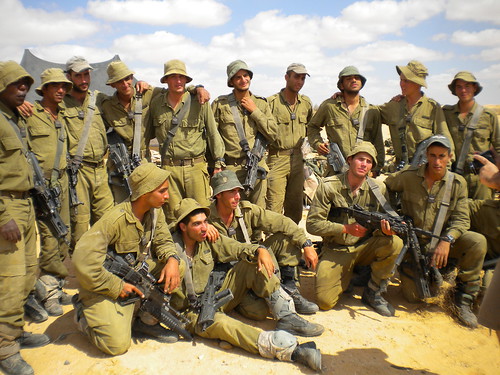
I had the immense pleasure to attend the ceremony which marked the end of my son's basic training course.  The young soldiers were presented to us in a parade to mark their formal induction to the Israel Defense Force (IDF) as fully-fledged soldiers.  It was truly an amazing and an emotional scene to witness the commitment of these young people to the cause of defending their homeland, and the enthusiasm with which they accept the need to give up three years of their young lives in doing so.

During the course of the ceremony, the new recruits were called upon to make an oath of allegiance to the State of Israel and the IDF.  An oath of allegiance is common in ceremonies in which new immigrants to certain countries becoming citizens.  In the USA, the pledge of allegiance is commonly recited in schools as a way of instilling a feeling of patriotism towards the motherland.  In reality, such oaths are more of a mantra and, while those reciting it may believe in its statements in their hearts, they are seldom called upon to act to fulfil the pledge.  This is not so in the case of young Israelis.  The oath that they take includes the statement that they will even be prepared to sacrifice their lives in the protection of the State of Israel, and its liberty.  This is no idle undertaking.  Thousands who have taken this oath before have made the ultimate sacrifice.  This point was not lost on any of the new recruits as they made their oath in front of the gathered crowd, and their commanders.  Even at their tender age, each understood in no uncertain terms how serious this oath is.

The ceremony was filled with symbolism as the recruits first recited their oath together in unison, and were then called upon individually to make their promise.  Each one stepped forward in front of their commander, was handed a Tanach (copy of the Old Testament)* and a rifle, and made his vow.  I was overwhelmed with pride and trepidation as my son also made the simple statement "I promise".  The Tanach in his one hand represented not only a holy book on which to make a vow, but also represented thousands of years of Jewish history that are now being entrusted into his hands.  The rifle in his other hand represented the determination of the Jewish people to survive, even if force is required.  It represented the piece that has been missing at certain critical stages during our history, and which was missing when six million of our people were annihilated at the hands of the Nazis.  The combination of the Tanach and the rifle is all that we need to move forward, determined never to allow such an event to happen again.  Each recruit stepped forward and made his promise with confidence and commitment.  Despite the obvious dangers that are involved in serving in the IDF, not one flinched or hesitated when making his vow.  I felt enormous gratitude to these young men and women, and great confidence in handing the future safety of our country and our people to them.  They are worthy in every way.

My mind wandered momentarily to think of those members of my family who were cruelly murdered in the Holocaust.  I considered what they may have thought if they were present to witness this amazing scene before me.  This is the one thing that was missing for them, and that would have protected them at the moment that they so needed it only 70 short years ago.  I felt thankful that we have learned our lesson sufficiently to create the powerful fighting force that is the IDF, and that I have merited to witness this with my own eyes.  I felt enormous pride that I can also be involved in this miracle via the wonderful work being done by my sons, and by the sons and daughters of our friends and neighbours.  This is truly a modern miracle that could never have been envisaged during the dark days that our people were forced to endure.

Today is the fast of the Tenth of Tevet, which also doubles as the memorial day for those whose date and location of death are unknown.  I feel pain in my heart that they could not be offered the amazing protection that the IDF offers us today.  I wish they could feel the immense pride that we feel, and experience the sense of comfort that we are privileged to feel in the knowledge that we are being protected by our own army.  As much as we all pray for the opportunity to live in peace and not be forced to have our army on constant alert to protect our country and our people, we will never again allow our fate and our safety to be left to the responsibility of others.  Our boys and girls are ready to take their oath to keep our safety in their hands.

* Non-Jewish soldiers make their oath on a holy book or symbol of their choosing. 

Sunday, 12 August 2012

The Second Time Around Simply Doubles the Pride

It seems like only yesterday that we were on our way to the IDF recruitment base to deliver our elder son to begin his military service.  Ten months have since passed, and he has thankfully found his path in the military jungle.  He continues to seek out ways to make his service as meaningful and effective as possible, in order to allow the State of Israel to get the best out of him that he can offer.  I now find myself back  in a similar situation, and on my way to deliver my younger son for the start of his military service.

The fact that I now have a slightly better understanding of the military, does not make the second time around any easier.  I feel the same fears, concerns and trepidations now that I felt on the first occasion.  I am still worried for his well-being, and concerned that he will find his way to ensure that he can make his contribution to his country and to his people in the best possible way.  The thing that has changed on this second occasion, is the level of pride that I feel.  This has now been doubled.

I feel immense pride in my sons for the way in which they have approached their military obligation.  They have understood the importance of every Israeli boy and girl being recruited to defend their country and their people.  Together with their friends, these young men have decided that they will fulfil the obligation to serve their country, and have decided to do it willingly and to the best of their ability.  Thousands of young men and women will be joining the military over the course of the next few weeks, and will give their time and energy to ensure the well-being of the State of Israel.  All of these young people have witnessed the threats that the State of Israel has been forced to live under in recent times, and understand the importance of having a strong army to counter these threats.  Many of them have visited concentration camps such as Auschwitz, that bear testament to the consequences of not having a strong Jewish army to defend our people.  They have resolved not to allow these events to repeat themselves while we have the ability to defend ourselves with a strong army.

Israelis and Jews around the world are indeed fortunate to have a young generation of the type that Israel has.  These young people are not only seeking ways to fulfil their obligation in a minimalist way.  They are happy to volunteer to be members of elite units, and to take on the toughest and most dangerous of jobs in maintaining freedom for Israelis and Jews.  These jobs require training that is extremely demanding, and frequently put our young men and women in harm's way.  This does not deter them from agreeing to these conditions, and even frequently signing up to serve for more time than the law requires if this is what it takes.

For you, my son, today is a day that will change your life.  The time that lies ahead of you will ask the most difficult questions of your physical and mental strength.  I know that you are up to the task, and I have every confidence in you.  I know that you and your friends will do a great job in defending our land and our people.  You understand the consequences are of not having our own army, and you will keep this in the back of your mind when you are having hard days.  All I can offer is to be there for you in every way I can.  I will be available to you at all times of the day and night, and I will be ready to do anything and everything in order to give you the support that you need.  We will eagerly await every moment that you will be allowed to spend time with us at home.

I wish you a successful period of service that will contribute to your personal growth, and that will give you a sense that you have made your contribution to your country and your people.  May Hashem protect you in all that you do, wherever you are.  You are true heroes for Israelis and for Jews around the world.

Even though the level of my anxiety is doubled today with the start of your service, my pride is equally doubled.  Go well, and return home safely.

Saturday, 26 November 2011

Message To My Son

My son,

For the past fourteen years, we knew that this day would eventually come.  Somehow, I did not imagine that it would be like this.   When we decided all those years ago to make our home in Israel, you were only 6 years old.  The notion of you becoming a soldier in the Israel Defense Force (IDF) seemed so far removed from the reality of our everyday lives. We were living in the post-Oslo period, which gave us all a false sense of security that peace was about to break out in the Middle East.  The advantages of moving our lives to the Jewish homeland, seemed to far outweigh the disadvantages.  This was true even when we considered the fact that you would be obliged to serve in the Jewish army.  Now that your draft date has arrived,  I find myself revisiting those decisions taken on your behalf, and the events that have occurred since then.

Over the years, we have discovered that the hopes that we all had for peace, were simply a false facade for the duplicitous dealings of Palestinian leader Yasser Arafat.  We have been forced to endure wars, terror attacks and continued threats to destroy Israel and the Jewish people.  We have witnessed how any young man or woman in the IDF uniform has become a target for attack or kidnap by our enemies.  All of these things contribute to making your service in the IDF a much more dangerous and risky prospect than was previously the case.  In a perverse sort of way, it is also these events that make your service of greater value and importance to Israel and the Jewish people than before.

During the course of your schooling in Israel, you have learned about the numerous attempts to annihilate the Jewish people.  You have visited Auschwitz and other death camps in Poland where millions of Jews were put to death, only because they were Jews.  You understand very well, the context of the service that you are about to render in the IDF.  You know that 6 million Jews would not have lost their lives in the Holocaust if a Jewish army had existed at that time.  You also know that new Hitlers arise in every generation.  Given the chance, Ahmadinejad, Nasrallah and others would follow in Hitler's footsteps to try to wipe the Jews off the earth, even in our day and age.  There is only one thing that stops them from doing so, and this is the IDF.  The IDF not only ensures the safety and survival of Israel and her citizens, it also gives freedom to Jews around the world to exist as Jews in relative safety, freedom and security.  As a soldier in the IDF, you will continue to protect all Jews around the world against the numerous enemies that seek to destroy the Jews.  You understand the importance of agreeing to serve in order to ensure that the IDF continues to be a strong force and protector of the Jewish people, even in the future.

Even though the big picture is clear and a great motivating force, it does not necessarily make the day-to-day realities of military life any easier.  You feel unsure of what the future holds for you, and are not clear what your task in the IDF will be or where you will serve.  We feel nervous with you and for you, as you contemplate this great unknown venture ahead of you.  We all know that the army cannot necessarily accommodate every individual's needs and requests, and place each person in the position that is best suited to them personally.  The army's needs come first, and you will be forced to undertake a role which is not one that you would have chosen for yourself.  In spite of all of this, we have watched you approach your military service with tremendous maturity and a positive attitude.  You have done all that you can to guarantee that your rights are protected, and to try to find your way to a role that will keep you interested and well-utilised.  We have equally seen your willingness to do whatever is needed, even where this does not necessarily match what you want.

Today, as I watch these events before my eyes, and contemplate the next three years in which you will be a soldier in the IDF, I feel a tremendous pride.  I am enormously proud of the fact that you and your friends are willing to sacrifice three years of your life to serve your country and your people.  At a time when only one in two eligible Israelis are actually being drafted, every man and woman counts for a great deal.  You have stood up and been counted.  I am extremely proud of the fact that you are determined to undertake a role that will keep you challenged and allow you to make a real contribution.  Many have decided that they prefer to lay low and do as little as possible to allow the three years to pass in any uneventful way.  This is not for you.  You are determined to have a job that will keep you interested, and will allow you to make some use of the tremendous talents and skills that you have.  I am proud of the fact that you understand the necessity for you to play your role, at a time when many others are finding ways to escape this.

You have benefited over the past fourteen years from all the good things that Israeli society has to offer its children.  You have had the opportunity to walk the streets in relative safety whenever you wish, and to learn the independence that is typical of Israeli youth.  You have explored all corners of Israel, and connected to the Jewish homeland that was inhabited by your forefathers.  You have celebrated Jewish festivals and Israeli national holidays amongst your fellow Jews.  You have explored and developed your technical skills in an environment that is amongst the most technologically advanced in the world.  You have represented your country in an international competition, bringing great credit to your country, city, school and family.  You have volunteered to help underprivileged youth, and experienced the difficulties that so many people in Israel are suffering.  And now you are ready to take this further in making a commitment to safeguard your country and your people.

We wish you success and happiness during the time that you will serve.  We hope that you will find a way to make a meaningful contribution, and that will allow you to develop yourself in the process.  We pray for your health and safety, in mind and in body, and for the safety of those serving alongside you.  No matter where you are or what you are doing, we will be supporting you all the way, and eagerly awaiting the hours that you will be allowed to spend with us at home.  May Hashem guide and protect you in all that you do, wherever you may be.  I am extremely proud to be your father.

Wednesday, 23 February 2011

Catastrophe in Christchurch

I was horrified to see the pictures of the effects of the devastating earthquake which took place in the New Zealand city of Christchurch earlier this week. And all this after having suffered a major earthquake only 5 months ago. In September last year, there was damage caused but no casualties. Unfortunately, this time Christchurch, has not been so lucky.

Casualties have mounted with almost 100 people reported dead and a few hundred still missing. The scenes of building collapses across the city of Christchurch are quite shocking to view, and the central feature of the cathedral of Christchurch remains barely a shadow of its former glory.

What is more shocking about these scenes, is the fact that New Zealand is a country which has paid a great deal of attention over the years to ensuring that buildings are built to special earthquake standards. The general public are trained to respond to earthquakes, and have frequent earthquake drills to prepare for moments like these. Despite this fact, the damage is widespread and there are likely to be many more deaths to add to the already mounting list. It could be said that the devastation would be much wider if these precautions had not been taken. Witness the impact on a country like Haiti, which had no earthquake preparations in place whatsoever. It lost hundreds of thousands of its citizens, and remains on its knees more than a year after the earthquake.

For me, this earthquake feels personal. I fondly remember the time that I spent in New Zealand and, particularly, my visit to Christchurch. I remember being entertained by the famous Wizard of Christchurch in the shadow of the cathedral that has now lost its steeple and its proud position of domination in the centre of the city. This was all part of a wonderful adventure that I had in New Zealand as an exchange student. Not only did I enjoy the beauty of the country, the people were so kind and welcoming and made me feel like I really belonged.

For now, the scene in Christchurch is covered by a black cloud. It is difficult to see past the death and damage which have been thrust upon this city over the past few days. I have no doubt, however, that the people of Christchurch will show a fighting spirit to overcome this tragedy, and will rebuild their city to be at least as good as it previously was. The people of New Zealand will ensure that this is achieved as soon as possible.

For now, my thoughts are with those who have lost loved ones, who have been injured and who are concerned about missing friends and relatives. May they be granted the strength and the resilience to overcome this terrible tragedy. "God defend New Zealand".

Saturday, 13 March 2010

Yerushalyim Shel Zahav (Jerusalem of Gold)

Over the course of the nearly 12 years that I have been living in Israel, and before that during numerous visits to Israel, I have had the privilege of visiting the holy city of Jerusalem many times. I spent a number of years working in the city, and commuted each day to my office there. Although I long ago decided that I would not like to live in the city, it definitely holds a mysteriousness for me and has a unique atmosphere that I feel a strong connection with. Despite this fact, I have never taken the chance to be in Jerusalem over Shabbat. So, when I was recently invited to spend last Shabbat in Jerusalem, I grabbed the opportunity with both hands. I am so pleased that I did so.

One of the things that I love about living in Israel is the real and noticeable difference between Shabbat and other days of the week. It is not only the fact that most businesses and all schools are closed, it is the fact that the whole atmosphere is completely different. My most favourite time of the week is on Friday afternoon when the shops begin to close for Shabbat, and the air is filled with the delicious smells of chicken soup and cholent (a traditional Shabbat dish prepared and cooked before Shabbat, but eaten on Saturday for lunch). Daily life in Israel is so hectic and people are always rushing and scurrying about to try to pack as much as possible into the limited hours that the week offers. When things begin to relax on a Friday afternoon and everybody slows down a little, it really feels like a different world.

Last week, we decided to spend an hour or two in the ultra-Orthodox Jerusalem neighbourhood of Mea Shearim on Friday afternoon as people were running their last-minute errands before the shops finally took a welcome break. Here, it seems the weekday intensity is heightened quite substantially, especially on a Friday. It was tiring just to watch people as they rushed about their business trying to beat the weary shopkeepers who, themselves, were rushing to close their stores to finish their pre-Shabbat preparations. A walk through the new city of Jerusalem after this revealed that most people had already gone home, and the Ben-Yehuda pedestrian mall that forms the main focus for the new city's commercial area was practically deserted.

We decided to welcome Shabbat at the Western Wall. As the only remaining structure which formed part of the second Temple, there is no holier site in the Jewish world. We approached the Western Wall from the Jaffa gate and crossed through the Armenian Quarter and Jewish Quarter of the Old City of Jerusalem. We were accompanied by numerous others like ourselves who were wishing to celebrate the holiest day of the week at the holiest location. All were in their finest Shabbat clothes - the ultra-Orthodox had donned their traditional smart robes, streimels and hats in honour of this holy day. The air was electric, but this was nothing in comparison to what was happening at the Western Wall itself.

Thousands had gathered at the Kotel in groups and in singles to experience the magic of Shabbat. Some were gathered in their regular prayer groups as they are privileged to do each week. They were obvious by the fact that they had an established location at the wall that they occupied, and looked like a permanent structure. There were groups, Israelis and foreigners, who were obviously there on a one-time basis and who praying fervently, hardly able to believe the wonderful location to be celebrating their prayers. There was a group of IDF soldiers in a prayer group, and who broke out into a dance during the course of their prayers. Excited onlookers joined the dance and their prayers. There were others like myself who strolled around looking for a group to attach themselves to in order to pray. Because of the wide variety of styles of prayer, I tried a few groups before finding the one that suited my style best. At various times, singing could be heard from across the Kotel plaza of groups welcoming the Shabbat bride. Each group was singing a different tune, but each more fervently than the next.

After I completed my prayers, I wandered around amongst the groups praying there just to listen in to the style of prayer and tunes they were singing. It was difficult for me to tear myself away from this wonderful, happy, holy place. Everybody was so happy. There was so much dancing, singing and joy . I just wanted the scene to last forever.

Eventually, the hunger took over and I was forced to pull myself away to return for our Shabbat meal. As I walked away and back through the Old City, the fact that many Arab merchants still had their shops and stalls open did not detract from the wonderful atmosphere that prevailed.

Now, more than a week later, the effect of the scene at the Kotel on Friday night has still not worn off. In fact, it is a feeling that could live with me forever. Any visit to Jerusalem feels special for me. Going to the Kotel, in particular, always feels like an enormous privilege. This is especially true when considering the amount of history that has taken place at this holy site. The Friday night scene was, for me, one of the greatest highlights I have experienced.

Perhaps we make up a feeling of holiness when in Jerusalem because of our knowledge of the history attached to the city. I feel, however, that it has a holiness of its own. Something that cannot be made up, but has to be experienced in person to really be felt. The Jewish people have had a connection of holiness to this city and this location for over 2,000 years. During this time, many of my ancestors could only pray about the possibility of being there as part of a far-flung unrealistic dream. Living in Israel, I am truly privileged to live this out on behalf of those of my forefathers who were not able to do so. But mainly, I did it for the joy and honour that I felt for myself.

"If I forget thee, O Jerusalem, let my right hand wither,
let my tongue cleave to my palate if I do not remember you,
if I do not set Jerusalem above my highest joy."
(Psalms 137, 5-7)

Saturday, 20 February 2010

The Money or The Box?

A new immigrant to Israel has many cultural changes and challenges to contend with. Many of these, such as the typical Israeli aggression and impatience, and the horrendous driving on the roads are fairly well documented. Due to the fact that these cultural changes are better-known, it is easier to prepare for them and to overcome them when they confront you. It is the less well publicised issues that somehow take longer to confront, and longer to overcome. I never expected that the issue of giving gifts at family celebrations would present such a challenge. Sometimes, life has some strange surprises in store for us.

The common practice adopted in my native South Africa is to give a gift, rather than a money present, on the occasion of a family celebration. The idea is that the gift should be carefully chosen to suit the recipient and to reflect the giver. Especially in the case of a wedding, the gift is designed to be something that will give the happy couple something of a start to set up their home and embark upon the path of married life. In the case of barmitzvah boys, this did not always produce the desired result in terms of the presents that they hoped for. For those people who may not have known the barmitzvah boy very well, a pen somehow always seemed to be an appropriate gift. I certainly received a few of them for my barmitzvah. Along with those, however, I received a number of gifts which I am still using today. They provide fond memories of my important day, as well as those people who gave them to me.

More recently especially for weddings, it has become common to set up gift registries at shops to avoid receiving unwanted gifts. The registry is advertised to all invitees and they are free to choose a gift from the register at the shop. This results in the happy couple receiving only what they want, and not receiving duplicates of any items.

The practice of gift-giving in Israel is, however, quite different. Here, it is expected that all invitees will give money gifts when invited to weddings and barmitzvahs. This may be understandable as money is, of course, something that is always needed and welcome. With the money, any items that are needed can be purchased and there are no issues with unwanted gifts or duplicates. As simple as this sounds, however, it presents its own set of issues and considerations. Most notably, there is always the question as to how much money is appropriate to give as a gift. We are told that the considerations are how close a friend or family member the person is, and how many members of your family will attend the function. There are also some people who believe that more money should be given if the function venue is a more expensive one. There always seems to be a danger of giving too little, or even too much money as a gift.

There is a problem with money - not everybody can afford what may be expected of them. Whereas with a gift, it is sometimes possible to give something which is more valuable than its cost, with money this is not possible. Sometimes a gift has a sentimental value or can be acquired at a significant discount which brings the recipient much greater value than its cost. So, where money is expected and an invitee cannot afford the amount that is expected, it happens frequently in Israel that people decide not to attend the function rather than embarrass themselves. This surely defeats that whole objective behind inviting people to a family function, and the giving of gifts?

I imagine that the giving of money gifts comes from a good place. In addition to the advantages of money gifts mentioned above, I can imagine that money gifts must in the past have had an importance for families wishing to celebrate an important event, but not having enough money to even put on the function. They would have been able to put on the function in the knowledge that many invitees would contribute money gifts equal to or greater than the cost of their meal. In this way, the party host could be sure of being able to pay for the function from the gifts, and even possibly having some over to keep for themselves. Even though many Israelis are thankfully not in the position of having to rely on money gifts to allow them to host a celebration function, the concept of using money to fund the cost of the party still persists.

This has been taken even further by viewing the celebration as a "business" project. The choice of where to hold the function and who to invite is increasingly being dictated by money considerations. The idea is to run the function at the best possible "profit". There are those who believe that hosting the function at a more expensive venue will generate better gifts. This is weighed up against those invitees who may decide not to come because the required gift is too expensive for them. It is also sometimes noticeable how many people are invited to functions, sometimes even people who are distant associates of the party hosts. I believe that all celebrants are entitled to host a function that will allow them to celebrate their happy occasion, even if this means using gift money to finance this. Turning the party into a business, however, seems to me to take be taking this practice too far.

I hold the view that, wherever possible, it is better to host a more modest function, but one which can be funded by those hosting the party without relying on gift money. This allows the guests to have the freedom to give gifts rather than money if this is their choice. It also allows the celebrants to have the gifts for themselves, rather than to be financing the celebration. In spite of the flexibility afforded by the receipt of money gifts, there is definitely a lot to be said for the giving of gifts that will allow the giver to be remembered in the future. It adds so much more sentimental value and meaning to the act of giving the gift. It also allows the personality and personal relationship of those giving the gift to be reflected.

Despite the fact that money gifts are generally expected of me when attending local functions, it still remains my personal preference to give a "real" gift. Maybe I am old-fashioned, and perhaps not sensitive enough to local customs. There are, however, some things from my past which I find very difficult to give up.

Saturday, 13 February 2010

Twenty Years Since Mandela's Release

I was following the recent events in South Africa to mark 20 years since Nelson Mandela was released from Victor Verster prison on that fateful day in February1990. For South Africa, there can be no doubt that this day will go down in history as one of the most significant, if not THE most significant, in its history. I have the feeling that I have grown up with the young multi-racial South Africa, albeit from a slight distance.

The 20 year celebration brought a ton of personal memories flooding back for me. I remember so clearly the day that President FW De Klerk announced that he was unbanning the ANC, and that he would be releasing Mandela from prison. Rumours had circulated all day about the importance of the announcement that De Klerk would be making on TV that evening. When the announcement came, few South Africans could have been prepared for the enormity of its contents. It seemed to me to be a sudden change of direction from the policies that had been pursued in the preceding years. There was no gradual build-up to the dramatic political change. In current political terminology, it would be called a "turn-around" of the most extreme kind. I suppose I would have preferred it if there had been some warning about the events that were on the verge of unfolding in order to allow us to prepare ourselves for them.

Growing up in apartheid South Africa proved to be challenging for a Jewish kid in a small town. Even though it was clear that the apartheid system was not just or democratic, it is tough for people born into such a situation to differentiate. It was all that I knew and, by virtue of that fact, I grew to accept it as such. Despite this fact, I found my years at the University of Cape Town during the mid and late eighties to be quite tumultuous. Universities are inevitably highly politicised and liberal environments, and South African universities were a dramatic hotbed of anti-apartheid activity during the final years of apartheid. It is also true that the eighties proved to be particularly volatile years in the history of South Africa. My memories of politics on the university campus include a combination of undercover security agents spying on all activities, daily anti-government protests, lengthy detentions without trial and a general air of defiance and protest. Even though I was more focused on earning my degree, I could not avoid being affected by the general environment which prevailed on the campus and around the country. The security services seemed to have free reign to do almost as they pleased in depressing anti-government protest. Many protesters were arrested, detained for lengthy periods without trial and even killed by the forces in their attempts to do the impossible and quell the uprising. It was against this background that the sudden announcement of Mandela's release was received.

After giving a short period for the South African public to consume this huge change to the political landscape, a date was set for Mandela's release from prison. A massive welcoming gathering was arranged on Cape Town's Grand Parade. I remember sitting in my apartment on Sunday 11th February 1990 with our television tuned into the live feed from the prison showing the latest exciting developments. Through my lounge window, I could hear the noise of the expectant crowd awaiting Mandela's arrival at the Grand Parade. I decided that these events were too significant for me to be watching on my television, when I was only a stone's throw from live history in the making. The delay in Mandela's release from prison and arrival at the welcoming party allowed me sufficient time to get to the Parade to witness the unfolding events. It is a moment that will live with me forever.

Six months after these events, Janene and I left South Africa. This means that we have lived out of South Africa for almost as long as Mandela has been out of prison. The 20 years that have gone by have been as significant in our personal lives as they have been for South Africa. We have learned a great deal about survival, raising children and searching for our own identities. South Africa has similarly been through a "growing up" process by learning to cope with a new fully-democratic and multi-racial environment.

Hearing that 20 years have passed since these events brought me to a realisation as to how long ago I left South Africa. The truth is that, although I have found happiness and a real belonging living in the Jewish homeland, I can never get away from my South African roots. And I am not seeking to escape from them as they represent much about who I am as a person, and the values that I hold. The memories of my childhood days in rural South Africa are still very fresh in my mind, and feel like they occurred only yesterday. They will continue to be a very important part of me in my future as well.

Now that Mandela has all but completed his journey in helping to determine South Africa's future, it is clear that South Africa has a long path yet to tread. Even from my new homeland, I will continue to take a keen and active interest in all that happens in South Africa, and I will be willing her and her citizens every success in the future. Viva Africa.

Saturday, 6 February 2010

100 Up and Plenty to Come

Having started to write blogs in mid July 2008, I am happy to celebrate this, the occasion of my 100th blog. It has turned out that I have more to say than I originally anticipated.

I started out writing my blogs as a personal therapy more than anything else. It was a way to channel my views on various subjects in a more organised fashion, and to allow an outlet for my strong views. Now, having written 100 blogs, I can honestly say that I have really enjoyed the discipline of researching various subjects linked to the Middle East and Jewish issues, and have learned a great deal in the process. Not only has the blog allowed me to convey my view to others, it has also afforded me the chance to reinforce my own views for myself.

Although my writing is only a hobby, it has progressed to the point where I am also publishing my articles on another Jewish blog site - The Israel Situation. In addition, I do a weekly radio slot on the South African Jewish radio station, Chai FM, where I broadcast the Israel Update each Tuesday afternoon. I thoroughly enjoy this and find it very rewarding.

Living in the Middle East and taking an active interest in Jewish affairs around the world, I am fortunate that I am not at a loss for subjects to write about. Judging by the way in which local politics is progressing, it seems like I will have a great deal more to write about - hopefully more of it positive in nature.

I wish to thank all those who are regular readers of my blog and listeners to my radio broadcast. Your support is greatly appreciated. Don't forget that your feedback is always welcome, whatever form it takes.

Special thanks go to my long suffering family who enthusiastically read what I write, listen to my broadcasts, act as my sounding board and editorial committee and are always a fantastic support to me.

There is a great deal more to come yet !! I hope that you will all keep reading and listening with me.

Saturday, 20 June 2009

Counting Blessings

It has often been said that it takes a real crisis to learn certain truths in life. Things that seem true during the course of a regular day, week or month often turn out to be a smokescreen for what is really true. And a crisis somehow seems to bring the truth into sharp focus, and dispels any myths that may have been dressing up as the truth.

It would be safe to say that I have been through the toughest week of my life so far. The difficulties were largely self-inflicted, but this unfortunately does not make it any easier. A difficult time is not made any easier by virtue of the cause of the problem. Equally, any support that is received during a tough period is welcome no matter the source of the problem or the source of the support.

I have been fortunate enough to receive support from many different sources and directions during my moment of difficulty. This gave me immense strength to get through the week. The greatest support surprisingly came from the source which was the least expected.

It took a crisis in my life to really learn a few truths about those who surround me. In particular, I learned not to take anything for granted. But most of all, I learned who I can really rely upon in when in a tight spot.

You guys know who you are. Thanks !!

Friday, 12 December 2008

A Search for the Meaning of Life

December is with us once more and it seems to spring upon us more rapidly with each passing year. When I was younger, the year seemed to last a full 12 months. Nowadays, it appears to go by much more quickly. When it reaches this time of year, it always brings back memories of my late Bobbie and Zaida. My Zaida's birthday was in November, and Bobbie's birthday was in December. She liked to have a big fuss made of her for her birthday, and the family usually ensured that she was the queen for a day. And because her Hebrew birthday fell during Chanukah, she often managed to squeeze out two birthday celebrations for the price of one.

What I find quite strange is that, even though my own children are already teenagers and almost adults themselves, it doesn't seem to change the way in which I remember my own grandparents. It is often said that one sees ones parents and grandparents in a different way when you have children of your own. I am sure that this is true for many people, but not really for me. I was one of those kids who was immensely fortunate to have known all 4 grandparents. And even though my paternal grandfather died when I was quite young, it was my great privilege to have 3 grandparents present at my barmitzvah, and both my grandmothers alive to witness the birth of my own children. For now, my thoughts turn to my maternal grandparents who had a tremendous influence on my life especially during my teenage years.

Quite how a young Lithuanian man found and married a lady from the northern English town of Hull, both of whom were immigrants to South Africa, is something of a mystery to me. Besides the Jewish blood which ran through their veins, they appeared to have very little in common. She was a strong-willed domineering figure whilst his personality was less domineering. Despite this fact, he was equally as strong-willed and as stubborn as anybody you could ever meet. And yet, they had a happy marriage whilst leading a simple and hard-working existence. The notion that opposites attract was surely proven by this couple. After raising and marrying off three daughters in the heart of rural South Africa, my grandparents retired and decided to move to live around the corner from where my family was living. For me, this was the start of a wonderful period in which they both had a tremendous influence on me.

My Zaida was the first person to start teaching me to read some Hebrew. There was no Jewish school or Cheder where I lived, so it was my Zaida who started guiding me in this direction. I used to go to shul with him each week, and he always seemed to know all that there was to know about Judaism. As the only Kohen (descendent of the Priestly clan of Aaron) of the community, he had the honour of being called up to the Torah each time it was read, and had the responsibility of duchening (saying the Priestly Blessing) on the high holidays. My Bobbie would insist that he duchen with the correct socks - the ones that she knitted for him (the blessing is made before the community by the Kohanim without their shoes on). And I will never forget the pride that he felt on the day of my barmitzvah. My Bobbie was the one who always had a secret supply of biscuits at her house, no matter when we turned up there. She made our favourite potato salad and lokshen pudding when we went there for Friday evening supper. Their house was an extension of ours.

My Zaida suffered a lengthy illness which took it's toll on him and gradually weakened him. Although I was only 16 years old when he died, his mark had been indelibly made on me and my life. In fact, I was present with him when he took his last breaths. This event is forever carved in my memory as moment when a young boy suddenly grew up.

Following his death, Bobbie's fighting spirit came to the fore. She was also not in the best health and spent many years in a wheelchair and bedridden. But she refused to give up and her strength of personality was always obvious. She was ever eager to do a crossword, play a word game or show her vast general knowledge. And, of course, she loved to be made a fuss of for her birthday in December and on the the third light of Chanukah. And, as life sometimes dictates, she made sure that I was there too when she died. I arrived for a short visit from Israel bringing my own son with me just before his barmitzvah. She held on to whatever life was in her, awaiting our arrival.

It was my son who made the kiddush at her bedside on the last Friday night that she was able to share with us. We had the short opportunity to share some thoughts with her before she quietly slipped away having seen 90 unbelievable years.

Although they are no longer with us, I frequently feel their presence and their influence over our lives. My wife feels that it was no coincidence that we viewed our present home for the first time on Bobbie's birthday. She seemed to be there guiding us to somehow see things into a house that were almost not there to be seen. And yet, having moved in and made it our home, there is no doubt that this is the right place for us. My Zaida always seems to be close to me, particularly when the Kohanim duchen at shul. I can almost feel him there. And we are reminded of him each Friday night when his kiddush cup is used by my younger son who is named after him.

It is hard to know if there is any significant meaning to be derived from any of this. It surely is a source of comfort to me, and a provider of fond memories. It often makes me think what sort of a grandparent I might be in the event that I am, one day, blessed with grandchildren. I feel that it would be hard to emulate their fantastic example, and yet I would like to try. Perhaps this is the meaning of life.