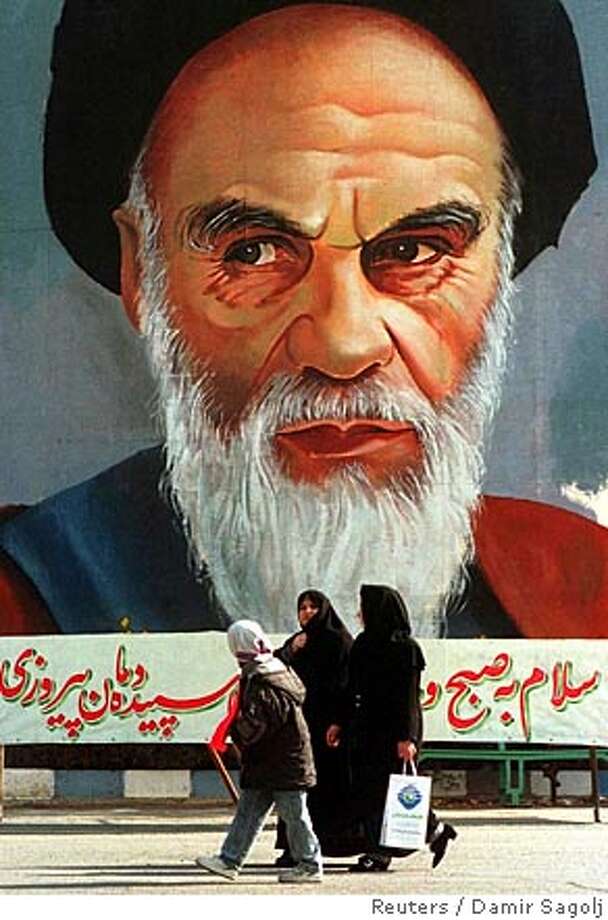
Part of the paradigm of accepted international diplomacy as it is
presented today, is that Iran wishes to destroy the State of Israel and
her people. This is reinforced by the Iranian regime threatening to do
so at every opportunity. It has become a given fact, and everybody
knows and accepts this situation. It seems strange that there is no
significant attempt to question the right of a nation to threaten to
destroy another sovereign nation. But more than this, there appears to
be no attempt to understand what drives Iran to wish to destroy Israel.
The desire to conquer another nation, or the land belonging to another
nation, is relatively common and can be explained in a number of
understandable ways. The wish to destroy a nation is entirely
different, and I cannot recall another case in history where a country
has been singled out for destruction in the way that Israel has been in
recent times. The fact that the world seems to allow this, and the fact
that there would appear to be no logical reason for it, troubles me a
great deal.
It is said that, in order to present the
most effective defence against enemies, it is important to understand
your enemies, their thoughts and what drives and motivates them. With
that in mind, I have been wondering why it is that Iran wishes to
destroy Israel. Given how common it is to hear Iran's threats of
destruction, I expected to find much written and said about this in the
literature and the press. It turns out that it is exactly the opposite,
and that there is very little written on the subject. And I could find
no convincing argument that explains why the Iranian regime has the
obsession to destroy Israel So, I have tried to formulate my own views
and theories that I am sharing here now.
Many believe
that Iran's hatred for Israel forms part of the Arab-Israeli conflict
that has typified relations between Israel and the Arab world since the
State of Israel was declared in 1948. Nothing could be further from the
truth. In spite of Iran being a Muslim country in common with the rest
of the Arab world, it is certainly not an Arab country. As opposed to
the Arab world that immediately launched a war when Israel declared
independence, Iran recognised the State of Israel immediately in 1948,
and was the second Muslim country after Turkey to do so. Iran and
Israel maintained close diplomatic ties until the revolution in Iran and
the fall of the Shah in 1979.
Diplomatic relations
were immediately broken off by the Islamist regime of Ayatollah Khomeini
after the revolution, and Israel was labelled as the "Little Satan"
following in the footsteps of the "Great Satan" which was the USA. This
seems to be the point at which the hatred for Israel really began.
Ironically, and in spite of the hateful rhetoric that emanated from the
regime at that time, behind the scenes there was a great deal of close
cooperation between Iran and Israel. Much of this was driven by the 8
year-long war between Iran and Iraq. Iraq was a common enemy of both
Israel and Iran, and this created unlikely ties and reasons to
cooperate. Israel sold Iran vast quantities of arms and ammunition, in
return for which Israel received Iranian oil. It is believed that the
Iranian air force continued to operate, after it was initially attacked
by Iraq, only because of the assistance received from Israel. Iran was
also delighted when Israel audaciously succeeded in destroying Iraq's
nuclear reactor at Osirak in 1981 after the Iranians failed in their
attempt to do the same. The weekly insults and denunciations of Israel
at Friday prayers by the Iranian leadership served conveniently to
conceal the fact that there were no fewer than 100 carefully hidden
Israeli advisers and technicians in Iran throughout the period of the
war.
Since that time, Iran's leaders have continued to
criticise, insult and threaten Israel at every opportunity. And nobody
has questioned for a moment why this is the case, and what justifies
this vilification and extreme sentiment. It has become a situation that
simply forms part of the diplomatic landscape. Can it be explained by
Iran's hatred towards the USA, and the fact that the Israel is seen to
be very close to the US? It is difficult for me to accept that this
explains all the public threats and the acts of terror that have been
undertaken (and continue to be undertaken) against Israel. Israel is
not the USA's only close ally. Why have other allies not been
threatened for destruction in the halls of the United Nations in the way
that Israel has been forced to endure? And, while sentiment towards
the US has wavered with different Iranian regimes (while always
maintaining its negative bias), the hatred towards Israel seems
unwavering no matter which Iranian president has been in power. The
threats against Israel have been the one pillar of consistency in
Iranian foreign policy. So I find it difficult to believe that this is
purely driven by Israel's relationship and friendship with the USA.
The
only explanation that I can offer to this extreme situation is the
resurfacing of plain, old-fashioned anti-Semitism. I use the term
"resurfacing" because the Iranians/Persians do not have a long or
consistent history of anti-Semitism. The story of Purim that took place
in Persia is a good representation of the relations that Jews and
Iranians have enjoyed over the centuries. While the king of Persia
married a Jewess (Esther) and was prepared to take action to destroy
Haman and his evil band for their anti-Semitism expressed against
Mordechai, the fact was that anti-Semitism was clearly a common thing at
that time. In more recent times the Nazis declared Iranians immune to
the Nuremburg Laws as they were considered to be pure Aryans. In spite
of this, the Shah and the Iranian government did not support the
anti-Semitism of the Nazis. With the rise to power of the Islamic
extremists in Iran in 1979, we saw the rise to power of extreme
anti-Semitism at a regime level. Ironically, this anti-Semitism was not
directed at Jews living in Iran as much as it was directed at Israel.
When Ayatollah Khomeini returned from exile in Paris to take up the
leadership role immediately after the revolution, he declared, "We
recognize our Jews as separate from those godless, bloodsucking
Zionists" and he issued a fatwa decreeing that the Jews in Iran were to be protected. This did not stop
Iranian Jews from leaving Iran in large numbers. The population of
Iranian Jewry shrunk from around100,000 at the time of the revolution to
around 50,000 in the mid-1980s, to around 25,000 in the mid-1990s.
Less than 10,000 Jews are left in Iran today. Because of the
"protection" afforded to Jews living in Iran, there are those who
believe that the hatred that we see coming from Iran is not
anti-Semitism, but anti-Zionism. The problem is that the basis for this
anti-Zionism is still unexplained.
In spite of the
Iranians not being Arabs, they have enjoyed some ideals in common with
the Arabs since the revolution in Iran. The premise for the
Arab-Israeli conflict is pure anti-Semitism. The Arab world could not
accept the notion of Jews living in the Middle East on their doorstep,
and resolved to do all to destroy them and their state. The holy city
of Jerusalem has become embroiled in this war as a tool, rather than an
end. It is noticeable that no attempt was made to claim Jerusalem (and
its Muslim holy sites) by the Arabs in the period prior to the
establishment of Israel. When the Jews took control of Jerusalem, and
even in spite of granting control of the Muslim holy sites to the Waqf
Council under the chairmanship of the King of Jordan, the Arab world and
the Muslim world rose up to object. Was their objection in favour of
the Muslim holy sites, or was the objection against the presence of the
Jews? Everybody will reach their own conclusion. What is clear is that
Iran has firmly jumped on this anti-Semitic bandwagon.
Iran's
brand of Shia Islam has been a huge source of conflict with the Sunni
Islam practised by most of the Arab world. In spite of this fundamental
source of disagreement, they have found a common cause to fight against
the Jews in Israel, to fight against the existence of the State of
Israel and to use the claim of the holy city of Jerusalem for Islam as a
means to their end. The city of Jerusalem seems to be almost the only
cause and rallying point that unites all different streams of Muslims
around the world. And, by extension, the fight against Israel, the Jews
and the current regime in Jerusalem is equally a common point of
agreement between them all. Although distinct cracks are starting to
show in this quest as individual Arab countries come to the realisation
that Israel is going nowhere, and understand that cooperation with
Israel may be a better option for them than fighting the futile battle
of trying to destroy her.
The Iranians are, however,
unwavering and unashamed in their battle against Israel and her people.
They continue to sponsor Hamas and Hezbollah, amongst other terrorist
groups, that act as proxies for Iran to destroy Israel. Iran is also
responsible for numerous terror attacks orchestrated against Israeli and
Jewish targets outside of Israel. It's quest to build a nuclear weapon
that could potentially be used against Israel is clearly a cause that
any Israeli government will consider to be of highest priority. So
Iran has clearly not changed its mind, nor given up its desire to
destroy Israel in any way.
My problem is that I am still not entirely clear why Iran wants to destroy Israel.
Showing posts with label Iraq. Show all posts
Tuesday, 13 August 2019
Thursday, 10 September 2015
Another Refugee Crisis
The latest refugee crisis has succeeded in stirring the emotions of many around the world. The same is true for those in Israel and Jews around the world. The sight of the
men, women and children moving across land and sea in unrelenting
conditions to escape the disaster that has fallen upon them as a result
of a civil war of human making, can only bring out the most heartfelt
sympathies in anybody who has seen the pictures on TV and social media. Some are calling this the worst refugee crisis since the Second World War.
The emotions of the Jewish community are particularly affected, because it was precisely this type of disaster that befell our ancestors 75 short years ago. It will never be forgotten that, as a result of the world failing to mobilise to accept refugees who were running from the disaster of war and genocide in Europe, and failing to act to stop those who were carrying out the genocide, 6 million of our people were systematically annihilated. Jewish sympathy is no less than that of others around the world, despite the fact that many of the refugees come from countries that seek the destruction of the State of Israel, and the death of the Jews.
Israel has already provided a great deal of assistance to victims of the Syrian war over the past few years, despite the fact that Syria has no diplomatic relations with Israel and despite the fact that Syria has formally been at war with Israel for the past 67 years with the intention of wiping Israel off the map. Thousands of victims of the Syrian civil war have streamed across the border from Syria into Israel seeking medical and humanitarian assistance. The IDF has provided first aid assistance to many of these victims via mobile medical units along the Syrian border, and supplied them with humanitarian aid. Irrespective of which side of the conflict they have come from. Hundreds of others have been admitted to Israeli hospitals for medical treatment, some undergoing complex life-saving surgery to nurse them back to health. All of these services have been provided courtesy of the Israeli tax-payer, and nobody has been denied humanitarian assistance on the grounds of opposing political or religious views, or any other grounds. This humanitarian work has been undertaken without fanfare, desire for recognition or international headlines.
But now, the the floodgates to Europe have finally opened. Instead of seeking medical attention across the Israeli border, the eyes of the war victims have stretched further afield. Thousands of refugees are swarming across the Mediterranean to seek shelter in the calmer waters of Europe. European leaders have been caught somewhat off guard at the suddenness of the developing situation. Some leaders mumble phrases about the Shengen Agreement and the Dublin Regulation, which are designed to secure and protect the borders of European countries. Despite their mumblings, they seem to have no real clue as to how the provisions of these agreements can possibly be applied under the current circumstances. Some countries seem resigned to accept the refugees that turn up on their borders, while others are doing all that they can to re-route their flood of humanity or pass them on to other neighbouring countries to get rid of their problem. The humanitarian nature of the citizens of many European countries is demanding that their leaders relax provisions in order to accept a share of responsibility for rehousing the refugees, while others are concerned about what this may mean in the longer term for the makeup, nature and culture of their country.
Without detracting from the immediate humanitarian disaster that needs a short-term solution, European and world leaders can be justified in asking a few searching questions as longer-term solutions will need to be considered once the refugees have been clothed, fed, treated and housed in the near-term. Some of the questions, to which I have not found answers yet, are the following:
War is never a pleasant event, and our generation seems to experience more than its fair share of conflict. It is pleasing that there are countries who are prepared to come to the short-term aid of the refugees. But does this present a longer-term problem for these countries? These are questions that only time can answer.
The emotions of the Jewish community are particularly affected, because it was precisely this type of disaster that befell our ancestors 75 short years ago. It will never be forgotten that, as a result of the world failing to mobilise to accept refugees who were running from the disaster of war and genocide in Europe, and failing to act to stop those who were carrying out the genocide, 6 million of our people were systematically annihilated. Jewish sympathy is no less than that of others around the world, despite the fact that many of the refugees come from countries that seek the destruction of the State of Israel, and the death of the Jews.
Israel has already provided a great deal of assistance to victims of the Syrian war over the past few years, despite the fact that Syria has no diplomatic relations with Israel and despite the fact that Syria has formally been at war with Israel for the past 67 years with the intention of wiping Israel off the map. Thousands of victims of the Syrian civil war have streamed across the border from Syria into Israel seeking medical and humanitarian assistance. The IDF has provided first aid assistance to many of these victims via mobile medical units along the Syrian border, and supplied them with humanitarian aid. Irrespective of which side of the conflict they have come from. Hundreds of others have been admitted to Israeli hospitals for medical treatment, some undergoing complex life-saving surgery to nurse them back to health. All of these services have been provided courtesy of the Israeli tax-payer, and nobody has been denied humanitarian assistance on the grounds of opposing political or religious views, or any other grounds. This humanitarian work has been undertaken without fanfare, desire for recognition or international headlines.
But now, the the floodgates to Europe have finally opened. Instead of seeking medical attention across the Israeli border, the eyes of the war victims have stretched further afield. Thousands of refugees are swarming across the Mediterranean to seek shelter in the calmer waters of Europe. European leaders have been caught somewhat off guard at the suddenness of the developing situation. Some leaders mumble phrases about the Shengen Agreement and the Dublin Regulation, which are designed to secure and protect the borders of European countries. Despite their mumblings, they seem to have no real clue as to how the provisions of these agreements can possibly be applied under the current circumstances. Some countries seem resigned to accept the refugees that turn up on their borders, while others are doing all that they can to re-route their flood of humanity or pass them on to other neighbouring countries to get rid of their problem. The humanitarian nature of the citizens of many European countries is demanding that their leaders relax provisions in order to accept a share of responsibility for rehousing the refugees, while others are concerned about what this may mean in the longer term for the makeup, nature and culture of their country.
Without detracting from the immediate humanitarian disaster that needs a short-term solution, European and world leaders can be justified in asking a few searching questions as longer-term solutions will need to be considered once the refugees have been clothed, fed, treated and housed in the near-term. Some of the questions, to which I have not found answers yet, are the following:
- What happened that the refugee problem has suddenly arisen at this time? The Syrian civil war and the conflicts in Iran and Afghanistan have been ongoing for some time already. Tens, if not hundreds, of thousands have been killed, and many more injured and displaced. Why did these refugees not run and seek shelter in Europe some time ago? What was the real trigger to the sudden flight that we see now? Is this related in any way to the more public involvement of ISIS, and the realisation of what an ISIS caliphate will mean to them?
- How many of the refugees are really economic migrants? In recent years, there has been a distinction drawn between those who seek asylum as refugees, and those who do so in order to improve their economic situation. Many countries try to do their best to make this distinction clearer, in order to provide required assistance to refugees while rejecting economic migrants who do not qualify for naturalisation. The migrants naturally do all that they can to confuse those trying to separate the refugees from the economic migrants, in order to secure themselves the best possible chance of being accepted to a new country and a new life. It is clear that many of the current wave of refugees are escaping war-torn countries and situations in which it is impossible to survive. Amongst them, however, are more than a few who are truly economic migrants and who are merely jumping on the bandwagon to take advantage of a situation.
- Where are their Arab brethren in assisting the refugees? All of the refugees in the current crisis are Arabs. Some are Christian Arabs, but the vast majority are Moslem Arabs. Most of them are Sunni Moslems, who made up some 74% of the Syrian population prior to the civil war. With countries like Saudi Arabia and the United Arab Emirates being majority Sunni Moslem, there is surely enough money and space to accommodate the refugees within the Sunni Arab world quite easily? And yet, there seems to be a thundering silence from the Arab world at a time when their brethren are desperate for help.
- Is this a ploy to gain a greater Muslim foothold in Europe? The words of Hungarian Prime Minister, Viktor Orbán, cannot be ignored entirely. He said that Europeans risk becoming a minority on their own continent. This is an interesting concept, particularly when there is no such thing as a "European" nationality. The European continent has historically been split, divided and conflicted by many different interests, nationalities and religious strains. In the face of a threat to the continued existence of these nationalities in their current form, however, a European nation has suddenly and unexpectedly arisen. There are those who contend that this refugee crisis is a conspiracy on the part of Muslim leaders to allow Muslims to infiltrate in Europe in a manner greater than has been the case until now. There is much evidence of the effects of the Islamisation of Europe. Muslims have made attempts to set up enclaves of Sharia law in the UK and France (in addition to what they achieved in some African countries). The sight of British and French-born Muslims leaving their homes to join the ranks of ISIS has shocked many.
- What is the role of ISIS in the crisis? An ISIS announcement in the midst of the building refugee crisis in Europe said that hundreds of ISIS activists are scattered amongst the refugees claiming asylum in Europe. It is difficult not to notice the disproportionate number of young men among the refugees. While the announcement by ISIS may simply be opportunistic rather than an action that was pre-planned, it is something that cannot be completely ignored.
War is never a pleasant event, and our generation seems to experience more than its fair share of conflict. It is pleasing that there are countries who are prepared to come to the short-term aid of the refugees. But does this present a longer-term problem for these countries? These are questions that only time can answer.
Labels:
Arab World,
Europe,
Iraq,
Muslims,
Syria
Friday, 17 May 2013
The Importance of Preemptive Strikes
Israel's recent double strike on Syrian weapons storage facilities has, once again, raised the issue of the validity of preemptive strikes. Israel has used this tactic on more than a number of previous occasions, has already struck Syria already a few times this year. There are those who go as far as attributing Israel's continued existence to the fact that she has been prepared to go out and defend herself even before the attack materialises.
The issue of preemptive strikes as a defense mechanism to counter a potential threat has a number of inherent problems attached to it, particularly when this encroaches on the sovereign territory of another country. Firstly, there is always the question as to whether the perceived threat is real and credible. We saw the consequences of a bad call on the perceived threat when it was revealed that intelligence information was incorrect prior to the Second Gulf War. This dogged both Tony Blair and George W. Bush until the end of their respective tenures, and continues to dog them in their personal capacities to this day. Secondly, there is the question as to whether one sovereign country has the right to attack another sovereign country in defense of itself even where the threat is sure. It could easily be argued that there is an element of hypocrisy in this concept. Does it make a difference if the perceived threat is not an immediate one, but rather a perceived future threat? This is the case with Israel's strikes in Syria last week, where the rationale for the strike was that Hezbollah may use these arms against Israel at an undetermined time in the future. There are no firm answers to these questions, and the international community has historically judged such deeds on the basis of the parties involved, rather than the act. On this occasion, Israel succeeded in capitalising on the negative views currently held by the international community towards Syria and Hezbollah, and escaped with little or no censure by the international community - something quite rare for Israeli attacks. But this has not always been the case in the past.
Israel, a small island located in a sea of aggressive and hateful enemies, has been forced to employ the tactic of preemptive strikes in order to survive. Some of Israel's most famous and important victories - most notably that in the Six Day War - were achieved by surprising the enemy before they were able to inflict damage. The Egyptian air force was destroyed while on the ground in 1967. This surely paved the way for the famous Israeli victory. Israel was roundly criticised for sending its air force aeroplanes to destroy the Osirak nuclear reactor site in Iraq in 1981. It was only many years later in 2005 that President Clinton finally acknowledged for the first time that the strike on Osirak by Israel was a "really good thing". Similarly, the strike on the Syrian nuclear facility that was carried out by Israel in 2007, attracted criticism from Mohamed ElBaradei, then head of the International Atomic Energy Agency. Imagine if the civil war in Syria being waged at this time involved the added concern of nuclear weapons. With the benefit of hindsight, the Israeli strike in 2007 has potentially saved massive consequences.
These historical experiences also put a context to the ongoing standoff with Iran concerning the development of its own nuclear facilities. A preemptive strike against Iran's nuclear facilities would be much more difficult, and would have far greater consequences than the ones carried out against Iraq and Syria. Both of the previous attacks solicited no military response at all. This miraculous escape, after catching each of these countries off guard, is highly unlikely in the Iranian context. It is almost assured that any attempt to carry out a military strike against the Iranian nuclear facilities would include a substantial response. It is for this reason that Israel has tried using different tactics against Iran, including mounting a concerted campaign to assassinate key personnel employed in the Iranian nuclear industry and using cyber warfare to destroy software and hardware in use by the Iranian nuclear facilities. Until now, these tactics have served to slow the processes down at best, and have not been effective in halting Iran's march towards becoming a nuclear power. Israel is still considering a game-changing strike that will kill off Iran's nuclear push once and for all. The threat posed by a retaliation to such a strike is surely much lower than the threat presented by a nuclear Iran. Despite this fact, the threat presented by retaliation is substantial.
While not completely invincible, Israel's military and intelligence establishments have proven themselves over and over again. Mistakes have certainly been made, but reports of potential threats which are reported by these organisations are always taken seriously by the Israeli government. This is based on its amazing track record of getting things right more often than getting them wrong, and managing to sniff out information in a seemingly impossible way. The way that the Israeli organisations work seems somehow to be different and more effective than similar intelligence agencies elsewhere in the world. A potential threat to Israel which is reported by Israeli intelligence will almost certainly be taken seriously. Equally, the Israeli intelligence community is well aware of the importance of the advice that they offer, and the consequences of giving bad advice or making mistakes.
It seems highly unlikely that Israel will reverse its tactic of preemptive strikes against enemies in the near future. This tactic which has proved very effective in the past, and critical to Israel's survival. Despite the fact that a great deal of Israel's focus is on defense rather than attack, as evidenced by new developments such as the Iron Dome, the tactic of attack is often the best form of defense. Despite this fact, we all wish to believe that this will always be used sparingly and very cautiously. Ultimately, however, it is one of the ways that Israel will be able to maintain any superiority over its enemy neighbours around the Middle East. If attacks and threats against Israel persist, Israel will be forced to employ measures to protect herself. These measures include preemptive tactics to prevent the possibility of attacks taking place, and to prevent loss of innocent lives. Extreme circumstances demand extreme measures. It would be difficult to argue that Israel is not living under extreme circumstances.
The issue of preemptive strikes as a defense mechanism to counter a potential threat has a number of inherent problems attached to it, particularly when this encroaches on the sovereign territory of another country. Firstly, there is always the question as to whether the perceived threat is real and credible. We saw the consequences of a bad call on the perceived threat when it was revealed that intelligence information was incorrect prior to the Second Gulf War. This dogged both Tony Blair and George W. Bush until the end of their respective tenures, and continues to dog them in their personal capacities to this day. Secondly, there is the question as to whether one sovereign country has the right to attack another sovereign country in defense of itself even where the threat is sure. It could easily be argued that there is an element of hypocrisy in this concept. Does it make a difference if the perceived threat is not an immediate one, but rather a perceived future threat? This is the case with Israel's strikes in Syria last week, where the rationale for the strike was that Hezbollah may use these arms against Israel at an undetermined time in the future. There are no firm answers to these questions, and the international community has historically judged such deeds on the basis of the parties involved, rather than the act. On this occasion, Israel succeeded in capitalising on the negative views currently held by the international community towards Syria and Hezbollah, and escaped with little or no censure by the international community - something quite rare for Israeli attacks. But this has not always been the case in the past.
Israel, a small island located in a sea of aggressive and hateful enemies, has been forced to employ the tactic of preemptive strikes in order to survive. Some of Israel's most famous and important victories - most notably that in the Six Day War - were achieved by surprising the enemy before they were able to inflict damage. The Egyptian air force was destroyed while on the ground in 1967. This surely paved the way for the famous Israeli victory. Israel was roundly criticised for sending its air force aeroplanes to destroy the Osirak nuclear reactor site in Iraq in 1981. It was only many years later in 2005 that President Clinton finally acknowledged for the first time that the strike on Osirak by Israel was a "really good thing". Similarly, the strike on the Syrian nuclear facility that was carried out by Israel in 2007, attracted criticism from Mohamed ElBaradei, then head of the International Atomic Energy Agency. Imagine if the civil war in Syria being waged at this time involved the added concern of nuclear weapons. With the benefit of hindsight, the Israeli strike in 2007 has potentially saved massive consequences.
These historical experiences also put a context to the ongoing standoff with Iran concerning the development of its own nuclear facilities. A preemptive strike against Iran's nuclear facilities would be much more difficult, and would have far greater consequences than the ones carried out against Iraq and Syria. Both of the previous attacks solicited no military response at all. This miraculous escape, after catching each of these countries off guard, is highly unlikely in the Iranian context. It is almost assured that any attempt to carry out a military strike against the Iranian nuclear facilities would include a substantial response. It is for this reason that Israel has tried using different tactics against Iran, including mounting a concerted campaign to assassinate key personnel employed in the Iranian nuclear industry and using cyber warfare to destroy software and hardware in use by the Iranian nuclear facilities. Until now, these tactics have served to slow the processes down at best, and have not been effective in halting Iran's march towards becoming a nuclear power. Israel is still considering a game-changing strike that will kill off Iran's nuclear push once and for all. The threat posed by a retaliation to such a strike is surely much lower than the threat presented by a nuclear Iran. Despite this fact, the threat presented by retaliation is substantial.
While not completely invincible, Israel's military and intelligence establishments have proven themselves over and over again. Mistakes have certainly been made, but reports of potential threats which are reported by these organisations are always taken seriously by the Israeli government. This is based on its amazing track record of getting things right more often than getting them wrong, and managing to sniff out information in a seemingly impossible way. The way that the Israeli organisations work seems somehow to be different and more effective than similar intelligence agencies elsewhere in the world. A potential threat to Israel which is reported by Israeli intelligence will almost certainly be taken seriously. Equally, the Israeli intelligence community is well aware of the importance of the advice that they offer, and the consequences of giving bad advice or making mistakes.
It seems highly unlikely that Israel will reverse its tactic of preemptive strikes against enemies in the near future. This tactic which has proved very effective in the past, and critical to Israel's survival. Despite the fact that a great deal of Israel's focus is on defense rather than attack, as evidenced by new developments such as the Iron Dome, the tactic of attack is often the best form of defense. Despite this fact, we all wish to believe that this will always be used sparingly and very cautiously. Ultimately, however, it is one of the ways that Israel will be able to maintain any superiority over its enemy neighbours around the Middle East. If attacks and threats against Israel persist, Israel will be forced to employ measures to protect herself. These measures include preemptive tactics to prevent the possibility of attacks taking place, and to prevent loss of innocent lives. Extreme circumstances demand extreme measures. It would be difficult to argue that Israel is not living under extreme circumstances.
Sunday, 10 February 2013
Israel Providing a Service to the World
The world has been observing the events in Syria, particularly over the period of the civil war that has raged there for the past two years. Syria has long presented a threat to the international community because of two main factors. The first factor is its substantial arsenal of conventional, biological and chemical weapons which President Bashar al-Assad appears to have no reluctance to use. The second factor is its close links to Iran in the sponsorship of international terror. During the course of the civil war, the threat has escalated even further with numerous international terror groups using the instability created by the war to take up camp in Syria. This increases the possibility that dangerous weapons could fall into renegade terror groups around the world. The world has been observing these events from a safe distance without taking any action at all to prevent the strengthening of international terror.
Israel's proximity to Syria, and the fact that a border is shared by the two countries, has always meant that all that happens in Syria is of significant interest to the Israeli security services. Syria has been an enemy of the State of Israel from the moment Israel came into existence in 1948, a situation that has not changed until the present day. The period during which the civil war has been fought in Syria is no exception, and has added further instability to the region due to the lack of predictability as to how the Syrian authorities and the rebels may direct their forces towards Israel. A few isolated missiles have already landed in Israeli territory from Syria, but these have been regarded having crossed the border in error rather than having been deliberately directed towards Israel. The truth is that the Syrian forces and their rebel enemies are too busy fighting against each other to spend much time worrying about launching an attack against Israel. While this presents a source of comfort for Israel on one hand, it also presents a real threat on the other hand.
The war has led to the general opening up of Syria's arms and ammunitions depots for the Syrian army to use against the rebels. Some reports suggest that it has even made use of chemical weapons in this war. The opening of missile storage facilities means that these arms and missiles are also more easily available to other renegade groups who may wish to snatch them from the Syrians. This has resulted in the Syrians trying to move some of their most strategic missiles to be under the care of its allies and friends, most notably Hezbollah in southern Lebanon.
These movements undoubtedly lie behind recent reports coming from Syria that a convoy of weapons was attacked while in transit from Syria to Lebanon. Israel has been accused of the attack, even though there is no formal word from the Israeli government or army on the matter. Another attack was also reported, nearer to Damascus, at around the same time. Syrian TV reported that Israeli jets attacked an army facility, widely rumoured to be a research centre involved in the production of chemical and biological weapons. Once again, the Israelis have remained silent on the matter. Even though there is no official word on whether Israel was involved in either or both of these incidents, the pinpoint accuracy with which they were carried out does bear the hallmark of operations that Israel could have been involved in. Hints have come out of the US government to confirm this, and remarks made by Israel Defense Minister Ehud Barak also seem to support Israel's involvement.
While these attacks were clearly carried out in the interests of Israel's own safety, she is doing the world a huge service in the process. The threat presented by the axis of Iran, Syria and Hezbollah, and their links to other terror organisations, is one that is not solely directed towards Israel. The Bulgarian government confirmed that the attack against Israeli tourists in Burgas on the Black Sea in the summer of 2012, was carried out by Hezbollah. In addition to the 5 Israelis who were killed in the attack in Bulgaria, there was also a Bulgarian tour guide who was a casualty. The Bulgarian economy was also affected as a result of the decision made by tourists to stay away from the area while international terror organisations were operating there. Attacks on targets in the US, Far East and across Europe which have escalated over the past 10 or 15 years, show clearly that terror that was once aimed solely at Israel or limited to the Middle East, has now become a global threat. Any activities carried out by Israel against these terror organisations, even if it is solely in the pursuit of securing her own safety, represents a huge favour to the wider international community.
The unfortunate part of this is that Israel seldom, if ever, receives help, support and assistance in these activities. At best, Israel may receive a "green light" in the form of an agreement not to resist or oppose the attack. More likely, Israel is subject to international condemnation in the international press, and in bodies like the UN. An example of this is the reaction that was received to Israel's bombing of Iraq's Osirak nuclear facility back in 1981. Israel was roundly condemned by the international community, and resolutions were passed by the UN Security Council and by the UN General Assembly criticising Israel's actions. It took until 2005 for US President Bill Clinton to finally admit in public that " I think, in retrospect, that it was a really good thing". Clearly, the path of the Gulf Wars in Iraq would have looked completely different had Israel not been bold enough to carry out this attack. A similar assessment could be made of Israel's attack on the Syrian nuclear reactor in 2007. Even though the world condemnation was not quite as vociferous on this occasion, there was no other country lining up to challenge Syria's development of nuclear weapons, or to help Israel in destroying it. As the Syrian civil war continues, a heavy sigh of relief is being breathed by the world that there is no nuclear option available to the Syrian government.
As in the past, Israel's strikes on the weapons convoy being sent to Hezbollah and the Syrian weapons research centre comes as a gift to the free world. This is a further service provided by the Israeli military, which seems at times to be the only force in the world that is ready to do the impossible. This impossible is frequently done on its own steam, and in the face of international condemnation. Although Israel is not necessarily seeking thanks and recognition for these efforts, many of which place the lives of our young soldiers on the line, it would be a welcome change to receive some support for these audacious actions.
Even if this is not forthcoming, I feel good to live in a country that is prepared to take the tough decisions to do the dirty work to secure the safety of its citizens, and has young men and women who are willing to put their lives on the line in the interests of executing it. This is a source of immense pride, and source of great comfort to me. It is a pity that the rest of the world gets a free ride in the process.
Israel's proximity to Syria, and the fact that a border is shared by the two countries, has always meant that all that happens in Syria is of significant interest to the Israeli security services. Syria has been an enemy of the State of Israel from the moment Israel came into existence in 1948, a situation that has not changed until the present day. The period during which the civil war has been fought in Syria is no exception, and has added further instability to the region due to the lack of predictability as to how the Syrian authorities and the rebels may direct their forces towards Israel. A few isolated missiles have already landed in Israeli territory from Syria, but these have been regarded having crossed the border in error rather than having been deliberately directed towards Israel. The truth is that the Syrian forces and their rebel enemies are too busy fighting against each other to spend much time worrying about launching an attack against Israel. While this presents a source of comfort for Israel on one hand, it also presents a real threat on the other hand.
The war has led to the general opening up of Syria's arms and ammunitions depots for the Syrian army to use against the rebels. Some reports suggest that it has even made use of chemical weapons in this war. The opening of missile storage facilities means that these arms and missiles are also more easily available to other renegade groups who may wish to snatch them from the Syrians. This has resulted in the Syrians trying to move some of their most strategic missiles to be under the care of its allies and friends, most notably Hezbollah in southern Lebanon.
These movements undoubtedly lie behind recent reports coming from Syria that a convoy of weapons was attacked while in transit from Syria to Lebanon. Israel has been accused of the attack, even though there is no formal word from the Israeli government or army on the matter. Another attack was also reported, nearer to Damascus, at around the same time. Syrian TV reported that Israeli jets attacked an army facility, widely rumoured to be a research centre involved in the production of chemical and biological weapons. Once again, the Israelis have remained silent on the matter. Even though there is no official word on whether Israel was involved in either or both of these incidents, the pinpoint accuracy with which they were carried out does bear the hallmark of operations that Israel could have been involved in. Hints have come out of the US government to confirm this, and remarks made by Israel Defense Minister Ehud Barak also seem to support Israel's involvement.
While these attacks were clearly carried out in the interests of Israel's own safety, she is doing the world a huge service in the process. The threat presented by the axis of Iran, Syria and Hezbollah, and their links to other terror organisations, is one that is not solely directed towards Israel. The Bulgarian government confirmed that the attack against Israeli tourists in Burgas on the Black Sea in the summer of 2012, was carried out by Hezbollah. In addition to the 5 Israelis who were killed in the attack in Bulgaria, there was also a Bulgarian tour guide who was a casualty. The Bulgarian economy was also affected as a result of the decision made by tourists to stay away from the area while international terror organisations were operating there. Attacks on targets in the US, Far East and across Europe which have escalated over the past 10 or 15 years, show clearly that terror that was once aimed solely at Israel or limited to the Middle East, has now become a global threat. Any activities carried out by Israel against these terror organisations, even if it is solely in the pursuit of securing her own safety, represents a huge favour to the wider international community.
The unfortunate part of this is that Israel seldom, if ever, receives help, support and assistance in these activities. At best, Israel may receive a "green light" in the form of an agreement not to resist or oppose the attack. More likely, Israel is subject to international condemnation in the international press, and in bodies like the UN. An example of this is the reaction that was received to Israel's bombing of Iraq's Osirak nuclear facility back in 1981. Israel was roundly condemned by the international community, and resolutions were passed by the UN Security Council and by the UN General Assembly criticising Israel's actions. It took until 2005 for US President Bill Clinton to finally admit in public that " I think, in retrospect, that it was a really good thing". Clearly, the path of the Gulf Wars in Iraq would have looked completely different had Israel not been bold enough to carry out this attack. A similar assessment could be made of Israel's attack on the Syrian nuclear reactor in 2007. Even though the world condemnation was not quite as vociferous on this occasion, there was no other country lining up to challenge Syria's development of nuclear weapons, or to help Israel in destroying it. As the Syrian civil war continues, a heavy sigh of relief is being breathed by the world that there is no nuclear option available to the Syrian government.
As in the past, Israel's strikes on the weapons convoy being sent to Hezbollah and the Syrian weapons research centre comes as a gift to the free world. This is a further service provided by the Israeli military, which seems at times to be the only force in the world that is ready to do the impossible. This impossible is frequently done on its own steam, and in the face of international condemnation. Although Israel is not necessarily seeking thanks and recognition for these efforts, many of which place the lives of our young soldiers on the line, it would be a welcome change to receive some support for these audacious actions.
Even if this is not forthcoming, I feel good to live in a country that is prepared to take the tough decisions to do the dirty work to secure the safety of its citizens, and has young men and women who are willing to put their lives on the line in the interests of executing it. This is a source of immense pride, and source of great comfort to me. It is a pity that the rest of the world gets a free ride in the process.
Subscribe to:
Posts (Atom)
