Showing posts with label Nuclear Weapons. Show all posts

Tuesday, 13 August 2019

Why Does Iran Wish to Destroy Israel?

Part of the paradigm of accepted international diplomacy as it is presented today, is that Iran wishes to destroy the State of Israel and her people.  This is reinforced by the Iranian regime threatening to do so at every opportunity.  It has become a given fact, and everybody knows and accepts this situation.  It seems strange that there is no significant attempt to question the right of a nation to threaten to destroy another sovereign nation.  But more than this, there appears to be no attempt to understand what drives Iran to wish to destroy Israel.  The desire to conquer another nation, or the land belonging to another nation, is relatively common and can be explained in a number of understandable ways.  The wish to destroy a nation is entirely different, and I cannot recall another case in history where a country has been singled out for destruction in the way that Israel has been in recent times.  The fact that the world seems to allow this, and the fact that there would appear to be no logical reason for it, troubles me a great deal.

It is said that, in order to present the most effective defence against enemies, it is important to understand your enemies, their thoughts and what drives and motivates them.  With that in mind, I have been wondering why it is that Iran wishes to destroy Israel.  Given how common it is to hear Iran's threats of destruction, I expected to find much written and said about this in the literature and the press.  It turns out that it is exactly the opposite, and that there is very little written on the subject.  And I could find no convincing argument that explains why the Iranian regime has the obsession to destroy Israel  So, I have tried to formulate my own views and theories that I am sharing here now.

Many believe that Iran's hatred for Israel forms part of the Arab-Israeli conflict that has typified relations between Israel and the Arab world since the State of Israel was declared in 1948.  Nothing could be further from the truth.  In spite of Iran being a Muslim country in common with the rest of the Arab world, it is certainly not an Arab country.  As opposed to the Arab world that immediately launched a war when Israel declared independence, Iran recognised the State of Israel immediately in 1948, and was the second Muslim country after Turkey to do so.  Iran and Israel maintained close diplomatic ties until the revolution in Iran and the fall of the Shah in 1979.

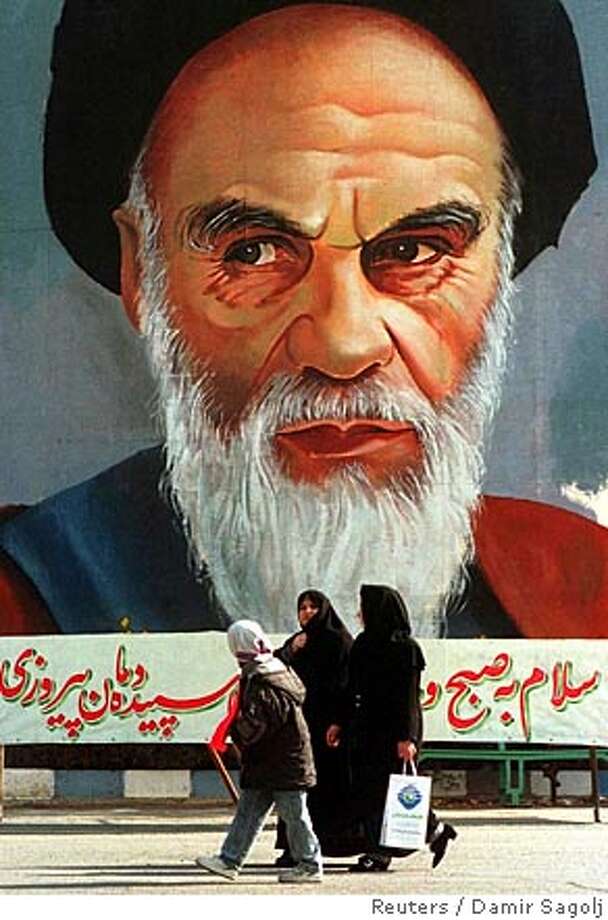
Diplomatic relations were immediately broken off by the Islamist regime of Ayatollah Khomeini after the revolution, and Israel was labelled as the "Little Satan" following in the footsteps of the "Great Satan" which was the USA.  This seems to be the point at which the hatred for Israel really began.  Ironically, and in spite of the hateful rhetoric that emanated from the regime at that time, behind the scenes there was a great deal of close cooperation between Iran and Israel.  Much of this was driven by the 8 year-long war between Iran and Iraq.  Iraq was a common enemy of both Israel and Iran, and this created unlikely ties and reasons to cooperate.  Israel sold Iran vast quantities of arms and ammunition, in return for which Israel received Iranian oil.  It is believed that the Iranian air force continued to operate, after it was initially attacked by Iraq, only because of the assistance received from Israel.  Iran was also delighted when Israel audaciously succeeded in destroying Iraq's nuclear reactor at Osirak in 1981 after the Iranians failed in their attempt to do the same.  The weekly insults and denunciations of Israel at Friday prayers by the Iranian leadership served conveniently to conceal the fact that there were no fewer than 100 carefully hidden Israeli advisers and technicians in Iran throughout the period of the war.

Since that time, Iran's leaders have continued to criticise, insult and threaten Israel at every opportunity.  And nobody has questioned for a moment why this is the case, and what justifies this vilification and extreme sentiment.  It has become a situation that simply forms part of the diplomatic landscape.  Can it be explained by Iran's hatred towards the USA, and the fact that the Israel is seen to be very close to the US?  It is difficult for me to accept that this explains all the public threats and the acts of terror that have been undertaken (and continue to be undertaken) against Israel.  Israel is not the USA's only close ally.  Why have other allies not been threatened for destruction in the halls of the United Nations in the way that Israel has been forced to endure?  And, while sentiment towards the US has wavered with different Iranian regimes (while always maintaining its negative bias), the hatred towards Israel seems unwavering no matter which Iranian president has been in power.  The threats against Israel have been the one pillar of consistency in Iranian foreign policy.  So I find it difficult to believe that this is purely driven by Israel's relationship and friendship with the USA.

The only explanation that I can offer to this extreme situation is the resurfacing of plain, old-fashioned anti-Semitism.  I use the term "resurfacing" because the Iranians/Persians do not have a long or consistent history of anti-Semitism.  The story of Purim that took place in Persia is a good representation of the relations that Jews and Iranians have enjoyed over the centuries.  While the king of Persia married a Jewess (Esther) and was prepared to take action to destroy Haman and his evil band for their anti-Semitism expressed against Mordechai, the fact was that anti-Semitism was clearly a common thing at that time.  In more recent times the Nazis declared Iranians immune to the Nuremburg Laws as they were considered to be pure Aryans.  In spite of this, the Shah and the Iranian government did not support the anti-Semitism of the Nazis.  With the rise to power of the Islamic extremists in Iran in 1979, we saw the rise to power of extreme anti-Semitism at a regime level.  Ironically, this anti-Semitism was not directed at Jews living in Iran as much as it was directed at Israel.  When Ayatollah Khomeini returned from exile in Paris to take up the leadership role immediately after the revolution, he declared, "We recognize our Jews as separate from those godless, bloodsucking Zionists" and he issued a fatwa decreeing that the Jews in Iran were to be protected.  This did not stop Iranian Jews from leaving Iran in large numbers.  The population of Iranian Jewry shrunk from around100,000 at the time of the revolution to around 50,000 in the mid-1980s, to around 25,000 in the mid-1990s.  Less than 10,000 Jews are left in Iran today.  Because of the "protection" afforded to Jews living in Iran, there are those who believe that the hatred that we see coming from Iran is not anti-Semitism, but anti-Zionism.  The problem is that the basis for this anti-Zionism is still unexplained.

In spite of the Iranians not being Arabs, they have enjoyed some ideals in common with the Arabs since the revolution in Iran.  The premise for the Arab-Israeli conflict is pure anti-Semitism.  The Arab world could not accept the notion of Jews living in the Middle East on their doorstep, and resolved to do all to destroy them and their state.  The holy city of Jerusalem has become embroiled in this war as a tool, rather than an end.  It is noticeable that no attempt was made to claim Jerusalem (and its Muslim holy sites) by the Arabs in the period prior to the establishment of Israel.  When the Jews took control of Jerusalem, and even in spite of granting control of the Muslim holy sites to the Waqf Council under the chairmanship of the King of Jordan, the Arab world and the Muslim world rose up to object.  Was their objection in favour of the Muslim holy sites, or was the objection against the presence of the Jews?  Everybody will reach their own conclusion.  What is clear is that Iran has firmly jumped on this anti-Semitic bandwagon.

Iran's brand of Shia Islam has been a huge source of conflict with the Sunni Islam practised by most of the Arab world.  In spite of this fundamental source of disagreement, they have found a common cause to fight against the Jews in Israel, to fight against the existence of the State of Israel and to use the claim of the holy city of Jerusalem for Islam as a means to their end.  The city of Jerusalem seems to be almost the only cause and rallying point that unites all different streams of Muslims around the world.  And, by extension, the fight against Israel, the Jews and the current regime in Jerusalem is equally a common point of agreement between them all.  Although distinct cracks are starting to show in this quest as individual Arab countries come to the realisation that Israel is going nowhere, and understand that cooperation with Israel may be a better option for them than fighting the futile battle of trying to destroy her.

The Iranians are, however, unwavering and unashamed in their battle against Israel and her people.  They continue to sponsor Hamas and Hezbollah, amongst other terrorist groups, that act as proxies for Iran to destroy Israel.  Iran is also responsible for numerous terror attacks orchestrated against Israeli and Jewish targets outside of Israel.  It's quest to build a nuclear weapon that could potentially be used against Israel is clearly a cause that any Israeli government will consider to be of highest priority.   So Iran has clearly not changed its mind, nor given up its desire to destroy Israel in any way.

My problem is that I am still not entirely clear why Iran wants to destroy Israel.

Friday, 15 January 2016

Reflections of 2015

As we take the first few tentatives steps into 2016, it is a natural instinct to take a look back on the year that has just passed, and to assess its events.  It was an action-packed year, not always in the positive sense of the word, and some of these occurrences are likely to accompany us for some years into the future.  As I see things, 2015 will be remembered for two key happenings.  The first of which is the signing of the deal with Iran by the P5+1 countries, led strongly by the US.  The second happening is the campaign of terror that has swept across Israel over the past few months.

The signing of the nuclear deal with Iran in July 2015 is of significance for a number of reasons, none of them favourable to Israel.  After many years of operating a nuclear enrichment program in secret, Iran's nuclear program was given an official stamp of authority and approval by the international community upon the signing of the agreement.  The fact that the program was run under cover for so long, brings into question the real intentions of this program.  While Iran claims that the purpose of the nuclear enrichment program has always been for the purpose of producing electricity for domestic consumption (and indeed some of the enriched Uranium has been used for this purpose), this can surely not explain why it was operated in secret away from the prying eyes of the international community for all those years.   Israeli intelligence tells us that Iran has been enriching Uranium to produce nuclear weapons, and the intelligence has found secret sites housed in underground bunkers where this has been happening for some time.  The international community acknowledges this in its agreement with Iran.  If there was no intention on the part of the Iranians to produce nuclear weapons, I guess that the convoluted agreement with Iran limiting its rights to enrich Uranium would not have been necessary.  The fact that the negotiations took so long and involved brinkmanship right until the last moment, is clear indication that the objectives of the international community were not aligned with those of Iran.  Now, it is claimed that Iran's nuclear program will be under constant supervision to ensure that it cannot produce nuclear weapons.  This statement seems to ignore the fact that Iran successfully ran a secret program of producing nuclear weapons for so long, and is highly likely to continue to do so now in the same was as before, after the agreement has been concluded and implemented.

The most astonishing revelation for me, is the fact that the international community is willing to negotiate and reach agreement with a country that constantly threatens the annihilation of another member of the international community.  This simply legitimises bad behaviour that is contrary to the spirit and rules of the United Nations.  Instead of castigating and isolating the country involved until such time as it amends its bad behaviour, this country is rewarded with an agreement that accepts its nuclear program (that was clearly intended for non-peaceful purposes) and lifts the sanctions that were designed to punish it.  I see the signing of this agreement as one of the great historical mistakes of the international community, and one that will have a substantial negative impact on peace and safety of the Middle East for many years ahead.  By signing this agreement, and by legitimising Iran's nuclear program that is at best highly questionable, the international community effectively becomes a party to the threats and the terrorist activities that Iran perpetrates and funds against Israel.

The second notable event of 2015 in my eyes, is the cycle of violence that has taken hold of Israel.  What ostensibly started out as a few "lone wolves" venting their frustration against Israel and Jews, has taken hold as a cycle supported by the usual terror organisations, as well as the Palestinian Authority. (PA)  At first, it seemed as though the isolated stabbing of an innocent civilian, or the odd "accident" in which pedestrians were being run over by vehicles would pass quickly.  But it has expanded further into what some are calling the third intifada or the "stabbing intifada".  The term "intifada" is one that indicates that the uprising is being supported by the PA, something that the Israeli government goes out of is way to deny.  When the only action that the PA is seen to take in the wake of these attacks is to justify them on the grounds of the fact that Palestinians are feeling frustrated by the so-called "occupation", there can be no doubt of their complicity.  Complicity does not necessarily come in the form of supplying arms and specifically sending terrorists into action.  Their complicity comes in the form of tacit consent.

But there is more to it than this.  The PA's contribution to the uprising that we see now runs longer and deeper.  It begins with the messages that are being sent to children in schools about the Jewish enemy, and about how the Palestinians will not rest until they ultimately conquer all the land that currently forms part of the Jewish state.  It continues with the premeditated act of maintaining squalid living conditions for their citizens, and deflecting the blame for this onto the "occupation".  This builds further animosity and hatred, and is not at all accurate.  There seems to be no accounting for the billions of dollars of international aid money given to the PA over the years, earmarked for assisting economic development for its citizens.  Instead, much of it has been syphoned into the personal bank accounts of the PA leadership, who all enjoy luxurious standards of living.  Some of the money is being paid to the families of "shahids", those who have been killed while carrying out terror attacks against Israeli soldiers and civilians. Some of these shahids are from the current "stabbing intifada" wave of violence, giving further credence to their support of the current uprising.  The PA is not at all as sweet and innocent as they would wish the international community to believe.

While it may be possible to quell the cycle of violence with a firm hand from Israeli security and military personnel, it will leave its footprint in the same way as other violence has done.  People are being killed unnecessarily on both sides of the divide.  These deaths simply generate further animosity and calls for revenge.  They radicalise people who see these deaths as just another attempt to destroy one people or another, or deny an entire nation or people the right to exist in peace and security.  Surely the time has come for the PA to be held to account for its actions, and for its role in the violence that we have seen, not only now, but over many years?

In spite of these and other challenges that the State of Israel has had to deal with during 2015, it is remarkable to note the progress that it has made in parallel.  The Israeli economy continued to grow at more than 2% pa during 2015, had the lowest levels of unemployment ever, had the lowest interest rates in history and also had negative inflation.  The Shekel ended 2015 as the currency with strongest growth against the US Dollar for the year.  Israel absorbed more than 30,000 Jews from other countries, many of whom were running from the threats of ever-increasing anti-Semitism.  Many of these achievements could not be matched by countries that do not have to deal with big threats and issues that Israel deals with daily.  It shows the resilience and the resourcefulness of Israel and her people.

So, while we tentatively step into 2016 expecting more of the same from 2015, there remains an air of optimism about what can be achieved this year.  Imagine what could be done if there was not so much time, energy and money being devoted to fighting negative forces.

Monday, 20 April 2015

Iran and Obama


What is it that is driving US President Barack Obama to seemingly single-mindedly pursue an agreement with Iran?  From the outset, he has appeared determined to reach this agreement, almost at any price.  This is despite strong opposition and warnings from the US's key allies in the Middle East, Israel and Saudi Arabia.  Although the agreement that is being sought with Iran comes under the auspices of the United Notions and the European Union together with a group of countries that includes Germany, France, the United Kingdom, China and Russia, there is no doubt that it is the US and Obama that are making all the running in trying to achieve this agreement.  On the face of it, there seems no obvious reason why Obama would wish to do this.  In the absence of clear publicly-visible reasons to reach such an understanding with Iran, the situation inevitably gives rise to conspiracy theories about what may be happening behind the scenes, that is driving Obama to act in the way that he is.

The US broke off diplomatic relations with Iran in 1980, soon after the Shah was deposed and around the time of the Iran hostage crisis.  The US gave strong support to Iraq during the Iran-Iraq war, even if this meant providing support to former Iraqi President Saddam Hussein during the 1980s.  All of this was done in the interests of opposing Iran.  The current threat that the Iranian regime represents in the world order is clearly not new to the US administration.  The question remains as to what has happened over the past few years that gives the urgency for Obama to reach this agreement with Iran, where his predecessors followed policies towards Iran that were exactly the opposite?

Some have put forward the theory that Obama is pursuing a policy of engagement with Iran.  The theory on engagement says that it is better to have a relationship with Iran to allow visibility and supervision of its nuclear program, rather than allow it to proceed with its nuclear activities in an unsupervised and secretive way.  There are certainly cases where a policy of engagement has proven itself to be successful, and reach positive results.  There are also glaring examples of the failure of engagement, where even more damage was done as a result of the belief that all parties are pursuing a common objective.  Possibly the most obvious failure of engagement was when British Prime Minister Neville Chamberlain pursued his policy of appeasement in relation to the Nazi regime during the late 1930s.  His triumphant declaration of securing "peace for our time" after concluding the Munich Pact in 1938 could not have been a greater misjudgement of the facts.  The Second World War broke out less than a year later.  A policy of engagement has a place, but only under very specific circumstances and conditions.  The moment there is any doubt about what may be driving the other party to wish to pursue engagement, it is a policy that can do much more harm than good.  This certainly seems to be the case with Iran.

Iran has two clear objectives from the talks with the P5+1 group.  The first and primary objective is to lift the crippling sanctions that have been applied to it over the past few years by western countries.  There can be no doubt that these sanctions have had a devastating effect on Iran's economy.  Iran has a heavy burden in funding daily economic activities, funding its nuclear development and also funding a large number of proxies conducting terror activities around the world.  This is tough for any economy, and even more so for an economy where its primary economic activity is suffering severe constraints due to international sanctions.  Iran's second clear objective is to gain an international stamp of approval for its nuclear activities.  These activities have been conducted in secrecy until now, despite the international community being aware of the fact that this has been pursued behind closed doors.  The opportunity has now been offered for Iran to get international approval for its nuclear development program, and Iran would certainly wish to accept this chance with both hands.

By giving such great compromises to Iran, President Obama is allowing a golden opportunity to slip through his hands and is breaking the cardinal rules of international diplomacy.  The fact that Iran has been brought to its knees by the effects of the sanctions, should present the chance that Obama needs to force Iran to kill off its nuclear program once and for all.  The "concessions" that Obama triumphantly announced that he had received from Iran sounded more like Chamberlain's misguided announcement of "peace for our time".  After Iran admitted to having lied about the fact that its nuclear facilities were not being used to produce a nuclear weapon, Obama still felt comfortable about accepting Iranian promises about how it would conduct its nuclear activities going forward.  Why do Iran's past lies not count for anything when moving into this brave new world?  Why would anybody believe that Iran has suddenly decided to reveal all details of its nuclear program moving forward, when it has never done so in the past?   As president of the Supreme National Security Council for 16 years, Iran's President Rouhani frequently boasted of how he succeeded in using talks with western countries to buy time to advance Iran's nuclear program.  It seems as though nothing much has changed.  According to some interpretations of the framework agreement reached in Lausanne, Iran will be formally free to pursue a nuclear weapon as soon as 10 years from now.  It is a frightening thought that Obama has officially signed this off.

In his announcement of the successful conclusion of the framework deal, Obama clearly showed the weakness of the agreement and the betrayal of his Middle Eastern allies.  He acknowledged that Iran is engaged in sponsoring terror activities and groups around the world.  The fact that Iran continues to publicly call into question Israel's right to exist and advocates her annihilation is undisputed.  The terror activities and ongoing threatening behaviour is all being funded out of Iran's economy.  Despite Obama trying his best to separate between Iran the terrorist and Iran the nuclear power, and to emphasise that the new deal does not change the US policy towards Iran's terror activities, it doesn't require an advanced knowledge of politics and diplomacy to understand that all of these things are linked and intertwined.  Lifting sanctions against Iran will immediately channel more money into terror activities, and channel money into building further nuclear activities and nuclear weapons away from the prying eyes of the international community.  Despite Israel's constant requests, there was no requirement on Iran to cease its anti-Semitic and discriminatory activities against the state of Israel.  In agreeing to lift restrictions on Iran while refusing to demand that Iran stop its activities of terror around the world and stop its discrimination against Israel, Obama has effectively becomes a party to them.  Not only has he let down Israel, Saudi Arabia, Iraq and other countries in the Middle East who are threatened by Iran on a daily basis, he has placed the entire free world at risk.

The question still remains as to why Obama would find it fit to pursue this policy, that has so much risk attached to it?  Does he honestly believe that the greater visibility that he believes he has achieved will really place a limit on Iran's nuclear activity?  I would like to think that the president of the US is smarter than being duped into such a misconception.  Perhaps it has to do with the need to show some success in an otherwise dismal record in the pursuit of its policies in the Middle East, or to have a legacy of some sort before leaving office.  This legacy promises to dog him to his dying day and beyond, in the same way that appeasement continues to cloud the legacy that Chamberlain left.

It took less than two weeks for the effects of the Lausanne agreement with Iran to be felt.  Russia, one of the P5+1 countries, announced that it would be selling its sophisticated S-300 anti-missile system to Iran.  This is a sale that has been on hold for many years, delayed as a result of the sanctions regime against Iran.  Now that the US and the P5+1 group have found it acceptable to reach a formal international agreement with Iran, it opens the floodgates for international trade with Iran to resume, even before sanctions have been lifted.  Iran is already benefiting from the policy of engagement, even before it has lifted a finger to implement any of the terms that it has undertaken to implement under the terms of the agreement.

Iran is unashamed in its sponsor of terror and pursuit of conflict, death and destruction against Sunni Muslims, Jews and western countries.  Any person or country that enters into an agreement with Iran effectively becomes part of these activities.  Obama has entered into the agreement with Iran in full knowledge of this situation.  History will judge him accordingly.

Monday, 2 March 2015

A Storm in a Teacup, or Diplomatic Snub?

Prime Minister Benjamin Netanyahu is on his way to Washington this week to present his case on Iran to a joint session of Congress on 3 March.  This is despite huge pressure that was put on him, both in the USA and in Israel not to go ahead, or at least to postpone his trip to Capitol Hill.  Having accepted House of Representatives Speaker John Boehner's invitation to make the address, it always seemed unlikely that Netanyahu would change his mind.  Many Israelis seem undecided as to whether this is a good or bad thing, and whether this is likely to do more harm than good to already troubled relations between the US and Israel.

The prime minister was certainly justified in accepting what appeared to be a genuine invitation from a legitimate source.  House Speaker Boehner is within his rights to invite guests to address Congress, and Boehner's office has issued a statement confirming that the invitation was already well on its way to Netanyahu before the Israeli election date was set early in December 2014.  The prime minister has used every possible opportunity to make known his (and Israel's) opposition to the agreement currently under negotiation between Iran and the P5+1 countries, and it would have come as no surprise to anybody that Bibi was quick to jump at this opportunity as well.  The timing of the invitation was particularly attractive, to address the US lawmakers just prior to the date that was set for the finalisation of the agreement.  Where the discussions with Iran are concerned, Boehner and Netanyahu are on the same side of the fence in opposing US President Barack Obama's seemingly single-minded intention to come to an agreement with Iran almost at any price.  If Boehner wished to find a like-minded international leader to address the US Congress on this matter, Netanyahu was the most obvious person to turn to.  Like Netanyahu, Boehner fears that giving Iran the green light to enrich Uranium with an official international stamp of approval, even at low levels of enrichment, would destabilise the balance of power in the Middle East and the world.  Obama's desire to establish a legacy before leaving the White House next year, could leave a most dangerous problem for Israel and the western world following his departure.

It is easy to be suspicious about Obama's reaction to Netanyahu's visit to Washington, and his his true intentions behind the reaction.  We know that Obama has little time or respect for Netanyahu, and this visit to Washington, coming as it does at the invitation of Obama's arch-rival in the Congress, is a perfect opportunity for Obama to make his negative feelings for Bibi more public.  The White House has accused Netanyahu of not following protocol by not advising them of his visit to Washington.  The prime minister's office says that the same protocol was followed this time as for previous visits.  John Boehner has admitted not following protocol on his part, and he purposefully did not advise the White House of Netanyahu's upcoming visit.  He says that the reason for this, was the fear that the White House would make every effort to undermine the visit in an attempt to prevent the visit from going ahead.  This is precisely what we saw happening when details of the visit were made known in the press.  The administration moved immediately to say that no meetings would be accommodated between the prime minister and administration officials.  Obama went further by hiding behind the fact that the administration has a policy of not meeting with foreign visitors in the weeks leading up to a general election.  The Obama administration also announced that they would no longer provide updates to Israeli government officials about the progress of the talks with Iran.  This laid the groundwork for Secretary of State John Kerry to accuse  Netanyahu of having no knowledge of what is happening in the talks with Iran, and therfore having no right to make comments about the terms of the agreement.

The reactions all reek of a combination of anti-Netanyahu behaviour, and US party politics.  The Obama-led Democrats seem hell-bent on reaching an agreement with Iran, while the Republicans are doing all that they can to scupper the deal from proceeding.  Throwing Netanyahu into the centre of this battle is an ideal plan, particularly for Obama's Democrats.

For Netanyahu, even if the visit to Washington was not originally designed as an attempt to strengthen his position just before the election, it still presents an ideal opportunity to do so.  Netanyahu's election platform is based almost entirely upon foreign relations and security issues.  As opposed to candidates like Yair Lapid and others who focus more on  the economy and internal matters, Netanyahu's plan of attack plays to his personal strength of international diplomacy.  There is nobody in Israeli politics who can represent Israel on the international stage as Netanyahu can, and those voters who have forgotten or overlooked this are about to be reminded in this week's speech to Congress.  Israeli TV has decided that they will broadcast Netanyahu's speech to Congress live, except for a short delay to allow it to remove any election-specific comments that they be included in the speech.

The local and international press has come out in strong criticism of Netanyahu for cynically using an opportunity to promote himself before the election.  There seems equally to be a case against Obama for using the opportunity to try to put Netanyahu down to ensure that he is not re-elected, and for using this to promote the deal with Iran. 

The matter that has been lost in the crossfire, is the agreement with Iran.  It is of grave concern that Iran may be granted the right by the international community to have the capability of producing a nuclear bomb, or coming very close to it.  The highly aggressive language that Iran uses in public against Israel, and the acknowledged military threat that Iran presents to Israel, make this possibility a frightening prospect.  Coupled with the increasing anti-Semitism around thw world, much of it tied to vehement anti-Israel attacks, there seems to be a strong case in favour of Netanyahu using every opportunity to present Israel's case where he can.  While politicians play little political games in Washington and do all that they can to discredit individuals, the door is left open for Iran to freely pursue its contruction of a threat that could put future generations of Jews and Israelis in grave danger.  This danger is not unique to Jews and Israelis, but ultimately extends to all of the Middle East and the western world.  President Obama seems somehow to have lost sight of this, but perhaps it concerns him less than his own personal battles and legacy.

Prime Minister Netanyahu has his weak points, and has been known to behave to promote his own interests on numerous occasions.  There can be no doubt that he is fighting for his political survival, as the opinion polls show he is struggling to gain any advantage over his political rivals ahead of the upcoming election.  There are, however, some international issues that are above party politics and that don't wait for elections.  The Iran problem is surely one of these.

Friday, 17 May 2013

The Importance of Preemptive Strikes

Israel's recent double strike on Syrian weapons storage facilities has, once again, raised the issue of the validity of preemptive strikes.  Israel has used this tactic on more than a number of previous occasions, has already struck Syria already a few times this year.  There are those who go as far as attributing Israel's continued existence to the fact that she has been prepared to go out and defend herself even before the attack materialises.

The issue of preemptive strikes as a defense mechanism to counter a potential threat has a number of inherent problems attached to it, particularly when this encroaches on the sovereign territory of another country.  Firstly, there is always the question as to whether the perceived threat is real and credible.  We saw the consequences of a bad call on the perceived threat when it was revealed that intelligence information was incorrect prior to the Second Gulf War.  This dogged both Tony Blair and George W. Bush until the end of their respective tenures, and continues to dog them in their personal capacities to this day.  Secondly, there is the question as to whether one sovereign country has the right to attack another sovereign country in defense of itself even where the threat is sure.  It could easily be argued that there is an element of hypocrisy in this concept.  Does it make a difference if the perceived threat is not an immediate one, but rather a perceived future threat?  This is the case with Israel's strikes in Syria last week, where the rationale for the strike was that Hezbollah may use these arms against Israel at an undetermined time in the future.  There are no firm answers to these questions, and the international community has historically judged such deeds on the basis of the parties involved, rather than the act.  On this occasion, Israel succeeded in capitalising on the negative views currently held by the international community towards Syria and Hezbollah, and escaped with little or no censure by the international community - something quite rare for Israeli attacks.  But this has not always been the case in the past.

Israel, a small island located in a sea of aggressive and hateful enemies, has been forced to employ the tactic of preemptive strikes in order to survive.  Some of Israel's most famous and important victories - most notably that in the Six Day War - were achieved by surprising the enemy before they were able to inflict damage.  The Egyptian air force was destroyed while on the ground in 1967.  This surely paved the way for the famous Israeli victory.  Israel was roundly criticised for sending its air force aeroplanes to destroy the Osirak nuclear reactor site in Iraq in 1981.  It was only many years later in 2005 that President Clinton finally acknowledged for the first time that the strike on Osirak by Israel was a "really good thing".  Similarly, the strike on the Syrian nuclear facility that was carried out by Israel in 2007, attracted criticism from Mohamed ElBaradei, then head of the International Atomic Energy Agency.  Imagine if the civil war in Syria being waged at this time involved the added concern of nuclear weapons.  With the benefit of hindsight, the Israeli strike in 2007 has potentially saved massive consequences.

These historical experiences also put a context to the ongoing standoff with Iran concerning the development of its own nuclear facilities.  A preemptive strike against Iran's nuclear facilities would be much more difficult, and would have far greater consequences than the ones carried out against Iraq and Syria.  Both of the previous attacks solicited no military response at all.  This miraculous escape, after catching each of these countries off guard, is highly unlikely in the Iranian context.  It is almost assured that any attempt to carry out a military strike against the Iranian nuclear facilities would include a substantial response.  It is for this reason that Israel has tried using different tactics against Iran, including mounting a concerted campaign to assassinate key personnel employed in the Iranian nuclear industry and using cyber warfare to destroy software and hardware in use by the Iranian nuclear facilities.  Until now, these tactics have served to slow the processes down at best, and have not been effective in halting Iran's march towards becoming a nuclear power.  Israel is still considering a game-changing strike that will kill off Iran's nuclear push once and for all.  The threat posed by a retaliation to such a strike is surely much lower than the threat presented by a nuclear Iran.  Despite this fact, the threat presented by retaliation is substantial.

While not completely invincible, Israel's military and intelligence establishments have proven themselves over and over again.  Mistakes have certainly been made, but reports of potential threats which are reported by these organisations are always taken seriously by the Israeli government.  This is based on its amazing track record of getting things right more often than getting them wrong, and managing to sniff out information in a seemingly impossible way.  The way that the Israeli organisations work seems somehow to be different and more effective than similar intelligence agencies elsewhere in the world.  A potential threat to Israel which is reported by Israeli intelligence will almost certainly be taken seriously.  Equally, the Israeli intelligence community is well aware of the importance of the advice that they offer, and the consequences of giving bad advice or making mistakes.

It seems highly unlikely that Israel will reverse its tactic of preemptive strikes against enemies in the near future.  This tactic which has proved very effective in the past, and critical to Israel's survival. Despite the fact that a great deal of Israel's focus is on defense rather than attack, as evidenced by new developments such as the Iron Dome, the tactic of attack is often the best form of defense.  Despite this fact, we all wish to believe that this will always be used sparingly and very cautiously.  Ultimately, however, it is one of the ways that Israel will be able to maintain any superiority over its enemy neighbours around the Middle East.  If attacks and threats against Israel persist, Israel will be forced to employ measures to protect herself.  These measures include preemptive tactics to prevent the possibility of attacks taking place, and to prevent loss of innocent lives.  Extreme circumstances demand extreme measures.  It would be difficult to argue that Israel is not living under extreme circumstances.

Saturday, 30 March 2013

Obama's Israeli Triumph

US President Barack Obama has concluded his trip to Israel after an intensive few days in the Holy Land.  Prior to this visit, Obama was perceived by a majority of the Israeli public as being unsympathetic and unhelpful to Israel's cause in the international community.  Some believe that a US president with the Muslim heritage that Obama has, can never be good for Israel.  Expectations that Obama's visit to Israel would dramatically change his attitude towards Israel were extremely low.

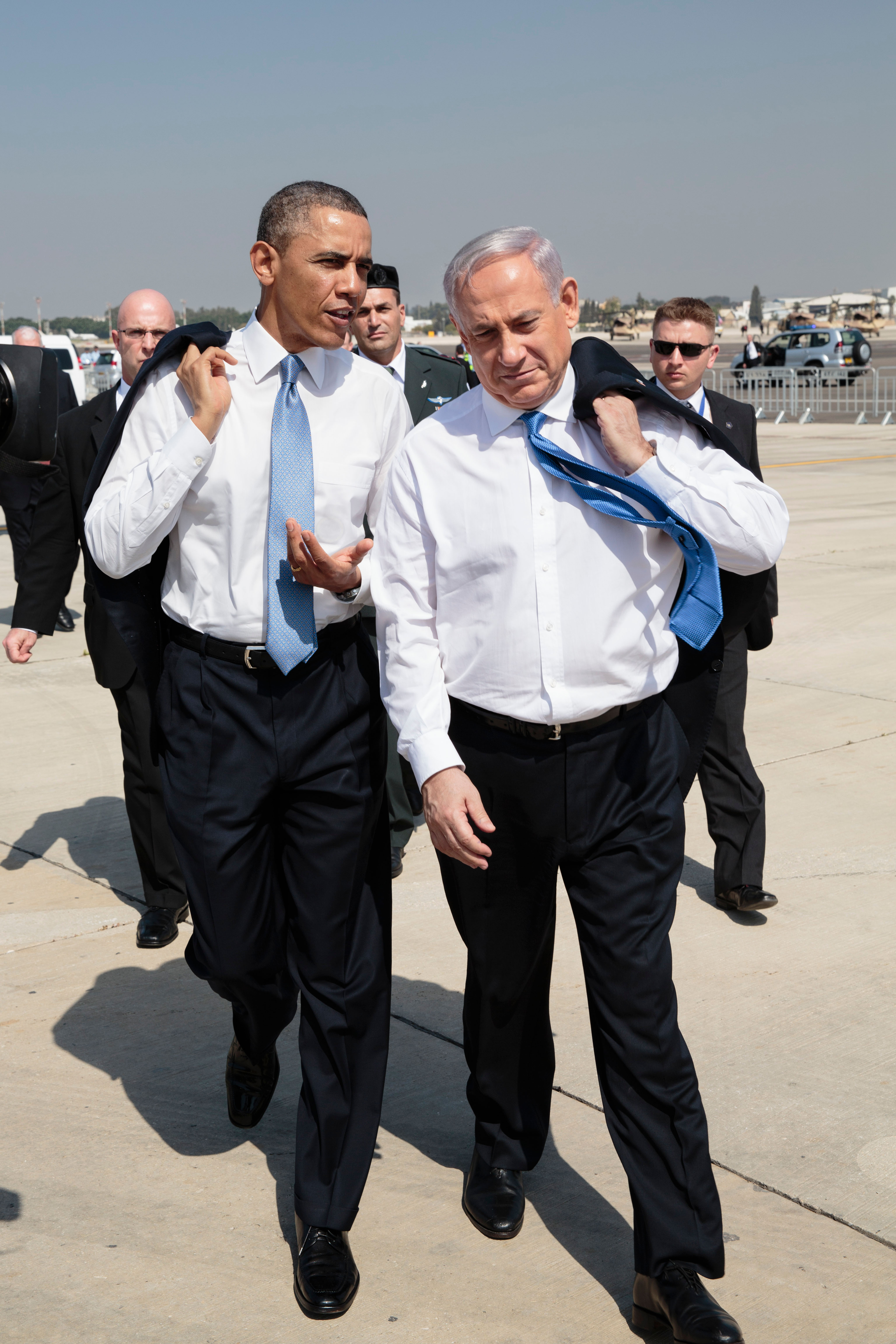
Now that he has been and gone, and we have had the chance to view the course of the visit's events in hindsight (albeit a very close hindsight), I believe that Obama has almost managed to pull off the impossible.  It was a very different Obama who was in Israel from the one who has spent the past four years taking neutral positions on matters which affect Israel.  From the moment that he stepped onto the tarmac at Ben Gurion airport and said in Hebrew that he was happy to be back in Israel, Obama seemed not to put a foot wrong.  He managed to say all the right things to help reverse the negative sentiments towards him.  He paid tribute to Israeli technology and military strength when inspecting the Iron Dome battery at the airport.  He reiterated his intention to continue to fund this program, despite the budget cuts in the US.  He paid tribute to Israeli fallen heroes during his visit to the Mount Herzl cemetery, and paid his tribute to the six million at Yad Vashem.  He met with Israeli students to relate his view of the future to them, and to listen to the things that they had to say.

On the pressing issue of Iran, the US president was eager to reiterate the points of common understanding rather than the differences.  He said that there was little daylight between the Israeli and US positions.  In truth, I think that he refers more to the assessment of what is happening in Iran, rather than the view as to how to deal with it.  Even though nobody expected that there would be a great deal of public discourse on the Iran issue, it was easy to read between the lines that Obama and Netanyahu are not precisely on the same page where this is concerned.  The Israeli public would like to know if Obama will be prepared to sanction military action in sufficient time to prevent the final steps being taken for the construction of an Iranian nuclear bomb.  It is also important to know whether the US commander-in-chief is prepared to commit his forces to be in the front line, or if they will be watching from a distance while Israeli forces are required to do the hard work.  Answers to these questions were not forthcoming in public, and we have the impression that the US answers to these questions are probably not the ones that Israel would prefer to hear.

It was important to hear Obama say that Israel's continued strength will ensure that a Holocaust does not happen in the future.  As much as it is a stark admission to make that it is not the free world and the powers of the UN that will prevent such a genocide in future, it was equally important for him to publicly recognise the central role that Israel plays in the future of Jewish survival.  It was also important to hear him say that being on friendly terms with Israel is in the US national security interest.  Relationships between countries are built on necessity and mutual-dependence, and not on sentiments.  As much as there are some in the US who do feel some sentimental attachment towards Israel, the only thing that will ensure that the US will continue to support Israel in the future, is a national security interest that drives this friendship.
President Obama's trip to Israel was a public relations triumph that saw him win over many Israeli sceptics.  He managed to convince some that America is indeed there to support Israeli, despite the many instances over the past four years when Israel felt isolated by the contrary view adopted by the Obama administration.  Could it be that the next four years will be different, and that there will be more help forthcoming from Obama and his friends in support of Israel?  Only time will tell.  Many feel that the president's appointment of Chuck Hagel to the position of US Secretary of Defense is more reminiscent of the old Obama, rather than a new one.
Hagel is perceived to unsupportive and unsympathetic to Israel's cause.  I do believe that most Israelis are prepared to give Obama the opportunity to prove his credentials again.  His actions over the coming months, particularly with regard to Iran, will be highly influential in convincing people of his true allegiance.

As a parting gift, Obama brokered an apology to be delivered by Prime Minister Netanyahu to Turkish Prime Minister Erdogan over the deaths of Turkish activists in the Gaza Flotilla incident three years ago.  While it is clear to see why a united Israel and Turkey serves US national security interests as a buffer against Syria, it is still unclear whether this is good for Israel's interests or not.  This apology by Israel represents a major climb-down on a point of principle, while the benefits sufficient to outweigh this concession are not immediately obvious.

A good relationship with the USA is certainly in Israel's best interests.  But this is not at any price.  Israel wishes to see the US being prepared to speak out and take actions on matters which would benefit Israel in the international community.  With the constant threats that Israel is facing, this is of importance to Israel's future surivival and that of the Jewish people.  Over the course of the next year, this will manifest itself in the support that Israel receives to counter the Iranian threat.  The clock is ticking.......

Sunday, 11 November 2012

Barack is Back - The Aftermath for Israel

While half of America celebrates the results of the presidential election, many Israelis will be feeling quite depressed about the results.  It would be safe to say that most of Israel was rooting for Romney (or whoever would have opposed Barack Obama).  In four short years, Obama succeeded in alienating much of the Israeli public, and there is a fairly flat feeling about the prospect of Obama continuing similar Middle East policies over the next four years.

Of course, it is true that Israelis have very different interests than Americans have when viewing the presidential election.  Americans are justifiably mostly concerned about economic issues, and about domestic issues such as universal health care.  These are issues which are of much less interest to the average Israeli, even though the man on the street in Tel Aviv or Jerusalem still cares a great deal about who will govern from the White House.  The reason for this is quite simple.  The White House has historically had a substantial impact on events in the Middle East in the past, and this is likely to continue for the foreseeable future.  People are clearly hoping that this influence will be exerted to help the security of the Jewish people in Israel, and also to advance the cause of peace in the Middle East.  The experience of how this influence has been exerted over the past four years does not engender any feeling of confidence that the current status quo is likely to change, or that the current situation will move in a positive direction over the next four years.  Even though life for Jews in Israel has been far worse in the past, people continue to live in hope that it will be a lot better with the help and influence of the White House in the future.

When Barack Obama came to power four years ago, there was a great deal of scepticism in Israel about how a president with such close family links to Islam, could be good for the Jews in Israel.  The euphoria and excitement that swept through the USA, however, convinced many to give Obama the benefit of the doubt and the chance to prove himself one way or the other.  Now, four years later, many believe that he has proved himself, and that their initial scepticism was fully justified.  In President Obama's first presidential visit to the Middle East, he made a point of stopping in Egypt to lay out his policy for the region.  Since then, he has not stepped foot in Israel nor shown himself to be particularly engaged in Middle Eastern issues.  He has waged a battle against policies that Prime Minister Netanyahu has pursued to secure the safety of Israel as a Jewish state, and has allowed Iran to reach the verge of producing a nuclear weapon by not being prepared to support the required military action to remove this threat.  Even though not all Israelis are supporters of Netanyahu and his policies, Obama's opposition to these policies have been viewed as unhelpful to Israel's cause and her security.  Obama has not been sufficiently willing to speak out against the continued missile fire under which so many communities in the south of Israel have been forced to live under, and to make clear to the perpetrators of these attacks how unacceptable this situation is.

Obama's predecessor, George W. Bush was the one who coined the phrase "if they are not with us, they are against us", in the context of the war on terror following the 9/11 attacks.  Israel has been fighting a war on terror for much longer than this, and understands very well the fact that there can be no "abstentions" in this important issue.  Those who do not strongly support the fight and help to take steps to assist in eradicating terror, effectively enable it by their lack of action.  Those who do not actively work to eradicate the nuclear threat from Iran, are those who enable it.  Responsibility for this extremely worrying situation will fall to all of those who were happy to be spectators while it was clear that a nuclear weapon was being constructed by a rogue regime with full knowledge and in full sight of the world.  The UN was set up in the wake of the Second World War with a brief of preventing conflicts and avoid future wars.  This type of activity is surely exactly what the UN has been set up to act against.  Even though the clear understanding is that Iran's nuclear program has the worst of intentions, it is being allowed by the world, and by Barack Obama in particular, to proceed almost unimpeded.

With this background, it is hardly surprising that Obama doesn't have a place in the hearts of many Israelis.  There are those who claim that the Obama administration has done more than any other US administration to provide arms and funding for weapons to Israel.  It is also clear that a strong US economy is good for Israel's economy in many respects.  So, action taken by Obama to strengthen the US economy is good and extremely important for Israel's continued well-being.  But these are indirect, and often invisible to the Israeli eye.  The most public and obvious matters, being the Iran nuclear issue and the continued conflict with the Palestinians, particularly Hamas in Gaza, are always going to be the issues that grab the headlines.  These are also the things that will capture the attention of the Israeli public, and by which Obama's success and failure with regard to his policy on Israel will be measured.

What remains unclear, is the extent to which the personal lack of agreement between Netanyahu and Obama may affect Obama's Israel policy.  Netanyahu is reported to have got on the wrong side of Obama on more than one previous occasion, and was extremely clear in his support for Romney in the presidential election campaign.  Indications from the White House are, that this will not influence Obama's attitude towards Israel, but this remains to be seen.  Despite the lurch towards democracy by some Middle Eastern countries as a result of the Arab Spring, Israel is still the only truly democratic country in the Middle East that the US can truly rely upon as an ally.  Their partnership in the war on terror is also a critical for both the US and Israel.

Perhaps its a good thing that Israelis have a very low expectation of the support that Israel will get from the new Obama administration.  At least, this means that the chances for disappointment are much lower than was the case four years ago when he took office for the first time.  Of course, we would all like to be pleasantly surprised, but there is no expectation that this will be the case.  The real fear is that we will wake up one day during the course of the next few years, and find that Iran has a nuclear bomb.  This will change the shape of the Middle East, and of the world.  It is our hope that Obama will at least take action to prevent this nightmare becoming reality.  Even though Israel is known for acting independently where required, and is not bound to US agreement or support on these matters in any way, the problem is a global one and not one which is only a threat to Israel.  While Israel is clearly one of the main targets of the Iranian aggression, this issue should not be left entirely to Israel to take care of.  The US and other countries around the world have a clear share of responsibility.  The time to act is now.

Sunday, 16 September 2012

Fifty Fateful Days

Former government minister Tzachi Hanegbi has been quoted as telling a closed meeting of Likud activists that the next fifty days are the most fateful in Israel’s history.  Hanegbi is not a member of the government or even of the Knesset, having recently been convicted of moral turpitude in relation to previous ministerial posts held.  He has also flip-flopped between political parties when he decided to join Ariel Sharon’s Kadima party, then return to the Likud.  Hanegbi is, however, known to be a close confidante of Prime Minister Netanyahu.  Under the circumstances, his statements are being closely analysed for hidden significance.

The fact that his statements were clearly not intended for outside consumption has added even greater weight to them.  Now that the words have been recorded and smuggled to the outside world, the press is taking the opportunity to speculate as to precisely what they mean.  In his statement, Hanegbi compared the next fifty days to a dozen or so days during the Yom Kippur War which he considers to be equally as fateful, and upon which the balance of Israel’s fate hung.  He referred to the fact that allowing Iran to have nuclear weapons has a price tag.  Hanegbi made a request of the Likud faithful to support Prime Minister Binyamin Netanyahu, and to “allow him quiet” and “strengthen his legitimacy” so that he can take the necessary decisions calmly.

The seriousness of the situation with Iran has been evident and obvious to many within Israel and  outside for some time.  It is the first time, however, that somebody who is believed to be close to the inner core of government has indicated a timetable of any type on this matter.  The reference to the next 50 days seems to tie in quite closely with speculation that has been previously heard, suggesting that the window of opportunity to carry out a strike against Iran is limited until the US presidential elections are held in November.  After the election takes place, there are strong reasons why Israel will not be able to expect support for an attack on Iran, irrespective of whether Obama is reelected or Romney is successful.  It is not clear when the window of opportunity may reopen after the election, but it is assumed that it will take a good few months.  By then, the situation in Iran may be beyond the point of no return.

For some time now, Prime Minister Netanyahu has expressed his frustration over the lack of international support to deal with the Iran nuclear program.  Despite the fact that Iran has consistently failed to provide adequate responses to the international community in relation to its nuclear program, the world (led by President Barack Obama) seems content to provide it with the time it needs, while ostensibly waiting for the sanctions to take effect.  This is valuable time that is being wasted, and which Iran is taking maximum advantage of to get its nuclear bomb beyond the point where action can still be taken to destroy it.  I hope that the world will not look back in the future, and regret not having used these days more productively.

Many ask why it is that Israel does not act unilaterally against Iran, in the same way as the action was taken against Syria and Iraq?  It is my guess that we can never fully understand the differences in the circumstances that exist now with Iran, when compared to those that existed in Iraq and Syria.  For one, the Iranians are lying in wait ready and have hundreds, if not thousands, of missiles waiting to be fired towards Israel.  That seems to be a very powerful reason to change the tactics used.  The prime minister has responsibility for the safety of his citizens, both now and in the future.  As opposed to the situation that existed previously, the Iranian issue is far too public and high-profile to allow the IDF to carry out stealth missions without any consequences.  The world’s media is lying in wait for the first Israeli aircraft to take off from their hangars towards Iran.  Any attack of this type will probably be broadcast live on Al Jazeera and CNN.

When Tzachi Hanegbi spoke about 50 fateful days, I think he referred as much to the consequences of inaction, as to the consequences of any action.  If the prime minister has decided that it is too risky to send the forces in unilaterally, the question is what has he decided to do instead.  Clearly, doing nothing is not an option.  We are now relying on the creativity of the Israeli mind to find ways to get the Iranian nuclear bomb without the need to send in the troops.  Let us hope that this is  already in train.

With the onset of the Jewish New Year, we sincerely hope and pray that 5773 will bring a final answer to this issue.  We hope that, by the time we reach 5774, the issue of the Iranian nuclear bomb will be behind us once and for all.  We pray for the health and safety of all of our brave soldiers who give their time, energy and their souls in protecting Israel and the Jewish people.  May we find that elusive missing piece of the puzzle that will lead our country towards peaceful coexistence, and prosperity for all her people.

Wishing you and your family, and all the people of Israel, a happy, healthy and prosperous new year.

Tuesday, 28 August 2012

Non-Aligned, But Extremely Maligned

Iran is playing host to the meeting of the Non-Aligned Movement (NAM) during the course of this week.  The meeting sees 120 developing nations of the world attend, with special attendance by the UN Secretary-General, Ban Ki Moon.  Although the original intention of the NAM was to provide a home for countries who were not formally aligned with or against any major power bloc, it has always represented something of a political hot potato.  This is because its membership includes the so-called "axis of evil" countries, and many other pariah states of the world.  The NAM has, perhaps unwittingly, acted as a club for countries that are persona non grata in the developed world.  The best example is the the host of the 16th meeting of the NAM this week, Iran.

Since the NAM was established in 1961, a great deal has changed in the make-up of the world's power blocs.  Despite this fact, it seems as though many of the original members of the NAM remain members to this day.  The changes in the political power blocs have not succeeded in changing  the countries that are aligned with them.  The term "non-aligned", while accurately reflecting the fact that the member countries are not part of any major international power bloc, conceals the fact that many of the member states are aligned with each other in different ways.  It seems as though being non-aligned is not sufficiently compelling to link the NAM countries.  Even these countries need a common cause to create a more substantial link between themselves.  Iran has succeeded in creating a common issue for the NAM countries to rally around, and this is the issue of hating Israel and bringing into question her right to continue to exist.

Iran's policy of publicly humiliating and deligitimising Israel is already not a new phenomenon.  Iranian President Ahmadinejad has been allowed to get away with behaving like a thug on this issue for many years.  He has stood at international gatherings at every opportunity, and ranted against Israel's right to existence amongst the family of nations.  The international community has silently sat back and watched the spectacle without taking action.  This has even been the case when Ahmadinejad has had the audacity to stand up at the United Nations General Assembly, the place that is supposed to protect the rights of nations to exist in peace and harmony, and spew vitriol about the destruction of Israel.   Once again, the UN stands accused of failing to protect the basic rights of member nations by allowing UN Secretary-General Ban Kim Moon to travel to Tehran to attend the NAM.  In so doing, he has legimitised the attendance of all the other countries at the meeting, all of whom will be subject to tirades promoting the destruction of the State of Israel in the usual Iranian way.

Surely, this enough to convince the world of Iran's ban intentions regarding its nuclear program?  The evidence that Iran intends to construct a nuclear weapon is irrefutable.  The subject of Iran's wrath and aggression is equally irrefutable.  The fact that the world allows Iran to threaten Israel in every public forum in the most unashamed manner, is now supported by the world's unwillingness to take tougher action against the nuclear program.  Instead, the world has decided to hide behind the sanctions to defer action on this matter.  It has been clear for some time that the sanctions will neither prevent the countries of the world from buying oil from Iran, nor prevent Iran from continuing to build a nuclear bomb.  Once again, it seems as though it will be left to Israel to take on the world's responsibility in acting against a tyrant.  It is true that Israel is at the front of the line of countries at risk by Iran's aggression, but it is also true that Israel is not the only country at risk.  It is clear that any action by Iran to construct a nuclear weapon will place all of the western world, and beyond, in the firing line.  Perhaps the threat to these countries is not sufficiently pressing now to force them into action.  As has been the case a few times in the past, it will be Israeli soldiers whose lives will be risked to clean up the mess that others are not prepared to take care of.

Israel has acted in the past without the blessing of its allies to take care of problems.  Twice before, Israeli aircraft have destroyed nuclear reactors under construction.  It was notable that the US government opposed Israeli action against both the Iraqi reactor and the Syrian one under construction.  We now know that Israeli action saved some extremely nasty situations from arising, and history books could have looked extremely different had the timely and brave action not been taken in the nick of time.  Fortunately, all Israeli soldiers and equipment was returned to base safely on both previous occasions.  Where Iran is concerned, the operation looks to be infinitely more complicated and risky.  This is partially because the world has failed to take timely action to destroy the threat at a much earlier stage.  Any operation that Israel will mount against Iran is likely to be extremely risky, and will almost certainly result in Israeli loss of life.

In the interests of international diplomacy and world peace, the UN Secretary-General will appear alongside the world's thugs including Ahmadinejad, Zimbabwe's President Mugabe and others.  Instead of protecting the interests and the freedom of the democratic world, he has chosen to legitimise the unacceptable behaviour of those countries who present the greatest threat to world peace.

The NAM conference has given Ahmadinejad the perfect opportunity to stand up in front of the non-aligned, and malign them against Israel and the west.  In a few weeks' time, we will expect to see another of his tirades at the UN General Assembly in New York.  All of the actions that turn a blind eye to Ahmadinejad's bad behaviour, simply empower him even further.  He understands that the world does not set any limits in terms of acceptable behaviour, and will exploit this to the maximum extent possible.  As before, it will be left to Israel to draw the line and to take the required action.  It is my hope and prayer that our soldiers and our civilians will not be endangered in the process.

Monday, 4 June 2012

Ramping Up the Cyber Warfare

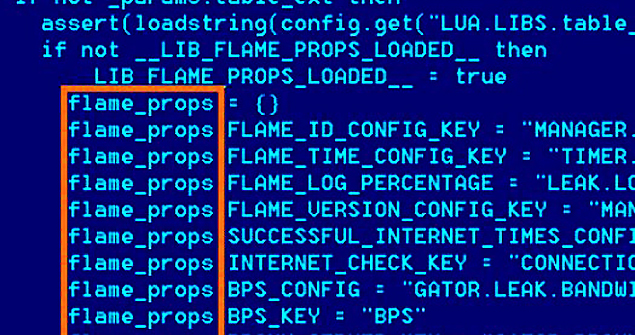
The discovery last week of the latest weapon in the war being fought in cyberspace, has confirmed to me the fact that the war against Iran began some time ago.  Flame is the latest in a series of computer viruses that have been found to have infected computers in Iran's nuclear industry.  Despite Iran's consistent protests that its nuclear program is intended only for domestic purposes, the fact that it has denied access for inspectors from the International Atomic Energy Agency to see some of its facilities is clear indication that there is something to hide.  This was reinforced last week when images were released by the US showing frantic work on the part of the Iranians to erase evidence of certain activities.

Out of all the types of warfare being undertaken, the development of nuclear weapons is one which plays into the hands of the computer experts the most.  The nuclear industry is highly dependent on computerised systems for the control of the reactors, for the operation of the centrifuges and for much of the process that enriches Uranium to levels that allows for it to be used in nuclear weapons.  For Israel, this comes as a something of a relief as few countries around the world have the same level of expertise in software and hardware as the Israelis.  Israeli engineers have established a name for themselves in developing a number of products and features in the software arena which are "firsts" in the world.  These same skills have allowed Israel to tap into much of what is happening in the Iranian nuclear industry, and to cause disruption to retard or damage the process.

Israel embraced the need to conduct cyber warfare some time ago.  It is believed that unit 8200, which was established in the 1950s as an intelligence-gathering unit using the most sophisticated electronic technologies, was the first facility deployed to use its technological capabilities to wage cyber warfare.  Since then, it is known that specialised units for this purpose have been set up by the IDF, the latest of which is addressing new media, including social networks.  Not only is the IDF focusing on attacking enemy networks and computer systems, there is a great deal of work being done to ensure that its own systems adhere to the highest standards of security.

The latest Flame virus was discovered by Russian anti-virus company Kaspersky.  Some reports suggest that Flame may have operated undetected for as long as 5 years, and succeeded in evading 43 anti-virus systems deployed on Iranian computers.  During the time that it operated on individual computers, Flame was able to send copies of data stored on the computer back to its controllers.  It was also able to take screen shots of the computer, as was as activate the computer microphone to allow eavesdropping on nearby conversations.  If it infected 1,000 computers over a period of 5 years, a great deal of information could have been collected.

Flame comes hot on the heels of the Stuxnet virus which is reported to have destroyed centrifuges that were in use in Iranian nuclear plants.  Stuxnet was discovered much more quickly because it infected many more computers and, therefore, came to the attention of the anti-virus systems much more quickly.  There can be little doubt that for every virus we hear about, there are many more that go unpublicised.

Computer systems are in use in every aspect of a modern military environment.  They are used for simple tasks like administration and data storage, as well as for more sophisticated tasks such as the command and control of the most sensitive and most destructive weapons systems.  This gives massive opportunity for those who are able to use cyber warfare effectively, to infiltrate every corner of a country's security establishment.  This is the enviable position that Israel finds herself in today.  The next war against Iran will also certainly be fought on this basis.

This war has, in fact, already begun, and may have been ongoing for as long as 10 years.  It is a war that has no room for the faint-hearted, and has a great deal at stake.  Small errors can have huge consequences, and the survival of an entire nation could be resting upon doing everything right.  When Israel was found 64 years ago, she was regarded as being at a huge disadvantage because of the small poorly-equipped army that she was able to deploy.  Despite this disadvantage, Israel has survived and turned into one of the great military nations of the world.  With the advent of cyber warfare, the game has turned very much in Israel's favour.  The most unlikely of military powers is now more in the driving seat than ever before.  A cyber war seems built to fit the strengths that Israel has.  It would be foolish of the Iranians to think that they will be able to triumph in such circumstances.

Sunday, 11 March 2012

A Modern-Day Purim Story

Last week we celebrated the Jewish festival of Purim.  It is a classic Jewish festival which involves bad guys who wanted to murder the Jews.  Somehow, we managed to survive against the odds and a festival was created to celebrate this fact with the addition of delicious food.  As a child growing up, I remember thinking how unrealistic these stories sounded.  Could it really have been the case that the evil Haman was trying to influence the king of Persia to annihilate the Jews?  What reason could he have had for wishing to do this?  After all, most of the Jews that I knew were decent upstanding citizens and quite nice people as well.  So why would somebody have wanted to kill them?

For those of my parents' and grandparents' generation, this story would have been a very real one.  They were unfortunate enough to have witnessed the horrors of the Holocaust.  This was a repeat of the Purim story except, in this story, millions of innocent people were slaughtered.  Only now, 60 years later, can the State of Israel boast a population that equals the number that were murdered during the most barbaric human-cleansing exercise in history.  Despite the fact that the Jews have survived and made a strong comeback, we have not quite decided upon a festival with delicious food to celebrate Hitler's failure.  Perhaps we will have one in the future.  This should, however, not allow our eyes to be taken off the ball.  The Haggadah that we read on Pesach tells us that, "In each and every generation they rise up against us to destroy us. And The Holy One, blessed be He, rescues us from their hands."  We are also instructed to remember how Amalek attacked the Israelites soon after the crossing of the Red Sea following the exodus from Egypt.  Each year, we read the portion known as "Zachor" (remember) on the Shabbat preceding Purim to be reminded of the evil of Amalek, who is traditionally believed to be a descendant of the evil Haman from the Purim story.  The need to read this each year and remember, arises from the fact that we are required to be vigilant to prevent it from happening again.  Now, in 2012, there are strong indications that it is happening again.

The irony of the Purim story cannot be lost on us as we hurtle headlong into an inevitable conflict with Iran.  The Purim story took place in Persia, and we now return to the scene of the crime approximately 2,400 years later to confront Ahmadinejad, the modern-day Iranian Haman.  As far as I can make out, the Jews and Israel have caused no damage nor present any threat to Iran or Ahmadinejad.  Despite this fact, Ahmadinejad has made Israel-bashing the cornerstone of his foreign policy platform.  He has not missed an opportunity to threaten Israel or to predict her demise whenever he has had the ears and eyes of the world trained on him.  He has been good to his word in practice as well, channelling millions of dollars into terror organisations like Hezbollah and Hamas which have indiscriminately attacked Jewish and Israeli targets.  When adding his duplicitous dealings with the Iranian nuclear program, it is clear that this situation cannot be allowed to continue unchecked.  This is the reincarnation of Amalek, of Haman and of Hitler.  This is exactly the sort of person that we are warned against.

Experience that the Jewish people have accumulated over the years, shows that they cannot rely on others to do the right thing to protect them.  Whether it was the failure to bomb Auschwitz, or the criticism over the destruction of nuclear reactors in Iraq and Syria, the international community has shown itself unwilling or unable to take action at the required moment in order to prevent a disaster.  Viewing things with the benefit of hindsight is too late, and the lessons are somehow never learned.  The Jewish nation have been forced to ensure that they can take care of themselves.

Fortunately, one important thing has changed since the days of Haman and Hitler.  We now have a Jewish army.  This is probably the most substantial element of the equation in the current scenario with Ahmadinejad.  The fact that thousands of Iranians missiles are trained on Israel, and waiting for the first strike on Iran, does not intimidate the Israeli army.  This is simply another danger to be considered, alongside the others, when taking on the significant threat that Iran poses under Ahmadinejad's leadership.  The fight will be ugly and there will be casualties, but there is no choice for the Israeli army in the imperative to put a stop to this threat as soon as possible.

For parents like myself whose children are the soldiers who will be called upon to fight this fight, the prospects are chilling.  We would certainly prefer not to be in this situation, and we would not choose for our children to be placed in harm's way as they battle to protect Israel and the Jewish people.  Ultimately, however, we realise the importance of having an army like the IDF, and we are forced to stand helplessly by as our children willingly fulfil their obligation to protect their land and their people.  This is the only way that we can be assured that the likes of Haman, Hitler and Ahmadinejad will never be allowed to carry out their evil plans to destroy our state and our nation.  These soldiers, our children, are the heroes of this part of the story of survival.

As the situation escalates and the prospects of an armed conflict with Iran grow with each passing day, it is our prayer that our army and our children will succeed in doing their job safely and securely.  We pray that they will return to their families, sound in body and mind, having completed their task that they have been called upon to do.  We stand behind them, fearful for their well-being, but immensely proud of their sacrifice.  May Hashem protect them in all that they do.

Image by Deputado Bruno Covas

Monday, 5 March 2012

Netanyahu's Gamble

Picture courtesy The London Evening Post
Prime Minister Benjamin Netanyahu has travelled to the United States to address the annual conference of the American Israel Public Affairs Committee (AIPAC).  This is probably the largest and highest profile event on the US Jewish calendar, and it is no surprise that Bibi makes a special point of attending each year.  Continued support, both financially and politically, of the American Jews is key to Bibi.  One of the other keynote speakers at the event will be US President Barack Obama.  It is handy that the conference is being held in Washington DC this year, only a hop and a skip from the White House.  In this, an election year for Obama, he will not be missing out on the opportunity to pander to the highly influential “Jewish vote”.

On the fringes of the AIPAC conference, Obama and Netanyahu have scheduled a meeting.  This will be the 9th time that the two leaders have met since Obama came to office almost four years ago, despite the fact that Obama has yet to pay a visit to Israel during this time.  Even though this meeting is taking place as a secondary event around the AIPAC conference, the importance of this meeting should not be underestimated.   There is really only one topic on the agenda, and this is the huge issue of Iran and its nuclear activities.  Netanyahu has decided to go to the USA, and enter into a gamble with Obama.
Although both the USA and Israel agree that the Iranian nuclear program is building the capability of producing a bomb, it seems also to be agreed that a bomb has yet to be constructed.  This fact appears to make the issue less pressing for the US president and his men.  The Israeli team is far less relaxed about this situation and, for them, the fact that Iran is able to build a bomb is the equivalent of Iran having a bomb.   This is why Netanyahu has been pressing the international community for so long to take action against Ahmadinejad, and the dangers that are presented by the Iranian nuclear program.  Until now, the international community has been prepared only to impose economic sanctions on Iran and not take a stronger military stand as Netanyahu would have preferred.  While the sanctions do seem to be biting into the Iranian economy, the construction of the nuclear program appears to proceed without slowing down at all.

The last time this situation presented itself was less than 5 short years ago when the issue of the Syrian nuclear reactor came up for discussion between then Prime Minister Olmert and former President George W. Bush.  Acting on strong advice from his Secretary of State Condoleezza Rice, Bush decided that the right approach would be to make a public announcement about construction of a nuclear reactor in Syria, and harness the support of the international community to impose sanctions to make Syria toe the line.  In his book, Bush reveals that Olmert neither sought nor received US approval to bomb the Syrian reactor.  Instead, he instructed the Israeli Air Force to destroy the reactor after reacting to Bush’s recommendation by saying that he would be forced to do what is in the best interests of the security of the State of Israel.  With the benefit of hindsight, we have a few more pieces of information on this incident which may be guiding Netanyahu in the way that he wishes to deal with Ahmadinejad.  Firstly, we know that Assad was either unable or unwilling to respond militarily to this strike on his sovereign territory, which resulted in Olmert’s gamble paying off handsomely.  As such, the regional conflagration that was predicted would arise as a result of an Israeli strike never materialized.  Thanks to the current uprising in Syria, we now also know how Assad responds to pressure from the international community – with contempt.  Without the bold decision and unilateral action taken by Olmert 5 years ago, the international community may be viewing the uprising in Syria today in a completely different way.

Netanyahu is hoping to convince Obama to publicly state that the US is willing to consider the possibility of taking military action against Iran.  Although other US representatives, most notably military senior brass, have made statements along these lines, it has never come from the president himself.  Netanyahu regards a statement of preparedness to act militarily as a significant position from the US administration even if the Americans are not the ones who ultimately strike at Iran.  It will show that the military force is justified in dealing with this problem in the event that other actions are not effective, and it will also indicate a willingness on the part of the US administration to commit forces to the cause possibly as a back-up to Israel.  Netanyahu will be gambling on the fact that the AIPAC audience will want to hear this from Obama, and that Obama will be under huge election pressure to tell AIPAC what they wish to hear.  Even if the statement is made in their White House meeting which is due after Obama’s address to AIPAC, it will certainly be enough for Netanyahu.

The real problem for Netanyahu is that he is also in the midst of gearing up for an election of his own.  Israel will go to the polls within the next 12 months to choose a new government, and Netanyahu will wish to have the Iran problem safely behind him by then.  Any success that he achieves on this front will almost certainly guarantee him re-election.  Netanyahu would, of course, prefer for the US military to take care of the problem.  This seems highly unlikely as Obama will be looking for every excuse not to commit his military to action in Iran during the lead-up to the US election.

Behind all of this is Iranian President Ahmadinejad, who is playing things as cool as a cucumber.  His authority in Iran may be weakened as a result of this weekend’s elections which showed a substantial swing away from him.  He may be at loggerheads with Supreme Leader Khameini, and he may be persona non grata in much of the international community.  None of this, however, prevents him from bashing Israel at every opportunity in a way that is reminiscent of the public shows of anti-Semitism that preceded the Holocaust.  It also does not prevent him from continuing to build his nuclear capability, causing further instability to an already highly volatile region.

Netanyahu is often presented as being prepared to take decisions which fly in the face of the international community.  His ability to act boldly and smartly will be severely tested over the coming months as he battles with the correct course of action to bring the Iranian threat to a sensible conclusion.  He needs to be able to achieve this without bringing undue risk or harm to the citizens of Israel.  This will be a huge challenge when we know that the Iranian military has hundreds of Shihab missiles targeted at Israel, and would not hesitate to use them if the situation demanded it.  Netanyahu’s first step in achieving this is to bring off his gamble with Obama this week.

All the time that the Iranian saga drags on, oil prices are bound to increase exponentially.  Neither Obama nor Netanyahu will get any thanks for that, which makes their window of opportunity for action much tighter.   Netanyahu’s political and diplomatic skills will be tested to their maximum over the next few months as he makes critical decisions as to each action to be taken against Iran.  The stakes are high.  Success could elevate him to the upper echelons of international statesmanship. Failure could risk the very existence of the State of Israel.

Monday, 14 November 2011

Iran Back in the Headlines

Following an eventful summer which has seen the Arab Spring dominate the headlines, Iran's nuclear program is back in the headlines again.  And not too soon.  The fact that the Iranians have had a period of peace while world attention has been focused elsewhere, has allowed them to stay under the radar while continuing to build a nuclear bomb.  The report delivered by the International Atomic Energy Agency last week confirmed this fact, and the world is no longer in a situation where it is forced to rely on seemingly biased intelligence produced by the Israelis or the Americans.

I have heard it said that Iran has the same right as anybody else to build a nuclear bomb.  Nuclear countries, including Israel which continues to maintain nuclear ambiguity, have been accused of double standards by keeping nuclear weapons themselves while trying to deny the Iranians a right to run a nuclear program.  The question is why some countries have the right, while others come under huge international pressure to prevent them from building a nuclear arsenal?  The answer is fairly simple.  It is all down to who has his or her finger on the trigger.  It seems obvious that there is a huge difference between allowing the leader of a democratic country to hold the trigger, and allowing the likes of Ahmadinejad, Saddam Hussein or Colonel Gadaffi to have this right.  Ahmadinejad has succeeded in clinging onto power in Iran only by rigging elections to cheat his rivals, and by silencing and eliminating those who oppose him.  He spends little or no effort dealing with the main issues which confront his country i.e. dealing with economic challenges.  Instead, he spends most of his time and energy on the international stage trying to create some sort of an international personality for himself.  He never misses an opportunity to threaten the destruction of Israel, the USA and other western countries.  Is he the sort of person that we can trust to hold the trigger of a nuclear weapon?  I don't think so.

It has been interesting to watch the development of the Iranian nuclear story.  Initially, there were many denials about whether Iran has a nuclear program at all.  Later, when it was proved beyond a doubt, there was disagreement whether this was focused on civilian or military purposes.  In 2007, US intelligence announced that Iran had ended "nuclear weapon design and weaponization work" in 2003.  Last week's IAEA report has shown that statement to be completely inaccurate.  And now, even when it is proved beyond a reasonable doubt that Iran is building a nuclear bomb, the world seems to stand by and watch from a distance.  Sanctions have proven to be wholly ineffective, and world events such as the Arab Spring and financial crises have served to divert attention elsewhere.   This week, when Iran is back in the headlines, a survey conducted in the USA shows that 57% of Americans think that Israel should attack Iran.  I know that  the Americans are war weary, but surely this seems a crazy expectation?  Why should it be Israel's responsibility to protect the world from one crazy, unpredictable mad person who is building a nuclear weapon?  It is well understood that Iranian missiles can easily hit American targets, and those of many other countries.  The answer may have something to do with the fact that Israel has proved itself capable in these types of attacks before, and has shown sheer audacity in carrying them out on two previous occasions.

As it turns out, the Israeli government also seems to be warming to the idea.  It is well-known that PM Netanyahu is a supporter of such an attack.  Defence Minister Barak, previously opposed to the idea, now seems to be won around.  Indications are that, if a cabinet vote was taken today, the Israeli cabinet would support such a move in principle.  The real challenge is to conceive a plan that would succeed in doing the required damage, and not place Israel in mortal danger of her existence at the same time.  The Iranians have more than a few Shihab missile launchers trained in Israel's direction.  They could do a great deal of damage and result in high numbers of casualties, and would certainly be used to retaliate any strike by Israel on Iran.  It is not clear what sort of attack the Israeli government could approve that would achieve the objective of eliminating Iran's nuclear reactors, while not bringing undue harm to Israel and her citizens.  This is particularly true under the current circumstances, where every newspaper and TV news station in the world is filled with speculation as to what Israel will do next.

And yet, the IDF has a reputation for being highly inventive as well as daring.  The rescue of the hostages under the noses of the terrorists at Entebbe is probably one of the best examples.  The destruction of the Iraqi nuclear at Osirak in 1981 is another example.  Could it be that the IDF has dreamed up something so unexpected and unusual, that the Iranians will not be ready for it when it hits them?  I wouldn't rule this out completely, although the response by Iran when they finally discover what has happened, will be a magnitude larger than Iraq's reaction 30 years ago.

The willingness by Ahmadinejad and his Ayatollahs to fly in the face of world opinion in the construction of the nuclear program, shows that they will stop at nothing.  No sanctions, international condemnation nor diplomatic actions will make any difference to what they are doing.  The only language that they will understand, is the language of force.  This requires a short, sharp strike that will entirely destroy the heart of the program pursued by Iran.  It is true that Israel seems the best qualified, and the country with the greatest incentive, to carry out this attack.  As a very minimum, I would like to believe that other NATO countries will provide some sort of backup, and give Israel all the help and support that she needs to succeed in this highly risky mission.  The consequences of not carrying this out, or not succeeding with such an assignment, seems a much more risky option.  But, who will have the guts to take the required decision, and to carry out the mission?  If this responsibility lands on Israel, will the support there in the way that it should be?  Time will surely tell.