Showing posts with label Purim. Show all posts

Tuesday, 13 August 2019

Why Does Iran Wish to Destroy Israel?

Part of the paradigm of accepted international diplomacy as it is presented today, is that Iran wishes to destroy the State of Israel and her people.  This is reinforced by the Iranian regime threatening to do so at every opportunity.  It has become a given fact, and everybody knows and accepts this situation.  It seems strange that there is no significant attempt to question the right of a nation to threaten to destroy another sovereign nation.  But more than this, there appears to be no attempt to understand what drives Iran to wish to destroy Israel.  The desire to conquer another nation, or the land belonging to another nation, is relatively common and can be explained in a number of understandable ways.  The wish to destroy a nation is entirely different, and I cannot recall another case in history where a country has been singled out for destruction in the way that Israel has been in recent times.  The fact that the world seems to allow this, and the fact that there would appear to be no logical reason for it, troubles me a great deal.

It is said that, in order to present the most effective defence against enemies, it is important to understand your enemies, their thoughts and what drives and motivates them.  With that in mind, I have been wondering why it is that Iran wishes to destroy Israel.  Given how common it is to hear Iran's threats of destruction, I expected to find much written and said about this in the literature and the press.  It turns out that it is exactly the opposite, and that there is very little written on the subject.  And I could find no convincing argument that explains why the Iranian regime has the obsession to destroy Israel  So, I have tried to formulate my own views and theories that I am sharing here now.

Many believe that Iran's hatred for Israel forms part of the Arab-Israeli conflict that has typified relations between Israel and the Arab world since the State of Israel was declared in 1948.  Nothing could be further from the truth.  In spite of Iran being a Muslim country in common with the rest of the Arab world, it is certainly not an Arab country.  As opposed to the Arab world that immediately launched a war when Israel declared independence, Iran recognised the State of Israel immediately in 1948, and was the second Muslim country after Turkey to do so.  Iran and Israel maintained close diplomatic ties until the revolution in Iran and the fall of the Shah in 1979.

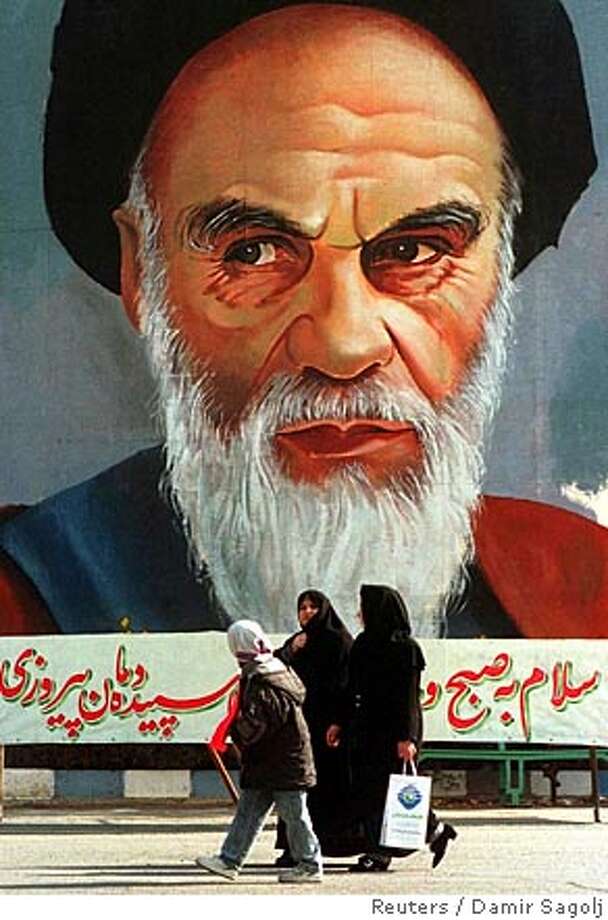
Diplomatic relations were immediately broken off by the Islamist regime of Ayatollah Khomeini after the revolution, and Israel was labelled as the "Little Satan" following in the footsteps of the "Great Satan" which was the USA.  This seems to be the point at which the hatred for Israel really began.  Ironically, and in spite of the hateful rhetoric that emanated from the regime at that time, behind the scenes there was a great deal of close cooperation between Iran and Israel.  Much of this was driven by the 8 year-long war between Iran and Iraq.  Iraq was a common enemy of both Israel and Iran, and this created unlikely ties and reasons to cooperate.  Israel sold Iran vast quantities of arms and ammunition, in return for which Israel received Iranian oil.  It is believed that the Iranian air force continued to operate, after it was initially attacked by Iraq, only because of the assistance received from Israel.  Iran was also delighted when Israel audaciously succeeded in destroying Iraq's nuclear reactor at Osirak in 1981 after the Iranians failed in their attempt to do the same.  The weekly insults and denunciations of Israel at Friday prayers by the Iranian leadership served conveniently to conceal the fact that there were no fewer than 100 carefully hidden Israeli advisers and technicians in Iran throughout the period of the war.

Since that time, Iran's leaders have continued to criticise, insult and threaten Israel at every opportunity.  And nobody has questioned for a moment why this is the case, and what justifies this vilification and extreme sentiment.  It has become a situation that simply forms part of the diplomatic landscape.  Can it be explained by Iran's hatred towards the USA, and the fact that the Israel is seen to be very close to the US?  It is difficult for me to accept that this explains all the public threats and the acts of terror that have been undertaken (and continue to be undertaken) against Israel.  Israel is not the USA's only close ally.  Why have other allies not been threatened for destruction in the halls of the United Nations in the way that Israel has been forced to endure?  And, while sentiment towards the US has wavered with different Iranian regimes (while always maintaining its negative bias), the hatred towards Israel seems unwavering no matter which Iranian president has been in power.  The threats against Israel have been the one pillar of consistency in Iranian foreign policy.  So I find it difficult to believe that this is purely driven by Israel's relationship and friendship with the USA.

The only explanation that I can offer to this extreme situation is the resurfacing of plain, old-fashioned anti-Semitism.  I use the term "resurfacing" because the Iranians/Persians do not have a long or consistent history of anti-Semitism.  The story of Purim that took place in Persia is a good representation of the relations that Jews and Iranians have enjoyed over the centuries.  While the king of Persia married a Jewess (Esther) and was prepared to take action to destroy Haman and his evil band for their anti-Semitism expressed against Mordechai, the fact was that anti-Semitism was clearly a common thing at that time.  In more recent times the Nazis declared Iranians immune to the Nuremburg Laws as they were considered to be pure Aryans.  In spite of this, the Shah and the Iranian government did not support the anti-Semitism of the Nazis.  With the rise to power of the Islamic extremists in Iran in 1979, we saw the rise to power of extreme anti-Semitism at a regime level.  Ironically, this anti-Semitism was not directed at Jews living in Iran as much as it was directed at Israel.  When Ayatollah Khomeini returned from exile in Paris to take up the leadership role immediately after the revolution, he declared, "We recognize our Jews as separate from those godless, bloodsucking Zionists" and he issued a fatwa decreeing that the Jews in Iran were to be protected.  This did not stop Iranian Jews from leaving Iran in large numbers.  The population of Iranian Jewry shrunk from around100,000 at the time of the revolution to around 50,000 in the mid-1980s, to around 25,000 in the mid-1990s.  Less than 10,000 Jews are left in Iran today.  Because of the "protection" afforded to Jews living in Iran, there are those who believe that the hatred that we see coming from Iran is not anti-Semitism, but anti-Zionism.  The problem is that the basis for this anti-Zionism is still unexplained.

In spite of the Iranians not being Arabs, they have enjoyed some ideals in common with the Arabs since the revolution in Iran.  The premise for the Arab-Israeli conflict is pure anti-Semitism.  The Arab world could not accept the notion of Jews living in the Middle East on their doorstep, and resolved to do all to destroy them and their state.  The holy city of Jerusalem has become embroiled in this war as a tool, rather than an end.  It is noticeable that no attempt was made to claim Jerusalem (and its Muslim holy sites) by the Arabs in the period prior to the establishment of Israel.  When the Jews took control of Jerusalem, and even in spite of granting control of the Muslim holy sites to the Waqf Council under the chairmanship of the King of Jordan, the Arab world and the Muslim world rose up to object.  Was their objection in favour of the Muslim holy sites, or was the objection against the presence of the Jews?  Everybody will reach their own conclusion.  What is clear is that Iran has firmly jumped on this anti-Semitic bandwagon.

Iran's brand of Shia Islam has been a huge source of conflict with the Sunni Islam practised by most of the Arab world.  In spite of this fundamental source of disagreement, they have found a common cause to fight against the Jews in Israel, to fight against the existence of the State of Israel and to use the claim of the holy city of Jerusalem for Islam as a means to their end.  The city of Jerusalem seems to be almost the only cause and rallying point that unites all different streams of Muslims around the world.  And, by extension, the fight against Israel, the Jews and the current regime in Jerusalem is equally a common point of agreement between them all.  Although distinct cracks are starting to show in this quest as individual Arab countries come to the realisation that Israel is going nowhere, and understand that cooperation with Israel may be a better option for them than fighting the futile battle of trying to destroy her.

The Iranians are, however, unwavering and unashamed in their battle against Israel and her people.  They continue to sponsor Hamas and Hezbollah, amongst other terrorist groups, that act as proxies for Iran to destroy Israel.  Iran is also responsible for numerous terror attacks orchestrated against Israeli and Jewish targets outside of Israel.  It's quest to build a nuclear weapon that could potentially be used against Israel is clearly a cause that any Israeli government will consider to be of highest priority.   So Iran has clearly not changed its mind, nor given up its desire to destroy Israel in any way.

My problem is that I am still not entirely clear why Iran wants to destroy Israel.

Wednesday, 15 March 2017

Israel Apartheid Week - A Contradiction in Terms

Source; Haaretz
Every year, many universities around the world hold an event on their campuses know as "Israel Apartheid Week".  The event is justified by the fact that it brings the so-called discriminatory behaviour of Israel to the attention of the general public to allow people to know "what is really happening in Israel and the Palestinian Territories".  There could be no greater contradiction in terms than this.

I am trying to work out why the focus is on Israel's reportedly discriminatory behaviour in particular?  Why Israel, as opposed to discrimination by the Turks against the Kurds, or discrimination by the Chinese against the Nepalese, or by the Russians against the Ukrainians in Crimea and other former Soviet countries, or the discrimination in many African countries, or discrimination by many Muslim countries against their minorities and foreign workers, and even their own citizens?  There are surely so many countries on the list of those behaving badly, that universities could mark some country's discriminatory behaviour every week of the year.  While one form of discrimination does not justify another, the question is why Israel is singled out for an apartheid week of its own?  Surely this is discriminatory in itself?  It brings into question the real motivations of those who are the main instigators behind this highly questionable event, and how come it has gained so much traction around the world that it is repeated on an annual basis?

The first question that arises, is whether Israel really behaves in the discriminatory manner that is alleged by so many in the international community?  Given the level of threat and violence that is a constant in and around Israel, it is easy to conclude that Israel discriminates against Arabs.  News broadcasts frequently show IDF soldiers in action against those who are presented as innocent civilians.  Israeli is constantly engaged in one military operation or another.  This supports the easy conclusion about Israel being discriminatory against Arabs.  This conclusion, however, would be misguided.  Instead, it would be more accurate to say that Israel discriminates against the threat of terror and violence that she has to deal with.  And judging Israel's actions using a standard for a western country, that is not subject to the same risks and terror attacks, is not an even playing field.  It would be interesting to see how other peace-seeking countries would respond to the set of circumstances that Israel finds herself in.  I suspect that Israel's so-called "discrimination" would be seen in an entirely different light.  Using the term "apartheid" to describe Israel is simply an emotive term trying to play on the ultimate success of the anti-Apartheid movement in South Africa.  There is no link between what is happening in Israel today, and Apartheid South Africa.

Many people try to put constant attacks on Israel in the international community simply down to Israel-hating and Jew-hating.  It is easy to say that these are anti-Semitic activities dressed up with a political justification, and leave it at that.  And, even though much of that is probably true, I don't feel satisfied with leaving the explanation there.  It is important for me to put this into greater context.  I wish to understand where this comes from, and why it is rearing its head at this time and in this way.

The anti-Israel activities that have become common around the world, and which are epitomised in Israel Apartheid Week, bear resemblance to the wave of anti-Semitism that was in evidence in the years leading up to the Second World War.  We know that anti-Semitism is an age-old phenomenon that has no real explanation or justification.  We know that it has been allowed to rise and fall, largely by the general tolerance and acceptance of the general community.  It increased in its intensity when leaders in the international community have encouraged it, or tolerated it.  Hitler's Germany is the best example when the state encouraged anti-Semitism on an industrial scale at the highest levels.  The man in the street needed little further encouragement, and the results are one of the most shameful periods in history.  It is my contention that the constant criticism of Israel at the highest echelons of the international community, is effectively encouraging the man in the street to believe that his hatred towards Israel and Jews is justified and consistent with public opinion.  It is inconceivable that Israel justifies being the one country in the world with more negative resolutions against her at the UN Security Council, or having a permanent agenda item to answer to at the UN Human Rights Council.  These unjustified actions are encouraging anti-Semitism on the streets of Europe, the USA and around the world.

We have just celebrated the Jewish festival of Purim, that marks victory over unjustified anti-Semitism in Persia more than 2,000 years ago.  It seems that little has changed since then.  Not in the modern-day Persian country of Iran, and not elsewhere around the world.  People are taking their cue from international leaders who find it acceptable to spew venom against Israel at every chance.  And to turn international institutions, particularly those connected to the UN, into tools of anti-Semitism and anti-Israel sentiment.  This provides the green light for people around the world to feel that it is politically correct and acceptable to focus their hatred towards Israel.  This is clearly a form of anti-Semitism, in the same way as much of the anti-Israel activity is simply anti-Semitism dressed up to look politically acceptable.

Surely the time has come for international leaders to show true leadership and stop the discrimination once and for all.

Sunday, 11 March 2012

A Modern-Day Purim Story

Last week we celebrated the Jewish festival of Purim.  It is a classic Jewish festival which involves bad guys who wanted to murder the Jews.  Somehow, we managed to survive against the odds and a festival was created to celebrate this fact with the addition of delicious food.  As a child growing up, I remember thinking how unrealistic these stories sounded.  Could it really have been the case that the evil Haman was trying to influence the king of Persia to annihilate the Jews?  What reason could he have had for wishing to do this?  After all, most of the Jews that I knew were decent upstanding citizens and quite nice people as well.  So why would somebody have wanted to kill them?

For those of my parents' and grandparents' generation, this story would have been a very real one.  They were unfortunate enough to have witnessed the horrors of the Holocaust.  This was a repeat of the Purim story except, in this story, millions of innocent people were slaughtered.  Only now, 60 years later, can the State of Israel boast a population that equals the number that were murdered during the most barbaric human-cleansing exercise in history.  Despite the fact that the Jews have survived and made a strong comeback, we have not quite decided upon a festival with delicious food to celebrate Hitler's failure.  Perhaps we will have one in the future.  This should, however, not allow our eyes to be taken off the ball.  The Haggadah that we read on Pesach tells us that, "In each and every generation they rise up against us to destroy us. And The Holy One, blessed be He, rescues us from their hands."  We are also instructed to remember how Amalek attacked the Israelites soon after the crossing of the Red Sea following the exodus from Egypt.  Each year, we read the portion known as "Zachor" (remember) on the Shabbat preceding Purim to be reminded of the evil of Amalek, who is traditionally believed to be a descendant of the evil Haman from the Purim story.  The need to read this each year and remember, arises from the fact that we are required to be vigilant to prevent it from happening again.  Now, in 2012, there are strong indications that it is happening again.

The irony of the Purim story cannot be lost on us as we hurtle headlong into an inevitable conflict with Iran.  The Purim story took place in Persia, and we now return to the scene of the crime approximately 2,400 years later to confront Ahmadinejad, the modern-day Iranian Haman.  As far as I can make out, the Jews and Israel have caused no damage nor present any threat to Iran or Ahmadinejad.  Despite this fact, Ahmadinejad has made Israel-bashing the cornerstone of his foreign policy platform.  He has not missed an opportunity to threaten Israel or to predict her demise whenever he has had the ears and eyes of the world trained on him.  He has been good to his word in practice as well, channelling millions of dollars into terror organisations like Hezbollah and Hamas which have indiscriminately attacked Jewish and Israeli targets.  When adding his duplicitous dealings with the Iranian nuclear program, it is clear that this situation cannot be allowed to continue unchecked.  This is the reincarnation of Amalek, of Haman and of Hitler.  This is exactly the sort of person that we are warned against.

Experience that the Jewish people have accumulated over the years, shows that they cannot rely on others to do the right thing to protect them.  Whether it was the failure to bomb Auschwitz, or the criticism over the destruction of nuclear reactors in Iraq and Syria, the international community has shown itself unwilling or unable to take action at the required moment in order to prevent a disaster.  Viewing things with the benefit of hindsight is too late, and the lessons are somehow never learned.  The Jewish nation have been forced to ensure that they can take care of themselves.

Fortunately, one important thing has changed since the days of Haman and Hitler.  We now have a Jewish army.  This is probably the most substantial element of the equation in the current scenario with Ahmadinejad.  The fact that thousands of Iranians missiles are trained on Israel, and waiting for the first strike on Iran, does not intimidate the Israeli army.  This is simply another danger to be considered, alongside the others, when taking on the significant threat that Iran poses under Ahmadinejad's leadership.  The fight will be ugly and there will be casualties, but there is no choice for the Israeli army in the imperative to put a stop to this threat as soon as possible.

For parents like myself whose children are the soldiers who will be called upon to fight this fight, the prospects are chilling.  We would certainly prefer not to be in this situation, and we would not choose for our children to be placed in harm's way as they battle to protect Israel and the Jewish people.  Ultimately, however, we realise the importance of having an army like the IDF, and we are forced to stand helplessly by as our children willingly fulfil their obligation to protect their land and their people.  This is the only way that we can be assured that the likes of Haman, Hitler and Ahmadinejad will never be allowed to carry out their evil plans to destroy our state and our nation.  These soldiers, our children, are the heroes of this part of the story of survival.

As the situation escalates and the prospects of an armed conflict with Iran grow with each passing day, it is our prayer that our army and our children will succeed in doing their job safely and securely.  We pray that they will return to their families, sound in body and mind, having completed their task that they have been called upon to do.  We stand behind them, fearful for their well-being, but immensely proud of their sacrifice.  May Hashem protect them in all that they do.

Image by Deputado Bruno Covas

Sunday, 20 March 2011

Being Happy on Purim

Today is the day that Jews around the world celebrate the festival of Purim. The festival celebrates the victory of the Jews of Persia over the anti-Semitic Haman, who sought to have them all annihalated. It was only through the actions of Queen Esther and her uncle, the righteous Mordechai, that the king was convinced to save the Jews and to execute his trusted adviser Haman instead. To mark this miraculous event, Jewish law requires that Jews be happy on Purim. In fulfillment of this commandment, it is customary for adults and children to dress in fancy dress, and for adults to consume copious amounts of alcohol. A rabinnic ruling says that people should revel on Purim until "they cannot tell the difference between the evil Haman and the saintly Mordechai".

But how can we be happy on Purim when, only one week earlier, 5 members of the Fogel family have been ruthlessly murdered in their beds? And how can we feel safe on Purim when communities near to the Gaza Strip had to endure 50 rockets being fired by the Palestinians randomly towards Jewish homes in a short space of 40 minutes yesterday? How can we celebrate the festival when the memory of the 8 young boys who were murdered 3 years ago while sitting in the library of the Mercaz Harav religious school in Jerusalem is still so fresh in our minds? How can we revel in the miracle of Purim when Gilad Shalit remains in captitivity for the 6th year, without his basic humanitarian needs being taken care of? Does Gilad even know that today is Purim? These events and others make it difficult to celebrate Purim and feel genuine happiness from the bottom of our hearts. Despite this, we are obliged to feel happiness and joy on this festival.

It seems unusual to be commanded to have an emotional feeling as part of one's obligations on a festival. And yet, this is the situation on Purim. Our rabbis draw a link between Purim and Yom Kippurim (Yom Kippur, also translated as "a day like Purim"), which is Judaism's most solemn day. They make the point that observant Jews would not consider the possibility of not fasting on Yom Kippur if they do not feel like it. By the same token, we are expected to feel happy on Purim even if we don't particularly feel happy. This is part of our commitment to G-d and the blind fulfillment of His commandments.

In spite of the sadness that many parts of Israel are feeling, Purim was celebrated today as usual and as in previous years. The parades in towns and cities went ahead to the sounds of blaring music and accompanied by adults and children dressed up in all manner of outfits. Young children fulfilled their fantasies of dressing up as princesses, superheros and movie characters. Gifts of food were given by people to their friends, and donations made to the needy to allow all to partake in the traditional Purim feast. The story of Purim (the Megilah of Esther) was recited for all to hear, and Haman's name was drowned out by boos and graggers in the traditional way. Dressing up parties continued into the early hours. In particular, in the settlement of Itamar, a special effort was made to be happy on Purim. The fact that we were able to be happy on Purim against the background of all the other events, is a great achievement and serves to honour G-d's commandment to an even greater extent.

Wouldn't it be good if we can wake up on the day after Purim, and feel the same happiness in evidence? Unfortunately, reality will come back to roost and we will be back to dealing with our daily threats, issues and feelings of loss. All these tragic events that we continue to suffer embroider the blanket of Jewish history in much the same way as the Purim events that took place in Persia all those years ago. In some ways, things have not changed at all. As much as I hope that we will be able to work through the everpresent threats and reach a situation where we can live in peace without anybody having the intention to harm or kill us, that time has not yet come.

Just as the Jews of Persia took it upon themselves to do all that they could to secure the future of the Jewish people, we do the same today. On this, the happiest day in the Jewish calendar, we feel particularly close to those who have to make the maximum effort to be happy today. We think about the surviving members of the Fogel family, and we think about the Shalit family who fight tirelessly to return their son and brother home. We think about all the survivors of the Holocaust, and we think about those families who have lost loved ones in war or terror incidents over the past 63 years and more. We thank them for making such an effort to be happy on Purim even if there is deep pain in their hearts. This is a sign of strength and resilience that the Jewish people have, and that we are not ready to give up on this battle for survival.

Chag Purim sameach. Happy Purim.