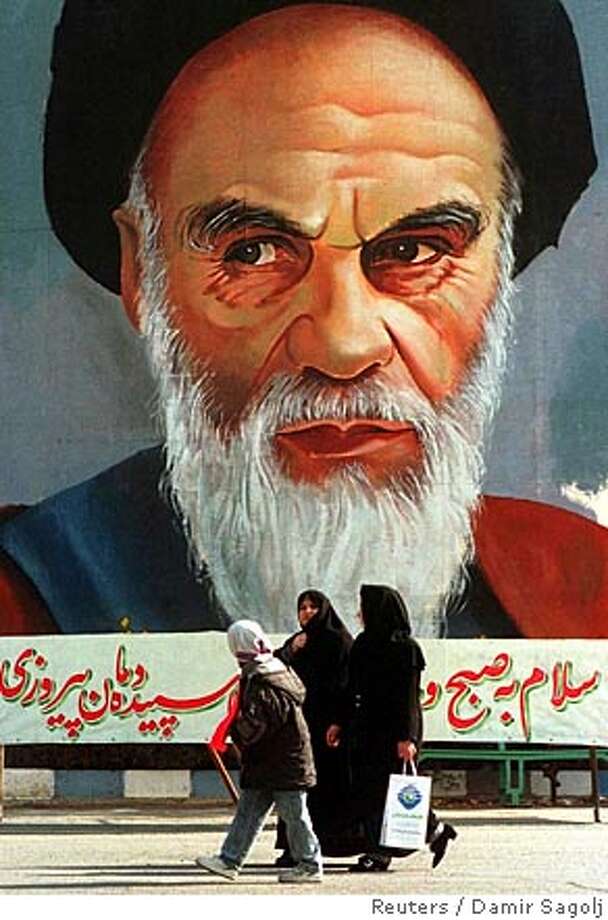
Part of the paradigm of accepted international diplomacy as it is
presented today, is that Iran wishes to destroy the State of Israel and
her people. This is reinforced by the Iranian regime threatening to do
so at every opportunity. It has become a given fact, and everybody
knows and accepts this situation. It seems strange that there is no
significant attempt to question the right of a nation to threaten to
destroy another sovereign nation. But more than this, there appears to
be no attempt to understand what drives Iran to wish to destroy Israel.
The desire to conquer another nation, or the land belonging to another
nation, is relatively common and can be explained in a number of
understandable ways. The wish to destroy a nation is entirely
different, and I cannot recall another case in history where a country
has been singled out for destruction in the way that Israel has been in
recent times. The fact that the world seems to allow this, and the fact
that there would appear to be no logical reason for it, troubles me a
great deal.
It is said that, in order to present the
most effective defence against enemies, it is important to understand
your enemies, their thoughts and what drives and motivates them. With
that in mind, I have been wondering why it is that Iran wishes to
destroy Israel. Given how common it is to hear Iran's threats of
destruction, I expected to find much written and said about this in the
literature and the press. It turns out that it is exactly the opposite,
and that there is very little written on the subject. And I could find
no convincing argument that explains why the Iranian regime has the
obsession to destroy Israel So, I have tried to formulate my own views
and theories that I am sharing here now.
Many believe
that Iran's hatred for Israel forms part of the Arab-Israeli conflict
that has typified relations between Israel and the Arab world since the
State of Israel was declared in 1948. Nothing could be further from the
truth. In spite of Iran being a Muslim country in common with the rest
of the Arab world, it is certainly not an Arab country. As opposed to
the Arab world that immediately launched a war when Israel declared
independence, Iran recognised the State of Israel immediately in 1948,
and was the second Muslim country after Turkey to do so. Iran and
Israel maintained close diplomatic ties until the revolution in Iran and
the fall of the Shah in 1979.
Diplomatic relations
were immediately broken off by the Islamist regime of Ayatollah Khomeini
after the revolution, and Israel was labelled as the "Little Satan"
following in the footsteps of the "Great Satan" which was the USA. This
seems to be the point at which the hatred for Israel really began.
Ironically, and in spite of the hateful rhetoric that emanated from the
regime at that time, behind the scenes there was a great deal of close
cooperation between Iran and Israel. Much of this was driven by the 8
year-long war between Iran and Iraq. Iraq was a common enemy of both
Israel and Iran, and this created unlikely ties and reasons to
cooperate. Israel sold Iran vast quantities of arms and ammunition, in
return for which Israel received Iranian oil. It is believed that the
Iranian air force continued to operate, after it was initially attacked
by Iraq, only because of the assistance received from Israel. Iran was
also delighted when Israel audaciously succeeded in destroying Iraq's
nuclear reactor at Osirak in 1981 after the Iranians failed in their
attempt to do the same. The weekly insults and denunciations of Israel
at Friday prayers by the Iranian leadership served conveniently to
conceal the fact that there were no fewer than 100 carefully hidden
Israeli advisers and technicians in Iran throughout the period of the
war.
Since that time, Iran's leaders have continued to
criticise, insult and threaten Israel at every opportunity. And nobody
has questioned for a moment why this is the case, and what justifies
this vilification and extreme sentiment. It has become a situation that
simply forms part of the diplomatic landscape. Can it be explained by
Iran's hatred towards the USA, and the fact that the Israel is seen to
be very close to the US? It is difficult for me to accept that this
explains all the public threats and the acts of terror that have been
undertaken (and continue to be undertaken) against Israel. Israel is
not the USA's only close ally. Why have other allies not been
threatened for destruction in the halls of the United Nations in the way
that Israel has been forced to endure? And, while sentiment towards
the US has wavered with different Iranian regimes (while always
maintaining its negative bias), the hatred towards Israel seems
unwavering no matter which Iranian president has been in power. The
threats against Israel have been the one pillar of consistency in
Iranian foreign policy. So I find it difficult to believe that this is
purely driven by Israel's relationship and friendship with the USA.
The
only explanation that I can offer to this extreme situation is the
resurfacing of plain, old-fashioned anti-Semitism. I use the term
"resurfacing" because the Iranians/Persians do not have a long or
consistent history of anti-Semitism. The story of Purim that took place
in Persia is a good representation of the relations that Jews and
Iranians have enjoyed over the centuries. While the king of Persia
married a Jewess (Esther) and was prepared to take action to destroy
Haman and his evil band for their anti-Semitism expressed against
Mordechai, the fact was that anti-Semitism was clearly a common thing at
that time. In more recent times the Nazis declared Iranians immune to
the Nuremburg Laws as they were considered to be pure Aryans. In spite
of this, the Shah and the Iranian government did not support the
anti-Semitism of the Nazis. With the rise to power of the Islamic
extremists in Iran in 1979, we saw the rise to power of extreme
anti-Semitism at a regime level. Ironically, this anti-Semitism was not
directed at Jews living in Iran as much as it was directed at Israel.
When Ayatollah Khomeini returned from exile in Paris to take up the
leadership role immediately after the revolution, he declared, "We
recognize our Jews as separate from those godless, bloodsucking
Zionists" and he issued a fatwa decreeing that the Jews in Iran were to be protected. This did not stop
Iranian Jews from leaving Iran in large numbers. The population of
Iranian Jewry shrunk from around100,000 at the time of the revolution to
around 50,000 in the mid-1980s, to around 25,000 in the mid-1990s.
Less than 10,000 Jews are left in Iran today. Because of the
"protection" afforded to Jews living in Iran, there are those who
believe that the hatred that we see coming from Iran is not
anti-Semitism, but anti-Zionism. The problem is that the basis for this
anti-Zionism is still unexplained.
In spite of the
Iranians not being Arabs, they have enjoyed some ideals in common with
the Arabs since the revolution in Iran. The premise for the
Arab-Israeli conflict is pure anti-Semitism. The Arab world could not
accept the notion of Jews living in the Middle East on their doorstep,
and resolved to do all to destroy them and their state. The holy city
of Jerusalem has become embroiled in this war as a tool, rather than an
end. It is noticeable that no attempt was made to claim Jerusalem (and
its Muslim holy sites) by the Arabs in the period prior to the
establishment of Israel. When the Jews took control of Jerusalem, and
even in spite of granting control of the Muslim holy sites to the Waqf
Council under the chairmanship of the King of Jordan, the Arab world and
the Muslim world rose up to object. Was their objection in favour of
the Muslim holy sites, or was the objection against the presence of the
Jews? Everybody will reach their own conclusion. What is clear is that
Iran has firmly jumped on this anti-Semitic bandwagon.
Iran's
brand of Shia Islam has been a huge source of conflict with the Sunni
Islam practised by most of the Arab world. In spite of this fundamental
source of disagreement, they have found a common cause to fight against
the Jews in Israel, to fight against the existence of the State of
Israel and to use the claim of the holy city of Jerusalem for Islam as a
means to their end. The city of Jerusalem seems to be almost the only
cause and rallying point that unites all different streams of Muslims
around the world. And, by extension, the fight against Israel, the Jews
and the current regime in Jerusalem is equally a common point of
agreement between them all. Although distinct cracks are starting to
show in this quest as individual Arab countries come to the realisation
that Israel is going nowhere, and understand that cooperation with
Israel may be a better option for them than fighting the futile battle
of trying to destroy her.
The Iranians are, however,
unwavering and unashamed in their battle against Israel and her people.
They continue to sponsor Hamas and Hezbollah, amongst other terrorist
groups, that act as proxies for Iran to destroy Israel. Iran is also
responsible for numerous terror attacks orchestrated against Israeli and
Jewish targets outside of Israel. It's quest to build a nuclear weapon
that could potentially be used against Israel is clearly a cause that
any Israeli government will consider to be of highest priority. So
Iran has clearly not changed its mind, nor given up its desire to
destroy Israel in any way.
My problem is that I am still not entirely clear why Iran wants to destroy Israel.
Showing posts with label Muslims. Show all posts
Tuesday, 13 August 2019
Sunday, 5 June 2016
Staying Unified
![]() |
| Picture from aicvideo |
Not only is Jerusalem one of the oldest cities in the world, it is undoubtedly the most controversial city in history. According to Wikipedia, the city has been destroyed twice, besieged 23 times, attacked 52 times, and captured and recaptured 44 times. And these numbers do not include internal strife, intifadas and terror attacks which persist in the city until today. Although these events have taken place over approximately 5,000 years, it still seems a great deal for any city to endure, and there are many who wonder why it is that one city should be so sought after that people are prepared to go to such extraordinary lengths to secure control over the city.
For the Jewish people, the answer is quite clear. The belief is that the creation of the world emanated from the Foundation Stone on Mount Moriah. This is also the same place that Jacob was ordered to sacrifice Isaac (and then stopped from doing so), and also coincides with the location of of the famous dream of Jacob's ladder. So it comes as no surprise that King David chose this place to erect his City of David in approximately 1,000 BCE, and that Solomon's Temple was built on Mount Moriah soon after this. From the moment that Solomon's Temple stood at this site (and possibly even from long before), it took on the undisputed position as the holiest place on earth to all Jews. The city of Jerusalem is mentioned by name more than 600 times in the Jewish biblical texts, and thousands more times by other names and references. The centrality of this location and this city to Jews is without rival. It is highly likely that this centrality is the reason why Jesus, a Jewish boy from Nazareth, found himself in Jerusalem where he was crucified. This established Jerusalem as a holy city for his followers, later to be known as Christians. The holiness of Jerusalem to the third monotheistic religion, Islam, stems from an event that took place more than 600 years later. The Quran tells us that the Prophet Mohammad was taken by Buraq to visit the "furthest mosque" (believed to mean the Al Aqsa Mosque in Jerusalem), from where Mohammad was taken to heaven. This reference is the sole claim that Muslims have to Jerusalem as a holy city (although still not quite as holy as Mecca and Medina), and Jerusalem is not mentioned by name once in the entire Quran. The scene was set for conflict, disagreement, war, death and destruction surrounding the control of this city, holy to three religions.
Today we celebrate 49 years of freedom of the city of Jerusalem. This freedom extends not only to Jews and Israelis who have administrative control over the city. It extends to all from the three religions, and others, who come in peace to worship, learn the history and pay respects to the holy city. But this was not always the case, and is never taken for granted in this conflict-filled city. Even as recently as 50 years ago, Jews were prevented from entering the Old City of Jerusalem, and approaching the holy site of the Western Wall. This fact alone is justification for Israel to continue to exert control over the city and its holy sites.
Over the past few years, Jerusalem has put on an annual festival of light as part of the Jerusalem Day festivities. It is highly symbolic that the city, with such a dark history, has a festival of light to emphasize all that is positive about the city. I had the good fortune to participate in the festival this year, and it is an experience that has left an impression that will remain with me for a long time to come. Not only were each of the exhibits creative and interesting, the atmosphere that could be felt around all parts of the city was electrifying (no pun intended). Thousands of people formed a human chain following the different coloured tracks around the streets of the Old City, and around the walls. People were drawn to parts of the Old City that they had never visited, perhaps because they were afraid or perhaps just because they were off the beaten track and unfamiliar. I could not help noticing that people came from all parts of the country, from all walks of life and from all ethnic backgrounds. Muslims joined with Christians and Jews in celebrating the light of this intriguing city. I silently wondered as I walked around the thronging alleyways whether the Muslims were not enjoying more freedom now since the Old City is in Jewish hands, than they did when it was ruled by Jordan. It could only happen under Jewish leadership that the King of Jordan, the same Jordan that denied Jews the right to access its holiest site for 19 long years years, is now the head of the Waqf religious council that has jurisdiction over Muslim holy sites in the city of Jerusalem.
Despite the conflicts and violence that continue in Jerusalem at the current time, the city of Jerusalem has undergone probably one of its most dramatic reconstruction periods in its history over the past 49 years. While the integrity and the character of the original city has been preserved, the construction of infrastructure and residential and commercial buildings has been astonishing. The light rail trundles over ancient cobblestones, and modern buildings are built in the Jerusalem stone in keeping with the rest of the architecture of the city, blending in with the ancient walls of the Old City.
Jews have maintained a continuous presence in the Jewish Quarter of the Old City of Jerusalem since the 8th century BCE, with the exception of the period between 1948 and 1967 when Jordan brutally forced Jews out. There were periods when being Jewish in the Jewish Quarter was not easy, but Jews were never willing to give up on this despite any hardship. The same tenacious spirit is in evidence today. Jews will not give up on the presence in the Jewish Quarter, and Jews will not give up on the united city of Jerusalem as the capital of Israel.
Each time I visit Jerusalem, I wonder what my grandparents and great-grandparents would feel if they saw the ease with which I am able to visit the holiest city in Judaism, and its holiest site, the Western Wall. I wonder what they would think to see me driving freely around the streets, walking in the market and viewing the Knesset building. We are indeed a privileged generation to have the immense good fortune to live at this time when we are able to do the things that our forefathers prayed fervently to have the right to do, and who died fighting to do. When we say Lshana habaa B'Yerushalayim at the end of the Pesach seder, it is not a pipe dream. It is something that is absolutely achievable.
If the history of Jerusalem is anything to go by, we will be forced to continue to fight to retain Jerusalem as our eternal capital. It is a fight that most Israelis are prepared to undertake, and a fight that many have already died for. But this makes us stronger rather than weaker, and our resolve to retain Jerusalem will never diminish. For now, we bask in the glory of Jerusalem, and we rejoice in our ability to be free as Jews in our holy city.
Monday, 30 November 2015
Double Entendre
Two weeks have now passed since the terror attacks were carried out in Paris. They outraged people in Israel, as they did people in France and around the world. Somehow, however, the people in Israel understand these attacks a little better and a little more intimately than many others around the world can do. The personal experience that Israelis have of dealing with attacks of this type on their doorstep serves, not only to allow Israelis to have much greater empathy with the people of Paris, it also serves to bring focus to the real cause of international terror activities.
Parisians are wondering why France and Paris were chosen for the attacks. The people of Brussels are wondering why their city has been in lock-down for days while the security services try to defuse a cell of terrorists who had plans to bring death and destruction in their neighbourhoods. The people of Hanover in Germany are wondering why it was their city and their football stadium that was chosen for an attack that would have been carried out, had the security services not intervened and cancelled the game at the last minute. What purpose do these attacks serve? What objectives do the terrorists hope to achieve by carrying them out? Some of the left-wing French press has been quoted as saying that they cannot understand what purpose the attacks in Paris had. They claim that they could have understood if the attacks had been carried out against Israel, and against the Jews. After all, they deserve to be the targets of such attacks! So why should the rest of the world have to suffer as well? The fact that one of the perpetrators of the attacks in Paris is quoted as saying that further attacks were planned against Jews and Jewish targets (again), has not served to help this rhetoric. Perhaps Paris would be a better and safer city without the Jews?
Many Israelis have this notion that the rest of the world may feel a little more empathy and understanding towards the Jewish state, if they are subjected to the same terror and violence that Israel has been forced to endure for many years. It is hoped that the international community may now be more inclined to support Israel's efforts in fighting the onslaught of terror, rather than continuing to preach to Israel about human rights violations committed while the Jewish state is forced to fight a constant struggle for survival. Perhaps, if they experience terrorists shooting innocent civilians in restaurants or blowing up buses, Israel and Israelis will be viewed in a different light. Maybe then they will understand what our young soldiers and innocent civilians are forced to confront on a daily basis in the fight against terrorists. Maybe our army may be given a little more credit and leverage to fight this battle.
Alas, this is not the situation at all. Instead of being understood better, more blame is being laid at Israel’s doorstep for the terror attacks being committed elsewhere around the world. There is the belief that, if the Palestinian issue was resolved, peace would break out in the world and there would be no further terror attacks committed. There are those who believe that the terror wave that the world is experiencing now, is all caused by the lack of peace between Israel and the Palestinians. What is more, the blame for the lack of peace is largely being placed on Israel. The argument follows that, if Israel was more “reasonable” in dealing with the Palestinians, the problem of world terror would magically be eradicated.
Try as we might, it is tough to convince believers of this argument that it is fatally flawed. How can we persuade them that Israel is not the source of world terror, but rather its key target? The fact that terrorism in its current form arose only at the time of the establishment of the Jewish state convinces them that Israel is the source of the problem rather than the victim. It is difficult for them to comprehend that it is precisely because of the establishment of Israel, that terrorism arose to try to eradicate her. For some reason, these people also cannot see that radical Islam promotes terrorism around the world today to eradicate the “infidels”, whether or not Israel exists. In reality, Israel is the greatest terror target, but not the only one. All non-Muslims and all inhabitants of the free world are targets, and are at constant risk of attack. How did the world reach a situation where the greatest victim of international terror, is the one being blamed as the cause of it?
Hatred against the Jews is certainly not a new concept. There can be little doubt that the current view that Israel is the cause of much of the international terror being experienced, is based upon age-old anti-Semitism. This has recently undergone a face-lift in the form of anti-Israel sentiment. It is politically acceptable to be anti-Israel, and this provides a seemingly justifiable outlet for the anti-Semitic feelings that are otherwise much less acceptable. When some of the world’s most influential leaders criticise Israel for disproportionate responses to attempts to annihilate her and her people, and when Israeli leaders are being accused of human rights atrocities by the most recognised international organisations in the world in their response to terrorism, it comes as no surprise that those with anti-Semitic sentiments are spurred on in their views. When fighter planes from numerous countries have free reign to drop their bombs on targets in Syria and elsewhere despite “collateral damage”, while each bomb that Israel drops on Gaza is examined with a microscope, the anti-Jewish and the anti-Israel lobby is empowered.
There can be no doubt that criticism of Israel’s fight against Islamic terror is misplaced, wholly unjustified and smacks of ulterior motives. Any country that fights a war will undoubtedly make mistakes – this is part and parcel of the territory. This applies even more so to a country that has been forced to fight 68 years of wars. This does not mean, however, that Israel warrants the hatred and boycotts that have been aimed against her. Instead, those who are truly concerned about international atrocities and human rights violations should seek more carefully as to who is the real cause of these. It is not Israel, nor her people. Instead, Israel seeks only the right to live in peace to protect and to promote the best interests of her citizens and Jews around the world. She has no desire or intention to harm others, especially not those who give her the respect and the right to take her fair place amongst the family of nations.
The fact that terror attacks are taking place around the world may have enraged Israelis, but it has not shocked them. Those Israelis who had hoped that the Paris attacks may change the world’s views of Israel’s terror-fighting activities, should not feel surprised or disappointed. If views in the international community were not changed by the 9/11 attacks in the USA or by those in Madrid, London, Paris and elsewhere, it seems that there is nothing that can change these views. Israel’s critics would be better off joining Israel’s efforts in the fights against international terrorism inspired by Islamic fundamentalism, as it is here to stay. It requires a bold and coordinated response, as failure to respond in this way will surely result in death and destruction around the world.
In spite of ongoing international opposition, Israel will not be frightened off from the fight against terrorism and attempts to destroy her. She will support those in Paris, Hanover, Brussels and elsewhere in their attempts to secure their citizens in the common fight, whether they choose to understand and acknowledge the link, or not. The greatest irony will come when those using international terror as a pretext to display their blatant anti-Semitism, will find themselves forced to join with Israel and the Jews in a fight for their own survival in their lands.
Thursday, 10 September 2015
Another Refugee Crisis
The latest refugee crisis has succeeded in stirring the emotions of many around the world. The same is true for those in Israel and Jews around the world. The sight of the
men, women and children moving across land and sea in unrelenting
conditions to escape the disaster that has fallen upon them as a result
of a civil war of human making, can only bring out the most heartfelt
sympathies in anybody who has seen the pictures on TV and social media. Some are calling this the worst refugee crisis since the Second World War.
The emotions of the Jewish community are particularly affected, because it was precisely this type of disaster that befell our ancestors 75 short years ago. It will never be forgotten that, as a result of the world failing to mobilise to accept refugees who were running from the disaster of war and genocide in Europe, and failing to act to stop those who were carrying out the genocide, 6 million of our people were systematically annihilated. Jewish sympathy is no less than that of others around the world, despite the fact that many of the refugees come from countries that seek the destruction of the State of Israel, and the death of the Jews.
Israel has already provided a great deal of assistance to victims of the Syrian war over the past few years, despite the fact that Syria has no diplomatic relations with Israel and despite the fact that Syria has formally been at war with Israel for the past 67 years with the intention of wiping Israel off the map. Thousands of victims of the Syrian civil war have streamed across the border from Syria into Israel seeking medical and humanitarian assistance. The IDF has provided first aid assistance to many of these victims via mobile medical units along the Syrian border, and supplied them with humanitarian aid. Irrespective of which side of the conflict they have come from. Hundreds of others have been admitted to Israeli hospitals for medical treatment, some undergoing complex life-saving surgery to nurse them back to health. All of these services have been provided courtesy of the Israeli tax-payer, and nobody has been denied humanitarian assistance on the grounds of opposing political or religious views, or any other grounds. This humanitarian work has been undertaken without fanfare, desire for recognition or international headlines.
But now, the the floodgates to Europe have finally opened. Instead of seeking medical attention across the Israeli border, the eyes of the war victims have stretched further afield. Thousands of refugees are swarming across the Mediterranean to seek shelter in the calmer waters of Europe. European leaders have been caught somewhat off guard at the suddenness of the developing situation. Some leaders mumble phrases about the Shengen Agreement and the Dublin Regulation, which are designed to secure and protect the borders of European countries. Despite their mumblings, they seem to have no real clue as to how the provisions of these agreements can possibly be applied under the current circumstances. Some countries seem resigned to accept the refugees that turn up on their borders, while others are doing all that they can to re-route their flood of humanity or pass them on to other neighbouring countries to get rid of their problem. The humanitarian nature of the citizens of many European countries is demanding that their leaders relax provisions in order to accept a share of responsibility for rehousing the refugees, while others are concerned about what this may mean in the longer term for the makeup, nature and culture of their country.
Without detracting from the immediate humanitarian disaster that needs a short-term solution, European and world leaders can be justified in asking a few searching questions as longer-term solutions will need to be considered once the refugees have been clothed, fed, treated and housed in the near-term. Some of the questions, to which I have not found answers yet, are the following:
War is never a pleasant event, and our generation seems to experience more than its fair share of conflict. It is pleasing that there are countries who are prepared to come to the short-term aid of the refugees. But does this present a longer-term problem for these countries? These are questions that only time can answer.
The emotions of the Jewish community are particularly affected, because it was precisely this type of disaster that befell our ancestors 75 short years ago. It will never be forgotten that, as a result of the world failing to mobilise to accept refugees who were running from the disaster of war and genocide in Europe, and failing to act to stop those who were carrying out the genocide, 6 million of our people were systematically annihilated. Jewish sympathy is no less than that of others around the world, despite the fact that many of the refugees come from countries that seek the destruction of the State of Israel, and the death of the Jews.
Israel has already provided a great deal of assistance to victims of the Syrian war over the past few years, despite the fact that Syria has no diplomatic relations with Israel and despite the fact that Syria has formally been at war with Israel for the past 67 years with the intention of wiping Israel off the map. Thousands of victims of the Syrian civil war have streamed across the border from Syria into Israel seeking medical and humanitarian assistance. The IDF has provided first aid assistance to many of these victims via mobile medical units along the Syrian border, and supplied them with humanitarian aid. Irrespective of which side of the conflict they have come from. Hundreds of others have been admitted to Israeli hospitals for medical treatment, some undergoing complex life-saving surgery to nurse them back to health. All of these services have been provided courtesy of the Israeli tax-payer, and nobody has been denied humanitarian assistance on the grounds of opposing political or religious views, or any other grounds. This humanitarian work has been undertaken without fanfare, desire for recognition or international headlines.
But now, the the floodgates to Europe have finally opened. Instead of seeking medical attention across the Israeli border, the eyes of the war victims have stretched further afield. Thousands of refugees are swarming across the Mediterranean to seek shelter in the calmer waters of Europe. European leaders have been caught somewhat off guard at the suddenness of the developing situation. Some leaders mumble phrases about the Shengen Agreement and the Dublin Regulation, which are designed to secure and protect the borders of European countries. Despite their mumblings, they seem to have no real clue as to how the provisions of these agreements can possibly be applied under the current circumstances. Some countries seem resigned to accept the refugees that turn up on their borders, while others are doing all that they can to re-route their flood of humanity or pass them on to other neighbouring countries to get rid of their problem. The humanitarian nature of the citizens of many European countries is demanding that their leaders relax provisions in order to accept a share of responsibility for rehousing the refugees, while others are concerned about what this may mean in the longer term for the makeup, nature and culture of their country.
Without detracting from the immediate humanitarian disaster that needs a short-term solution, European and world leaders can be justified in asking a few searching questions as longer-term solutions will need to be considered once the refugees have been clothed, fed, treated and housed in the near-term. Some of the questions, to which I have not found answers yet, are the following:
- What happened that the refugee problem has suddenly arisen at this time? The Syrian civil war and the conflicts in Iran and Afghanistan have been ongoing for some time already. Tens, if not hundreds, of thousands have been killed, and many more injured and displaced. Why did these refugees not run and seek shelter in Europe some time ago? What was the real trigger to the sudden flight that we see now? Is this related in any way to the more public involvement of ISIS, and the realisation of what an ISIS caliphate will mean to them?
- How many of the refugees are really economic migrants? In recent years, there has been a distinction drawn between those who seek asylum as refugees, and those who do so in order to improve their economic situation. Many countries try to do their best to make this distinction clearer, in order to provide required assistance to refugees while rejecting economic migrants who do not qualify for naturalisation. The migrants naturally do all that they can to confuse those trying to separate the refugees from the economic migrants, in order to secure themselves the best possible chance of being accepted to a new country and a new life. It is clear that many of the current wave of refugees are escaping war-torn countries and situations in which it is impossible to survive. Amongst them, however, are more than a few who are truly economic migrants and who are merely jumping on the bandwagon to take advantage of a situation.
- Where are their Arab brethren in assisting the refugees? All of the refugees in the current crisis are Arabs. Some are Christian Arabs, but the vast majority are Moslem Arabs. Most of them are Sunni Moslems, who made up some 74% of the Syrian population prior to the civil war. With countries like Saudi Arabia and the United Arab Emirates being majority Sunni Moslem, there is surely enough money and space to accommodate the refugees within the Sunni Arab world quite easily? And yet, there seems to be a thundering silence from the Arab world at a time when their brethren are desperate for help.
- Is this a ploy to gain a greater Muslim foothold in Europe? The words of Hungarian Prime Minister, Viktor Orbán, cannot be ignored entirely. He said that Europeans risk becoming a minority on their own continent. This is an interesting concept, particularly when there is no such thing as a "European" nationality. The European continent has historically been split, divided and conflicted by many different interests, nationalities and religious strains. In the face of a threat to the continued existence of these nationalities in their current form, however, a European nation has suddenly and unexpectedly arisen. There are those who contend that this refugee crisis is a conspiracy on the part of Muslim leaders to allow Muslims to infiltrate in Europe in a manner greater than has been the case until now. There is much evidence of the effects of the Islamisation of Europe. Muslims have made attempts to set up enclaves of Sharia law in the UK and France (in addition to what they achieved in some African countries). The sight of British and French-born Muslims leaving their homes to join the ranks of ISIS has shocked many.
- What is the role of ISIS in the crisis? An ISIS announcement in the midst of the building refugee crisis in Europe said that hundreds of ISIS activists are scattered amongst the refugees claiming asylum in Europe. It is difficult not to notice the disproportionate number of young men among the refugees. While the announcement by ISIS may simply be opportunistic rather than an action that was pre-planned, it is something that cannot be completely ignored.
War is never a pleasant event, and our generation seems to experience more than its fair share of conflict. It is pleasing that there are countries who are prepared to come to the short-term aid of the refugees. But does this present a longer-term problem for these countries? These are questions that only time can answer.
Labels:
Arab World,
Europe,
Iraq,
Muslims,
Syria
Sunday, 20 May 2012
Keeping Jerusalem Unified
Today, Sunday 20th May, we celebrate 45 years since Jerusalem was reunified in the Six Day War according to the Hebrew calendar. These have been 45 eventful but happy years, which have seen the holy city of Jerusalem quickly regain its central place in Israeli and Jewish life. After 2,000 years of exile from the Land of Israel and the city of Jerusalem, and a further 19 years of being denied access to the holiest sites in Judaism, Jews around the world celebrated when the IDF paratroopers finally reached the Kotel and Motta Gur announced the famous words, "The Temple Mount is in our hands". That moment is being savoured and celebrated today on Jerusalem Day.
The important place that Jerusalem occupies for Israelis and for Jewish people all around the world has strengthened over the past 45 years. Once again, we have had the merit and the joy to be able to visit the holiest site in Judaism. It is impossible to consider a possibility that Jerusalem would not remain unified in the future, and that Jews could be denied access to visit the holy sites in the way that we were forced to experience in the past. This is almost certainly one of the reasons why discussions on the final status of Jerusalem in the peace talks with the Palestinians are so fraught. It seems as though the Palestinians understand the strength of feeling that we have for Jerusalem, and continue to demand it for themselves. This may enable them to extract major compromises in return for giving up on Jerusalem in the final agreement.
There can be no escape from the centrality of Jerusalem in Judaism. Even those who wish to prevent Jews from having access to Jerusalem would struggle to the deny strong links that Jews and Judaism have to this holy city. The holy nature of the city was arguably only established during the time of David and Solomon when the temple was built. It is no mere coincidence, however, that the temple was built in this city and on Mount Moriah. This is the site of the dream of Jacob's ladder, the site of the almost-sacrifice of Isaac and possibly even the site from which the which the world was created. Whether or not one believes in these biblical links, it is simple to refer to Jewish texts that have been written and passed down over thousands of years, and which bear testimony to the close links that Jews have to the city.
Over the past 45 years, the city of Jerusalem has developed and grown in a way that makes it unrecognisable from the city that was reunified 45 years ago. The Kotel (the Western Wall), the only remnant of the remains of the temple, was quickly transformed into an area that could be host to the many millions of visitors that wish to visit the heart of Judaism. It is believed in Judaism that the divine presence emanates from Jerusalem. In order, however, for the divine presence to be felt, it is required that there will be those to receive and bask in its glory. The Kotel has truly fulfilled that purpose. It plays host to state and military ceremonies of great importance and significance. It also hosts all manner of religious worship, celebration and heartbreak. The Kotel plaza is often filled with tens of thousands of people as they cram themselves in to take part in the merit that our generation enjoys to have free access to this place. The surrounding parts of the Old City, and stretching out well beyond into the new city and further, have seen a renewal and redevelopment that has transformed the face of Jerusalem, without changing its character. The modern Chords Bridge at the entrance to the city, numerous luxury hotels and the sight of the Jerusalem light rail show the face of a contemporary city keeping up with the times, while allowing residents and visitors to get close to its historical roots.
Over the years, conquerors of Jerusalem have denied access to other religions as a punishment, and as a sign of their supremacy over the city. It is, after all, a city that is holy to all three monotheistic religions. Contrary to this trend, it is interesting that Israel decided to allow all religions access to their holy sites in the city. Rather than weaken Israel's grip on the city, I feel that it has served to strengthen Israel's position in Jerusalem. I believe that most Israelis are proud that this is the case, as much as they are determined to ensure that Israel's rule over the city continues well into the future.
The truth is that it is difficult to try to predict what the future holds for the holy city. There seems to be no real reason for the Palestinians to wish to rule over the city. While it is a city that is holy to Muslims, it ranks only third in its holiness to the cities of Mecca and Medina. Muslims have access to, and complete control over all Muslim holy sites in the city through the Waqf. This stretches even to having control over the Temple Mount and the Al Aqsa mosque, despite this also being the site of the holy Jewish temple. I imagine that the only benefit that can be gained from ruling over Jerusalem, or parts of the city, is that it may give them the right to deny access by others to these areas. We can never risk this situation coming to fruition.
Despite the fact that a great deal of thought has been given to the possibility of creating Jerusalem into something of an international city that is owned by everyone, but nobody in particular, there is no real precedent for a successful implementation of such a model. This gives rise to a great deal of scepticism, and suspicion as to what the true intentions of the Palestinians may be with regard to Jerusalem.
For now, the united city of Jerusalem is the capital of the State of Israel, and the centre of the Jewish world. It also plays host to Muslims, Christians and members of other faiths that may wish to visit, live and study in the city. There seems little wrong with this model, and no individual is denied any rights that he may wish to have.
It is my hope and prayer that Jerusalem will continue to play its role as a central part of so many faiths, and that all faiths will continue to have free access to all corners of this ancient and fascinating city.
The important place that Jerusalem occupies for Israelis and for Jewish people all around the world has strengthened over the past 45 years. Once again, we have had the merit and the joy to be able to visit the holiest site in Judaism. It is impossible to consider a possibility that Jerusalem would not remain unified in the future, and that Jews could be denied access to visit the holy sites in the way that we were forced to experience in the past. This is almost certainly one of the reasons why discussions on the final status of Jerusalem in the peace talks with the Palestinians are so fraught. It seems as though the Palestinians understand the strength of feeling that we have for Jerusalem, and continue to demand it for themselves. This may enable them to extract major compromises in return for giving up on Jerusalem in the final agreement.
There can be no escape from the centrality of Jerusalem in Judaism. Even those who wish to prevent Jews from having access to Jerusalem would struggle to the deny strong links that Jews and Judaism have to this holy city. The holy nature of the city was arguably only established during the time of David and Solomon when the temple was built. It is no mere coincidence, however, that the temple was built in this city and on Mount Moriah. This is the site of the dream of Jacob's ladder, the site of the almost-sacrifice of Isaac and possibly even the site from which the which the world was created. Whether or not one believes in these biblical links, it is simple to refer to Jewish texts that have been written and passed down over thousands of years, and which bear testimony to the close links that Jews have to the city.
Over the past 45 years, the city of Jerusalem has developed and grown in a way that makes it unrecognisable from the city that was reunified 45 years ago. The Kotel (the Western Wall), the only remnant of the remains of the temple, was quickly transformed into an area that could be host to the many millions of visitors that wish to visit the heart of Judaism. It is believed in Judaism that the divine presence emanates from Jerusalem. In order, however, for the divine presence to be felt, it is required that there will be those to receive and bask in its glory. The Kotel has truly fulfilled that purpose. It plays host to state and military ceremonies of great importance and significance. It also hosts all manner of religious worship, celebration and heartbreak. The Kotel plaza is often filled with tens of thousands of people as they cram themselves in to take part in the merit that our generation enjoys to have free access to this place. The surrounding parts of the Old City, and stretching out well beyond into the new city and further, have seen a renewal and redevelopment that has transformed the face of Jerusalem, without changing its character. The modern Chords Bridge at the entrance to the city, numerous luxury hotels and the sight of the Jerusalem light rail show the face of a contemporary city keeping up with the times, while allowing residents and visitors to get close to its historical roots.
Over the years, conquerors of Jerusalem have denied access to other religions as a punishment, and as a sign of their supremacy over the city. It is, after all, a city that is holy to all three monotheistic religions. Contrary to this trend, it is interesting that Israel decided to allow all religions access to their holy sites in the city. Rather than weaken Israel's grip on the city, I feel that it has served to strengthen Israel's position in Jerusalem. I believe that most Israelis are proud that this is the case, as much as they are determined to ensure that Israel's rule over the city continues well into the future.
The truth is that it is difficult to try to predict what the future holds for the holy city. There seems to be no real reason for the Palestinians to wish to rule over the city. While it is a city that is holy to Muslims, it ranks only third in its holiness to the cities of Mecca and Medina. Muslims have access to, and complete control over all Muslim holy sites in the city through the Waqf. This stretches even to having control over the Temple Mount and the Al Aqsa mosque, despite this also being the site of the holy Jewish temple. I imagine that the only benefit that can be gained from ruling over Jerusalem, or parts of the city, is that it may give them the right to deny access by others to these areas. We can never risk this situation coming to fruition.
Despite the fact that a great deal of thought has been given to the possibility of creating Jerusalem into something of an international city that is owned by everyone, but nobody in particular, there is no real precedent for a successful implementation of such a model. This gives rise to a great deal of scepticism, and suspicion as to what the true intentions of the Palestinians may be with regard to Jerusalem.
For now, the united city of Jerusalem is the capital of the State of Israel, and the centre of the Jewish world. It also plays host to Muslims, Christians and members of other faiths that may wish to visit, live and study in the city. There seems little wrong with this model, and no individual is denied any rights that he may wish to have.
It is my hope and prayer that Jerusalem will continue to play its role as a central part of so many faiths, and that all faiths will continue to have free access to all corners of this ancient and fascinating city.
If I forget thee, O Jerusalem, let my right hand forget her skill.
(Psalm 137)
Sunday, 4 December 2011
Egypt's Elections Produce a Surprise Package
The Arab Spring uprisings began exactly 1 year ago this month. The demonstrations against the government of President Zine El Abidine Ben Ali in Tunisia began in December 2010, and resulted in him being removed from power 1 month later. The Spring subsequently spread to many other countries in the Middle East, and has been encouraged by enthusiastic support from the western countries. Ironically, the one voice of hesitation against the uprisings came from Israel. At the time, it was difficult for many to understand why Netanyahu did not support the Spring whole-heartedly. Now, a year later, his reasons are starting to become apparent.
Netanyahu's concern about the uprisings were most obvious when the demonstrations reached Egypt, and thousands of Egyptians gathered in Tahrir Square demanding the head of President Hosni Mubarak. It was clear that Mubarak had ruled with an iron fist in the 30 years that he had presided over Egypt. He was never elected in a free democratic election, and he never repealed the emergency laws under which his government and his security apparatus were entitled to do almost as they wished, and which they used to maximum effect. Most citizens around the world who have lived in a democratic system (as well as many who have not) felt some level of empathy with Egyptians as they demanded, and finally got, the resignation of their president. Netanyahu's voice was a lone one during that time, and it seemed strange to many that the leader of a free and democratic country would express concern about the democratisation of another country. There were silent whispers about whether the relationship between Mubarak and Netanyahu held more than what was publicly known. There were mutterings about whether the gas deal that was struck between Egypt and Israel, and which Mubarak's family are reputed to have personally profited from, possibly held personal profits for Israel's leaders too. All the while, Netanyahu was heard to speak out in understated tones about his concerns for the Arab Spring.
Fast forward 11 months since the day that it was announced that Mubarak had resigned from power, and how different the situation looks. Egypt has undergone its first round of voting in its nascent democratic process, and things are looking distinctly worrying for Israel and the west. Voting for the lower house of Egypt's parliament has revealed that Islamic extremist groups are likely to rule in the new Egypt. The Muslim Brotherhood, which was held responsible for the assassination of former Egyptian President Anwar Sadat and which remained a banned organisation throughout the 30 years of Mubarak's rule, has emerged as the strongest party in the elections. There are those who believe that this support comes as a result of euphoria over the unbanning of the Muslim Brotherhood, not unlike the euphoria which saw the ANC sweep to power in South Africa after it was unbanned. There are those, however, who believe that this reflects a trend towards Islamic fundamentalism that can be seen in many countries around the world. This is borne out by the meteoric rise of the Salafist Al-Nour party which received the second highest number of votes in the first round. The Salafists advocate greater Islamic fundamentalism than the Muslim Brotherhood, and wish to apply Islamic Sharia law to Egypt. They make the Muslim Brotherhood look like amateur fundamentalists.
The fact that the Muslim Brotherhood had strong showings in the elections in Tunisia and Morocco, is not nearly as concerning as the indications of the trend in Egypt. Besides the fact that Egypt has a direct land border with Israel, Egypt also enjoys a strategic position both geographically and politically in the current fragile state of international diplomacy. Is the election result in Egypt showing that some countries are not yet ready to cope with western-style democracy, as so many people claim? Or is the truth that Hosni Mubarak's iron fist also worked to protect the west against the scourge of Islamic fundamentalism? Netanyahu seems to have been one of the only western leaders who understood this at a stage that it was still early enough to do something. Unfortunately, his was very much a lone voice, and he had no prospect of stemming the tide towards the overthrow of Mubarak.
The Israeli establishment understood as soon as Mubarak left power that Israel's relationship with Egypt has changed forever. There are some doubts as to whether the peace treaty signed between late Prime Minister Menachem Begin and late President Anwar Sadat will be respected by the new regime. Even if it is, a new era has dawned for Israel and Egypt. This will also manifest itself in Israel's relationship with the Palestinians. The Muslim Brotherhood is a close ally of Hamas. Whereas President Mubarak worked hard with the Israelis to try to prevent Hamas from acquiring weapons into the Gaza Strip, the Muslim Brotherhood is likely to do the exact opposite. This promises greater and more sophisticated attacks coming from Gaza, spelling real danger for southern Israel, and for the safety and security of the State of Israel as a whole.
It will be interesting to watch what sort of political system will manifest itself in post-Gaddafi Libya. In this case, western countries were actively involved in overthrowing Gaddafi by supplying NATO air power to assist rebel forces against him. Now, they will be forced to stand back to allow a new democratic government to replace the old dictatorship. But who will be the new elected leaders of Libya, and could it be that the west may yet come to regret this too? Sometimes, you need to be careful what you wish for.
Netanyahu's concern about the uprisings were most obvious when the demonstrations reached Egypt, and thousands of Egyptians gathered in Tahrir Square demanding the head of President Hosni Mubarak. It was clear that Mubarak had ruled with an iron fist in the 30 years that he had presided over Egypt. He was never elected in a free democratic election, and he never repealed the emergency laws under which his government and his security apparatus were entitled to do almost as they wished, and which they used to maximum effect. Most citizens around the world who have lived in a democratic system (as well as many who have not) felt some level of empathy with Egyptians as they demanded, and finally got, the resignation of their president. Netanyahu's voice was a lone one during that time, and it seemed strange to many that the leader of a free and democratic country would express concern about the democratisation of another country. There were silent whispers about whether the relationship between Mubarak and Netanyahu held more than what was publicly known. There were mutterings about whether the gas deal that was struck between Egypt and Israel, and which Mubarak's family are reputed to have personally profited from, possibly held personal profits for Israel's leaders too. All the while, Netanyahu was heard to speak out in understated tones about his concerns for the Arab Spring.
Fast forward 11 months since the day that it was announced that Mubarak had resigned from power, and how different the situation looks. Egypt has undergone its first round of voting in its nascent democratic process, and things are looking distinctly worrying for Israel and the west. Voting for the lower house of Egypt's parliament has revealed that Islamic extremist groups are likely to rule in the new Egypt. The Muslim Brotherhood, which was held responsible for the assassination of former Egyptian President Anwar Sadat and which remained a banned organisation throughout the 30 years of Mubarak's rule, has emerged as the strongest party in the elections. There are those who believe that this support comes as a result of euphoria over the unbanning of the Muslim Brotherhood, not unlike the euphoria which saw the ANC sweep to power in South Africa after it was unbanned. There are those, however, who believe that this reflects a trend towards Islamic fundamentalism that can be seen in many countries around the world. This is borne out by the meteoric rise of the Salafist Al-Nour party which received the second highest number of votes in the first round. The Salafists advocate greater Islamic fundamentalism than the Muslim Brotherhood, and wish to apply Islamic Sharia law to Egypt. They make the Muslim Brotherhood look like amateur fundamentalists.
The fact that the Muslim Brotherhood had strong showings in the elections in Tunisia and Morocco, is not nearly as concerning as the indications of the trend in Egypt. Besides the fact that Egypt has a direct land border with Israel, Egypt also enjoys a strategic position both geographically and politically in the current fragile state of international diplomacy. Is the election result in Egypt showing that some countries are not yet ready to cope with western-style democracy, as so many people claim? Or is the truth that Hosni Mubarak's iron fist also worked to protect the west against the scourge of Islamic fundamentalism? Netanyahu seems to have been one of the only western leaders who understood this at a stage that it was still early enough to do something. Unfortunately, his was very much a lone voice, and he had no prospect of stemming the tide towards the overthrow of Mubarak.
The Israeli establishment understood as soon as Mubarak left power that Israel's relationship with Egypt has changed forever. There are some doubts as to whether the peace treaty signed between late Prime Minister Menachem Begin and late President Anwar Sadat will be respected by the new regime. Even if it is, a new era has dawned for Israel and Egypt. This will also manifest itself in Israel's relationship with the Palestinians. The Muslim Brotherhood is a close ally of Hamas. Whereas President Mubarak worked hard with the Israelis to try to prevent Hamas from acquiring weapons into the Gaza Strip, the Muslim Brotherhood is likely to do the exact opposite. This promises greater and more sophisticated attacks coming from Gaza, spelling real danger for southern Israel, and for the safety and security of the State of Israel as a whole.
It will be interesting to watch what sort of political system will manifest itself in post-Gaddafi Libya. In this case, western countries were actively involved in overthrowing Gaddafi by supplying NATO air power to assist rebel forces against him. Now, they will be forced to stand back to allow a new democratic government to replace the old dictatorship. But who will be the new elected leaders of Libya, and could it be that the west may yet come to regret this too? Sometimes, you need to be careful what you wish for.
Monday, 10 October 2011
The Price That is Not Worth Paying
A new and unwelcome phenomenon has been taking hold in Israel over the past few months. The phenomenon involves attacks on Arab targets in what has become known as "price tag" attacks. The name "price tag" comes from graffiti sprayed at the attack sites by the perpetrators, and that uses these words. This all adds up to an attack in revenge for other events that have taken place. The attacks that have taken place to date largely involve damage or destruction to property, and have been attributed to extremist religious Jews who have been taking the law into their own hands.
It is true that the Middle East is an extremely volatile part of the world. It is also true that we see behaviour that would never be tolerated in other parts of the world, but here is somehow regarded as acceptable. Despite this fact, the government of the State of Israel insists that the rule of law should prevail. This means, amongst other things, that individuals do not have the right to summarily judge and punish others. There is an established court system for this purpose, and individuals do not have the right to replace the court system in any way.
The price tag revenge attacks arise out of a frustration that almost all Israelis feel. This stems from the fact that we seem to be in an almost constant state of war, and under continuous attack from terrorist groups based in the Arab countries that surround Israel. Despite the IDF's efforts to keep us safe and their many successes in preventing attacks from taking place, the threat under which we live remains constant. Some Israelis feel frustrated that Israel insists on behaving correctly and respects the human rights even of those who seek to destroy us, while Hamas violates every possible human right while holding Gilad Shalit in captivity. This frustration still does not justify taking the law into one's own hands. Certain groups, particularly religious groups, feel that the Israeli court system is stacked against them. They believe that the courts pass judgement against them because there is too little recognition of the values and frameworks which guide their lives. Even this cannot be used as a justification for taking the law into your own hands. Even though there are many who will have sympathy for these frustrations, nothing and nobody is above the law.
The recent events that have particularly provoked price tag attacks have included the deaths a few weeks ago of Asher Palmer and his infant son in a car accident near Hebron. It is reported that the car accident was caused by Arabs throwing stones at the car. The government's actions to dismantle unlawful settler outposts in the West Bank have also provoked price tag attacks. It should be emphasized that it is a small group of individuals who are involved in these attacks, and that they do not in any way represent the views of most Israelis in the actions that they have taken. In fact, some religious Jewish groups have already begun fundraising to replace the holy books and repair damage done to the mosque.
When a mosque was burnt down in the Bedouin village of Tuba Sangariye destroying many religious books in the fire, Israel reacted with outrage. The exact reason for choosing this village for a price-tag attack was not clear, but the response was clear. This type of attack cannot be justified in a country that respects the rule of law. President Shimon Peres and both chief rabbis of Israel visited the village to show solidarity, and to demonstrate that the establishment does not condone or tolerate this behaviour. Over the period of Yom Kippur, Judaism's holiest day, Christian and Muslim graves in Jaffa and Bat Yam were vandalised. The irony of such an act over Yom Kippur hardly needs to be highlighted. There are those who equate attacks on cemeteries and places of religious worship with the attacks that were carried out on Jewish targets during the period of the Holocaust. Now, it seems that Jews are resorting to similar tactics to make their own point. The Israeli government has rightly resolved to crack down on this behaviour, and has increased the police's presence in areas considered to be targets. There is some speculation that the Yom Kippur vandals were not from extremist religious groups, but were rather hooligans looking to take advantage of the climate that has been created by the price-tag attackers. Whatever the truth may be, none of this behaviour can be tolerated.
As much as Israel is often a country under siege due to the constant security threats to her citizens, we are forced to protect our freedom and democracy for law-abiding citizens. This freedom and democracy also extends to Arab Israelis, even when members of their clan or family are not abiding by the law. Besides the negative effect that such behaviour has on Israel's standing in the international community, it has a greater negative impact upon ourselves. We need to ensure that we are not dragged into behaving as badly as our enemies have behaved towards us over the years, no matter how tempting this prospect may be.
Unfortunately, the recent price-tag attacks are evidence that we have not quite begun the year on the correct foot. We have a great deal to do in order to take care of the way that we respond to provocations by our enemies. Reacting in the incorrect way could potentially draw us into consequences that are more damaging than any good that could come out of this. Allowing individuals to continue to take the law into their own hands is clearly unacceptable. The price on this price tag is one that we do not wish to pay.
It is true that the Middle East is an extremely volatile part of the world. It is also true that we see behaviour that would never be tolerated in other parts of the world, but here is somehow regarded as acceptable. Despite this fact, the government of the State of Israel insists that the rule of law should prevail. This means, amongst other things, that individuals do not have the right to summarily judge and punish others. There is an established court system for this purpose, and individuals do not have the right to replace the court system in any way.
The price tag revenge attacks arise out of a frustration that almost all Israelis feel. This stems from the fact that we seem to be in an almost constant state of war, and under continuous attack from terrorist groups based in the Arab countries that surround Israel. Despite the IDF's efforts to keep us safe and their many successes in preventing attacks from taking place, the threat under which we live remains constant. Some Israelis feel frustrated that Israel insists on behaving correctly and respects the human rights even of those who seek to destroy us, while Hamas violates every possible human right while holding Gilad Shalit in captivity. This frustration still does not justify taking the law into one's own hands. Certain groups, particularly religious groups, feel that the Israeli court system is stacked against them. They believe that the courts pass judgement against them because there is too little recognition of the values and frameworks which guide their lives. Even this cannot be used as a justification for taking the law into your own hands. Even though there are many who will have sympathy for these frustrations, nothing and nobody is above the law.
The recent events that have particularly provoked price tag attacks have included the deaths a few weeks ago of Asher Palmer and his infant son in a car accident near Hebron. It is reported that the car accident was caused by Arabs throwing stones at the car. The government's actions to dismantle unlawful settler outposts in the West Bank have also provoked price tag attacks. It should be emphasized that it is a small group of individuals who are involved in these attacks, and that they do not in any way represent the views of most Israelis in the actions that they have taken. In fact, some religious Jewish groups have already begun fundraising to replace the holy books and repair damage done to the mosque.
When a mosque was burnt down in the Bedouin village of Tuba Sangariye destroying many religious books in the fire, Israel reacted with outrage. The exact reason for choosing this village for a price-tag attack was not clear, but the response was clear. This type of attack cannot be justified in a country that respects the rule of law. President Shimon Peres and both chief rabbis of Israel visited the village to show solidarity, and to demonstrate that the establishment does not condone or tolerate this behaviour. Over the period of Yom Kippur, Judaism's holiest day, Christian and Muslim graves in Jaffa and Bat Yam were vandalised. The irony of such an act over Yom Kippur hardly needs to be highlighted. There are those who equate attacks on cemeteries and places of religious worship with the attacks that were carried out on Jewish targets during the period of the Holocaust. Now, it seems that Jews are resorting to similar tactics to make their own point. The Israeli government has rightly resolved to crack down on this behaviour, and has increased the police's presence in areas considered to be targets. There is some speculation that the Yom Kippur vandals were not from extremist religious groups, but were rather hooligans looking to take advantage of the climate that has been created by the price-tag attackers. Whatever the truth may be, none of this behaviour can be tolerated.
As much as Israel is often a country under siege due to the constant security threats to her citizens, we are forced to protect our freedom and democracy for law-abiding citizens. This freedom and democracy also extends to Arab Israelis, even when members of their clan or family are not abiding by the law. Besides the negative effect that such behaviour has on Israel's standing in the international community, it has a greater negative impact upon ourselves. We need to ensure that we are not dragged into behaving as badly as our enemies have behaved towards us over the years, no matter how tempting this prospect may be.
Unfortunately, the recent price-tag attacks are evidence that we have not quite begun the year on the correct foot. We have a great deal to do in order to take care of the way that we respond to provocations by our enemies. Reacting in the incorrect way could potentially draw us into consequences that are more damaging than any good that could come out of this. Allowing individuals to continue to take the law into their own hands is clearly unacceptable. The price on this price tag is one that we do not wish to pay.
Sunday, 31 October 2010
The Threat of Muslim Terrorism
The world has reacted with shock and horror. Statements have been made by the president of the USA and by government officials in the UK and Dubai where the parcels were found. Even the Yemeni president has come out confirming that intelligence obtained from foreign countries has led the Yemeni authorities to arrest a woman suspected of being involved in the plot. Calls have been made to tighten security in the airline industry even further! International terrorism rears its ugly head once again to place everybody on high alert, and to cause further disruption and inconvenience to those law-abiding citizens who need to travel for business or pleasure.
Events like this cause me to question the intention of Islamic terror. What exactly is this campaign of terror designed to achieve? I know that it is not politically correct to blame Muslims for the terror campaign that the world has experienced since the 1960s and 1970s. It was people like Nobel Peace Prize winner Yasser Arafat who blazed the trail of airline hijackings and acts of international terror. As much as it is not nice to lay the blame of this type of terror entirely at the door of the Muslims, I am not sure what other term to use in order to describe this phenomenon. While it is true that not all Muslims are terrorists, it is increasingly clear that those behind these acts of international terror are all Muslims. What are the intentions of these people? In particular, what compromise solution could be reached in order to convince these Muslims to cease their campaign of international terror?
There are those who hold up the Arab-Israeli conflict as being the cause of all instability in the world. Many have contended that the resolution of the Palestinian issue will somehow magically wipe out all international terror. This has, in turn, placed undue international pressure on Israel to compromise on a peace agreement with the Palestinians in recent years. As if this pressure was really required. I would suggest that the ongoing threat to life and limb of Israelis, and the possibility of the Jewish state being driven into the sea is sufficient incentive to come to any possible agreement with the Palestinians. In recent times, activities of the "infidels" in Iraq, Afghanistan and other similar actions has also been held up as justification for international acts of terror against western countries. Rather than being the real factor which has "forced" Muslims to acts of terror, I believe that these are only weak excuses to try to justify the unjustifiable.
I have often envisaged a Palestinian equivalent of the Irish Good Friday Agreement, or other similar international treaties which have resulted in a significant reduction in violence by virtue of people achieving political compromise. I have wondered what this equivalent of the Good Friday Agreement would look like, or indeed whether the Palestinians or Al-Qaeda are even prepared to enter into one. Unfortunately, I always seem to end up with the same conclusion, no matter which way I look at the situation. My conclusion is that the only agreement that the Muslims will be happy with, is one which is a one-sided agreement; one where they are the sole rulers over the world in every respect and can apply their rule over all inhabitants. Until the Palestinians have full control over Israel, there does not seem to be a compromise agreement that is good enough for them to sign up to. This is my perception of the situation. Acts of international terror, including the most recent parcel-bomb attempts, serve only to reinforce my views in this regard.
Although countries in the west have beefed up their security services, and have vowed to fight international terror "on the beaches, on the landing grounds, in the fields and streets and in the hills, and never surrender", critical mistakes are being made in this battle. One of the biggest mistakes is to refuse to call it what it really is - Islamic terror. The president of the USA feels that it is more important to engage the Muslims and to hold out a hand of friendship in a softly-softly way. This may have something to do with his own Muslim roots, or maybe not. To hold out a hand of friendship to those who will be your friend is acceptable, and there are some Muslims amongst these people. But I feel that it is a huge mistake to actively court Islam as a friend when there is such a significant threat currently originating from this source, and such disdain and disrespect shown to all who are "non believers". A show of weakness like this will be exploited to the maximum, and the Muslim blood flowing through Obama's veins will not save him from the same fate as the rest of us.
The time has come to leave political correctness behind in the fight for survival. The way to do this is to show strength, and to demonstrate a clear understanding of the enemy's intentions. In this way, the international world can act with true conviction to fight the substantial threat to its freedom, and that is growing daily. The parcel bombs discovered over the past few days serve to remind us of this ongoing threat, and to reinforce the need to take decisive action to punish those responsible for this and many other acts of terror. Unwillingness to do this will unfortunately only result in disaster for the free world as we know it.
Saturday, 6 June 2009
Oh Dear Obama !
Barack Obama's visit to Egypt this week and his speech entitled "A New Beginning" is part of a policy pursued by the new US President that worries me a great deal. Whilst many newspaper inches have been filled up dissecting each and every word that was uttered, my concern is more of a big-picture one. Why is it that the President feels the necessity to be so apologetic towards the Muslims, and to now actively court the Muslim world?
Just to dispel any misunderstandings, I have no issues with Islam, the Islamic religion and the Muslim nation. As one of the world's monotheistic religions alongside Christianity and Judaism, I have a great deal of respect for Islam, its writings and prophets. My problem is with certain elements who use Islam as a reason to promote anti-western behaviour, and those who use Islam as a means to transfer their anti-social and terrorist activities around the world. In many instances, this behaviour is in the form of terrorism against legitimately elected governments and against private individuals who are unknown to the terrorists and have never wronged them. Surely, private citizens have the right to continue their lives without the fear of such disgraceful threats against their personal safety? In many instances, these threats and actual attacks are carried out in the name of Islam, or by people who actively preach Islam as part of their terrorist activities.
It is more than just a passing coincidence that all the individuals involved in the September 11th attacks in the US were Muslims. The same is true of the perpetrators of the July 7th attacks in London and numerous other attacks that have been carried out (and prevented) around the world. What is also noticeable is the fact that these people make an open point of linking their terrorist activities to their Muslim faith. On the most recent State Department List of Foreign Terrorist Groups issued in April 2008, 26 of the 44 organisations on the list are obviously Muslim groups that can easily identified as such just by the name of their organisation. It is possible that others are also Muslim organisations that are not obviously so from their names. From this I have concluded that, whilst all Muslims are not terrorists, the majority of terrorists seem to be Muslims.
The USA has offered a home and citizenship to many millions of Muslims in the same way as it has offered to other religions and people from other countries. This is also true of many European and other western nations who have admitted Muslims from all around the world to be citizens. The notion that the west has an axe to grind with Islam, or has embarked upon a policy of treating Muslims around the world in a less than fair manner is surely recognised by most reasonable people as pure fiction. Current military actions in Iraq, Afghanistan and elsewhere were initiated in response to attacks or threats on the west's freedom and democracy, rather than as an attack on Islam. Maybe freedom and democracy is not a relevant style of government in the Muslim world, but this does not give Muslims the right to deny others the right to live like this. Equally, the west has a right to defend its freedoms and its rights when they come under attack from outside forces.
Surely President Obama recognises the fact that the USA has not actively pursued a policy of discrimination against Muslims? If he does recognise this, why does he feel the necessity at this time to apologise for the way in which Muslims have been treated? He seems to be blaming the Bush administration for maltreatment of Muslims. And now, President Obama arrives in the form of a superhero to apologise for the wrongs of his predecessor and to bring peace upon the planet. The timing and manner of his "New Beginning" seem to me to be fatally flawed.
My fear is that the "New Beginning" will show a weakness on the part of the west that will be exploited by the Muslim terrorist organisations. At a time when the free world should be standing shoulder-to-shoulder and pursuing a zero tolerance policy, a key player is opening up a weak front. This can only encourage those that wish to undermine peace and democracy to try to take advantage of the lack of unity and resolve that now seems to exist amongst western countries.
For more than 60 years, many highly intelligent and capable people have applied themselves to try to solve the conundrum of achieving a lasting peace in the Middle East. Obama displays an alarming level of arrogance when he makes statements indicating this he can insist that the parties reach a peace deal within two years. His people may indeed be smart and talented, but it seems as though his arrogance can only be detrimental to efforts to bring peace. I fear that his "New Beginning" will be a beginning of something that will make the situation worse rather than better. To my mind, a more appropriate message to the Muslim world would be that we will respect and embrace those who respect and embrace us, and that we will single-mindedly act to eliminate those who do not.
Just to dispel any misunderstandings, I have no issues with Islam, the Islamic religion and the Muslim nation. As one of the world's monotheistic religions alongside Christianity and Judaism, I have a great deal of respect for Islam, its writings and prophets. My problem is with certain elements who use Islam as a reason to promote anti-western behaviour, and those who use Islam as a means to transfer their anti-social and terrorist activities around the world. In many instances, this behaviour is in the form of terrorism against legitimately elected governments and against private individuals who are unknown to the terrorists and have never wronged them. Surely, private citizens have the right to continue their lives without the fear of such disgraceful threats against their personal safety? In many instances, these threats and actual attacks are carried out in the name of Islam, or by people who actively preach Islam as part of their terrorist activities.
It is more than just a passing coincidence that all the individuals involved in the September 11th attacks in the US were Muslims. The same is true of the perpetrators of the July 7th attacks in London and numerous other attacks that have been carried out (and prevented) around the world. What is also noticeable is the fact that these people make an open point of linking their terrorist activities to their Muslim faith. On the most recent State Department List of Foreign Terrorist Groups issued in April 2008, 26 of the 44 organisations on the list are obviously Muslim groups that can easily identified as such just by the name of their organisation. It is possible that others are also Muslim organisations that are not obviously so from their names. From this I have concluded that, whilst all Muslims are not terrorists, the majority of terrorists seem to be Muslims.
The USA has offered a home and citizenship to many millions of Muslims in the same way as it has offered to other religions and people from other countries. This is also true of many European and other western nations who have admitted Muslims from all around the world to be citizens. The notion that the west has an axe to grind with Islam, or has embarked upon a policy of treating Muslims around the world in a less than fair manner is surely recognised by most reasonable people as pure fiction. Current military actions in Iraq, Afghanistan and elsewhere were initiated in response to attacks or threats on the west's freedom and democracy, rather than as an attack on Islam. Maybe freedom and democracy is not a relevant style of government in the Muslim world, but this does not give Muslims the right to deny others the right to live like this. Equally, the west has a right to defend its freedoms and its rights when they come under attack from outside forces.
Surely President Obama recognises the fact that the USA has not actively pursued a policy of discrimination against Muslims? If he does recognise this, why does he feel the necessity at this time to apologise for the way in which Muslims have been treated? He seems to be blaming the Bush administration for maltreatment of Muslims. And now, President Obama arrives in the form of a superhero to apologise for the wrongs of his predecessor and to bring peace upon the planet. The timing and manner of his "New Beginning" seem to me to be fatally flawed.
My fear is that the "New Beginning" will show a weakness on the part of the west that will be exploited by the Muslim terrorist organisations. At a time when the free world should be standing shoulder-to-shoulder and pursuing a zero tolerance policy, a key player is opening up a weak front. This can only encourage those that wish to undermine peace and democracy to try to take advantage of the lack of unity and resolve that now seems to exist amongst western countries.
For more than 60 years, many highly intelligent and capable people have applied themselves to try to solve the conundrum of achieving a lasting peace in the Middle East. Obama displays an alarming level of arrogance when he makes statements indicating this he can insist that the parties reach a peace deal within two years. His people may indeed be smart and talented, but it seems as though his arrogance can only be detrimental to efforts to bring peace. I fear that his "New Beginning" will be a beginning of something that will make the situation worse rather than better. To my mind, a more appropriate message to the Muslim world would be that we will respect and embrace those who respect and embrace us, and that we will single-mindedly act to eliminate those who do not.
Subscribe to:
Posts (Atom)

