Showing posts with label Arab-Israeli Conflict. Show all posts

Tuesday, 13 August 2019

Why Does Iran Wish to Destroy Israel?

Part of the paradigm of accepted international diplomacy as it is presented today, is that Iran wishes to destroy the State of Israel and her people.  This is reinforced by the Iranian regime threatening to do so at every opportunity.  It has become a given fact, and everybody knows and accepts this situation.  It seems strange that there is no significant attempt to question the right of a nation to threaten to destroy another sovereign nation.  But more than this, there appears to be no attempt to understand what drives Iran to wish to destroy Israel.  The desire to conquer another nation, or the land belonging to another nation, is relatively common and can be explained in a number of understandable ways.  The wish to destroy a nation is entirely different, and I cannot recall another case in history where a country has been singled out for destruction in the way that Israel has been in recent times.  The fact that the world seems to allow this, and the fact that there would appear to be no logical reason for it, troubles me a great deal.

It is said that, in order to present the most effective defence against enemies, it is important to understand your enemies, their thoughts and what drives and motivates them.  With that in mind, I have been wondering why it is that Iran wishes to destroy Israel.  Given how common it is to hear Iran's threats of destruction, I expected to find much written and said about this in the literature and the press.  It turns out that it is exactly the opposite, and that there is very little written on the subject.  And I could find no convincing argument that explains why the Iranian regime has the obsession to destroy Israel  So, I have tried to formulate my own views and theories that I am sharing here now.

Many believe that Iran's hatred for Israel forms part of the Arab-Israeli conflict that has typified relations between Israel and the Arab world since the State of Israel was declared in 1948.  Nothing could be further from the truth.  In spite of Iran being a Muslim country in common with the rest of the Arab world, it is certainly not an Arab country.  As opposed to the Arab world that immediately launched a war when Israel declared independence, Iran recognised the State of Israel immediately in 1948, and was the second Muslim country after Turkey to do so.  Iran and Israel maintained close diplomatic ties until the revolution in Iran and the fall of the Shah in 1979.

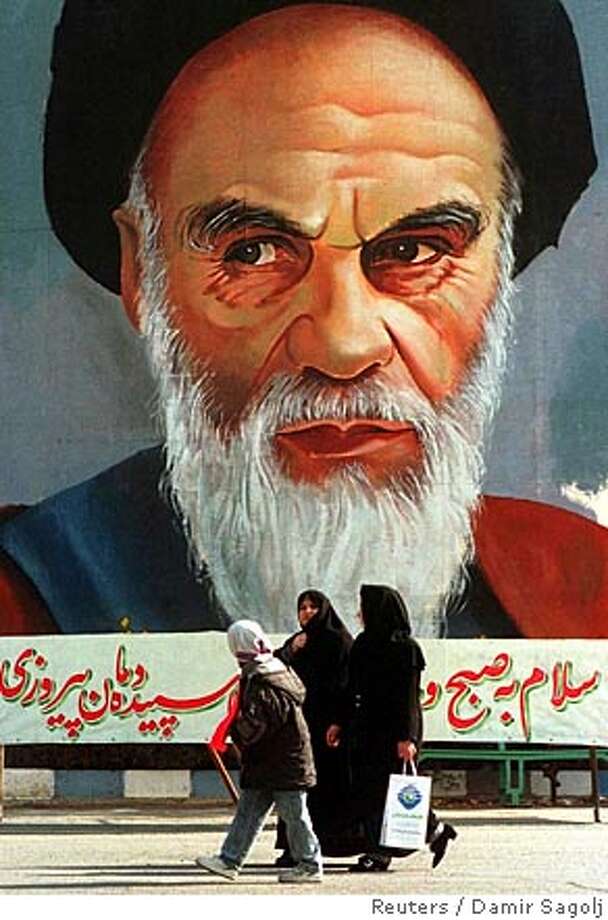
Diplomatic relations were immediately broken off by the Islamist regime of Ayatollah Khomeini after the revolution, and Israel was labelled as the "Little Satan" following in the footsteps of the "Great Satan" which was the USA.  This seems to be the point at which the hatred for Israel really began.  Ironically, and in spite of the hateful rhetoric that emanated from the regime at that time, behind the scenes there was a great deal of close cooperation between Iran and Israel.  Much of this was driven by the 8 year-long war between Iran and Iraq.  Iraq was a common enemy of both Israel and Iran, and this created unlikely ties and reasons to cooperate.  Israel sold Iran vast quantities of arms and ammunition, in return for which Israel received Iranian oil.  It is believed that the Iranian air force continued to operate, after it was initially attacked by Iraq, only because of the assistance received from Israel.  Iran was also delighted when Israel audaciously succeeded in destroying Iraq's nuclear reactor at Osirak in 1981 after the Iranians failed in their attempt to do the same.  The weekly insults and denunciations of Israel at Friday prayers by the Iranian leadership served conveniently to conceal the fact that there were no fewer than 100 carefully hidden Israeli advisers and technicians in Iran throughout the period of the war.

Since that time, Iran's leaders have continued to criticise, insult and threaten Israel at every opportunity.  And nobody has questioned for a moment why this is the case, and what justifies this vilification and extreme sentiment.  It has become a situation that simply forms part of the diplomatic landscape.  Can it be explained by Iran's hatred towards the USA, and the fact that the Israel is seen to be very close to the US?  It is difficult for me to accept that this explains all the public threats and the acts of terror that have been undertaken (and continue to be undertaken) against Israel.  Israel is not the USA's only close ally.  Why have other allies not been threatened for destruction in the halls of the United Nations in the way that Israel has been forced to endure?  And, while sentiment towards the US has wavered with different Iranian regimes (while always maintaining its negative bias), the hatred towards Israel seems unwavering no matter which Iranian president has been in power.  The threats against Israel have been the one pillar of consistency in Iranian foreign policy.  So I find it difficult to believe that this is purely driven by Israel's relationship and friendship with the USA.

The only explanation that I can offer to this extreme situation is the resurfacing of plain, old-fashioned anti-Semitism.  I use the term "resurfacing" because the Iranians/Persians do not have a long or consistent history of anti-Semitism.  The story of Purim that took place in Persia is a good representation of the relations that Jews and Iranians have enjoyed over the centuries.  While the king of Persia married a Jewess (Esther) and was prepared to take action to destroy Haman and his evil band for their anti-Semitism expressed against Mordechai, the fact was that anti-Semitism was clearly a common thing at that time.  In more recent times the Nazis declared Iranians immune to the Nuremburg Laws as they were considered to be pure Aryans.  In spite of this, the Shah and the Iranian government did not support the anti-Semitism of the Nazis.  With the rise to power of the Islamic extremists in Iran in 1979, we saw the rise to power of extreme anti-Semitism at a regime level.  Ironically, this anti-Semitism was not directed at Jews living in Iran as much as it was directed at Israel.  When Ayatollah Khomeini returned from exile in Paris to take up the leadership role immediately after the revolution, he declared, "We recognize our Jews as separate from those godless, bloodsucking Zionists" and he issued a fatwa decreeing that the Jews in Iran were to be protected.  This did not stop Iranian Jews from leaving Iran in large numbers.  The population of Iranian Jewry shrunk from around100,000 at the time of the revolution to around 50,000 in the mid-1980s, to around 25,000 in the mid-1990s.  Less than 10,000 Jews are left in Iran today.  Because of the "protection" afforded to Jews living in Iran, there are those who believe that the hatred that we see coming from Iran is not anti-Semitism, but anti-Zionism.  The problem is that the basis for this anti-Zionism is still unexplained.

In spite of the Iranians not being Arabs, they have enjoyed some ideals in common with the Arabs since the revolution in Iran.  The premise for the Arab-Israeli conflict is pure anti-Semitism.  The Arab world could not accept the notion of Jews living in the Middle East on their doorstep, and resolved to do all to destroy them and their state.  The holy city of Jerusalem has become embroiled in this war as a tool, rather than an end.  It is noticeable that no attempt was made to claim Jerusalem (and its Muslim holy sites) by the Arabs in the period prior to the establishment of Israel.  When the Jews took control of Jerusalem, and even in spite of granting control of the Muslim holy sites to the Waqf Council under the chairmanship of the King of Jordan, the Arab world and the Muslim world rose up to object.  Was their objection in favour of the Muslim holy sites, or was the objection against the presence of the Jews?  Everybody will reach their own conclusion.  What is clear is that Iran has firmly jumped on this anti-Semitic bandwagon.

Iran's brand of Shia Islam has been a huge source of conflict with the Sunni Islam practised by most of the Arab world.  In spite of this fundamental source of disagreement, they have found a common cause to fight against the Jews in Israel, to fight against the existence of the State of Israel and to use the claim of the holy city of Jerusalem for Islam as a means to their end.  The city of Jerusalem seems to be almost the only cause and rallying point that unites all different streams of Muslims around the world.  And, by extension, the fight against Israel, the Jews and the current regime in Jerusalem is equally a common point of agreement between them all.  Although distinct cracks are starting to show in this quest as individual Arab countries come to the realisation that Israel is going nowhere, and understand that cooperation with Israel may be a better option for them than fighting the futile battle of trying to destroy her.

The Iranians are, however, unwavering and unashamed in their battle against Israel and her people.  They continue to sponsor Hamas and Hezbollah, amongst other terrorist groups, that act as proxies for Iran to destroy Israel.  Iran is also responsible for numerous terror attacks orchestrated against Israeli and Jewish targets outside of Israel.  It's quest to build a nuclear weapon that could potentially be used against Israel is clearly a cause that any Israeli government will consider to be of highest priority.   So Iran has clearly not changed its mind, nor given up its desire to destroy Israel in any way.

My problem is that I am still not entirely clear why Iran wants to destroy Israel.

Thursday, 12 April 2018

The "March of Return" Protests

The world's attention and news media have been trained recently on the Gaza border over the past few weeks, where thousands of people have gathered and tyres were burnt emitting poisonous smoke and fumes.  We are told that this is a peaceful demonstration against Israel to protest the right of return of Palestinian refugees to their homes and land in Israel.  The protest has been named the "March of Return" protest.

A closer inspection of the situation reveals that the truth does not resemble anything like what Hamas and the Palestinian side choose to present to viewers and listeners.  It reveals that the Palestinian rhetoric continues to mislead in order to give the Palestinian side public justification to pursue its sinister objective of destroying Israel, and killing of Jews in full sight of the international community.

In the period prior to 2005 when Israel unilaterally disengaged from Gaza, the accusation against Israel fueled by the Palestinians was that Israel was an "illegal occupier" of Gaza.  To an innocent bystander in the international community, it seemed as though all conflicts surrounding Gaza could be healed by a simple act on Israel's part to withdraw from Gaza and hand it over to Palestinian control.  That actually happened in 2005 when the Israeli government decided to unilaterally withdraw civilians and military forces from Gaza, and hand the strip over to the control of the Palestinian Authority.  Not long after that, control of Gaza was snatched by Hamas in a coup d'état.  Instead of using the opportunity and the huge sums of money given to them to build a nation state in Gaza for the benefit of their people, Hamas has used the land and the resources made available to them for the purpose of creating further conflict.  It has invested in weapons, arms, missiles, tunnel construction and terror training, all with the intention of destroying Israel.  If it was not apparent to all at the time of the Gaza withdrawal, it should be apparent now that Hamas's objective has nothing to do with building a state for its people.  Instead, it has everything to do with destroying Israel and the Jews.  Gaza was a step in this direction, but this was merely a means to an end rather than an end in itself.

The Palestinians have been extremely successful in duping the world to believe two key lies in the story that they tell to the international community.  The first is that Israel is the main transgressor in the conflict.  According to their accusations, Israel is the occupier, Israel violates human rights and Israel does all that it can to discriminate against the Arabs who have the just right to any land that is currently part of the Jewish state.  To focus the attention on Israel as the transgressor, they have succeeded in playing on the world's sensitivity to the preservation of human rights, and to the plight of the underdog.  The Palestinians have been careful to ensure that their militia are dressed as civilians to present the highly misleading picture of the might of Israel's army confronting innocent and unarmed civilians.  The second lie is that all they want is to live in peace in their own homeland, and this is being denied them by Israel.  The international community infers from this that peace would suddenly break out in the Middle East (and maybe even the wider world) if Israel simply allowed the Palestinians the freedom to live peacefully in their own homeland.  These lies afford them the opportunity to take little steps towards their ultimate objective of destroying Israel and the Jews.

In the same way as the statement that all that they want is a land of their own to live in peace is simply a ploy to weaken Israel, so too is the demand of the right of return of the refugees a ploy to try to weaken Israel.  The so-called refugee argument has been constantly raised over the past 70 years as an attempt to displace and weaken the Jewish hold on Israel.  Those Arabs who left Israel as refugees in 1948 were ordered to do so by their own leadership.  In fact, those who did not heed the calls of their leaders and chose to stay, still have their land and properties and are citizens of the State of Israel.  They came under no direct threat and were allowed to remain where they were without any reprisals.  It almost appears as though the status of refugee cannot be applied to those who ran of their own volition, or under orders from their leaders.  And yet, these people and their descendants have been held in inhumane conditions without any nationality for generations in the hope that they can be used as a tool against Israel.  It has drawn the attention of the international community, and played very successfully on their sensitivity to protect the weakest members of our society.  These members of society have, however, been weakened by their own leaders.  And nothing has been done over more than four generations to help them.  Let us compare this to the Jewish refugees who ran from Europe or Middle Eastern countries for fear of being persecuted and murdered.  They have been absorbed into Israel.  There is no United Nations agency devoted to taking care of their daily needs.  There are no demands for them to return to their homes, or to have their land returned.  Once again, the world has been successfully duped by a ploy that is designed to assist the Palestinians in their desire to destroy Israel.

The current events on Gaza's border are just another chapter in this saga.  Thousands of civilians have gathered on the border to threaten Israel, and to provide cover for armed operatives trying to break through the border fence, and trying to harm Israeli soldiers and collect intelligence for future operations.  Of course, their cause is substantially assisted if they can show the world that innocent civilians undertaking legitimate protest were killed by the might of the Israeli military machine.  To this end, Hamas has no qualms in cynically using children by sending them into the war zone in the hope that Israeli soldiers may fire upon them to help their claims against Israel even further.  The act of burning tyres to create a smokescreen that prevents IDF soldiers from having a clear vision of the actions of these militia is surely an obvious ploy?

If this was about a homeland for the Palestinians, the matter would have been amicably resolved many years ago.  What it is really about is a homeland for the Palestinians wherever the Jews happen to have theirs.  This will never be resolved.  Irrespective of the threats, and the lies and the unnecessary murder of people, theirs and ours, Israel will not be frightened into submission.  On the contrary, these threats simply strengthen the resolve of Israelis who are determined to protect and fight for each inch of their homeland.

Monday, 18 December 2017

How Important is Trump's Recognition of Jerusalem?

President Donald Trump's announcement to recognise Jerusalem as Israel's capital, and his decision to instruct the US embassy to be moved to Jerusalem, have dominated world headlines in recent weeks.  Many have analysed what lies behind his decision, and why he chose to take these steps now.  Amidst the speculation about these points, there appear to be no clear answers to these questions.

The reaction from around the world has been almost universally critically.  Except, of course, Israel's reaction where Prime Minister Netanyahu has lauded Trump's announcement as courageous, just and historic.  It is interesting to understand why western countries have been so opposed to this announcement, and why so many countries have responded in criticising Israel when Israel was not party to this action at all.  Not to speak of the anger shown by the Arab world with riots being held in many countries.  And the launching of missiles towards Israel in a way that one may have viewed Israel to be the offending party here.

Why has there been such a huge reaction to this announcement?  Previous American presidents, most notably Democratic Presidents Clinton and Obama, are on record stating the Jerusalem is the capital of Israel. The Jerusalem Embassy Act has been on the US statue books since 1995, and dictates that the US embassy should be moved to Jerusalem.  In reality, Trump has said and done nothing new.  He has simply followed in the footsteps of others before him by reiterating the obvious. 

The fact that Jerusalem is Israel's capital cannot be disputed.  The decision as to which city is the capital city of any country, is one that is taken by the country itself.  It is almost unheard of for any country's choice of a capital city not to be recognised or respected by members of the international community.  Israel declared Jerusalem to be her capital in 1948, a fact that was entrenched in the Basic Law in Israel in 1980 with the Jerusalem Law.  The Knesset sits in Jerusalem as do all government ministries.  Both the prime minister and the president have their offices and residences in Jerusalem, and foreign dignitaries are received in Jerusalem as the nation's capital.  Trump's announcement, or lack of announcement, makes no difference at all to the situation.  The fact that Jerusalem functions as the country's capital cannot be denied even by the most anti-Israeli person.

So why the furore over Trump's announcement?  It stems back to 1947 when the Arabs refused to accept the UN Partition Plan for Palestine that envisaged the sharing of Palestine, as it was, between Jewish and Arab states.  It also envisaged Jerusalem being a city under international control that would be shared between the Jews and the Arabs.  When the Arabs rejected this plan and grabbed whatever they could for themselves (including East Jerusalem), one would have thought that the UN plan was effectively rejected and binned.  Following a number of wars in the intervening period which saw the Arabs trying to grab more for themselves, but ultimately losing ground, the Arabs ironically still reject this plan as being not enough for them.  Perhaps this is because the Arabs continue to plot for the takeover of the entire city of Jerusalem, and the expulsion of the Jews from all parts of it.  In spite of all of the history, the international community has continued to pressurise Israel to honour the plan, even though it was formally rejected by the Arabs.  In this context, the international community refuses to recognise Jerusalem as Israel's capital, believing instead that the Arabs have some right to it.  They continue to demand a piece of Jerusalem for an Arab country, that seems unlikely to arise in the near future.  What has suddenly changed since 1947 when the Arabs rejected the plan to share Palestine and Jerusalem?  I don't think that anything has changed since then, and I suspect that the same plan would be rejected today by the Arabs as it was then.

For those who continue to insist that the Arabs have some rights to Jerusalem, Trump's announcement has been interpreted as reducing the possibility of this becoming reality.  They consider that Trump effectively took Jerusalem off the table from any peace talks that may take place.  If they were more honest, I believe that they would acknowledge the fact that the Arabs have no current plan or intention to sit down in peace talks anytime soon.  In my view, this means that Jerusalem was never really on the table at all.

Jerusalem has never been freer, than since the city was unified under Israeli rule in 1967.  All religions are free to worship at their holy sites, providing that they come with intention of behaving respectfully and peacefully.  While Jews were denied the right to visit the holiest site in Judaism when it was under Arab rule, Muslims have been assured the rights to their holy sites under Israeli rule.  The Israeli government has rebuilt the city of Jerusalem, improved its infrastructure and made it more desirable for all those who wish to live in and visit the city.  This should surely be something that influences the views of the international community regarding the most appropriate entity to rule over Jerusalem.  The argument that many of the citizens of Jerusalem, particularly in East Jerusalem, are Arabs who have no desire to be citizens of Israel is also used as reason why this area of the city should be ruled by a future Palestinian state.  It should be known that these residents were offered the right to Israeli citizenship, and have many rights as permanent residents of Jerusalem and Israel in spite of their rejection.  Just because entire neighbourhoods of Paris are dominated by Muslim residents, does not mean that these neighbourhoods should form part of an Arab state. Why is this different in Jerusalem?

The Trump announcement is not a trailblazer, and changes nothing in reality.  It is essentially an insignificant act for Israelis, Arabs and the international community.  Israelis may appreciate the statements of support for the Jewish right to Israel and Jerusalem, but are essentially indifferent to Trump's announcement.  They care little about what was said, and would have cared the same if it was not said.  Israelis are determined that the united city of Jerusalem be the capital of Israel, and nothing has changed.

There can be no doubt that the announcement by Trump has been seized upon by those who are determined to destroy Israel.  They have taken the opportunity to further their aim of ultimately ridding Jerusalem and Israel of Jews.  Trump's announcement is being used to justify this in a manner that is politically correct.  It seems entirely acceptable to launch rockets into Israel, to attack Israeli soldiers and to riot in Bangladesh in response to the Trump announcement.  The announcement itself was of no consequence, and nothing has changed.  Jerusalem will continue to be the capital of Israel whether the world accepts this or not.  Perhaps this is what Trump came to realise.

Sunday, 25 December 2016

Obama's Final Act of Betrayal

Image courtesy of www.politico.com
After weeks of speculation as to how the US will vote at the UN Security Council when presented with the resolution condemning Israel's policy regarding the so-called "settlements", we now have a clear and unequivocal answer.  In the vote held on Friday, Barack Obama instructed his ambassador to the UN to abstain from the vote at the Security Council.  This action allowed the motion to be carried, with 14 countries voting in favour and 1 country (the USA) abstaining.  Had Obama decided to vote against the resolution, it would not have been carried despite the majority voting in favour.  Because the USA has a veto right at the UN Security Council, it had the power to defeat the motion on its own.  This veto right was not exercised on Friday.

The decision by the USA delegation to abstain from Friday's vote flies in the face of USA policy at the UN Security Council in recent years on the subject of resolutions condemning Israel.  In the words of outgoing UN Secretary-General Ban Ki Moon, Israel has been the victim of a disproportionate number of resolutions condemning her actions at the hands of various UN organisations.  One could interpret this to mean that Israel has been unfairly targeted by the UN, and unjustifiably singled out for constant criticism and condemnation.  The USA has somewhat redressed this imbalance by exercising its right of veto at the Security Council over the years, and has ensured that the unfair condemnations of Israel are not allowed to stand, at least in that forum.  The most recent example of this was in 2011, when the Obama administration vetoed a resolution that condemned Israel's settlement activity.  The resolution on that occasion was remarkably similar to the one passed by the Security Council on Friday by virtue of the US abstention.  So what has changed in 5 short years, that justified the US turning its back on Israel at this time?

In 2011, there was a great deal more at stake for President Obama.  He had been in office for approximately 3 years, and was already eyeing his re-election with the hope of returning to the White House for 4 more years.  His decision to veto the resolution on that occasion was all about serving his interest at that time, rather than showing what he genuinely felt and believed.  Fast-forward 5 years, and Obama has no political capital to win or lose from the Security Council vote.  He will vacate the Oval Office in less than a month, and this vote has no bearing on his future whatsoever.  The only reason that he would vote in one direction or another, is to reflect his genuine view on the matter.  This view is shown loudly and clearly in a resolution that is one-sided and false in its depiction of the reality.  This is the legacy that Obama and Kerry are leaving on their peace-making efforts over the years, that were presented as being fair and even-handed.

This act puts an entire 8 year presidency into context.  There were many conspiracy theories about what Obama's true position on Israel was.  Was he influenced by the fact that he comes from Muslim heritage?  Was he genuinely sympathetic to Israel's struggle for survival?  Did he understand that the obstacles to peace are numerous, and not only the fault of one party or the other?  He tried to cloud the answers to these questions, and presented himself as a friend of Israel throughout his term in office.  This single act at the end of his presidency, however, has clarified all that has gone before.    While Israel would never wish to oppose the possibility of reaching a genuine agreement with the Palestinians, it has always been important to Israel that any agreement be reached on the basis of mutual respect and recognition between the parties.  This respect and recognition has been sorely missing from the Palestinian side.

The only real purpose that this resolution serves, is to continue to perpetrate the view that Israel is solely to blame for the lack of progress towards peace.  And Israel's policy on settlements is an easy scapegoat to use to illustrate why Israel should be blamed.  If it was true that the settlements are the main obstacle to peace, why was peace not achieved in the period from 1948 to 1967, when there were no settlements to blame.  Not only was peace not achieved, the Arabs were hell-bent on destroying Israel at any and every opportunity.  But now, the settlements are being presented as the only reason for the lack of a peace agreement.  Where is the criticism of the fact that the Palestinians refuse to recognise Israel as a Jewish state, that has a right to live in peace and security?  Or of the fact that the PLO charter continues to call for the destruction of the State of Israel?  Or the continuous terror attacks that Israelis are forced to endure?  These were conveniently ommitted from the UN Security Council resolution, and this emphasizes how one-sided how this resolution really is.

If the resolution served to somehow move the peace process forward or to make a positive contribution the situation, I would be able to understand Obama's decision to allow it to stand on the record.  Unfortunately, this is not the case.  Instead, it is a pointless finger-pointing exercise that makes little contribution to the creation of a positive environment for peace-making.  And now, it is clearer as to who is pointing at whom.  Obama, your true colours have been revealed.  Shame on you.

Saturday, 10 December 2016

The Real Obstacle to Peace

If one believes all that is written in the international media about the current state of the Middle East conflict, it would be easy to reach the conclusion that there is only one obstacle to peace - Israel's policy on the so-called settlements.  According to these accounts, if Israel agreed to uproot its citizens who are living in the disputed areas of Judea and Samaria,  peace would magically break out in the Middle East.  Nothing could be further from the truth.  And the fact that outgoing US Secretary of State John Kerry (amongst others) constantly uses the line that the Israeli policy on settlements is the obstacle to peace, is a shameful inaccurate depiction of the situation.

Before suggesting what I think the real obstacle to peace is, it is worth understanding the true legal standing of this disputed land.  Until 1948, the land in Judea and Samaria was under a British mandate in terms of the San Remo conference of 1920.  In 1947, the United Nations adopted a resolution to support the establishment of an Arab state and a Jewish state in the land under British mandate, then known as Palestine.  The Arab world rejected this idea, chiefly because they objected to the establishment of a Jewish state.  Ultimately, the Jewish state was established, and the Arab world declared war on it.  In the aftermath of this war, the area of Judea and Samara came under the rulership of the Jordanian government.  It remained like this for 19 years.  During the course of the Six Day War in 1967, Israel captured this land and put it under Israeli military rule.  This situation continued until 1982, when a semi-civil authority was appointed to oversee rulership of this area under the auspices of the Israeli ministry of defence.  This is the situation until the present day.  What is clear from history, is that Arabs were handed the opportunity to rule over this land on a golden platter in the UN partition plan for Palestine in 1947.  It was rejected by them.  Had it not been rejected, we would not still be arguing over ownership issues today.  In addition, had the Arab world not plotted to try to wipe Israel off the map in 1967, the land would probably still be under Jordanian control.  So now, that Israel has responded to protect the existence of the Israeli state, the complaints are too little, too late.

There is no doubt in my mind that the Arab world is using all at its disposal to bring Israel's name into disrepute in the international community, and to take advantage of the easiest argument to convince others that Israel is the evil ogre in the story.  This, it seems, is the argument of Israel's settlement policy which, according to the current rhetoric, is designed to scupper the prospects of peace ever being established in the region.  Memories are, however, short.  It is already long forgotten that it was the Arabs who rejected the opportunity of two states for two peoples in 1947, and it seems strange that questions are not being asked about why that was.

In my view, the real obstacle to peace is the same one that existed in 1947 when the Arab world rejected the UN partition plan, and the same obstacle that existed for many years before that.  The obstacle is the existence of the Jews, and now, the existence of the Jewish state.  Until this "problem" is resolved, there will never be peace in the Middle East.  And, judging by some of the things that are happening in Syria, there is unlikely to be peace in the Middle East even if the Arab world would succeed in removing Israel.  All actions that are undertaken by the Arabs in the context of "peace" discussions, are done with the intention of weakening Israel's position to the point of destroying her.  This is clearly evidenced by the response to Israel's unilateral withdrawal from Gaza.  Until that moment, Israel's rulership over Gaza was held up as an obstacle to peace.  Since Israel withdrew from Gaza, the area has become less peaceful than it was before.  Now it is being used as a springboard to launch further attacks into Israel.  As far as progress towards peace is concerned, nothing was achieved by withdrawing from Gaza.  So why should we believe that withdrawal from settlements in Judea and Samaria will be any different?  The truth is that most Israelis do not believe this, even though the desire by Israelis to achieve peace remains as strong as ever.

Over the years, Israel has made numerous unilateral gestures in an attempt to further the prospects for peace.  Terrorists have been released from prison, money has been paid to the Palestinian Authority, borders have been opened and concessions granted, all in the interests of showing goodwill and positive intention to reach a peace agreement.  In return, Israelis have been killed in terror attacks and Israel has had to fight numerous wars and protect her citizens from ongoing missile attacks.  No meaningful progress has been made towards achieving a peace, or towards peaceful co-existence.  It seems no wonder that the Israeli government is hesitant to make further concessions.  They seem to achieve nothing other than further weakening Israel's ability to protect her right to peaceful existence.

The time has come for the world to stop allowing the Arabs to hide behind the rhetoric that Israel's settlement policy is the obstacle to peace.  More than that, the time has come for the international community to stop repeating and validating this ridiculous position.  I feel sure that, if somebody could give a cast iron guarantee that reversing the settlement policy would allow peace to be reached, Israel would agree to it almost immediately.  It is clear to all concerned, however, even to most of those repeating this line in the international community, that Israel's settlement policy is only being used as an excuse to justify why there is no peace.  It is far from the obstacle that, if overcome, would allow peace to be achieved.

The peace agenda contains numerous points that require resolution before a peace can be achieved.  These include land borders, the rights of Palestinian refugees, the status of Jerusalem, the arming of a future Palestinian state and many others.  In my view,  however, there is only one point that is of any real significance in this discussion, and this is the recognition by the Arab world of Israel's right to exist as a Jewish state.  Until this is resolved, there is nothing further to talk about.

Wednesday, 17 August 2016

The Historical Entitlement Argument Does Not Work

Image from worldcometomyhome.blogspot.co.il


The link between the Jews and the land of Israel is undeniable.  The extent to which Jewish history has played itself out in this land makes it inconceivable that a Jewish state could exist anywhere else in the world.  We feel this link every day as we pray to be in Zion and the rebuilt city of Jerusalem, and we experience it every week in our readings of the Torah that mention places that still carry the same names to this very day.  The festivals that we celebrate are frequently associated with particular places in this land, and the graves of our revered forefathers and mothers are within our borders.  Perhaps, most of all, the site of the holy Temple, destroyed almost 2,000 years ago in the city of Jerusalem, remains the holiest site in our religion and culture.  Despite offers to create a Jewish homeland in other parts of the world, Jews through the generations could never have accepted a  Jewish state anywhere other than in the land of Israel.
In spite of this, the international community continues to question the rights that Jews have to be in the land of Israel, and to have their own homeland there.  This forces Israelis into defending why they have the right to state in the land of Israel.  The main argument that Jews use to justify their right to be there, is on the basis of historical links and entitlement.  Typical justifications include the fact that it is written in the Old Testament about the borders of the Jewish state, or that there has been more then 2,000 years of continuous Jewish presence in the land.  This is true despite numerous attempts over the years to expel the Jews from the land of Israel.  It is my view, however, that the ongoing attempts to prove rights to the land by Jews via these avenues, serve to weaken the claim rather than to strengthen it.  Even the act of trying to justify the rights at all represents a weakness in my eyes.

Israel is the only member of the UN whose right to exist is continuously questioned, and whose future existence is openly threatened.  Other members of the UN have no qualms in calling for Israel's destruction, knowing full well that this comes without any consequences.  Without the support of the members of the international community who should speak up against such atrocious threats and behaviour, Israel is drawn into the vacuum and feels the need to defend herself.  While this is a natural response to such vile threats, the act of going on the defensive only goads the bullies into increasing their attacks.  This creates a vicious circle which has no end to it.

Under UN partition plan in 1947, independent Arab and Jewish states were approved to be established in the former British mandate of Palestine.   This was confirmed by a two-thirds majority of states present and voting at the UN General Assembly.  Despite the fact that 13 countries voted against the plan and a further 10 countries abstained, the will of the 33 countries who voted in favour of the resolution was implemented.  This concluded any questions about who would have the right to live in the land, and to set up their state there.  The fact that the Arabs rejected the plan and refused to establish their state as envisaged does not detract from their right to do so, nor from the right of the Jews to do the same.  This was clearly laid down in resolution 181(II) and passed on 29 November 1947.

The justification for a Jewish state in the land of Israel is embodied solely in the UN resolution that presented this right.  Since the moment that the resolution was passed, the arguments surrounding historical entitlement or continuous presence (or anything else) were effectively set aside and became less significant as points in order to prove entitlement.  Perhaps these matters were considered in the extensive work and report issued by the United Nations Special Committee on Palestine (UNSCOP).  Now that the recommendations of the committee have been accepted, the partition plan approved and the State of Israel established, there is no room to question this any further.  And it is certainly not acceptable to call for the destruction of the State of Israel, a country that was set up by a UN mandate with a two-thirds majority.

By continuing to put forward the argument of historical links and rights to the land, Israelis effectively give detractors justification to ignore the importance of the UN vote.  This negates the vote, and its legal significance.  It also gives  people the opportunity to open all types of debates to negate the historical rights arguments.  Not everybody believes what is written in the Bible, and it is almost impossible to conivince them otherwise.  Similarly, the debate whether or not Jews have really had a continuous presence in the land of Israel.  Facts of history are frequently difficult to prove unequivocally.  This is an argument that can never really be proved or won, in one direction or the other.  It is futile, and shows only that Israelis are happy to reopen this debate that cannot really prove anything in either direction.

The time has come to stop using arguments to justify Jewish presence in the land of Israel, that simply serve to weaken its right.  This is not to say that the historical link is unimportant to the Jewish soul.  On the contrary, this is what drove the Jews to fight so hard for their homeland in this place over so many years.  Now that this homeland is a reality, these arguments are no longer useful as political arguments, and are mostly unhelpful.  Instead, the vote by the international community that legitimised the Jewish homeland in Israel is the one and only relevant argument.  And, while it is true that the map of Israel today is not quite the map that was approved by the UN in 1947, it is equally true to note that the Arab state that was approved in that same UN vote was never accepted.  Instead, the land that was earmarked for the Arab state has simply been used as a springboard to try to destroy the Jewish state.

The Jewish state could never be anywhere else, other than in the historical Jewish homeland.  Now that this has been accepted by the UN and the international community in a legally binding vote, the argument about historical entitlement should be ceased.  It is simply no longer relevant as a political and legal argument, and not helpful to Israel's cause.

Saturday, 4 June 2016

Rough Justice?

The story of Sgt. Elor Azaria has captured the imagination of many Israelis, and has succeeded in dividing opinions very sharply.  Sgt. Azaria is an IDF soldier in the Kfir brigade, who was on duty near Hebron on a day in February when a terrorist stabbed and wounded another IDF soldier friend of his.  According to the most reliable eye-witness accounts of the story, Sgt. Azaria shot at the terrorist some time after the terrorist had already been neutralised and was under the full control of other IDF soldiers.  The shot fired from Sgt. Azaria's gun resulted in the death of the terrorist.  As a result of this incident, Elor has been court-martialed, and charged with the offense of manslaughter.

The entire episode has played itself out in the public eye.  This is due to the intervention of the human rights organisation Btselem, who miraculously had somebody on the scene to record the events, and decided that it was appropriate to publicly air a video taken of the incident.  The video turns out to have been edited before being publicised, and without full disclosure of that fact.  The act of airing the video in public pushed the matter, and the debate, into the public arena.  The IDF was forced to respond publicly saying that it would investigate the incident, and take actions against the soldier if appropriate.  This, in turn, sparked a great deal of public support for the soldier, explaining that he has been forced to operate in extremely dangerous conditions as a result of the recent wave of terrorist violence in the West Bank and Israel.  It was put forward that his actions should be understood in the context of the situation that has been imposed upon Israel and her soldiers.  Israel's prime minister, minister of defense, chief of general staff and other ministers in government all felt the need to make public statements on the matter in criticising the soldier's actions.  In turn, this drew in the family of the soldier and many others who felt the need to defend him.  The incident degenerated into a classic public free-for-all.

The considerations on each side of the argument are clear, and convincing.  Israel is a country that is constantly under threat from those who wish to destroy her and her people.  This forces all of Israel's citizens to serve in the army as protection against those who desire to reap destruction.  Israel's soldiers are placed in danger's way each and every day.  This is not a normal or acceptable situation, and places enormous stress on young people who serve in the country's military.  Little consideration seems to be given by the international community to this fact.  Instead, Israel's soldiers are constantly under close scrutiny.  Organisations like Btselem ignore the human rights abuses that are inherent in the constant threats to Israel, and they find it only necessary to hold Israel and her soldiers accountable for their reactions in the spur of the moment.  This background forms the basis for the support that Elor has received from the public.  The fact that he was placed in a difficult situation having to protect his country at such a young age, has elicited sympathy and respect for him, and support for his actions.  Elor and his brigade spent many long hours on patrols, knowing that somebody could try to kill them at any moment.  Why should terrorists be afforded human rights, when they have no respect for the human rights of others?  There are many who believe that the fact that this person was trying to kill another individual in an orchestrated terror attack, immediately removes his right to being treated with respect and removes his human rights.  So, for many Israelis, it is inconceivable that a soldier can be tried on charges of killing a terrorist.  This is, after all, the job that soldiers are trained to do.

Despite many indications to the contrary, the IDF has strict disciplinary rules that it enforces.  These rules have been developed to fit with the environment in which its soldiers are forced to operate, and are designed to take advantage of the Israeli culture to extract the most from each conscripted soldier.  The rules are also highly influenced by our Jewish heritage, and the values that come with that.  The IDF's view is that we have the obligation to separate ourselves and our behaviour from those who seek to destroy us, and who behave without compassion or humanity in their quest to achieve this.  Even though the IDF's objective is to protect the people and the State of Israel, this should be achieved in a manner that is true to our cultural and religious teachings.  We should never lose sight of the fact that our soldiers are human beings before they are soldiers.  It is for this reason that the IDF discipline affords human rights not only to soldiers, but also to terrorists and enemies.  When responding to terrorists and enemy fighters, IDF soldiers have strict rules of engagement that are closely policed.  While giving IDF soldiers freedom to do almost anything that is required in the protection of Israeli lives, the rules of engagement strictly forbid shooting anybody unless an order to do so has been given or unless a victim's life is in immediate danger.  Failure to abide by the rules of engagement is taken seriously.  An army that has to counter the threats that the IDF sees daily, is forced to have a zero tolerance policy on operational transgressions.  There is no room for any soldier to have his or her own agenda or ulterior motive while he is in the service of the IDF.  If there is any suspicion that Elor has overstepped the well-kown and highly drilled rules of engagement, the correct action is to investigate the matter and give the soldier the right to defend his or her actions.  If the soldier felt fear or threat at the moment that he fired his shot, or believed that another life was in imminent danger, he will have his opportunity to present this defence.

I feel confident that the court-martial system will allow the charges to be put to the soldier, while also allowing him the opportunity to defend them in a democratic manner.  No external party or member of the public, whether it be Btselem, the minister of defense, the chief of general staff and even the prime minister can, or should pre-empt or interrupt this process.  It is extremely regrettable that this process is being played out in public, and it would be far more effective to allow the IDF to do its job internally in the manner that it is accustomed to doing.  It is clear that the act by Btselem of bringing this into the public domain effectively forced some of our leadership to respond to this in public.  The response, however, to the Btselem accusations was way beyond what was required.  Some believe that this was designed to pander to the international community, rather than considering the impact on the soldier and on the IDF as a whole.  Elor Azaria has become a villain in the eyes of some, while being a hero in the eyes of others.  I regard this act of forcing him into such a high public profile is possibly as stressful as the job that he was doing in the field near Hebron.

There is no doubt that Israel's young soldiers are forced to endure more stress than other young people of their age, and perhaps even more than professional soldiers in the armies of other countries.  Israel is currently the only country in the developed world that is being forced to fight a war within its borders, and the only country whose very existence is constantly questioned and threatened.  In spite of this fact, the international community seems to hold Israel to standards that are far in excess of the standards expected of other countries.  All of this is extremely unreasonable and even discriminatory, but standing up and shouting about it from the rooftops appears futile.  It does not help Israel secure her future, which is the most important task at hand.

It is thanks to the enthusiasm of those like Elor Azaria that Israel is able to protect herself against the constant threats of destruction.  Israel's young soldiers show incredible loyalty and patriotism when serving their country.  This enthusiasm needs to be allowed to show itself within a very stringent framework.  The framework is not only important for the discipline in the IDF, it is important for our soldiers and our country to retain their humanity.  This is the key difference that distinguishes Israel from her enemies, and is something that we would never wish to lose.  We would never wish to sink to the levels of those who seek to destroy Israel.

It is important now to allow the court-martial to conduct its work according to the rules and democratic principles under which it operates.  No external parties should be allowed to influence this process in any way.  No doubt, the verdict of the court-martial will be received with controversy, whatever its outcome.  We are forced to accept the verdict, and understand that this is the way in which our democracy operates.  Whatever the outcome may be, I feel immensely proud that we are able to retain our humanity even under the most extreme conditions.  And I am proud that we demand this humanity of our soldiers, even if the international community does not acknowledge this.

Wednesday, 18 May 2016

Lies, Damn Lies and Deligitimisation

"The creation of the State of Israel was fundamentally wrong,  because there had been a Palestinian community there for 2000 years".

"The creation of the State of Israel was a great catastrophe.  We should have absorbed the post World War II Jewish refugees in Britain and America".

These are the words of former London mayor and UK Labour Party member and activist, Ken Livingstone in a recent interview that he conducted with Arabic station Al Ghad Al Arabi.  The fact that Livingstone, or "Red Ken" as he is known by the British establishment, is anti-Israel and anti-Semitic is not new to most of us.  His own Labour Party recently suspended him on accusations of anti-Semitism, along with more than 50 other members of the party.   What is surprising is the fact that a former mayor of a capital city of one of the world's leading and progressive nations, can utter such factual inaccuracies in support of his anti-Semitic rant.  What is perhaps even more astonishing is that so many around the world accept these inaccuracies as fact. and find his open anti-Semitism (dressed up as anti-Zionism) to be perfectly acceptable.

Even though Red Ken was only a babe at the time that the State of Israel came into existence and will probably not be able to remember its details, it is incumbent on a man in his position and who is as outspoken as he is, to get the facts right before taking strong public positions.  Instead, he is using inaccuracies to justify his bias.  If he had learnt the facts, he would know that there was no Palestinian community in 1948, and so there could not have been a Palestinian community for 2000 years.  The concept of a "Palestinian people" or community only arose after the 1967 Six Day War when the Arab countries lost control of the West Bank, Gaza Strip, Golan Heights and East Jerusalem after trying to drive the Jews into the sea once more.  After they realised that they had little chance of defeating Israel militarily in order to gain control over the land held by the Jews, the notion of a "Palestinian people" was born as a tactic to beguile the world into feeling sympathy for their cause.  This has now translated into an "occupation" of their land, a misconception believed by a vast majority of the world's citizens and used endlessly at the UN and other international bodies to criticise Israel.

It is ironic that he makes a statement that the creation of the State of Israel was a catastrophe.  Why a catastrophe?  Does he believe that peace would have prevailed in this region had the State of Israel not come into being?  In the same interview, Livingstone refers to Libya and Iraq.  In those cases, he tries to blame western intervention for the conflicts that arose in those, and other Middle Eastern countries.  He claims that the west is equally to blame for the rise of Islamic terrorism, which has come about because of western double standards in the Middle East in Livingstone's opinion.  According to him, this is what has been encouraging angry youth to fight alongside ISIS and other terror groups.  Even he is smart enough to recognise that Arab and Muslim groups have fought amongst each other for hundreds of years., and that western intervention was not required to trigger terrorist activities.  We only need to witness the most basic split between Sunni and Shia Muslims to understand this, not to speak of the numerous tribal and political splits in evidence around the Middle East.  Does Livingstone believe that the Middle East would have been more enlightened and more developed without the existence of the State of Israel?  Once again, we have numerous examples to cite where Muslims have failed to capitalise on opportunities to enlighten and develop their countries and their people.  Should this be blamed on Israel?  Can we blame the terror state that has been constructed in Gaza, and funded by foreign aid, on Israel?  The catastrophe that Ken talks about is the same catastrophe that the Palestinians speak about.  It is the catastrophe of the Jews have a free homeland in which they can find self-determination.

It is ironic that Mr. Livingstone thinks that Britain and America should have absorbed all the post World War II Jewish refugees, and their failure to do so caused the "catastrophe" of the creation of the State of Israel.  In reality, it was exactly because of bigoted anti-Semites like Red Ken, that these countries and others refused to accept Jewish refugees, both during the war (when they really needed place to go) and in its aftermath.  Even those who were allowed to escape to western countries were made to feel like they were "guests", who may be sent out at any moment.  The exposure of endemic anti-Semitism in the Labour Party in Britain is not as a result of a recent development.  This manifests itself as a result of decades of institutionalised anti-Semitism in many areas of British society.  Who would believe that, even as recently as the 1980's, some large government-owned companies in the UK had a policy of not employing Jews?  This anti-Semitism has been cleansed by the political acceptability of being anti-Israel.  The anti-Semites finally found a legitimate cause that allows them to openly express their anti-Semitism in the public arena.  Even if they claim to oppose Israel's actions and policies while being Jew lovers.  

It should be clear that anybody who denies the right of the State of Israel to exist, or supports groups who seek Israel's destruction, is an anti-Semite.  This has little to do with the so-called occupation or the rights of the Palestinian people.  There are millions of Palestinians in refugee camps in the region, whose human rights are being denied in a much more systematic way than anything that Israel has ever done.  No criticism is issued about these human rights abuses, or about the abuses by the Palestinian leadership of its own people.  Instead, this has everything to do with the right of the Jews to be masters of their own destiny, and to have the right to protect themselves and their  Jewish homeland.  It can be dressed up as anti-Zionism or support for the Palestinian people, but the real root cause is well understood, and will not hidden from sight.

UK Labour leader Jeremy Corbyn is on record calling Hamas and Hezbollah his friends.  And he is the one who has suspended more than 50 members of his party for their anti-Semitic behaviour.  This is evidence of how deep the anti-Semitism in the Labour Party runs.  The fact that those who support groups calling for Israel's destruction are the ones suspending the anti-Semites is ironic.  The anti-Semites have succeeded in galvanising support for hating the Jews and Israel around the issue of human rights abuses against the Palestinians.  This has filtered into the left-wing arm of the Jewish community, giving even greater strength to the mantra that being anti-Israel does not necessarily equal being anti-Jewish.  Each meeting of the UNHRC is forced to discuss agenda item 7 covering human rights violations by Israel.  How does it transpire that, amongst all human rights violators in the world (of which there are many), Israel is the one and only country that is forced to endure a torrent of criticism and abuse at each and every UNHRC meeting?  My contention is that it is rooted in institutionalised anti-Semitism at this organisation, and many others.

Although Red Ken is a classic example of anti-Semitism in its ugliest form, he is unfortunately not the only example.  And he is sufficiently unashamed to be prepared to make public statements in support of his argument that are factually inaccurate and incorrect.  The problem is that, when senior leaders like Livingstone make such statements and contentions, many of their followers believe it without any doubt and this perpetuates the unbridled hatred without cause.

When Livingstone refers to the "catastrophe", we understand what he truly means.  It has nothing to do with the so-called "nakba" or catastrophe that has befallen the Palestinian people.  This could easily have been avoided if they had accepted the Palestine Partition Plan agreed by the UN in 1947, instead of choosing to try to destroy the Jews.  The two-state solution that we continue to fight over today, could already have been implemented at that time.  If this is indeed what the true desire is.  Instead, Livingstone is referring to the catastrophe of the Jews having their right to independence and self-determination, and how much this has served to strengthen the cause and the presence of Jews around the world.  I imagine that he may have described it as an even greater catastrophe had the UK absorbed more Jews in the period after the Shoa as he suggests, and had a greater presence and influence in the UK today.  The mix of strong Jewish presence and influence, along with virulent anti-Semitism was exactly the recipe that brought the Nazis to power, and led to the Shoa and the massacre of 6 million people.  So, while I don't tolerate this form of bigotry from Livingstone and I am happy that there is a State of Israel to call him out and provide protection to Jews against his ilk, I still prefer this form of a catastrophe to the alternatives that Livingstone suggests.

Friday, 15 January 2016

Reflections of 2015

As we take the first few tentatives steps into 2016, it is a natural instinct to take a look back on the year that has just passed, and to assess its events.  It was an action-packed year, not always in the positive sense of the word, and some of these occurrences are likely to accompany us for some years into the future.  As I see things, 2015 will be remembered for two key happenings.  The first of which is the signing of the deal with Iran by the P5+1 countries, led strongly by the US.  The second happening is the campaign of terror that has swept across Israel over the past few months.

The signing of the nuclear deal with Iran in July 2015 is of significance for a number of reasons, none of them favourable to Israel.  After many years of operating a nuclear enrichment program in secret, Iran's nuclear program was given an official stamp of authority and approval by the international community upon the signing of the agreement.  The fact that the program was run under cover for so long, brings into question the real intentions of this program.  While Iran claims that the purpose of the nuclear enrichment program has always been for the purpose of producing electricity for domestic consumption (and indeed some of the enriched Uranium has been used for this purpose), this can surely not explain why it was operated in secret away from the prying eyes of the international community for all those years.   Israeli intelligence tells us that Iran has been enriching Uranium to produce nuclear weapons, and the intelligence has found secret sites housed in underground bunkers where this has been happening for some time.  The international community acknowledges this in its agreement with Iran.  If there was no intention on the part of the Iranians to produce nuclear weapons, I guess that the convoluted agreement with Iran limiting its rights to enrich Uranium would not have been necessary.  The fact that the negotiations took so long and involved brinkmanship right until the last moment, is clear indication that the objectives of the international community were not aligned with those of Iran.  Now, it is claimed that Iran's nuclear program will be under constant supervision to ensure that it cannot produce nuclear weapons.  This statement seems to ignore the fact that Iran successfully ran a secret program of producing nuclear weapons for so long, and is highly likely to continue to do so now in the same was as before, after the agreement has been concluded and implemented.

The most astonishing revelation for me, is the fact that the international community is willing to negotiate and reach agreement with a country that constantly threatens the annihilation of another member of the international community.  This simply legitimises bad behaviour that is contrary to the spirit and rules of the United Nations.  Instead of castigating and isolating the country involved until such time as it amends its bad behaviour, this country is rewarded with an agreement that accepts its nuclear program (that was clearly intended for non-peaceful purposes) and lifts the sanctions that were designed to punish it.  I see the signing of this agreement as one of the great historical mistakes of the international community, and one that will have a substantial negative impact on peace and safety of the Middle East for many years ahead.  By signing this agreement, and by legitimising Iran's nuclear program that is at best highly questionable, the international community effectively becomes a party to the threats and the terrorist activities that Iran perpetrates and funds against Israel.

The second notable event of 2015 in my eyes, is the cycle of violence that has taken hold of Israel.  What ostensibly started out as a few "lone wolves" venting their frustration against Israel and Jews, has taken hold as a cycle supported by the usual terror organisations, as well as the Palestinian Authority. (PA)  At first, it seemed as though the isolated stabbing of an innocent civilian, or the odd "accident" in which pedestrians were being run over by vehicles would pass quickly.  But it has expanded further into what some are calling the third intifada or the "stabbing intifada".  The term "intifada" is one that indicates that the uprising is being supported by the PA, something that the Israeli government goes out of is way to deny.  When the only action that the PA is seen to take in the wake of these attacks is to justify them on the grounds of the fact that Palestinians are feeling frustrated by the so-called "occupation", there can be no doubt of their complicity.  Complicity does not necessarily come in the form of supplying arms and specifically sending terrorists into action.  Their complicity comes in the form of tacit consent.

But there is more to it than this.  The PA's contribution to the uprising that we see now runs longer and deeper.  It begins with the messages that are being sent to children in schools about the Jewish enemy, and about how the Palestinians will not rest until they ultimately conquer all the land that currently forms part of the Jewish state.  It continues with the premeditated act of maintaining squalid living conditions for their citizens, and deflecting the blame for this onto the "occupation".  This builds further animosity and hatred, and is not at all accurate.  There seems to be no accounting for the billions of dollars of international aid money given to the PA over the years, earmarked for assisting economic development for its citizens.  Instead, much of it has been syphoned into the personal bank accounts of the PA leadership, who all enjoy luxurious standards of living.  Some of the money is being paid to the families of "shahids", those who have been killed while carrying out terror attacks against Israeli soldiers and civilians. Some of these shahids are from the current "stabbing intifada" wave of violence, giving further credence to their support of the current uprising.  The PA is not at all as sweet and innocent as they would wish the international community to believe.

While it may be possible to quell the cycle of violence with a firm hand from Israeli security and military personnel, it will leave its footprint in the same way as other violence has done.  People are being killed unnecessarily on both sides of the divide.  These deaths simply generate further animosity and calls for revenge.  They radicalise people who see these deaths as just another attempt to destroy one people or another, or deny an entire nation or people the right to exist in peace and security.  Surely the time has come for the PA to be held to account for its actions, and for its role in the violence that we have seen, not only now, but over many years?

In spite of these and other challenges that the State of Israel has had to deal with during 2015, it is remarkable to note the progress that it has made in parallel.  The Israeli economy continued to grow at more than 2% pa during 2015, had the lowest levels of unemployment ever, had the lowest interest rates in history and also had negative inflation.  The Shekel ended 2015 as the currency with strongest growth against the US Dollar for the year.  Israel absorbed more than 30,000 Jews from other countries, many of whom were running from the threats of ever-increasing anti-Semitism.  Many of these achievements could not be matched by countries that do not have to deal with big threats and issues that Israel deals with daily.  It shows the resilience and the resourcefulness of Israel and her people.

So, while we tentatively step into 2016 expecting more of the same from 2015, there remains an air of optimism about what can be achieved this year.  Imagine what could be done if there was not so much time, energy and money being devoted to fighting negative forces.

Saturday, 5 December 2015

No Respect for Dr. Levine


Dr. Marsha Levine is an expert on the origins of horse husbandry, and spent a decade as a fellow and a senior research associate the University of Cambridge’s McDonald Institute for Archaeological Research.  She was recently contacted by 13 year-old Shachar Rabinovitch, an Israeli pupil, who asked her questions for a school project about how ancient horses lived, and how much modern horses have in common with their ancestors.  Dr. Levine’s astonishing response to Shachar read, “You might be a child, but if you are old enough to write to me, you are old enough to learn about Israeli history and how it has impacted on the lives of Palestinian people”.    When asked by London’s Jewish Chronicle about the incident, Dr. Levine said that she has the choice not to waste her time on people who tread on the rights of other people.  She continued that she will answer Shachar when there is justice for Palestine.  Dr. Levine is a signatory to Jews for Justice for Palestinians, and she claims to have responded in this way as a matter of conscience and to stand up for what she believes in.  She described Israel’s treatment of Palestinians as “totally disgusting” and says that Israeli Jews have become the Nazis!

Dr. Levine’s response is wholly unacceptable for a number of reasons.  Politics aside, answering an innocent enquiry from a 13 year-old child in this manner can never be justified.  This aspect gives perhaps the greatest incite into Dr. Levine, and who she is as an individual.  While having sympathy and standing up for the human rights of the Palestinians, what happened to this empathy when approached by a child?  There is no possible way of understanding that this child, or any child, can be held responsible for the political situation in the Middle East, and deserves to be punished or taught a lesson for it.  It is entirely likely that Shachar will remember the rude response received from a person who sympathises with the Palestinian cause, and hold a negative view towards such people in the future.  There is nothing positive that young Shachar can glean from this response, and her exposure to Dr. Levine.  The most likely educational lesson that Shachar has learned is that she should be wary of people who stand up for the human rights of the Palestinians.

Dr. Levine also perhaps forgets that it takes two to tango, and that the current situation that exists between Israel and the Palestinians arises as a result of the actions of two parties.  Perhaps she has forgotten the ongoing attempts to attack Israel, to commit terror attacks against innocent Israelis and the larger desire to destroy the State of Israel at any price.  Where does she raise the issue of how the Palestinians are treading on the human rights of the Israelis?  Do Israel civilians not have the basic right to live without threat of terror attack and without having missiles fired towards them?  Does Dr. Levine consider the possibility that the current human rights situation is more as a result of the actions of the Palestinian leadership, than it is about Israel?  When looking at the human rights records of Muslim countries around the world, it is extremely difficult to conclude that human rights violations in the Palestinian Authority area are wholly about Israel and her actions.  The desire by Muslim fundamentalists to destroy does not stop in Israel.  Perhaps Dr. Levine forgot that these Muslim acts of terror are also seeking out Jews and other innocents around the world.  The terrorists are looking for people exactly like her to kill, maim and terrorise.

The act of signing up to Jews for Justice for Palestinians is somewhat superfluous.  We have a whole country of Jews who are signed up to this – those living in Israel.  Israelis believe in justice for all people.  And while Israelis certainly stand up for justice for innocent Palestinians, Israelis firstly believe in justice for themselves.  If this justice is under threat at any time, Israelis will not stop at any obstacle to defend themselves, even if this means that they stand accused of treading on the human rights of other people by Dr. Levine and her cronies.  Respect for human rights is something that should not only be given, but it should also be received.  When the human rights threats come in the form of a desire to destroy an entire nation or people, there can be no doubt that this nation and those people have the right and the obligation to defend themselves in protection of their own human rights.

Being a career academic, I would have expected Dr. Levine to study the facts before she stands up to criticize, and before she takes the wind out of the sails of an innocent child.  I cannot blame uneducated people for being sucked in by the propaganda that is presented by enemies of Israel and by the general press.  Dr. Levine should know better than to be influenced by such unreliable sources, and to take such a strong stand on the base of these flawed positions.

I am do not expect Jews like Dr. Levine to blindly support Israel’s cause or actions.  I know that all countries can, and should be held to account for transgressions that they commit.  Israel is no exception.  Israel, however, has a slightly different status for the Jewish community around the world.  Not only does Israel defend and protect the rights of the Jews living in Israel, it also sees its role as defending and protecting the rights of all Jews around the world.  This includes those, like Dr. Levine, who are Israel-hating Jews.  There is little doubt in my mind that, the only reason why there has not been another Holocaust in more recent times, is because of the existence and the actions of the State of Israel.  With the terrorist actions undertaken by Muslim fundamentalists against Jews even with the existence of Israel, we can only consider what may have been without the protection afforded by the Jewish state.  There can be little doubt that it is precisely this protection that has given the background to allow Jews like Dr. Levine to live their lives in relative normality.  I have strong doubts as to whether she would have succeeded at a Jew as an academic at one of the world’s top institutions, without the protection afforded by Israel.

Dr. Levine, you have lost respect in my eyes.  You have lost my respect for the inappropriate and unjustified insult that you issued to an innocent child when she turned to you out of admiration for you as an expert in your  field.  You have lost my respect for your attack on Israel, which is flawed and baseless.  You have lost my respect for your lack of balance in the manner in which you presented your views.  You have lost my respect for stooping so low as to compare Israelis to Nazis.  Perhaps it is best that young Shachar Rabinovich received the real picture of who you are, and learned her lesson about you in this way.  You are not worthy of her admiration.

Saturday, 17 October 2015

Palestinian Actions Speaking as Loudly as Words

Israeli Prime Minister Benjamin Netanyahu  delivered  another triumphant speech at the United Nations General Assembly meeting.  He seems to be at his best when standing at the UN podium and presenting Israel's case to the world.  His speech came only a day after the one delivered by Palestinian Authority President Mahmoud Abbas, and it was noticeable how Netanyahu's speech contained much optimism in stark contrast to Abbas's words.  Since these speeches were delivered, a number of innocent Israelis have been murdered and many more injured in Palestinian terror attacks in the city of Jerusalem, in the West Bank and elsewhere in Israel.  It frequently seems as though nobody in the UN General Assembly is really listening to the speeches, as most people come there with their positions firmly entrenched.  The speeches are heard by audiences outside of the General Assembly chamber in New York, particularly by the electorate of the leader concerned.  Abbas's speech appears to have been very much directed at the Palestinian people.  There also seems to be a strong link between the tone of the messages delivered, and the actions that have taken place on the ground in Israel since the speech.

Those close to Abbas had warned for many months prior to this UN General Assembly meeting, that Abbas's speech was going to contain a "bombshell".  This expectation was set, not only amongst the international community, but also amongst the Palestinians who are looking to Abbas for leadership.  There was speculation about what it could be.  Most of the ideas that were put forward as possibilities were along a negative theme.  Some thought that Abbas would resign or dismantle the Palestinian Authority.  Those people who were hoping for something positive that could somehow contribute to the situation in the Middle East, and possibly move the peace process forward, were drowned out.  After the speech, the so-called "bombshell" was described by one Israeli newspaper as more of a stink bomb than a bombshell.  There was nothing dramatic that one could point to in his speech that could be termed a "bombshell".  Perhaps, more importantly, there was certainly no hint of anything positive to give one a feeling that a way forward can be found.  Instead, there was evidence of frustration that the Palestinian issue has been replaced on the front pages of the international press by the ISIS threat and by the Syrian refugee crisis.  There was an appeal for governments around the world not to forget that they should continue to pursue foreign policies that criticise Israel's behaviour and actions, while heaping sympathy on the Palestinian "victims" in the conflict.  The message, however, was received loudly by the Palestinian people, while not registering any response on the agendas of foreign governments.  The clear message sent by Abbas and received by the Palestinians, was one of hopelessness and lack of optimism for the future.

It should, therefore, come as no surprise that the Palestinians have heard the message from the UN, and have embarked upon a spree of terror attacks across Israel that have killed and injured innocent people.  In the process, children have been orphaned, parents have lost children, and wives have lost their husbands.  Even though the wave of violence has been blamed by Palestinian leaders on events that have recently taken place on the Temple Mount in Jerusalem, the violence cannot be attributed to these events in any way.  The events on the Temple Mount are simply part of this violence that we have seen elsewhere, rather than a cause of it.  The cause of the violence can be traced back to the words in the UN General Assembly Hall that reflect the general message that has been in evidence for the Palestinians for some time.  A lack of hope and optimism, and a feeling that there is little to lose, can cause people to behave in extreme and sometimes illogical ways.  This is clearly the case with Palestinian people right now.  It is too simplistic to explain the current events as simply arising spontaneously out of a lack of hope.

It is frequently the case that the actions of the government serve to give their people the optimism that drives them to feel motivated or not.  Actions by a national government can easily trigger a positive feeling and spirit amongst its populace, and equally cause it to dry up as a result of actions that drain their mood.  This can sometimes be triggered by relatively mall things that are of greater concern to people. It seems to me that the spirit of the Palestinian people has been drained by the negative actions of Mahmoud Abbas.  How can a nation feel motivated when your leader stands up in front of the international community and expresses views that are completely devoid of any optimism for the future?

The Palestinian Authority is not only guilty of milking their people of any optimism to the point that they have effectively given cause to this cycle of violence, they are also guilty of inciting them to continue this violence.  The word "intifada" has been mentioned many times in relation to this cycle of violence.  For those of us who lived through the previous 2 intifadas, this cycle of violence looks remarkably like an intifada.  We are told, however, that this is not an intifada.  The most commonly quoted reason is that the previous 2 intifadas were actively supported by the Palestinian Authority, with weapons, money and specific instructions being given by the authority.  On this occasion, according to what we are being told, the authority is not actively supporting the violence.  It is noticeable, however, that they are also not speaking out against this violence in any way.  This can surely be considered and interpreted to be support.  Those who are not speaking out against this wave of violence, are clearly seen to support it.  In my view, and according to the official definition, this is an intifada.

The involvement of the Palestinian Authority in previous intifadas was described as a "guiding hand" behind the scenes.  The Israeli government is telling us that, on this occasion, there is no guiding hand.  Having said that, there are some hallmarks of the current wave of violence that seem to be part of an orchestrated strategy.  The fact that the weapons of choice being used in the current round of attacks are stones that are being thrown, and knives being used for stabbing attacks, is different from intifadas in the past.  And it is also noticeable that many of those involved in attacks in the current wave of violence are youths and minors.  This certainly tells a better story for putting on social media.  Minors are clearly problematic from a prosecution perspective under Israel law, when the perpetrators are arrested.  They cannot be treated in the same way as adults are treated under the law, and this may be one of the reasons why this strategy is being employed.  As much as we are being told that the violent attacks are spontaneous actions by individuals on the ground, it seems that the attacks are coordinated and part of a strategy.

A recent development in the wave of violence, is the involvement of Israeli Arabs.   Some of the attacks carried out in Jerusalem, have been undertaken by Arabs who are citizens of Israel.  Over the past few days, protests have been seen in Israeli Arab cities up and down Israel.  These are protests in support of the wave of violence directed against Jewish Israelis.  The involvement of Israeli Arabs is a dangerous development, and creates a dilemma for the Israeli government.  The interior minister has threatened to withdraw Israeli citizenship from any Israeli found to be involved in the violence.  Even this is more of a knee-jerk response, and not necessarily a longer-term solution.

The responsibility for this wave of violence falls directly on the Palestinian Authority.  And this is not only because of their responses (or lack of responses) over the past few weeks.  This responsibility goes back many years during the time that they have educated their children for conflict and violence against Israel and Jews.  Such education takes a long time to undo, perhaps even a number of generations.  Of course, this is not aided by staying silent when their people carry out heinous attacks on innocent people, and by blaming Israel for a change in status on the Temple Mount.  This is an outrageous accusation, that is simply designed to get support from fellow Muslims around the world, and to return the Palestinian issue back to the front pages of the newspapers.

Despite the fact that the support and the "guiding hand" of the Palestinian Authority is different from what it has been in the past, this is an intifada in definition and action.  The authority has adopted a policy of maintaining a feeling of hopelessness amongst its people, in order to build hatred and despondency that is being channelled against Israel and Israelis.  It continues to educate its children for hatred, war and conflict rather than education for peace and coexistence.  The speeches at the United Nations showed clearly that Israel stands for all that is positive and optimistic, while the Palestinian Authority stands for the opposite.  Until this is rectified, there can never be peaceful coexistence in this land.

Sunday, 18 January 2015

Je Suis Israel?

The huge outpouring of sympathy and shock over the past week following the terror attacks in France is entirely understandable.  The French people have not experienced an attack on their republic in this way, probably since the storming of the Bastille in 1789.  The reason why this represents a threat that is different from the various wars that the French have fought on their home territory over the years, is because this attack comes from within France, and not from outside of her borders.  The sight of native French speakers explaining that they follow the doctrines of Al Qaeda, Islamic State and other extremist Muslim groups has dismayed the average Frenchman, and even many within the huge French Muslim community.

The French (and the international community) came out in an immediate response to show their support for the Charlie Hebdo publication, which is also an expression of their support for freedom as demonstrated by a free press.   One could almost hear the cries of Liberté, Égalité, Fraternité.  Millions of Frenchmen made their statement in the presence of leaders from the international community in opposition to the attack on their freedom, and protested against Islamic extremism that was behind these latest attacks and many others.  The war on Islamic extremism is on the lips of people around the world, including the leaders of the most influential western countries.  Despite this fact, we saw Palestinian Authority President Mahmoud Abbas lining up with the world leaders at the protest rally in  Paris, in one of the most visible positions in the front row of the protest.  Many have questioned why a leader, who has been so closely associated with terror attacks over the years, could have been allowed to be in the front line of a demonstration to protest against exactly this

The organisation that was originally established in 1964 to represent the so-called Palestinian Arabs, was the Palestine Liberation Organisation (the PLO).  Current Palestinian Authority President Mahmoud Abbas was one of the founders of the PLO.  The stated objective of the PLO was the "liberation of Palestine through armed struggle".  This armed struggle turned out to include hijacking aeroplanes and cruise liners, as well as kidnapping and killing people without any sympathy or regard for the value of human life.  Despite being a stated pan-Arab organisation, many of its Arab colleagues expelled the leadership of the PLO from their countries as a way of opposing the means of terror that they used to pursue their agenda.  This same PLO forms the backbone of the Fatah party that makes up the modern-day Palestinian Authority.  Since his death, it has been publicly recognised that former Palestinian leader Yasser Arafat was orchestrating a campaign of terror and violence even while standing on the lawns of the White House, and receiving a Nobel Peace Prize.  Now that Abbas has signed a unity agreement with Hamas, a party that is blacklisted as a terrorist organisation in the USA, Europe and elsewhere, surely the evidence of his terror connections is as clear as ever.  And yet, he is seen leading an anti-terror march through the streets of Paris.  How is it possible that the world does not connect the terror that he is involved with, to the terror that is being experienced around the world?

Prime Minister Netanyahu has long been trying to draw this link in a way that the international community can understand, and is willing to understand.  He has described the terror that is being experienced in France, Syria, Iraq and elsewhere around the world as a different branch of the same tree when compared to the terror that Israel is forced to contend with on a daily basis.  The money to fund these activities is coming from common sources, and the organisations that are providing the arms and the impetus to carry out the attacks are the same.  The penny, however, refuses to drop.  When in France, the prime minister tried again to draw the connection to link the fresh wounds being felt by the French to gaping wounds felt constantly in Israel.  Everybody is rallying around the slogans "Je suis Charlie Hebdo" and "Je Suis Juif".  Why not "Je Suis Israel"?

Much of this stems from the fact that the Palestinians have succeeded in garnering public sympathy for their cause beyond the level that is justified.  While it is certainly true that many innocent civilians amongst the Palestinians are deserving of our sympathy and support, it is equally true that their misery has largely been caused by their own leaders.  The Palestinian leadership has ensured that those who were instructed to run from their homes when the State of Israel was declared in 1948 (despite requests by the Israeli government for them to stay), have remained refugees for more than 6 decades.  This has been designed to ensure that this issue remains a thorn in the side of the international community, in an attempt to milk any sympathy and support that can be gained.  The original 700,000 refugees have turned into a problem affecting 5 million people today.  All of this, linked to the fact that the peace talks to achieve a two-state solution have not progressed at all, have generated a certain sympathy for the Palestinian cause.  This sympathy has somehow been translated into justification for the acts of terror committed against Israel.  It is almost as if Israel is considered to deserve the terror it receives, because of the ongoing inability to reach a satisfactory compromise solution to create a Palestinian state.  It is almost as if Israel deserves whatever terror she is forced to endure, simply because she insists that any agreement for a two-state solution will ensure her security in future years.  It seems as though terror is only terror when it is not directed towards Israel.  Israeli-style terror seems entirely justified, in the eyes of the international community, as a fight for freedom or a fight against the so-called occupation.

What makes this even more absurd is when the Palestinians take complaints to the International Criminal Court, charging Israel of war crimes that are alleged to have been committed in an operation to protect her future existence and the safety of her citizens.  How can it be that prosecutors in The Hague are even spending a minute examining these claims?  After living through incessant rocket fire directed towards innocent civilians for years, surely Israel is entitled to eventually strike back to protect her innocent citizens?  And when doing so, if she takes every precaution to prevent civilian deaths despite the ongoing efforts of the Palestinians to throw civilians in the path of the military crossfire, should it not be the Palestinians who are accused of war crimes?

The branches of the same tree referred to by Prime Minister Netanyahu are certainly not of equal size and weight.  Israel has been forced to endure terror attacks for years, which have been randomly carried out against any and all sectors of her society.  Without meaning to dilute the enormity of attacks carried out and lives lost in the process, terror attacks elsewhere in the world have been of a much lower number and intensity than those that Israel has been forced to endure.  Despite this, there is the commonly-held view that Israel has somehow invited these attacks, and that they are justified.

The fact that Palestinians have been offered the opportunity to set up their own state in Gaza and the West Bank, the conditions of which far exceed the starting point that the State of Israel was offered 66 years ago, seems to be ignored.  The Jewish people demonstrated what is possible when there are good and true intentions to build a country and a nation, even with scraps to start with.  Out of these scraps, a prosperous country has been built which holds her own and takes up a justifed position in the family of nations.

The world's lack of link between the Islamic extremists operating in Israel, and those operating elsewhere, will be at its peril.  Israel has become a world leader in combating terror, and has experience and expertise that other countries will be needing in due course.  Ignoring or diluting the terror threat that Israelis constantly live under, will not give Israel much incentive to join in to assist others who suddenly discover the real nature of this plague.

Je Suis Israel!