Much has been written and discussed about Marwan Barghouti's article in The New York Times, trying to explain why prisoners in Israeli jails have embarked on a hunger strike. Most of the comments have surrounded the factual inaccuracies in Barghouti's statements and accusations against Israel. Or they have questioned why The New York Times had the audacity to allow such subversive trash to be published at all. My question is a different one. I ask whether it is right that Israel should allow its prisoners (whether they are criminal or political prisoners) the freedom that it does, and that allows people like Barghouti to make such ludicrous claims in public?
It is somewhat ironic that Barghouti accuses Israel of operating an "inhumane system" in its attempt "to break the spirit of prisoners" and of "grave breaches of the Geneva Conventions against the Palestinian people", while still having the freedom to publish these accusations in The New York Times. Surely this is a contradiction in terms? If Israel was so intent on breaching the Geneva Convention, it would surely do more to ensure that prisoners do not have access to publish their articles in international publications. Or at least opppose violations more vehemently than it has. It is common knowledge that prisoners in many systems, even in countries that pride themselves on their democracy, are not allowed access to go unpunished when they publish their complaints and accusations in public. And yet, Israel has hardly responded to Barghouti's article to punish him.
In many countries around the world, even in democratic countries, prisoners have significant restrictions placed on them. This is even more true of those convicted of terror-related crimes, or who are considered the most dangerous after committing very extreme crimes. In some cases, these restrictions can result in the opposite outcome of the one that the authorities hope to achieve. In the case of Nelson Mandela who spent 27 years as a political prisoner in South Africa, his popularity grew substantially while he was in prison and isolated from the outside world. He had no access to the media, and his likeness was not allowed to be published at all by the press. Despite this, the campaign for his release only grew more over time. The same was true of Prisoner of Zion Natan Sharansky when he was imprisoned in the Soviet Union. Despite these examples, the act of isolating prisoners seems, in the most part, to keep them out of the public view. This raises the question as to whether a stronger reaction to Marghouti would not be in Israel's best interests?
In spite of accusations of Israel acting in a racist way towards Arabs, and even being called an "Apartheid country", Israel values its democracy and freedom of speech almost above everything else. And while security considerations are always of paramount importance in every situation, the notion of preserving democracy and freedom has a very high priority. The Jewish people have suffered so much discriminatory behaviour over the generations that it would be anathema to have a Jewish country that does not embody democracy and freedom in every respect. Even if it means being tolerant of those who seek Israel's destruction.
It seems as though the furore over the article has died down, and the hunger strike in the prisons has been abandoned by large numbers of prisoners. It is ironic that some of the most important facts about the treatment of prisoners in Israeli jails seem to have been kept low-key in the whole uproar. The system of housing prisoners in jails is well demonstrated in the list of the improvements that the prisoners are striking for. These include;
- increasing family visits from the current 45 minutes a time, to 90 minutes a time
- increasing the frequency of family visits from once a month to twice a month
- allowing the prisoners an increased selection of TV channels in the prisons
- allowing the prisoners greater education facilities.
Comparing this to the way in which Israeli prisoners have been held by Arab states over the years seems a joke. And yet, The New York Times sees it fit to cover this matter. This hardly points to the systematic violations of the Geneva Convention that Barghouti accuses of.
With the story having almost burnt itself out, perhaps it was the right decision by the Israeli government not to respond more actively to the article that was published. In Israel's case, the criticism seems to come whether she has done something, and equally when she has not. Ultimately, we need to feel good with ourselves that we are doing what allows us to feel good when we look at ourselves in the mirror. I believe that this is what has been achieved in this case.
The story of Sgt. Elor Azaria has captured the imagination of many Israelis, and has succeeded in dividing opinions very sharply. Sgt. Azaria is an IDF soldier in the Kfir brigade, who was on duty near Hebron on a day in February when a terrorist stabbed and wounded another IDF soldier friend of his. According to the most reliable eye-witness accounts of the story, Sgt. Azaria shot at the terrorist some time after the terrorist had already been neutralised and was under the full control of other IDF soldiers. The shot fired from Sgt. Azaria's gun resulted in the death of the terrorist. As a result of this incident, Elor has been court-martialed, and charged with the offense of manslaughter.
The entire episode has played itself out in the public eye. This is due to the intervention of the human rights organisation Btselem, who miraculously had somebody on the scene to record the events, and decided that it was appropriate to publicly air a video taken of the incident. The video turns out to have been edited before being publicised, and without full disclosure of that fact. The act of airing the video in public pushed the matter, and the debate, into the public arena. The IDF was forced to respond publicly saying that it would investigate the incident, and take actions against the soldier if appropriate. This, in turn, sparked a great deal of public support for the soldier, explaining that he has been forced to operate in extremely dangerous conditions as a result of the recent wave of terrorist violence in the West Bank and Israel. It was put forward that his actions should be understood in the context of the situation that has been imposed upon Israel and her soldiers. Israel's prime minister, minister of defense, chief of general staff and other ministers in government all felt the need to make public statements on the matter in criticising the soldier's actions. In turn, this drew in the family of the soldier and many others who felt the need to defend him. The incident degenerated into a classic public free-for-all.
The considerations on each side of the argument are clear, and convincing. Israel is a country that is constantly under threat from those who wish to destroy her and her people. This forces all of Israel's citizens to serve in the army as protection against those who desire to reap destruction. Israel's soldiers are placed in danger's way each and every day. This is not a normal or acceptable situation, and places enormous stress on young people who serve in the country's military. Little consideration seems to be given by the international community to this fact. Instead, Israel's soldiers are constantly under close scrutiny. Organisations like Btselem ignore the human rights abuses that are inherent in the constant threats to Israel, and they find it only necessary to hold Israel and her soldiers accountable for their reactions in the spur of the moment. This background forms the basis for the support that Elor has received from the public. The fact that he was placed in a difficult situation having to protect his country at such a young age, has elicited sympathy and respect for him, and support for his actions. Elor and his brigade spent many long hours on patrols, knowing that somebody could try to kill them at any moment. Why should terrorists be afforded human rights, when they have no respect for the human rights of others? There are many who believe that the fact that this person was trying to kill another individual in an orchestrated terror attack, immediately removes his right to being treated with respect and removes his human rights. So, for many Israelis, it is inconceivable that a soldier can be tried on charges of killing a terrorist. This is, after all, the job that soldiers are trained to do.
Despite many indications to the contrary, the IDF has strict disciplinary rules that it enforces. These rules have been developed to fit with the environment in which its soldiers are forced to operate, and are designed to take advantage of the Israeli culture to extract the most from each conscripted soldier. The rules are also highly influenced by our Jewish heritage, and the values that come with that. The IDF's view is that we have the obligation to separate ourselves and our behaviour from those who seek to destroy us, and who behave without compassion or humanity in their quest to achieve this. Even though the IDF's objective is to protect the people and the State of Israel, this should be achieved in a manner that is true to our cultural and religious teachings. We should never lose sight of the fact that our soldiers are human beings before they are soldiers. It is for this reason that the IDF discipline affords human rights not only to soldiers, but also to terrorists and enemies. When responding to terrorists and enemy fighters, IDF soldiers have strict rules of engagement that are closely policed. While giving IDF soldiers freedom to do almost anything that is required in the protection of Israeli lives, the rules of engagement strictly forbid shooting anybody unless an order to do so has been given or unless a victim's life is in immediate danger. Failure to abide by the rules of engagement is taken seriously. An army that has to counter the threats that the IDF sees daily, is forced to have a zero tolerance policy on operational transgressions. There is no room for any soldier to have his or her own agenda or ulterior motive while he is in the service of the IDF. If there is any suspicion that Elor has overstepped the well-kown and highly drilled rules of engagement, the correct action is to investigate the matter and give the soldier the right to defend his or her actions. If the soldier felt fear or threat at the moment that he fired his shot, or believed that another life was in imminent danger, he will have his opportunity to present this defence.
I feel confident that the court-martial system will allow the charges to be put to the soldier, while also allowing him the opportunity to defend them in a democratic manner. No external party or member of the public, whether it be Btselem, the minister of defense, the chief of general staff and even the prime minister can, or should pre-empt or interrupt this process. It is extremely regrettable that this process is being played out in public, and it would be far more effective to allow the IDF to do its job internally in the manner that it is accustomed to doing. It is clear that the act by Btselem of bringing this into the public domain effectively forced some of our leadership to respond to this in public. The response, however, to the Btselem accusations was way beyond what was required. Some believe that this was designed to pander to the international community, rather than considering the impact on the soldier and on the IDF as a whole. Elor Azaria has become a villain in the eyes of some, while being a hero in the eyes of others. I regard this act of forcing him into such a high public profile is possibly as stressful as the job that he was doing in the field near Hebron.
There is no doubt that Israel's young soldiers are forced to endure more stress than other young people of their age, and perhaps even more than professional soldiers in the armies of other countries. Israel is currently the only country in the developed world that is being forced to fight a war within its borders, and the only country whose very existence is constantly questioned and threatened. In spite of this fact, the international community seems to hold Israel to standards that are far in excess of the standards expected of other countries. All of this is extremely unreasonable and even discriminatory, but standing up and shouting about it from the rooftops appears futile. It does not help Israel secure her future, which is the most important task at hand.
It is thanks to the enthusiasm of those like Elor Azaria that Israel is able to protect herself against the constant threats of destruction. Israel's young soldiers show incredible loyalty and patriotism when serving their country. This enthusiasm needs to be allowed to show itself within a very stringent framework. The framework is not only important for the discipline in the IDF, it is important for our soldiers and our country to retain their humanity. This is the key difference that distinguishes Israel from her enemies, and is something that we would never wish to lose. We would never wish to sink to the levels of those who seek to destroy Israel.
It is important now to allow the court-martial to conduct its work according to the rules and democratic principles under which it operates. No external parties should be allowed to influence this process in any way. No doubt, the verdict of the court-martial will be received with controversy, whatever its outcome. We are forced to accept the verdict, and understand that this is the way in which our democracy operates. Whatever the outcome may be, I feel immensely proud that we are able to retain our humanity even under the most extreme conditions. And I am proud that we demand this humanity of our soldiers, even if the international community does not acknowledge this.
The shocking news received last week that the bodies of the three missing teenagers were found in a shallow grave near to where they were kidnapped, has left me with a feeling of utter despair. My heart breaks for the parents and the families of the three young men who will never see them grow to full adulthood. We mourn for three lives that were taken in a random, unnecessary and evil way.
When news of the kidnapping broke, we all knew deep in our hearts that it could end like this. We prayed and desperately hoped that the story would somehow end well. That we would see the boys, once again, in the arms of their parents and rejoice like we did upon the return of Gilad Shalit. We hoped all of this, despite the concern that we all felt for the safety of Eyal, Gil-Ad and Naftali. In this case, however, the smiles that we all hoped to see have turned to tears and despair. They have also turned to anger, bitterness and calls for retaliation and revenge.
I feel immense mourning and sadness for the murder of three children long before their time. My despair, however, comes from a different place than the source of my mourning. I keep thinking about the type of person or people that could have carried out this horrifying act. Who are they? Who are the members of their families that support them in these acts? Who are their colleagues in the organisations that stand behind them and their ghastly murderous acts? My great despair comes from the reality that these are the people that we have been sitting around the negotiating table with over many years. These are the people who are being released from our prisons in prisoner exchange deals, only to re offend.
If these were the people that lived in my street, I would probably prefer to move to live elsewhere, in order to escape their vile influence. The neighbourhood in which I live, however, is the only one for me. Instead of moving away, I continue to live where I really wish to be, in the hope that somehow the government will clean up my local area to allow me to live here in peace and security.
The source of my despair comes from the fact that I feel isolated in my fear about the neighbours that I live with. The international community is forcing me to find a way to co-exist with such monsters, despite their unashamed desire to kill me off. After I clean up my street by placing such unwanted people in prison in response to heinous crimes that they have committed, the international community thinks that it is acceptable to force my hand to release them. All of this in the name of creating a better future. Why can they not understand that releasing murderers, no matter what the reason for their murder, cannot create a better future? It simply makes it acceptable for the murderers to commit their horrible acts over and over again. Those who force me to litter my neighbourhood with unwanted individuals seem to understand the need to keep their own streets clean. Why are we not justified in keeping our streets clean too?
Despite the fact that we are in mourning for three of our children who were murdered by those who were released to kill again, we will not allow ourselves to mourn for the future that we plan to build. While we would prefer to have a good, peaceful co-existence with our neighbourhoods, we will protect ourselves when this is not the situation. And we will not allow ourselves to give up on our vision for the future, even if this cannot be achieved right now. The time has come for us to stand up to the international community and say that we will give peace in return for peace, and we will keep criminals in their rightful place. If our neighbours do not value the peace that we offer in return for peace, there is no deal to be done.
It is my hope that three innocent lives were not lost totally in vain. The unity that they brought to the people of Israel and Jews around the world, while we prayed for their safe return, is unparallelled. Let us hope that this unity will allow us to overcome the obstacles that lie in our way to build a better future for ourselves and our children.
Israel's recent double strike on Syrian weapons storage facilities has, once again, raised the issue of the validity of preemptive strikes. Israel has used this tactic on more than a number of previous occasions, has already struck Syria already a few times this year. There are those who go as far as attributing Israel's continued existence to the fact that she has been prepared to go out and defend herself even before the attack materialises.
The issue of preemptive strikes as a defense mechanism to counter a potential threat has a number of inherent problems attached to it, particularly when this encroaches on the sovereign territory of another country. Firstly, there is always the question as to whether the perceived threat is real and credible. We saw the consequences of a bad call on the perceived threat when it was revealed that intelligence information was incorrect prior to the Second Gulf War. This dogged both Tony Blair and George W. Bush until the end of their respective tenures, and continues to dog them in their personal capacities to this day. Secondly, there is the question as to whether one sovereign country has the right to attack another sovereign country in defense of itself even where the threat is sure. It could easily be argued that there is an element of hypocrisy in this concept. Does it make a difference if the perceived threat is not an immediate one, but rather a perceived future threat? This is the case with Israel's strikes in Syria last week, where the rationale for the strike was that Hezbollah may use these arms against Israel at an undetermined time in the future. There are no firm answers to these questions, and the international community has historically judged such deeds on the basis of the parties involved, rather than the act. On this occasion, Israel succeeded in capitalising on the negative views currently held by the international community towards Syria and Hezbollah, and escaped with little or no censure by the international community - something quite rare for Israeli attacks. But this has not always been the case in the past.
Israel, a small island located in a sea of aggressive and hateful enemies, has been forced to employ the tactic of preemptive strikes in order to survive. Some of Israel's most famous and important victories - most notably that in the Six Day War - were achieved by surprising the enemy before they were able to inflict damage. The Egyptian air force was destroyed while on the ground in 1967. This surely paved the way for the famous Israeli victory. Israel was roundly criticised for sending its air force aeroplanes to destroy the Osirak nuclear reactor site in Iraq in 1981. It was only many years later in 2005 that President Clinton finally acknowledged for the first time that the strike on Osirak by Israel was a "really good thing". Similarly, the strike on the Syrian nuclear facility that was carried out by Israel in 2007, attracted criticism from Mohamed ElBaradei, then head of the International Atomic Energy Agency. Imagine if the civil war in Syria being waged at this time involved the added concern of nuclear weapons. With the benefit of hindsight, the Israeli strike in 2007 has potentially saved massive consequences.
These historical experiences also put a context to the ongoing standoff with Iran concerning the development of its own nuclear facilities. A preemptive strike against Iran's nuclear facilities would be much more difficult, and would have far greater consequences than the ones carried out against Iraq and Syria. Both of the previous attacks solicited no military response at all. This miraculous escape, after catching each of these countries off guard, is highly unlikely in the Iranian context. It is almost assured that any attempt to carry out a military strike against the Iranian nuclear facilities would include a substantial response. It is for this reason that Israel has tried using different tactics against Iran, including mounting a concerted campaign to assassinate key personnel employed in the Iranian nuclear industry and using cyber warfare to destroy software and hardware in use by the Iranian nuclear facilities. Until now, these tactics have served to slow the processes down at best, and have not been effective in halting Iran's march towards becoming a nuclear power. Israel is still considering a game-changing strike that will kill off Iran's nuclear push once and for all. The threat posed by a retaliation to such a strike is surely much lower than the threat presented by a nuclear Iran. Despite this fact, the threat presented by retaliation is substantial.
While not completely invincible, Israel's military and intelligence establishments have proven themselves over and over again. Mistakes have certainly been made, but reports of potential threats which are reported by these organisations are always taken seriously by the Israeli government. This is based on its amazing track record of getting things right more often than getting them wrong, and managing to sniff out information in a seemingly impossible way. The way that the Israeli organisations work seems somehow to be different and more effective than similar intelligence agencies elsewhere in the world. A potential threat to Israel which is reported by Israeli intelligence will almost certainly be taken seriously. Equally, the Israeli intelligence community is well aware of the importance of the advice that they offer, and the consequences of giving bad advice or making mistakes.
It seems highly unlikely that Israel will reverse its tactic of preemptive strikes against enemies in the near future. This tactic which has proved very effective in the past, and critical to Israel's survival. Despite the fact that a great deal of Israel's focus is on defense rather than attack, as evidenced by new developments such as the Iron Dome, the tactic of attack is often the best form of defense. Despite this fact, we all wish to believe that this will always be used sparingly and very cautiously. Ultimately, however, it is one of the ways that Israel will be able to maintain any superiority over its enemy neighbours around the Middle East. If attacks and threats against Israel persist, Israel will be forced to employ measures to protect herself. These measures include preemptive tactics to prevent the possibility of attacks taking place, and to prevent loss of innocent lives. Extreme circumstances demand extreme measures. It would be difficult to argue that Israel is not living under extreme circumstances.
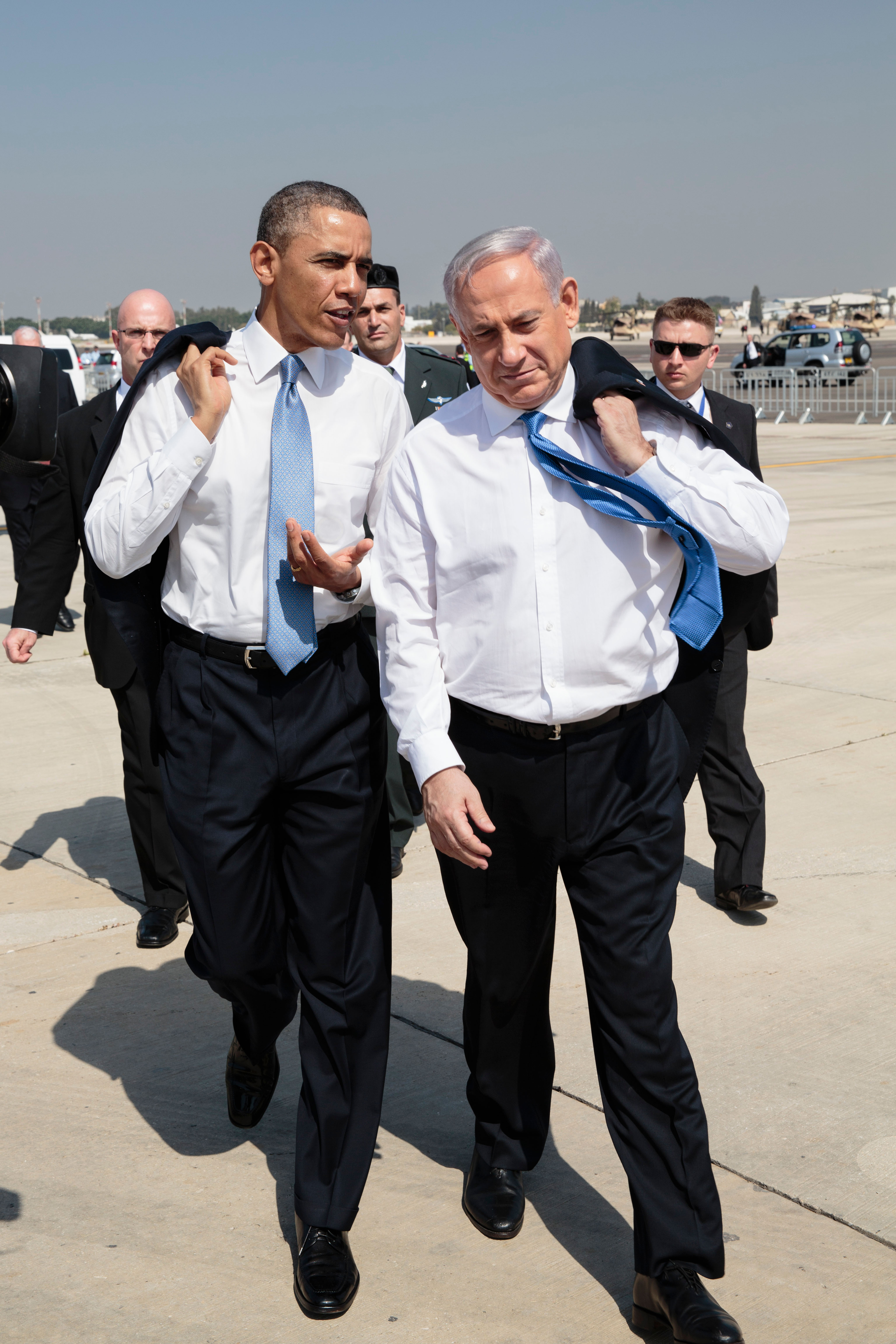
US President Barack Obama has concluded his trip to Israel after an
intensive few days in the Holy Land. Prior to this visit, Obama was perceived by a majority of the Israeli public as being
unsympathetic and unhelpful to Israel's cause in the international
community. Some believe that a US president with the Muslim
heritage that Obama has, can never be good for Israel. Expectations that Obama's visit to Israel would dramatically change his
attitude towards Israel were extremely low.
Now that he
has been and gone, and we have had the chance to view the course of the visit's
events in hindsight (albeit a very close hindsight), I believe that
Obama has almost managed to pull off the impossible. It was a very
different Obama who was in Israel from the one who has spent the past
four years taking neutral positions on matters which affect Israel.
From the moment that he stepped onto the tarmac at Ben Gurion airport
and said in Hebrew that he was happy to be back in Israel, Obama seemed not to put a foot wrong. He managed to say all
the right things to help reverse the negative sentiments towards him.
He paid tribute to Israeli technology and military strength when
inspecting the Iron Dome battery at the airport. He reiterated his
intention to continue to fund this program, despite the budget cuts in
the US. He paid tribute to Israeli fallen heroes during his visit to the
Mount Herzl cemetery, and paid his tribute to the six million at Yad
Vashem. He met with Israeli students to relate his view of the future
to them, and to listen to the things that they had to say.
On
the pressing issue of Iran, the US president was eager to reiterate the
points of common understanding rather than the differences. He said
that there was little daylight between the Israeli and US positions. In
truth, I think that he refers more to the assessment of what is
happening in Iran, rather than the view as to how to deal with it. Even
though nobody expected that there would be a great deal of public
discourse on the Iran issue, it was easy to read between the lines that
Obama and Netanyahu are not precisely on the same page where this is
concerned. The Israeli public would like to know if Obama will be prepared
to sanction military action in sufficient time to prevent the final steps being taken for the construction of an Iranian nuclear bomb. It
is also important to know whether the US commander-in-chief is prepared
to commit his forces to be in the front line, or if they will be watching
from a distance while Israeli forces are required to do the hard work. Answers to these questions were not forthcoming in
public, and we have the impression that the US answers to these questions are
probably not the ones that Israel would prefer to hear.
It was important to hear Obama say that Israel's continued strength will ensure that a Holocaust does not happen in the future. As much as it is a stark admission to make that it is not the free world and the powers of the UN that will prevent such a genocide in future, it was equally important for him to publicly recognise the central role that Israel plays in the future of Jewish survival. It was also important to hear him say that being on friendly terms with Israel is in the US national security interest. Relationships between countries are built on necessity and mutual-dependence, and not on sentiments. As much as there are some in the US who do feel some sentimental attachment towards Israel, the only thing that will ensure that the US will continue to support Israel in the future, is a national security interest that drives this friendship.
President Obama's trip to Israel was a public relations triumph that saw him win over many Israeli sceptics. He managed to convince some that America is indeed there to support Israeli, despite the many instances over the past four years when Israel felt isolated by the contrary view adopted by the Obama administration. Could it be that the next four years will be different, and that there will be more help forthcoming from Obama and his friends in support of Israel? Only time will tell. Many feel that the president's appointment of Chuck Hagel to the position of US Secretary of Defense is more reminiscent of the old Obama, rather than a new one.
Hagel is perceived to unsupportive and unsympathetic to Israel's cause. I do believe that most Israelis are prepared to give Obama the opportunity to prove his credentials again. His actions over the coming months, particularly with regard to Iran, will be highly influential in convincing people of his true allegiance.
As a parting gift, Obama brokered an apology to be delivered by Prime Minister Netanyahu to Turkish Prime Minister Erdogan over the deaths of Turkish activists in the Gaza Flotilla incident three years ago. While it is clear to see why a united Israel and Turkey serves US national security interests as a buffer against Syria, it is still unclear whether this is good for Israel's interests or not. This apology by Israel represents a major climb-down on a point of principle, while the benefits sufficient to outweigh this concession are not immediately obvious.
A good relationship with the USA is certainly in Israel's best interests. But this is not at any price. Israel wishes to see the US being prepared to speak out and take actions on matters which would benefit Israel in the international community. With the constant threats that Israel is facing, this is of importance to Israel's future surivival and that of the Jewish people. Over the course of the next year, this will manifest itself in the support that Israel receives to counter the Iranian threat. The clock is ticking.......
On Wednesday, Israel's patience finally broke down. After months, and even years of incessant rocket fire from Gaza towards communities in the south of Israel, the government finally decided that enough is enough. A pin-point assassination was launched against the military leader of Hamas, Ahmad Jabari. In addition, air force planes were sent in to target the longer-range missiles stationed in the Gaza Strip waiting to launch attacks on the densely populated areas of central Israel. Operation Pillar of Defense hit the road, and is now already into its fifth day.
It is not only that Israel has the right to defend herself and her citizens against these attacks. The imperative is a great deal stronger. The Israeli government and the Israel Defense Forces (IDF) have the responsibility that requires them to do so. Israelis and foreigners alike seem to understand this. The only criticism that is being levelled against the government by Israelis in the wake of the latest operation, is that it came too late. For now, even the most dovish of the international leaders have at least expressed a level of understanding at Israel's decision to launch this operation. It is clear that none of these leaders would tolerate one missile being fired at their civilian populations, let alone the thousands of missiles that have been fired towards Israel over the past few months. It should be clear that this is a war of necessity, and not one of choice. The aggressor is Hamas, while the IDF is taking the role of simply defending the nation that it is responsible for keeping safe, and out of harm's way. Israel has no desire to kill, hurt or injure Palestinians. Israel also has no interest to take control of the Gaza Strip. The only objective of this operation is simply to stop the rocket fire which threatens Israeli citizens on a daily basis.
Even though we have unfortunately seen this more than once or twice, even in the recent past, the reaction of the Israeli nation is astonishing. Now that I am a parent of two young soldiers in the IDF, I am able to see things from a slightly different angle than was previously the case. The more I see, the more proud I feel. Our young men and women in uniform are the most incredible asset to our country and to our people. Even though they are merely children, they understand the responsibility that falls to them in this hour of need, and they are happy to accept this burden and to defend our country. They are nervous as they make their way to their bases, knowing full well what awaits them when they get there. They don't disclose their nerves to the outside world and, when the moment comes, they do their job with pride and purpose. The State of Israel and the Jewish people owe everything we have to these young soldiers.
They are not alone. When the call went out to the reserve forces to begin their preparations and to move to their bases, the response was overwhelming. Some were called out in the middle of the night and on Shabbat. Many of them are husbands and fathers to young children. Some are entitled to defer the call to duty for justifiable reasons. Many run sole proprietor businesses. And yet, they moved to bases in a green swarm without a hesitation. Roads were congested with buses and cars as thousands of reserve soldiers travelled to their staging points. The patriotism and the incredible sense of pride and enthusiasm with which they defend their country never ceases to amaze me. I feel sure that the grandparents and great-grandparents of these soldiers, many of whom lived during the period of the Holocaust and through anti-Semitism in Middle Eastern countries and who were unable to defend themselves without a Jewish army, would feel immense pride if they had the merit to witness this activity. They are the true embodiment of modern-day heroes.
For Israel, by far the most important story of the war so far is the success of Iron Dome. Iron Dome is the anti-missile defense system which was developed entirely in Israel, by Israelis for the defence of the State of Israel. Iron Dome has the unique capability of being able to respond to extremely short-range missiles, to shoot them down before they hit their targets. The sophistication and accuracy of Iron Dome is such, that it only deploys itself when missiles are launched in the direction of populated areas. At times, there are only 15 or 20 seconds available to detect the incoming rocket, and launch an Iron Dome anti-missile missile to destroy the rocket. Over the past five days, almost 750 rockets have been fired from Gaza into Israel. Approximately one-third of these have been intercepted and shot down by Iron Dome. About 30 rockets have hit targets in Israeli populated areas. This indicates two things. Firstly, a very high proportion of the rockets from Gaza are purposefully being launched towards densely populated areas in Israel. Secondly, the Iron Dome success rate has been remarkable. There was one reported Iron Dome miss yesterday, and the missile crashed into an apartment building in Ashdod. One cannot even begin to imagine the devastation that may have been caused if Iron Dome was not in existence, and not doing the unbelievably effective job that it is doing.
For a war of this level of intensity, the casualties have been relatively few. This is no thanks to the tactics that have been adopted by Hamas. On the contrary, they have been doing all that they can to maximise the casualties. The IDF has aimed its attacks at almost 1,000 targets across the Gaza Strip. Some of these attacks have been aimed at individuals who are instrumental in orchestrating and carrying out attacks on Israeli civilians. Including the targeted assassination hits, there have been approximately 70 deaths on the Palestinian side. Considering that war inevitably has "collateral damage", particularly when missiles are being fired from residential neighbourhoods in Gaza, this is remarkably low even though each civilian killed is regrettable, and should be avoided at all costs. Israeli deaths have been limited to three people killed on Thursday in Kiryat Malachi. This is thanks to a fantastic job by Iron Dome, and excellent support by the Home Front Command which has ensured that people know how to stay out of harm's way even when the rockets do hit. It is nothing short of miraculous that we have managed to avoid further loss of life and serious injury when the Palestinians have shown such great determination in trying to create as much death, destruction and havoc as possible. This says a great deal about the type of enemy that we are fighting against. There is no hesitation to launch missiles from within their populated areas, risking the lives of their own citizens. There is no hesitation in targeting the most densely populated areas of Israel with massive missiles. Israeli citizens have much to be grateful for in terms of the fantastic protection that has been afforded us by our army, and by our anti-missile defense systems.
The name given to the operation in Hebrew is "Amud Anan" (עמוד ענן). Although this has been translated into English by the IDF as "Pillar of Defense", in reality it is a biblical term which really means "pillar of cloud". It refers particularly to the divine cloud which guided the Israelites through the desert, and shielded from those who might do them harm. It is a perfectly chosen name, as we pray that our soldiers and civilians will be guided and protected by the amud anan in the same way that it guided and protected the Israelites in the desert.
Our forces are gathering in large numbers on the borders of Gaza in anticipation of a ground invasion. The backup systems have gone into high action to make sure that everything is done behind the scenes to support this to the best of our ability. We are immensely proud of our boys and girls in uniform who are unflinching in their commitment to protect our country, and our right to exist in freedom. We wish all our soldiers Godspeed in the coming days, and it is our prayer that the operation to rid Israel of the attacks from its enemies will be effective and swift in its execution. May all our soldiers be protected in all that they do. The will and prayers of an entire nation are with them.
While half of America celebrates the results of the presidential election, many Israelis will be feeling quite depressed about the results. It would be safe to say that most of Israel was rooting for Romney (or whoever would have opposed Barack Obama). In four short years, Obama succeeded in alienating much of the Israeli public, and there is a fairly flat feeling about the prospect of Obama continuing similar Middle East policies over the next four years.
Of course, it is true that Israelis have very different interests than Americans have when viewing the presidential election. Americans are justifiably mostly concerned about economic issues, and about domestic issues such as universal health care. These are issues which are of much less interest to the average Israeli, even though the man on the street in Tel Aviv or Jerusalem still cares a great deal about who will govern from the White House. The reason for this is quite simple. The White House has historically had a substantial impact on events in the Middle East in the past, and this is likely to continue for the foreseeable future. People are clearly hoping that this influence will be exerted to help the security of the Jewish people in Israel, and also to advance the cause of peace in the Middle East. The experience of how this influence has been exerted over the past four years does not engender any feeling of confidence that the current status quo is likely to change, or that the current situation will move in a positive direction over the next four years. Even though life for Jews in Israel has been far worse in the past, people continue to live in hope that it will be a lot better with the help and influence of the White House in the future.
When Barack Obama came to power four years ago, there was a great deal of scepticism in Israel about how a president with such close family links to Islam, could be good for the Jews in Israel. The euphoria and excitement that swept through the USA, however, convinced many to give Obama the benefit of the doubt and the chance to prove himself one way or the other. Now, four years later, many believe that he has proved himself, and that their initial scepticism was fully justified. In President Obama's first presidential visit to the Middle East, he made a point of stopping in Egypt to lay out his policy for the region. Since then, he has not stepped foot in Israel nor shown himself to be particularly engaged in Middle Eastern issues. He has waged a battle against policies that Prime Minister Netanyahu has pursued to secure the safety of Israel as a Jewish state, and has allowed Iran to reach the verge of producing a nuclear weapon by not being prepared to support the required military action to remove this threat. Even though not all Israelis are supporters of Netanyahu and his policies, Obama's opposition to these policies have been viewed as unhelpful to Israel's cause and her security. Obama has not been sufficiently willing to speak out against the continued missile fire under which so many communities in the south of Israel have been forced to live under, and to make clear to the perpetrators of these attacks how unacceptable this situation is.
Obama's predecessor, George W. Bush was the one who coined the phrase "if they are not with us, they are against us", in the context of the war on terror following the 9/11 attacks. Israel has been fighting a war on terror for much longer than this, and understands very well the fact that there can be no "abstentions" in this important issue. Those who do not strongly support the fight and help to take steps to assist in eradicating terror, effectively enable it by their lack of action. Those who do not actively work to eradicate the nuclear threat from Iran, are those who enable it. Responsibility for this extremely worrying situation will fall to all of those who were happy to be spectators while it was clear that a nuclear weapon was being constructed by a rogue regime with full knowledge and in full sight of the world. The UN was set up in the wake of the Second World War with a brief of preventing conflicts and avoid future wars. This type of activity is surely exactly what the UN has been set up to act against. Even though the clear understanding is that Iran's nuclear program has the worst of intentions, it is being allowed by the world, and by Barack Obama in particular, to proceed almost unimpeded.
With this background, it is hardly surprising that Obama doesn't have a place in the hearts of many Israelis. There are those who claim that the Obama administration has done more than any other US administration to provide arms and funding for weapons to Israel. It is also clear that a strong US economy is good for Israel's economy in many respects. So, action taken by Obama to strengthen the US economy is good and extremely important for Israel's continued well-being. But these are indirect, and often invisible to the Israeli eye. The most public and obvious matters, being the Iran nuclear issue and the continued conflict with the Palestinians, particularly Hamas in Gaza, are always going to be the issues that grab the headlines. These are also the things that will capture the attention of the Israeli public, and by which Obama's success and failure with regard to his policy on Israel will be measured.
What remains unclear, is the extent to which the personal lack of agreement between Netanyahu and Obama may affect Obama's Israel policy. Netanyahu is reported to have got on the wrong side of Obama on more than one previous occasion, and was extremely clear in his support for Romney in the presidential election campaign. Indications from the White House are, that this will not influence Obama's attitude towards Israel, but this remains to be seen. Despite the lurch towards democracy by some Middle Eastern countries as a result of the Arab Spring, Israel is still the only truly democratic country in the Middle East that the US can truly rely upon as an ally. Their partnership in the war on terror is also a critical for both the US and Israel.
Perhaps its a good thing that Israelis have a very low expectation of the support that Israel will get from the new Obama administration. At least, this means that the chances for disappointment are much lower than was the case four years ago when he took office for the first time. Of course, we would all like to be pleasantly surprised, but there is no expectation that this will be the case. The real fear is that we will wake up one day during the course of the next few years, and find that Iran has a nuclear bomb. This will change the shape of the Middle East, and of the world. It is our hope that Obama will at least take action to prevent this nightmare becoming reality. Even though Israel is known for acting independently where required, and
is not bound to US agreement or support on these matters in any way,
the problem is a global one and not one which is only a threat to
Israel. While Israel is clearly one of the main targets of the Iranian
aggression, this issue should not be left entirely to Israel to take
care of. The US and other countries around the world have a clear share
of responsibility. The time to act is now.
The debate about whether Israel should or should not attack Iran's nuclear facilities has broken out into the public arena in the strangest possible way. Over last weekend, the press reported a disagreement between the prime minister and the president over whether attacking Iran at this time is the correct course of action.
Indications are that Prime Minister Netanyahu is one of two lone voices calling for Israel to take military action to stop Iran building a nuclear bomb. Ironically, his only supporter is Defense Minister Ehud Barak. This is ironic due to the completely opposite ends of the political spectrum that these two politicians come from. At the moment, however, they are bedfellows in calling for the IDF to act in the near future to strike at Iran's nuclear facilities. President Shimon Peres is advocating a completely different approach. He would prefer to allow America to take the lead, and is currently trusting President Barack Obama's approach in waiting to see whether the sanctions will bring the desired result. Ultimately, Peres is opposed to Israel acting unilaterally against Iran. Peres, always a dove in his approach over many years, was also opposed to the strike that Israel carried out on the Iraqi nuclear reactor in1981. We know how crucial that operation ultimately proved to be.
Peres is not alone in Israel in his opposition to an attack on Iran. From recent press reports, it is understood that the military leadership in the IDF is also opposed to such an attack. This does not mean that they are not prepared to carry out such an attack, or that they would not do so if the government decided that this is the correct approach. It is just that military leaders, in their individual and professional capacities, believe that this would not be the best approach. In addition to this, it is reported from surveys undertaken, that most Israelis also do not support military action. The Israeli public seems concerned about the safety of the home front in the event of an attack on Iran. It is well understood that Iran will almost certainly take retaliatory action in the event that there are strikes on her nuclear facilities. This puts the Israeli public at risk, as Iran's Shihab missiles are armed and ready to fire towards Israeli territory. Clearly, this nervousness is influencing the view of the general public such that they are opposed to attacking Iran, even if this is by a slim majority. Some Israelis feel so strongly that we should not be attacking Iran, that an online petition has been launched imploring Israeli air force pilots to reject orders to strike Iran if called upon to do so. While the prospect of Israel's pilots not carrying out orders is something we could not contemplate, I guess that it does show the strength of the feelings.
The fact that this entire debate is being conducted via the press and in the public, is not positive. While democratic principles are important in our society, and especially maintaining the right to freedom of speech, I believe that certain discussions are much better held out of the public domain. This particularly refers to matters of national security, which this clearly is. It may be true that President Peres should not be interfering in government business, and that he has previously made incorrect calls on whether the IDF should attack targets or not. I feel, however, that these points should be made directly to him rather via articles in the weekend newspapers. My choosing to use the media to canvass internal support for their respective positions, the prime minister and the president may have forgotten that our enemies (including Iran) have intelligence officers who are scrutinising every article that is published. What sort of message are we sending to them? I believe that sending a message which shows a lack of unity in our government potentially weakens our situation in the eyes of the Iranians. If we cannot even agree on the fundamental issue of whether we should be taking military action to protect Israeli sovereignty for ourselves and future generations, how are we expected to agree on more substantial matters? Iran has reacted as we would expect, by making fun of our internal squabble, and by continuing at full steam to develop a nuclear weapon.
It is a good thing that we have an environment which supports internal debates and disagreements, and that we have the freedom to be able to express ourselves openly in the national media. Better decisions are often made when there is a minority that disagrees, and that is strong enough to bring the majority to consider their view before the final decision is made. Where issues relating to how we deal with Iran are concerned, the debate should be held in the well-secured hallowed halls of government and the IDF, and not in the press. Although we are very used to playing out party political agreements in the media, there are times when this approach is not appropriate. This is clearly one of those times, and the national security of the country must surely take preference over all other matters.
Over the past few weeks, we have been occupied with looking back. We celebrated the exodus from Egypt and the miracle of the crossing of the Red Sea. We stood in silence to commemorate the 6 million killed at the hands of the Nazis, and we stood in silence to commemorate the 23,000 who have given their lives for the modern State of Israel. We celebrated 64 years of independence of the State of Israel, and considered the remarkable and miraculous events that allowed us to reach this point in time. Come to think about it, Jews seem to spend a disproportionate amount of time looking back and commemorating the past. I decided to pause for a moment, and try to imagine what things could look like in 50 years' time. Not only to imagine this, but perhaps also to dream about how things could be. I have tried to dream about a world where my children are grandparents, and to try to put Israel into that context.
I think that there is one major piece of the puzzle which is missing in current-day Israel, and which most Israelis yearn for in the future. This is the missing peace and, with it, the recognition of the right of Israel to exist as a Jewish state among the nations. A state of peace and security would bring so many advantages to the State of Israel, and could change the nature of this small country in a most dramatic way. Most importantly, it would save hundreds, if not thousands of lives a year. Not only the lives of soldiers would be saved, but also the lives of innocent women and children would be spared if we could create a situation where Qassam and Grad missiles are not being fired into civilian neighbourhoods, and where suicide bombers are not trying to detonate their explosives in crowded restaurants, coffee shops and buses. It would also spare valuable government money that could be spent on education and infrastructure instead of the acquisition of military hardware and ammunition. A state of peace would also free up our most valuable resource, the 18 to 21 year-olds, who would be free to make their contribution to Israel's economy rather than be forced to serve in the military to protect their country from constant attack.
A peace arrangement would also create a completely different dynamic with Israel's neighbours. I can imagine a situation where Israeli citizens could spend their holidays in Beirut, which is only a few hours' drive from the central part of Israel. Perhaps Syrian tourists would be a major source of foreign revenue for Israel's hotels and restaurants. I can dream about Israeli irrigation technology being used to make deserts in Jordan and Syria green.
In my dream world, there is harmony and co-existence between religious and secular communities. Somehow, the religious will find a way to make their contribution to Israeli society, as a result of which the secular communities are able to respect the religious communities and their way of life. This, in turn, paves the way for understanding and exchange of ideas between the two communities.
In my imaginary world, members of the Knesset are there to serve the wider community rather than primarily their own interests. While being paid a reasonable salary, they will do all that they can to save the country unnecessary expense. Their conduct on the floor of the Knesset will be exemplary, and send a positive message to the younger generation about the way in which people should conduct themselves in public.
In the new and improved Israel, customer service will be of primary importance when dealing with companies and shops, and hotel, restaurant and coffee shop staff will give the utmost respect to their patrons. This is a world where drivers will give way to other drivers wishing to enter into the flow of traffic, and hooters will only be sounded when danger exists on the road. Cellphones will be silenced in elevators and other public places, and people will not resort to screaming at others in order to get their own way.
I guess that my wish list can go on forever, but it is important to dream in order to somehow improve our society. It is critical for us to be able to continuously develop and progress with the next generation, who seem to be hungrier for information and technology than ever before.
When I think about it, the "negative" things mentioned above also have their positive sides. There is no doubt that our young men and women who are forced to serve in the military, learn skills and behaviours which help them in the future. The responsibility of protecting Israel's borders, and survival skills that they learn with this are great tools in their future lives. The tenacity and attitude of never giving up are certainly traits that are instilled in our children during their military service. In Israeli living, sometimes even shouting at people represents a form of communication that is preferable to not talking at all. The madness of Israeli society forces people to adapt themselves in ways which lends itself to the survival of a people and a nation. Perhaps a more orderly society would have less survival skills.
When I come to think about things, I would certainly be happier for my family to live our lives in peace and security. I would also be happier to have greater understanding and respect between different parts of Israeli society. This would, however, undoubtedly come at a price which I am unable to identify or quantify now. Perhaps this price would be too high for me? Maybe it is better to give thanks for what we have, and to do all we can to protect it. This must be part of the logic of spending so much time looking back. We are really able to value and appreciate what we have now. This is more than our grandparents could have dreamt of when they had their dreams. Am Yisrael Chai.
Last week we celebrated the Jewish festival of Purim. It is a classic Jewish festival which involves bad guys who wanted to murder the Jews. Somehow, we managed to survive against the odds and a festival was created to celebrate this fact with the addition of delicious food. As a child growing up, I remember thinking how unrealistic these stories sounded. Could it really have been the case that the evil Haman was trying to influence the king of Persia to annihilate the Jews? What reason could he have had for wishing to do this? After all, most of the Jews that I knew were decent upstanding citizens and quite nice people as well. So why would somebody have wanted to kill them?
For those of my parents' and grandparents' generation, this story would have been a very real one. They were unfortunate enough to have witnessed the horrors of the Holocaust. This was a repeat of the Purim story except, in this story, millions of innocent people were slaughtered. Only now, 60 years later, can the State of Israel boast a population that equals the number that were murdered during the most barbaric human-cleansing exercise in history. Despite the fact that the Jews have survived and made a strong comeback, we have not quite decided upon a festival with delicious food to celebrate Hitler's failure. Perhaps we will have one in the future. This should, however, not allow our eyes to be taken off the ball. The Haggadah that we read on Pesach tells us that, "In each and every generation they rise up against us to destroy us. And
The Holy One, blessed be He, rescues us from their hands." We are also instructed to remember how Amalek attacked the Israelites soon after the crossing of the Red Sea following the exodus from Egypt. Each year, we read the portion known as "Zachor" (remember) on the Shabbat preceding Purim to be reminded of the evil of Amalek, who is traditionally believed to be a descendant of the evil Haman from the Purim story. The need to read this each year and remember, arises from the fact that we are required to be vigilant to prevent it from happening again. Now, in 2012, there are strong indications that it is happening again.
The irony of the Purim story cannot be lost on us as we hurtle headlong into an inevitable conflict with Iran. The Purim story took place in Persia, and we now return to the scene of the crime approximately 2,400 years later to confront Ahmadinejad, the modern-day Iranian Haman. As far as I can make out, the Jews and Israel have caused no damage nor present any threat to Iran or Ahmadinejad. Despite this fact, Ahmadinejad has made Israel-bashing the cornerstone of his foreign policy platform. He has not missed an opportunity to threaten Israel or to predict her demise whenever he has had the ears and eyes of the world trained on him. He has been good to his word in practice as well, channelling millions of dollars into terror organisations like Hezbollah and Hamas which have indiscriminately attacked Jewish and Israeli targets. When adding his duplicitous dealings with the Iranian nuclear program, it is clear that this situation cannot be allowed to continue unchecked. This is the reincarnation of Amalek, of Haman and of Hitler. This is exactly the sort of person that we are warned against.
Experience that the Jewish people have accumulated over the years, shows that they cannot rely on others to do the right thing to protect them. Whether it was the failure to bomb Auschwitz, or the criticism over the destruction of nuclear reactors in Iraq and Syria, the international community has shown itself unwilling or unable to take action at the required moment in order to prevent a disaster. Viewing things with the benefit of hindsight is too late, and the lessons are somehow never learned. The Jewish nation have been forced to ensure that they can take care of themselves.
Fortunately, one important thing has changed since the days of Haman and Hitler. We now have a Jewish army. This is probably the most substantial element of the equation in the current scenario with Ahmadinejad. The fact that thousands of Iranians missiles are trained on Israel, and waiting for the first strike on Iran, does not intimidate the Israeli army. This is simply another danger to be considered, alongside the others, when taking on the significant threat that Iran poses under Ahmadinejad's leadership. The fight will be ugly and there will be casualties, but there is no choice for the Israeli army in the imperative to put a stop to this threat as soon as possible.
For parents like myself whose children are the soldiers who will be called upon to fight this fight, the prospects are chilling. We would certainly prefer not to be in this situation, and we would not choose for our children to be placed in harm's way as they battle to protect Israel and the Jewish people. Ultimately, however, we realise the importance of having an army like the IDF, and we are forced to stand helplessly by as our children willingly fulfil their obligation to protect their land and their people. This is the only way that we can be assured that the likes of Haman, Hitler and Ahmadinejad will never be allowed to carry out their evil plans to destroy our state and our nation. These soldiers, our children, are the heroes of this part of the story of survival.
As the situation escalates and the prospects of an armed conflict with Iran grow with each passing day, it is our prayer that our army and our children will succeed in doing their job safely and securely. We pray that they will return to their families, sound in body and mind, having completed their task that they have been called upon to do. We stand behind them, fearful for their well-being, but immensely proud of their sacrifice. May Hashem protect them in all that they do.
Prime Minister Benjamin Netanyahu has travelled to the United States to address
the annual conference of the American Israel Public Affairs Committee
(AIPAC). This is probably the largest and highest profile event on the US
Jewish calendar, and it is no surprise that Bibi makes a special point of
attending each year. Continued support, both financially and politically,
of the American Jews is key to Bibi. One of the other keynote speakers at
the event will be US President Barack Obama. It is handy that the
conference is being held in Washington DC this year, only a hop and a skip from
the White House. In this, an election year for Obama, he will not be
missing out on the opportunity to pander to the highly influential “Jewish
vote”.
On the
fringes of the AIPAC conference, Obama and Netanyahu have scheduled a
meeting. This will be the 9th time that the two leaders have
met since Obama came to office almost four years ago, despite the fact that
Obama has yet to pay a visit to Israel during this time. Even though this
meeting is taking place as a secondary event around the AIPAC conference, the
importance of this meeting should not be underestimated. There is
really only one topic on the agenda, and this is the huge issue of Iran and its
nuclear activities. Netanyahu has decided to go to the USA, and enter
into a gamble with Obama.
Although
both the USA and Israel agree that the Iranian nuclear program is building the
capability of producing a bomb, it seems also to be agreed that a bomb has yet
to be constructed. This fact appears to make the issue less pressing for
the US president and his men. The Israeli team is far less relaxed about
this situation and, for them, the fact that Iran is able to build a bomb is the
equivalent of Iran having a bomb. This is why Netanyahu has been
pressing the international community for so long to take action against
Ahmadinejad, and the dangers that are presented by the Iranian nuclear
program. Until now, the international community has been prepared only to
impose economic sanctions on Iran and not take a stronger military stand as
Netanyahu would have preferred. While the sanctions do seem to be biting
into the Iranian economy, the construction of the nuclear program appears to
proceed without slowing down at all.
The last
time this situation presented itself was less than 5 short years ago when the issue
of the Syrian nuclear reactor came up for discussion between then Prime
Minister Olmert and former President George W. Bush. Acting on strong
advice from his Secretary of State Condoleezza Rice, Bush decided that the
right approach would be to make a public announcement about construction of a
nuclear reactor in Syria, and harness the support of the international
community to impose sanctions to make Syria toe the line. In his book,
Bush reveals that Olmert neither sought nor received US approval to bomb the
Syrian reactor. Instead, he instructed the Israeli Air Force to destroy
the reactor after reacting to Bush’s recommendation by saying that he would be
forced to do what is in the best interests of the security of the State of
Israel. With the benefit of hindsight, we have a few more pieces of
information on this incident which may be guiding Netanyahu in the way that he
wishes to deal with Ahmadinejad. Firstly, we know that Assad was either
unable or unwilling to respond militarily to this strike on his sovereign
territory, which resulted in Olmert’s gamble paying off handsomely. As
such, the regional conflagration that was predicted would arise as a result of
an Israeli strike never materialized. Thanks to the current uprising in Syria,
we now also know how Assad responds to pressure from the international
community – with contempt. Without the bold decision and unilateral
action taken by Olmert 5 years ago, the international community may be viewing
the uprising in Syria today in a completely different way.
Netanyahu
is hoping to convince Obama to publicly state that the US is willing to
consider the possibility of taking military action against Iran. Although
other US representatives, most notably military senior brass, have made
statements along these lines, it has never come from the president
himself. Netanyahu regards a statement of preparedness to act militarily
as a significant position from the US administration even if the Americans are
not the ones who ultimately strike at Iran. It will show that the
military force is justified in dealing with this problem in the event that
other actions are not effective, and it will also indicate a willingness on the
part of the US administration to commit forces to the cause possibly as a back-up
to Israel. Netanyahu will be gambling on the fact that the AIPAC audience
will want to hear this from Obama, and that Obama will be under huge election
pressure to tell AIPAC what they wish to hear. Even if the statement is
made in their White House meeting which is due after Obama’s address to AIPAC,
it will certainly be enough for Netanyahu.
The real
problem for Netanyahu is that he is also in the midst of gearing up for an
election of his own. Israel will go to the polls within the next 12
months to choose a new government, and Netanyahu will wish to have the Iran
problem safely behind him by then. Any success that he achieves on this
front will almost certainly guarantee him re-election. Netanyahu would,
of course, prefer for the US military to take care of the problem. This
seems highly unlikely as Obama will be looking for every excuse not to commit
his military to action in Iran during the lead-up to the US election.
Behind all
of this is Iranian President Ahmadinejad, who is playing things as cool as a
cucumber. His authority in Iran may be weakened as a result of this
weekend’s elections which showed a substantial swing away from him. He
may be at loggerheads with Supreme Leader Khameini, and he may be persona non
grata in much of the international community. None of this, however,
prevents him from bashing Israel at every opportunity in a way that is
reminiscent of the public shows of anti-Semitism that preceded the
Holocaust. It also does not prevent him from continuing to build his
nuclear capability, causing further instability to an already highly volatile
region.
Netanyahu
is often presented as being prepared to take decisions which fly in the face of
the international community. His ability to act boldly and smartly will
be severely tested over the coming months as he battles with the correct course
of action to bring the Iranian threat to a sensible conclusion. He needs
to be able to achieve this without bringing undue risk or harm to the citizens
of Israel. This will be a huge challenge when we know that the Iranian
military has hundreds of Shihab missiles targeted at Israel, and would not
hesitate to use them if the situation demanded it. Netanyahu’s first step
in achieving this is to bring off his gamble with Obama this week.
All the
time that the Iranian saga drags on, oil prices are bound to increase
exponentially. Neither Obama nor Netanyahu will get any thanks for that,
which makes their window of opportunity for action much tighter.
Netanyahu’s political and diplomatic skills will be tested to their maximum over
the next few months as he makes critical decisions as to each action to be
taken against Iran. The stakes are high. Success could elevate him
to the upper echelons of international statesmanship. Failure could risk the
very existence of the State of Israel.
Events of last week contain a clear reminder that Israelis need to be
vigilant wherever they are around the world. Three attacks in three
different countries within two days have made clear that those who wish
to attack Israel will stop at nothing in their attempts to do so. In
these particular attacks, poor execution and good fortune meant that
there was no loss of life and that injuries were kept to a minimum.
Israel knows only too well that this is not always the case, and that
the next attacks may be much more serious.
An attempted attack in the Georgian capital, Tbilisi, on Sunday was
the first of last week’s critical events. A bomb was attached to the
car of a Georgian employee of the Israeli embassy, and was discovered by
coincidence when the employee heard a strange noise on his car after
dropping his children at kindergarten. After he stopped the car to
investigate the unusual sound, the bomb was noticed attached to the
car. The next incident in New Delhi on the same day was more serious
because it caused moderate injuries to the wife of an Israeli official
at the embassy. In this case, a “drive-by” bomber on a motorcycle
attached the device to the car as the woman and her Indian driver were
driving to collect children from school. The woman and the driver were
both injured in the attack, as were two passers-by who were caught in
the attack. In the third incident, which took place in the Thai capital
Bangkok, a comedy of errors saw two Iranians detained in the city after
detonating explosives while still in their possession. An Iranian man
blew off both his legs when a device he was carrying exploded after he
was confronted by a police office. The roof of a rented house was blown
off in Bangkok when the explosives were detonated by accident. Thai
police have confirmed that the intended targets of the attack were
Israeli diplomatic personnel, and that the explosives in Bangkok were
identical to those found in Tbilisi and New Delhi.
These attacks bring home a number of important lessons for Israelis
and the Israeli government, as well as for bystanders around the world.
It is clear that Iran is intent upon carrying out its threats to try to
destroy Israel or, at least, to try to inflict major damage on her.
Iranian President Ahmadinejad is being allowed to get away with his
incitement, including statements calling for the destruction of Israel
in any and every public forum, including the hallowed halls of the
United Nations. On Thursday last week, only four days after the
attempts by Iranians to attack Israeli diplomatic staff in foreign
countries, Ahmadinejad had the audacity to turn up at an anti-terrorism
conference in Pakistan. The international community has no idea how to
stand up to the behaviour of this thug, and his actions are being
tolerated while leaders continue to prevaricate in the halls of power
around the world. Each time he is allowed to get away with his actions,
he is emboldened for the next set of actions in the knowledge that the
world does not have the backbone to stand up to anything that he does.
There were a few positive hidden positive messages for Israel in the
actions of last week. Until now, Ahmadinejad has not found a way to
attack Israel directly. He may have tried, although we will never know
if there have been attempts that have failed. The attacks last week
show that he is directing his efforts against Israeli targets abroad,
where the security may be of a lower or inferior level. He has been
unable to break through the security cordon around Israel itself. The
attacks last week showed an element of desperation, demonstrated by the
lack of professionalism in all of the attacks. The fact that not one of
the three attacks achieved its true objective, and that Iranians were
blowing themselves up in Bangkok, demonstrate that plans are being
implemented before they are fully ready, and in a very haphazard
fashion. Frustration and pressure were evident in the way in which the
attacks were executed.
This is not an indication for Israel to sit back and relax. On the
contrary, the plans to stop the development of the Iranian nuclear
missile need to be executed as soon as possible. Despite the fact that
the sanctions being imposed on Iran are taking their economic toll,
indications are clear that these actions will not stop Iran from
constructing its nuclear bomb. An economically weak Iran with a nuclear
missile is no better than an economically strong Iran with the same
missile. The world is looking to Israel, in many cases begrudgingly and
critically, to take care of this problem. No other nation seems to
have the willingness and the ability to deal with this issue. It was
Israel that saved the world from an Iraqi nuclear weapon (despite
enduring heavy criticism for its actions against the Iraqi nuclear
reactor) and a Syrian nuclear weapon. It seems quite likely that it
will be Israel that will take action against the Iranian threat as well.
Organisations like Hezbollah, Hamas and countries like Iran will
continue to pose a threat to Israelis, and Israeli diplomatic missions
abroad. This simply causes Israel to redouble her efforts to protect
these missions to ensure that Israeli diplomats can continue to take up
their rightful places in the diplomatic community. Despite having
suffered attacks on diplomatic missions in London, Buenos Aires and
other locations, some of which took precious lives, Israel continues to
insist on being represented as a country among the nations.
I continue to believe that 2012 will be the year in which the Iranian
nuclear issue is resolved, one way or the other. If Iran succeeds in
getting to the end of the year with its full nuclear capabilities
intact, I will concede that Iran has won this battle. I expect that
things will not be quite so easy, and that Israel will be doing all that
she can to ensure that this does not happen. The world is looking on
expecting to see Israeli warplanes bombing Bushehr, Natanz and other
Iranian nuclear facilities from the air. I find this scenario very
unlikely as it presents too much of a threat to regional stability.
Instead, I believe that the Israelis are hatching an unconventional plan
that the Iranians may not even recognise until it is too late.
Somehow, I have to believe that this matter will be taken care of
during the course of this year in order to feel that Israel’s security
continues to be assured. The Israeli government and army understand
this too. Instead of waiting to hear the drones of fighter-plane
engines in carrying out this task, I am expecting the completely
unexpected.
For the past fourteen years, we knew that this day would eventually come. Somehow, I did not imagine that it would be like this. When we decided all those years ago to make our home in Israel, you were only 6 years old. The notion of you becoming a soldier in the Israel Defense Force (IDF) seemed so far removed from the reality of our everyday lives. We were living in the post-Oslo period, which gave us all a false sense of security that peace was about to break out in the Middle East. The advantages of moving our lives to the Jewish homeland, seemed to far outweigh the disadvantages. This was true even when we considered the fact that you would be obliged to serve in the Jewish army. Now that your draft date has arrived, I find myself revisiting those decisions taken on your behalf, and the events that have occurred since then.
Over the years, we have discovered that the hopes that we all had for peace, were simply a false facade for the duplicitous dealings of Palestinian leader Yasser Arafat. We have been forced to endure wars, terror attacks and continued threats to destroy Israel and the Jewish people. We have witnessed how any young man or woman in the IDF uniform has become a target for attack or kidnap by our enemies. All of these things contribute to making your service in the IDF a much more dangerous and risky prospect than was previously the case. In a perverse sort of way, it is also these events that make your service of greater value and importance to Israel and the Jewish people than before.
During the course of your schooling in Israel, you have learned about the numerous attempts to annihilate the Jewish people. You have visited Auschwitz and other death camps in Poland where millions of Jews were put to death, only because they were Jews. You understand very well, the context of the service that you are about to render in the IDF. You know that 6 million Jews would not have lost their lives in the Holocaust if a Jewish army had existed at that time. You also know that new Hitlers arise in every generation. Given the chance, Ahmadinejad, Nasrallah and others would follow in Hitler's footsteps to try to wipe the Jews off the earth, even in our day and age. There is only one thing that stops them from doing so, and this is the IDF. The IDF not only ensures the safety and survival of Israel and her citizens, it also gives freedom to Jews around the world to exist as Jews in relative safety, freedom and security. As a soldier in the IDF, you will continue to protect all Jews around the world against the numerous enemies that seek to destroy the Jews. You understand the importance of agreeing to serve in order to ensure that the IDF continues to be a strong force and protector of the Jewish people, even in the future.
Even though the big picture is clear and a great motivating force, it does not necessarily make the day-to-day realities of military life any easier. You feel unsure of what the future holds for you, and are not clear what your task in the IDF will be or where you will serve. We feel nervous with you and for you, as you contemplate this great unknown venture ahead of you. We all know that the army cannot necessarily accommodate every individual's needs and requests, and place each person in the position that is best suited to them personally. The army's needs come first, and you will be forced to undertake a role which is not one that you would have chosen for yourself. In spite of all of this, we have watched you approach your military service with tremendous maturity and a positive attitude. You have done all that you can to guarantee that your rights are protected, and to try to find your way to a role that will keep you interested and well-utilised. We have equally seen your willingness to do whatever is needed, even where this does not necessarily match what you want.
Today, as I watch these events before my eyes, and contemplate the next three years in which you will be a soldier in the IDF, I feel a tremendous pride. I am enormously proud of the fact that you and your friends are willing to sacrifice three years of your life to serve your country and your people. At a time when only one in two eligible Israelis are actually being drafted, every man and woman counts for a great deal. You have stood up and been counted. I am extremely proud of the fact that you are determined to undertake a role that will keep you challenged and allow you to make a real contribution. Many have decided that they prefer to lay low and do as little as possible to allow the three years to pass in any uneventful way. This is not for you. You are determined to have a job that will keep you interested, and will allow you to make some use of the tremendous talents and skills that you have. I am proud of the fact that you understand the necessity for you to play your role, at a time when many others are finding ways to escape this.
You have benefited over the past fourteen years from all the good things that Israeli society has to offer its children. You have had the opportunity to walk the streets in relative safety whenever you wish, and to learn the independence that is typical of Israeli youth. You have explored all corners of Israel, and connected to the Jewish homeland that was inhabited by your forefathers. You have celebrated Jewish festivals and Israeli national holidays amongst your fellow Jews. You have explored and developed your technical skills in an environment that is amongst the most technologically advanced in the world. You have represented your country in an international competition, bringing great credit to your country, city, school and family. You have volunteered to help underprivileged youth, and experienced the difficulties that so many people in Israel are suffering. And now you are ready to take this further in making a commitment to safeguard your country and your people.
We wish you success and happiness during the time that you will serve. We hope that you will find a way to make a meaningful contribution, and that will allow you to develop yourself in the process. We pray for your health and safety, in mind and in body, and for the safety of those serving alongside you. No matter where you are or what you are doing, we will be supporting you all the way, and eagerly awaiting the hours that you will be allowed to spend with us at home. May Hashem guide and protect you in all that you do, wherever you may be. I am extremely proud to be your father.
The mood across Israel was changed in a dramatic fashion on Tuesday last week when the news was made public during the early evening that an agreement had been reached with Hamas for the return of the kidnapped Israeli soldier Gilad Shalit. After 5 long years during which Hamas had allowed no access to him at all, not even by human rights organisations like the International Committee of the Red Cross, it seems as though Gilad Shalit will finally be on his way home.
Of course, the agreement that was finally struck by David Meidan and the Israeli negotiating team comes at a high cost to Israel. The objective behind the kidnapping in the first instance, was to extract a high price from Israel by insisting that prisoners in Israeli jails be released in exchange for any agreement to release Shalit. This is exactly what they have achieved, even though it has taken more than 5 long years to finally reach the agreement. Israel will release 1,027 Palestinian prisoners from Israeli jails in order to secure the freedom of one IDF soldier. Many of these prisoners are serving life sentences, and have "blood on their hands" for murdering innocent Israeli civilians. Among those due for release are those who planned the Sbarro and Moment restaurant bombings in Jerusalem, those who planned the Seder night bombing at the Park Hotel in Netanya and those who planned the kidnap of Gilad Shalit. There are also many others who were involved in numerous bus bombings, and others who have committed similar heinous crimes. Along with the euphoria of knowing that Gilad will finally be returned to his parents and to the people of Israel, have come searching questions about the terms of his release.
As we sat in our Sukkah on Wednesday evening celebrating the festival of Sukkot (Tabernacles), the conversation inevitably turned to the deal that was struck for Gilad's release. There were some sitting around the table who felt that the price was too high, and that the deal should never have been done on these terms. All the old concerns and issues were raised to justify why this deal endangers Israel's security going forward. One friend said that he thought that the prisoner exchange shows a weakness in Israeli society that we are prepared to contemplate a deal that will return only one of our soldiers for more than a thousand of theirs. It is his view that our one soldier should effectively be sacrificed in order to protect the security of Israel going forward. The welfare of one soldier should not be allowed to destabilise the security of the entire State of Israel by placing convicted murderers and terrorists back on the streets. This friend has a daughter currently serving her two years in the IDF. When I asked how he would respond if the soldier in question was Heaven forbid his own daughter, he brought me the story of Joseph Stalin who refused to accept a deal with the Germans for a prisoner exchange to return his own son, Yacov, from captivity whilst a soldier in the Red army. Yacov ultimately died while being held by the Germans. My friend's point is that the state is larger than any of its individuals, and that the government should behave accordingly.
As expected, the prisoner exchange has come under a great deal of resistance from the families of the victims who were maimed and murdered at the hands of the prisoners due for release. Many have already made it clear how insulted they feel by the release of the murderers of their loved ones. We can all understand their pain, and the fact that they feel that this insults the memories of their dearly departed. The government went out of its way to arrest and imprison the perpetrators of these horrible attacks. Now, it seems that all is being thrown away by the prisoner exchange deal. This view would be entirely valid if our circumstances were normal. Unfortunately, like so many other things in Israel and the Middle East, things are never straightforward.
My view is that we should do all that we can to respect the memories of those who have fallen in the line of duty protecting their homeland, and those whose lives have been taken by those seeking to destroy our country and our people. While doing so, however, we are also forced to confront the new realities and circumstances that arise each day. I think that the strength of our society lies in the fact that we do value each individual as if he is the only one. While I agree that the price seems unbalanced when we exchange 1 for more than 1,000, the message that it sends to our serving soldiers and their families can only help to strengthen the resolve and the strength of our military, and of our society as a whole. Our security forces can operate in the knowledge that they are more than simply a number, and that the government will do all that is required to protect them, even under the most extreme situation. The argument that, through this prisoner exchange, the government is releasing murderers and terrorists to kill and maim again is valid. The security services have said that they can take care of this situation, and I believe that there are so many potential terrorists and murderers in the West Bank and Gaza, that the release of this motley crew does not significantly increase the risk. And while the exchange deal does reinforce what the terrorists already knew when they kidnapped Gilad, which is that Israel values each of its individual soldiers and will be prepared to strike an unbalanced prisoner exchange deal to release him, I don't believe that this dramatically increases the risk of other soldiers being kidnapped in the future. This is because the risk has been at the highest level for many years, and the fact that 5 years have passed without another soldier being kidnapped is not because they have not tried. Regular attempts have been made to kidnap soldiers, and we should expect that such attempts will continue.
Israel is forced to exist under extreme and severe circumstances. The risk of a terror or missile attack against her civilians is ever-present. The act of rounding up those who have brought death and destruction on Israelis in the past is more about justice than it is about reducing the risk levels. It is clear that removing such individuals from a situation where they can repeat their crimes does give some increased level of security. I am not convinced, however, that arresting these individuals, even when related to 1,000 people, serves to dramatically improve Israel's security. Apparently the Shin Bet security agency agrees with this assessment, and has given its approval to the prisoner exchange. The Shin Bet chief Yoram Cohen described the prisoner exchange deal as "a bad deal, but the only one available to us". This sums it up for many in Israel. We would prefer not to have to release criminals back onto the street, but the alternative of not doing so is worse.
The Israeli government last night released the names of the first group of prisoners set for release. This is to allow the 48 hour period that the law requires for any legal challenges to the prisoner exchange before it goes ahead. Objections to the exchange have already been filed with the High Court of Justice, and the court will hear these petitions during the course of today. Assuming that the court gives its approval to the exchange, it is expected that Gilad Shalit will return to Israel during the course of Tuesday. For one family and for many Israelis, this will be a moment of great joy and the ultimate fulfilment of the government's responsibility to each of its citizens. For many families, it will reopen painful wounds and memories. Our joy is tempered by their pain, and the sacrifice that these fmailies have made will never be ignored or forgotten. Unfortunately, nothing can return their loved ones, and it is my hope that they will find a way to feel the joy of the Shalit family and other Israelis. We wait expectantly for the moment when Gilad will emerge, alive and well, into the arms of his family and the Israeli nation.