The new Jewish nation-state law (also known as the nationality law)
was passed by the Knesset into law before the summer break, and now
forms part of Israel's "Basic Laws". In the absence of a constitution,
the Basic Laws act in the place of a constitution and are the most
fundamental laws on Israel's statute book. The new nationality law has
caused a great deal of consternation amongst many Jewish Israelis as
well as amongst Jews living outside Israel, and continues to occupy the
pages of Israeli and international press in spite of the time that has
passed since it was enacted. There has also been a great deal of
opposition coming from the Druze community in Israel which is an
immensely loyal, law-abiding minority group living in Israel. This
Druze opposition has been used by Israel-haters to increase their verbal
attacks on Israel. The main charges against the nationality law are
that it is undemocratic, and that it discriminates against non-Jewish
citizens of Israel.
The crux of the new law is that it
reaffirms a number of facts that are already in place and well known.
These include the fact that Israel is a Jewish state, that the united
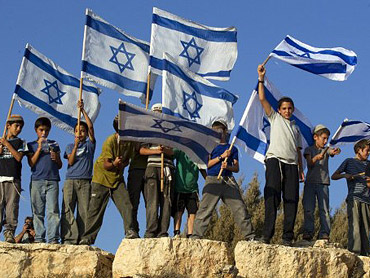
city of Jerusalem is the capital of Israel and confirms the flag and
menorah emblem as being the symbols of the state.
Before
examining the pros and cons of the nationality law, it is interesting
to consider why there was even the need to enact it. Some people
consider the combination of the Declaration of Independence as well as
the previous nationality law to have been enough to confirm the fact
that Israel is a Jewish state for the Jewish people, that Jerusalem is
the capital and to confirm the symbols of state. In spite of this,
there appear to be constant questions surrounding the right by the
Jewish people to determine their own destiny in the State of Israel.
The most public of these questions comes in the form of the denial by
the Palestinian Authority to acknowledge that Israeli is a Jewish state
as part of the peace talks that have been in hiatus for the past few
years. This denial is part of a concerted campaign against Israel, but
particularly against Jews. This is the new form of anti-Semitism that
is considered by many to be politically acceptable and correct, because
it is directed against Israel rather than Jews. The fact that the
attack is in the form of a denial of the right of Israel to be a Jewish
state seems somehow to be lost in the debate. The status of the city of
Jerusalem is also a very public battle in spite of it having served as
the capital of Israel since 1948, and in its current form as the
undivided city since 1967.
History has supported
and recognised the right of Israel to be a Jewish state over many
years. The Balfour Declaration of 1917 spoke about the "establishment
in Palestine of a national home for the Jewish people". Of course, the
Palestine referred to in the letter by Lord Balfour comprises, in a
large part, modern-day Israel. The Mandate for Palestine passed by the
League of Nations in 1922 also spoke about the British government being
responsible ".... for establishing in Palestine a national home for the
Jewish people". UN General Assembly resolution 181 (II) passed in
November 1947 on the issue of the partition of Palestine spoke about an
"Arab State and a Jewish State" being established in then Palestine.
Israel's Declaration of Independence declared "the establishment of a
Jewish State in Eretz Israel, to be known as the State of Israel". In
spite of this, the Palestinians under Mahmoud Abbas still have the
audacity to refuse to acknowledge and recognise this. And members of
the international community signal their tacit support for this position
by trying to force Israel to return to the negotiating table despite
the unwillingness on the part of the Palestinians to give due
recognition. Surely, this is enough reason in itself to warrant Israel
restating and emphasising these facts as some that are fundamental to
Israel's existence and identity?
This new law changes
nothing on the ground in Israel, and discriminates against nobody. It
seems quite normal for countries to have a strong religious basis for
the identity and symbols adopted by their countries. Around 20
countries around the world have crosses, crescents or other religious
symbols on their flags and emblems of state. Those countries are not
accused of discrimination because of that. We have not heard charges of
being undemocratic levelled against them because of their flags or
symbols of state. So why should Israel be singled out again? Because
it is the only Jewish state?
The accusation that this
law is undemocratic is entirely without basis. The principles of
democracy require that each citizen has an equal right to express his
free will in a national poll for government. Once this has been
adequately achieved, the majority is entitled to exert its will on the
minority. Israel goes a step further by also granting certain minority
protection rights to ensure that the minorities are not entirely trodden
on. Even the new nationality law does not change the democracy of the
State of Israel, nor its status as the only democracy in the Middle
East. In fact, aside from making a stronger statement of the obvious
and what has been in situ for many years, the new nationality law
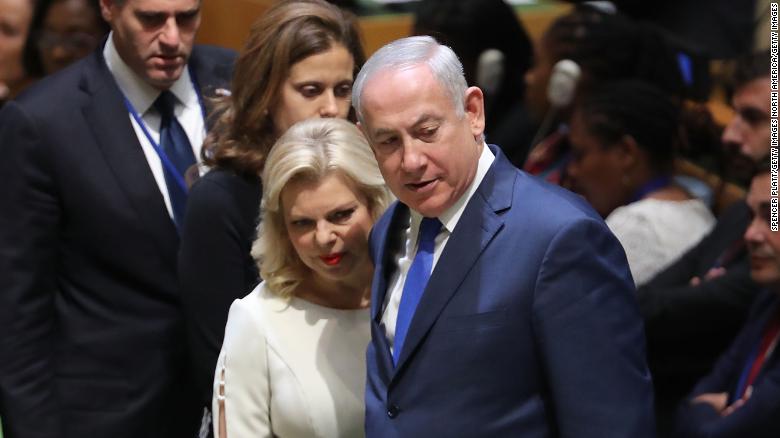
changes nothing at all. As Prime Minister Netanyahu pointed out in his
recent address
to the General Assembly of the United Nations, it is ironic that Israel
is being accused when other nations have much more serious
discriminatory actions to answer for.
Perhaps the
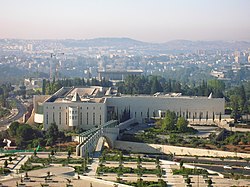
strongest organ of Israel's democracy is its independent judiciary. It
seems almost certain that this body will be called in to adjudicate on
the new law, and whether it transgresses Israel's democratic and other
ideals. I watch eagerly for this matter to be brought before Israel's
Court of Appeal, and the outcome of this case. I am not optimistic that
the court's decision, whatever it may turn out to be, will necessarily
change anything about the way in which Israel is viewed in the
international community.
Work is still required to
convince the Druze community (and other loyal minorities) that the new
law does not affect them in any way. I feel sure that, in time, they
will understand this for themselves and that no further explanations
will be necessary.
Showing posts with label Legal System. Show all posts
Wednesday, 3 October 2018
Wednesday, 7 March 2018
Corruption and Israeli Democracy
Accusations of corruption and behaviour unbefitting of a person acting in a position of trust as a minister or prime minister of the country have been circulating around Prime Minister Netanyahu for some time. The stories and accusations are not new. Things did, however, take a different turn over the past couple of weeks. The recommendation by the police to the attorney-general that the prime minister should be indicted on charges of corruption, bribery and breach of trust in two of the cases has put a different complexity on this sorry case. This, added to a new story and set of accusations coming out of the woodwork with a former close associate of the prime minister turning state witness, has served to tighten the squeeze on Netanyahu and those around him. The accusations made by the new state witness, Shlomo Filber, sound almost inconceivable. If only a small proportion of the accusations are proven to be true, it would make place Netanyahu in an untenable position regarding his ability to continue to serve as prime minister.
For now, however, that is all that they are. Accusations. The stories sound like they could come from a far-flung land where there is no consideration for rule of law or fiduciary responsibility towards those who elected the prime minister into office. Many of them are corroborated by people who are seemingly unrelated to each other, and are reported to have been repeated in different situations involving different people and issues. In the way that they have been presented, the stories sound almost like they could be true. Any objective person with a high level ability to assess fact from fiction could easily be convinced that the accusations are all based on truth. And yet, we still do not know. We do not know because the stories have yet to be verified by an objective court of law that was set up for the purpose of evaluating the credibility and truth of such accusations. All we know is that certain people, not an insignificant number of people, have the incentive to publicly tell stories of bribery, corruption and betrayal about the prime minister and his associates, while others have the incentive to defend them. That is as much as we know. Nothing more. So how can it be that a democracy allows public officials to be charged, vilified and castigated in public like this, when no formal charges have been laid, and when there is no attempt to bring them before a duly constituted court of law?
Don't get me wrong. I have listened to and read about the accusations of bad behaviour on the part of the prime minister, his wife, members of his family and others in his close circle. It seems inconceivable to me that such stories could be made up by people, purely for the intention of weakening or unseating the prime minister. It seems unbelievable that seemingly similar patterns of behaviour could be concocted by so many different people from different spheres of life and with different interests. It seems to me that, where there is smoke, there is fire. And I am a great believer in elected officials being held accountable for all their actions, good and bad. I am also a great believer in the basic democratic tenet that everybody is innocent until proven guilty by a duly established court of law to examine the particular issues. If the accusations are so convincing, and if the police have recommended on the basis of evidence in their possession that there is a case to answer, why is the case not being answered?
I am not sure of the answer to this question, but I remain convinced of a few other important aspects of our democracy. I believe that the trial by public opinion is wrong, and wholly undemocratic. It is my view that all the investigations that are being conducted into the prime minister's behaviour, should have taken place behind closed doors. Until the moment that the attorney-general is ready to formally lay legal charges to be answered in a court of law, I think that the details of all that we have been bombarded with, should have been kept away from the public eye. Instead, we have experienced a trial by public kangaroo court, and directed by the press. All of the protagonists in this sordid affair, including those who have been accused, the accusers, those involved around the edges, the press and the general public seem to have some axe to grind on the issue of the prime minister and his family. It is difficult to work out who we should believe, as more and more unbelievable stories surface daily. The country seems to be split almost down the middle between those who support the prime minister and wish to see him stay in office, as opposed to those who wish to see him unseated, jailed and consigned to political purgatory.
In addition to holding our public officials up to the light and expecting them to be fully accountable to the voting public for their actions in office, our democracy should also protect them against unreasonable and frivolous claims that could damage them and our democracy. Prime Minister Netanyahu has effectively been rendered incapable of carrying out his highly important prime ministerial duties, as he is spending most of his time these days bring questioned, defending his character against the accusations, and trying to influence the public about the nature of these accusations. Who is running our country and keeping it secure while he is worrying about the next story that accuses him of inappropriate behaviour? If the attorney-general considers the police investigation to have produced a case for the prime minister to answer in court, Netanyahu should resign his position and answer the accusations against him. If it turns out that the court does not find the accusations against him worthy of a guilty verdict, he should be able to return to the prime minister's office to resume his duties.
Israeli democracy should not tolerate corruption of public officials under any circumstances. It should also protect them while in office against any attempts to disturb their ability to carry out their jobs. The democratic process should determine that, at a certain point, elected officials should be relieved of their duties to allow them to answer properly-constituted charges that have sufficient basis to believe that they have a reasonable possibility of being upheld by a court. Until that moment, they should be allowed to get on with their job.
In my opinion, democracy goes both ways. At the moment, we are suffering the worst of all situations that a democracy gives us. The people of Israel deserve more, and it has come time to examine our system to ensure that democracy for us protects both the state and the individuals, rather than the unsavoury and undesirable position that our country current finds itself in.
For now, however, that is all that they are. Accusations. The stories sound like they could come from a far-flung land where there is no consideration for rule of law or fiduciary responsibility towards those who elected the prime minister into office. Many of them are corroborated by people who are seemingly unrelated to each other, and are reported to have been repeated in different situations involving different people and issues. In the way that they have been presented, the stories sound almost like they could be true. Any objective person with a high level ability to assess fact from fiction could easily be convinced that the accusations are all based on truth. And yet, we still do not know. We do not know because the stories have yet to be verified by an objective court of law that was set up for the purpose of evaluating the credibility and truth of such accusations. All we know is that certain people, not an insignificant number of people, have the incentive to publicly tell stories of bribery, corruption and betrayal about the prime minister and his associates, while others have the incentive to defend them. That is as much as we know. Nothing more. So how can it be that a democracy allows public officials to be charged, vilified and castigated in public like this, when no formal charges have been laid, and when there is no attempt to bring them before a duly constituted court of law?
Don't get me wrong. I have listened to and read about the accusations of bad behaviour on the part of the prime minister, his wife, members of his family and others in his close circle. It seems inconceivable to me that such stories could be made up by people, purely for the intention of weakening or unseating the prime minister. It seems unbelievable that seemingly similar patterns of behaviour could be concocted by so many different people from different spheres of life and with different interests. It seems to me that, where there is smoke, there is fire. And I am a great believer in elected officials being held accountable for all their actions, good and bad. I am also a great believer in the basic democratic tenet that everybody is innocent until proven guilty by a duly established court of law to examine the particular issues. If the accusations are so convincing, and if the police have recommended on the basis of evidence in their possession that there is a case to answer, why is the case not being answered?
I am not sure of the answer to this question, but I remain convinced of a few other important aspects of our democracy. I believe that the trial by public opinion is wrong, and wholly undemocratic. It is my view that all the investigations that are being conducted into the prime minister's behaviour, should have taken place behind closed doors. Until the moment that the attorney-general is ready to formally lay legal charges to be answered in a court of law, I think that the details of all that we have been bombarded with, should have been kept away from the public eye. Instead, we have experienced a trial by public kangaroo court, and directed by the press. All of the protagonists in this sordid affair, including those who have been accused, the accusers, those involved around the edges, the press and the general public seem to have some axe to grind on the issue of the prime minister and his family. It is difficult to work out who we should believe, as more and more unbelievable stories surface daily. The country seems to be split almost down the middle between those who support the prime minister and wish to see him stay in office, as opposed to those who wish to see him unseated, jailed and consigned to political purgatory.
In addition to holding our public officials up to the light and expecting them to be fully accountable to the voting public for their actions in office, our democracy should also protect them against unreasonable and frivolous claims that could damage them and our democracy. Prime Minister Netanyahu has effectively been rendered incapable of carrying out his highly important prime ministerial duties, as he is spending most of his time these days bring questioned, defending his character against the accusations, and trying to influence the public about the nature of these accusations. Who is running our country and keeping it secure while he is worrying about the next story that accuses him of inappropriate behaviour? If the attorney-general considers the police investigation to have produced a case for the prime minister to answer in court, Netanyahu should resign his position and answer the accusations against him. If it turns out that the court does not find the accusations against him worthy of a guilty verdict, he should be able to return to the prime minister's office to resume his duties.
Israeli democracy should not tolerate corruption of public officials under any circumstances. It should also protect them while in office against any attempts to disturb their ability to carry out their jobs. The democratic process should determine that, at a certain point, elected officials should be relieved of their duties to allow them to answer properly-constituted charges that have sufficient basis to believe that they have a reasonable possibility of being upheld by a court. Until that moment, they should be allowed to get on with their job.
In my opinion, democracy goes both ways. At the moment, we are suffering the worst of all situations that a democracy gives us. The people of Israel deserve more, and it has come time to examine our system to ensure that democracy for us protects both the state and the individuals, rather than the unsavoury and undesirable position that our country current finds itself in.
Thursday, 4 December 2014
Is the "Jewish State" Bill Really Needed?
The Israeli government decided last week to submit the so-called
"Jewish State" bill for consideration to the Knesset to be incorporated
in the Basic Law. The decision by the government to approve this law
has proved to be enormously controversial, both within Israel as well as
by the international community. There are many questions about whether
the Jewish State bill is really needed in Israel at this time, whether
the bill is really required at all, and whether the introduction of such
a bill will make any difference to the facts on the ground in Israel?
The main purpose of the Jewish State bill is to enshrine in Israel's Basic Law (which acts as a type of constitution in the absence of an official constitution) that Israel is the national state of the Jewish people and that Israel is a Jewish state. Despite the fact that there are various references in different Israeli laws to the Jewish nature of Israel, and despite the fact that it is mentioned in the Declaration of Independence, members of the government have deemed it necessary and appropriate at this time to entrench it in the Basic Law.
While the proposed bill has yet to be passed into law, it seems as though the proposed bill in its current form will not make any difference to the way in which Israel operates. Israel has always been governed as a Jewish state. This manifests itself in a number of different aspects of Israeli everyday life. National holidays are according to the Jewish calendar, the day of rest is Saturday while Sunday is a regular school and working day, Jewish religious law is applicable in certain situations specifically those relating to family matters, and people with one Jewish grandparent are entitled to claim immediate citizenship of Israel under the Law of Return. None of these aspects of Israeli society will change as a result of the Jewish State bill. It is anticipated that all matters that relate to the Jewish nature of Israel will continue to apply in the same way as they have applied until now.
Some of the Jewish aspects of Israel have been controversial, in a country that prides itself on its democracy. There are those who believe that the Jewish nature of the state is a contradiction to democracy, due to the fact that these aspects disadvantage non-Jewish citizens of the state. Despite the fact that all Israelis, Jewish and non-Jewish, are entitled to vote, are entitled to be a member of Knesset, have the right to freedom of speech and receive state education and health, there are many who feel that the Jewish nature of the state discriminates against those who are not Jewish. As a counter-balance, non-Jewish citizens are not obliged to be conscripted to the army while young Jewish men and women are mostly required to sign up. Non-Jews are free to volunteer for military service, and many choose to do so. The question is whether these points of law, that favour Jews over non-Jews, result in a democracy that is not really democratic? How does this compare, for example, to affirmative action that has been employed in a number of democracies around the world. It is contended that favouring one group or race over another, even where this is designed to correct wrongs in the society, is an undemocratic policy. Does this make the entire country undemocratic? In cases outside of Israel, employing policies that may be considered questionable on a purely democratic scale, have not resulted in the country's democracy being called into question. By the same token, it is my view that the Law of Return and the Jewish nature of the state, do not change the fact that Israel is a real democracy, the only one in the Middle East.
If this is true, why would there be such opposition to formally adopting a Jewish State bill? Many people believe that the idea of reinforcing the Jewish nature of the state is, in itself, not objectionable. The problem for them is that the draft bill does not specifically balance this out against the democratic nature of the state. They object to the bill for its form rather than for its substance. These objectors wish to see some open statements in the draft bill to reinforce the democracy of the State of Israel, while also confirming the Jewish nature of the state. For other objectors, their opposition comes to the timing of the introduction of the bill. Israel is currently experiencing a wave of terror attacks that some are calling the start of the third Intifada. Israel has been criticised for events that have taken place on the Temple Mount in Jerusalem, and some have even accused Israel of attempting to change the current modus operandi of the Temple Mount. The situation is extremely sensitive, and there can be no doubt that the introduction of such a bill at this time contributes to stirring up this sensitive situation.
What is the reason behind Prime Minister Netanyahu's desire to introduce the Jewish state bill at this time? Perhaps it is about countering the current Palestinian violence and uprising that is being experienced in Jerusalem and other areas. The prime minister has been known to take unilateral steps against the Palestinians to counter the unilateral steps that the Palestinians take. I believe that it runs deeper than that. We know that the peace talks between the Palestinian Authority and Israel are currently stalled on the issue of the recognition of Israel as a Jewish state. Prime Minister Netanyahu has insisted that Palestinian Authority President Mahmoud Abbas acknowledges this fact before the talks can move forward. Abbas has failed to do this, and the talks are stalled. Netanyahu has come under criticism in the international community for this position, and it is presented that this is his own demand that has been made without justification. By passing this into law, Netanyahu can turn this argument around by saying that this fact is now in Israel's Basic Law. Failure to recognise this on the part of Abbas is tantamount to denying a fundamental tenet of the State of Israel. Have the Jewish State law on the books may cause further delays to the peace talks, but may also help to clear the logjam and progress the talks. Abbas will be forced to turn to his people to say that he has no choice where this is concerned because it is a law of the land, and not a whim of Netanyahu.
The Jewish nature of Israel is undeniable. This was clear to those who escaped the ashes of the Shoa and found Israel to be the only place that Jews can really feel safe, and it is clear now when anti-Semitism is rife around the world. Members of other religions have more than one country in which they can to choose to live, that will give them the religious freedom that they desire. Jews only have one. It is inconceivable that the Jewish nature of Israel can be denied, in the same way as the democracy of the State of Israel cannot be denied. The fact that some members of the international community are questioning the concept of the Jewish State bill, is perhaps enough reason to insist that it be passed into law. We have an obligation to future generations of Jews to ensure that the Jewish nature of Israel can never be denied, not by those who live here and not be those who do not. Israel will always be the safe haven for Jewish people, and placing this on the law books is a natural extension of the intentions of the founding fathers of our country as set out in the Declaration of Independence. It also reflects the views of the majority of those living in Israel, including many of those who are objecting to the introduction of the bill for technical reasons.
I do not believe that balancing the Jewish State bill with statements reinforcing Israel's democratic nature, dilutes the statement of the Jewish nature of Israel. As such, it seems sensible to balance the statement out in order to gain wider support in favour of the bill. Those non-Jews who wish to accept these principles upon which Israel is premised, are welcome to live here and enjoy our democracy. Despite the fact that the bill will change little or nothing on the ground about the way that Israel operates, I personally support having this on the statute books and including it in the Basic Law. After all, it is one of the fundamental premises upon which the State of Israel was built, and upon which the state continues to be built. And we should not be ashamed to say so.
The main purpose of the Jewish State bill is to enshrine in Israel's Basic Law (which acts as a type of constitution in the absence of an official constitution) that Israel is the national state of the Jewish people and that Israel is a Jewish state. Despite the fact that there are various references in different Israeli laws to the Jewish nature of Israel, and despite the fact that it is mentioned in the Declaration of Independence, members of the government have deemed it necessary and appropriate at this time to entrench it in the Basic Law.
While the proposed bill has yet to be passed into law, it seems as though the proposed bill in its current form will not make any difference to the way in which Israel operates. Israel has always been governed as a Jewish state. This manifests itself in a number of different aspects of Israeli everyday life. National holidays are according to the Jewish calendar, the day of rest is Saturday while Sunday is a regular school and working day, Jewish religious law is applicable in certain situations specifically those relating to family matters, and people with one Jewish grandparent are entitled to claim immediate citizenship of Israel under the Law of Return. None of these aspects of Israeli society will change as a result of the Jewish State bill. It is anticipated that all matters that relate to the Jewish nature of Israel will continue to apply in the same way as they have applied until now.
Some of the Jewish aspects of Israel have been controversial, in a country that prides itself on its democracy. There are those who believe that the Jewish nature of the state is a contradiction to democracy, due to the fact that these aspects disadvantage non-Jewish citizens of the state. Despite the fact that all Israelis, Jewish and non-Jewish, are entitled to vote, are entitled to be a member of Knesset, have the right to freedom of speech and receive state education and health, there are many who feel that the Jewish nature of the state discriminates against those who are not Jewish. As a counter-balance, non-Jewish citizens are not obliged to be conscripted to the army while young Jewish men and women are mostly required to sign up. Non-Jews are free to volunteer for military service, and many choose to do so. The question is whether these points of law, that favour Jews over non-Jews, result in a democracy that is not really democratic? How does this compare, for example, to affirmative action that has been employed in a number of democracies around the world. It is contended that favouring one group or race over another, even where this is designed to correct wrongs in the society, is an undemocratic policy. Does this make the entire country undemocratic? In cases outside of Israel, employing policies that may be considered questionable on a purely democratic scale, have not resulted in the country's democracy being called into question. By the same token, it is my view that the Law of Return and the Jewish nature of the state, do not change the fact that Israel is a real democracy, the only one in the Middle East.
If this is true, why would there be such opposition to formally adopting a Jewish State bill? Many people believe that the idea of reinforcing the Jewish nature of the state is, in itself, not objectionable. The problem for them is that the draft bill does not specifically balance this out against the democratic nature of the state. They object to the bill for its form rather than for its substance. These objectors wish to see some open statements in the draft bill to reinforce the democracy of the State of Israel, while also confirming the Jewish nature of the state. For other objectors, their opposition comes to the timing of the introduction of the bill. Israel is currently experiencing a wave of terror attacks that some are calling the start of the third Intifada. Israel has been criticised for events that have taken place on the Temple Mount in Jerusalem, and some have even accused Israel of attempting to change the current modus operandi of the Temple Mount. The situation is extremely sensitive, and there can be no doubt that the introduction of such a bill at this time contributes to stirring up this sensitive situation.
What is the reason behind Prime Minister Netanyahu's desire to introduce the Jewish state bill at this time? Perhaps it is about countering the current Palestinian violence and uprising that is being experienced in Jerusalem and other areas. The prime minister has been known to take unilateral steps against the Palestinians to counter the unilateral steps that the Palestinians take. I believe that it runs deeper than that. We know that the peace talks between the Palestinian Authority and Israel are currently stalled on the issue of the recognition of Israel as a Jewish state. Prime Minister Netanyahu has insisted that Palestinian Authority President Mahmoud Abbas acknowledges this fact before the talks can move forward. Abbas has failed to do this, and the talks are stalled. Netanyahu has come under criticism in the international community for this position, and it is presented that this is his own demand that has been made without justification. By passing this into law, Netanyahu can turn this argument around by saying that this fact is now in Israel's Basic Law. Failure to recognise this on the part of Abbas is tantamount to denying a fundamental tenet of the State of Israel. Have the Jewish State law on the books may cause further delays to the peace talks, but may also help to clear the logjam and progress the talks. Abbas will be forced to turn to his people to say that he has no choice where this is concerned because it is a law of the land, and not a whim of Netanyahu.
The Jewish nature of Israel is undeniable. This was clear to those who escaped the ashes of the Shoa and found Israel to be the only place that Jews can really feel safe, and it is clear now when anti-Semitism is rife around the world. Members of other religions have more than one country in which they can to choose to live, that will give them the religious freedom that they desire. Jews only have one. It is inconceivable that the Jewish nature of Israel can be denied, in the same way as the democracy of the State of Israel cannot be denied. The fact that some members of the international community are questioning the concept of the Jewish State bill, is perhaps enough reason to insist that it be passed into law. We have an obligation to future generations of Jews to ensure that the Jewish nature of Israel can never be denied, not by those who live here and not be those who do not. Israel will always be the safe haven for Jewish people, and placing this on the law books is a natural extension of the intentions of the founding fathers of our country as set out in the Declaration of Independence. It also reflects the views of the majority of those living in Israel, including many of those who are objecting to the introduction of the bill for technical reasons.
I do not believe that balancing the Jewish State bill with statements reinforcing Israel's democratic nature, dilutes the statement of the Jewish nature of Israel. As such, it seems sensible to balance the statement out in order to gain wider support in favour of the bill. Those non-Jews who wish to accept these principles upon which Israel is premised, are welcome to live here and enjoy our democracy. Despite the fact that the bill will change little or nothing on the ground about the way that Israel operates, I personally support having this on the statute books and including it in the Basic Law. After all, it is one of the fundamental premises upon which the State of Israel was built, and upon which the state continues to be built. And we should not be ashamed to say so.
Tuesday, 17 July 2012
Olmert is Found Innocent
The events that took place in the Jerusalem District Court last week were quite extraordinary. For the first time in the history of the State of Israel, a former prime minister was in the dock to answer charges of corruption alleged to have taken place in a period before he became prime minister. On this occasion, the court found that fomer Prime Minister Ehud Olmert is innocent of the main corruption charges against him. Even though this decision sounds to be the end of a story, in many ways it is only the beginning of this story.
The headline that Olmert is innocent conceals the most important aspects of the story. A sitting prime minister was forced to resign his office, accused of corruption when in a former public office. Now, more than 3 years later, a court has decided that all he is guilty of is a relatively minor offence of breach of trust. It is for this that a prime minister was driven from office at a time when the country was fighting wars on a number of fronts, and facing a major economic crisis. Not only this. During the intervening 3 year period while the prosecution gathered its evidence, interviewed high profile individuals under subpoena and brought the case to trial, the press found Olmert guilty and publicly castigated him at every opportunity. In one of the most dramatic U-turns seen in the modern press, it took 2 days after the verdict exonerating Olmert, for the newspapers to publish the results of a new public opinion poll. This poll shows that Olmert would muster more seats than current Prime Minister Bibi Netanyahu in the next year's general election. This "zig zag" (as such political about-turns are known in Hebrew) seems quite astonishing. Has Olmert suddenly become the blue-eyed boy of the press after suffering such horrendous treatment at its hannds?
State prosecutors have been forced to explain their actions in bringing this case to trial. There was more than a sniff of political motivation in evidence at the time that they announced their intention to indict Olmert three years ago. Now that they have lost the gamble, the country is rightly asking questions about what drove them to make allegations against a prime minister, which could ultimately not be made to stick. While the prosecution continue to defend their decision to bring this case to trial, they admit that the verdict will create great difficulty for future corruption charges against high profile figures, in the event that these need to be brought. Even though our political landscape is far from perfect and seems to be riddled with bad behaviour and questionable judgement, there is perhaps no harm in forcing prosecuting lawyers to think 100 times before bringing about the downfall of public figures. Although I feel proud that Israeli democracy is strong enough to see even a sitting prime minister indicted, democracy also requires that the consequences of an acquittal be considered. This is particularly true of high profile public figures.
The judges in the Olmert trial, while finding him not guilty, confirmed that unacceptable practices were taking place in his office. His bureau chief, Shula Zaken, was found guilty on corruption charges even though her boss was acquitted. The basis of his acquittal was simply the fact that the prosecution was unable to prove that he knew what was going on, rather than the fact that it did not happen. This serves to reinforce that practices of public officials in Israel leave a great deal to be desired. There can be no doubt that the questionable and corruptive practices which were proven to have taken place in Olmert's office when he was the Mayor of Jerusalem, are practices that are established in public life and occur in numerous public offices up and down the country. The message that such behaviour is unacceptable and needs to be stamped out was unfortunately completely drowned out by the headlines of Olmert's acquittal.
Although Olmert has escaped from this sorry saga, he still faces corruption charges in the so-called "Holyland Affair" in a Tel Aviv court. Prosecution officials have already begun to re-examine the file of charges against him in this case, for fear that the charges could go the same way as the previous case. They are well aware of the enormous damage that they would suffer if they lose this case as well.
Olmert seems happy to escape the public glare for now, and slip into the background. There is no doubt, however, that this will not be allowed to continue for long - this is a man who has spent so many years in the public arena, that it seems unlikely that he will quietly fade away. Olmert has said he has no interest in returning to politics, but it is difficult to take these words at face value for now. The acquittal could not have come at a better time for the Kadima party. The party runs the risk of disbanding at the next election due to its poor showings. The prospect of Olmert returning to politics and heading up the party has created a great deal of interest, and even some expectation. There are those who see Olmert beating Bibi to become prime minister at the head of a Kadima government. The most recent opinion polls seem to support this. I find it difficult to see this euphoria lasting until the next election, and I still predict that Netanyahu will keep the hot seat. I do think that Kadima could be saved if Olmert returns to head up the party. If not, I believe it will be consigned to the dustbin filled with failed political parties
The headline that Olmert is innocent conceals the most important aspects of the story. A sitting prime minister was forced to resign his office, accused of corruption when in a former public office. Now, more than 3 years later, a court has decided that all he is guilty of is a relatively minor offence of breach of trust. It is for this that a prime minister was driven from office at a time when the country was fighting wars on a number of fronts, and facing a major economic crisis. Not only this. During the intervening 3 year period while the prosecution gathered its evidence, interviewed high profile individuals under subpoena and brought the case to trial, the press found Olmert guilty and publicly castigated him at every opportunity. In one of the most dramatic U-turns seen in the modern press, it took 2 days after the verdict exonerating Olmert, for the newspapers to publish the results of a new public opinion poll. This poll shows that Olmert would muster more seats than current Prime Minister Bibi Netanyahu in the next year's general election. This "zig zag" (as such political about-turns are known in Hebrew) seems quite astonishing. Has Olmert suddenly become the blue-eyed boy of the press after suffering such horrendous treatment at its hannds?
State prosecutors have been forced to explain their actions in bringing this case to trial. There was more than a sniff of political motivation in evidence at the time that they announced their intention to indict Olmert three years ago. Now that they have lost the gamble, the country is rightly asking questions about what drove them to make allegations against a prime minister, which could ultimately not be made to stick. While the prosecution continue to defend their decision to bring this case to trial, they admit that the verdict will create great difficulty for future corruption charges against high profile figures, in the event that these need to be brought. Even though our political landscape is far from perfect and seems to be riddled with bad behaviour and questionable judgement, there is perhaps no harm in forcing prosecuting lawyers to think 100 times before bringing about the downfall of public figures. Although I feel proud that Israeli democracy is strong enough to see even a sitting prime minister indicted, democracy also requires that the consequences of an acquittal be considered. This is particularly true of high profile public figures.
The judges in the Olmert trial, while finding him not guilty, confirmed that unacceptable practices were taking place in his office. His bureau chief, Shula Zaken, was found guilty on corruption charges even though her boss was acquitted. The basis of his acquittal was simply the fact that the prosecution was unable to prove that he knew what was going on, rather than the fact that it did not happen. This serves to reinforce that practices of public officials in Israel leave a great deal to be desired. There can be no doubt that the questionable and corruptive practices which were proven to have taken place in Olmert's office when he was the Mayor of Jerusalem, are practices that are established in public life and occur in numerous public offices up and down the country. The message that such behaviour is unacceptable and needs to be stamped out was unfortunately completely drowned out by the headlines of Olmert's acquittal.
Although Olmert has escaped from this sorry saga, he still faces corruption charges in the so-called "Holyland Affair" in a Tel Aviv court. Prosecution officials have already begun to re-examine the file of charges against him in this case, for fear that the charges could go the same way as the previous case. They are well aware of the enormous damage that they would suffer if they lose this case as well.
Olmert seems happy to escape the public glare for now, and slip into the background. There is no doubt, however, that this will not be allowed to continue for long - this is a man who has spent so many years in the public arena, that it seems unlikely that he will quietly fade away. Olmert has said he has no interest in returning to politics, but it is difficult to take these words at face value for now. The acquittal could not have come at a better time for the Kadima party. The party runs the risk of disbanding at the next election due to its poor showings. The prospect of Olmert returning to politics and heading up the party has created a great deal of interest, and even some expectation. There are those who see Olmert beating Bibi to become prime minister at the head of a Kadima government. The most recent opinion polls seem to support this. I find it difficult to see this euphoria lasting until the next election, and I still predict that Netanyahu will keep the hot seat. I do think that Kadima could be saved if Olmert returns to head up the party. If not, I believe it will be consigned to the dustbin filled with failed political parties
Monday, 9 January 2012
Justice Prevails
The meeting of the Judicial Appointments Committee on Friday turned out to be something of a pleasant anti-climax. In a meeting that lasted only 90 minutes, four new justices were duly appointed to the bench of the Israeli Supreme Court. The cordial nature of the meeting and the appointments seemed to conceal the less-than-cordial path that led to this moment.
Israel's Supreme Court plays a very central role in Israeli society. In addition to acting as an appellate court, it also acts as a High Court of Justice in which decisions by government and state authorities can be challenged and set aside. The right of the Supreme Court to set aside government decisions creates a critical place for it in Israeli democracy. It is little wonder that the appointment of new justices to the bench of this court is such an important and controversial exercise. Once appointed to the Supreme Court, justices serve until they are seventy years of age and cannot be removed except under extreme circumstances. The judges on the bench need to be act independently of government, and need to be seen to act independently of government to maintain their important role as defender of democracy.
For some time now, certain ultra-Orthodox and right-wing citizens of Israel have protested that decisions by the Supreme Court have discriminated against their views and positions. While many Israelis have regarded the court's decisions as representing the voice of reason in situations which have seemed wholly unreasonable, some groups feel discriminated against by these decisions. Surprisingly, it seems as if this view was not only shared by extremists. In the lead-up to the meeting of the Judicial Appointments Committee, the Minister of Justice and the Prime Minister threatened to become caught up in a judicial appointments row. Their actions pointed unashamedly to the fact that they also subscribe to the view that the bench of the Supreme Court has become too left-wing. Certain actions and statements on their behalf attempted to influence the makeup of the Judicial Appointments Committee in the hope that this may influence the appointment of the Supreme Court judges towards their right-wing views.
The nine-man Judicial Appointments Committee includes two members who are appointed by the Israeli Bar Association. The remaining seven members of the committee are made up of three sitting judges of the Supreme Court, two ministers and two members of Knesset. The two Bar Association representatives are chosen in a vote that is conducted according to a simple majority. The two representatives were chosen to the satisfaction of the Bar Association, and this revealed that one representative was somebody known to be politically left of centre. Individuals close to the Minister of Justice embarked upon a campaign to retroactively change the rules by which the Bar Association candidates were selected, in order to replace the left-wing representative. It was hoped that this would ensure that the right-wing candidates to the bench would be appointed. This attempt to undermine the due process of appointment of justices is shameful, and can be seen as an attempt to meddle with an important arm of the democracy of our nation. No person is larger than the system, and no individual should be allowed to undermine the operation of a process that is so fundamental to the democracy of the country.
Ultimately, the attempts to change the rules retroactively were unsuccessful, and the original vote of the Bar Association stood. Their two representatives took their place on the Judicial Appointments Committee and four new judges were appointed. Despite the controversy and shenanigans leading up to the vote, the four new candidates can be seen as typifying compromise and organisation. Justice Noam Sohlberg lives in Alon Shvut on the West Bank, and was elected by eight of the nine committee members as a representative of the right. Justice Zvi Zylbertal was elected unanimously as a candidate from the left. He is regarded as being very close to retiring Judge President Dorit Beinisch. Justice Uri Shoham was also elected unanimously, and is seen to represent those of North African and Middle Easter (Mizrachi) origin. Finally, Justice Daphne Barak-Erez received unanimous support as the only female new judge.
Whereas in the USA, the appointment of judges is a highly politicised process and is a good way for presidents to leave a legacy long after the end of their presidential term, in Israel this has not been the case until now. It may, however be set to change in the future, even though it seems as though this would be an unfortunate development. Due to the fact that the Israeli Supreme Court is frequently called upon to adjudicate matters which have strong political overtones, it is important that the bench should be as politically impartial as possible. This is particularly true when living in a society with so many minority groupings. Citizens should feel confident that the Supreme Court will judge fairly and independently on each case that is brought before the court. On this occasion, democracy has ensured that even the Minister of Justice was unable to influence the process of justice. This is real democracy in action.
Israel's Supreme Court plays a very central role in Israeli society. In addition to acting as an appellate court, it also acts as a High Court of Justice in which decisions by government and state authorities can be challenged and set aside. The right of the Supreme Court to set aside government decisions creates a critical place for it in Israeli democracy. It is little wonder that the appointment of new justices to the bench of this court is such an important and controversial exercise. Once appointed to the Supreme Court, justices serve until they are seventy years of age and cannot be removed except under extreme circumstances. The judges on the bench need to be act independently of government, and need to be seen to act independently of government to maintain their important role as defender of democracy.
For some time now, certain ultra-Orthodox and right-wing citizens of Israel have protested that decisions by the Supreme Court have discriminated against their views and positions. While many Israelis have regarded the court's decisions as representing the voice of reason in situations which have seemed wholly unreasonable, some groups feel discriminated against by these decisions. Surprisingly, it seems as if this view was not only shared by extremists. In the lead-up to the meeting of the Judicial Appointments Committee, the Minister of Justice and the Prime Minister threatened to become caught up in a judicial appointments row. Their actions pointed unashamedly to the fact that they also subscribe to the view that the bench of the Supreme Court has become too left-wing. Certain actions and statements on their behalf attempted to influence the makeup of the Judicial Appointments Committee in the hope that this may influence the appointment of the Supreme Court judges towards their right-wing views.
The nine-man Judicial Appointments Committee includes two members who are appointed by the Israeli Bar Association. The remaining seven members of the committee are made up of three sitting judges of the Supreme Court, two ministers and two members of Knesset. The two Bar Association representatives are chosen in a vote that is conducted according to a simple majority. The two representatives were chosen to the satisfaction of the Bar Association, and this revealed that one representative was somebody known to be politically left of centre. Individuals close to the Minister of Justice embarked upon a campaign to retroactively change the rules by which the Bar Association candidates were selected, in order to replace the left-wing representative. It was hoped that this would ensure that the right-wing candidates to the bench would be appointed. This attempt to undermine the due process of appointment of justices is shameful, and can be seen as an attempt to meddle with an important arm of the democracy of our nation. No person is larger than the system, and no individual should be allowed to undermine the operation of a process that is so fundamental to the democracy of the country.
Ultimately, the attempts to change the rules retroactively were unsuccessful, and the original vote of the Bar Association stood. Their two representatives took their place on the Judicial Appointments Committee and four new judges were appointed. Despite the controversy and shenanigans leading up to the vote, the four new candidates can be seen as typifying compromise and organisation. Justice Noam Sohlberg lives in Alon Shvut on the West Bank, and was elected by eight of the nine committee members as a representative of the right. Justice Zvi Zylbertal was elected unanimously as a candidate from the left. He is regarded as being very close to retiring Judge President Dorit Beinisch. Justice Uri Shoham was also elected unanimously, and is seen to represent those of North African and Middle Easter (Mizrachi) origin. Finally, Justice Daphne Barak-Erez received unanimous support as the only female new judge.
Whereas in the USA, the appointment of judges is a highly politicised process and is a good way for presidents to leave a legacy long after the end of their presidential term, in Israel this has not been the case until now. It may, however be set to change in the future, even though it seems as though this would be an unfortunate development. Due to the fact that the Israeli Supreme Court is frequently called upon to adjudicate matters which have strong political overtones, it is important that the bench should be as politically impartial as possible. This is particularly true when living in a society with so many minority groupings. Citizens should feel confident that the Supreme Court will judge fairly and independently on each case that is brought before the court. On this occasion, democracy has ensured that even the Minister of Justice was unable to influence the process of justice. This is real democracy in action.
Subscribe to:
Posts (Atom)