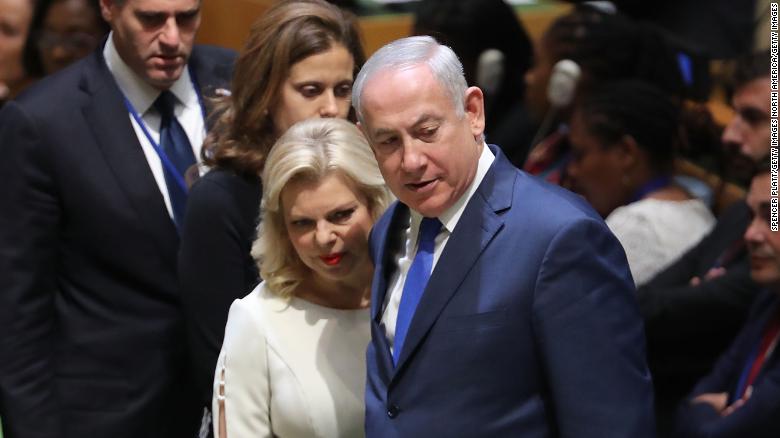
Over the weekend, Prime Minister Netanyahu officially became Israel's
longest-serving prime minister since the state was created in 1948.
And he could not have reached this historical milestone under stranger
circumstances.
Netanyahu has achieved this notable
record while currently governing the country without a mandate. In
spite of having been democratically elected to continue to rule the
country in the elections in 2015, the most recent round of elections
earlier this year did not produce any winners who could secure a mandate
to rule. A such, Netanyahu has remained in office as a caretaker prime
minister until the next round of elections take place in September.
Without the support of the majority as required by our democracy. And
it is in this role as caretaker prime minister that he has overtaken
David Ben Gurion's previous record of having ruled over Israel for 13
years and 127 days, in spite of the heavy cloud that hangs over his
head. He also holds the record as the prime minister to have the
longest uninterrupted term as prime minister (10 years and 110 days and
counting).
There can be no doubt or argument that
Netanyahu has devoted much of his life in the service of the State of
Israel. Nor can there be any doubt about some of his significant
achievements during this period. Credit needs to be given for this. As
can be anticipated with any leader and public official, he has had his
notable failures too. And, as much as he would like to achieve the
legacy of having been the protector of Israel during his term in office,
it seems that he is likely to be remembered for the scandal that
currently surrounds him, irrespective of how it ultimately turns out.
This is a real pity for the longest-serving prime minister in Israel's
history.
Along with this record, come many unwelcome
and undesirable effects of the length of time that Netanyahu has been in
office. "Power tends to corrupt, and absolute power corrupts
absolutely. Great men are almost always bad men." This quotation by
Lord Acton from 1887 seems as relevant now as it was then, and can
easily be applied to Netanyahu in recent years. He has behaved in a
manner that indicates his sense of invincibility, that has only been
strengthened by success that he has enjoyed at the polls. The people
gave him the power, but it seems as though this has been taken for
granted as a result of it lasting for too long. The feeling that he
will have enough public support to rule irrespective of how he behaves,
has led him to really test this out with behaviour by him and members of
his family that is way beyond what could reasonably be tolerated from
an elected leader. It is no coincidence that other democracies, such as
the USA, put a limit on how long the elected leader is allowed to be in
office for. I believe that such a limit is healthy and much-needed in
Israel.
In addition to the promotion of unlawful
behaviour, the lack of limit on time in office promotes another
unwelcome consequence. This is the lack of incentive to groom new young
leaders to assume the senior positions. In Netanyahu's case, he has
done everything in his power to ensure that there are no pretenders to
the throne who could possibly cause a threat to his continued rule. He
has no interest at all to ensure that a new generation of leaders is
prepared to take over from him when he finally leaves office. There is a
huge chasm in his party and in the country at the moment between the
current prime minister and those who may take over from him. This is
surely undesirable and unhealthy.
As a result of his
extended term in office and the anti feeling that this has generated
against Netanyahu, the upcoming election will ignore the main issues of
the day that face Israel. Instead of focusing on security, economy,
education or health care, the election will be all about how to keep
Netanyahu in office or, more likely, how to remove him. The country is
currently divided into three camps; those who support Netanyahu at any
price, those who would vote for Mickey Mouse if he was a candidate only
to remove Netanyahu, and those who feel forced to vote for Netanyahu
simply because there is no alternative credible candidate. This is
surely not what our democracy is about.
Now that the
record has been achieved and past, and Prime Minister Netanyahu has
become Israel's longest- ruling prime minister, the time has come to
change the laws to prevent anybody else from surpassing this record.
Democracy is not only about holding elections, it is also about ensuring
that the best quality candidates are encouraged to come forward and
have an equal chance of being elected on merit. Our democracy is sorely
missing this right now.
Showing posts with label Democracy. Show all posts
Tuesday, 23 July 2019
Wednesday, 3 October 2018
What is the Problem with the New Nationality Law?
The new Jewish nation-state law (also known as the nationality law)
was passed by the Knesset into law before the summer break, and now
forms part of Israel's "Basic Laws". In the absence of a constitution,
the Basic Laws act in the place of a constitution and are the most
fundamental laws on Israel's statute book. The new nationality law has
caused a great deal of consternation amongst many Jewish Israelis as
well as amongst Jews living outside Israel, and continues to occupy the
pages of Israeli and international press in spite of the time that has
passed since it was enacted. There has also been a great deal of
opposition coming from the Druze community in Israel which is an
immensely loyal, law-abiding minority group living in Israel. This
Druze opposition has been used by Israel-haters to increase their verbal
attacks on Israel. The main charges against the nationality law are
that it is undemocratic, and that it discriminates against non-Jewish
citizens of Israel.
The crux of the new law is that it reaffirms a number of facts that are already in place and well known. These include the fact that Israel is a Jewish state, that the united city of Jerusalem is the capital of Israel and confirms the flag and menorah emblem as being the symbols of the state.
Before examining the pros and cons of the nationality law, it is interesting to consider why there was even the need to enact it. Some people consider the combination of the Declaration of Independence as well as the previous nationality law to have been enough to confirm the fact that Israel is a Jewish state for the Jewish people, that Jerusalem is the capital and to confirm the symbols of state. In spite of this, there appear to be constant questions surrounding the right by the Jewish people to determine their own destiny in the State of Israel. The most public of these questions comes in the form of the denial by the Palestinian Authority to acknowledge that Israeli is a Jewish state as part of the peace talks that have been in hiatus for the past few years. This denial is part of a concerted campaign against Israel, but particularly against Jews. This is the new form of anti-Semitism that is considered by many to be politically acceptable and correct, because it is directed against Israel rather than Jews. The fact that the attack is in the form of a denial of the right of Israel to be a Jewish state seems somehow to be lost in the debate. The status of the city of Jerusalem is also a very public battle in spite of it having served as the capital of Israel since 1948, and in its current form as the undivided city since 1967.
History has supported and recognised the right of Israel to be a Jewish state over many years. The Balfour Declaration of 1917 spoke about the "establishment in Palestine of a national home for the Jewish people". Of course, the Palestine referred to in the letter by Lord Balfour comprises, in a large part, modern-day Israel. The Mandate for Palestine passed by the League of Nations in 1922 also spoke about the British government being responsible ".... for establishing in Palestine a national home for the Jewish people". UN General Assembly resolution 181 (II) passed in November 1947 on the issue of the partition of Palestine spoke about an "Arab State and a Jewish State" being established in then Palestine. Israel's Declaration of Independence declared "the establishment of a Jewish State in Eretz Israel, to be known as the State of Israel". In spite of this, the Palestinians under Mahmoud Abbas still have the audacity to refuse to acknowledge and recognise this. And members of the international community signal their tacit support for this position by trying to force Israel to return to the negotiating table despite the unwillingness on the part of the Palestinians to give due recognition. Surely, this is enough reason in itself to warrant Israel restating and emphasising these facts as some that are fundamental to Israel's existence and identity?
This new law changes nothing on the ground in Israel, and discriminates against nobody. It seems quite normal for countries to have a strong religious basis for the identity and symbols adopted by their countries. Around 20 countries around the world have crosses, crescents or other religious symbols on their flags and emblems of state. Those countries are not accused of discrimination because of that. We have not heard charges of being undemocratic levelled against them because of their flags or symbols of state. So why should Israel be singled out again? Because it is the only Jewish state?
The accusation that this law is undemocratic is entirely without basis. The principles of democracy require that each citizen has an equal right to express his free will in a national poll for government. Once this has been adequately achieved, the majority is entitled to exert its will on the minority. Israel goes a step further by also granting certain minority protection rights to ensure that the minorities are not entirely trodden on. Even the new nationality law does not change the democracy of the State of Israel, nor its status as the only democracy in the Middle East. In fact, aside from making a stronger statement of the obvious and what has been in situ for many years, the new nationality law changes nothing at all. As Prime Minister Netanyahu pointed out in his recent address to the General Assembly of the United Nations, it is ironic that Israel is being accused when other nations have much more serious discriminatory actions to answer for.
Perhaps the strongest organ of Israel's democracy is its independent judiciary. It seems almost certain that this body will be called in to adjudicate on the new law, and whether it transgresses Israel's democratic and other ideals. I watch eagerly for this matter to be brought before Israel's Court of Appeal, and the outcome of this case. I am not optimistic that the court's decision, whatever it may turn out to be, will necessarily change anything about the way in which Israel is viewed in the international community.
Work is still required to convince the Druze community (and other loyal minorities) that the new law does not affect them in any way. I feel sure that, in time, they will understand this for themselves and that no further explanations will be necessary.
The crux of the new law is that it reaffirms a number of facts that are already in place and well known. These include the fact that Israel is a Jewish state, that the united city of Jerusalem is the capital of Israel and confirms the flag and menorah emblem as being the symbols of the state.
Before examining the pros and cons of the nationality law, it is interesting to consider why there was even the need to enact it. Some people consider the combination of the Declaration of Independence as well as the previous nationality law to have been enough to confirm the fact that Israel is a Jewish state for the Jewish people, that Jerusalem is the capital and to confirm the symbols of state. In spite of this, there appear to be constant questions surrounding the right by the Jewish people to determine their own destiny in the State of Israel. The most public of these questions comes in the form of the denial by the Palestinian Authority to acknowledge that Israeli is a Jewish state as part of the peace talks that have been in hiatus for the past few years. This denial is part of a concerted campaign against Israel, but particularly against Jews. This is the new form of anti-Semitism that is considered by many to be politically acceptable and correct, because it is directed against Israel rather than Jews. The fact that the attack is in the form of a denial of the right of Israel to be a Jewish state seems somehow to be lost in the debate. The status of the city of Jerusalem is also a very public battle in spite of it having served as the capital of Israel since 1948, and in its current form as the undivided city since 1967.
History has supported and recognised the right of Israel to be a Jewish state over many years. The Balfour Declaration of 1917 spoke about the "establishment in Palestine of a national home for the Jewish people". Of course, the Palestine referred to in the letter by Lord Balfour comprises, in a large part, modern-day Israel. The Mandate for Palestine passed by the League of Nations in 1922 also spoke about the British government being responsible ".... for establishing in Palestine a national home for the Jewish people". UN General Assembly resolution 181 (II) passed in November 1947 on the issue of the partition of Palestine spoke about an "Arab State and a Jewish State" being established in then Palestine. Israel's Declaration of Independence declared "the establishment of a Jewish State in Eretz Israel, to be known as the State of Israel". In spite of this, the Palestinians under Mahmoud Abbas still have the audacity to refuse to acknowledge and recognise this. And members of the international community signal their tacit support for this position by trying to force Israel to return to the negotiating table despite the unwillingness on the part of the Palestinians to give due recognition. Surely, this is enough reason in itself to warrant Israel restating and emphasising these facts as some that are fundamental to Israel's existence and identity?
This new law changes nothing on the ground in Israel, and discriminates against nobody. It seems quite normal for countries to have a strong religious basis for the identity and symbols adopted by their countries. Around 20 countries around the world have crosses, crescents or other religious symbols on their flags and emblems of state. Those countries are not accused of discrimination because of that. We have not heard charges of being undemocratic levelled against them because of their flags or symbols of state. So why should Israel be singled out again? Because it is the only Jewish state?
The accusation that this law is undemocratic is entirely without basis. The principles of democracy require that each citizen has an equal right to express his free will in a national poll for government. Once this has been adequately achieved, the majority is entitled to exert its will on the minority. Israel goes a step further by also granting certain minority protection rights to ensure that the minorities are not entirely trodden on. Even the new nationality law does not change the democracy of the State of Israel, nor its status as the only democracy in the Middle East. In fact, aside from making a stronger statement of the obvious and what has been in situ for many years, the new nationality law changes nothing at all. As Prime Minister Netanyahu pointed out in his recent address to the General Assembly of the United Nations, it is ironic that Israel is being accused when other nations have much more serious discriminatory actions to answer for.
Perhaps the strongest organ of Israel's democracy is its independent judiciary. It seems almost certain that this body will be called in to adjudicate on the new law, and whether it transgresses Israel's democratic and other ideals. I watch eagerly for this matter to be brought before Israel's Court of Appeal, and the outcome of this case. I am not optimistic that the court's decision, whatever it may turn out to be, will necessarily change anything about the way in which Israel is viewed in the international community.
Work is still required to convince the Druze community (and other loyal minorities) that the new law does not affect them in any way. I feel sure that, in time, they will understand this for themselves and that no further explanations will be necessary.
Sunday, 13 May 2018
Reflecting on Israel at 70
As the festivities of the celebration of the 70th anniversary of
Independence die away, there is the inevitable return to the reality of
everyday living. Each of us returns to our daily chores of working,
studying and taking care of our usual activities. The threatening
protesters are gathered once again on the Gaza border as before. Iran still continues to threaten to annihilate Israel. The
usual attacks, both verbal and physical are again being perpetrated.
All continues as it was, and little changes.
And yet, this is the beauty of the reality. Unlike a birthday when the special day lasts only 24 hours until next year at the same time, the celebration of 70 years of independence continues even after the festivities are gone and forgotten. Because every day in Israel is a celebration of independence. The reality of the daily grind of life in an independent country is a part of the success. Not only that, but the 70 years becomes 70 years and a day, and another day, building steadily each moment with greater and greater independence and confidence.
This seems a good moment to reflect, not only on the past and the present, but also upon where things are leading in the future. To consider that 70 years have not only brought massive growth, development and progress in Israel, but have also allowed for the rebuilding of a nation. The population has grown from a little more than 800 thousand to almost 9 million in a short 70 years. The country's infrastructure and economy has grown along with the population to support it, and it has been able to absorb and integrate the large numbers of Jews who have immigrated to Israel over the years. This is a huge achievement, unrivalled in modern times. In addition, these 70 years have brought Jewish growth and pride even outside of Israel. The Jewish people are experiencing one of the greatest periods in Jewish learning in history, something that could not have been dreamt of 70 years ago. All that Israel stands for and has achieved reaches every corner of the Jewish world, and the non-Jewish world.
The miracle of the survival of Israel against the odds, and against the will of the surrounding Arab countries and their armies has been recounted numerous times and is well documented. Somehow, it seems that the enormity of this miracle can never be sufficiently emphasized. There is no logic to explain how it is that the Israelis and Jews still have their state after so many attempts to wipe it off the map. And this has not been only survival, the 70 years have been enormously productive in terms of the growth, development and ingenuity that have been brought to the state and the wider world. So many technological advances have come out of Israel that have also made a huge contribution to people around the world. These have come in so many different fields, including computing, telecommunications, medical, agriculture and many others. So many Israeli inventions are incorporated into products that are used around the world as a matter of course. Undoubtedly, one of Israel's greatest inventions has been the Iron Dome anti-missile system. Not only is this a great military development in its own right, it has afforded Israel the protection that it needs to continue to build and innovate in safety.
The routine in Israel has proved to be part of the joy and success. Whether it be the routine of another attack to take out weapons that threaten the safety of the state, or whether it be the routine of another Shabbat with the regular smells of chicken soup and the sight of white shirts. There is also the routine of competing on the world stage in the blue and white in sporting and cultural events, and in showing presence and contribution in the international community in general.
The daily grind that we see in the Jewish state today would have been inconceivable to so many Jews who were sent to their deaths in the years that preceded the founding of the state. And while the obvious fact that all young Israelis will be called to serve in the military to defend the state is just part of the daily routine, it remains a source of wonder and pride to so many who experienced being a Jew in a world without a Jewish army. We think about so many who were not spared to see this routine, and who would have rejoiced in it.
Anti-Semitism is again on the rise in the most dramatic fashion. It is well documented and accepted that Europe is now a hotbed of anti-Semitic activity. The number of anti-Semitic incidents in Europe continues to rise each year, and Jews living there are feeling more at risk than ever before in the last 70 years. The same is true of the USA where anti-Semitic sentiment is dramatically on the rise. Shining through all of this is the fight by the Jewish state in defence of Jews around the world.
We feel comfort and security in the routine that Israel has developed. Events are great to celebrate, but the greatest celebration is the return to the status quo. The new status quo that has only become possible for Jews as a result of the founding of the Jewish state. And despite all the threats against Israel, against Israelis and against Jews, the routine of Israel incorporates the defence of Jews and Jewish values around the world. This gives much to celebrate.
As we look forward to the next 70 years, it seems that it will be difficult to rival the achievements of the last 70 years. The development from almost zero seems astonishing due to the low starting point and lack of resources and support. And yet, the achievements are clear for all to see. This provides a huge incentive to achieve similar greatness in the years to come, this time starting from a much higher level. The routine in Israel is encouraging this, and providing the platform to continue these phenomenal achievements.
Am Yisrael Chai.
And yet, this is the beauty of the reality. Unlike a birthday when the special day lasts only 24 hours until next year at the same time, the celebration of 70 years of independence continues even after the festivities are gone and forgotten. Because every day in Israel is a celebration of independence. The reality of the daily grind of life in an independent country is a part of the success. Not only that, but the 70 years becomes 70 years and a day, and another day, building steadily each moment with greater and greater independence and confidence.
This seems a good moment to reflect, not only on the past and the present, but also upon where things are leading in the future. To consider that 70 years have not only brought massive growth, development and progress in Israel, but have also allowed for the rebuilding of a nation. The population has grown from a little more than 800 thousand to almost 9 million in a short 70 years. The country's infrastructure and economy has grown along with the population to support it, and it has been able to absorb and integrate the large numbers of Jews who have immigrated to Israel over the years. This is a huge achievement, unrivalled in modern times. In addition, these 70 years have brought Jewish growth and pride even outside of Israel. The Jewish people are experiencing one of the greatest periods in Jewish learning in history, something that could not have been dreamt of 70 years ago. All that Israel stands for and has achieved reaches every corner of the Jewish world, and the non-Jewish world.
The miracle of the survival of Israel against the odds, and against the will of the surrounding Arab countries and their armies has been recounted numerous times and is well documented. Somehow, it seems that the enormity of this miracle can never be sufficiently emphasized. There is no logic to explain how it is that the Israelis and Jews still have their state after so many attempts to wipe it off the map. And this has not been only survival, the 70 years have been enormously productive in terms of the growth, development and ingenuity that have been brought to the state and the wider world. So many technological advances have come out of Israel that have also made a huge contribution to people around the world. These have come in so many different fields, including computing, telecommunications, medical, agriculture and many others. So many Israeli inventions are incorporated into products that are used around the world as a matter of course. Undoubtedly, one of Israel's greatest inventions has been the Iron Dome anti-missile system. Not only is this a great military development in its own right, it has afforded Israel the protection that it needs to continue to build and innovate in safety.
The routine in Israel has proved to be part of the joy and success. Whether it be the routine of another attack to take out weapons that threaten the safety of the state, or whether it be the routine of another Shabbat with the regular smells of chicken soup and the sight of white shirts. There is also the routine of competing on the world stage in the blue and white in sporting and cultural events, and in showing presence and contribution in the international community in general.
The daily grind that we see in the Jewish state today would have been inconceivable to so many Jews who were sent to their deaths in the years that preceded the founding of the state. And while the obvious fact that all young Israelis will be called to serve in the military to defend the state is just part of the daily routine, it remains a source of wonder and pride to so many who experienced being a Jew in a world without a Jewish army. We think about so many who were not spared to see this routine, and who would have rejoiced in it.
Anti-Semitism is again on the rise in the most dramatic fashion. It is well documented and accepted that Europe is now a hotbed of anti-Semitic activity. The number of anti-Semitic incidents in Europe continues to rise each year, and Jews living there are feeling more at risk than ever before in the last 70 years. The same is true of the USA where anti-Semitic sentiment is dramatically on the rise. Shining through all of this is the fight by the Jewish state in defence of Jews around the world.
We feel comfort and security in the routine that Israel has developed. Events are great to celebrate, but the greatest celebration is the return to the status quo. The new status quo that has only become possible for Jews as a result of the founding of the Jewish state. And despite all the threats against Israel, against Israelis and against Jews, the routine of Israel incorporates the defence of Jews and Jewish values around the world. This gives much to celebrate.
As we look forward to the next 70 years, it seems that it will be difficult to rival the achievements of the last 70 years. The development from almost zero seems astonishing due to the low starting point and lack of resources and support. And yet, the achievements are clear for all to see. This provides a huge incentive to achieve similar greatness in the years to come, this time starting from a much higher level. The routine in Israel is encouraging this, and providing the platform to continue these phenomenal achievements.
Am Yisrael Chai.
Wednesday, 7 March 2018
Corruption and Israeli Democracy
Accusations of corruption and behaviour unbefitting of a person acting in a position of trust as a minister or prime minister of the country have been circulating around Prime Minister Netanyahu for some time. The stories and accusations are not new. Things did, however, take a different turn over the past couple of weeks. The recommendation by the police to the attorney-general that the prime minister should be indicted on charges of corruption, bribery and breach of trust in two of the cases has put a different complexity on this sorry case. This, added to a new story and set of accusations coming out of the woodwork with a former close associate of the prime minister turning state witness, has served to tighten the squeeze on Netanyahu and those around him. The accusations made by the new state witness, Shlomo Filber, sound almost inconceivable. If only a small proportion of the accusations are proven to be true, it would make place Netanyahu in an untenable position regarding his ability to continue to serve as prime minister.
For now, however, that is all that they are. Accusations. The stories sound like they could come from a far-flung land where there is no consideration for rule of law or fiduciary responsibility towards those who elected the prime minister into office. Many of them are corroborated by people who are seemingly unrelated to each other, and are reported to have been repeated in different situations involving different people and issues. In the way that they have been presented, the stories sound almost like they could be true. Any objective person with a high level ability to assess fact from fiction could easily be convinced that the accusations are all based on truth. And yet, we still do not know. We do not know because the stories have yet to be verified by an objective court of law that was set up for the purpose of evaluating the credibility and truth of such accusations. All we know is that certain people, not an insignificant number of people, have the incentive to publicly tell stories of bribery, corruption and betrayal about the prime minister and his associates, while others have the incentive to defend them. That is as much as we know. Nothing more. So how can it be that a democracy allows public officials to be charged, vilified and castigated in public like this, when no formal charges have been laid, and when there is no attempt to bring them before a duly constituted court of law?
Don't get me wrong. I have listened to and read about the accusations of bad behaviour on the part of the prime minister, his wife, members of his family and others in his close circle. It seems inconceivable to me that such stories could be made up by people, purely for the intention of weakening or unseating the prime minister. It seems unbelievable that seemingly similar patterns of behaviour could be concocted by so many different people from different spheres of life and with different interests. It seems to me that, where there is smoke, there is fire. And I am a great believer in elected officials being held accountable for all their actions, good and bad. I am also a great believer in the basic democratic tenet that everybody is innocent until proven guilty by a duly established court of law to examine the particular issues. If the accusations are so convincing, and if the police have recommended on the basis of evidence in their possession that there is a case to answer, why is the case not being answered?
I am not sure of the answer to this question, but I remain convinced of a few other important aspects of our democracy. I believe that the trial by public opinion is wrong, and wholly undemocratic. It is my view that all the investigations that are being conducted into the prime minister's behaviour, should have taken place behind closed doors. Until the moment that the attorney-general is ready to formally lay legal charges to be answered in a court of law, I think that the details of all that we have been bombarded with, should have been kept away from the public eye. Instead, we have experienced a trial by public kangaroo court, and directed by the press. All of the protagonists in this sordid affair, including those who have been accused, the accusers, those involved around the edges, the press and the general public seem to have some axe to grind on the issue of the prime minister and his family. It is difficult to work out who we should believe, as more and more unbelievable stories surface daily. The country seems to be split almost down the middle between those who support the prime minister and wish to see him stay in office, as opposed to those who wish to see him unseated, jailed and consigned to political purgatory.
In addition to holding our public officials up to the light and expecting them to be fully accountable to the voting public for their actions in office, our democracy should also protect them against unreasonable and frivolous claims that could damage them and our democracy. Prime Minister Netanyahu has effectively been rendered incapable of carrying out his highly important prime ministerial duties, as he is spending most of his time these days bring questioned, defending his character against the accusations, and trying to influence the public about the nature of these accusations. Who is running our country and keeping it secure while he is worrying about the next story that accuses him of inappropriate behaviour? If the attorney-general considers the police investigation to have produced a case for the prime minister to answer in court, Netanyahu should resign his position and answer the accusations against him. If it turns out that the court does not find the accusations against him worthy of a guilty verdict, he should be able to return to the prime minister's office to resume his duties.
Israeli democracy should not tolerate corruption of public officials under any circumstances. It should also protect them while in office against any attempts to disturb their ability to carry out their jobs. The democratic process should determine that, at a certain point, elected officials should be relieved of their duties to allow them to answer properly-constituted charges that have sufficient basis to believe that they have a reasonable possibility of being upheld by a court. Until that moment, they should be allowed to get on with their job.
In my opinion, democracy goes both ways. At the moment, we are suffering the worst of all situations that a democracy gives us. The people of Israel deserve more, and it has come time to examine our system to ensure that democracy for us protects both the state and the individuals, rather than the unsavoury and undesirable position that our country current finds itself in.
For now, however, that is all that they are. Accusations. The stories sound like they could come from a far-flung land where there is no consideration for rule of law or fiduciary responsibility towards those who elected the prime minister into office. Many of them are corroborated by people who are seemingly unrelated to each other, and are reported to have been repeated in different situations involving different people and issues. In the way that they have been presented, the stories sound almost like they could be true. Any objective person with a high level ability to assess fact from fiction could easily be convinced that the accusations are all based on truth. And yet, we still do not know. We do not know because the stories have yet to be verified by an objective court of law that was set up for the purpose of evaluating the credibility and truth of such accusations. All we know is that certain people, not an insignificant number of people, have the incentive to publicly tell stories of bribery, corruption and betrayal about the prime minister and his associates, while others have the incentive to defend them. That is as much as we know. Nothing more. So how can it be that a democracy allows public officials to be charged, vilified and castigated in public like this, when no formal charges have been laid, and when there is no attempt to bring them before a duly constituted court of law?
Don't get me wrong. I have listened to and read about the accusations of bad behaviour on the part of the prime minister, his wife, members of his family and others in his close circle. It seems inconceivable to me that such stories could be made up by people, purely for the intention of weakening or unseating the prime minister. It seems unbelievable that seemingly similar patterns of behaviour could be concocted by so many different people from different spheres of life and with different interests. It seems to me that, where there is smoke, there is fire. And I am a great believer in elected officials being held accountable for all their actions, good and bad. I am also a great believer in the basic democratic tenet that everybody is innocent until proven guilty by a duly established court of law to examine the particular issues. If the accusations are so convincing, and if the police have recommended on the basis of evidence in their possession that there is a case to answer, why is the case not being answered?
I am not sure of the answer to this question, but I remain convinced of a few other important aspects of our democracy. I believe that the trial by public opinion is wrong, and wholly undemocratic. It is my view that all the investigations that are being conducted into the prime minister's behaviour, should have taken place behind closed doors. Until the moment that the attorney-general is ready to formally lay legal charges to be answered in a court of law, I think that the details of all that we have been bombarded with, should have been kept away from the public eye. Instead, we have experienced a trial by public kangaroo court, and directed by the press. All of the protagonists in this sordid affair, including those who have been accused, the accusers, those involved around the edges, the press and the general public seem to have some axe to grind on the issue of the prime minister and his family. It is difficult to work out who we should believe, as more and more unbelievable stories surface daily. The country seems to be split almost down the middle between those who support the prime minister and wish to see him stay in office, as opposed to those who wish to see him unseated, jailed and consigned to political purgatory.
In addition to holding our public officials up to the light and expecting them to be fully accountable to the voting public for their actions in office, our democracy should also protect them against unreasonable and frivolous claims that could damage them and our democracy. Prime Minister Netanyahu has effectively been rendered incapable of carrying out his highly important prime ministerial duties, as he is spending most of his time these days bring questioned, defending his character against the accusations, and trying to influence the public about the nature of these accusations. Who is running our country and keeping it secure while he is worrying about the next story that accuses him of inappropriate behaviour? If the attorney-general considers the police investigation to have produced a case for the prime minister to answer in court, Netanyahu should resign his position and answer the accusations against him. If it turns out that the court does not find the accusations against him worthy of a guilty verdict, he should be able to return to the prime minister's office to resume his duties.
Israeli democracy should not tolerate corruption of public officials under any circumstances. It should also protect them while in office against any attempts to disturb their ability to carry out their jobs. The democratic process should determine that, at a certain point, elected officials should be relieved of their duties to allow them to answer properly-constituted charges that have sufficient basis to believe that they have a reasonable possibility of being upheld by a court. Until that moment, they should be allowed to get on with their job.
In my opinion, democracy goes both ways. At the moment, we are suffering the worst of all situations that a democracy gives us. The people of Israel deserve more, and it has come time to examine our system to ensure that democracy for us protects both the state and the individuals, rather than the unsavoury and undesirable position that our country current finds itself in.
Monday, 15 January 2018
Israel and Shabbat
The Knesset passed into law last week, the controversial so-called "Shabbat law", also labelled by some as the "minimarket law". This new law requires local municipalities to first get the approval of interior minister before allowing stores in their municipal area to open on Shabbat. Given the fact that the current interior minister is Shas leader Arye Deri, the immediate expectation is that such approval would generally be withheld, forcing stores across the country to be closed on Shabbat. And furthermore, the extent to which stores are allowed to be open on Shabbat or not, will seem to depend upon who occupies the seat of the interior minister at any moment in time.
The issue of Shabbat in the Jewish state is a complex one. The religious community will always wish to see the Shabbat respected to the fullest as set out by Jewish law. This dictates, amongst other things, that stores will be closed from sundown on Friday until sundown on Saturday each week, and similarly on religious holidays. Aside from the issue of violating Jewish law by opening stores on the holy Shabbat, the religious community also argues that the opening of stores on Shabbat forces people to work there on Shabbat. These workers, they believe, would be better off spending Shabbat at home with their families resting, rather than being forced to work. On the other hand, there is a substantial secular community living in Israel which prefers to have greater choice as to when they shop for their groceries and other items. Many of them work long hours during the week, and find it impossible, difficult or inconvenient to do their shopping after work during the week. For them, shopping on Shabbat is preferable. Why should they not have the right to choose for themselves when the best shopping time is for them? What about those people whose work during the week does not afford them enough to make a living, and who welcome the additional work hours at double time that the law allows on Shabbat?
Does Israel, as a democratic Jewish state, have the right to impose Jewish law on its citizens? Does it really want to impose Jewish law? How important is the observance of the Shabbat to the Jewish nature of Israel? Israel's Jews are a mixed bunch. Some are observant, and some are not. Most of them are fiercely proud to be Jewish and to live in the Jewish state, and each expresses their Jewish identity in a different way. The statistics show that between 20% and 30% of the Jews in Israel consider themselves to be ultra-Orthodox or Orthodox. On the other end of the spectrum, around 40% of Jewish Israelis consider themselves to be secular. So the balance of power rests with those who consider themselves to be traditional. From this, we can see that there is no obvious single view that emerges concerning the importance of Shabbat observance. This was reflected in the law that was in force until now, that allowed each municipality to choose for itself what its policy regarding store-opening on Shabbat would be. This was also borne out in the High Court decision that confirmed this method of deciding. Each municipality can decide, according to the demographics of its local area, whether stores will be open on Shabbat or not. Some decide yes, others decide no. Some have a mixed policy of forcing stores in certain areas to close, while allowing stores in other areas to be open. One thing that remains certain is that there will also be those who disagree with whatever happens in their local vicinity. There is no possible way of satisfying all the people in any particular locality.
The authorities have previously intervened in some ways in order to impose some element of Shabbat observance in Israel. El Al, Israel's national airline does not fly on Shabbat or on Jewish holidays. Banks, supermarkets and many other facilities are prohibited from opening on Shabbat. All hotels in Israel that wish to be certified by the Ministry of Tourism, are forced to serve food that is kosher. This requires a certain level of observance of Shabbat. Much of Israel's public transport does not operate on Shabbat. It seems to me, however, that this has extended a little too far with the government passing the recent Shabbat law.
It seems that Interior Minister Arye Deri also feels the same. Despite his personal views that Shabbat should be observed, he has pledged not to exercise the power that the new law gives him to enforce Shabbat observance. Instead, he has indicated that he will allow each municipality to decide for themselves as they have done before. This view does not, however, remove the possibility that a future interior minister may exercise his power under the law in one direction or the other. For this reason, the law seems to me to be a step too far.
Unfortunately and unsurprisingly, the law has become mixed up in Israeli party politics. Essentially, the enactment of this law has served to give Health Minister Yossi Litzman a path back to his ministerial position, after resigning from the government over his opposition to work being undertaken on Israeli railway infrastructure on Shabbat. Now that the new Shabbat law is on the statute books, he can prove to his party and electorate that he has forced a change to the government policy on Shabbat, and is justified in returning to the government. The illusion seems to hide the reality in this case.
The often remembered Ahad Ha'am quote says, "More than the Jews have kept the Shabbat, the Shabbat has kept the Jews". There is no doubt that Shabbat observance has been a central tenet around which Jews have focused during the thousands of years of exile, and which has helped to maintain some element of identity and unity. It is interesting that, during the years of exile, Shabbat was observed out of free will, and not out of being forced on anybody. It seems to me that it is desirable to continue the observance out of free will, now that we have a Jewish state that enables this more than at any time during Jewish history. Forcing it on anybody seems counterproductive.
The real question is whether Shabbat observance and the traditional Shabbat atmosphere in Israel can survive the law, or whether the law will potentially force people away from it. I have no doubt that free will is much stronger than laws that are imposed. The Shabbat is no exception.
The issue of Shabbat in the Jewish state is a complex one. The religious community will always wish to see the Shabbat respected to the fullest as set out by Jewish law. This dictates, amongst other things, that stores will be closed from sundown on Friday until sundown on Saturday each week, and similarly on religious holidays. Aside from the issue of violating Jewish law by opening stores on the holy Shabbat, the religious community also argues that the opening of stores on Shabbat forces people to work there on Shabbat. These workers, they believe, would be better off spending Shabbat at home with their families resting, rather than being forced to work. On the other hand, there is a substantial secular community living in Israel which prefers to have greater choice as to when they shop for their groceries and other items. Many of them work long hours during the week, and find it impossible, difficult or inconvenient to do their shopping after work during the week. For them, shopping on Shabbat is preferable. Why should they not have the right to choose for themselves when the best shopping time is for them? What about those people whose work during the week does not afford them enough to make a living, and who welcome the additional work hours at double time that the law allows on Shabbat?
Does Israel, as a democratic Jewish state, have the right to impose Jewish law on its citizens? Does it really want to impose Jewish law? How important is the observance of the Shabbat to the Jewish nature of Israel? Israel's Jews are a mixed bunch. Some are observant, and some are not. Most of them are fiercely proud to be Jewish and to live in the Jewish state, and each expresses their Jewish identity in a different way. The statistics show that between 20% and 30% of the Jews in Israel consider themselves to be ultra-Orthodox or Orthodox. On the other end of the spectrum, around 40% of Jewish Israelis consider themselves to be secular. So the balance of power rests with those who consider themselves to be traditional. From this, we can see that there is no obvious single view that emerges concerning the importance of Shabbat observance. This was reflected in the law that was in force until now, that allowed each municipality to choose for itself what its policy regarding store-opening on Shabbat would be. This was also borne out in the High Court decision that confirmed this method of deciding. Each municipality can decide, according to the demographics of its local area, whether stores will be open on Shabbat or not. Some decide yes, others decide no. Some have a mixed policy of forcing stores in certain areas to close, while allowing stores in other areas to be open. One thing that remains certain is that there will also be those who disagree with whatever happens in their local vicinity. There is no possible way of satisfying all the people in any particular locality.
The authorities have previously intervened in some ways in order to impose some element of Shabbat observance in Israel. El Al, Israel's national airline does not fly on Shabbat or on Jewish holidays. Banks, supermarkets and many other facilities are prohibited from opening on Shabbat. All hotels in Israel that wish to be certified by the Ministry of Tourism, are forced to serve food that is kosher. This requires a certain level of observance of Shabbat. Much of Israel's public transport does not operate on Shabbat. It seems to me, however, that this has extended a little too far with the government passing the recent Shabbat law.
It seems that Interior Minister Arye Deri also feels the same. Despite his personal views that Shabbat should be observed, he has pledged not to exercise the power that the new law gives him to enforce Shabbat observance. Instead, he has indicated that he will allow each municipality to decide for themselves as they have done before. This view does not, however, remove the possibility that a future interior minister may exercise his power under the law in one direction or the other. For this reason, the law seems to me to be a step too far.
Unfortunately and unsurprisingly, the law has become mixed up in Israeli party politics. Essentially, the enactment of this law has served to give Health Minister Yossi Litzman a path back to his ministerial position, after resigning from the government over his opposition to work being undertaken on Israeli railway infrastructure on Shabbat. Now that the new Shabbat law is on the statute books, he can prove to his party and electorate that he has forced a change to the government policy on Shabbat, and is justified in returning to the government. The illusion seems to hide the reality in this case.
The often remembered Ahad Ha'am quote says, "More than the Jews have kept the Shabbat, the Shabbat has kept the Jews". There is no doubt that Shabbat observance has been a central tenet around which Jews have focused during the thousands of years of exile, and which has helped to maintain some element of identity and unity. It is interesting that, during the years of exile, Shabbat was observed out of free will, and not out of being forced on anybody. It seems to me that it is desirable to continue the observance out of free will, now that we have a Jewish state that enables this more than at any time during Jewish history. Forcing it on anybody seems counterproductive.
The real question is whether Shabbat observance and the traditional Shabbat atmosphere in Israel can survive the law, or whether the law will potentially force people away from it. I have no doubt that free will is much stronger than laws that are imposed. The Shabbat is no exception.
Friday, 2 June 2017
Trump - Saviour or Poison Chalice
The visit to Israel by US President Donald Trump has come and gone,
and the analysts will undoubtedly still spend some time considering
their verdicts dissecting each aspect of the visit. At first glance,
the visit appears to have been filled with symbolism but short on
substance. Following a turbulent first few months in office for the US
president, there are many who wonder whether his support for Israel is
welcome, or whether it is turning out to be more of a poison chalice
than a helping hand.
Trump has been openly and publicly supportive of Israel's position, even from before he was elected. His high profile campaign promise to move the US embassy from Tel Aviv to Jerusalem has been the subject of much debate and controversy. When his victory in the presidential election was revealed, the Israeli government (and many other Israelis) welcomed his election with the hope and expectation that this would change the anti-Israel bias within the US government and elsewhere that was such a feature of the Obama administration. And changes have certainly been felt since his election.
The current atmosphere at the United Nations is entirely different from the one that ruled during 2016 and before. Part of this change can be attributed to new UN Secretary General António Guterres, who is much less inclined to entertain the constant barrage of anti-Israel sentiment that prevailed under Ban Ki Moon. Much of the change is, however, thanks to new US ambassador to the UN Nikki Haley and the change in policy that she represents. She has imposed the Trump administration's support for Israel at the UN in the strongest possible terms. The days of raising frivolous anti-Israel resolutions at the UN Security Council are over for now. The international community has understood that these will be vetoed by the US, and that there is little point in raising them under the current administration. Haley has been vociferous in her condemnation of the constant attempts to paint Israel in a negative light. There can be little doubt that the changes at the UN have a great deal to do with the new man in the White House.
President Trump's visit to Israel was highly symbolic. He made Israel one of the stops on his maiden foreign tour since becoming president. He visited the Western Wall in Jerusalem during his visit, becoming the first US president to make this visit while in office. He emphasized to Palestinian Authority President Mahmoud Abbas that funding terror is not acceptable. He reinforced the support that Israel will always enjoy from his administration. In spite of this, he stayed clear of the key substantive issues confronting Israel and the region now. He did not raise the move of the US embassy to Jerusalem. No mention was made of the constant accusations against Israel regarding construction in Judea and Samaria. Nothing was said about Palestinian claims to Jerusalem, or accusations regarding Israel's claims to Jerusalem as its capital. His outward shows of support were all seized upon, recognised and appreciated by the majority of Israelis. The lack of meaningful progress in getting Israelis and Palestinians to sit down around the peace table is what the international community has seized upon.
The issue that Israel needs to consider is Trump's overall standing within the USA and further afield. It was clear before he arrived in Israel that Trump has many enemies at home, and that they are determined to keep him on the back foot by levelling all types of accusations against him. Trump's own conduct in defending these accusations has certainly not helped his cause. And Israel was dragged into the crossfire when Trump was accused of sharing secret intelligence received from Israel with Russia. If true, this would be a serious violation of trust, and norms associated with the sharing of intelligence information.
Distrust for Trump appears to be spreading rapidly within the international community as well. Trump's recent appearances at the G7 and NATO meetings did not show him to be in accord with any of the other western leaders. On the contrary, there are indications that Trump is being sidelined from the key international organisations.
Winston Churchill famously said, “Diplomacy is the art of telling people to go to hell in such a way that they ask for directions.” This is an art that Trump has clearly not yet mastered. Even though Trump frequently says things that many people are thinking, he has not yet discovered how to say it in a way that does not create enemies. While Israel has no particular issue with Trump's popularity (or lack of it) in the international community, there is a danger that Israel will be tarred with the same negative brush if she is seen to be too closely associated with Trump.
There is no doubt that Israel has already gained a great deal from the change of administration in the White House. Trump's influence over US domestic and international policy towards Israel, and his influence over proceedings at the UN cannot be under-estimated. Israel will certainly wish to see more of that in the future. There is a danger, however, that the association with Trump could prove to be negative in Israel's relationships with other countries around the world. If Trump continues to completely ignore the accepted rules of international engagement while representing his contrary views, he will quickly became a pariah in the international community. And, even if Israel wishes to stay close to Trump to benefit from his supportive views and actions, the association with him may proved negative.
The prime minister and the Israeli government has a tough job to navigate a careful path to take advantage of the emerging situation, without losing too much in the process. Will Trump prove to be the good things for Israel that were predicted, or a poison chalice? Only time will tell.
Trump has been openly and publicly supportive of Israel's position, even from before he was elected. His high profile campaign promise to move the US embassy from Tel Aviv to Jerusalem has been the subject of much debate and controversy. When his victory in the presidential election was revealed, the Israeli government (and many other Israelis) welcomed his election with the hope and expectation that this would change the anti-Israel bias within the US government and elsewhere that was such a feature of the Obama administration. And changes have certainly been felt since his election.
The current atmosphere at the United Nations is entirely different from the one that ruled during 2016 and before. Part of this change can be attributed to new UN Secretary General António Guterres, who is much less inclined to entertain the constant barrage of anti-Israel sentiment that prevailed under Ban Ki Moon. Much of the change is, however, thanks to new US ambassador to the UN Nikki Haley and the change in policy that she represents. She has imposed the Trump administration's support for Israel at the UN in the strongest possible terms. The days of raising frivolous anti-Israel resolutions at the UN Security Council are over for now. The international community has understood that these will be vetoed by the US, and that there is little point in raising them under the current administration. Haley has been vociferous in her condemnation of the constant attempts to paint Israel in a negative light. There can be little doubt that the changes at the UN have a great deal to do with the new man in the White House.
President Trump's visit to Israel was highly symbolic. He made Israel one of the stops on his maiden foreign tour since becoming president. He visited the Western Wall in Jerusalem during his visit, becoming the first US president to make this visit while in office. He emphasized to Palestinian Authority President Mahmoud Abbas that funding terror is not acceptable. He reinforced the support that Israel will always enjoy from his administration. In spite of this, he stayed clear of the key substantive issues confronting Israel and the region now. He did not raise the move of the US embassy to Jerusalem. No mention was made of the constant accusations against Israel regarding construction in Judea and Samaria. Nothing was said about Palestinian claims to Jerusalem, or accusations regarding Israel's claims to Jerusalem as its capital. His outward shows of support were all seized upon, recognised and appreciated by the majority of Israelis. The lack of meaningful progress in getting Israelis and Palestinians to sit down around the peace table is what the international community has seized upon.
The issue that Israel needs to consider is Trump's overall standing within the USA and further afield. It was clear before he arrived in Israel that Trump has many enemies at home, and that they are determined to keep him on the back foot by levelling all types of accusations against him. Trump's own conduct in defending these accusations has certainly not helped his cause. And Israel was dragged into the crossfire when Trump was accused of sharing secret intelligence received from Israel with Russia. If true, this would be a serious violation of trust, and norms associated with the sharing of intelligence information.
Distrust for Trump appears to be spreading rapidly within the international community as well. Trump's recent appearances at the G7 and NATO meetings did not show him to be in accord with any of the other western leaders. On the contrary, there are indications that Trump is being sidelined from the key international organisations.
Winston Churchill famously said, “Diplomacy is the art of telling people to go to hell in such a way that they ask for directions.” This is an art that Trump has clearly not yet mastered. Even though Trump frequently says things that many people are thinking, he has not yet discovered how to say it in a way that does not create enemies. While Israel has no particular issue with Trump's popularity (or lack of it) in the international community, there is a danger that Israel will be tarred with the same negative brush if she is seen to be too closely associated with Trump.
There is no doubt that Israel has already gained a great deal from the change of administration in the White House. Trump's influence over US domestic and international policy towards Israel, and his influence over proceedings at the UN cannot be under-estimated. Israel will certainly wish to see more of that in the future. There is a danger, however, that the association with Trump could prove to be negative in Israel's relationships with other countries around the world. If Trump continues to completely ignore the accepted rules of international engagement while representing his contrary views, he will quickly became a pariah in the international community. And, even if Israel wishes to stay close to Trump to benefit from his supportive views and actions, the association with him may proved negative.
The prime minister and the Israeli government has a tough job to navigate a careful path to take advantage of the emerging situation, without losing too much in the process. Will Trump prove to be the good things for Israel that were predicted, or a poison chalice? Only time will tell.
Monday, 1 May 2017
Damned If You Do, and Damned If You Don't
Much has been written and discussed about Marwan Barghouti's article in The New York Times, trying to explain why prisoners in Israeli jails have embarked on a hunger strike. Most of the comments have surrounded the factual inaccuracies in Barghouti's statements and accusations against Israel. Or they have questioned why The New York Times had the audacity to allow such subversive trash to be published at all. My question is a different one. I ask whether it is right that Israel should allow its prisoners (whether they are criminal or political prisoners) the freedom that it does, and that allows people like Barghouti to make such ludicrous claims in public?
It is somewhat ironic that Barghouti accuses Israel of operating an "inhumane system" in its attempt "to break the spirit of prisoners" and of "grave breaches of the Geneva Conventions against the Palestinian people", while still having the freedom to publish these accusations in The New York Times. Surely this is a contradiction in terms? If Israel was so intent on breaching the Geneva Convention, it would surely do more to ensure that prisoners do not have access to publish their articles in international publications. Or at least opppose violations more vehemently than it has. It is common knowledge that prisoners in many systems, even in countries that pride themselves on their democracy, are not allowed access to go unpunished when they publish their complaints and accusations in public. And yet, Israel has hardly responded to Barghouti's article to punish him.
In many countries around the world, even in democratic countries, prisoners have significant restrictions placed on them. This is even more true of those convicted of terror-related crimes, or who are considered the most dangerous after committing very extreme crimes. In some cases, these restrictions can result in the opposite outcome of the one that the authorities hope to achieve. In the case of Nelson Mandela who spent 27 years as a political prisoner in South Africa, his popularity grew substantially while he was in prison and isolated from the outside world. He had no access to the media, and his likeness was not allowed to be published at all by the press. Despite this, the campaign for his release only grew more over time. The same was true of Prisoner of Zion Natan Sharansky when he was imprisoned in the Soviet Union. Despite these examples, the act of isolating prisoners seems, in the most part, to keep them out of the public view. This raises the question as to whether a stronger reaction to Marghouti would not be in Israel's best interests?
In spite of accusations of Israel acting in a racist way towards Arabs, and even being called an "Apartheid country", Israel values its democracy and freedom of speech almost above everything else. And while security considerations are always of paramount importance in every situation, the notion of preserving democracy and freedom has a very high priority. The Jewish people have suffered so much discriminatory behaviour over the generations that it would be anathema to have a Jewish country that does not embody democracy and freedom in every respect. Even if it means being tolerant of those who seek Israel's destruction.
It seems as though the furore over the article has died down, and the hunger strike in the prisons has been abandoned by large numbers of prisoners. It is ironic that some of the most important facts about the treatment of prisoners in Israeli jails seem to have been kept low-key in the whole uproar. The system of housing prisoners in jails is well demonstrated in the list of the improvements that the prisoners are striking for. These include;
- increasing family visits from the current 45 minutes a time, to 90 minutes a time
- increasing the frequency of family visits from once a month to twice a month
- allowing the prisoners an increased selection of TV channels in the prisons
- allowing the prisoners greater education facilities.
Comparing this to the way in which Israeli prisoners have been held by Arab states over the years seems a joke. And yet, The New York Times sees it fit to cover this matter. This hardly points to the systematic violations of the Geneva Convention that Barghouti accuses of.
With the story having almost burnt itself out, perhaps it was the right decision by the Israeli government not to respond more actively to the article that was published. In Israel's case, the criticism seems to come whether she has done something, and equally when she has not. Ultimately, we need to feel good with ourselves that we are doing what allows us to feel good when we look at ourselves in the mirror. I believe that this is what has been achieved in this case.
It is somewhat ironic that Barghouti accuses Israel of operating an "inhumane system" in its attempt "to break the spirit of prisoners" and of "grave breaches of the Geneva Conventions against the Palestinian people", while still having the freedom to publish these accusations in The New York Times. Surely this is a contradiction in terms? If Israel was so intent on breaching the Geneva Convention, it would surely do more to ensure that prisoners do not have access to publish their articles in international publications. Or at least opppose violations more vehemently than it has. It is common knowledge that prisoners in many systems, even in countries that pride themselves on their democracy, are not allowed access to go unpunished when they publish their complaints and accusations in public. And yet, Israel has hardly responded to Barghouti's article to punish him.
In many countries around the world, even in democratic countries, prisoners have significant restrictions placed on them. This is even more true of those convicted of terror-related crimes, or who are considered the most dangerous after committing very extreme crimes. In some cases, these restrictions can result in the opposite outcome of the one that the authorities hope to achieve. In the case of Nelson Mandela who spent 27 years as a political prisoner in South Africa, his popularity grew substantially while he was in prison and isolated from the outside world. He had no access to the media, and his likeness was not allowed to be published at all by the press. Despite this, the campaign for his release only grew more over time. The same was true of Prisoner of Zion Natan Sharansky when he was imprisoned in the Soviet Union. Despite these examples, the act of isolating prisoners seems, in the most part, to keep them out of the public view. This raises the question as to whether a stronger reaction to Marghouti would not be in Israel's best interests?
In spite of accusations of Israel acting in a racist way towards Arabs, and even being called an "Apartheid country", Israel values its democracy and freedom of speech almost above everything else. And while security considerations are always of paramount importance in every situation, the notion of preserving democracy and freedom has a very high priority. The Jewish people have suffered so much discriminatory behaviour over the generations that it would be anathema to have a Jewish country that does not embody democracy and freedom in every respect. Even if it means being tolerant of those who seek Israel's destruction.
It seems as though the furore over the article has died down, and the hunger strike in the prisons has been abandoned by large numbers of prisoners. It is ironic that some of the most important facts about the treatment of prisoners in Israeli jails seem to have been kept low-key in the whole uproar. The system of housing prisoners in jails is well demonstrated in the list of the improvements that the prisoners are striking for. These include;
- increasing family visits from the current 45 minutes a time, to 90 minutes a time
- increasing the frequency of family visits from once a month to twice a month
- allowing the prisoners an increased selection of TV channels in the prisons
- allowing the prisoners greater education facilities.
Comparing this to the way in which Israeli prisoners have been held by Arab states over the years seems a joke. And yet, The New York Times sees it fit to cover this matter. This hardly points to the systematic violations of the Geneva Convention that Barghouti accuses of.
With the story having almost burnt itself out, perhaps it was the right decision by the Israeli government not to respond more actively to the article that was published. In Israel's case, the criticism seems to come whether she has done something, and equally when she has not. Ultimately, we need to feel good with ourselves that we are doing what allows us to feel good when we look at ourselves in the mirror. I believe that this is what has been achieved in this case.
Monday, 14 November 2016
Does Israel Really Care That Trump Was Elected?
The US presidential election is thankfully finally over. The American people have spoken, and Donald Trump will be the next US president. Now it is time for the Democrats in the US to accept the result and the way in which US democracy works, and to get on with living the next four years as positively as possible.
Many around the world have taken an interest in the election. Some people have been involved in this almost to the extent that they are involved in their own local elections. Such is the extent of the global influence exerted by the US and its leader. Israel has been no exception, with media continually carrying the latest US election stories and Israelis following the stories very closely. In Israel's case, it is understandable that individual Israelis have an interest in the outcome of the election. The US is Israel's most important international ally, which is helpful for a country that continues to fight an international battle against those who call for her destruction. There are many Israelis who believe that the views of the US president could be a great influence on the safety and the security of the State of Israel. But how much of a difference does it really make to Israel as to who is sitting in the Oval Office? Is it possible that Trump could be so much better for Israel's interests than Hillary would have been? Would Hillary really have been such a disaster for Israel's interests if she had been elected, as many Israelis believe?
Because it is true that Republican presidents have historically been more understanding of Israel's security challenges over the years and have been more supportive of Israel's position, many Israelis assume that a Republican president will automatically be better for Israel than a president representing the Democrat party. There is certainly some justification to that point of view. But I am not convinced that one president can really be so much better for the interests of the State of Israel than another. While I feel that Trump may be a more understanding president for Israel, I am tempering my expectations about how the extent to which he will really be able to help Israel's cause. In the same way, I am not convinced that Hillary would have been so terrible for Israel, in the way that some of her detractors like to present.
There is no doubt that Donald Trump made some remarks during his election campaign that were pleasing to the ears of many Israelis. His desire to move the US embassy to Jerusalem would finally bring some international recognition of Israel's rights to Jerusalem as her capital. His desire to build a wall along the US border with Mexico shows some understanding of Israel's construction of a safety wall in some parts of the country to reduce terrorist attacks. His comments about keeping tighter controls over Iran have come in contrast to US policy pursued to date, and stand out in criticism of Iran's antagonistic position towards Israel. But these, and other positive comments, were all simply electioneering rhetoric. I am sure that Trump understood that many Jews in the US were Hillary supporters, and he wanted to find a way to convince at least some of them to vote for him. US policy on Israel is a sure-fire way to get US Jews to think twice about who they wish to support in the election, and it is quite conceivable that Trump was using this lever to try to win support. It is not obvious that any of these desires will come to fruition during his term as president, despite the best will in the world. Making small things happen takes a huge effort, even if you are president of the US. There is a constant battle against interest groups and bureaucracy, and President Trump will have his work cut out to make things happen. We can expect that he will give up on pushing through legislation that he has no particular interest to pursue, especially if the headwinds are strong. I suspect that the move of the US embassy from Tel Aviv to Jerusalem falls into this category.
The Obama presidency is regarded by many Israelis to have been one of the toughest for Israel. President Obama and Prime Minister Netanyahu did not get along on a personal level, and this relationship characterised the period during which Obama was in office. The agreement with Iran, which worked against Israel's national interest, is surely a result of his personal lobbying. Despite this, many positive things were achieved for Israel during Obama's presidency. The only veto cast by the US at the UN Security Council during Obama's presidency was on a resolution condemning Israel. The US opposed attempts by the Palestinian Authority to gain membership of international organisations, even during the Obama presidency. The US supplied Israel with sorely-needed weapons during Operation Protective Edge, and the defence loan guarantee agreement, providing millions of dollars of military aid to Israel, was renewed. Despite Obama and his criticisms of Israel, Israel somehow succeeded in doing all that was required to protect her national security and to enjoy eight years of growth and relative prosperity.
This all indicates that the presidency, and the relationship between the two countries, is larger than one individual. It all about national interests and priorities, and these do not change substantially when a new president takes office. Israel will continue to be the only democracy in the Middle East and, therefore, of major importance to the US's national interests in a highly volatile part of the world. And the US will continue to be a source of huge support to Israel's economic and defence needs. Sometimes the relationship will be slightly closer, and at other times less so. But it will always be important, at least for the foreseeable future. This is in spite of anybody who may be resident in the White House. What Israel really cares about is that the US continues to occupy its position of dominance in the international community.
I am sure that President Trump and Prime Minister Netanyahu will have a closer relationship than the one that existed between Obama and Netanyahu. This will be good news. I am sure that Israel will find an ear that is prepared to listen when talking to the Trump administration, so that is also good news. I am equally sure that Trump will not have a free hand to carry out all of his election promises, so expectations should be tempered. Overall, indications are good, but we should be cautious to judge things only by results. Predicting how things will be ahead of time is dangerous.
If the Obama presidency was bad for Israel, and Israel survived it relatively unscathed, it is fair to assume that Israel can survive almost any president and situation. I think that Hillary would probably have been better than Obama for Israel, and it may be the case that Trump will be better than both of them. But Israel will survive and prosper irrespective of who rules the Oval Office. Israel is simply too important of an ally to the US for any US president to neglect the US relationship with Israel.
It is my hope that Trump will live up to the expectations of those who believe that he will do well for the US and for Israel. And I hope that all his detractors will be pleasantly surprised as time goes by. Mainly, I hope that he will maintain the US's position on the global stage. We will only really be able to judge this in four years time.
Many around the world have taken an interest in the election. Some people have been involved in this almost to the extent that they are involved in their own local elections. Such is the extent of the global influence exerted by the US and its leader. Israel has been no exception, with media continually carrying the latest US election stories and Israelis following the stories very closely. In Israel's case, it is understandable that individual Israelis have an interest in the outcome of the election. The US is Israel's most important international ally, which is helpful for a country that continues to fight an international battle against those who call for her destruction. There are many Israelis who believe that the views of the US president could be a great influence on the safety and the security of the State of Israel. But how much of a difference does it really make to Israel as to who is sitting in the Oval Office? Is it possible that Trump could be so much better for Israel's interests than Hillary would have been? Would Hillary really have been such a disaster for Israel's interests if she had been elected, as many Israelis believe?
Because it is true that Republican presidents have historically been more understanding of Israel's security challenges over the years and have been more supportive of Israel's position, many Israelis assume that a Republican president will automatically be better for Israel than a president representing the Democrat party. There is certainly some justification to that point of view. But I am not convinced that one president can really be so much better for the interests of the State of Israel than another. While I feel that Trump may be a more understanding president for Israel, I am tempering my expectations about how the extent to which he will really be able to help Israel's cause. In the same way, I am not convinced that Hillary would have been so terrible for Israel, in the way that some of her detractors like to present.
There is no doubt that Donald Trump made some remarks during his election campaign that were pleasing to the ears of many Israelis. His desire to move the US embassy to Jerusalem would finally bring some international recognition of Israel's rights to Jerusalem as her capital. His desire to build a wall along the US border with Mexico shows some understanding of Israel's construction of a safety wall in some parts of the country to reduce terrorist attacks. His comments about keeping tighter controls over Iran have come in contrast to US policy pursued to date, and stand out in criticism of Iran's antagonistic position towards Israel. But these, and other positive comments, were all simply electioneering rhetoric. I am sure that Trump understood that many Jews in the US were Hillary supporters, and he wanted to find a way to convince at least some of them to vote for him. US policy on Israel is a sure-fire way to get US Jews to think twice about who they wish to support in the election, and it is quite conceivable that Trump was using this lever to try to win support. It is not obvious that any of these desires will come to fruition during his term as president, despite the best will in the world. Making small things happen takes a huge effort, even if you are president of the US. There is a constant battle against interest groups and bureaucracy, and President Trump will have his work cut out to make things happen. We can expect that he will give up on pushing through legislation that he has no particular interest to pursue, especially if the headwinds are strong. I suspect that the move of the US embassy from Tel Aviv to Jerusalem falls into this category.
The Obama presidency is regarded by many Israelis to have been one of the toughest for Israel. President Obama and Prime Minister Netanyahu did not get along on a personal level, and this relationship characterised the period during which Obama was in office. The agreement with Iran, which worked against Israel's national interest, is surely a result of his personal lobbying. Despite this, many positive things were achieved for Israel during Obama's presidency. The only veto cast by the US at the UN Security Council during Obama's presidency was on a resolution condemning Israel. The US opposed attempts by the Palestinian Authority to gain membership of international organisations, even during the Obama presidency. The US supplied Israel with sorely-needed weapons during Operation Protective Edge, and the defence loan guarantee agreement, providing millions of dollars of military aid to Israel, was renewed. Despite Obama and his criticisms of Israel, Israel somehow succeeded in doing all that was required to protect her national security and to enjoy eight years of growth and relative prosperity.
This all indicates that the presidency, and the relationship between the two countries, is larger than one individual. It all about national interests and priorities, and these do not change substantially when a new president takes office. Israel will continue to be the only democracy in the Middle East and, therefore, of major importance to the US's national interests in a highly volatile part of the world. And the US will continue to be a source of huge support to Israel's economic and defence needs. Sometimes the relationship will be slightly closer, and at other times less so. But it will always be important, at least for the foreseeable future. This is in spite of anybody who may be resident in the White House. What Israel really cares about is that the US continues to occupy its position of dominance in the international community.
I am sure that President Trump and Prime Minister Netanyahu will have a closer relationship than the one that existed between Obama and Netanyahu. This will be good news. I am sure that Israel will find an ear that is prepared to listen when talking to the Trump administration, so that is also good news. I am equally sure that Trump will not have a free hand to carry out all of his election promises, so expectations should be tempered. Overall, indications are good, but we should be cautious to judge things only by results. Predicting how things will be ahead of time is dangerous.
If the Obama presidency was bad for Israel, and Israel survived it relatively unscathed, it is fair to assume that Israel can survive almost any president and situation. I think that Hillary would probably have been better than Obama for Israel, and it may be the case that Trump will be better than both of them. But Israel will survive and prosper irrespective of who rules the Oval Office. Israel is simply too important of an ally to the US for any US president to neglect the US relationship with Israel.
It is my hope that Trump will live up to the expectations of those who believe that he will do well for the US and for Israel. And I hope that all his detractors will be pleasantly surprised as time goes by. Mainly, I hope that he will maintain the US's position on the global stage. We will only really be able to judge this in four years time.
Sunday, 5 June 2016
Staying Unified
![]() |
| Picture from aicvideo |
Not only is Jerusalem one of the oldest cities in the world, it is undoubtedly the most controversial city in history. According to Wikipedia, the city has been destroyed twice, besieged 23 times, attacked 52 times, and captured and recaptured 44 times. And these numbers do not include internal strife, intifadas and terror attacks which persist in the city until today. Although these events have taken place over approximately 5,000 years, it still seems a great deal for any city to endure, and there are many who wonder why it is that one city should be so sought after that people are prepared to go to such extraordinary lengths to secure control over the city.
For the Jewish people, the answer is quite clear. The belief is that the creation of the world emanated from the Foundation Stone on Mount Moriah. This is also the same place that Jacob was ordered to sacrifice Isaac (and then stopped from doing so), and also coincides with the location of of the famous dream of Jacob's ladder. So it comes as no surprise that King David chose this place to erect his City of David in approximately 1,000 BCE, and that Solomon's Temple was built on Mount Moriah soon after this. From the moment that Solomon's Temple stood at this site (and possibly even from long before), it took on the undisputed position as the holiest place on earth to all Jews. The city of Jerusalem is mentioned by name more than 600 times in the Jewish biblical texts, and thousands more times by other names and references. The centrality of this location and this city to Jews is without rival. It is highly likely that this centrality is the reason why Jesus, a Jewish boy from Nazareth, found himself in Jerusalem where he was crucified. This established Jerusalem as a holy city for his followers, later to be known as Christians. The holiness of Jerusalem to the third monotheistic religion, Islam, stems from an event that took place more than 600 years later. The Quran tells us that the Prophet Mohammad was taken by Buraq to visit the "furthest mosque" (believed to mean the Al Aqsa Mosque in Jerusalem), from where Mohammad was taken to heaven. This reference is the sole claim that Muslims have to Jerusalem as a holy city (although still not quite as holy as Mecca and Medina), and Jerusalem is not mentioned by name once in the entire Quran. The scene was set for conflict, disagreement, war, death and destruction surrounding the control of this city, holy to three religions.
Today we celebrate 49 years of freedom of the city of Jerusalem. This freedom extends not only to Jews and Israelis who have administrative control over the city. It extends to all from the three religions, and others, who come in peace to worship, learn the history and pay respects to the holy city. But this was not always the case, and is never taken for granted in this conflict-filled city. Even as recently as 50 years ago, Jews were prevented from entering the Old City of Jerusalem, and approaching the holy site of the Western Wall. This fact alone is justification for Israel to continue to exert control over the city and its holy sites.
Over the past few years, Jerusalem has put on an annual festival of light as part of the Jerusalem Day festivities. It is highly symbolic that the city, with such a dark history, has a festival of light to emphasize all that is positive about the city. I had the good fortune to participate in the festival this year, and it is an experience that has left an impression that will remain with me for a long time to come. Not only were each of the exhibits creative and interesting, the atmosphere that could be felt around all parts of the city was electrifying (no pun intended). Thousands of people formed a human chain following the different coloured tracks around the streets of the Old City, and around the walls. People were drawn to parts of the Old City that they had never visited, perhaps because they were afraid or perhaps just because they were off the beaten track and unfamiliar. I could not help noticing that people came from all parts of the country, from all walks of life and from all ethnic backgrounds. Muslims joined with Christians and Jews in celebrating the light of this intriguing city. I silently wondered as I walked around the thronging alleyways whether the Muslims were not enjoying more freedom now since the Old City is in Jewish hands, than they did when it was ruled by Jordan. It could only happen under Jewish leadership that the King of Jordan, the same Jordan that denied Jews the right to access its holiest site for 19 long years years, is now the head of the Waqf religious council that has jurisdiction over Muslim holy sites in the city of Jerusalem.
Despite the conflicts and violence that continue in Jerusalem at the current time, the city of Jerusalem has undergone probably one of its most dramatic reconstruction periods in its history over the past 49 years. While the integrity and the character of the original city has been preserved, the construction of infrastructure and residential and commercial buildings has been astonishing. The light rail trundles over ancient cobblestones, and modern buildings are built in the Jerusalem stone in keeping with the rest of the architecture of the city, blending in with the ancient walls of the Old City.
Jews have maintained a continuous presence in the Jewish Quarter of the Old City of Jerusalem since the 8th century BCE, with the exception of the period between 1948 and 1967 when Jordan brutally forced Jews out. There were periods when being Jewish in the Jewish Quarter was not easy, but Jews were never willing to give up on this despite any hardship. The same tenacious spirit is in evidence today. Jews will not give up on the presence in the Jewish Quarter, and Jews will not give up on the united city of Jerusalem as the capital of Israel.
Each time I visit Jerusalem, I wonder what my grandparents and great-grandparents would feel if they saw the ease with which I am able to visit the holiest city in Judaism, and its holiest site, the Western Wall. I wonder what they would think to see me driving freely around the streets, walking in the market and viewing the Knesset building. We are indeed a privileged generation to have the immense good fortune to live at this time when we are able to do the things that our forefathers prayed fervently to have the right to do, and who died fighting to do. When we say Lshana habaa B'Yerushalayim at the end of the Pesach seder, it is not a pipe dream. It is something that is absolutely achievable.
If the history of Jerusalem is anything to go by, we will be forced to continue to fight to retain Jerusalem as our eternal capital. It is a fight that most Israelis are prepared to undertake, and a fight that many have already died for. But this makes us stronger rather than weaker, and our resolve to retain Jerusalem will never diminish. For now, we bask in the glory of Jerusalem, and we rejoice in our ability to be free as Jews in our holy city.
Saturday, 4 June 2016
Rough Justice?
The story of Sgt. Elor Azaria has captured the imagination of many Israelis, and has succeeded in dividing opinions very sharply. Sgt. Azaria is an IDF soldier in the Kfir brigade, who was on duty near Hebron on a day in February when a terrorist stabbed and wounded another IDF soldier friend of his. According to the most reliable eye-witness accounts of the story, Sgt. Azaria shot at the terrorist some time after the terrorist had already been neutralised and was under the full control of other IDF soldiers. The shot fired from Sgt. Azaria's gun resulted in the death of the terrorist. As a result of this incident, Elor has been court-martialed, and charged with the offense of manslaughter.
The entire episode has played itself out in the public eye. This is due to the intervention of the human rights organisation Btselem, who miraculously had somebody on the scene to record the events, and decided that it was appropriate to publicly air a video taken of the incident. The video turns out to have been edited before being publicised, and without full disclosure of that fact. The act of airing the video in public pushed the matter, and the debate, into the public arena. The IDF was forced to respond publicly saying that it would investigate the incident, and take actions against the soldier if appropriate. This, in turn, sparked a great deal of public support for the soldier, explaining that he has been forced to operate in extremely dangerous conditions as a result of the recent wave of terrorist violence in the West Bank and Israel. It was put forward that his actions should be understood in the context of the situation that has been imposed upon Israel and her soldiers. Israel's prime minister, minister of defense, chief of general staff and other ministers in government all felt the need to make public statements on the matter in criticising the soldier's actions. In turn, this drew in the family of the soldier and many others who felt the need to defend him. The incident degenerated into a classic public free-for-all.
The considerations on each side of the argument are clear, and convincing. Israel is a country that is constantly under threat from those who wish to destroy her and her people. This forces all of Israel's citizens to serve in the army as protection against those who desire to reap destruction. Israel's soldiers are placed in danger's way each and every day. This is not a normal or acceptable situation, and places enormous stress on young people who serve in the country's military. Little consideration seems to be given by the international community to this fact. Instead, Israel's soldiers are constantly under close scrutiny. Organisations like Btselem ignore the human rights abuses that are inherent in the constant threats to Israel, and they find it only necessary to hold Israel and her soldiers accountable for their reactions in the spur of the moment. This background forms the basis for the support that Elor has received from the public. The fact that he was placed in a difficult situation having to protect his country at such a young age, has elicited sympathy and respect for him, and support for his actions. Elor and his brigade spent many long hours on patrols, knowing that somebody could try to kill them at any moment. Why should terrorists be afforded human rights, when they have no respect for the human rights of others? There are many who believe that the fact that this person was trying to kill another individual in an orchestrated terror attack, immediately removes his right to being treated with respect and removes his human rights. So, for many Israelis, it is inconceivable that a soldier can be tried on charges of killing a terrorist. This is, after all, the job that soldiers are trained to do.
Despite many indications to the contrary, the IDF has strict disciplinary rules that it enforces. These rules have been developed to fit with the environment in which its soldiers are forced to operate, and are designed to take advantage of the Israeli culture to extract the most from each conscripted soldier. The rules are also highly influenced by our Jewish heritage, and the values that come with that. The IDF's view is that we have the obligation to separate ourselves and our behaviour from those who seek to destroy us, and who behave without compassion or humanity in their quest to achieve this. Even though the IDF's objective is to protect the people and the State of Israel, this should be achieved in a manner that is true to our cultural and religious teachings. We should never lose sight of the fact that our soldiers are human beings before they are soldiers. It is for this reason that the IDF discipline affords human rights not only to soldiers, but also to terrorists and enemies. When responding to terrorists and enemy fighters, IDF soldiers have strict rules of engagement that are closely policed. While giving IDF soldiers freedom to do almost anything that is required in the protection of Israeli lives, the rules of engagement strictly forbid shooting anybody unless an order to do so has been given or unless a victim's life is in immediate danger. Failure to abide by the rules of engagement is taken seriously. An army that has to counter the threats that the IDF sees daily, is forced to have a zero tolerance policy on operational transgressions. There is no room for any soldier to have his or her own agenda or ulterior motive while he is in the service of the IDF. If there is any suspicion that Elor has overstepped the well-kown and highly drilled rules of engagement, the correct action is to investigate the matter and give the soldier the right to defend his or her actions. If the soldier felt fear or threat at the moment that he fired his shot, or believed that another life was in imminent danger, he will have his opportunity to present this defence.
I feel confident that the court-martial system will allow the charges to be put to the soldier, while also allowing him the opportunity to defend them in a democratic manner. No external party or member of the public, whether it be Btselem, the minister of defense, the chief of general staff and even the prime minister can, or should pre-empt or interrupt this process. It is extremely regrettable that this process is being played out in public, and it would be far more effective to allow the IDF to do its job internally in the manner that it is accustomed to doing. It is clear that the act by Btselem of bringing this into the public domain effectively forced some of our leadership to respond to this in public. The response, however, to the Btselem accusations was way beyond what was required. Some believe that this was designed to pander to the international community, rather than considering the impact on the soldier and on the IDF as a whole. Elor Azaria has become a villain in the eyes of some, while being a hero in the eyes of others. I regard this act of forcing him into such a high public profile is possibly as stressful as the job that he was doing in the field near Hebron.
There is no doubt that Israel's young soldiers are forced to endure more stress than other young people of their age, and perhaps even more than professional soldiers in the armies of other countries. Israel is currently the only country in the developed world that is being forced to fight a war within its borders, and the only country whose very existence is constantly questioned and threatened. In spite of this fact, the international community seems to hold Israel to standards that are far in excess of the standards expected of other countries. All of this is extremely unreasonable and even discriminatory, but standing up and shouting about it from the rooftops appears futile. It does not help Israel secure her future, which is the most important task at hand.
It is thanks to the enthusiasm of those like Elor Azaria that Israel is able to protect herself against the constant threats of destruction. Israel's young soldiers show incredible loyalty and patriotism when serving their country. This enthusiasm needs to be allowed to show itself within a very stringent framework. The framework is not only important for the discipline in the IDF, it is important for our soldiers and our country to retain their humanity. This is the key difference that distinguishes Israel from her enemies, and is something that we would never wish to lose. We would never wish to sink to the levels of those who seek to destroy Israel.
It is important now to allow the court-martial to conduct its work according to the rules and democratic principles under which it operates. No external parties should be allowed to influence this process in any way. No doubt, the verdict of the court-martial will be received with controversy, whatever its outcome. We are forced to accept the verdict, and understand that this is the way in which our democracy operates. Whatever the outcome may be, I feel immensely proud that we are able to retain our humanity even under the most extreme conditions. And I am proud that we demand this humanity of our soldiers, even if the international community does not acknowledge this.
The entire episode has played itself out in the public eye. This is due to the intervention of the human rights organisation Btselem, who miraculously had somebody on the scene to record the events, and decided that it was appropriate to publicly air a video taken of the incident. The video turns out to have been edited before being publicised, and without full disclosure of that fact. The act of airing the video in public pushed the matter, and the debate, into the public arena. The IDF was forced to respond publicly saying that it would investigate the incident, and take actions against the soldier if appropriate. This, in turn, sparked a great deal of public support for the soldier, explaining that he has been forced to operate in extremely dangerous conditions as a result of the recent wave of terrorist violence in the West Bank and Israel. It was put forward that his actions should be understood in the context of the situation that has been imposed upon Israel and her soldiers. Israel's prime minister, minister of defense, chief of general staff and other ministers in government all felt the need to make public statements on the matter in criticising the soldier's actions. In turn, this drew in the family of the soldier and many others who felt the need to defend him. The incident degenerated into a classic public free-for-all.
The considerations on each side of the argument are clear, and convincing. Israel is a country that is constantly under threat from those who wish to destroy her and her people. This forces all of Israel's citizens to serve in the army as protection against those who desire to reap destruction. Israel's soldiers are placed in danger's way each and every day. This is not a normal or acceptable situation, and places enormous stress on young people who serve in the country's military. Little consideration seems to be given by the international community to this fact. Instead, Israel's soldiers are constantly under close scrutiny. Organisations like Btselem ignore the human rights abuses that are inherent in the constant threats to Israel, and they find it only necessary to hold Israel and her soldiers accountable for their reactions in the spur of the moment. This background forms the basis for the support that Elor has received from the public. The fact that he was placed in a difficult situation having to protect his country at such a young age, has elicited sympathy and respect for him, and support for his actions. Elor and his brigade spent many long hours on patrols, knowing that somebody could try to kill them at any moment. Why should terrorists be afforded human rights, when they have no respect for the human rights of others? There are many who believe that the fact that this person was trying to kill another individual in an orchestrated terror attack, immediately removes his right to being treated with respect and removes his human rights. So, for many Israelis, it is inconceivable that a soldier can be tried on charges of killing a terrorist. This is, after all, the job that soldiers are trained to do.
Despite many indications to the contrary, the IDF has strict disciplinary rules that it enforces. These rules have been developed to fit with the environment in which its soldiers are forced to operate, and are designed to take advantage of the Israeli culture to extract the most from each conscripted soldier. The rules are also highly influenced by our Jewish heritage, and the values that come with that. The IDF's view is that we have the obligation to separate ourselves and our behaviour from those who seek to destroy us, and who behave without compassion or humanity in their quest to achieve this. Even though the IDF's objective is to protect the people and the State of Israel, this should be achieved in a manner that is true to our cultural and religious teachings. We should never lose sight of the fact that our soldiers are human beings before they are soldiers. It is for this reason that the IDF discipline affords human rights not only to soldiers, but also to terrorists and enemies. When responding to terrorists and enemy fighters, IDF soldiers have strict rules of engagement that are closely policed. While giving IDF soldiers freedom to do almost anything that is required in the protection of Israeli lives, the rules of engagement strictly forbid shooting anybody unless an order to do so has been given or unless a victim's life is in immediate danger. Failure to abide by the rules of engagement is taken seriously. An army that has to counter the threats that the IDF sees daily, is forced to have a zero tolerance policy on operational transgressions. There is no room for any soldier to have his or her own agenda or ulterior motive while he is in the service of the IDF. If there is any suspicion that Elor has overstepped the well-kown and highly drilled rules of engagement, the correct action is to investigate the matter and give the soldier the right to defend his or her actions. If the soldier felt fear or threat at the moment that he fired his shot, or believed that another life was in imminent danger, he will have his opportunity to present this defence.
I feel confident that the court-martial system will allow the charges to be put to the soldier, while also allowing him the opportunity to defend them in a democratic manner. No external party or member of the public, whether it be Btselem, the minister of defense, the chief of general staff and even the prime minister can, or should pre-empt or interrupt this process. It is extremely regrettable that this process is being played out in public, and it would be far more effective to allow the IDF to do its job internally in the manner that it is accustomed to doing. It is clear that the act by Btselem of bringing this into the public domain effectively forced some of our leadership to respond to this in public. The response, however, to the Btselem accusations was way beyond what was required. Some believe that this was designed to pander to the international community, rather than considering the impact on the soldier and on the IDF as a whole. Elor Azaria has become a villain in the eyes of some, while being a hero in the eyes of others. I regard this act of forcing him into such a high public profile is possibly as stressful as the job that he was doing in the field near Hebron.
There is no doubt that Israel's young soldiers are forced to endure more stress than other young people of their age, and perhaps even more than professional soldiers in the armies of other countries. Israel is currently the only country in the developed world that is being forced to fight a war within its borders, and the only country whose very existence is constantly questioned and threatened. In spite of this fact, the international community seems to hold Israel to standards that are far in excess of the standards expected of other countries. All of this is extremely unreasonable and even discriminatory, but standing up and shouting about it from the rooftops appears futile. It does not help Israel secure her future, which is the most important task at hand.
It is thanks to the enthusiasm of those like Elor Azaria that Israel is able to protect herself against the constant threats of destruction. Israel's young soldiers show incredible loyalty and patriotism when serving their country. This enthusiasm needs to be allowed to show itself within a very stringent framework. The framework is not only important for the discipline in the IDF, it is important for our soldiers and our country to retain their humanity. This is the key difference that distinguishes Israel from her enemies, and is something that we would never wish to lose. We would never wish to sink to the levels of those who seek to destroy Israel.
It is important now to allow the court-martial to conduct its work according to the rules and democratic principles under which it operates. No external parties should be allowed to influence this process in any way. No doubt, the verdict of the court-martial will be received with controversy, whatever its outcome. We are forced to accept the verdict, and understand that this is the way in which our democracy operates. Whatever the outcome may be, I feel immensely proud that we are able to retain our humanity even under the most extreme conditions. And I am proud that we demand this humanity of our soldiers, even if the international community does not acknowledge this.
Saturday, 7 May 2016
Remembrance Day Reflections
When lighting the candle or listening to the siren on the day that commemorates the six million who were killed, and the heroes who survived the greatest genocide known to mankind, I find myself reflecting on so many different thoughts. We are afforded a few minutes to think about what was, what is and what could be.
Amongst other thoughts, today I was struck by some of the similarities between Pesach and remembering the Shoah. Jewish texts and prayers are littered with references to the exodus from Egypt, and the obligation on the Jewish people to remember it. It is found necessary to remind Jews to remember this through the generations, despite it being regarded as probably the greatest miracle ever to happen to the Jewish people. Memories can apparently be short, even when it comes to recalling miracles. This is also reflected in the central mitzvah of the Pesach Seder, to tell one's children of the miracle of the exodus from Egypt. In fact, the Haggadah tells us that, in each generation, we should immerse ourselves into the exodus from Egypt so deeply, that we should imagine that we actually experienced it ourselves.
In many ways, this is exactly what Holocaust Remembrance Day in Israel is about. It is about never forgetting. It is about being immersed in the events that led to the annihilation of 6 million of our people. It is about recognising the bravery of those who stood up to the murderers despite the odds. It is about standing to support and strengthen the survivors. It is about never forgetting how evil people can be, and how Jews can be hated for no apparent reason. It is about celebrating the survival of our people, and celebrating he Jewish state. And it is about ensuring that the next generations know all of this so they will never forget. Most of all, it is about preserving the State of Israel which is the only way to ensure that this never happens again.
In the months and years following the genocide, people could not believe that such an event had been allowed to take place without the intervention of the international community. And yet, more than 70 years later, it is easy to see how it could have happened. The United Nations organisation that was set up in the aftermath of the Second World War and the Shoa to ensure that it does not happen again, is exactly the organisation that gives a platform to those who wish for it to happen again. Many of the events that precipitated the murder of millions of our people, and the thoughts, sentiments, views and actions are dangerously repeating themselves in our day. It has become politically correct, acceptable and even desirable to be anti-Semitic, dressed up as being anti-Zionist or anti-Israeli. The BDS movement is at the forefront of what could be likened to the Nazi Party in Germany in the early 1930s. While they stop short of calling for the annihilation of the Jews, they are actively working to indelibly damage the State of Israel. They realise, as many of us do, that a world without Israel is a smokescreen for a world without Jews.
While we unbelievably continue to witness the hatred towards Israel and Jews that was such a hallmark of the lead-up to the Shoa, there are a few things that have changed since then. With the access that we have to news and events around the world brought about by the Internet and social media, nobody will be able to say that they were not aware that this was happening. Some are in denial about the true intentions of the Palestinians, of BDS and of other anti-Israel activists. There are those, many of them Jews, who think that this is ok in our democratic world. It is their view that Israel deserves to be criticised and castigated for actions to defend her existence and that of her citizens and Jews around the world. But they will never be able to deny that these events took place.
Perhaps the most important difference between then and now, is the existence of the State of Israel. It is not only the existence of the state, but also the existence of leadership which is prepared to take the difficult decisions required to ensure our continued survival. When considering this, along with a population of young and old who are willing to give all that they have to defend our rightful existence in our homeland, I am convinced that even the most determined anti-Semite will have no prospect of repeating the horrendous events of the Shoa. The State of Israel and the proud Jews who live there are our strength that is insurmountable to all those who wish harm upon the Jews.
It has been amazing to see the evolution of the nervous, fearful yellow star into the strong, proud and determined blue star. The same star, but two different worlds. Whereas the yellow star was worn with shame and trepidation, the blue star stands for democracy, innovation, pride, determination and an attitude that will do everything to ensure that we never again return to the yellow star.
We mourn those millions who were lost in the Shoa, but we bask in the glory of the State of Israel, the victory that this represents over those who wished to destroy us. We will never forget, and we will never return to those days. Never again.
Am Yisrael Chai.
Amongst other thoughts, today I was struck by some of the similarities between Pesach and remembering the Shoah. Jewish texts and prayers are littered with references to the exodus from Egypt, and the obligation on the Jewish people to remember it. It is found necessary to remind Jews to remember this through the generations, despite it being regarded as probably the greatest miracle ever to happen to the Jewish people. Memories can apparently be short, even when it comes to recalling miracles. This is also reflected in the central mitzvah of the Pesach Seder, to tell one's children of the miracle of the exodus from Egypt. In fact, the Haggadah tells us that, in each generation, we should immerse ourselves into the exodus from Egypt so deeply, that we should imagine that we actually experienced it ourselves.
In many ways, this is exactly what Holocaust Remembrance Day in Israel is about. It is about never forgetting. It is about being immersed in the events that led to the annihilation of 6 million of our people. It is about recognising the bravery of those who stood up to the murderers despite the odds. It is about standing to support and strengthen the survivors. It is about never forgetting how evil people can be, and how Jews can be hated for no apparent reason. It is about celebrating the survival of our people, and celebrating he Jewish state. And it is about ensuring that the next generations know all of this so they will never forget. Most of all, it is about preserving the State of Israel which is the only way to ensure that this never happens again.
In the months and years following the genocide, people could not believe that such an event had been allowed to take place without the intervention of the international community. And yet, more than 70 years later, it is easy to see how it could have happened. The United Nations organisation that was set up in the aftermath of the Second World War and the Shoa to ensure that it does not happen again, is exactly the organisation that gives a platform to those who wish for it to happen again. Many of the events that precipitated the murder of millions of our people, and the thoughts, sentiments, views and actions are dangerously repeating themselves in our day. It has become politically correct, acceptable and even desirable to be anti-Semitic, dressed up as being anti-Zionist or anti-Israeli. The BDS movement is at the forefront of what could be likened to the Nazi Party in Germany in the early 1930s. While they stop short of calling for the annihilation of the Jews, they are actively working to indelibly damage the State of Israel. They realise, as many of us do, that a world without Israel is a smokescreen for a world without Jews.
While we unbelievably continue to witness the hatred towards Israel and Jews that was such a hallmark of the lead-up to the Shoa, there are a few things that have changed since then. With the access that we have to news and events around the world brought about by the Internet and social media, nobody will be able to say that they were not aware that this was happening. Some are in denial about the true intentions of the Palestinians, of BDS and of other anti-Israel activists. There are those, many of them Jews, who think that this is ok in our democratic world. It is their view that Israel deserves to be criticised and castigated for actions to defend her existence and that of her citizens and Jews around the world. But they will never be able to deny that these events took place.
Perhaps the most important difference between then and now, is the existence of the State of Israel. It is not only the existence of the state, but also the existence of leadership which is prepared to take the difficult decisions required to ensure our continued survival. When considering this, along with a population of young and old who are willing to give all that they have to defend our rightful existence in our homeland, I am convinced that even the most determined anti-Semite will have no prospect of repeating the horrendous events of the Shoa. The State of Israel and the proud Jews who live there are our strength that is insurmountable to all those who wish harm upon the Jews.
It has been amazing to see the evolution of the nervous, fearful yellow star into the strong, proud and determined blue star. The same star, but two different worlds. Whereas the yellow star was worn with shame and trepidation, the blue star stands for democracy, innovation, pride, determination and an attitude that will do everything to ensure that we never again return to the yellow star.
We mourn those millions who were lost in the Shoa, but we bask in the glory of the State of Israel, the victory that this represents over those who wished to destroy us. We will never forget, and we will never return to those days. Never again.
Am Yisrael Chai.
Monday, 30 November 2015
Double Entendre
Two weeks have now passed since the terror attacks were carried out in Paris. They outraged people in Israel, as they did people in France and around the world. Somehow, however, the people in Israel understand these attacks a little better and a little more intimately than many others around the world can do. The personal experience that Israelis have of dealing with attacks of this type on their doorstep serves, not only to allow Israelis to have much greater empathy with the people of Paris, it also serves to bring focus to the real cause of international terror activities.
Parisians are wondering why France and Paris were chosen for the attacks. The people of Brussels are wondering why their city has been in lock-down for days while the security services try to defuse a cell of terrorists who had plans to bring death and destruction in their neighbourhoods. The people of Hanover in Germany are wondering why it was their city and their football stadium that was chosen for an attack that would have been carried out, had the security services not intervened and cancelled the game at the last minute. What purpose do these attacks serve? What objectives do the terrorists hope to achieve by carrying them out? Some of the left-wing French press has been quoted as saying that they cannot understand what purpose the attacks in Paris had. They claim that they could have understood if the attacks had been carried out against Israel, and against the Jews. After all, they deserve to be the targets of such attacks! So why should the rest of the world have to suffer as well? The fact that one of the perpetrators of the attacks in Paris is quoted as saying that further attacks were planned against Jews and Jewish targets (again), has not served to help this rhetoric. Perhaps Paris would be a better and safer city without the Jews?
Many Israelis have this notion that the rest of the world may feel a little more empathy and understanding towards the Jewish state, if they are subjected to the same terror and violence that Israel has been forced to endure for many years. It is hoped that the international community may now be more inclined to support Israel's efforts in fighting the onslaught of terror, rather than continuing to preach to Israel about human rights violations committed while the Jewish state is forced to fight a constant struggle for survival. Perhaps, if they experience terrorists shooting innocent civilians in restaurants or blowing up buses, Israel and Israelis will be viewed in a different light. Maybe then they will understand what our young soldiers and innocent civilians are forced to confront on a daily basis in the fight against terrorists. Maybe our army may be given a little more credit and leverage to fight this battle.
Alas, this is not the situation at all. Instead of being understood better, more blame is being laid at Israel’s doorstep for the terror attacks being committed elsewhere around the world. There is the belief that, if the Palestinian issue was resolved, peace would break out in the world and there would be no further terror attacks committed. There are those who believe that the terror wave that the world is experiencing now, is all caused by the lack of peace between Israel and the Palestinians. What is more, the blame for the lack of peace is largely being placed on Israel. The argument follows that, if Israel was more “reasonable” in dealing with the Palestinians, the problem of world terror would magically be eradicated.
Try as we might, it is tough to convince believers of this argument that it is fatally flawed. How can we persuade them that Israel is not the source of world terror, but rather its key target? The fact that terrorism in its current form arose only at the time of the establishment of the Jewish state convinces them that Israel is the source of the problem rather than the victim. It is difficult for them to comprehend that it is precisely because of the establishment of Israel, that terrorism arose to try to eradicate her. For some reason, these people also cannot see that radical Islam promotes terrorism around the world today to eradicate the “infidels”, whether or not Israel exists. In reality, Israel is the greatest terror target, but not the only one. All non-Muslims and all inhabitants of the free world are targets, and are at constant risk of attack. How did the world reach a situation where the greatest victim of international terror, is the one being blamed as the cause of it?
Hatred against the Jews is certainly not a new concept. There can be little doubt that the current view that Israel is the cause of much of the international terror being experienced, is based upon age-old anti-Semitism. This has recently undergone a face-lift in the form of anti-Israel sentiment. It is politically acceptable to be anti-Israel, and this provides a seemingly justifiable outlet for the anti-Semitic feelings that are otherwise much less acceptable. When some of the world’s most influential leaders criticise Israel for disproportionate responses to attempts to annihilate her and her people, and when Israeli leaders are being accused of human rights atrocities by the most recognised international organisations in the world in their response to terrorism, it comes as no surprise that those with anti-Semitic sentiments are spurred on in their views. When fighter planes from numerous countries have free reign to drop their bombs on targets in Syria and elsewhere despite “collateral damage”, while each bomb that Israel drops on Gaza is examined with a microscope, the anti-Jewish and the anti-Israel lobby is empowered.
There can be no doubt that criticism of Israel’s fight against Islamic terror is misplaced, wholly unjustified and smacks of ulterior motives. Any country that fights a war will undoubtedly make mistakes – this is part and parcel of the territory. This applies even more so to a country that has been forced to fight 68 years of wars. This does not mean, however, that Israel warrants the hatred and boycotts that have been aimed against her. Instead, those who are truly concerned about international atrocities and human rights violations should seek more carefully as to who is the real cause of these. It is not Israel, nor her people. Instead, Israel seeks only the right to live in peace to protect and to promote the best interests of her citizens and Jews around the world. She has no desire or intention to harm others, especially not those who give her the respect and the right to take her fair place amongst the family of nations.
The fact that terror attacks are taking place around the world may have enraged Israelis, but it has not shocked them. Those Israelis who had hoped that the Paris attacks may change the world’s views of Israel’s terror-fighting activities, should not feel surprised or disappointed. If views in the international community were not changed by the 9/11 attacks in the USA or by those in Madrid, London, Paris and elsewhere, it seems that there is nothing that can change these views. Israel’s critics would be better off joining Israel’s efforts in the fights against international terrorism inspired by Islamic fundamentalism, as it is here to stay. It requires a bold and coordinated response, as failure to respond in this way will surely result in death and destruction around the world.
In spite of ongoing international opposition, Israel will not be frightened off from the fight against terrorism and attempts to destroy her. She will support those in Paris, Hanover, Brussels and elsewhere in their attempts to secure their citizens in the common fight, whether they choose to understand and acknowledge the link, or not. The greatest irony will come when those using international terror as a pretext to display their blatant anti-Semitism, will find themselves forced to join with Israel and the Jews in a fight for their own survival in their lands.
Sunday, 13 September 2015
The Pendulum Swings
It is noticeable how the relationships between Jews and their host countries fluctuate over the years. Who would believe that the Jewish community in Germany would be increasing in numbers today after all that happened in the Holocaust, or that Jews would return to live in Spain and Portugal after the inquisition? The wave of anti-Semitism that is currently being seen in Europe and around the world comes as something of a surprise to those who thought that the world has become more tolerant towards Jews. The rate of assimilation of Jews around the world shows that Jews continue to wish to be less identifiable in their host countries, partially as a result of the threat that they feel by being identifiably Jewish. It is also noticeable that the relationship between Diaspora Jews and Israel goes through its ups and downs. Israel had the unwavering support of Diaspora Jews at the time of independence, and during the Six Day and Yom Kippur Wars. In more recent times, however, Jews from around the world have been some of Israel's fiercest critics.
The swing of the pendulum has been particularly noticeable in South Africa in recent times. The Jews of South Africa have traditionally been regarded as loyal South African citizens, while also being considered strong Zionists and supporters of Israel. This community has not been without its fair share of contradictions and controversies over the years. The community was split during the apartheid era between those who supported the struggle for democracy, and those who preferred to maintain a lower profile and show loyalty to the regime of the day. The community has also, at times, shown contradictory behaviour towards Israel over the years. Despite being regarded as one of the most Zionist communities in the world, it is also true that the majority of Jewish South Africans who decided to leave South Africa over the years, did not choose to make Israel their home. The highly regarded South African Jewish education system and Zionist youth movements have recently produced graduates who seem more concerned about criticising Israel for the plight of innocent Palestinians, while choosing to ignore the role played by the Palestinian leadership in getting their innocent citizens to this situation, and also ignoring the constant attacks by the same "innocent" Palestinians that Israel is continuously forced to protect herself against. None of this detracts from the support that the South African community has shown to Israel over the years.
Since the release of Nelson Mandela and the ascendence of the African National Congress (ANC) to government, the existence by Jews in South Africa has been like walking a tightrope. It is well understood that the ANC is a great friend of the PLO and the Palestinian Authority, and not a supporter of Israel. This goes back to the days of the struggle against apartheid, when the ANC and PLO were "brothers-in-arms" supporting each other in fighting their respective "struggles". This close relationship has been reinforced over the past 21 years since the ANC has been in government. And while the ANC has not quite come out in an open revolt against the Jews living under its regime, it has used every possible opportunity to come out in opposition to Israel, its policies and its actions. Although this opposition is directed against Israel, it is understood as an attack on the local Jewish community by the community, and intended as such by those launching the attack. This has, in effect, been a slow but sure sign to the Jews in South Africa that its government is pursuing a policy that will ultimately cause them to question where their true allegiance lies. It has been noticeable how the South African Jewish leadership, with Chief Rabbi Warren Goldstein at the helm, has done all in its power to transmit the communication to the government that Jews are loyal to South Africa and its government. While being careful always to emphasize that they are proud Jews (and supporters of Israel in the most part), the Jewish community has sent a message of "South African first". The message from the government in return, has been one of tolerance of the Jews rather than one of welcome with open arms.
There are signs that this uneasy status quo may be on the verge of changing. A recent announcement by an ANC official that the government may seek to review the dual nationality law, could represent the tipping point. The reason given for the possible review of this law, is the fact that a number of South African Jews have joined the ranks of the Israel Defense Force (IDF) as lone soldiers. The thinking seems to be that, by revoking the right to dual citizenship, Jews will be forced to choose between being a South African, or enlisting with the IDF. In effect, the community will need to choose between its allegiance to South Africa and its allegiance to Israel (along with their Jewish identity). In order to put this into its correct perspective, it is worth noting that the latest information I have for lone soldiers serving in the IDF reflects that there are fewer than 50 South Africans in this number. While it is true that there are others serving in the IDF who also carry South African citizenship (largely as a result of their parents originating from South Africa), it is clear that we are talking about a tiny number of people who are in reality being targeted by this new provision. The real, and perhaps hidden, target is the Jewish community in South Africa as a group. The fact that many thousands of non-Jews of all creeds and cultures may be affected by a review of the dual citizenship laws in South Africa, seems to be completely lost. It seems as though the action directed against the Jews is more important than the widespread consequences to others. It is a classic case of the tail wagging the dog.
The matter of South African nationals serving in the IDF has been a bone of contention for some time. The South African government has previously threatened to arrest South Africans who have served in conflicts fought by the IDF, with the intention of extraditing them to The Hague to answer accusations of war crimes. There has been much discussion about the fact that it is illegal for South Africans to serve in the IDF at all. Former Minister of Home Affairs, and serving member of parliament and leader of the Inkatha Freedom Party, Prince Mangusuthu Buthelezi MP, helped to clarify this point. In response to the announcement by the ANC of the possible review of dual citizenship, Buthelezi put out a statement during a visit that he was making to Israel. He said that the law makes it illegal for South Africans to serve in the army of a foreign country, only if this country is at war with South Africa. With the countries having formal diplomatic relations, including the exchange of ambassadors, there can be no possible interpretation that Israel and South Africa are at war. As such, there is nothing illegal about South Africans serving in the IDF,
Chief Rabbi Goldstein's forceful response to the announcement of a possible review, recognises the change that this announcement represents for the Jews of South Africa. While his video still reinforces his traditional message of the loyalty of the Jews to South Africa, he emphasizes the deep insult and hurt that the announcement of this review is causing to the Jews of South Africa. He also makes abundantly clear the close link that the Jews in South Africa have to the State of Israel. Rather than attempting to play down the dual loyalty that Jews in South Africa feel, both to their host country and to the Jewish homeland, he plays this up. The purpose of him reinforcing the dual loyalty seems to issue a warning to the ANC and the South African government that the Jews may ultimately choose to prefer their links to Israel over their loyalty to South Africa, if pressed to make a selection. The underlying message being sent seems to be for the ANC not to test this loyalty. Despite all of this, the writing appears to be on the wall.
South Africa is commonly held up as a shining example of a country that has succeeded in achieving a peaceful revolution, to transform a discriminatory society into a democracy. Much credit must be given to those on all sides of society for the creation of the "rainbow nation". It seems, however, that despite 21 years having passed since this landmark transformation, the revolution is not yet over. It seems as though affirmative action is giving way to more open discrimination against Whites, with Jews at the front of the line. While a review of the dual nationality laws may require the Jews to make their choices about which side of the fence that they prefer to choose, it is also likely to require a similar choice for many other South African citizens with dual nationality. Even though a government official has attempted to calm the stormy waters by stating that the government has no current intention to change the dual nationality laws, it gives clear indication of some of the thoughts circulating within the ruling party.
Historically, Jews have been forced to pander to their host countries, even in the wake of extreme discrimination, for fear that they would have nowhere else to go. This is no longer the case, thanks to the existence of the State of Israel. And while Diaspora Jews don't necessarily always agree with the Israeli government, and frequently publicly criticise its actions, Israel will always be there to accept Jews. This gives the Jews in South Africa a power and a strength to make their choice, when called upon to do so. There can be no doubt that the pendulum continues to swing.
Shana tova.
The swing of the pendulum has been particularly noticeable in South Africa in recent times. The Jews of South Africa have traditionally been regarded as loyal South African citizens, while also being considered strong Zionists and supporters of Israel. This community has not been without its fair share of contradictions and controversies over the years. The community was split during the apartheid era between those who supported the struggle for democracy, and those who preferred to maintain a lower profile and show loyalty to the regime of the day. The community has also, at times, shown contradictory behaviour towards Israel over the years. Despite being regarded as one of the most Zionist communities in the world, it is also true that the majority of Jewish South Africans who decided to leave South Africa over the years, did not choose to make Israel their home. The highly regarded South African Jewish education system and Zionist youth movements have recently produced graduates who seem more concerned about criticising Israel for the plight of innocent Palestinians, while choosing to ignore the role played by the Palestinian leadership in getting their innocent citizens to this situation, and also ignoring the constant attacks by the same "innocent" Palestinians that Israel is continuously forced to protect herself against. None of this detracts from the support that the South African community has shown to Israel over the years.
Since the release of Nelson Mandela and the ascendence of the African National Congress (ANC) to government, the existence by Jews in South Africa has been like walking a tightrope. It is well understood that the ANC is a great friend of the PLO and the Palestinian Authority, and not a supporter of Israel. This goes back to the days of the struggle against apartheid, when the ANC and PLO were "brothers-in-arms" supporting each other in fighting their respective "struggles". This close relationship has been reinforced over the past 21 years since the ANC has been in government. And while the ANC has not quite come out in an open revolt against the Jews living under its regime, it has used every possible opportunity to come out in opposition to Israel, its policies and its actions. Although this opposition is directed against Israel, it is understood as an attack on the local Jewish community by the community, and intended as such by those launching the attack. This has, in effect, been a slow but sure sign to the Jews in South Africa that its government is pursuing a policy that will ultimately cause them to question where their true allegiance lies. It has been noticeable how the South African Jewish leadership, with Chief Rabbi Warren Goldstein at the helm, has done all in its power to transmit the communication to the government that Jews are loyal to South Africa and its government. While being careful always to emphasize that they are proud Jews (and supporters of Israel in the most part), the Jewish community has sent a message of "South African first". The message from the government in return, has been one of tolerance of the Jews rather than one of welcome with open arms.
There are signs that this uneasy status quo may be on the verge of changing. A recent announcement by an ANC official that the government may seek to review the dual nationality law, could represent the tipping point. The reason given for the possible review of this law, is the fact that a number of South African Jews have joined the ranks of the Israel Defense Force (IDF) as lone soldiers. The thinking seems to be that, by revoking the right to dual citizenship, Jews will be forced to choose between being a South African, or enlisting with the IDF. In effect, the community will need to choose between its allegiance to South Africa and its allegiance to Israel (along with their Jewish identity). In order to put this into its correct perspective, it is worth noting that the latest information I have for lone soldiers serving in the IDF reflects that there are fewer than 50 South Africans in this number. While it is true that there are others serving in the IDF who also carry South African citizenship (largely as a result of their parents originating from South Africa), it is clear that we are talking about a tiny number of people who are in reality being targeted by this new provision. The real, and perhaps hidden, target is the Jewish community in South Africa as a group. The fact that many thousands of non-Jews of all creeds and cultures may be affected by a review of the dual citizenship laws in South Africa, seems to be completely lost. It seems as though the action directed against the Jews is more important than the widespread consequences to others. It is a classic case of the tail wagging the dog.
The matter of South African nationals serving in the IDF has been a bone of contention for some time. The South African government has previously threatened to arrest South Africans who have served in conflicts fought by the IDF, with the intention of extraditing them to The Hague to answer accusations of war crimes. There has been much discussion about the fact that it is illegal for South Africans to serve in the IDF at all. Former Minister of Home Affairs, and serving member of parliament and leader of the Inkatha Freedom Party, Prince Mangusuthu Buthelezi MP, helped to clarify this point. In response to the announcement by the ANC of the possible review of dual citizenship, Buthelezi put out a statement during a visit that he was making to Israel. He said that the law makes it illegal for South Africans to serve in the army of a foreign country, only if this country is at war with South Africa. With the countries having formal diplomatic relations, including the exchange of ambassadors, there can be no possible interpretation that Israel and South Africa are at war. As such, there is nothing illegal about South Africans serving in the IDF,
Chief Rabbi Goldstein's forceful response to the announcement of a possible review, recognises the change that this announcement represents for the Jews of South Africa. While his video still reinforces his traditional message of the loyalty of the Jews to South Africa, he emphasizes the deep insult and hurt that the announcement of this review is causing to the Jews of South Africa. He also makes abundantly clear the close link that the Jews in South Africa have to the State of Israel. Rather than attempting to play down the dual loyalty that Jews in South Africa feel, both to their host country and to the Jewish homeland, he plays this up. The purpose of him reinforcing the dual loyalty seems to issue a warning to the ANC and the South African government that the Jews may ultimately choose to prefer their links to Israel over their loyalty to South Africa, if pressed to make a selection. The underlying message being sent seems to be for the ANC not to test this loyalty. Despite all of this, the writing appears to be on the wall.
South Africa is commonly held up as a shining example of a country that has succeeded in achieving a peaceful revolution, to transform a discriminatory society into a democracy. Much credit must be given to those on all sides of society for the creation of the "rainbow nation". It seems, however, that despite 21 years having passed since this landmark transformation, the revolution is not yet over. It seems as though affirmative action is giving way to more open discrimination against Whites, with Jews at the front of the line. While a review of the dual nationality laws may require the Jews to make their choices about which side of the fence that they prefer to choose, it is also likely to require a similar choice for many other South African citizens with dual nationality. Even though a government official has attempted to calm the stormy waters by stating that the government has no current intention to change the dual nationality laws, it gives clear indication of some of the thoughts circulating within the ruling party.
Historically, Jews have been forced to pander to their host countries, even in the wake of extreme discrimination, for fear that they would have nowhere else to go. This is no longer the case, thanks to the existence of the State of Israel. And while Diaspora Jews don't necessarily always agree with the Israeli government, and frequently publicly criticise its actions, Israel will always be there to accept Jews. This gives the Jews in South Africa a power and a strength to make their choice, when called upon to do so. There can be no doubt that the pendulum continues to swing.
Shana tova.
Subscribe to:
Posts (Atom)