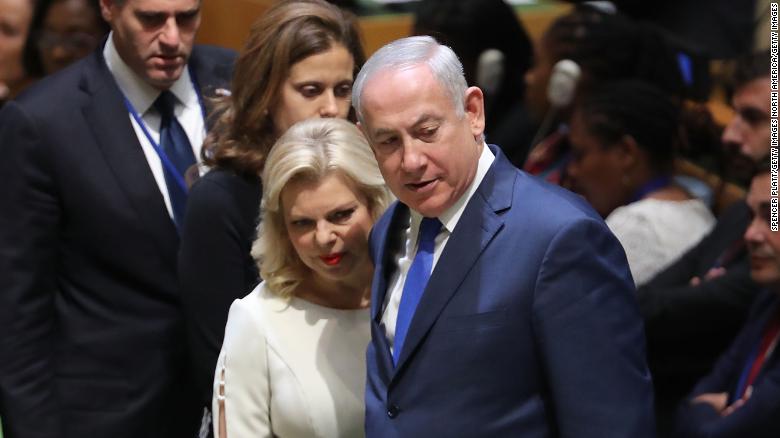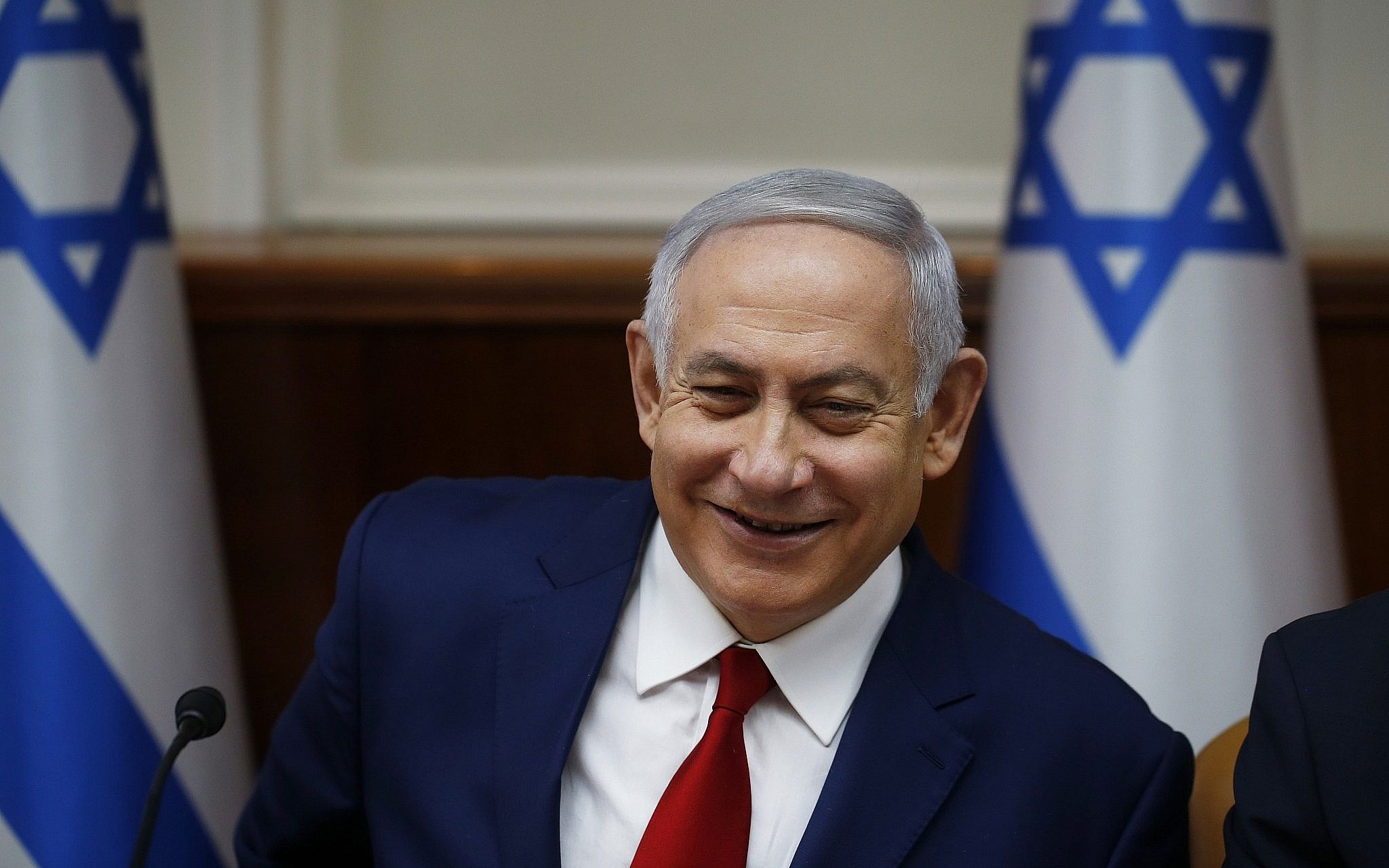
Over the weekend, Prime Minister Netanyahu officially became Israel's
longest-serving prime minister since the state was created in 1948.
And he could not have reached this historical milestone under stranger
circumstances.
Netanyahu has achieved this notable
record while currently governing the country without a mandate. In
spite of having been democratically elected to continue to rule the
country in the elections in 2015, the most recent round of elections
earlier this year did not produce any winners who could secure a mandate
to rule. A such, Netanyahu has remained in office as a caretaker prime
minister until the next round of elections take place in September.
Without the support of the majority as required by our democracy. And
it is in this role as caretaker prime minister that he has overtaken
David Ben Gurion's previous record of having ruled over Israel for 13
years and 127 days, in spite of the heavy cloud that hangs over his
head. He also holds the record as the prime minister to have the
longest uninterrupted term as prime minister (10 years and 110 days and
counting).
There can be no doubt or argument that
Netanyahu has devoted much of his life in the service of the State of
Israel. Nor can there be any doubt about some of his significant
achievements during this period. Credit needs to be given for this. As
can be anticipated with any leader and public official, he has had his
notable failures too. And, as much as he would like to achieve the
legacy of having been the protector of Israel during his term in office,
it seems that he is likely to be remembered for the scandal that
currently surrounds him, irrespective of how it ultimately turns out.
This is a real pity for the longest-serving prime minister in Israel's
history.
Along with this record, come many unwelcome
and undesirable effects of the length of time that Netanyahu has been in
office. "Power tends to corrupt, and absolute power corrupts
absolutely. Great men are almost always bad men." This quotation by
Lord Acton from 1887 seems as relevant now as it was then, and can
easily be applied to Netanyahu in recent years. He has behaved in a
manner that indicates his sense of invincibility, that has only been
strengthened by success that he has enjoyed at the polls. The people
gave him the power, but it seems as though this has been taken for
granted as a result of it lasting for too long. The feeling that he
will have enough public support to rule irrespective of how he behaves,
has led him to really test this out with behaviour by him and members of
his family that is way beyond what could reasonably be tolerated from
an elected leader. It is no coincidence that other democracies, such as
the USA, put a limit on how long the elected leader is allowed to be in
office for. I believe that such a limit is healthy and much-needed in
Israel.
In addition to the promotion of unlawful
behaviour, the lack of limit on time in office promotes another
unwelcome consequence. This is the lack of incentive to groom new young
leaders to assume the senior positions. In Netanyahu's case, he has
done everything in his power to ensure that there are no pretenders to
the throne who could possibly cause a threat to his continued rule. He
has no interest at all to ensure that a new generation of leaders is
prepared to take over from him when he finally leaves office. There is a
huge chasm in his party and in the country at the moment between the
current prime minister and those who may take over from him. This is
surely undesirable and unhealthy.
As a result of his
extended term in office and the anti feeling that this has generated
against Netanyahu, the upcoming election will ignore the main issues of
the day that face Israel. Instead of focusing on security, economy,
education or health care, the election will be all about how to keep
Netanyahu in office or, more likely, how to remove him. The country is
currently divided into three camps; those who support Netanyahu at any
price, those who would vote for Mickey Mouse if he was a candidate only
to remove Netanyahu, and those who feel forced to vote for Netanyahu
simply because there is no alternative credible candidate. This is
surely not what our democracy is about.
Now that the
record has been achieved and past, and Prime Minister Netanyahu has
become Israel's longest- ruling prime minister, the time has come to
change the laws to prevent anybody else from surpassing this record.
Democracy is not only about holding elections, it is also about ensuring
that the best quality candidates are encouraged to come forward and
have an equal chance of being elected on merit. Our democracy is sorely
missing this right now.
Showing posts with label Prime Minister. Show all posts
Tuesday, 23 July 2019
Wednesday, 7 March 2018
Corruption and Israeli Democracy
Accusations of corruption and behaviour unbefitting of a person acting in a position of trust as a minister or prime minister of the country have been circulating around Prime Minister Netanyahu for some time. The stories and accusations are not new. Things did, however, take a different turn over the past couple of weeks. The recommendation by the police to the attorney-general that the prime minister should be indicted on charges of corruption, bribery and breach of trust in two of the cases has put a different complexity on this sorry case. This, added to a new story and set of accusations coming out of the woodwork with a former close associate of the prime minister turning state witness, has served to tighten the squeeze on Netanyahu and those around him. The accusations made by the new state witness, Shlomo Filber, sound almost inconceivable. If only a small proportion of the accusations are proven to be true, it would make place Netanyahu in an untenable position regarding his ability to continue to serve as prime minister.
For now, however, that is all that they are. Accusations. The stories sound like they could come from a far-flung land where there is no consideration for rule of law or fiduciary responsibility towards those who elected the prime minister into office. Many of them are corroborated by people who are seemingly unrelated to each other, and are reported to have been repeated in different situations involving different people and issues. In the way that they have been presented, the stories sound almost like they could be true. Any objective person with a high level ability to assess fact from fiction could easily be convinced that the accusations are all based on truth. And yet, we still do not know. We do not know because the stories have yet to be verified by an objective court of law that was set up for the purpose of evaluating the credibility and truth of such accusations. All we know is that certain people, not an insignificant number of people, have the incentive to publicly tell stories of bribery, corruption and betrayal about the prime minister and his associates, while others have the incentive to defend them. That is as much as we know. Nothing more. So how can it be that a democracy allows public officials to be charged, vilified and castigated in public like this, when no formal charges have been laid, and when there is no attempt to bring them before a duly constituted court of law?
Don't get me wrong. I have listened to and read about the accusations of bad behaviour on the part of the prime minister, his wife, members of his family and others in his close circle. It seems inconceivable to me that such stories could be made up by people, purely for the intention of weakening or unseating the prime minister. It seems unbelievable that seemingly similar patterns of behaviour could be concocted by so many different people from different spheres of life and with different interests. It seems to me that, where there is smoke, there is fire. And I am a great believer in elected officials being held accountable for all their actions, good and bad. I am also a great believer in the basic democratic tenet that everybody is innocent until proven guilty by a duly established court of law to examine the particular issues. If the accusations are so convincing, and if the police have recommended on the basis of evidence in their possession that there is a case to answer, why is the case not being answered?
I am not sure of the answer to this question, but I remain convinced of a few other important aspects of our democracy. I believe that the trial by public opinion is wrong, and wholly undemocratic. It is my view that all the investigations that are being conducted into the prime minister's behaviour, should have taken place behind closed doors. Until the moment that the attorney-general is ready to formally lay legal charges to be answered in a court of law, I think that the details of all that we have been bombarded with, should have been kept away from the public eye. Instead, we have experienced a trial by public kangaroo court, and directed by the press. All of the protagonists in this sordid affair, including those who have been accused, the accusers, those involved around the edges, the press and the general public seem to have some axe to grind on the issue of the prime minister and his family. It is difficult to work out who we should believe, as more and more unbelievable stories surface daily. The country seems to be split almost down the middle between those who support the prime minister and wish to see him stay in office, as opposed to those who wish to see him unseated, jailed and consigned to political purgatory.
In addition to holding our public officials up to the light and expecting them to be fully accountable to the voting public for their actions in office, our democracy should also protect them against unreasonable and frivolous claims that could damage them and our democracy. Prime Minister Netanyahu has effectively been rendered incapable of carrying out his highly important prime ministerial duties, as he is spending most of his time these days bring questioned, defending his character against the accusations, and trying to influence the public about the nature of these accusations. Who is running our country and keeping it secure while he is worrying about the next story that accuses him of inappropriate behaviour? If the attorney-general considers the police investigation to have produced a case for the prime minister to answer in court, Netanyahu should resign his position and answer the accusations against him. If it turns out that the court does not find the accusations against him worthy of a guilty verdict, he should be able to return to the prime minister's office to resume his duties.
Israeli democracy should not tolerate corruption of public officials under any circumstances. It should also protect them while in office against any attempts to disturb their ability to carry out their jobs. The democratic process should determine that, at a certain point, elected officials should be relieved of their duties to allow them to answer properly-constituted charges that have sufficient basis to believe that they have a reasonable possibility of being upheld by a court. Until that moment, they should be allowed to get on with their job.
In my opinion, democracy goes both ways. At the moment, we are suffering the worst of all situations that a democracy gives us. The people of Israel deserve more, and it has come time to examine our system to ensure that democracy for us protects both the state and the individuals, rather than the unsavoury and undesirable position that our country current finds itself in.
For now, however, that is all that they are. Accusations. The stories sound like they could come from a far-flung land where there is no consideration for rule of law or fiduciary responsibility towards those who elected the prime minister into office. Many of them are corroborated by people who are seemingly unrelated to each other, and are reported to have been repeated in different situations involving different people and issues. In the way that they have been presented, the stories sound almost like they could be true. Any objective person with a high level ability to assess fact from fiction could easily be convinced that the accusations are all based on truth. And yet, we still do not know. We do not know because the stories have yet to be verified by an objective court of law that was set up for the purpose of evaluating the credibility and truth of such accusations. All we know is that certain people, not an insignificant number of people, have the incentive to publicly tell stories of bribery, corruption and betrayal about the prime minister and his associates, while others have the incentive to defend them. That is as much as we know. Nothing more. So how can it be that a democracy allows public officials to be charged, vilified and castigated in public like this, when no formal charges have been laid, and when there is no attempt to bring them before a duly constituted court of law?
Don't get me wrong. I have listened to and read about the accusations of bad behaviour on the part of the prime minister, his wife, members of his family and others in his close circle. It seems inconceivable to me that such stories could be made up by people, purely for the intention of weakening or unseating the prime minister. It seems unbelievable that seemingly similar patterns of behaviour could be concocted by so many different people from different spheres of life and with different interests. It seems to me that, where there is smoke, there is fire. And I am a great believer in elected officials being held accountable for all their actions, good and bad. I am also a great believer in the basic democratic tenet that everybody is innocent until proven guilty by a duly established court of law to examine the particular issues. If the accusations are so convincing, and if the police have recommended on the basis of evidence in their possession that there is a case to answer, why is the case not being answered?
I am not sure of the answer to this question, but I remain convinced of a few other important aspects of our democracy. I believe that the trial by public opinion is wrong, and wholly undemocratic. It is my view that all the investigations that are being conducted into the prime minister's behaviour, should have taken place behind closed doors. Until the moment that the attorney-general is ready to formally lay legal charges to be answered in a court of law, I think that the details of all that we have been bombarded with, should have been kept away from the public eye. Instead, we have experienced a trial by public kangaroo court, and directed by the press. All of the protagonists in this sordid affair, including those who have been accused, the accusers, those involved around the edges, the press and the general public seem to have some axe to grind on the issue of the prime minister and his family. It is difficult to work out who we should believe, as more and more unbelievable stories surface daily. The country seems to be split almost down the middle between those who support the prime minister and wish to see him stay in office, as opposed to those who wish to see him unseated, jailed and consigned to political purgatory.
In addition to holding our public officials up to the light and expecting them to be fully accountable to the voting public for their actions in office, our democracy should also protect them against unreasonable and frivolous claims that could damage them and our democracy. Prime Minister Netanyahu has effectively been rendered incapable of carrying out his highly important prime ministerial duties, as he is spending most of his time these days bring questioned, defending his character against the accusations, and trying to influence the public about the nature of these accusations. Who is running our country and keeping it secure while he is worrying about the next story that accuses him of inappropriate behaviour? If the attorney-general considers the police investigation to have produced a case for the prime minister to answer in court, Netanyahu should resign his position and answer the accusations against him. If it turns out that the court does not find the accusations against him worthy of a guilty verdict, he should be able to return to the prime minister's office to resume his duties.
Israeli democracy should not tolerate corruption of public officials under any circumstances. It should also protect them while in office against any attempts to disturb their ability to carry out their jobs. The democratic process should determine that, at a certain point, elected officials should be relieved of their duties to allow them to answer properly-constituted charges that have sufficient basis to believe that they have a reasonable possibility of being upheld by a court. Until that moment, they should be allowed to get on with their job.
In my opinion, democracy goes both ways. At the moment, we are suffering the worst of all situations that a democracy gives us. The people of Israel deserve more, and it has come time to examine our system to ensure that democracy for us protects both the state and the individuals, rather than the unsavoury and undesirable position that our country current finds itself in.
Saturday, 28 March 2015
The People of Israel Have Spoken
The ballots have been counted in Israel's
election 2015, and people have recovered from the surprise of a result which
has deviated substantially from the opinion polls and exit polls. I
believe that the surprise comes, not from the result itself, but because of the
extent to which people's expectations were inaccurately set by the polls in the
media. The people of Israel have spoken, and they have spoken loud and
clear.
It is possible to draw a number of conclusions from the comprehensive and unexpected manner in which Prime Minister Netanyahu and his Likud party have been returned to power.
1. Security issues are at the top of the national agenda.
Prime Minister Netanyahu's election platform was based upon security issues, and the nature of the threat that exists against the State of Israel. Some have called it scare-mongering people to believe that Israel is under an existential threat, in order to convince people to vote for him. He even appeared in front of the American Congress during the latter stages of the election campaign, in an attempt to reinforce this point for the Israeli public, the American public and the world at large. With the strength of anti-Israel feeling evident within the international community, within the United Nations and evident from individuals around the world, it hardly comes as a surprise that the Israeli people believe him when he is says that Israel is under threat. And when considering the rhetoric coming from countries like Iran and countries along Israel's borders, it is easy to understand why this feeling is so great. When adding the growing levels of anti-Semitism, much of it dressed up as anti-Israel views, I don't believe that this threat arises from paranoia. It is true to say that Israel is not on the verge of being wiped out, as was the case a few times in the past. The Israeli army is certainly strong enough to stand up to any physical threat to our country. This does not, however, diminish the threat and the desires of Israel's enemies to destroy her. The majority of the Israeli electorate believe that Israel is under a substantial international threat, and have good reason to believe this.
2. Peace with the Palestinians is not a priority.
It is noticeable that the issue of peace with the Palestinians played no role in the election campaigns of any of the parties. The left-wing parties did not seek election on the strength of promises to bring compromises in the interests of reaching peace with the Palestinians, and the right-wing parties did not seek election on the basis that they would not be prepared to enter into peace with the Palestinians. It would appear as though the Israeli public has understood that peace is unattainable with people who are not prepared to recognise that Israel is a Jewish country. This is despite the fact that it is a most basic Israeli aspiration to seek a just and equitable peace. The realisation that the Palestinians are not willing or ready to agree upon the compromises that are necessary to reach a peace, has not been easy to understand. It is tough to accept that the Palestinian leadership has no intention of entering into a peace agreement at all. It is unfortunate that the international community continues to try to squeeze a square peg into a round hole, and to insist that now is the time to force the parties to negotiate to reach a peace agreement. It is even more unfortunate that the international community places the blame on Israel for the lack of progress towards peace.
3. Tzipi Livni is unelectable.
Isaac Herzog sought out Tzipi Livni to join him at the head of the Zionist Union list. The combined list was regarded as greater than the sum of its component parts, and this was borne out by the election result. It seems unlikely that Labour and Hatnua could have secured 24 seats if they had run as separate lists. When agreeing to form the Zionist Union list, Herzog and Livni also agreed to rotate the position of prime minister between the two of them in the event that their list should win the election. There were many in the Labour Party and across the country who wondered why Herzog had agreed to conceed such a strong position to Livni, when her power to bring support to the Zionist Union was questionable. Only one day before the election, Tzipi Livni announced that she was giving up on her right to be prime minister in the rotation agreement. This was widely interpreted as the Zionist Union acknowledging that more people would be inclined to vote for them if they knew that Livni would not be prime minister. The act was also seen as an immense act of weakness on the part of the tough lady. It was also the final word in confirming that Tzipi Livni is unelectable as prime minister. She lost credibility while she migrated from the Likud, across Kadima and Hatnua to ultimately team up with Labour at the opposite end of the political spectrum. She was unable to form a government in 2009, despite her Kadima party won the highest number of seats in the general election. This act of her giving up her right to be prime minister is the final nail in her prime ministerial ambitions. It also opens a broad debate about whether Isaac Herzog is electable as prime minster.
4. Toughness by Israel's leaders on the international stage is desirable and respected.
Prime Minister Netanyahu has always been a master at presenting Israel's case on the international stage, and showing toughness and being unashamed and uncompromising in doing so. He is the new type of Jew that Jabotinsky could only dream of during the years of the pogroms in Eastern Europe. Despite the fact that a number of generations have come and gone since Jabotinsky's time when he dreamed of this Jew, it seems as though Israelis continue to like, respect and desire this quality that Netanyahu possesses. At a time when attacks on Israel in the international community are at an unprecedented high and when anti-Semitism around the world is rising to levels that are unknown since the Shoah, there is something appealing to Israeli eyes and ears in a leader who is prepared to confront and beat these attacks by facing them head-on. The sight of him addressing the US Congress just before the election will have confirmed Netanyahu's ability and willingness to do this for any Israeli who doubted it.
5. Bias in the media counts for nothing.
There can be no doubt that the Israeli media waged a campaign against Prime Minister Netanyahu in order to remove him from the prime minister's residence. He tried calling out the Yediot Haachronot and its online version Ynet during the course of the election campaign, by accusing the editor Noni Moses of publishing untruths in an attempt to discredit him. Israel's media, and its lack of independence and editorial integrity, has come under scrutiny in recent months. It is not only the anti-Netanyahu camp that stands accused, but equally Sheldon Adelson's Yisrael Hayom, and its unashamed support for Netanyahu. The Israeli people have shown that, despite the vicious and overwhelming anti-Netanyahu sentiments published in many Israel printed and online newspapers, they have been able to make up their minds independently about who they wish to lead the country over the next 4 years. Even the opinion polls, that did not even get close to the election result at any point, could not influence the electorate. Since the election result has been made known, the anti-Netanyahu lobby has not given up and continues to castigate Israelis for making the wrong choice in the election. They make an even greater laughing stock of themselves by doing this.
6. Even Obama cannot unseat Netanyahu.
US President Barack Obama refused to meet with Prime Minister Netanyahu during his recent trip to address the US Congress in Washington. The reason given for him not meeting with Netanyahu was that he did not wish to influence Israel's election result in any way. When looking at Obama's actions in the period leading up to the election, and particularly his response to the election result, it seems that nothing could be further from the truth. There is no secret that Obama has no time or patience for Prime Minister Netanyahu. There is no secret that Obama would have been much happier if somebody else, anybody, would have been elected as the prime minister in the election. There were strong rumours that Obama was somehow behind funding the V15 group that rose up in Israel prior to the election in attempt to unseat Netanyahu almost at any price. The slogan of this group, and also much of the rhetoric behind the Zionist Union's election campaign, was anti-Netanyahu. They were encouraging people to vote against Netanyahu, as opposed to enticing people to make a positive choice and to vote for something that they do want. My interpretation of Obama's decision not to meet Netanyahu prior to the election, was a real attempt to influence people to vote against him, and not to stay neutral as he was trying to get us to believe. Perhaps he was concerned that a meeting may have helped to convince people to vote for a man that he would like to see consigned to the dustbin of history. The Israeli people have shown that even the most powerful politician in the world cannot influence their choice. This is not a happy moment for Obama, and his concerted campaign against Netanyahu and Israel since the election has demonstrated that he is a very sore loser. It seems inconceivable that US foreign policy in the Middle East can suddenly change as a result of an election result and a few statements from Netanyahu. Obama's message that "this is not personal" has shown to be completely false. Ultimately, the vote of the Israeli people is stronger, even than Obama.
Israelis are notoriously independent in their views and actions, and have a reputation for being steadfast and stubborn. This has come through very loudly in the 2015 election. And all of this with a turnout of voters in excess of 70%, the highest number since 1999. Even the number of Arab voters was more than 60%, the highest number in history. Despite numerous attempts to influence against the re-election of Prime Minister Netanyahu, he has returned to power with a stronger mandate than before. He is on the verge of becoming Israel's longest-serving prime minister in history. Israel is held up as the only real democracy in the Middle East, and the democratic process has spoken. The time has come for those who preferred a different result, and who would have liked to see Herzog as prime minster, to rally around and accept the result that Israeli democracy has selected. Continuing to fight against it does not serve a purpose. This is not to say that those who justifiably oppose Netanyahu's policies should be silent and not express their views. There is, however, a democratic way of doing this. This does not include intervention from the US president, or unjustified attacks from the media. Democracy is alive and well in Israel, and the people have spoken.
It is possible to draw a number of conclusions from the comprehensive and unexpected manner in which Prime Minister Netanyahu and his Likud party have been returned to power.
1. Security issues are at the top of the national agenda.
Prime Minister Netanyahu's election platform was based upon security issues, and the nature of the threat that exists against the State of Israel. Some have called it scare-mongering people to believe that Israel is under an existential threat, in order to convince people to vote for him. He even appeared in front of the American Congress during the latter stages of the election campaign, in an attempt to reinforce this point for the Israeli public, the American public and the world at large. With the strength of anti-Israel feeling evident within the international community, within the United Nations and evident from individuals around the world, it hardly comes as a surprise that the Israeli people believe him when he is says that Israel is under threat. And when considering the rhetoric coming from countries like Iran and countries along Israel's borders, it is easy to understand why this feeling is so great. When adding the growing levels of anti-Semitism, much of it dressed up as anti-Israel views, I don't believe that this threat arises from paranoia. It is true to say that Israel is not on the verge of being wiped out, as was the case a few times in the past. The Israeli army is certainly strong enough to stand up to any physical threat to our country. This does not, however, diminish the threat and the desires of Israel's enemies to destroy her. The majority of the Israeli electorate believe that Israel is under a substantial international threat, and have good reason to believe this.
2. Peace with the Palestinians is not a priority.
It is noticeable that the issue of peace with the Palestinians played no role in the election campaigns of any of the parties. The left-wing parties did not seek election on the strength of promises to bring compromises in the interests of reaching peace with the Palestinians, and the right-wing parties did not seek election on the basis that they would not be prepared to enter into peace with the Palestinians. It would appear as though the Israeli public has understood that peace is unattainable with people who are not prepared to recognise that Israel is a Jewish country. This is despite the fact that it is a most basic Israeli aspiration to seek a just and equitable peace. The realisation that the Palestinians are not willing or ready to agree upon the compromises that are necessary to reach a peace, has not been easy to understand. It is tough to accept that the Palestinian leadership has no intention of entering into a peace agreement at all. It is unfortunate that the international community continues to try to squeeze a square peg into a round hole, and to insist that now is the time to force the parties to negotiate to reach a peace agreement. It is even more unfortunate that the international community places the blame on Israel for the lack of progress towards peace.
3. Tzipi Livni is unelectable.
Isaac Herzog sought out Tzipi Livni to join him at the head of the Zionist Union list. The combined list was regarded as greater than the sum of its component parts, and this was borne out by the election result. It seems unlikely that Labour and Hatnua could have secured 24 seats if they had run as separate lists. When agreeing to form the Zionist Union list, Herzog and Livni also agreed to rotate the position of prime minister between the two of them in the event that their list should win the election. There were many in the Labour Party and across the country who wondered why Herzog had agreed to conceed such a strong position to Livni, when her power to bring support to the Zionist Union was questionable. Only one day before the election, Tzipi Livni announced that she was giving up on her right to be prime minister in the rotation agreement. This was widely interpreted as the Zionist Union acknowledging that more people would be inclined to vote for them if they knew that Livni would not be prime minister. The act was also seen as an immense act of weakness on the part of the tough lady. It was also the final word in confirming that Tzipi Livni is unelectable as prime minister. She lost credibility while she migrated from the Likud, across Kadima and Hatnua to ultimately team up with Labour at the opposite end of the political spectrum. She was unable to form a government in 2009, despite her Kadima party won the highest number of seats in the general election. This act of her giving up her right to be prime minister is the final nail in her prime ministerial ambitions. It also opens a broad debate about whether Isaac Herzog is electable as prime minster.
4. Toughness by Israel's leaders on the international stage is desirable and respected.
Prime Minister Netanyahu has always been a master at presenting Israel's case on the international stage, and showing toughness and being unashamed and uncompromising in doing so. He is the new type of Jew that Jabotinsky could only dream of during the years of the pogroms in Eastern Europe. Despite the fact that a number of generations have come and gone since Jabotinsky's time when he dreamed of this Jew, it seems as though Israelis continue to like, respect and desire this quality that Netanyahu possesses. At a time when attacks on Israel in the international community are at an unprecedented high and when anti-Semitism around the world is rising to levels that are unknown since the Shoah, there is something appealing to Israeli eyes and ears in a leader who is prepared to confront and beat these attacks by facing them head-on. The sight of him addressing the US Congress just before the election will have confirmed Netanyahu's ability and willingness to do this for any Israeli who doubted it.
5. Bias in the media counts for nothing.
There can be no doubt that the Israeli media waged a campaign against Prime Minister Netanyahu in order to remove him from the prime minister's residence. He tried calling out the Yediot Haachronot and its online version Ynet during the course of the election campaign, by accusing the editor Noni Moses of publishing untruths in an attempt to discredit him. Israel's media, and its lack of independence and editorial integrity, has come under scrutiny in recent months. It is not only the anti-Netanyahu camp that stands accused, but equally Sheldon Adelson's Yisrael Hayom, and its unashamed support for Netanyahu. The Israeli people have shown that, despite the vicious and overwhelming anti-Netanyahu sentiments published in many Israel printed and online newspapers, they have been able to make up their minds independently about who they wish to lead the country over the next 4 years. Even the opinion polls, that did not even get close to the election result at any point, could not influence the electorate. Since the election result has been made known, the anti-Netanyahu lobby has not given up and continues to castigate Israelis for making the wrong choice in the election. They make an even greater laughing stock of themselves by doing this.
6. Even Obama cannot unseat Netanyahu.
US President Barack Obama refused to meet with Prime Minister Netanyahu during his recent trip to address the US Congress in Washington. The reason given for him not meeting with Netanyahu was that he did not wish to influence Israel's election result in any way. When looking at Obama's actions in the period leading up to the election, and particularly his response to the election result, it seems that nothing could be further from the truth. There is no secret that Obama has no time or patience for Prime Minister Netanyahu. There is no secret that Obama would have been much happier if somebody else, anybody, would have been elected as the prime minister in the election. There were strong rumours that Obama was somehow behind funding the V15 group that rose up in Israel prior to the election in attempt to unseat Netanyahu almost at any price. The slogan of this group, and also much of the rhetoric behind the Zionist Union's election campaign, was anti-Netanyahu. They were encouraging people to vote against Netanyahu, as opposed to enticing people to make a positive choice and to vote for something that they do want. My interpretation of Obama's decision not to meet Netanyahu prior to the election, was a real attempt to influence people to vote against him, and not to stay neutral as he was trying to get us to believe. Perhaps he was concerned that a meeting may have helped to convince people to vote for a man that he would like to see consigned to the dustbin of history. The Israeli people have shown that even the most powerful politician in the world cannot influence their choice. This is not a happy moment for Obama, and his concerted campaign against Netanyahu and Israel since the election has demonstrated that he is a very sore loser. It seems inconceivable that US foreign policy in the Middle East can suddenly change as a result of an election result and a few statements from Netanyahu. Obama's message that "this is not personal" has shown to be completely false. Ultimately, the vote of the Israeli people is stronger, even than Obama.
Israelis are notoriously independent in their views and actions, and have a reputation for being steadfast and stubborn. This has come through very loudly in the 2015 election. And all of this with a turnout of voters in excess of 70%, the highest number since 1999. Even the number of Arab voters was more than 60%, the highest number in history. Despite numerous attempts to influence against the re-election of Prime Minister Netanyahu, he has returned to power with a stronger mandate than before. He is on the verge of becoming Israel's longest-serving prime minister in history. Israel is held up as the only real democracy in the Middle East, and the democratic process has spoken. The time has come for those who preferred a different result, and who would have liked to see Herzog as prime minster, to rally around and accept the result that Israeli democracy has selected. Continuing to fight against it does not serve a purpose. This is not to say that those who justifiably oppose Netanyahu's policies should be silent and not express their views. There is, however, a democratic way of doing this. This does not include intervention from the US president, or unjustified attacks from the media. Democracy is alive and well in Israel, and the people have spoken.
Wednesday, 30 January 2013
Lapid Becomes Kingmaker
The election is over, the votes are in and the results are final.
Despite this, we still don’t really know where we stand. The coalition
negotiations are yet to take place, which will probably add most spice
to the process. The big story coming out of the election is the way in
which Yair Lapid managed to propel his Yesh Atid (there is a future)
party into second place by capturing 19 seats in the Knesset. None of
the opinion polls ahead of the election gave any indication that Yesh
Atid was on the verge of such a significant achievement in its first
election. Many are wondering how Yesh Atid managed to sneak in under
the radar in this way, and what the future holds for Yair Lapid and his
new party.
It seems as though Lapid managed to pace his election campaign perfectly. He peaked just as people were heading to the polls, still undecided about whose ticket they would place in their voting envelope. An exit poll of Yesh Atid voters revealed that as many as 30% decided to vote for Lapid’s party in the last 4 days before the election. This is an astonishing statistic, and reveals how little previously established voting preferences counted for in this election. I also think that the combination of right of centre diplomatic polices, centre social policies and the insistence that all groups in society bear the burden equally, proved to be a popular platform for voters. In particular, the idea that concessions should be given neither to the super-wealthy nor to the ultra-Orthodox, reflects a sense of fairness and equality that most Israelis can identify with. Additionally, Lapid’s view that civil and social issues should have a higher priority on the new government’s agenda than diplomatic issues, has enjoyed a great deal of support. Without minimising the threat to Israel or the level of its importance, many Israelis are tired of hearing the prime minister spend most of his time talking about Iran. They would prefer to hear about how he will strengthen the economy, and make it easier for people to earn a decent living. Lapid sensed this, and managed to incorporate these views into his platform.
Although the son of long-time politician Tommy Lapid, Yair Lapid has no political experience at all. He is well-known in Israel as a journalist and TV anchor-man, a fact that clearly assisted him in his campaign. He needs to use the next few years to accumulate as much political experience as he can if he is truly going to be able to take on the job of leading a government in the future, something he claims to have ambitions to do. This also means that he has little choice but to join the coalition government that Benjamin Netanyahu is currently constructing. Acting as leader of the opposition cannot be compared to taking on a senior cabinet role in government. If Lapid is to progress towards his ambition of being a future prime minister of Israel, he will join the coalition at almost any price.
Despite having stood on a platform that opposed many of the outgoing government’s policies, Lapid and Netanyahu are politically not too far apart. On paper, Lapid and Netanyahu have remarkably similar diplomatic policies. Lapid appears more determined to create an environment that will encourage direct talks with the Palestinians than Netanyahu has shown himself to be. Despite this, Lapid ‘s platform is clear in that it does not advocate the splitting of Jerusalem or giving up on the large settlement blocs in the West Bank in pursuit of a two-state solution. The main difference between Lapid and Netanyahu becomes more obvious when looking at civil and economic policies. Lapid is determined to pursue a responsible economic policy, which is also satisfies the calls for social justice. Lapid’s interpretation of this means that he wishes to ensure that the social burden is equalised across all groups in society. For the most part, this will manifest itself by reducing or withdrawing the special advantages that the ultra-Orthodox groups have enjoyed over many years. In practice, Lapid aims to ensure that there is no wide-ranging exemption for the ultra-Orthodox from military service (or some form of national service), and he will be seeking to reduce or withdraw the special government grants that are paid to ultra-Orthodox men who are studying in yeshivot (religious learning institutions). These two aspects have proved to be a drain on Israeli coffers, and have been the cause of great conflict and anger in Israeli society.
The difference between Lapid and Netanyahu is not because they have different basic convictions on the social and economic issues. On the contrary, I believe that their basic beliefs are extremely similar. The issue is that Netanyahu has been forced to accommodate the requirements of the ultra-Orthodox bloc in order to secure his position as prime minister. He has played to the religious voters who support Likud, as well as to the ultra-Orthodox parties who he has been forced to share a coalition table with in the past. This has meant allocating vast sums of money to maintain and support the stipends being paid to yeshiva students, and perpetuating their exemption from military service. Both of these measures are extremely unpopular with the non-religious electorate, and contribute in a measurable way to lack of equality in Israeli society. The decision earlier in 2012 by the High Court of Justice that the exemption from military service granted to ultra-Orthodox men is unconstitutional, has pushed the government into a corner to force it to make some changes to this policy. If Netanyahu is able to structure a coalition to exclude the ultra-Orthodox parties, there is a greater likelihood that the required changes on the military exemption will be enacted in spite of the protests on the part of the religious groups.
The ultra-Orthodox parties have sensed the danger to their power base, and have decided to create single bloc out of the seats that were won by the two partes – Shas with 11 seats and the United Torah Judaism party with 7 seats. Their 18 seats is a counter-balance to Lapid’s 19 seats, and forces Netanyahu to make a choice between one or the other. It is almost inconceivable that Lapid would sit in a government with the religious parties, and vice versa. It is my expectation that, after all the negotiations are completed, Lapid will be in the government and the religious bloc will not.
As far as I can tell, Yair Lapid’s longer-term outlook looks more tenuous. He has successfully created a political party that bases most of its strength on him as the leader. Aside from himself, the members of the Yesh Atid list are relatively unknown, and much lower profile. His platform of policies is not very unique, but rather borrows policies from many others, and packages them in a slightly different way. His ability to continue to present this package in a unique way is key to determining whether Yesh Atid is a one-hit wonder, or whether it will be around in the future. Political parties that were built around the fame and personality of their leader, have a poor track record in Israel. Yair’s own father led the Shinui party, a party that no longer exists. Similarly, Kadima that was built by Ariel Sharon, is in the process of dying. There are many other examples of this, and I predict that Tzipi Livni’s Hatnua party will go the same way. Perhaps Lapid has achieved what he needs from Yesh Atid. His strategy may be to continue to lead the party in the current Knesset to his advantage, and then to fold into one of the established parties, probably Likud. This is probably the best solution for Lapid to ensure his long-term survival in politics.
The tens of thousands of people who voted for Lapid are hoping that he will succeed in converting his written manifesto into policies on the ground, to make a real difference to Israeli society. If he is able to achieve even a small fraction of what he set out to do, the kingmaker may go on to become a king in his own right. Failure to do so my relegate him to the political trash pile. The question is whether he is ready to take on the realities of Israeli politics, and to make them work to his advantage. The challenge is a tough one.
It seems as though Lapid managed to pace his election campaign perfectly. He peaked just as people were heading to the polls, still undecided about whose ticket they would place in their voting envelope. An exit poll of Yesh Atid voters revealed that as many as 30% decided to vote for Lapid’s party in the last 4 days before the election. This is an astonishing statistic, and reveals how little previously established voting preferences counted for in this election. I also think that the combination of right of centre diplomatic polices, centre social policies and the insistence that all groups in society bear the burden equally, proved to be a popular platform for voters. In particular, the idea that concessions should be given neither to the super-wealthy nor to the ultra-Orthodox, reflects a sense of fairness and equality that most Israelis can identify with. Additionally, Lapid’s view that civil and social issues should have a higher priority on the new government’s agenda than diplomatic issues, has enjoyed a great deal of support. Without minimising the threat to Israel or the level of its importance, many Israelis are tired of hearing the prime minister spend most of his time talking about Iran. They would prefer to hear about how he will strengthen the economy, and make it easier for people to earn a decent living. Lapid sensed this, and managed to incorporate these views into his platform.
Although the son of long-time politician Tommy Lapid, Yair Lapid has no political experience at all. He is well-known in Israel as a journalist and TV anchor-man, a fact that clearly assisted him in his campaign. He needs to use the next few years to accumulate as much political experience as he can if he is truly going to be able to take on the job of leading a government in the future, something he claims to have ambitions to do. This also means that he has little choice but to join the coalition government that Benjamin Netanyahu is currently constructing. Acting as leader of the opposition cannot be compared to taking on a senior cabinet role in government. If Lapid is to progress towards his ambition of being a future prime minister of Israel, he will join the coalition at almost any price.
Despite having stood on a platform that opposed many of the outgoing government’s policies, Lapid and Netanyahu are politically not too far apart. On paper, Lapid and Netanyahu have remarkably similar diplomatic policies. Lapid appears more determined to create an environment that will encourage direct talks with the Palestinians than Netanyahu has shown himself to be. Despite this, Lapid ‘s platform is clear in that it does not advocate the splitting of Jerusalem or giving up on the large settlement blocs in the West Bank in pursuit of a two-state solution. The main difference between Lapid and Netanyahu becomes more obvious when looking at civil and economic policies. Lapid is determined to pursue a responsible economic policy, which is also satisfies the calls for social justice. Lapid’s interpretation of this means that he wishes to ensure that the social burden is equalised across all groups in society. For the most part, this will manifest itself by reducing or withdrawing the special advantages that the ultra-Orthodox groups have enjoyed over many years. In practice, Lapid aims to ensure that there is no wide-ranging exemption for the ultra-Orthodox from military service (or some form of national service), and he will be seeking to reduce or withdraw the special government grants that are paid to ultra-Orthodox men who are studying in yeshivot (religious learning institutions). These two aspects have proved to be a drain on Israeli coffers, and have been the cause of great conflict and anger in Israeli society.
The difference between Lapid and Netanyahu is not because they have different basic convictions on the social and economic issues. On the contrary, I believe that their basic beliefs are extremely similar. The issue is that Netanyahu has been forced to accommodate the requirements of the ultra-Orthodox bloc in order to secure his position as prime minister. He has played to the religious voters who support Likud, as well as to the ultra-Orthodox parties who he has been forced to share a coalition table with in the past. This has meant allocating vast sums of money to maintain and support the stipends being paid to yeshiva students, and perpetuating their exemption from military service. Both of these measures are extremely unpopular with the non-religious electorate, and contribute in a measurable way to lack of equality in Israeli society. The decision earlier in 2012 by the High Court of Justice that the exemption from military service granted to ultra-Orthodox men is unconstitutional, has pushed the government into a corner to force it to make some changes to this policy. If Netanyahu is able to structure a coalition to exclude the ultra-Orthodox parties, there is a greater likelihood that the required changes on the military exemption will be enacted in spite of the protests on the part of the religious groups.
The ultra-Orthodox parties have sensed the danger to their power base, and have decided to create single bloc out of the seats that were won by the two partes – Shas with 11 seats and the United Torah Judaism party with 7 seats. Their 18 seats is a counter-balance to Lapid’s 19 seats, and forces Netanyahu to make a choice between one or the other. It is almost inconceivable that Lapid would sit in a government with the religious parties, and vice versa. It is my expectation that, after all the negotiations are completed, Lapid will be in the government and the religious bloc will not.
As far as I can tell, Yair Lapid’s longer-term outlook looks more tenuous. He has successfully created a political party that bases most of its strength on him as the leader. Aside from himself, the members of the Yesh Atid list are relatively unknown, and much lower profile. His platform of policies is not very unique, but rather borrows policies from many others, and packages them in a slightly different way. His ability to continue to present this package in a unique way is key to determining whether Yesh Atid is a one-hit wonder, or whether it will be around in the future. Political parties that were built around the fame and personality of their leader, have a poor track record in Israel. Yair’s own father led the Shinui party, a party that no longer exists. Similarly, Kadima that was built by Ariel Sharon, is in the process of dying. There are many other examples of this, and I predict that Tzipi Livni’s Hatnua party will go the same way. Perhaps Lapid has achieved what he needs from Yesh Atid. His strategy may be to continue to lead the party in the current Knesset to his advantage, and then to fold into one of the established parties, probably Likud. This is probably the best solution for Lapid to ensure his long-term survival in politics.
The tens of thousands of people who voted for Lapid are hoping that he will succeed in converting his written manifesto into policies on the ground, to make a real difference to Israeli society. If he is able to achieve even a small fraction of what he set out to do, the kingmaker may go on to become a king in his own right. Failure to do so my relegate him to the political trash pile. The question is whether he is ready to take on the realities of Israeli politics, and to make them work to his advantage. The challenge is a tough one.
Tuesday, 22 January 2013
To Vote or Not to Vote? That is the Question.
The polls have now closed in the election for the 19th Knesset, and predictions of a low voter turnout have proved to be incorrect. Even though it was claimed that the election campaign failed to capture the imagination of the electorate, initial information is that this is the highest voter turnout since the 1999 election. When the votes have all been counted, it is expected that more than 70% of those entitled to vote will have cast a ballot. The positive trend even applies to the Arab Israeli sector, which traditionally has a much lower turnout than Jewish Israelis. Overall, this is good for Israel's democracy, and shows that Israeli voters are less apathetic than was originally thought. It is entirely logical for Israel to have high voter turnout. Jews were forced to suffer many years of being denied the right to determine their own destiny. This should drive people to flood polling stations to vote in order to influence how Jewish life in Israel will be conducted over the next parliament. There remain decisions to be taken which are of substantial political significance to Israelis concerning the future of the country, and the how to achieve peace in the promised land. Some may say that these are life and death decisions, and seem important enough to convince most to exercise their democratic right.
Despite the obvious compelling issues that drive Israelis to the polls in significant numbers, there are those who do so somewhat reluctantly. This is mainly because of the general disillusionment with politicians and the political system. Gone are the days when people stood for the Knesset purely for the purpose of serving Israelis and improving Israeli society. The concept of selfless service of our society seems to be a historical dinosaur in Israel, and indeed elsewhere around the world. While I am not suggesting that people should agree to serve in the Knesset or in government for free or without adequate reward, it is a pity that the reward has become more of the issue than the service. This has led to increased corruption, and much less trust in politicians and the system that governs the country. The fact that financial rewards can be extracted has the effect of attracting a certain type of person to stand for the Knesset. In my view, the public is justified in feeling negative towards politicians, particularly when it is considered that these are the people who will be determining our destiny.
The second reason why people may be reluctant to vote, is the feeling that there will not be any change to the current status quo. If this is so, why bother turning up to vote? It has been predicted throughout the election campaign that Netanyahu will be returned as prime minister. The person who is elected to lead the government is the most important issue at stake in the election. The rest is in the details. The fact that Netanyahu has continued to hold a seemingly unassailable advantage gives the feeling that votes cannot, and will not influence anything of any significance.
The government-sponsored advertising to encourage people to turn up to vote has been quite creative and entertaining. This can claim a great deal of credit for the high voter turnout. Unfortunately, not the same can be said for the party election broadcasts, and the party election campaigns. They have been uninspiring, and have not provoked much interest at all. Better campaigns would, almost certainly, have inspired undecided voters to come out to exercise their votes.
Only a few years ago, Israel had a voter turnout rate of over 80%, and was in the top 25 countries of vote turnout at general elections. The last three elections before today have shown a dramatic reduction in the number of voters turning out, to below 65%. The challenges facing Israel, and the importance of the decisions, are no less than those that Israel was forced to confront at the time of independence in 1948. Israelis are all required to serve in the army in defense of the country, and this reality should surely encourage people to vote in their droves. Casting a vote for the right option could literally save people's lives if a peace agreement can be reached with the Palestinians. For this reason, it is appropriate and pleasing that people have decided to exercise their vote today.
Initial exit polls show that the split between the left and the right-wing in the new Knesset will be very narrow. This reflects that huge dilemma facing Israelis with regard to the direction that should be taken in dealing with Palestinian issue. Can we trust that there is a way of agreeing a way to survive harmoniously side-by-side with a Palestinian state, or do we take statements at face value which threaten that the Palestinians will not rest until Israel is entirely destroyed? Most Israelis really wish to believe that there is a solution to give us the peace that we yearn for. Many believe that this is not achievable right now, due to the Palestinians taking each concession and using it as ammunition to destroy Israel further. Israelis are also split on the issue of how to deal with the social justice reforms that are being sought for the economy. How can we give the weaker members of our society the help that they need, without being irresponsible with the economy? These are extremely heavy and important issues, for which there are no easy answers. The country seems to be split almost down the middle on these matters.
Irrespective of who will ultimately occupy the prime minister's office, and who will sit in the Knesset, this day has been a great victory for democracy in our country. Many countries that achieve voter turnout in excess of 70%, are those where it is a criminal offence not to vote in the election. In Israel, such a law is not required in order to convince people to come to the ballots. We are extremely fortunate to have a Jewish state of our own, and to have the opportunity to vote in elections to participate in the determination of the destiny of our country and our people. This was finally achieved after many years of being denied the right to vote, and being denied the right to determine our destiny. The turnout today is a vote of thanks to the many heroes who fought so hard to get us to this position, and a tribute to the memories of so many lives which were lost in the process.
Despite the obvious compelling issues that drive Israelis to the polls in significant numbers, there are those who do so somewhat reluctantly. This is mainly because of the general disillusionment with politicians and the political system. Gone are the days when people stood for the Knesset purely for the purpose of serving Israelis and improving Israeli society. The concept of selfless service of our society seems to be a historical dinosaur in Israel, and indeed elsewhere around the world. While I am not suggesting that people should agree to serve in the Knesset or in government for free or without adequate reward, it is a pity that the reward has become more of the issue than the service. This has led to increased corruption, and much less trust in politicians and the system that governs the country. The fact that financial rewards can be extracted has the effect of attracting a certain type of person to stand for the Knesset. In my view, the public is justified in feeling negative towards politicians, particularly when it is considered that these are the people who will be determining our destiny.
The second reason why people may be reluctant to vote, is the feeling that there will not be any change to the current status quo. If this is so, why bother turning up to vote? It has been predicted throughout the election campaign that Netanyahu will be returned as prime minister. The person who is elected to lead the government is the most important issue at stake in the election. The rest is in the details. The fact that Netanyahu has continued to hold a seemingly unassailable advantage gives the feeling that votes cannot, and will not influence anything of any significance.
The government-sponsored advertising to encourage people to turn up to vote has been quite creative and entertaining. This can claim a great deal of credit for the high voter turnout. Unfortunately, not the same can be said for the party election broadcasts, and the party election campaigns. They have been uninspiring, and have not provoked much interest at all. Better campaigns would, almost certainly, have inspired undecided voters to come out to exercise their votes.
Only a few years ago, Israel had a voter turnout rate of over 80%, and was in the top 25 countries of vote turnout at general elections. The last three elections before today have shown a dramatic reduction in the number of voters turning out, to below 65%. The challenges facing Israel, and the importance of the decisions, are no less than those that Israel was forced to confront at the time of independence in 1948. Israelis are all required to serve in the army in defense of the country, and this reality should surely encourage people to vote in their droves. Casting a vote for the right option could literally save people's lives if a peace agreement can be reached with the Palestinians. For this reason, it is appropriate and pleasing that people have decided to exercise their vote today.
Initial exit polls show that the split between the left and the right-wing in the new Knesset will be very narrow. This reflects that huge dilemma facing Israelis with regard to the direction that should be taken in dealing with Palestinian issue. Can we trust that there is a way of agreeing a way to survive harmoniously side-by-side with a Palestinian state, or do we take statements at face value which threaten that the Palestinians will not rest until Israel is entirely destroyed? Most Israelis really wish to believe that there is a solution to give us the peace that we yearn for. Many believe that this is not achievable right now, due to the Palestinians taking each concession and using it as ammunition to destroy Israel further. Israelis are also split on the issue of how to deal with the social justice reforms that are being sought for the economy. How can we give the weaker members of our society the help that they need, without being irresponsible with the economy? These are extremely heavy and important issues, for which there are no easy answers. The country seems to be split almost down the middle on these matters.
Irrespective of who will ultimately occupy the prime minister's office, and who will sit in the Knesset, this day has been a great victory for democracy in our country. Many countries that achieve voter turnout in excess of 70%, are those where it is a criminal offence not to vote in the election. In Israel, such a law is not required in order to convince people to come to the ballots. We are extremely fortunate to have a Jewish state of our own, and to have the opportunity to vote in elections to participate in the determination of the destiny of our country and our people. This was finally achieved after many years of being denied the right to vote, and being denied the right to determine our destiny. The turnout today is a vote of thanks to the many heroes who fought so hard to get us to this position, and a tribute to the memories of so many lives which were lost in the process.
Subscribe to:
Posts (Atom)