Showing posts with label Behaviour. Show all posts

Tuesday, 14 April 2020

Leading By Personal Example

Attribution:  United States Department of State
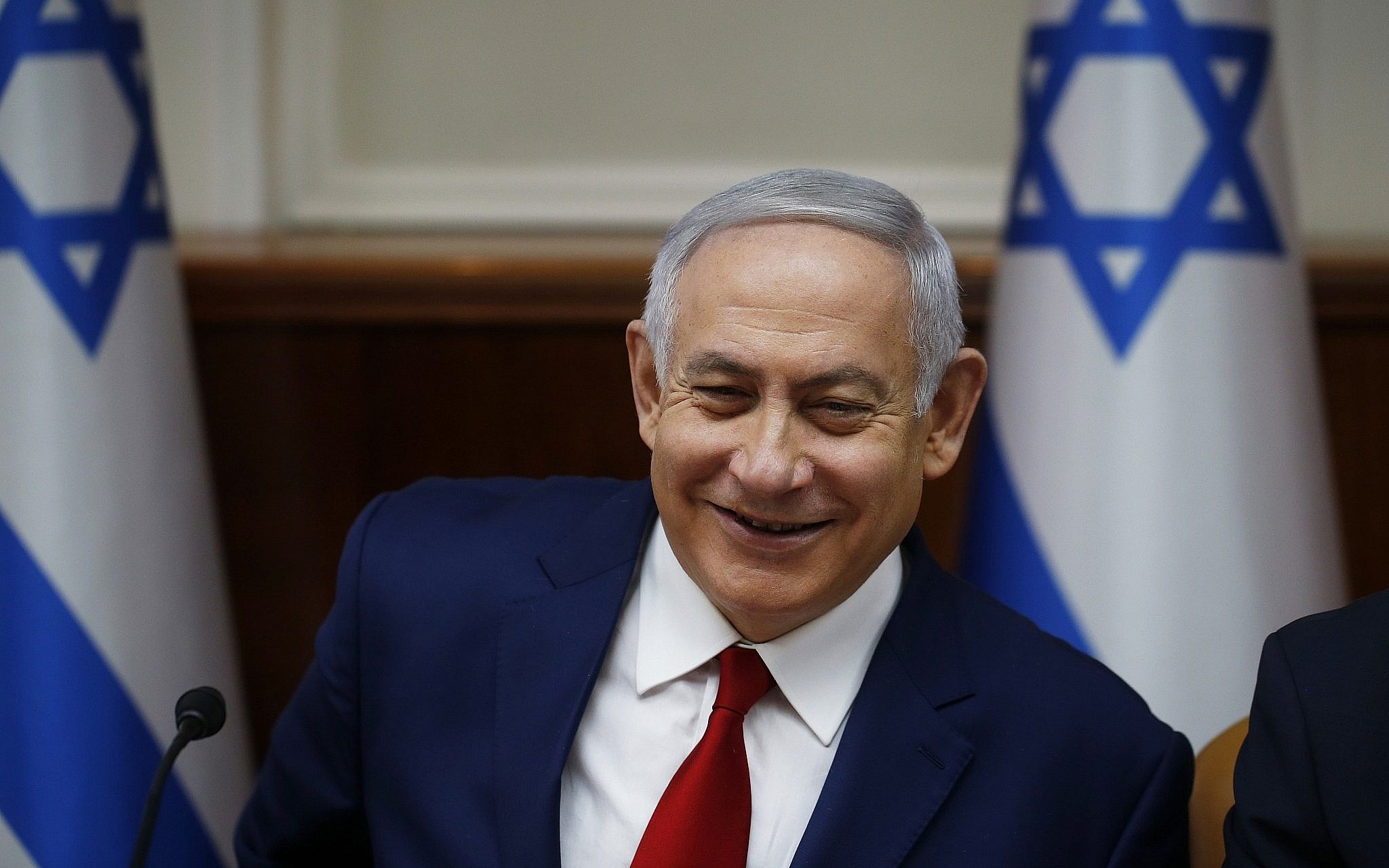
 The problems that we have had in holding Israel's leaders to personal accountability is not new.  The notion that politicians are above the law and not subject to the same rules as everybody else is unfortunately one that pervades Israel's political system.  This has reached the highest echelons in the hierarchy with a former president and a former prime minister having already served jail time for criminal offences committed.  The current list of charges levelled against Prime Minister Netanyahu do not help in any way to restore our faith in politicians and their behaviour.

Against this backdrop, little should surprise me in the way of politicians and leaders misbehaving.  And yet, some things over the past few weeks have surprised me into giving this matter some further thought.  My disgust has finally reached levels that have compelled me to air my thoughts in public.
Attribution: Kobi Gideon / GPO Israel

I was absolutely horrified at the inaction of the ultra-Orthodox leadership on the issue of the Coronavirus, both in Israel and around the world.  While doctors, scientists and international leaders were pronouncing the necessity of social distancing as a way to avoid the spread of the virus and to save lives, the leaders of the ultra-Orthodox community were imploring their followers to continue life as usual.  Their communities were advised to continue to attend wedding parties, brit celebrations, attend shiurim and study classes and to pray in a minyan, a quorum of at least ten men.  This extended even to Israel's Minister of Health, Yaakov Litzman, himself a follower of the ultra-Orthodox Ger Hasidic dynasty.  Soon after appearing live on the news laying down legal restrictions on the number of people allowed to gather in any place, he was attending wedding functions that hosted many more than the permitted maximum that he had earlier been responsible for imposing upon the nation.

By the same token, Rabbi Chaim Kanievsky, one of the senior leaders of the Israeli Haredi community, refused to consider the pleas of the civilian authorities for social distancing.  Instead, he instructed his followers to continue to pray in a minyan.  A number of weeks after the social distancing rules had been implemented in Israel, he was finally convinced to instruct his followers not to pray in a minyan.  In spite of this,  he was seen praying in a minyan himself at his home in Bnei Brak not long after that.  These life-threatening actions not only violated laws of the land that he lives in, they also directly contradicted his own instructions.  Perhaps, more tellingly, the act of endangering humans and taking action that could threaten human life goes against the highest-ranking principle in the religion of preserving human life at any price.

Prime Minster Netanyahu appeared on prime time TV on two separate occasions to prepare Israelis for the Pesach (Passover) holiday.  He told the nation that the government had taken decisions that would not allow Pesach to be Purim.  It was believed that Purim parties were attended by many carriers or sufferers of the Coronavirus, perhaps unknowingly, and were a source of many secondary infections.  The Pesach Seder is usually a time when friends and family gather together to celebrate the start of the holiday.  But not this year, said the prime minister.  "A small Seder is a healthy Seder", were his words on TV to convince people that they would be allowed only to celebrate the Seder at their registered place of residence and in the attendance of their nuclear family.  A full lock-down and curfew was imposed on the whole country to prevent anybody from venturing more than 100 metres from their residence on Seder night.  Police were deployed across the country to enforce the lock-down in the most determined manner possible.  Apparently, that applied to everybody except for members of the families of the prime minister himself and the president of Israel, who both hosted family members who were not part of their immediate household for Seder night.  Yisrael Beiteinu leader Avigdor Lieberman was also apparently exempt from the restrictions after it was alleged that he hosted members of his family at his Seder who do not live in his household.


Health Minister Yaakov Litzman was forced to pay the price for his indiscretion having contracted the Coronavirus and passed it onto his wife.  He also succeeded in sending many members of the Ministry of Health into self-isolation to prevent them from the possibility of passing his virus onto other unsuspecting and innocent people.  Just at a time when the Ministry of Health needs all of its team at their healthiest, most available and strongest to fight the greatest health crisis in living memory.  And, while we wish the Netanyahu, Rivlin and Lieberman families good health in spite of their indiscretions, their actions are clearly unforgivable under the circumstances that we find ourselves.  Gushing apologies and excuses were naturally forthcoming, but this falls well short of the behaviour that we expect from our leaders.  We particularly expect more from those who stand in front of the TV cameras advising what people will be forced to do, at risk of fines or even prison sentences, then go about doing exactly the opposite themselves.  Leaders in earlier times were forced to resign and vacate their office for infringements far less serious than these.  I do miss the days of leaders who are held accountable and responsible for their words and actions.

This sorry episode demonstrates a two-tier system that spells future disaster for any country.  If the leaders are unable to adhere to the rules, how can they expect other citizens to do so?  The simple answer is that they cannot.  The leaders set the tone for how others will behave.  Actions speak louder than words, and it is impossible to expect that ordinary citizens will not follow suit in their actions too.  This ultimately creates an environment where the unacceptable will become acceptable by virtue of common infringement of the laws.  Time has come for a return to leaders who not only set the rules, but adhere to them as well.  If not, our society will unavoidably fall into decline.

Tuesday, 23 July 2019

Netanyahu Breaks the Record

Over the weekend, Prime Minister Netanyahu officially became Israel's longest-serving prime minister since the state was created in 1948.  And he could not have reached this historical milestone under stranger circumstances.

Netanyahu has achieved this notable record while currently governing the country without a mandate.  In spite of having been democratically elected to continue to rule the country in the elections in 2015, the most recent round of elections earlier this year did not produce any winners who could secure a mandate to rule.  A such, Netanyahu has remained in office as a caretaker prime minister until the next round of elections take place in September.  Without the support of the majority as required by our democracy.  And it is in this role as caretaker prime minister that he has overtaken David Ben Gurion's previous record of having ruled over Israel for 13 years and 127 days, in spite of the heavy cloud that hangs over his head.  He also holds the record as the prime minister to have the longest uninterrupted term as prime minister (10 years and 110 days and counting).

There can be no doubt or argument that Netanyahu has devoted much of his life in the service of the State of Israel.  Nor can there be any doubt about some of his significant achievements during this period.  Credit needs to be given for this.  As can be anticipated with any leader and public official, he has had his notable failures too.  And, as much as he would like to achieve the legacy of having been the protector of Israel during his term in office, it seems that he is likely to be remembered for the scandal that currently surrounds him, irrespective of how it ultimately turns out.  This is a real pity for the longest-serving prime minister in Israel's history.

Along with this record, come many unwelcome and undesirable effects of the length of time that Netanyahu has been in office.  "Power tends to corrupt, and absolute power corrupts absolutely. Great men are almost always bad men."  This quotation by Lord Acton from 1887 seems as relevant now as it was then, and can easily be applied to Netanyahu in recent years.  He has behaved in a manner that indicates his sense of invincibility, that has only been strengthened by success that he has enjoyed at the polls.  The people gave him the power, but it seems as though this has been taken for granted as a result of it lasting for too long.  The feeling that he will have enough public support to rule irrespective of how he behaves, has led him to really test this out with behaviour by him and members of his family that is way beyond what could reasonably be tolerated from an elected leader.  It is no coincidence that other democracies, such as the USA, put a limit on how long the elected leader is allowed to be in office for.  I believe that such a limit is healthy and much-needed in Israel.

In addition to the promotion of unlawful behaviour, the lack of limit on time in office promotes another unwelcome consequence.  This is the lack of incentive to groom new young leaders to assume the senior positions.  In Netanyahu's case, he has done everything in his power to ensure that there are no pretenders to the throne who could possibly cause a threat to his continued rule.  He has no interest at all to ensure that a new generation of leaders is prepared to take over from him when he finally leaves office.  There is a huge chasm in his party and in the country at the moment between the current prime minister and those who may take over from him.  This is surely undesirable and unhealthy.

As a result of his extended term in office and the anti feeling that this has generated against Netanyahu, the upcoming election will ignore the main issues of the day that face Israel.  Instead of focusing on security, economy, education or health care, the election will be all about how to keep Netanyahu in office or, more likely, how to remove him.  The country is currently divided into three camps; those who support Netanyahu at any price, those who would vote for Mickey Mouse if he was a candidate only to remove Netanyahu, and those who feel forced to vote for Netanyahu simply because there is no alternative credible candidate.  This is surely not what our democracy is about.

Now that the record has been achieved and past, and Prime Minister Netanyahu has become Israel's longest- ruling prime minister, the time has come to change the laws to prevent anybody else from surpassing this record.  Democracy is not only about holding elections, it is also about ensuring that the best quality candidates are encouraged to come forward and have an equal chance of being elected on merit.  Our democracy is sorely missing this right now.

Wednesday, 7 March 2018

Corruption and Israeli Democracy

Accusations of corruption and behaviour unbefitting of a person acting in a position of trust as a minister or prime minister of the country have been circulating around Prime Minister Netanyahu for some time.  The stories and accusations are not new.  Things did, however, take a different turn over the past couple of weeks.  The recommendation by the police to the attorney-general that the prime minister should be indicted on charges of corruption, bribery and breach of trust in two of the cases has put a different complexity on this sorry case.  This, added to a new story and set of accusations coming out of the woodwork with a former close associate of the prime minister turning state witness, has served to tighten the squeeze on Netanyahu and those around him.  The accusations made by the new state witness, Shlomo Filber, sound almost inconceivable.  If only a small proportion of the accusations are proven to be true, it would make place Netanyahu in an untenable position regarding his ability to continue to serve as prime minister.

For now, however, that is all that they are.  Accusations.  The stories sound like they could come from a far-flung land where there is no consideration for rule of law or fiduciary responsibility towards those who elected the prime minister into office.  Many of them are corroborated by people who are seemingly unrelated to each other, and are reported to have been repeated in different situations involving different people and issues.  In the way that they have been presented, the stories sound almost like they could be true.  Any objective person with a high level ability to assess fact from fiction could easily be convinced that the accusations are all based on truth.  And yet, we still do not know.   We do not know because the stories have yet to be verified by an objective court of law that was set up for the purpose of evaluating the credibility and truth of such accusations.  All we know is that certain people, not an insignificant number of people, have the incentive to publicly tell stories of bribery, corruption and betrayal about the prime minister and his associates, while others have the incentive to defend them.  That is as much as we know.  Nothing more.  So how can it be that a democracy allows public officials to be charged, vilified and castigated in public like this, when no formal charges have been laid, and when there is no attempt to bring them before a duly constituted court of law?

Don't get me wrong.  I have listened to and read about the accusations of bad behaviour on the part of the prime minister, his wife, members of his family and others in his close circle.  It seems inconceivable to me that such stories could be made up by people, purely for the intention of weakening or unseating the prime minister.  It seems unbelievable that seemingly similar patterns of behaviour could be concocted by so many different people from different spheres of life and with different interests.  It seems to me that, where there is smoke, there is fire.  And I am a great believer in elected officials being held accountable for all their actions, good and bad.  I am also a great believer in the basic democratic tenet that everybody is innocent until proven guilty by a duly established court of law to examine the particular issues.  If the accusations are so convincing, and if the police have recommended on the basis of evidence in their possession that there is a case to answer, why is the case not being answered?

I am not sure of the answer to this question, but I remain convinced of a few other important aspects of our democracy.  I believe that the trial by public opinion is wrong, and wholly undemocratic.  It is my view that all the investigations that are being conducted into the prime minister's behaviour, should have taken place behind closed doors.  Until the moment that the attorney-general is ready to formally lay legal charges to be answered in a court of law, I think that the details of all that we have been bombarded with, should have been kept away from the public eye.  Instead, we have experienced a trial by public kangaroo court, and directed by the press.  All of the protagonists in this sordid affair, including those who have been accused, the accusers, those involved around the edges, the press and the general public seem to have some axe to grind on the issue of the prime minister and his family.  It is difficult to work out who we should believe, as more and more unbelievable stories surface daily.  The country seems to be split almost down the middle between those who support the prime minister and wish to see him stay in office, as opposed to those who wish to see him unseated, jailed and consigned to political purgatory.

In addition to holding our public officials up to the light and expecting them to be fully accountable to the voting public for their actions in office, our democracy should also protect them against unreasonable and frivolous claims that could damage them and our democracy.  Prime Minister Netanyahu has effectively been rendered incapable of carrying out his highly important prime ministerial duties, as he is spending most of his time these days bring questioned, defending his character against the accusations, and trying to influence the public about the nature of these accusations.  Who is running our country and keeping it secure while he is worrying about the next story that accuses him of inappropriate behaviour?  If the attorney-general considers the police investigation to have produced a case for the prime minister to answer in court, Netanyahu should resign his position and answer the accusations against him.  If it turns out that the court does not find the accusations against him worthy of a guilty verdict, he should be able to return to the prime minister's office to resume his duties.

Israeli democracy should not tolerate corruption of public officials under any circumstances.  It should also protect them while in office against any attempts to disturb their ability to carry out their jobs.  The democratic process should determine that, at a certain point, elected officials should be relieved of their duties to allow them to answer properly-constituted charges that have sufficient basis to believe that they have a reasonable possibility of being upheld by a court.  Until that moment, they should be allowed to get on with their job.

In my opinion, democracy goes both ways.  At the moment, we are suffering the worst of all situations that a democracy gives us.  The people of Israel deserve more, and it has come time to examine our system to ensure that democracy for us protects both the state and the individuals, rather than the unsavoury and undesirable position that our country current finds itself in.

Wednesday, 12 December 2012

Egotism and Politics

There was a time when people went into politics with the intention of serving their community, and making a difference to society.  The main imperative was public service, and offering personal skills and talents for the benefit of the country.  Unfortunately, those days appear to be long gone.  These days, politicians seem more interested in the power that their position brings, and the personal benefits that can be gained by entering office.

This is seen in many, if not most countries around the world.   Israel is no exception.  This has been very clearly demonstrated over the past week with the announcement that Tzipi Livni has formed a new party to contest the upcoming election.  The new party, Hatnua (the movement), seems to bring nothing new to the political arena.  So why would Livni form the new party?  When the press announcement of the new party was made, the main subtitle under the name of the party on the publicity boards was the tag line "under the leadership of Tzipi Livni".  This is the main point which supports the new party.  It is a place where Livni can be the leader.

Livni has already been a Member of Knesset representing two parties in the past, Likud and Kadima.  When she was ousted as leader of Kadima, she decided to leave the party.  It demonstrated what was important to her as a member of Kadima - the fact that she could be the leader and have control over the party.  As soon as she was voted out of the leadership position, there was nothing left in the party to keep her there.  The election platform of Hatnua looks remarkably similar to that of Kadima, which is also not too far away from the ideologies followed by Labour.  The centre left space in Israeli politics is an incredibly crowded area, and the addition of a new party serves to create even more congestion and probably reduce the number of seats that they can collectively win at the election.  The only real difference between the parties, is the people who lead them.  Perhaps this explains why Kadima has gone from a party with nearly 30 Knesset seats, to predictions of only 2 seats in the next election.  The original leader, Ariel Sharon, is no longer there.  Without him, there is no real substance to the party.  Perhaps there was no real substance even while he was there?

The electorate would like to believe that Tzipi Livni is in politics to progress the cause of the State of Israel.  This is not an easy task at the current time.  Instead, we find that she moves from one party to another, seemingly dependent on how well each party serves her personal interests.  Getting lost in this pursuit of personal glory, are the interests of the State of Israel and her citizens.  One of the members of Kadima was fully justified when asking what Livni thinks she can achieve with her new party, that she failed to achieve with Kadima's 28 seats when she was at the helm.  I suspect that whatever she failed to achieve with Kadima will probably also not be achieved with Hatnua.

What is even more remarkable in the politics of personal egos, is the fact that the centre left parties were unable to find a way to unite their lists for the purpose of progressing their policies and platform in a more effective way for the election.  Egos once again got in the way of sensible politics, thereby diluting the real message that the centre left groups are trying to promote.

There are some who would say that the aphrodisiac effect of power is not such a new phenomenon.  Lord Acton wrote in 1887, "Power tends to corrupt, and absolute power corrupts absolutely".  This seems as true now as it was then, and is clearly evident in these latest moves by Tzipi Livni and others like her.  Nobody expects politicians to do their job for free or without personal remuneration.  There is, however, an expectation that, in return for reasonable pay and reward, they will carry out the requirements of their office which expects them to serve the people by whom they were elected.  This is in short supply at this time.

While the new Hatnua party may well succeed in securing 8 or 9 seats in this election, the longer-term prospects seem slim.  Any party that is built on the strength of individual personalities rather than on the basis of solid ideologies and policies, seems destined to land on the rubbish heap of failed political parties.  Hatnua will almost surely end up in this junk pile in the fullness of time.

Despite Lord Acton commenting on political corruption all those years ago, there was a time not too long ago when politicians had a completely different and more modest approach to their work.  Names like David Ben-Gurion and Menachem Begin seem to be from a bygone era, even though they were both people who some of us still remember with fondness.  They were happy to live in a small apartment, and to invite members of the public to their official residences whenever they could, even while they were serving in a lofty public office.  Somehow, the office in which they served never allowed them to become corrupt, or to stray from the values that formed their character.


I have considered the possibility that the general public demand too much of politicians when we expect them to behave selfllessly in the interests of the electorate.  The more I think about it, the more I seem to convince myself that this behaviour is really the minimum that we should expect of politicians.   How can we trust them to act in the best interests of our country, and to build a future for our children if this is not the case?  Tzipi Livni has not only disappointed the public by her behaviour, she has let herself down and many others who do behave appropriately.  We cannot help but tar all politicians with the same brush, and she is setting the standard.

Monday, 30 April 2012

A Peek Into The Future

Over the past few weeks, we have been occupied with looking back.  We celebrated the exodus from Egypt and the miracle of the crossing of the Red Sea.  We stood in silence to commemorate the 6 million killed at the hands of the Nazis, and we stood in silence to commemorate the 23,000 who have given their lives for the modern State of Israel.  We celebrated 64 years of independence of the State of Israel, and considered the remarkable and miraculous events that allowed us to reach this point in time.  Come to think about it, Jews seem to spend a disproportionate amount of time looking back and commemorating the past.  I decided to pause for a moment, and try to imagine what things could look like in 50 years' time.  Not only to imagine this, but perhaps also to dream about how things could be.  I have tried to dream about a world where my children are grandparents, and to try to put Israel into that context.

I think that there is one major piece of the puzzle which is missing in current-day Israel, and which most Israelis yearn for in the future.  This is the missing peace and, with it, the recognition of the right of Israel to exist as a Jewish state among the nations.  A state of peace and security would bring so many advantages to the State of Israel, and could change the nature of this small country in a most dramatic way.  Most importantly, it would save hundreds, if not thousands of lives a year.  Not only the lives of soldiers would be saved, but also the lives of innocent women and children would be spared if we could create a situation where Qassam and Grad missiles are not being fired into civilian neighbourhoods, and where suicide bombers are not trying to detonate their explosives in crowded restaurants, coffee shops and buses.  It would also spare valuable government money that could be spent on education and infrastructure instead of the acquisition of military hardware and ammunition.  A state of peace would also free up our most valuable resource, the 18 to 21 year-olds, who would be free to make their contribution to Israel's economy rather than be forced to serve in the military to protect their country from constant attack.

A peace arrangement would also create a completely different dynamic with Israel's neighbours.  I can imagine a situation where Israeli citizens could spend their holidays in Beirut, which is only a few hours' drive from the central part of Israel.  Perhaps Syrian tourists would be a major source of foreign revenue for Israel's hotels and restaurants.  I can dream about Israeli irrigation technology being used to make deserts in Jordan and Syria green.

In my dream world, there is harmony and co-existence between religious and secular communities.  Somehow, the religious will find a way to make their contribution to Israeli society, as a result of which the secular communities are able to respect the religious communities and their way of life.  This, in turn, paves the way for understanding and exchange of ideas between the two communities.

In my imaginary world, members of the Knesset are there to serve the wider community rather than primarily their own interests.  While being paid a reasonable salary, they will do all that they can to save the country unnecessary expense.  Their conduct on the floor of the Knesset will be exemplary, and send a positive message to the younger generation about the way in which people should conduct themselves in public.

In the new and improved Israel, customer service will be of primary importance when dealing with companies and shops, and hotel, restaurant and coffee shop staff will give the utmost respect to their patrons.  This is a world where drivers will give way to other drivers wishing to enter into the flow of traffic, and hooters will only be sounded when danger exists on the road.  Cellphones will be silenced in elevators and other public places, and people will not resort to screaming at others in order to get their own way.

I guess that my wish list can go on forever, but it is important to dream in order to somehow improve our society.  It is critical for us to be able to continuously develop and progress with the next generation, who seem to be hungrier for information and technology than ever before.

When I think about it, the "negative" things mentioned above also have their positive sides.  There is no doubt that our young men and women who are forced to serve in the military, learn skills and behaviours which help them in the future.  The responsibility of protecting Israel's borders, and survival skills that they learn with this are great tools in their future lives.  The tenacity and attitude of never giving up are certainly traits that are instilled in our children during their military service.  In Israeli living, sometimes even shouting at people represents a form of communication that is preferable to not talking at all.  The madness of Israeli society forces people to adapt themselves in ways which lends itself to the survival of a people and a nation.  Perhaps a more orderly society would have less survival skills.

When I come to think about things, I would certainly be happier for my family to live our lives in peace and security.  I would also be happier to have greater understanding and respect between different parts of Israeli society.  This would, however,  undoubtedly come at a price which I am unable to identify or quantify now.  Perhaps this price would be too high for me?  Maybe it is better to give thanks for what we have, and to do all we can to protect it.  This must be part of the logic of spending so much time looking back.  We are really able to value and appreciate what we have now.  This is more than our grandparents could have dreamt of when they had their dreams.  Am Yisrael Chai.

Saturday, 14 August 2010

When Israeli Youth Grow Up

Israeli youth generally have a bad name amongst their peers around the world for being undisciplined, for not showing respect to others and for generally lacking manners. This results from the laissez-faire manner in which Israeli society allows them to grow up. Children in Israel seem to be allowed to do almost as they please without any restrictions. There seem to be no boundaries or red lines drawn to provide these children with the framework that they require if we are to believe the child behaviour experts.

The attitude towards children in Israel, we are told, arises from historical events in the years immediately preceding the declaration of the State of Israel, and events since then. After the annihilation of 6 million Jews during the Second World War, children took on a much greater level of significance in the period following the Holocaust. The children were the future to rebuilding the gaping hole left by the victims of the Holocaust. They were all that was left of almost an entire generation destroyed. During the 62 years of the existence of the State of Israel, the daily threat to her very existence has forced Israel to act to defend herself and secure her continued presence in the community of nations. To achieve this, Israel has been forced to build an army made up of the youth of Israel. The responsibility that rests on the shoulders of these young men and women when they enlist in the IDF at the age of 18 or 19 years old is immense. These young people are forced to act in the heat of the battle, and are forced to witness things in a way which no young person of similar age should be forced to experience. This compels Israeli youth to grow up overnight to be able to cope with this, and put their childhood behind them very quickly. But this the reality of modern-day Israel.

The importance of these children to Israel and the Jewish people is reflected by the way in which they are treated in Israeli society. They are allowed to "be children" in every sense of the word. They have free reign to do as they please, and to experience anything and everything that they wish. Society bows down before them and makes no attempt to limit them or their behaviour in any way. After all, far too many of our children have had their lives cut short at an early age and we wish to allow them to do all that their heart desires for fear of the possibility that they may not have the chance to get older and experience these things later on. Even, though this approach goes against all the theories of good child-raising, these theories don't take into consideration the Israeli reality, or that such a situation could ever exist in the 21st century. Despite doing all the "wrong things" in raising our children, we see our young people enlist in the IDF and form one of the world's most effective fighting units. Who would ever think that Jewish kids raised in such circumstances could form such a formidable army? The reality is there for all to see.

I have been honoured to witness another impressive phenomenon that comes out of a country that raises its youth in all the "wrong ways". I was proud to be at the Nahal Memorial one evening last week to be present at the opening ceremony for the current year of voluntary service under the framework of Israel's Scouting movement. I saw 480 young men and women from the Scout movement across Israel complete their training seminar, and embark upon a year which will take them to needy and underprivileged communities in the heartland of Israel and in the outlying areas. Their task is to volunteer their year to helping needy Israeli youth. While they are, of course, also attempting to grow the Israeli Scout movement through their work, there is a clear brief to devote their time to the community at large. This represents an amazing resource to these communities, and to the State of Israel. In total, approximately 2,000 young men and women will be volunteering across Israel as part of a number of different programs. This represents an amazing resource to these communities, and to the State of Israel.

The decision by these young people to take this year off to volunteer their time is not trivial. They are all youth who still have compulsory military training ahead of them - 3 years for the boys and 2 years for the girls. Many of them will wish to attend institutions of higher education to earn university degrees, which means that they will be 25 or 26 years old before they can truly embark on their life journey. The year of voluntary service extends the process by a further year. And yet they have decided to this with huge energy and enthusiasm. They are so eager to make their contribution, and to make a difference to the communities in which they will live for the next year. The truth is that even those who do not undertake such voluntary work will go into the IDF to serve their country. Many of these young people volunteer for front-line positions and fighting units for the period of their national service. Considering the number of child-rearing mistakes made by Israeli parents, the children who come out of the system have some amazing qualities when it comes to serving the State of Israel. By contrast, countries that do stick to the recognised child-rearing rules don't necessarily seem to produce generations of children that are noticeably better than Israeli children.

As I scanned the scene at the Nahal Memorial and focused on the young volunteers, my pride was swelled even more when I saw my own son amongst their number. I have enormous respect for his decision to devote his year to this fantastic cause. When I saw the families and friends that had come to support these young men and women, I could not help thinking about the environment that they have grown up in, and all the things that are wrong with child-rearing in Israel. Somehow, however, these families and many others like them seem to have got it right.

It is my wish that the young volunteers will be successful in all their endeavours, and will inspire others to do the same. Their selflessness is to be admired and respected. We, the parents, and the State of Israel are immensely proud of them, and truly appreciate the spirit of volunteering and willingness to serve their greater community.

Sunday, 25 July 2010

Not Learning the Lessons of Tisha B'Av

Tisha B'Av (the ninth day of the Hebrew month of Av), which we marked last week, is one of only two full fast days in the Jewish calendar. The other is Yom Kippur, Judaism's holiest day. This gives some indication of the level of importance attached to Tisha B'Av.

At the most simplistic level, the reason for fasting on each of the two days is very different. The fast on Yom Kippur is about atonement and seeking forgiveness. It is a day when Jews seek to atone for their sins of the past year committed against G-d and their fellow man, and undertake to be more holy in the year ahead. The act of fasting on this day is an attempt to separate oneself from the physical, material world and to draw closer to the spiritual world. In contrast, the fast on Tisha B'Av is about mourning a number of disasters that have befallen the Jewish people on this date over the ages. Most notable amongst the catastrophes attributed to this day, is the destruction of the first and second temples, both of which were destroyed on this unluckiest of dates 656 years apart. The day is dedicated to mourning these disasters and numerous others, and the fast is part of the mourning ritual.

The fast on Tisha B'Av, however, goes further than the simple act of mourning historical events. Significant introspection has taken place to try to understand why the temples were destroyed, and to understand the significance of why these events having taken place on the same date on the Hebrew calendar. It is commonly accepted that it is not pure coincidence that so many disasters share the same date. There is a widely-held view that the common date is a message, with a lesson that needs to be learned about human behaviour that was taking place at the time of each calamity.

The Talmud (a central text of Judaism in the form of a record of rabbinic discussions pertaining to Jewish law, ethics, philosophy, customs and history) cites the reasons attributed to the destruction of the temples. In the case of the first temple, it was because the three cardinal sins were rampant in society: idol worship, licentiousness, and murder. The Talmud tells us that the reason for the destruction of the second temple was sinat chinam - hatred without cause - which we are told was rampant in society in 70 C.E. when the temple was destroyed. Sinat chinam is characterised as the baseless hatred by one Jew towards his fellow man, and not simply hatred in general.

Two conclusions can be deduced from these Talmudic references. The first is that the three cardinal sins associated with the destruction of the first temple, are equal to the baseless hatred said to have caused the destruction of the second temple. Interestingly, sins towards G-d (idol worship) are placed on an equal footing with sins committed by man to his fellow man, including sinat chinam. The second conclusion is that the temple will not be rebuilt until our present-day society rids itself of these sins.

For believers in Jewish law and the Talmud, these conclusions are a clear indication that there is still work to be done in our society to bring about the reconstruction of the temple. Although there is also the belief that the coming of the messiah is a pre-requisite for the reconstruction of the temple, it is understood that this will not happen until the evils in our society, that were the cause of the destruction of the previous two temples, are eradicated to create conditions that are conducive to the reconstruction of the temple. Mainstream Judaism includes many calls in its daily prayers for the temple to be rebuilt "speedily in our days".

Given the strong desire for the temple to be rebuilt, and the understanding that baseless hatred could prevent this from taking place, it is surprising that this evil is so strongly perpetuated in our present-day society. It is even more surprising how much this behaviour is evident in the religious community. While they fast, beat their chests and prostrate themselves on Tisha B'Av, they seem to have no qualms about driving wedges in our society caused by baseless hatred. This is evident not only at the level of the individual, but is also obvious at a group and national level. Examples of this from the past few weeks alone can be seen with story of the Immanuel school, the arrest of a woman trying to read from the holy Torah at the Western Wall and the introduction of the conversion bill into the Knesset just to name a few. These are all instances of attempts to create religious tension where alternative solutions may have been sought.

The religious community responsible for initiating these antagonistic actions have defended their behaviour as being hatred with reason rather than sinat chinam, unjustified hatred. It is their contention that this is a fight to protect the strict application of Jewish law and practice in an environment where there is an attempt to dilute this. The battle over the school in Immanuel was billed as being the fight for G-d's law against the law laid down by the High Court of Justice. When presented in these emotive terms, it is obvious that a showdown is inevitable. This was the case when hundreds of thousands of ultra-Orthodox Jews took to the streets of Jerusalem to defend the Immanuel parents who took on a hero status for their stand, and acts in insulting other law-abiding Jews. Following all the brinkmanship, it seems as if the Immanuel parents have finally found a working solution to their problem which will satisfy all parties, and show a little respect to those who hold a slightly different view or practice than their own.

It is not the fact that they are prepared to fight for their beliefs that I find so objectionable. I cannot accept that it is necessary to conduct the battle with such disdain for others who do not agree, or with such a confrontational approach that seems designed to create conflict. Although our ultra-Orthodox brethren are supposedly not exposed to the modern world of television, internet and other media, they sure do understand the value of creating news headlines in the interests of getting their own way. If baseless hatred is required to attract the attention, they seem not to hesitate to pursue this without even giving a second thought to the negative impact that this may have on our society.

Perhaps, our society has not yet understood that the opposite of sinat chinam is not simply to avoid baseless hatred. It is ahavat chinam, the act of loving without a cause. We very seldom see people finding reasons and ways to love and respect people, rather than finding reasons to hate them. This would be the true manifestation of avoiding baseless hatred. If we need to find a solution to the conversion bill or to the school in Immanuel, ahavat chinam calls for us to sit down and discuss possible alternatives showing some respect for other people's positions, instead of demanding that there is only one solution to every problem. It would be wonderful to see more of this inclusive approach, particularly from the ultra-Orthodox community.

Unfortunately, it seems that we are destined to mourn the destruction of the temples for the foreseeable future, rather than rejoice in its reconstruction. While it may be possible to argue either way about the fact that poor behaviour patterns caused the destruction of the first two temples, there is no doubt in my mind that a third temple can never be built in a society which creates such conflicts amongst itself. If we cannot even manage to find a suitable compromise about the schools that our children attend, how can we hope to come to a consensus about the reconstruction of the temple?

Saturday, 31 October 2009

Where to Draw the Line

I read an article entitled "Democracy check" written by Naomi Chazan and published in The Jerusalem Post magazine this weekend . In her article, Ms Chazan argues that the murder of Prime Minister Yitzhak Rabin 14 years ago came as a result of a lack boundaries in Israeli democracy and society. She claims that increasingly threatening, aggressive and violent behaviour patterns have become commonplace and acceptable in Israeli society as a tool for people to get what they want.

While reading her article, I began to realise how correct she is. There are so many elements of Israeli society that are affected by this issue of lack of boundaries that Ms Chazan discusses. Even though she raises only negative aspects to this phenomenon, I have also identified one or two positives that arise from it.

The most basic and common behaviour that reflects lack of boundaries is the lack of personal space in Israel. Whether you are standing in line for the post office or withdrawing cash from an ATM machine, you can be sure to have somebody standing right on top of you. It also manifests itself when strangers look through your shopping trolley in the supermarket to ask your opinion regarding items that are there. Many even ask whether you should be eating something with so many calories. There are those who object to this sort of behaviour as being too intrusive and not respecting privacy and private space. These are usually new immigrants to Israel who find this type of intrusion totally unacceptable. Some immigrants find this behaviour endearing in the sense that it shows a caring and warm side of the Israeli culture. Even though people may be insulting you, they are doing it because they want to show that they care. People born and bred in Israel seem to find this completely normal and they know no different.

Israel is regarded as a place where laws, rules and prescribed methods of behaviour are all open to negotiation. This usually means that timid or polite people are considered "freiers" (the Hebrew word for suckers) and are the ones who wait in line patiently whilst more aggressive, persistent and convincing people seem to get away with pushing their way to the front of the line. These aggressive people are also the ones who get their own way in all other aspects of life, be it in business, when driving on the roads or other daily activities. It is unfortunate that this gives rise to the Israeli notion that the way to get anything done in this country is to "tip the table over". This literally means going along to the person who you wish to convince or who you require some service from, and remonstrate with them to the point of tipping their desk over until you get what you want. Usually, it works. This means that, the next time you wish to get a bank or government clerk to do something that may not be quite part of what they are allowed to do, you do what you know works best which is adopting bullying tactics. This notion clearly promotes aggressive and even violent actions, and breaks down the boundaries of reasonable and acceptable behaviour. This is handed down to the next generation when children witness parents and teachers getting their own way by bullying others.

The "lack of boundary" behaviour is clearly evident amongst our politicians. The lack of respect afforded by members of Knesset to each other, even on the floor of the Knesset, is a shocking example to Israeli adults and children. If this is the way that the society's leaders behave, what hope is there for future generations growing up in Israel who witness this unacceptable behaviour?

Despite the negative and often shameful behaviours that are seen in Israel, I am equally convinced that Israel would not be experiencing some of the successes that it enjoys if the boundaries were adhered to. A good example is the Israeli hi-tech industry which has developed and successfully sold some significant firsts. For example, the voicemail that most of us have on our mobile and fixed line phones was first thought of and developed in Israel. Similarly, an Israeli company was the first to produce a firewall to prevent unauthorised accesses to our private networks at home and at the office. It is no accident that companies like Intel and Microsoft have significant development labs in Israel. The fact that Israeli scientists and engineers refuse to be limited by restrictions that are regarded by others as insurmountable means that Israelis are producing new and improved products and technologies that would not be developed elsewhere. The lack of boundaries in society promotes free thinking and creativity in business and technology with astonishing results.

As is usual with such things, the real answer often lies between the extremes. In this case, it would be fantastic if we could ensure that boundaries are adhered to in our daily behaviour, whilst ignoring them in scientific or engineering developments. Inevitably, this is difficult to achieve.

Ms Chazan concludes that the lack of boundaries threatens Israeli democracy. There may be some element of truth in her contention. I find people who behave this way in everyday life to be intolerable. We cannot ignore, however, the contribution that this behaviour style has made to the building and successes of the State of Israel. Even though many of us find this attitude difficult to live with, it seems somehow to be an integral part of the culture of modern-day Israel. It will not change any time soon, so I am forced to focus on the positive elements of which they are many.