Showing posts with label Israeli Society. Show all posts

Wednesday, 8 April 2020

A New Modern-Day Plague

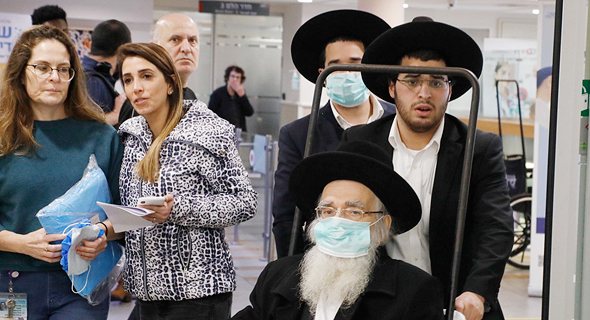
Image from calcalist.co.il
We are entering the Pesach (Passover) holiday in the midst of the greatest health challenge that the world has had to confront in living memory.  The Coronavirus epidemic has changed the world that we know in so many different ways.  It is almost difficult to see how things can ever go back to the way that they were a few months ago.

In Israel, in spite of having gone into lock-down at a relatively early stage of the outbreak of the virus, we are now having to deal with an infection rate in some ultra-Orthodox areas which is threatening to infect as many as one third of the citizens living there.  The government has already placed the city of Bnei Brak into a quasi-military rule in attempt to stem the further spread of the infection, and other neighbourhoods and towns are set to follow suit.  Much has been written about how it has transpired that the ultra-Orthodox neighbourhoods in Israel, and indeed in other parts of the world, have become disproportionately infected by the Coronavirus.  Most of the theories range from the fact that this element of the population is disconnected from much of what surrounds them, including news media and online information.  These theories also discuss the fact that instructions are only respected when they come from the community's Rabbis, rather than from secular or governmental authorities.  And the fact that the Rabbis are generally reluctant to quickly assimilate the assessment of the civilian authorities, when they prefer to allow their religious-based responses to take effect.  In this case, the Rabbis ruled to keep schools, yeshivas and places of learning open when the government ordered them closed.  The Rabbis insisted upon praying in the presence of a minyan (a quorum of ten men) when the laws of social distancing implemented by the government prevented this.  Additionally, functions to celebrate weddings and other family events were ruled to continue when the civilian authorities decided that these presented a risk to life and limb.  One of the most recognised leaders of the ultra-Orthodox community in Israel, 92 year-old Rabbi Chaim Kanievsky, was found to be praying with a minyan at his home as recently as last week in spite of having finally publicly ordered his followers not to do so.

As a result of these actions and inactions, Israel heads into the Pesach holiday period with great uncertainty.  It seems as though the huge number of people who were recently diagnosed as suffering from the Coronavirus from the ultra-Orthodox community have set us on an irreversable track to a medical catastrophe that will result in tens, possibly hundreds of deaths from the virus in the coming weeks.  It is ironic that this is set to coincide with the first few weeks of the counting of the Omer (the 7 week period that links Pesach to Shavuot) during which it is traditional to observe rituals of mourning.  The reason for the observation of these mourning rituals is because of the events that took place in the first century AD when 24,000 students of Rabbi Akiva died in a plague.  It is believed that they stopped dying on Lag B'Omer, the 33rd day of the Omer.  In a strange but very sad and unfortunate déjà vus, we are on a path to relive this to some degree, although hopefully not nearly to the same extent.  The reason that is commonly given and widely believed for the death of Rabbi Akiva's students is lashon hara, the speaking of negative things behind people's backs, whether true or not.  Lashon hara is one of the reasons being used as a way to explain why the world is having to endure the effects of the Coronavirus.

There can be little doubt that lashon hara is prevalent in all communities, is undesirable and is a problem in our society.  It is a problem that has been in evidence over the centuries, and seems very difficult to control or reduce.  It has been used to explain the occurrence of many disasters in Jewish history over the centuries, including the destruction of the Temples.  To me, on this occasion, it seems too easy to use this as an excuse for the current pandemic that we are suffering, and to explain the deaths of those who are suffering from it.  It is simply not acceptable to explain this as being because of lashon hara, and not to take a deep introspective view about the community's general lack of adherance to the orders of the civilian authorities.

There can be little doubt that the leaders of the community chose not to take note of the deliberate and highly-justified restrictions that were quickly imposed on our society to retard the spread of the virus.  They decided, in direct contradiction, to command their followers to continue to behave as before.  Word went out to keep shuls operating when others in Israel were closed, to keep schools open when others in the country were closed, and to keep operating as usual without consideration of the instructions by which everybody else was living.  This indicates that the leadership knew exactly what the civilian authorities were ordering, and they took their own independent decision to ignore these orders.  The Israeli minister of health, himself a follower and Rabbi from an ultra-Orthodox sect, should have brought the government's message to the ultra-Orthodox leadership and ensured that they followed the instructions in the same way as all other citizens in the country were required to do.  Instead, he stands accused of ignoring these instructions himself, and attending public events at a time when this was expressly forbidden by the government that he is a minister of.  The fact that he is also now inflicted by the virus cannot necessarily be inferred from this, but it is certainly shameful that he did not take heed of his own government's instructions.  More than that, the fact that he did not take it upon himself to bring this critical message to all leaders within the ultra-Orthodox community will surely hang as a black cloud over his head when the final death toll is tallied.  This is equally true of all senior leaders within the ultra-Orthodox community, who simply chose to ignore and contradict the expert opinions that are unanimous in their views that staying home saves lives.

When the dust settles on this set of tragic events and things revert back to some semblance of what we knew before, it is my sincere hope that lessons will be learned.  It is difficult for me to believe that the ultra-Orthodox community will not be affected by what is happening in their neighbourhoods now, and the disastrous mistake in ignoring civilian warnings and instructions.  The tension between them and the democratically-elected government in Israel has been one of the enduring stories of the State of Israel from its founding moments, and the current evens have the possibility of changing all of that.  In spite of the tolerance that has been shown to the ultra-Orthodox community by successive Israeli governments, including exemption from military service, government funding in a significantly disproportionate manner, incorporation of ultra-Orthodox parties in government coalitions and many other leniencies and concessions shown over the years, the ultra-Orthodox community has incessantly battled against governments and civilian authorities.  There are many within the ultra-Orthodox community who do not recognise the existence of the State of Israel and its government, while still being willing to accept social benefits from the state.  The sight of members of the ultra-Orthodox community screaming insults at Israeli police and accusing them of being Nazis, while police were instructing them to maintain social distancing in order to protect their own lives, is part of this tense and unacceptable relationship.  If the events surrounding the Coronavirus cannot change that, it seems that nothing will.  It is my hope that one of the most important outcomes of the virus and its effects, is a change in the relationship between government and ultra-Orthodox.  And a general change in the relationship between the ultra-Orthodox and other sectors of the population.  There is enough space for all of us to live with mutual respect.  Are my dreams unrealistic?  I hope not.

 The leaders of the ultra-Orthodox community have been exposed and shown up during the course of this pandemic.  Their refusal to take heed of the advice of scientists and civilian authorities has cost some of them their lives, and has cost the lives of many of their followers.  It raises a real question regarding the direction in which their leadership is taking their community.  Their advice on many real-world issues must surely now be in doubt.  I hope that the new generation of leaders that rise up following this episode will never forget the failures of their predecessors, and will find a way to do things differently going forward.

Chag sameach.


Tuesday, 23 July 2019

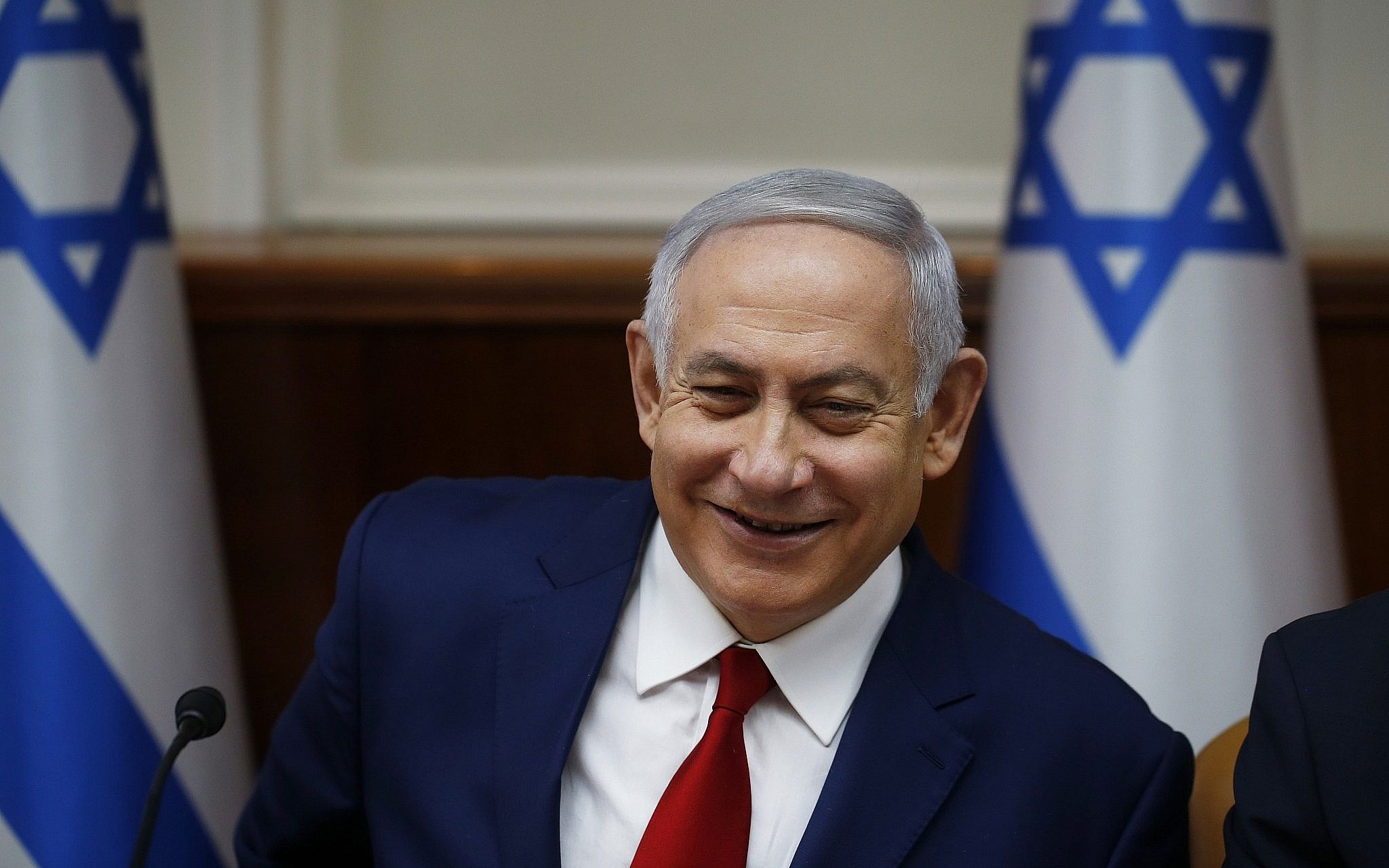
Netanyahu Breaks the Record

Over the weekend, Prime Minister Netanyahu officially became Israel's longest-serving prime minister since the state was created in 1948.  And he could not have reached this historical milestone under stranger circumstances.

Netanyahu has achieved this notable record while currently governing the country without a mandate.  In spite of having been democratically elected to continue to rule the country in the elections in 2015, the most recent round of elections earlier this year did not produce any winners who could secure a mandate to rule.  A such, Netanyahu has remained in office as a caretaker prime minister until the next round of elections take place in September.  Without the support of the majority as required by our democracy.  And it is in this role as caretaker prime minister that he has overtaken David Ben Gurion's previous record of having ruled over Israel for 13 years and 127 days, in spite of the heavy cloud that hangs over his head.  He also holds the record as the prime minister to have the longest uninterrupted term as prime minister (10 years and 110 days and counting).

There can be no doubt or argument that Netanyahu has devoted much of his life in the service of the State of Israel.  Nor can there be any doubt about some of his significant achievements during this period.  Credit needs to be given for this.  As can be anticipated with any leader and public official, he has had his notable failures too.  And, as much as he would like to achieve the legacy of having been the protector of Israel during his term in office, it seems that he is likely to be remembered for the scandal that currently surrounds him, irrespective of how it ultimately turns out.  This is a real pity for the longest-serving prime minister in Israel's history.

Along with this record, come many unwelcome and undesirable effects of the length of time that Netanyahu has been in office.  "Power tends to corrupt, and absolute power corrupts absolutely. Great men are almost always bad men."  This quotation by Lord Acton from 1887 seems as relevant now as it was then, and can easily be applied to Netanyahu in recent years.  He has behaved in a manner that indicates his sense of invincibility, that has only been strengthened by success that he has enjoyed at the polls.  The people gave him the power, but it seems as though this has been taken for granted as a result of it lasting for too long.  The feeling that he will have enough public support to rule irrespective of how he behaves, has led him to really test this out with behaviour by him and members of his family that is way beyond what could reasonably be tolerated from an elected leader.  It is no coincidence that other democracies, such as the USA, put a limit on how long the elected leader is allowed to be in office for.  I believe that such a limit is healthy and much-needed in Israel.

In addition to the promotion of unlawful behaviour, the lack of limit on time in office promotes another unwelcome consequence.  This is the lack of incentive to groom new young leaders to assume the senior positions.  In Netanyahu's case, he has done everything in his power to ensure that there are no pretenders to the throne who could possibly cause a threat to his continued rule.  He has no interest at all to ensure that a new generation of leaders is prepared to take over from him when he finally leaves office.  There is a huge chasm in his party and in the country at the moment between the current prime minister and those who may take over from him.  This is surely undesirable and unhealthy.

As a result of his extended term in office and the anti feeling that this has generated against Netanyahu, the upcoming election will ignore the main issues of the day that face Israel.  Instead of focusing on security, economy, education or health care, the election will be all about how to keep Netanyahu in office or, more likely, how to remove him.  The country is currently divided into three camps; those who support Netanyahu at any price, those who would vote for Mickey Mouse if he was a candidate only to remove Netanyahu, and those who feel forced to vote for Netanyahu simply because there is no alternative credible candidate.  This is surely not what our democracy is about.

Now that the record has been achieved and past, and Prime Minister Netanyahu has become Israel's longest- ruling prime minister, the time has come to change the laws to prevent anybody else from surpassing this record.  Democracy is not only about holding elections, it is also about ensuring that the best quality candidates are encouraged to come forward and have an equal chance of being elected on merit.  Our democracy is sorely missing this right now.

Saturday, 13 April 2019

Crash But Not Burn

It felt a little like déjà vu on Thursday night.  My mind was transported back to February 2003 when the whole of Israel waited with baited breath as the Space Shuttle Columbia re-entered the earth's atmosphere with the very first ever Israeli astronaut Ilan Ramon on board.  Despite feeling immense pride at the amazing achievements made by a tiny country and its first astronaut, the day was not to end well.  The space shuttle burned up during its re-entry to the atmosphere killing all on board in the process.  Ilan Ramon's memory remains a folk legend in Israel.  And so, too, there was disaster last night as Beresheet, Israel's first ever lunar craft, made its final approach to the Sea of Serenity.  Unfortunately another failure along Israel's route to becoming a superstar country in the area of space travel and exploration.  The quest to become only the world's fourth country to safely land a craft on the moon was not achieved yesterday by the Israeli lunar lander.

In spite of another setback for Israel in the field of space exploration, there were so many positive things that came out of Beresheet's trip to the moon that it is really difficult to see it as a failure at all.  Coming at the end of a week that also saw a general election that proved to be very divisive in many respects, it was heart-warming to see how the country and the Jewish world united in support of Beresheet.  Willing it to safely land on the surface of the moon.  Willing Israel to take up an important place as one of the handful of nations to achieve this.  This unified support was in such contrast to the previous few days over the period of the election, and would have seemed impossible only two or three days earlier.  This extended not only to those in Israel, but to Jews around the world.  We could feel a real sense of support from Jews around the world during the time of this project, something that is not taken for granted at all.

The fact that Israel became only the seventh nation on earth to send a spacecraft into orbit around the moon, is a huge achievement in itself.  And this was the very first project not sponsored by a national government, making the achievement quite unique.  This is a great response to those who use every opportunity to criticise Israel and to those who wish to destroy her.  This is the way to answer those who accuse Israel of being an apartheid state, and to demonstrate to BDS and its supporters that there is tremendous depth to Israeli ingenuity and huge desire to develop, to build and to make a real difference in science, technology and other fields.  This is the way to show that the Israel that is seen on BBC and CNN and that is castigated at the UNHRC, is not the real face of Israel.  Beresheet is a much truer face and a fairer reflection of what Israel really stands for and what she is truly about.  This shows Israel to be a nation that builds rather than destroying, and this stands in stark contrast to the lack of any positive achievements by many of Israel's enemies.

The attention that this project has drawn to the field of space travel and space exploration in Israel is almost on the scale of the attention drawn to it by Ilan Ramon and his exploits.  Surely, the interest of the next generation is almost assured in the process.  In spite of the slip-up at the final hurdle, young Israelis have been excited by this story sufficiently to ensure that they will be seeking ways of succeeding where Beresheet failed.  In the same way that we did not hear the last of Ilan Ramon when Columbia disintegrated and  he went on to become a household name and a legend, I am sure that we have not heard the end of an Israeli lunar landing.  It seems not to be coincidental that the name chosen for the spacecraft was Beresheet, the first word in the Torah with the meaning of "in the beginning".  Just as the name signifies, this seems to be just the beginning of great things to come.

Huge credit needs to go to the SpaceIL team, to sponsor and president Morris Kahn and to all those involved in the project.  They gave Israel and Israelis a dream and something around which to unite and feel proud.  And they gave thousands of Israeli children the little flame to ignite their interest and their desire and determination to ultimately succeed in the quest to have Israel successfully land on the moon.  This is a huge achievement and a very positive island in a huge sea of negativity that often surrounds Israel.

The Israeli flag and the Torah are on the moon.  They landed there with a crash rather than in the elegant way that we would have preferred.  But they are there to stay.  They may have crashed, but they did not burn.  A marker has been established, and this is certainly not the last that we will hear of Israeli ventures in space.  It is just the beginning.

Tuesday, 27 November 2018

Putting the Cart Before the Horse

There is a growing trend among Jews around the world, particularly within the younger generation, to feel some sort of lack of comfort and embarrassment about Israel's policy towards the Palestinians, and even towards Arab Israelis in general.  Their feeling stems from a view that Israel is responsible for human rights violations against the Palestinians, and they have not been shy to air their protest.  The recent "taking a knee" action by students at Herzliya School in Cape Town, South Africa, during the singing of Hatikva, is just the latest in a long line of incidents where Jewish youth have felt the need to to express the freedom of their choice to openly criticise Israel.  Other incidents have included the Palestinian flag being flown at a Jewish youth camp and the wearing of a "keffiya" Palestinian scarf to make a public protest.  Statistics show that Jewish youth in the US are feeling less connected with Israel than before, and that this disconnection is growing.  I find this a sad and unfortunate phenomenon, and have tried to understand the causes of it.

When the idea of the creation of the Jewish state was discussed and voted upon at the UN back in 1947, there was surprise in certain camps that the UN passed the resolution that effectively created Israel.  While there was clearly political motivation in the votes of some countries and financial motivation that drove others, there was almost certainly a sympathy factor that came into consideration.  In the wake of the Shoah that saw the annihilation of 6 million Jews, the Jewish people at that time were considered helpless victims.  Victims always seem to garner sympathy, no matter how it is that they became victims.  So the Jews were viewed as the victims, and the world did show some short-lived sympathy at that time.  Moreover, the world Jewish community was highly supportive of the Jews living in Israel.  Not only did Jews around the world give their unwavering support to Israel, Israel also allowed Jews around the world to feel a little more pride in being Jewish.

Israel and the Jews living in Israel were determined to shake off their label as victims as soon as possible.  The idea of being supported because of sympathy, rather being respected as equals, never sat comfortably with the Jewish culture.  Instead of waiting for Arabs and anti-Semites to attack and then being forced to respond, there was a determination to build a nation of proud people who were not simply going to wait for the enemy to attack and risk further annihilation.  Instead of a band of amateurs who relied upon the sympathy of others, Israel has built a professional army and built the country into one of the strongest and most respected.  No more victims, no more sympathy votes.  Now, a powerful army and a powerful country that could take on and beat the strongest.  And with it, we have managed to escape the label of victims.  We never wished to garner sympathy as victims.  Instead, we wanted to plant fear in the hearts of those who dare to attack us.  We have finally succeeded in this quest.

Unfortunately, the world seems to view situations in binary terms where conflicts are concerned.  Either you are the victim, or you are the perpetrator and the bully.  So, as we managed to escape the label of downtrodden victim, we have increasingly been painted as the bully.  This is in spite of the situation remaining essentially unchanged in that the same Arabs and anti-Semites are still trying to wipe us out only because we are Jews.  The fact that there would be no battle or conflict if they were prepared to live side-by-side in peace instead of trying to wipe us out, seems not to diminish our newly-acquired status as the bully.  And, even though our military activities are solely designed to protect us to allow our people live in peace, this seems not to help to present the situation in its truest light.  The real bullies are now considered to be the victims, even though they are the ones trying to drive the Jews into the sea.  And the real victims are now painted as bullies, even though their only wish is to live in peace and build a positive future for their children.

In order to offer maximum protection to Israelis and to secure the future of the Jewish state, Israel has been forced to be proactive in preventing terrorist activities being perpetrated.  Part of this involves sealing Gaza to prevent terror equipment from entering the area that presents a risk to the survival of Israel.  At the time that Israel withdrew from Gaza, the intention was to allow Gazans to get along with building a positive future for themselves.  Instead, Gaza has devoted its time to finding ways to destroy Israel.  The Israeli government cannot simply stand by and watch this happen, hence the "blockade" that has been imposed on Gaza.  Conveniently, the rhetoric has been twisted to reflect that Gaza justifiably launches attacks against Israel to protest against the blockade.  Apparently, according to a view accepted in international circles, launching hundreds of missiles randomly into populated areas is entirely justified by the need to break free from the "blockade".  The cart has truly been put before the horse.

Just as the world at large views the situation in a binary way, so our fellow Jews around the world are influenced to do the same.  Now, instead of Jews hanging their heads for fear of being singled out and attacked for being Jews, they choose to hang their heads in shame at Israel for being labelled as a bully and transgressor of human rights.  And they insist upon showing their shame in public places in order to be allowed to exercise their right to object to Israel and her policies.  The irony is that this shame is really imposed upon us by outsiders who view Israel as the transgressor, and has been absorbed by Jews who wish to fit in comfortably to their local environments,  Moreover, this view appears to have been adopted by many Jewish educational institutions around the world that have been blinded into accepting the contrary twisted rhetoric about Israel's position in the conflict.

I find it not only unfortunate that the story has been twisted to such a degree that the protagonists have switched roles, it hurts that diaspora Jews find it necessary to be so vocal and public in their criticism of Israel.  While I do not expect that all Jews should blindly support Israel under any circumstances, I do hope that they will express their criticism in a manner that is constructive and useful.  Just as in Israel where each person has more than one opinion on most subjects, I expect that diaspora Jews will also hold a variety of opinions of Israel, not all of them positive.  This is entirely within the realms of what is acceptable.  I don't accept, however, that "taking a knee" is constructive or useful.  And I don't believe that flying a Palestinian flag is constructive or useful.  Instead, it is important to promote the notion that Israel is fighting for its right to exist as a Jewish state, and to protect Jews around the world.  Support for Israel's tactics to survive, wherever it may come from, is welcome.

It may come as a great surprise to many to hear that most Israelis strongly support the idea of a creation of a Palestinian state alongside Israel.  And that most Israelis are very sensitive to the issue of acting humanely and the issue of human rights.  Most Israelis wish to see Palestinians living constructive lives with a great deal of hope for the future.  There is, however, a condition attached to the support for the Palestinians.  The condition is that the Palestinian state will promote peaceful co-existence with Israel, and allow Israel to survive as a Jewish state along the border of the Palestinian state.  Unfortunately, this condition has yet to be acknowledged and agreed upon.  In the absence of this acknowledgement, it is understood that the objective is to destroy Israel and the Jews.  Until this is agreed, Israel will continue to protect herself and the Jews.  Inevitably, the international community will conveniently use this to promote their criticism of Israel as a violator of human rights.  We should not be sucked into their point of view that is entirely without justification.


We cannot expect Israel's enemies and anti-Semites around the world to ensure that the rhetoric that they are promoting places the horse before the cart.  Their agenda means that this does not serve their purpose.  It would be welcome, however, if at least Jews around the world help to place the story in its correct order, without pandering to the views of those who wish to destroy us.

Wednesday, 3 October 2018

What is the Problem with the New Nationality Law?

The new Jewish nation-state law (also known as the nationality law) was passed by the Knesset into law before the summer break, and now forms part of Israel's "Basic Laws".  In the absence of a constitution, the Basic Laws act in the place of a constitution and are the most fundamental laws on Israel's statute book.  The new nationality law has caused a great deal of consternation amongst many Jewish Israelis as well as amongst Jews living outside Israel, and continues to occupy the pages of Israeli and international press in spite of the time that has passed since it was enacted.  There has also been a great deal of opposition coming from the Druze community in Israel which is an immensely loyal, law-abiding minority group living in Israel.  This Druze opposition has been used by Israel-haters to increase their verbal attacks on Israel.  The main charges against the nationality law are that it is undemocratic, and that it discriminates against non-Jewish citizens of Israel.

The crux of the new law is that it reaffirms a number of facts that are already in place and well known.  These include the fact that Israel is a Jewish state, that the united city of Jerusalem is the capital of Israel and confirms the flag and menorah emblem as being the symbols of the state.

Before examining the pros and cons of the nationality law, it is interesting to consider why there was even the need to enact it.  Some people consider the combination of the Declaration of Independence as well as the previous nationality law to have been enough to confirm the fact that Israel is a Jewish state for the Jewish people, that Jerusalem is the capital and to confirm the symbols of state.  In spite of this, there appear to be constant questions surrounding the right by the Jewish people to determine their own destiny in the State of Israel.  The most public of these questions comes in the form of the denial by the Palestinian Authority to acknowledge that Israeli is a Jewish state as part of the peace talks that have been in hiatus for the past few years.  This denial is part of a concerted campaign against Israel, but particularly against Jews.  This is the new form of anti-Semitism that is considered by many to be politically acceptable and correct, because it is directed against Israel rather than Jews.  The fact that the attack is in the form of a denial of the right of Israel to be a Jewish state seems somehow to be lost in the debate.  The status of the city of Jerusalem is also a very public battle in spite of it having served as the capital of Israel since 1948, and in its current form as the undivided city since 1967.

History has supported and recognised the right of Israel to be a Jewish state over many years.  The Balfour Declaration of 1917 spoke about the "establishment in Palestine of a national home for the Jewish people".  Of course, the Palestine referred to in the letter by Lord Balfour comprises, in a large part, modern-day Israel.  The Mandate for Palestine passed by the League of Nations in 1922 also spoke about the British government being responsible ".... for establishing in Palestine a national home for the Jewish people".  UN General Assembly resolution 181 (II) passed in November 1947 on the issue of the partition of Palestine spoke about an "Arab State and a Jewish State" being established in then Palestine.  Israel's Declaration of Independence  declared "the establishment of a Jewish State in Eretz Israel, to be known as the State of Israel".  In spite of this, the Palestinians under Mahmoud Abbas still have the audacity to refuse to acknowledge and recognise this.  And members of the international community signal their tacit support for this position by trying to force Israel to return to the negotiating table despite the unwillingness on the part of the Palestinians to give due recognition.  Surely, this is enough reason in itself to warrant Israel restating and emphasising these facts as some that are fundamental to Israel's existence and identity?

This new law changes nothing on the ground in Israel, and discriminates against nobody.  It seems quite normal for countries to have a strong religious basis for the identity and symbols adopted by their countries.  Around 20 countries around the world have crosses, crescents or other religious symbols on their flags and emblems of state.  Those countries are not accused of discrimination because of that.  We have not heard charges of being undemocratic levelled against them because of their flags or symbols of state.  So why should Israel be singled out again?  Because it is the only Jewish state?

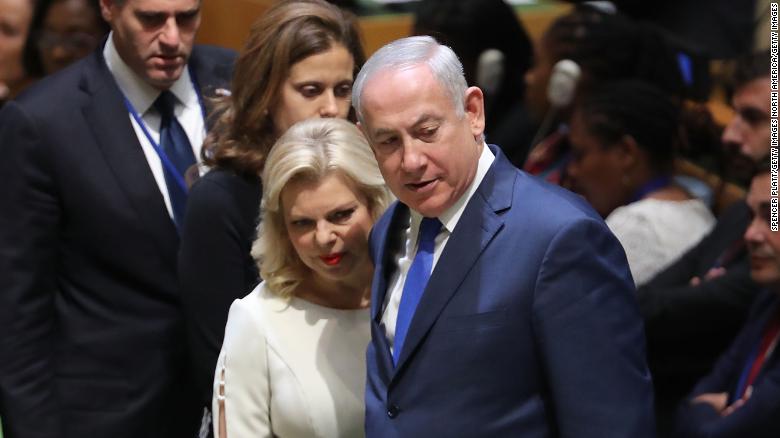
The accusation that this law is undemocratic is entirely without basis. The principles of democracy require that each citizen has an equal right to express his free will in a national poll for government.  Once this has been adequately achieved, the majority is entitled to exert its will on the minority.  Israel goes a step further by also granting certain minority protection rights to ensure that the minorities are not entirely trodden on.  Even the new nationality law does not change the democracy of the State of Israel, nor its status as the only democracy in the Middle East.  In fact, aside from making a stronger statement of the obvious and what has been in situ for many years, the new nationality law changes nothing at all.  As Prime Minister Netanyahu pointed out in his recent address to the General Assembly of the United Nations, it is ironic that Israel is being accused when other nations have much more serious discriminatory actions to answer for.

Perhaps the strongest organ of Israel's democracy is its independent judiciary.  It seems almost certain that this body will be called in to adjudicate on the new law, and whether it transgresses Israel's democratic and other ideals.  I watch eagerly for this matter to be brought before Israel's Court of Appeal, and the outcome of this case.  I am not optimistic that the court's decision, whatever it may turn out to be, will necessarily change anything about the way in which Israel is viewed in the international community.

Work is still required to convince the Druze community (and other loyal minorities) that the new law does not affect them in any way.  I feel sure that, in time, they will understand this for themselves and that no further explanations will be necessary.

Sunday, 13 May 2018

Reflecting on Israel at 70

As the festivities of the celebration of the 70th anniversary of Independence die away, there is the inevitable return to the reality of everyday living.  Each of us returns to our daily chores of working, studying and taking care of our usual activities.  The threatening protesters are gathered once again on the Gaza border as before.  Iran still continues to threaten to annihilate Israel.  The usual attacks, both verbal and physical are again being perpetrated.  All continues as it was, and little changes.

And yet, this is the beauty of the reality.  Unlike a birthday when the special day lasts only 24 hours until next year at the same time, the celebration of 70 years of independence continues even after the festivities are gone and forgotten.  Because every day in Israel is a celebration of independence.  The reality of the daily grind of life in an independent country is a part of the success.  Not only that, but the 70 years becomes 70 years and a day, and another day, building steadily each moment with greater and greater independence and confidence.

This seems a good moment to reflect, not only on the past and the present, but also upon where things are leading in the future.  To consider that 70 years have not only brought massive growth, development and progress in Israel, but have also allowed for the rebuilding of a nation.  The population has grown from a little more than 800 thousand to almost 9 million in a short 70 years.  The country's infrastructure and economy has grown along with the population to support it, and it has been able to absorb and integrate the large numbers of Jews who have immigrated to Israel over the years.  This is a huge achievement, unrivalled in modern times.  In addition, these 70 years have brought Jewish growth and pride even outside of Israel.  The Jewish people are experiencing one of the greatest periods in Jewish learning in history, something that could not have been dreamt of 70 years ago.  All that Israel stands for and has achieved reaches every corner of the Jewish world, and the non-Jewish world.

The miracle of the survival of Israel against the odds, and against the will of the surrounding Arab countries and their armies has been recounted numerous times and is well documented.  Somehow, it seems that the enormity of this miracle can never be sufficiently emphasized.  There is no logic to explain how it is that the Israelis and Jews still have their state after so many attempts to wipe it off the map.  And this has not been only survival, the 70 years have been enormously productive in terms of the growth, development and ingenuity that have been brought to the state and the wider world.  So many technological advances have come out of Israel that have also made a huge contribution to people around the world.  These have come in so many different fields, including computing, telecommunications, medical, agriculture and many others.  So many Israeli inventions are incorporated into products that are used around the world as a matter of course.  Undoubtedly, one of Israel's greatest inventions has been the Iron Dome anti-missile system.  Not only is this a great military development in its own right, it has afforded Israel the protection that it needs to continue to build and innovate in safety.

The routine in Israel has proved to be part of the joy and success.  Whether it be the routine of another attack to take out weapons that threaten the safety of the state, or whether it be the routine of another Shabbat with the regular smells of chicken soup and the sight of white shirts.  There is also the routine of competing on the world stage in the blue and white in sporting and cultural events, and in showing presence and contribution in the international community in general.

The daily grind that we see in the Jewish state today would have been inconceivable to so many Jews who were sent to their deaths in the years that preceded the founding of the state.  And while the obvious fact that all young Israelis will be called to serve in the military to defend the state is just part of the daily routine, it remains a source of wonder and pride to so many who experienced being a Jew in a world without a Jewish army.  We think about so many who were not spared to see this routine, and who would have rejoiced in it.

Anti-Semitism is again on the rise in the most dramatic fashion.  It is well documented and accepted that Europe is now a hotbed of anti-Semitic activity.  The number of anti-Semitic incidents in Europe continues to rise each year, and Jews living there are feeling more at risk than ever before in the last 70 years.  The same is true of the USA where anti-Semitic sentiment is dramatically on the rise.  Shining through all of this is the fight by the Jewish state in defence of Jews around the world.

We feel comfort and security in the routine that Israel has developed.  Events are great to celebrate, but the greatest celebration is the return to the status quo.  The new status quo that has only become possible for Jews as a result of the founding of the Jewish state.  And despite all the threats against Israel, against Israelis and against Jews, the routine of Israel incorporates the defence of Jews and Jewish values around the world.  This gives much to celebrate.

As we look forward to the next 70 years, it seems that it will be difficult to rival the achievements of the last 70 years.  The development from almost zero seems astonishing due to the low starting point and lack of resources and support.  And yet, the achievements are clear for all to see.  This provides a huge incentive to achieve similar greatness in the years to come, this time starting from a much higher level.  The routine in Israel is encouraging this, and providing the platform to continue these phenomenal achievements.

Am Yisrael Chai.

Wednesday, 7 March 2018

Corruption and Israeli Democracy

Accusations of corruption and behaviour unbefitting of a person acting in a position of trust as a minister or prime minister of the country have been circulating around Prime Minister Netanyahu for some time.  The stories and accusations are not new.  Things did, however, take a different turn over the past couple of weeks.  The recommendation by the police to the attorney-general that the prime minister should be indicted on charges of corruption, bribery and breach of trust in two of the cases has put a different complexity on this sorry case.  This, added to a new story and set of accusations coming out of the woodwork with a former close associate of the prime minister turning state witness, has served to tighten the squeeze on Netanyahu and those around him.  The accusations made by the new state witness, Shlomo Filber, sound almost inconceivable.  If only a small proportion of the accusations are proven to be true, it would make place Netanyahu in an untenable position regarding his ability to continue to serve as prime minister.

For now, however, that is all that they are.  Accusations.  The stories sound like they could come from a far-flung land where there is no consideration for rule of law or fiduciary responsibility towards those who elected the prime minister into office.  Many of them are corroborated by people who are seemingly unrelated to each other, and are reported to have been repeated in different situations involving different people and issues.  In the way that they have been presented, the stories sound almost like they could be true.  Any objective person with a high level ability to assess fact from fiction could easily be convinced that the accusations are all based on truth.  And yet, we still do not know.   We do not know because the stories have yet to be verified by an objective court of law that was set up for the purpose of evaluating the credibility and truth of such accusations.  All we know is that certain people, not an insignificant number of people, have the incentive to publicly tell stories of bribery, corruption and betrayal about the prime minister and his associates, while others have the incentive to defend them.  That is as much as we know.  Nothing more.  So how can it be that a democracy allows public officials to be charged, vilified and castigated in public like this, when no formal charges have been laid, and when there is no attempt to bring them before a duly constituted court of law?

Don't get me wrong.  I have listened to and read about the accusations of bad behaviour on the part of the prime minister, his wife, members of his family and others in his close circle.  It seems inconceivable to me that such stories could be made up by people, purely for the intention of weakening or unseating the prime minister.  It seems unbelievable that seemingly similar patterns of behaviour could be concocted by so many different people from different spheres of life and with different interests.  It seems to me that, where there is smoke, there is fire.  And I am a great believer in elected officials being held accountable for all their actions, good and bad.  I am also a great believer in the basic democratic tenet that everybody is innocent until proven guilty by a duly established court of law to examine the particular issues.  If the accusations are so convincing, and if the police have recommended on the basis of evidence in their possession that there is a case to answer, why is the case not being answered?

I am not sure of the answer to this question, but I remain convinced of a few other important aspects of our democracy.  I believe that the trial by public opinion is wrong, and wholly undemocratic.  It is my view that all the investigations that are being conducted into the prime minister's behaviour, should have taken place behind closed doors.  Until the moment that the attorney-general is ready to formally lay legal charges to be answered in a court of law, I think that the details of all that we have been bombarded with, should have been kept away from the public eye.  Instead, we have experienced a trial by public kangaroo court, and directed by the press.  All of the protagonists in this sordid affair, including those who have been accused, the accusers, those involved around the edges, the press and the general public seem to have some axe to grind on the issue of the prime minister and his family.  It is difficult to work out who we should believe, as more and more unbelievable stories surface daily.  The country seems to be split almost down the middle between those who support the prime minister and wish to see him stay in office, as opposed to those who wish to see him unseated, jailed and consigned to political purgatory.

In addition to holding our public officials up to the light and expecting them to be fully accountable to the voting public for their actions in office, our democracy should also protect them against unreasonable and frivolous claims that could damage them and our democracy.  Prime Minister Netanyahu has effectively been rendered incapable of carrying out his highly important prime ministerial duties, as he is spending most of his time these days bring questioned, defending his character against the accusations, and trying to influence the public about the nature of these accusations.  Who is running our country and keeping it secure while he is worrying about the next story that accuses him of inappropriate behaviour?  If the attorney-general considers the police investigation to have produced a case for the prime minister to answer in court, Netanyahu should resign his position and answer the accusations against him.  If it turns out that the court does not find the accusations against him worthy of a guilty verdict, he should be able to return to the prime minister's office to resume his duties.

Israeli democracy should not tolerate corruption of public officials under any circumstances.  It should also protect them while in office against any attempts to disturb their ability to carry out their jobs.  The democratic process should determine that, at a certain point, elected officials should be relieved of their duties to allow them to answer properly-constituted charges that have sufficient basis to believe that they have a reasonable possibility of being upheld by a court.  Until that moment, they should be allowed to get on with their job.

In my opinion, democracy goes both ways.  At the moment, we are suffering the worst of all situations that a democracy gives us.  The people of Israel deserve more, and it has come time to examine our system to ensure that democracy for us protects both the state and the individuals, rather than the unsavoury and undesirable position that our country current finds itself in.

Monday, 15 January 2018

Israel and Shabbat

The Knesset passed into law last week, the controversial so-called "Shabbat law", also labelled by some as the "minimarket law".  This new law requires local municipalities to first get the approval of interior minister before allowing stores in their municipal area to open on Shabbat.  Given the fact that the current interior minister is Shas leader Arye Deri, the immediate expectation is that such approval would generally be withheld, forcing stores across the country to be closed on Shabbat.  And furthermore, the extent to which stores are allowed to be open on Shabbat or not, will seem to depend upon who occupies the seat of the interior minister at any moment in time.

The issue of Shabbat in the Jewish state is a complex one.  The religious community will always wish to see the Shabbat respected to the fullest as set out by Jewish law.  This dictates, amongst other things, that stores will be closed from sundown on Friday until sundown on Saturday each week, and similarly on religious holidays.  Aside from the issue of violating Jewish law by opening stores on the holy Shabbat, the religious community also argues that the opening of stores on Shabbat forces people to work there on Shabbat.  These workers, they believe, would be better off spending Shabbat at home with their families resting, rather than being forced to work.  On the other hand, there is a substantial secular community living in Israel which prefers to have greater choice as to when they shop for their groceries and other items.  Many of them work long hours during the week, and find it impossible, difficult or inconvenient to do their shopping after work during the week.  For them, shopping on Shabbat is preferable.  Why should they not have the right to choose for themselves when the best shopping time is for them?  What about those people whose work during the week does not afford them enough to make a living, and who welcome the additional work hours at double time that the law allows on Shabbat?

Does Israel, as a democratic Jewish state, have the right to impose Jewish law on its citizens?  Does it really want to impose Jewish law?  How important is the observance of the Shabbat to the Jewish nature of Israel?  Israel's Jews are a mixed bunch.  Some are observant, and some are not.  Most of them are fiercely proud to be Jewish and to live in the Jewish state, and each expresses their Jewish identity in a different way.  The statistics show that between 20% and 30% of the Jews in Israel consider themselves to be ultra-Orthodox or Orthodox.  On the other end of the spectrum, around 40% of Jewish Israelis consider themselves to be secular.  So the balance of power rests with those who consider themselves to be traditional.  From this, we can see that there is no obvious single view that emerges concerning the importance of Shabbat observance.  This was reflected in the law that was in force until now, that allowed each municipality to choose for itself what its policy regarding store-opening on Shabbat would be.  This was also borne out in the High Court decision that confirmed this method of deciding.  Each municipality can decide, according to the demographics of its local area, whether stores will be open on Shabbat or not.  Some decide yes, others decide no.  Some have a mixed policy of forcing stores in certain areas to close, while allowing stores in other areas to be open.  One thing that remains certain is that there will also be those who disagree with whatever happens in their local vicinity.  There is no possible way of satisfying all the people in any particular locality.

The authorities have previously intervened in some ways in order to impose some element of Shabbat observance in Israel.  El Al, Israel's national airline does not fly on Shabbat or on Jewish holidays.  Banks, supermarkets and many other facilities are prohibited from opening on Shabbat.  All hotels in Israel that wish to be certified by the Ministry of Tourism, are forced to serve food that is kosher.  This requires a certain level of observance of Shabbat.  Much of Israel's public transport does not operate on Shabbat.  It seems to me, however, that this has extended a little too far with the government passing the recent Shabbat law.

It seems that Interior Minister Arye Deri also feels the same.  Despite his personal views that Shabbat should be observed, he has pledged not to exercise the power that the new law gives him to enforce Shabbat observance.  Instead, he has indicated that he will allow each municipality to decide for themselves as they have done before.  This view does not, however, remove the possibility that a future interior minister may exercise his power under the law in one direction or the other.  For this reason, the law seems to me to be a step too far.

Unfortunately and unsurprisingly, the law has become mixed up in Israeli party politics.  Essentially, the enactment of this law has served to give Health Minister Yossi Litzman a path back to his ministerial position, after resigning from the government over his opposition to work being undertaken on Israeli railway infrastructure on Shabbat.  Now that the new Shabbat law is on the statute books, he can prove to his party and electorate that he has forced a change to the government policy on Shabbat, and is justified in returning to the government.  The illusion seems to hide the reality in this case.

The often remembered Ahad Ha'am quote says, "More than the Jews have kept the Shabbat, the Shabbat has kept the Jews".  There is no doubt that Shabbat observance has been a central tenet around which Jews have focused during the thousands of years of exile, and which has helped to maintain some element of identity and unity.  It is interesting that, during the years of exile, Shabbat was observed out of free will, and not out of being forced on anybody.  It seems to me that it is desirable to continue the observance out of free will, now that we have a Jewish state that enables this more than at any time during Jewish history.  Forcing it on anybody seems counterproductive. 

The real question is whether Shabbat observance and the traditional Shabbat atmosphere in Israel can survive the law, or whether the law will potentially force people away from it.  I have no doubt that free will is much stronger than laws that are imposed.  The Shabbat is no exception.

Saturday, 4 June 2016

Rough Justice?

The story of Sgt. Elor Azaria has captured the imagination of many Israelis, and has succeeded in dividing opinions very sharply.  Sgt. Azaria is an IDF soldier in the Kfir brigade, who was on duty near Hebron on a day in February when a terrorist stabbed and wounded another IDF soldier friend of his.  According to the most reliable eye-witness accounts of the story, Sgt. Azaria shot at the terrorist some time after the terrorist had already been neutralised and was under the full control of other IDF soldiers.  The shot fired from Sgt. Azaria's gun resulted in the death of the terrorist.  As a result of this incident, Elor has been court-martialed, and charged with the offense of manslaughter.

The entire episode has played itself out in the public eye.  This is due to the intervention of the human rights organisation Btselem, who miraculously had somebody on the scene to record the events, and decided that it was appropriate to publicly air a video taken of the incident.  The video turns out to have been edited before being publicised, and without full disclosure of that fact.  The act of airing the video in public pushed the matter, and the debate, into the public arena.  The IDF was forced to respond publicly saying that it would investigate the incident, and take actions against the soldier if appropriate.  This, in turn, sparked a great deal of public support for the soldier, explaining that he has been forced to operate in extremely dangerous conditions as a result of the recent wave of terrorist violence in the West Bank and Israel.  It was put forward that his actions should be understood in the context of the situation that has been imposed upon Israel and her soldiers.  Israel's prime minister, minister of defense, chief of general staff and other ministers in government all felt the need to make public statements on the matter in criticising the soldier's actions.  In turn, this drew in the family of the soldier and many others who felt the need to defend him.  The incident degenerated into a classic public free-for-all.

The considerations on each side of the argument are clear, and convincing.  Israel is a country that is constantly under threat from those who wish to destroy her and her people.  This forces all of Israel's citizens to serve in the army as protection against those who desire to reap destruction.  Israel's soldiers are placed in danger's way each and every day.  This is not a normal or acceptable situation, and places enormous stress on young people who serve in the country's military.  Little consideration seems to be given by the international community to this fact.  Instead, Israel's soldiers are constantly under close scrutiny.  Organisations like Btselem ignore the human rights abuses that are inherent in the constant threats to Israel, and they find it only necessary to hold Israel and her soldiers accountable for their reactions in the spur of the moment.  This background forms the basis for the support that Elor has received from the public.  The fact that he was placed in a difficult situation having to protect his country at such a young age, has elicited sympathy and respect for him, and support for his actions.  Elor and his brigade spent many long hours on patrols, knowing that somebody could try to kill them at any moment.  Why should terrorists be afforded human rights, when they have no respect for the human rights of others?  There are many who believe that the fact that this person was trying to kill another individual in an orchestrated terror attack, immediately removes his right to being treated with respect and removes his human rights.  So, for many Israelis, it is inconceivable that a soldier can be tried on charges of killing a terrorist.  This is, after all, the job that soldiers are trained to do.

Despite many indications to the contrary, the IDF has strict disciplinary rules that it enforces.  These rules have been developed to fit with the environment in which its soldiers are forced to operate, and are designed to take advantage of the Israeli culture to extract the most from each conscripted soldier.  The rules are also highly influenced by our Jewish heritage, and the values that come with that.  The IDF's view is that we have the obligation to separate ourselves and our behaviour from those who seek to destroy us, and who behave without compassion or humanity in their quest to achieve this.  Even though the IDF's objective is to protect the people and the State of Israel, this should be achieved in a manner that is true to our cultural and religious teachings.  We should never lose sight of the fact that our soldiers are human beings before they are soldiers.  It is for this reason that the IDF discipline affords human rights not only to soldiers, but also to terrorists and enemies.  When responding to terrorists and enemy fighters, IDF soldiers have strict rules of engagement that are closely policed.  While giving IDF soldiers freedom to do almost anything that is required in the protection of Israeli lives, the rules of engagement strictly forbid shooting anybody unless an order to do so has been given or unless a victim's life is in immediate danger.  Failure to abide by the rules of engagement is taken seriously.  An army that has to counter the threats that the IDF sees daily, is forced to have a zero tolerance policy on operational transgressions.  There is no room for any soldier to have his or her own agenda or ulterior motive while he is in the service of the IDF.  If there is any suspicion that Elor has overstepped the well-kown and highly drilled rules of engagement, the correct action is to investigate the matter and give the soldier the right to defend his or her actions.  If the soldier felt fear or threat at the moment that he fired his shot, or believed that another life was in imminent danger, he will have his opportunity to present this defence.

I feel confident that the court-martial system will allow the charges to be put to the soldier, while also allowing him the opportunity to defend them in a democratic manner.  No external party or member of the public, whether it be Btselem, the minister of defense, the chief of general staff and even the prime minister can, or should pre-empt or interrupt this process.  It is extremely regrettable that this process is being played out in public, and it would be far more effective to allow the IDF to do its job internally in the manner that it is accustomed to doing.  It is clear that the act by Btselem of bringing this into the public domain effectively forced some of our leadership to respond to this in public.  The response, however, to the Btselem accusations was way beyond what was required.  Some believe that this was designed to pander to the international community, rather than considering the impact on the soldier and on the IDF as a whole.  Elor Azaria has become a villain in the eyes of some, while being a hero in the eyes of others.  I regard this act of forcing him into such a high public profile is possibly as stressful as the job that he was doing in the field near Hebron.

There is no doubt that Israel's young soldiers are forced to endure more stress than other young people of their age, and perhaps even more than professional soldiers in the armies of other countries.  Israel is currently the only country in the developed world that is being forced to fight a war within its borders, and the only country whose very existence is constantly questioned and threatened.  In spite of this fact, the international community seems to hold Israel to standards that are far in excess of the standards expected of other countries.  All of this is extremely unreasonable and even discriminatory, but standing up and shouting about it from the rooftops appears futile.  It does not help Israel secure her future, which is the most important task at hand.

It is thanks to the enthusiasm of those like Elor Azaria that Israel is able to protect herself against the constant threats of destruction.  Israel's young soldiers show incredible loyalty and patriotism when serving their country.  This enthusiasm needs to be allowed to show itself within a very stringent framework.  The framework is not only important for the discipline in the IDF, it is important for our soldiers and our country to retain their humanity.  This is the key difference that distinguishes Israel from her enemies, and is something that we would never wish to lose.  We would never wish to sink to the levels of those who seek to destroy Israel.

It is important now to allow the court-martial to conduct its work according to the rules and democratic principles under which it operates.  No external parties should be allowed to influence this process in any way.  No doubt, the verdict of the court-martial will be received with controversy, whatever its outcome.  We are forced to accept the verdict, and understand that this is the way in which our democracy operates.  Whatever the outcome may be, I feel immensely proud that we are able to retain our humanity even under the most extreme conditions.  And I am proud that we demand this humanity of our soldiers, even if the international community does not acknowledge this.

Friday, 29 May 2015

Starting on the Wrong Foot

The entire process that led to the forming of Israel's 34th government in 68 years of independence was filled with drama and unexpected events.

Opinion polls in the weeks leading up to the election predicted that the two largest parties, the Likud and the Zionist Union (formed out of a pact between the Labour and Hatnua parties), would be fighting each other off to form the new government.  The feeling was that one or two seats would separate the parties.  Even the election's exit polls did not predict the extent to which voters ultimately favoured the Likud over Zionist Union.  When the election result was announced showing that the Likud won 6 seats more than the Zionist Union, it took everybody in the country by surprise.  Even the members of the Likud were shocked at the size of the victory, especially in view of the earlier predictions.

The pendulum of expectation swung in the opposite direction.  All of a sudden, there was the expectation that Prime Minister Netanyahu would form a broad-based, strong, right-wing coalition government in double quick time.  As it turned out, the formation of the government took way longer than expected, is the narrowest possible government and is not nearly as strong as people thought and hoped it would be.   With these fluctations came swings in the public's expectation about how long this government can reasonably survive, and whether it has the ability to govern and make the changes that are so needed in Israeli society.

If the lead-up to the new government contained its fair share of surprises, the process of forming the government has also been less than inspiring.  The prime minister has been forced to compromise on many fundamental ideas that his electorate stand opposed to, in the interests of attracting coalition partners into the government.  For example, he has been forced to go back on legislation, that was put in place during the previous government, to force ultra-Orthodox yeshivah boys to undertake military or national service like all others of their age.  He has also been forced to redirect huge sums of money to the ultra-Orthodox sector, at a time when the Israeli government has implemented large budget cuts as part of an austerity plan.  Many Likud voters are horrified at these and other concessions.

One of the persistent rumours that refuses to go away concerns the reported approach that Prime Minister Netanyahu made to Labour leader Isaac Herzog to join the coalition.  The prime minister is reported to have approached Herzog on condition that he agrees to abandon his pact with Tzipi Livni, and bring only the Labour faction into the new government while leaving Livni and her Hatnua members out of the coalition.  Herzog refused, thereby turning down the opportunity to be part of a national unity government, and provide Israel with a much more stable coalition.  Has he spited the people of Israel by preferring to see Prime Minister Netanyahu fail in his endeavours?  There are many who believe that he has chosen the egotistical path, rather than setting his ego aside in the interests of serving the Israeli electorate.

The make-up of the new cabinet is also not a huge source of inspiration.  For starters, there are a total of 21 ministers in the new government, surpassing the 18 ministers that were recently legislated as being the maximum allowed in any government.  Netanyahu was forced to pass an amendment law through the Knesset to allow him to appoint 21 ministers to have sufficient jobs to dish out to all coalition partners.  The important job of foreign minister has been left vacant and has been assumed by the prime minister.  He has also retained the communications ministry, ministry of health and ministry of regional cooperation for himself.  It seems as though Netanyahu may be reserving these in case he is able to convince Lieberman or others to join the coalition in the future.

Aryeh Deri, head of Shas, is the new economics minister.  He has recently served a jail sentence and now come out of an exclusion period, during which he could not serve in a public position, as a result of having been found guilty of taking bribes while a government minister.  Yoav Galant is the minister of construction.  This is highly controversial seeing as Galant was prevented from taking up his appointment as the IDF Chief of General Staff due to irregularities found in the construction of his personal residence on public property.  Miri Regev is the new minster for culture and sport, despite having made it quite clear that she really wanted to have the welfare portfolio.  Habayit Hayehudi's Ayelet Shaked is probably the most surprising and high profile appointment to the new government, having been appointed as the minister of justice.  In this position, she has a huge influence over the appointment of judges to the supreme court, as well as many other aspects of Israel's judicial policy and justice system.  She has also secured herself a seat in the security cabinet, the narrow inner cabinet that is responsible for formulating and implementing Israel's security, defense and foreign policy on a daily basis.  At 39 years-old, she is considered an extremely young appointment to a critical position, despite clearly being very capable.  It is reported that Likud old-timer Benny Begin only knew of his appointment to the cabinet, as minister without portfolio, at the moment that it was announced in the Knesset.

The Knesset session to present the new government was held on Thursday 14 May.  The session epitomised a circus more than a meeting of Israel's legislature.  At first, Arab members of Knesset created an intentional and sustained disruption during the prime minister's address, that resulted in  a number of them being evicted from the chamber.  A few other Arab members decided to leave of their own accord in sympathy, although they did return during the address by the leader of the opposition.  Miri Regev was also issued a warning for heckling and disruptive behaviour, although managed to survive without being ejected.  Leader of the opposition, Isaac Herzog, delivered a stinging rebuke and criticism of the prime minister and his new government.  He was heckled by members from the religious parties, who were also issued with warnings.  While the job of the official opposition (and its leader) is to ensure that the government is held to account, there are times when it is appropriate for the opposition to support the government and to show some unity in helping with its efforts.  There are many who feel that this occasion was the perfect opportunity to show some unity and support.

The inconspicuous start to the new government continued further with a reshuffle coming less than 10 days into the life of the new government.  Likud number 2, Gilad Erdan, decided that he would be better off working within the new government rather than from the back benches.  While his disagreement with Prime Minister Netanyahu has not been resolved, Erdan finally agreed to accept the ministries of public security, strategic affairs and public diplomacy.  Despite him trying to put a spin on why he changed his mind to justify his actions, it is clear to all that this is a big U-turn on Erdan's party.  Netanyahu was happy to reshuffle his new government in order to accommodate Erdan.  Benny Begin, who was asked to resign his position as minister without portfolio to accommodate Erdan joining the cabinet, was not happy to comply with the request.

Despite the problematic manner in which the government has finally come into office, it does not detract from the fact that new government has a lot of important work to do.  Israel is under much pressure on the international diplomatic front to move forward to a peace agreeement with the Palestinians.  It also has to maintain firm security against those who are determined to destroy her and her people while also addressing the social and welfare needs for the weakest members of society in a tough economic climate.  All of this needs to achieved in a climate of lower levels of government spending to manage the economy responsibly.  Israel needs a firm, stable and decisive government that can make the difficult decisions that confront it.  Even though the manner in which the new government has started out life does not seem to bode well for the future, we all hope that we will be confounded by the extent to which the government is able to achieve great things.  We wish them much success.

Thursday, 21 May 2015

Is this Really Racism?

Demonstrations have taken to the streets of Israeli cities in recent weeks.  While demonstrations in Israel are not new, these demonstrations were different and unique.  For the first time since the first Ethiopian Jews were airlifted to Israel in Operation Moses in 1984 and in  Operation Solomon in 1991, Ethiopian Jews have demonstrated against their plight in Israel.  The images of black-skinned Israeli Jews battling against mostly white-skinned Israeli policemen that were displayed across much of the media in Israel and abroad, were perfect to fuel those who accuse Israel of racism and even apartheid.  But nothing could be further from the truth.

While the treatment of the Ethiopians in Israel leaves much to be desired in many instances, the underlying reason for the treatment that they have been forced to endure has nothing to do with racism.  Instead, this a story of a cultural chasm between two groups of Jews that has left one group greatly disadvantaged.  It is a story of natural human behaviour and survival instinct, and it is a story of the integration into society of a minority group to the point that they finally find their voices to stand up for themselves.

The story of the immigration of the Ethiopian Jews to Israel is uplifting and depressing in equal parts.  They were rescued from the African desert out of the jaws of starvation and anti-Semitic genocide.  They had suffered from the severe famine that had affected the African continent for years, and had been subjected to horrendous anti-Semitic discrimination by their fellow country people.  After much deliberation, the Israeli government accepted their claims to be Jewish, and sent planes to airlift them to safety, shelter and nourishment.  The stories of thousands of people crammed onto aeroplanes, many of them seated on the floor, are now part of the legend of tales that are told about this phenomenal rescue mission.  The truth was, however, tough to confront.  Not only had most of these Ethiopians never seen an aeroplane before, they had no idea what a toilet was or how to operate any electrical appliance.  They were literally lifted from one existence to something completely alien to them.  This culture shock upon landing in Israel led to a huge change in their natural, nomadic, male-dominated lifestyle.  In many instances, the patriarchal head of the family was no longer able to fulfil this role and to provide for the family.  The role of the women in the family was elevated as many of them went out to work to earn the basic necessities.  Social breakdown in the society followed quickly, accompanied with domestic violence, substance abuse and petty crime.  Family murders within the Ethiopian community continue to be common due to the upheaval that family life has been forced to endure.  All of this is despite the fact that the community has now been housed within its Israeli culture for more than 20 years.  The process of adjusting to a culture and existence totally alien to theirs has exacted a very high price on the Ethiopian community.

Due to the criminal activities that have become commonplace amongst Ethiopians, they have become well-known to the police authorities.  In turn, the police have placed the most common offenders, and the community as a whole, under close supervision.  The relationship between the Ethiopian community and the police has become strained.  The repetitive nature of the unlawful behaviour on the part of the Ethiopians has frustrated the police.  The police have been charged with unacceptable behaviour towards the Ethiopian community.  Many of these charges are justified.  Even if they are frustrated, there can be no doubt that the police are always expected to adhere to the highest standards.  In this regard, they have failed.

Israel is a country where those who scream loudest get the most.  This unfortunate cultural trait has deep historical roots, and can be traced back to the difficulties that Jews experienced when living as second class citizens during the Holocaust in Europe, or during their persecution in Middle Eastern countries.  All of a sudden, Jews found a voice for themselves after having been denied this right in other countries for so long.  This voice continues to be used extremely loudly, and in competition to many others who are also trying to get their voice heard at the same time.  Visitors and more recent immigrants to Israel find this cultural trait to be rude and intolerable, despite the fact that it is not intended in a rude way at all.  For the Ethiopian community, the loud voice was even more extreme when compared to their upbringing and background.  The Ethiopians have a very gentle and withdrawn nature, that is at complete odds with the aggressive style of the rest of Israeli society.  Any sign of standard Israeli screaming and shouting results in the Ethiopians withdrawing in surprise.  As a result, they are less likely to get what they want and what they need.  Those who are more aggressive and shout louder are given higher priority at their expense.  This situation has led to immense frustration within the Ethiopian community, and an overall feeling of disadvantage on their part.  The fact that their leaders do not shout loudly means that their community gets a lower share of the budget allocations than they deserve to receive, and they get less attention than is deserved.

The change that has happened recently is that the new generation of Ethiopians has finally come of age.  The young adults in the Ethiopian community have either been born in Israel, or have grown up for most of their formative years in Israel.  As such, they are more versed and more comfortable with the Israeli culture than are their parents and grandparents who remain in some type of culture shock.  Despite the fact that the new generation is growing up with the influence of their elders who still carry with them the old timid Ethiopian culture, the new kids have learnt the tricks of surviving in their Israeli reality.  These are the kids who are comfortable with raising their voices to make them heard, and with mounting demonstrations in order to express their disgust and disdain at the bad treatment that their community has received.  We are now seeing the effects of this new generation who look like Ethiopians, but speak good Hebrew and have Israeli culture and chutzpah.  They are finally standing up for what their parents and grandparents have been denied over the years.

While the demonstrations look like a story of racism in their imagery, this is not a story about racism.  Israelis are not inherently racist, but are people who know how to fight for their rights and what is due to them.  For too many years, Jews were denied these as they survived amongst the nations.  Now, they have found the voices and will fight for their rights in the most determined way.  This also means that the quieter and more timid amongst others, whether they are Ethiopians or other cultures, get drowned out.  But our Ethiopian brethren have discovered their role in Israeli society.  We are immensely proud of how a community, which started from such a different and unsophisticated beginning point, is finding its place in our society. I feel immense pride when seeing Ethiopian soldiers in IDF uniforms, Ethiopian students at our universities, and Ethiopians who are members of Knesset, TV presenters, doctors, lawyers and those who fill many other roles in society.   I like the fact that the Ethiopian Jewish festival of Sigd has widespread recognition in Israel along with Pesach and Mimouna.  I am delighted that the Ethiopian community religious leaders, the Kessim, have recognition and respect alongside our Ashkenazi and Sephardi Rabbis and scholars.

If anything, this is a sign that our society ultimately presents equal opportunities for all its members, and I feel sure that the Ethiopians will continue to take their place in society over time.  This includes being on the front lines of demonstrations to secure the rights richly deserved by members of their community who are less comfortable to assert themselves.  This is the reason why I support their demonstration, and I feel extremely comfortable with the fact that they are causing disruption in the streets of Israeli towns and cities.

Sunday, 10 May 2015

Converting the Missionaries

It may come as a surprise to some that missionary groups are alive and very active in Israel.  Groups like the Jehovah's Witnesses have been operating in Israel for some time, as they have operated all around the world for many years.  It is their belief that they should make every effort to convert as many people to their way of thinking as possible.  And their reason for being in Israel is entirely understandable.  When seeking out potential converts, it is known that the Jehovah's Witnesses consider the conversion of Jews is of much greater value than converting anyone else.  Now that Israel houses the largest community of Jews in the world, Israel is an obvious target for them.

The issue has become very public over the past few weeks, with the Jehovah's Witnesses trying to hire a hall in the city of Ra'anana for their meeting.  Some have labelled the meeting as an annual conference or convention, and others have described it as a baptism for some of their recent converts.  The Municipality of Ra'anana initially declined the request for a municipal hall to be hired to them, and then acceded to their request.  Their agreement to rent out the hall was challenged in a district court by those opposed to the municipality allowing such a group to hold a meeting in its hall.  The court decided that Israeli democracy is the primary issue at stake here, and that the Jehovah's Witnesses are as entitled as anybody else to rent a municipal facility, and have their right to freedom of speech, religion and expression.  An appeal lodged with the Supreme Court of Israel upheld this decision, and the event was allowed to go ahead.

Many hundreds of Orthodox Jews turned out to protest against the event, and held prayers outside the hall in which the meeting took place.  There were even sporadic outbreaks of violence against the Jehovah's Witnesses and their supporters when they arrived at the hall.  While such an event being held in the midst of a Jewish city certainly represents a provocation to those living within the proximity of the event and in the city of Ra'anana, the Supreme Court of Israel has made its decision regarding the important issue of democracy and how this ought to be applied in our country.  It is, of course, the democratic right of all those who oppose this, to voice their opposition.  This should, however, be undertaken within the confines of what the law allows.  If that was not enough, members of the religious community in the city have turned on each other to make scapegoats out of those who are held responsible for allowing such an event to take place.

For me, the question was not about the work that the Jehovah's Witnesses are doing to try to convert Jews to their belief system, or about the municipality for allowing their meeting to take place here.  They are fully within their rights to do this, even though many are affronted by their efforts.  The greater question is why so many Jews feel that they are forced to find their spiritual fulfilment with the Jehovah's Witnesses.  Nobody observed any Jews being forced against their will to convert to the Jehovah's Witness belief system.  This indicates that these Jews are doing so out of their own choice.  It also indicates that they have rejected the possibility of finding their spiritual home within Judaism.  Instead of protesting against the work that the Jehovah's Witnesses are doing to convert Jews, the religious community should be asking themselves why Orthodox Judaism does not provide this home to its own people?

It seemed to me not to be coincidental that these events took place in the same week as the United Torah Judaism Party signed a coalition with the Likud to enter the new government.  This coalition agreement is sprinkled with concessions that the new government will make to give religious Jews certain rights that other citizens of Israel do not have.  There are also agreements that will ensure that government funding is allocated to religious groups and institutions at the expense of others.  When considering that Israel is currently experience a period of austerity when the government does not have funding available for additional requirements, and when considering the relatively small amount that Haredi Jews contribute to government coffers, this agreement is highly controversial amongst many Israelis.  To make matters worse, the agreement requires the reversal of legislation that was recently passed in the Knesset in an attempt to bring the treatment of ultra-Orthodox Israelis in line with everybody else.  It seems little wonder that there is such a large stigma attached to the notion of secular Israelis reconnecting with their religious roots when seeking spiritual fulfilment.  The behaviour of those who are the public face of these religious roots is so unattractive and opposite to anything that good, law-abiding people consider to be acceptable, that they would not wish to be associated with anything that these people represent.

It would appear as though the success of the Jehovah's Witnesses in Israel has little to do with the authorities permitting them to operate here, or decisions made by the Supreme Court.  If there was no public need or desire to listen to the alternatives that they offer, they would have left these shores a long time ago.  The fact that they continue to be successful in Israel says more about the religious alternatives that Judaism offers, than it says about those public officials who allow them to hold meetings in our municipal facilities.

Judaism certainly offers attractive alternatives to those who wish to seek it out.  In order to attract people to seek this out, people need to be attracted to those who practise this Judaism as much as they are attracted to the Judaism itself.  It is extremely unfortunate that the lie of the religious land in Israel favours the ultra-Orthodox community at the expense of the secular and modern Orthodox Jews.  And as much as Jewry offers many different strands for those who are interested to choose from, the headlines that are attracted by the negative activities of the ultra-Orthodox serve to drown out the good aspects that Judaism can offer.  The storm created by the Jehovah's Witness event is an easy scapegoat for the failure of Judaism to make itself attractive to its own people.  This is a classic case of throwing the baby out with the bathwater.

  of proselytising has raised its head again in Israel following attempts by a group known as

Saturday, 28 March 2015

The People of Israel Have Spoken

The ballots have been counted in Israel's election 2015, and people have recovered from the surprise of a result which has deviated substantially from the opinion polls and exit polls.  I believe that the surprise comes, not from the result itself, but because of the extent to which people's expectations were inaccurately set by the polls in the media.  The people of Israel have spoken, and they have spoken loud and clear.
 
It is possible to draw a number of conclusions from the comprehensive and unexpected manner in which Prime Minister Netanyahu and his Likud party have been returned to power.

1.  Security issues are at the top of the national agenda.
Prime Minister Netanyahu's election platform was based upon security issues, and the nature of the threat that exists against the State of Israel.  Some have called it scare-mongering people to believe that Israel is under an existential threat, in order to convince people to vote for him.  He even appeared in front of the American Congress during the latter stages of the election campaign,  in an attempt to reinforce this point for the Israeli public, the American public and the world at large.  With the strength of anti-Israel feeling evident within the international community, within the United Nations and evident from individuals around the world, it hardly comes as a surprise that the Israeli people believe him when he is says that Israel is under threat.  And when considering the rhetoric coming from countries like Iran and countries along Israel's borders, it is easy to understand why this feeling is so great.  When adding the growing levels of anti-Semitism, much of it dressed up as anti-Israel views, I don't believe that this threat arises from paranoia.  It is true to say that Israel is not on the verge of being wiped out, as was the case a few times in the past.  The Israeli army is certainly strong enough to stand up to any physical threat to our country.  This does not, however, diminish the threat and the desires of Israel's enemies to destroy her.  The majority of the Israeli electorate believe that Israel is under a substantial international threat, and have good reason to believe this.

2.  Peace with the Palestinians is not a priority.
It is noticeable that the issue of peace with the Palestinians played no role in the election campaigns of any of the parties.  The left-wing parties did not seek election on the strength of promises to bring compromises in the interests of reaching peace with the Palestinians, and the right-wing parties did not seek election on the basis that they would not be prepared to enter into peace with the Palestinians.  It would appear as though the Israeli public has understood that peace is unattainable with people who are not prepared to recognise that Israel is a Jewish country.  This is despite the fact that it is a most basic Israeli aspiration to seek a just and equitable peace.  The realisation that the Palestinians are not willing or ready to agree upon the compromises that are necessary to reach a peace, has not been easy to understand.  It is tough to accept that the Palestinian leadership has no intention of entering into a peace agreement at all.  It is unfortunate that the international community continues to try to squeeze a square peg into a round hole, and to insist that now is the time to force the parties to negotiate to reach a peace agreement.  It is even more unfortunate that the international community places the blame on Israel for the lack of progress towards peace.

3.  Tzipi Livni is unelectable.
Isaac Herzog sought out Tzipi Livni to join him at the head of the Zionist Union list.  The combined list was regarded as greater than the sum of its component parts, and this was borne out by the election result.  It seems unlikely that Labour and Hatnua could have secured 24 seats if they had run as separate lists.  When agreeing to form the Zionist Union list, Herzog and Livni also agreed to rotate the position of prime minister between the two of them in the event that their list should win the election.  There were many in the Labour Party and across the country who wondered why Herzog had agreed to conceed such a strong position to Livni, when her power to bring support to the Zionist Union was questionable.  Only one day before the election, Tzipi Livni announced that she was giving up on her right to be prime minister in the rotation agreement.  This was widely interpreted as the Zionist Union acknowledging that more people would be inclined to vote for them if they knew that Livni would not be prime minister.  The act was also seen as an immense act of weakness on the part of the tough lady.  It was also the final word in confirming that Tzipi Livni is unelectable as prime minister.  She lost credibility while she migrated from the Likud, across Kadima and Hatnua to ultimately team up with Labour at the opposite end of the political spectrum.  She was unable to form a government in 2009, despite her Kadima party won the highest number of seats in the general election.  This act of her giving up her right to be prime minister is the final nail in her prime ministerial ambitions.  It also opens a broad debate about whether Isaac Herzog is electable as prime minster.

4.  Toughness by Israel's leaders on the international stage is desirable and respected.
Prime Minister Netanyahu has always been a master at presenting Israel's case on the international stage, and showing toughness and being unashamed and uncompromising in doing so.  He is the new type of Jew that Jabotinsky could only dream of during the years of the pogroms in Eastern Europe.  Despite the fact that a number of generations have come and gone since Jabotinsky's time when he dreamed of this Jew, it seems as though Israelis continue to like, respect and desire this quality that Netanyahu possesses.  At a time when attacks on Israel in the international community  are at an unprecedented high and when anti-Semitism around the world is rising to levels that are unknown since the Shoah, there is something appealing to Israeli eyes and ears in a leader who is prepared to confront and beat these attacks by facing them head-on.  The sight of him addressing the US Congress just before the election will have confirmed Netanyahu's ability and willingness to do this for any Israeli who doubted it.

5.  Bias in the media counts for nothing.
There can be no doubt that the Israeli media waged a campaign against Prime Minister Netanyahu in order to remove him from the prime minister's residence.  He tried calling out the Yediot Haachronot and its online version Ynet during the course of the election campaign, by accusing the editor Noni Moses of publishing untruths in an attempt to discredit him.  Israel's media, and its lack of independence and editorial integrity, has come under scrutiny in recent months.  It is not only the anti-Netanyahu camp that stands accused, but equally Sheldon Adelson's Yisrael Hayom, and its unashamed support for Netanyahu.  The Israeli people have shown that, despite the vicious and overwhelming anti-Netanyahu sentiments published in many Israel printed and online newspapers, they have been able to make up their minds independently about who they wish to lead the country over the next 4 years.  Even the opinion polls, that did not even get close to the election result at any point, could not influence the electorate.  Since the election result has been made known, the anti-Netanyahu lobby has not given up and continues to castigate Israelis for making the wrong choice in the election.  They make an even greater laughing stock of themselves by doing this.

6.  Even Obama cannot unseat Netanyahu.
US President Barack Obama refused to meet with Prime Minister Netanyahu during his recent trip to address the US Congress in Washington.  The reason given for him not meeting with Netanyahu was that he did not wish to influence Israel's election result in any way.  When looking at Obama's actions in the period leading up to the election, and particularly his response to the election result, it seems that nothing could be further from the truth.  There is no secret that Obama has no time or patience for Prime Minister Netanyahu.  There is no secret that Obama would have been much happier if somebody else, anybody, would have been elected as the prime minister in the election.  There were strong rumours that Obama was somehow behind funding the V15 group that rose up in Israel prior to the election in attempt to unseat Netanyahu almost at any price.  The slogan of this group, and also much of the rhetoric behind the Zionist Union's election campaign, was anti-Netanyahu.  They were encouraging people to vote against Netanyahu, as opposed to enticing people to make a positive choice and to vote for something that they do want.  My interpretation of Obama's decision not to meet Netanyahu prior to the election, was a real attempt to influence people to vote against him, and not to stay neutral as he was trying to get us to believe.  Perhaps he was concerned that a meeting may have helped to convince people to vote for a man that he would like to see consigned to the dustbin of history.  The Israeli people have shown that even the most powerful politician in the world cannot influence their choice.  This is not a happy moment for Obama, and his concerted campaign against Netanyahu and Israel since the election has demonstrated that he is a very sore loser.   It seems inconceivable that US foreign policy in the Middle East can suddenly change as a result of an election result and a few statements from Netanyahu.  Obama's message that "this is not personal" has shown to be completely false.  Ultimately, the vote of the Israeli people is stronger, even than Obama.

Israelis are notoriously independent in their views and actions, and have a reputation for being steadfast and stubborn.  This has come through very loudly in the 2015 election.  And all of this with a turnout of voters in excess of 70%, the highest number since 1999.  Even the number of Arab voters was more than 60%, the highest number in history.  Despite numerous attempts to influence against the re-election of Prime Minister Netanyahu, he has returned to power with a stronger mandate than before.  He is on the verge of becoming Israel's longest-serving prime minister in history.  Israel is held up as the only real democracy in the Middle East, and the democratic process has spoken.  The time has come for those who preferred a different result, and who would have liked to see Herzog as prime minster, to rally around and accept the result that Israeli democracy has selected.  Continuing to fight against it does not serve a purpose.  This is not to say that those who justifiably oppose Netanyahu's policies should be silent and not express their views.  There is, however, a democratic way of doing this.  This does not include intervention from the US president, or unjustified attacks from the media.  Democracy is alive and well in Israel, and the people have spoken.