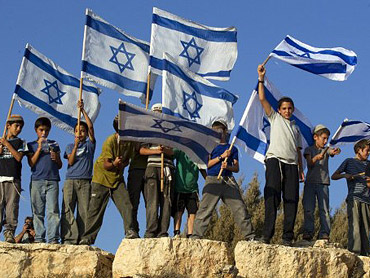
The new Jewish nation-state law (also known as the nationality law)
was passed by the Knesset into law before the summer break, and now
forms part of Israel's "Basic Laws". In the absence of a constitution,
the Basic Laws act in the place of a constitution and are the most
fundamental laws on Israel's statute book. The new nationality law has
caused a great deal of consternation amongst many Jewish Israelis as
well as amongst Jews living outside Israel, and continues to occupy the
pages of Israeli and international press in spite of the time that has
passed since it was enacted. There has also been a great deal of
opposition coming from the Druze community in Israel which is an
immensely loyal, law-abiding minority group living in Israel. This
Druze opposition has been used by Israel-haters to increase their verbal
attacks on Israel. The main charges against the nationality law are
that it is undemocratic, and that it discriminates against non-Jewish
citizens of Israel.
The crux of the new law is that it
reaffirms a number of facts that are already in place and well known.
These include the fact that Israel is a Jewish state, that the united
city of Jerusalem is the capital of Israel and confirms the flag and
menorah emblem as being the symbols of the state.
Before
examining the pros and cons of the nationality law, it is interesting
to consider why there was even the need to enact it. Some people
consider the combination of the Declaration of Independence as well as
the previous nationality law to have been enough to confirm the fact
that Israel is a Jewish state for the Jewish people, that Jerusalem is
the capital and to confirm the symbols of state. In spite of this,
there appear to be constant questions surrounding the right by the
Jewish people to determine their own destiny in the State of Israel.
The most public of these questions comes in the form of the denial by
the Palestinian Authority to acknowledge that Israeli is a Jewish state
as part of the peace talks that have been in hiatus for the past few
years. This denial is part of a concerted campaign against Israel, but
particularly against Jews. This is the new form of anti-Semitism that
is considered by many to be politically acceptable and correct, because
it is directed against Israel rather than Jews. The fact that the
attack is in the form of a denial of the right of Israel to be a Jewish
state seems somehow to be lost in the debate. The status of the city of
Jerusalem is also a very public battle in spite of it having served as
the capital of Israel since 1948, and in its current form as the
undivided city since 1967.
History has supported
and recognised the right of Israel to be a Jewish state over many
years. The Balfour Declaration of 1917 spoke about the "establishment
in Palestine of a national home for the Jewish people". Of course, the
Palestine referred to in the letter by Lord Balfour comprises, in a
large part, modern-day Israel. The Mandate for Palestine passed by the
League of Nations in 1922 also spoke about the British government being
responsible ".... for establishing in Palestine a national home for the
Jewish people". UN General Assembly resolution 181 (II) passed in
November 1947 on the issue of the partition of Palestine spoke about an
"Arab State and a Jewish State" being established in then Palestine.
Israel's Declaration of Independence declared "the establishment of a
Jewish State in Eretz Israel, to be known as the State of Israel". In
spite of this, the Palestinians under Mahmoud Abbas still have the
audacity to refuse to acknowledge and recognise this. And members of
the international community signal their tacit support for this position
by trying to force Israel to return to the negotiating table despite
the unwillingness on the part of the Palestinians to give due
recognition. Surely, this is enough reason in itself to warrant Israel
restating and emphasising these facts as some that are fundamental to
Israel's existence and identity?
This new law changes
nothing on the ground in Israel, and discriminates against nobody. It
seems quite normal for countries to have a strong religious basis for
the identity and symbols adopted by their countries. Around 20
countries around the world have crosses, crescents or other religious
symbols on their flags and emblems of state. Those countries are not
accused of discrimination because of that. We have not heard charges of
being undemocratic levelled against them because of their flags or
symbols of state. So why should Israel be singled out again? Because
it is the only Jewish state?
The accusation that this
law is undemocratic is entirely without basis. The principles of
democracy require that each citizen has an equal right to express his
free will in a national poll for government. Once this has been
adequately achieved, the majority is entitled to exert its will on the
minority. Israel goes a step further by also granting certain minority
protection rights to ensure that the minorities are not entirely trodden
on. Even the new nationality law does not change the democracy of the
State of Israel, nor its status as the only democracy in the Middle
East. In fact, aside from making a stronger statement of the obvious
and what has been in situ for many years, the new nationality law
changes nothing at all. As Prime Minister Netanyahu pointed out in his
recent address
to the General Assembly of the United Nations, it is ironic that Israel
is being accused when other nations have much more serious
discriminatory actions to answer for.
Perhaps the
strongest organ of Israel's democracy is its independent judiciary. It
seems almost certain that this body will be called in to adjudicate on
the new law, and whether it transgresses Israel's democratic and other
ideals. I watch eagerly for this matter to be brought before Israel's
Court of Appeal, and the outcome of this case. I am not optimistic that
the court's decision, whatever it may turn out to be, will necessarily
change anything about the way in which Israel is viewed in the
international community.
Work is still required to
convince the Druze community (and other loyal minorities) that the new
law does not affect them in any way. I feel sure that, in time, they
will understand this for themselves and that no further explanations
will be necessary.
Showing posts with label Arab Israelis. Show all posts
Wednesday, 3 October 2018
Tuesday, 17 March 2015
The Arabs Hold the Key to Israel's Next Government
The position of the Arab citizens of Israel has always represented a controversial point in our democracy. They represent a substantial minority (1.7 million out of a total population of 8.3 million, or 20% of the population), despite the fact that their representation in the Knesset has been approximately half of the proportion that they represent in society. The Israeli Arabs also represent the sum total of all Arabs with full democratic rights in the Middle East, a fact that is often overlooked. Despite this and the relatively good life that Israeli Arabs enjoy, they have struggled to fully find and assert their identity in Israel. Much of this emanates from the criticism that they have been forced to endure from neighbouring Arab countries, which have accused them of colluding with the Jews by remaining in Israel. This has been reflected in their reluctance to vote, and greater reluctance to support Arabs sitting in the Jewish parliament. It has also called into doubt their loyalty towards Israel, the country that provides them with their livelihood and existence, particularly when members of the Arab community (even those sitting in the Knesset) have publicly shown support for terrorists and for those who seek to destroy the State of Israel. Some of this behaviour can be regarded as treasonous.
Many Jews have questioned the logic of extending full democratic rights to the Arabs living in Israel. The decision for this was made many years ago, however, when first Prime Minister David Ben Gurion called upon the Arabs living in Israel to stay and share in the new-found democracy. With population growth in the Arab sector greater than that in the Jewish sector, there is a fear that the Arabs will outnumber the Jews in the future. This essentially spells the end of a Jewish homeland where Jews have the right to self-determination. While it is generally expected that this will happen when the Arab population outnumbers the Jewish the population, I suggest that we have already reached the moment when the Arabs essentially hold the key to determine who will govern the Jewish homeland, and who will be its prime minister.
Out of the Knesset of 120 seats, the coalition requires 61 seats to govern and more in order to establish a more stable government. When totting up the seats that the right-wing group (Likud, Habayit Hayehudi, Yisrael Beiteinu and Kulanu) is likely to achieve (according to the most recent opinion polls), indications are that they will have approximately 47 seats. A similar count for the left-wing group (Zionist Union, Meretz and Yesh Atid) gives approximately 42 seats. The religious parties together are likely to garner 18 seats, which they would probably contribute to any bloc that will give in to their specific demands to service the religious electorate. Even if the left-wing group succeeds in recruiting the religious parties, they still do not have a majority and certainly not a majority that can govern the country. The missing element is the Joint Arab List, that will command approximately 13 seats in the next Knesset. If Labour leader Isaac Herzog is prepared to bring an Arab party into the left-wing ruling coalition for the first time in the history of the State of Israel, he could be the next prime minister. If not, he will almost certainly not be.
The decision to include the Arab list into the coalition is not a simple one. Israel has had Arab members of government, and even Arab ministers before. Arabs hold senior civic positions in the High Court of Justice, and in many other governmental and municipal bodies. All of this has been accepted by the Jewish public. With the background of the ongoing controversy surrounding the true loyalty of Arab citizens of Israel to the state, however, and especially with attention having been drawn to this by Arab member of Knesset Hanin Zouabi who stands accused of treachery and treason, it is my sense that having an Arab party in the governing coalition may be a step too far for the Israeli public. The problem for Herzog is that he is damned if he does, and is damned if he doesn't. He is likely not to lead the next government if he does not include the Arab party in his coalition, and he is likely to have a real battle against public feeling and emotion if he does. This is not an easy situation for a leader who wishes to be the next prime minister almost at any price.
Some noises coming from the Arab Joint List may help to resolve this situation for Herzog without him needing to decide. The leader of the Arab party has indicated that they would be unwilling to sit in a coalition with the Zionist Union. The reason is that the Zionist Union is a Zionist party, something that the Joint Arab List opposes in principle. We have previously experienced many examples of parties not being prepared to join coalitions on the day before the election, and then joining that same coalition on the day after the election. So I would not necessarily accept all of the comments made by the Joint Arab List at face value.
It seems that even those who predicted that the Arabs would hold influence over the Jews in their own homeland, could not have anticipated that the influence would come in this way and at this time. This situation arises partially from the law change to the minimum threshold required to get into the Knesset which forced the smaller Arab parties to unite into one list, and partially from the style of Israeli politics that gives undue power to the smaller parties. And while I predict that the Arab party will not be in the government and that Herzog will not be prime minister, it does give immense food for thought about how this will play out in future elections. These are probably nearer than we would like them to be.
Sunday, 11 January 2015
Elections - Threat or Opportunity?
Most vocal in protesting against the actions and policies of the government have been Finance Minister Yair Lapid and Justice Minister Tzipi Livni. Prime Minister Netanyahu effectively announced his inability to manage his coalition by firing both ministers from his government, and giving a clear signal that elections would be his only alternative. Once the election was formally announced, the prime minister acknowledged that he had been forced into the coalition with Livni and Lapid after the last election, and that his coalition was unmanageable almost from the beginning of its term. This statement surprised many voters, and brought into sharp focus the almost impossible situation that Israeli politics finds itself in. The issues that form the base of the election platforms are substantial, and some are even life-threatening in the determination of the future safety of the State of Israel. The opinions on each issue are as diverse as the issues themselves. While a split of voter opinion is a fairly standard occurrence in many western democracies, in most cases the split seems not to disrupt the effective governing of the country by the chosen government. While it is well-known that coalition governments are notoriously less stable than governments that are comprised of a single party, this should not necessarily result in a total inability to govern. For some reason, the combination of issues that Israelis are forced to confront, along with a total split of opinion as to how to deal with them, results in an ungovernable situation. Not only is this situation enormously frustrating for the average voter, it also creates lack of stability in the government and comes at huge financial cost to the country. Israel has had 33 governments in its 66-year history
Having resigned ourselves to the fact that an election is now unavoidable, the question is whether this election can be used as an opportunity to somehow improve the situation in which Israel finds herself. Does this election present a real chance for change, or are we likely to get more of the same? And is there anything that the new prime minister and new government will be able to do to change the status quo? Most Israelis are seeking for an election result that can change the situation, particularly the security situation. Along with the security threat that the country faces, there is huge frustration over the economy and over the issue of Israel's standing in the international community, where Israel is increasingly isolated.
When considering the political parties in the Knesset and the way in which the public views them, it is difficult to see any dramatic changes coming about in the next election. Prime Minister Netanyahu is seeking a fourth term in office, and is currently looking like the only electable candidate for the office of prime minister. Labour leader Isaac Herzog is doing all that he can to present himself as a viable alternative, but opinion polls show that he has been unsuccessful so far in reaching the Netanyahu's level despite these efforts. He has little to show for his term as leader of the opposition during the last Knesset, and voters are sceptical about his ability to achieve anything as prime minister. He is being roundly criticised for the concessions that he made to attract Tzipi Livni and her Hatnua party into a joint list with Labour, given that opinion polls showed that Livni was running the risk of not gaining even one seat in the next Knesset. The question is being asked as to what concessions Herzog might make on behalf of the State of Israel if this is how he behaved with Livni?
The only political leader who has really enhanced his reputation and his standing in the last Knesset session was Naftali Bennett, leader of the Bayit Hayehudi (the Jewish Home) Party. Bennett succeeded in securing 12 seats in the Knesset in 2013 as a new party, which was a significant achievement. Since then, he has presented himself as a voice of the people - somebody who is prepared to say out loud the things that many people are thinking but not saying. He was, however, not really fully tested in the last Knesset session. As Minister of the Economy, Bennett had the opportunity to make his views known without having a responsibility for which the public held him accountable. It is expected that he is likely to increase his number of seats in the Knesset at the next election, and will have a position with greater responsibility in the next government that is likely to test him to a much greater extent than was the case until now. For the upcoming election, Bennett is not presenting himself as a prime ministerial candidate. It seems that he is setting the scene to be a possible prime minister following the next election, providing he can continue his ascent on the political ladder.
The three Arab parties that sat in the Knesset during the last session find themselves at an interesting crossroad. In total, the Arab parties secured 11 out of the 120 Knesset seats. This is despite the fact that Arabs represent around 20% of the Israeli population. Even more concerning for Arab Israelis is the fact that two of the three Arab parties will not sit in the next Knesset if they don't increase the number of votes that they attract. While they exceeded the election threshold of 2% that was set for the last election, they are well below the threshold of 3.25% that has been set for the 2015 elections. This has driven the Arab parties to hold talks about the possibility of combining their lists in order to continue to secure at least the number of seats that they have held until now. The Arab parties represent different constituencies of voters, each of whom believes in a different way of responding to the split identity that they have. They wish to find a balance in supporting their rights as Israeli citizens, as well as responding to the Palestinian issue and Palestinian terror against Israel. The different opinions on these key issues for them are also what is making it difficult for them to combine their lists.
The increase of the election threshold from 2% to 3.25% for the 2015 election is an attempt to somehow reduce the number of parties in the Knesset, and thereby also increase the stability of future governments. There were a total of 12 parties represented in the last Knesset, and 13 if you split out the combined Likud - Yisrael Beiteinu list. There were more than 30 parties who contested the elections, showing just how diverse Israeli views are and how many special-interest issues there are to be considered. While this allows democracy to work in a more idealistic manner, it also creates great instability in the government. Any reduction in the number of parties that this brings about will not be enough, however, to avoid the need to construct a coalition to rule after the election. Prime Minister Netanyahu has recommended further amendments to create greater governing stability moving forward, but none of these will be in operation after the next election. It seems doubtful as to whether greater could be achieved even after implementing the changes.
While the election issues are interesting, and some are critical for Israel's future security, safety and survival, there is no evidence that we will have greater governing stability during the course of the next Knesset, or even thereafter. Some parties will come and some will go, but the main issues confronting Israel and its system of government seem to be with us to stay for now. It seems that we will also have to live with the system that contributes to instability in the government, and accept that even the next government is unlikely to last the full distance under these circumstances. The fact that there are so many special-interest groups and parties contesting the election, and substantial numbers of people to support them seem to point to more of the same in Israeli politics for now.
Israeli politics has never had a dull moment in 66 years, and the upcoming elections will be no exception. At this juncture, there are many citizens of Israel seeking a little boredom in politics rather than more excitement. If boredom spells stability, both in the government and in the security of the state, this would be preferred by many of the voters. It seems, however, that more excitement lies ahead.
Thursday, 4 December 2014
Is the "Jewish State" Bill Really Needed?
The Israeli government decided last week to submit the so-called
"Jewish State" bill for consideration to the Knesset to be incorporated
in the Basic Law. The decision by the government to approve this law
has proved to be enormously controversial, both within Israel as well as
by the international community. There are many questions about whether
the Jewish State bill is really needed in Israel at this time, whether
the bill is really required at all, and whether the introduction of such
a bill will make any difference to the facts on the ground in Israel?
The main purpose of the Jewish State bill is to enshrine in Israel's Basic Law (which acts as a type of constitution in the absence of an official constitution) that Israel is the national state of the Jewish people and that Israel is a Jewish state. Despite the fact that there are various references in different Israeli laws to the Jewish nature of Israel, and despite the fact that it is mentioned in the Declaration of Independence, members of the government have deemed it necessary and appropriate at this time to entrench it in the Basic Law.
While the proposed bill has yet to be passed into law, it seems as though the proposed bill in its current form will not make any difference to the way in which Israel operates. Israel has always been governed as a Jewish state. This manifests itself in a number of different aspects of Israeli everyday life. National holidays are according to the Jewish calendar, the day of rest is Saturday while Sunday is a regular school and working day, Jewish religious law is applicable in certain situations specifically those relating to family matters, and people with one Jewish grandparent are entitled to claim immediate citizenship of Israel under the Law of Return. None of these aspects of Israeli society will change as a result of the Jewish State bill. It is anticipated that all matters that relate to the Jewish nature of Israel will continue to apply in the same way as they have applied until now.
Some of the Jewish aspects of Israel have been controversial, in a country that prides itself on its democracy. There are those who believe that the Jewish nature of the state is a contradiction to democracy, due to the fact that these aspects disadvantage non-Jewish citizens of the state. Despite the fact that all Israelis, Jewish and non-Jewish, are entitled to vote, are entitled to be a member of Knesset, have the right to freedom of speech and receive state education and health, there are many who feel that the Jewish nature of the state discriminates against those who are not Jewish. As a counter-balance, non-Jewish citizens are not obliged to be conscripted to the army while young Jewish men and women are mostly required to sign up. Non-Jews are free to volunteer for military service, and many choose to do so. The question is whether these points of law, that favour Jews over non-Jews, result in a democracy that is not really democratic? How does this compare, for example, to affirmative action that has been employed in a number of democracies around the world. It is contended that favouring one group or race over another, even where this is designed to correct wrongs in the society, is an undemocratic policy. Does this make the entire country undemocratic? In cases outside of Israel, employing policies that may be considered questionable on a purely democratic scale, have not resulted in the country's democracy being called into question. By the same token, it is my view that the Law of Return and the Jewish nature of the state, do not change the fact that Israel is a real democracy, the only one in the Middle East.
If this is true, why would there be such opposition to formally adopting a Jewish State bill? Many people believe that the idea of reinforcing the Jewish nature of the state is, in itself, not objectionable. The problem for them is that the draft bill does not specifically balance this out against the democratic nature of the state. They object to the bill for its form rather than for its substance. These objectors wish to see some open statements in the draft bill to reinforce the democracy of the State of Israel, while also confirming the Jewish nature of the state. For other objectors, their opposition comes to the timing of the introduction of the bill. Israel is currently experiencing a wave of terror attacks that some are calling the start of the third Intifada. Israel has been criticised for events that have taken place on the Temple Mount in Jerusalem, and some have even accused Israel of attempting to change the current modus operandi of the Temple Mount. The situation is extremely sensitive, and there can be no doubt that the introduction of such a bill at this time contributes to stirring up this sensitive situation.
What is the reason behind Prime Minister Netanyahu's desire to introduce the Jewish state bill at this time? Perhaps it is about countering the current Palestinian violence and uprising that is being experienced in Jerusalem and other areas. The prime minister has been known to take unilateral steps against the Palestinians to counter the unilateral steps that the Palestinians take. I believe that it runs deeper than that. We know that the peace talks between the Palestinian Authority and Israel are currently stalled on the issue of the recognition of Israel as a Jewish state. Prime Minister Netanyahu has insisted that Palestinian Authority President Mahmoud Abbas acknowledges this fact before the talks can move forward. Abbas has failed to do this, and the talks are stalled. Netanyahu has come under criticism in the international community for this position, and it is presented that this is his own demand that has been made without justification. By passing this into law, Netanyahu can turn this argument around by saying that this fact is now in Israel's Basic Law. Failure to recognise this on the part of Abbas is tantamount to denying a fundamental tenet of the State of Israel. Have the Jewish State law on the books may cause further delays to the peace talks, but may also help to clear the logjam and progress the talks. Abbas will be forced to turn to his people to say that he has no choice where this is concerned because it is a law of the land, and not a whim of Netanyahu.
The Jewish nature of Israel is undeniable. This was clear to those who escaped the ashes of the Shoa and found Israel to be the only place that Jews can really feel safe, and it is clear now when anti-Semitism is rife around the world. Members of other religions have more than one country in which they can to choose to live, that will give them the religious freedom that they desire. Jews only have one. It is inconceivable that the Jewish nature of Israel can be denied, in the same way as the democracy of the State of Israel cannot be denied. The fact that some members of the international community are questioning the concept of the Jewish State bill, is perhaps enough reason to insist that it be passed into law. We have an obligation to future generations of Jews to ensure that the Jewish nature of Israel can never be denied, not by those who live here and not be those who do not. Israel will always be the safe haven for Jewish people, and placing this on the law books is a natural extension of the intentions of the founding fathers of our country as set out in the Declaration of Independence. It also reflects the views of the majority of those living in Israel, including many of those who are objecting to the introduction of the bill for technical reasons.
I do not believe that balancing the Jewish State bill with statements reinforcing Israel's democratic nature, dilutes the statement of the Jewish nature of Israel. As such, it seems sensible to balance the statement out in order to gain wider support in favour of the bill. Those non-Jews who wish to accept these principles upon which Israel is premised, are welcome to live here and enjoy our democracy. Despite the fact that the bill will change little or nothing on the ground about the way that Israel operates, I personally support having this on the statute books and including it in the Basic Law. After all, it is one of the fundamental premises upon which the State of Israel was built, and upon which the state continues to be built. And we should not be ashamed to say so.
The main purpose of the Jewish State bill is to enshrine in Israel's Basic Law (which acts as a type of constitution in the absence of an official constitution) that Israel is the national state of the Jewish people and that Israel is a Jewish state. Despite the fact that there are various references in different Israeli laws to the Jewish nature of Israel, and despite the fact that it is mentioned in the Declaration of Independence, members of the government have deemed it necessary and appropriate at this time to entrench it in the Basic Law.
While the proposed bill has yet to be passed into law, it seems as though the proposed bill in its current form will not make any difference to the way in which Israel operates. Israel has always been governed as a Jewish state. This manifests itself in a number of different aspects of Israeli everyday life. National holidays are according to the Jewish calendar, the day of rest is Saturday while Sunday is a regular school and working day, Jewish religious law is applicable in certain situations specifically those relating to family matters, and people with one Jewish grandparent are entitled to claim immediate citizenship of Israel under the Law of Return. None of these aspects of Israeli society will change as a result of the Jewish State bill. It is anticipated that all matters that relate to the Jewish nature of Israel will continue to apply in the same way as they have applied until now.
Some of the Jewish aspects of Israel have been controversial, in a country that prides itself on its democracy. There are those who believe that the Jewish nature of the state is a contradiction to democracy, due to the fact that these aspects disadvantage non-Jewish citizens of the state. Despite the fact that all Israelis, Jewish and non-Jewish, are entitled to vote, are entitled to be a member of Knesset, have the right to freedom of speech and receive state education and health, there are many who feel that the Jewish nature of the state discriminates against those who are not Jewish. As a counter-balance, non-Jewish citizens are not obliged to be conscripted to the army while young Jewish men and women are mostly required to sign up. Non-Jews are free to volunteer for military service, and many choose to do so. The question is whether these points of law, that favour Jews over non-Jews, result in a democracy that is not really democratic? How does this compare, for example, to affirmative action that has been employed in a number of democracies around the world. It is contended that favouring one group or race over another, even where this is designed to correct wrongs in the society, is an undemocratic policy. Does this make the entire country undemocratic? In cases outside of Israel, employing policies that may be considered questionable on a purely democratic scale, have not resulted in the country's democracy being called into question. By the same token, it is my view that the Law of Return and the Jewish nature of the state, do not change the fact that Israel is a real democracy, the only one in the Middle East.
If this is true, why would there be such opposition to formally adopting a Jewish State bill? Many people believe that the idea of reinforcing the Jewish nature of the state is, in itself, not objectionable. The problem for them is that the draft bill does not specifically balance this out against the democratic nature of the state. They object to the bill for its form rather than for its substance. These objectors wish to see some open statements in the draft bill to reinforce the democracy of the State of Israel, while also confirming the Jewish nature of the state. For other objectors, their opposition comes to the timing of the introduction of the bill. Israel is currently experiencing a wave of terror attacks that some are calling the start of the third Intifada. Israel has been criticised for events that have taken place on the Temple Mount in Jerusalem, and some have even accused Israel of attempting to change the current modus operandi of the Temple Mount. The situation is extremely sensitive, and there can be no doubt that the introduction of such a bill at this time contributes to stirring up this sensitive situation.
What is the reason behind Prime Minister Netanyahu's desire to introduce the Jewish state bill at this time? Perhaps it is about countering the current Palestinian violence and uprising that is being experienced in Jerusalem and other areas. The prime minister has been known to take unilateral steps against the Palestinians to counter the unilateral steps that the Palestinians take. I believe that it runs deeper than that. We know that the peace talks between the Palestinian Authority and Israel are currently stalled on the issue of the recognition of Israel as a Jewish state. Prime Minister Netanyahu has insisted that Palestinian Authority President Mahmoud Abbas acknowledges this fact before the talks can move forward. Abbas has failed to do this, and the talks are stalled. Netanyahu has come under criticism in the international community for this position, and it is presented that this is his own demand that has been made without justification. By passing this into law, Netanyahu can turn this argument around by saying that this fact is now in Israel's Basic Law. Failure to recognise this on the part of Abbas is tantamount to denying a fundamental tenet of the State of Israel. Have the Jewish State law on the books may cause further delays to the peace talks, but may also help to clear the logjam and progress the talks. Abbas will be forced to turn to his people to say that he has no choice where this is concerned because it is a law of the land, and not a whim of Netanyahu.
The Jewish nature of Israel is undeniable. This was clear to those who escaped the ashes of the Shoa and found Israel to be the only place that Jews can really feel safe, and it is clear now when anti-Semitism is rife around the world. Members of other religions have more than one country in which they can to choose to live, that will give them the religious freedom that they desire. Jews only have one. It is inconceivable that the Jewish nature of Israel can be denied, in the same way as the democracy of the State of Israel cannot be denied. The fact that some members of the international community are questioning the concept of the Jewish State bill, is perhaps enough reason to insist that it be passed into law. We have an obligation to future generations of Jews to ensure that the Jewish nature of Israel can never be denied, not by those who live here and not be those who do not. Israel will always be the safe haven for Jewish people, and placing this on the law books is a natural extension of the intentions of the founding fathers of our country as set out in the Declaration of Independence. It also reflects the views of the majority of those living in Israel, including many of those who are objecting to the introduction of the bill for technical reasons.
I do not believe that balancing the Jewish State bill with statements reinforcing Israel's democratic nature, dilutes the statement of the Jewish nature of Israel. As such, it seems sensible to balance the statement out in order to gain wider support in favour of the bill. Those non-Jews who wish to accept these principles upon which Israel is premised, are welcome to live here and enjoy our democracy. Despite the fact that the bill will change little or nothing on the ground about the way that Israel operates, I personally support having this on the statute books and including it in the Basic Law. After all, it is one of the fundamental premises upon which the State of Israel was built, and upon which the state continues to be built. And we should not be ashamed to say so.
Tuesday, 12 June 2012
Gay Pride in the Holy Land
Last week was Gay Pride Week in Tel Aviv, which culminated on Friday in a huge parade through the streets of the city and along the beach front. Gay pride flags were proudly flying from street lights across the city in anticipation of the event, and it has become a major attraction on the city's calendar of events.
The whole idea of homosexuality in the Holy Land seems to be a contradiction in terms. For countries which have a strong religious base, the idea of free acceptance of gay rights seems a paradox. It would be difficult to imagine gay pride parades in the Vatican City or Islamabad. Many people put Israel into this category, and not without justification. The sight of the ultra-Orthodox Jew, either with a big black hat or with a crocheted kippa (skullcap) and flowing side locks, is the one that many associate with Israeli society. This is, after all, a Jewish country. The Tel Aviv gay pride parade, and the Tel Aviv gay scene in general, shows a completely different side to Tel Aviv, to Israel and to Jewish people. It is also a side that conjures up much emotion and controversy.
Many may be surprised to learn of the extensive gay scene in Tel Aviv. The city was voted "Best Gay City of 2011" by readers of a well-known gay website. With its fantastic climate, wonderful beaches, numerous restaurants and crazy night scene, Tel Aviv is an ideal destination for gay tourists. The Tel Aviv municipality and Israeli Ministry of Tourism have recognised the value of gay tourism, and have spent a good slice of their budgets in promoting Tel Aviv to the international gay community. Gay tourists are regarded as high quality tourists who are willing to spend money when on their holidays. Tel Aviv draws tens of thousands of gay visitors to the city each year, and this has boosted the tourist industry substantially. This seems to sit fairly easily with the persona of Tel Aviv, which is known to be the liberal centre of Israel. There seems to be little opposition from Tel Aviv residents to the gay branding of Tel Aviv, and this somehow seems to contribute to the cosmopolitan face of the city.
Attempts to replicate the gay pride parade in Jerusalem have been less successful. The city's gay pride parades have inevitably been accompanied by opposition and violence from the ultra-Orthodox community, which is not prepared to tolerate such an activity in the Holy City. The parades held in the city have been a cat-and-mouse game in getting the city council (dominated by ultra-Orthodox councillors) to approve the parade, and then allowing it to go ahead without intervention by groups and individuals opposed to it. Although the number of participants is substantially smaller, the statement that it makes is much larger.
While the issue of homosexuality is highly contentious and has much opposition within the religious community, it is also a subject that is becoming a greater part of the religious community. It is reported that more and more members of the religious community are coming out of the closet as gays, despite the fact that it is a concept that is completely taboo within the community. A number of Orthodox rabbis have publicly announced that they are gay, and this includes some who were openly involved in the Tel Aviv gay pride parade. For the majority of Orthodox Jews, the gay lifestyle is regarded as contrary to Jewish law and its practices are totally rejected. Despite this fact, it seems to me that the community is forced to at least recognise the existence of gays and their lifestyle. This is, in itself, a major change from the attitudes that we seen until now.
In addition to giving a voice to an alienated sector of the religious community, the gay scene and gay pride parade in Tel Aviv also gives an outlet to Arab gays. Most gays in the Arab community are forced to leave their families and their homes if they come out of the closet. The Tel Aviv gay scene is happy to accept these people into their midst, and gives them the opportunity to live the life that they cannot live in their home environment.
As much as there are still those who are opposed to open expressions of homosexuality such as the gay pride parades, the city of Tel Aviv has really embraced the parade and the people that come with it. It is an event like any other, which caters for a different sector of the population. Not only does it attract much-needed foreign tourists, it is also makes a statement about the tolerant and accepting atmosphere in the city. In the same way that the religious communities are allowed to live their lifestyle in the areas in which they have chosen to live, so it is true of the gay community of the city. I think that this is a great advert for the city of Tel Aviv, and for the State of Israel.
The whole idea of homosexuality in the Holy Land seems to be a contradiction in terms. For countries which have a strong religious base, the idea of free acceptance of gay rights seems a paradox. It would be difficult to imagine gay pride parades in the Vatican City or Islamabad. Many people put Israel into this category, and not without justification. The sight of the ultra-Orthodox Jew, either with a big black hat or with a crocheted kippa (skullcap) and flowing side locks, is the one that many associate with Israeli society. This is, after all, a Jewish country. The Tel Aviv gay pride parade, and the Tel Aviv gay scene in general, shows a completely different side to Tel Aviv, to Israel and to Jewish people. It is also a side that conjures up much emotion and controversy.
Many may be surprised to learn of the extensive gay scene in Tel Aviv. The city was voted "Best Gay City of 2011" by readers of a well-known gay website. With its fantastic climate, wonderful beaches, numerous restaurants and crazy night scene, Tel Aviv is an ideal destination for gay tourists. The Tel Aviv municipality and Israeli Ministry of Tourism have recognised the value of gay tourism, and have spent a good slice of their budgets in promoting Tel Aviv to the international gay community. Gay tourists are regarded as high quality tourists who are willing to spend money when on their holidays. Tel Aviv draws tens of thousands of gay visitors to the city each year, and this has boosted the tourist industry substantially. This seems to sit fairly easily with the persona of Tel Aviv, which is known to be the liberal centre of Israel. There seems to be little opposition from Tel Aviv residents to the gay branding of Tel Aviv, and this somehow seems to contribute to the cosmopolitan face of the city.
Attempts to replicate the gay pride parade in Jerusalem have been less successful. The city's gay pride parades have inevitably been accompanied by opposition and violence from the ultra-Orthodox community, which is not prepared to tolerate such an activity in the Holy City. The parades held in the city have been a cat-and-mouse game in getting the city council (dominated by ultra-Orthodox councillors) to approve the parade, and then allowing it to go ahead without intervention by groups and individuals opposed to it. Although the number of participants is substantially smaller, the statement that it makes is much larger.
While the issue of homosexuality is highly contentious and has much opposition within the religious community, it is also a subject that is becoming a greater part of the religious community. It is reported that more and more members of the religious community are coming out of the closet as gays, despite the fact that it is a concept that is completely taboo within the community. A number of Orthodox rabbis have publicly announced that they are gay, and this includes some who were openly involved in the Tel Aviv gay pride parade. For the majority of Orthodox Jews, the gay lifestyle is regarded as contrary to Jewish law and its practices are totally rejected. Despite this fact, it seems to me that the community is forced to at least recognise the existence of gays and their lifestyle. This is, in itself, a major change from the attitudes that we seen until now.
In addition to giving a voice to an alienated sector of the religious community, the gay scene and gay pride parade in Tel Aviv also gives an outlet to Arab gays. Most gays in the Arab community are forced to leave their families and their homes if they come out of the closet. The Tel Aviv gay scene is happy to accept these people into their midst, and gives them the opportunity to live the life that they cannot live in their home environment.
As much as there are still those who are opposed to open expressions of homosexuality such as the gay pride parades, the city of Tel Aviv has really embraced the parade and the people that come with it. It is an event like any other, which caters for a different sector of the population. Not only does it attract much-needed foreign tourists, it is also makes a statement about the tolerant and accepting atmosphere in the city. In the same way that the religious communities are allowed to live their lifestyle in the areas in which they have chosen to live, so it is true of the gay community of the city. I think that this is a great advert for the city of Tel Aviv, and for the State of Israel.
Sunday, 6 May 2012
A Little Election Excitement
Despite the fact that Prime Minister Netanyahu has been out of
circulation as he has been sitting shiva following the death of his
father, the Likud machine is working hard to arrange the next general
election. According to the law, the election could be called anytime
until November 2013. The prime minister and his advisers, however,
have decided to accelerate the date to September this year.
A bill to dissolve parliament ahead of the next election is due to be discussed in the Knesset today (Sunday 6th May) which could see the Knesset dissolved in one week’s time. Even before the Knesset has been dissolved, I notice that campaigning has begun. Advertisements have already been plastered onto buses and primary campaigns have sprung into action. The election campaign has gained such rapid momentum that it is difficult to believe that only two weeks ago, there was no official speak of an election at all.
The prime minister has decided to call an election now because he is obviously riding something of a wave of popularity right now. He has had a fairly stable term in office without any major ups and downs. He has done nothing remarkable, but has also not really put a foot wrong. His popularity seems largely to have depended on the things that have been happening in the other parties rather than actions of his government. The other parties have been very helpful in assisting Netanyahu’s fortunes over the term of this Knesset. The contest for the leadership of the Labour Party resulted in considerable damage to the party as the two main rivals bitterly vied for the top position. Since then, the new leader, Shelly Yachimovich, has not really asserted herself in any major way in the public eye. Now that there is talk of an early general election, she has suddenly made a public statement saying that Labour could defeat Likud in the election. This is nothing more than wishful thinking. Tzipi Livni’s defeat as leader of Kadima and her subsequent resignation from the Knesset have left the party languishing. Opinion polls suggest that Kadima could be demoted from the largest party to the fifth largest after the next election.
In addition, the prime minister would have been dreading another summer of social protests. He managed, somehow, to cling on last summer during the height of the tent protest when his government was being held responsible for the constant and dramatic increases in the cost of living. He certainly would not wish to repeat that experience if he can possibly avoid it. The election campaign over the summer months is, I think, partially designed to divert attention away from the social protests and bring other parties into play in the economic discussion.
It will take the Israeli public a little more time to get enthusiastic about the election. The truth is that it would be very surprising if Netanyahu is not reelected as prime minister. Most people have already resigned themselves to this outcome, and have moved on. So what is there to be excited about in an election that is not expected to deliver anything new? Many will be voting for Netanyahu to register a protest vote against the others, who all seem unelectable. Even Ehud Barak, who is a previous prime minister, seems a million miles away from the prime minister’s residence in Jerusalem’s Balfour Street in the eyes of most voters. The minor details of whether the Likud gains 31 seats in place of its current 27 seats, or if Kadima is the largest or the smallest party in the Knesset all seem unimportant in the grand scheme of things. Voters may be tempted to vote for one of the smaller parties if they believe that strengthening this party’s position within a coalition government may help to promote certain policies or legislation. This been proven to be effective by the Yisrael Beiteinu party in the existing coalition, which has been prepared to vigorously pursue issues that are of unique interest only to its voting constituency. It has enjoyed some success where this is concerned, and this fact is likely to secure it a similarly strong position in the next Knesset.
Despite the fact that the election seems not to inspire much excitement amongst the Israeli voting public, especially at this stage of the campaign, there are many reasons why Israelis should be excited and motivated by the election. We need always to bear in mind that this is the only true democracy in the Middle East, a fact for us all to be proud of. The election campaign is the greatest example of this democracy at work. This is also, uniquely, a Jewish democracy. This gives the chance to debate and vote on issues that are particular to us as Jews, and especially issues that concern our ongoing safety and security within the family of nations. In this respect, the Israeli elections have an impact on Jews living outside of Israel as well as within her borders. The more democratic the outcome of the election, the greater is our security and the more secure our future as Jews in the world. We should remember that the Arab citizens of Israel are also voters, and have their own parties which will send representatives to the Knesset as they have done since Israel was founded.
This democracy is not only important to Israelis and Jews, but is also important to the free world. Israel is a beacon of light in a dark Middle Eastern ocean that supports and finances Muslim extremism and terrorism in all corners of the earth. The fact that Israel contributes to a first line of defense against the threats of Iranian nuclear plans, Syrian government violence and Hamas and Hezbollah terrorism amongst others things, will always be a source of comfort and relief to many in the free world.
Unfortunately, democracy does not always deliver the right or the desired result. There are times that it could be argued that democracy has got things wrong. The best thing about democracy, however, is that it ensures the people the right to have their say again within a few years, and to hopefully put the wrongs right. This is certainly the character of Israel’s democracy, and is a cause for celebration. For so many years, Jews were denied the right to vote in the countries of their residence, and yearned for the opportunity to control their own destiny even in the smallest way. With the birth of the democratic State of Israel, Jews have been granted the opportunity to exercise this right under the Law of Return. It requires simply to prove that you are the grandchild of a Jew, and to turn up at the immigration desk at Ben Gurion Airport.
So, while Israelis consider who will deliver the best economic solution for them for the next four years or who will give them the best religious or ecological answers, we should not lose sight of the big picture that this election represents for Jews within and outside of Israel. Many generations of Jews would have been astonished and grateful for the little things that we take for granted. We are living their dream. Long live democracy in the State of Israel.
A bill to dissolve parliament ahead of the next election is due to be discussed in the Knesset today (Sunday 6th May) which could see the Knesset dissolved in one week’s time. Even before the Knesset has been dissolved, I notice that campaigning has begun. Advertisements have already been plastered onto buses and primary campaigns have sprung into action. The election campaign has gained such rapid momentum that it is difficult to believe that only two weeks ago, there was no official speak of an election at all.
The prime minister has decided to call an election now because he is obviously riding something of a wave of popularity right now. He has had a fairly stable term in office without any major ups and downs. He has done nothing remarkable, but has also not really put a foot wrong. His popularity seems largely to have depended on the things that have been happening in the other parties rather than actions of his government. The other parties have been very helpful in assisting Netanyahu’s fortunes over the term of this Knesset. The contest for the leadership of the Labour Party resulted in considerable damage to the party as the two main rivals bitterly vied for the top position. Since then, the new leader, Shelly Yachimovich, has not really asserted herself in any major way in the public eye. Now that there is talk of an early general election, she has suddenly made a public statement saying that Labour could defeat Likud in the election. This is nothing more than wishful thinking. Tzipi Livni’s defeat as leader of Kadima and her subsequent resignation from the Knesset have left the party languishing. Opinion polls suggest that Kadima could be demoted from the largest party to the fifth largest after the next election.
In addition, the prime minister would have been dreading another summer of social protests. He managed, somehow, to cling on last summer during the height of the tent protest when his government was being held responsible for the constant and dramatic increases in the cost of living. He certainly would not wish to repeat that experience if he can possibly avoid it. The election campaign over the summer months is, I think, partially designed to divert attention away from the social protests and bring other parties into play in the economic discussion.
It will take the Israeli public a little more time to get enthusiastic about the election. The truth is that it would be very surprising if Netanyahu is not reelected as prime minister. Most people have already resigned themselves to this outcome, and have moved on. So what is there to be excited about in an election that is not expected to deliver anything new? Many will be voting for Netanyahu to register a protest vote against the others, who all seem unelectable. Even Ehud Barak, who is a previous prime minister, seems a million miles away from the prime minister’s residence in Jerusalem’s Balfour Street in the eyes of most voters. The minor details of whether the Likud gains 31 seats in place of its current 27 seats, or if Kadima is the largest or the smallest party in the Knesset all seem unimportant in the grand scheme of things. Voters may be tempted to vote for one of the smaller parties if they believe that strengthening this party’s position within a coalition government may help to promote certain policies or legislation. This been proven to be effective by the Yisrael Beiteinu party in the existing coalition, which has been prepared to vigorously pursue issues that are of unique interest only to its voting constituency. It has enjoyed some success where this is concerned, and this fact is likely to secure it a similarly strong position in the next Knesset.
Despite the fact that the election seems not to inspire much excitement amongst the Israeli voting public, especially at this stage of the campaign, there are many reasons why Israelis should be excited and motivated by the election. We need always to bear in mind that this is the only true democracy in the Middle East, a fact for us all to be proud of. The election campaign is the greatest example of this democracy at work. This is also, uniquely, a Jewish democracy. This gives the chance to debate and vote on issues that are particular to us as Jews, and especially issues that concern our ongoing safety and security within the family of nations. In this respect, the Israeli elections have an impact on Jews living outside of Israel as well as within her borders. The more democratic the outcome of the election, the greater is our security and the more secure our future as Jews in the world. We should remember that the Arab citizens of Israel are also voters, and have their own parties which will send representatives to the Knesset as they have done since Israel was founded.
This democracy is not only important to Israelis and Jews, but is also important to the free world. Israel is a beacon of light in a dark Middle Eastern ocean that supports and finances Muslim extremism and terrorism in all corners of the earth. The fact that Israel contributes to a first line of defense against the threats of Iranian nuclear plans, Syrian government violence and Hamas and Hezbollah terrorism amongst others things, will always be a source of comfort and relief to many in the free world.
Unfortunately, democracy does not always deliver the right or the desired result. There are times that it could be argued that democracy has got things wrong. The best thing about democracy, however, is that it ensures the people the right to have their say again within a few years, and to hopefully put the wrongs right. This is certainly the character of Israel’s democracy, and is a cause for celebration. For so many years, Jews were denied the right to vote in the countries of their residence, and yearned for the opportunity to control their own destiny even in the smallest way. With the birth of the democratic State of Israel, Jews have been granted the opportunity to exercise this right under the Law of Return. It requires simply to prove that you are the grandchild of a Jew, and to turn up at the immigration desk at Ben Gurion Airport.
So, while Israelis consider who will deliver the best economic solution for them for the next four years or who will give them the best religious or ecological answers, we should not lose sight of the big picture that this election represents for Jews within and outside of Israel. Many generations of Jews would have been astonished and grateful for the little things that we take for granted. We are living their dream. Long live democracy in the State of Israel.
Monday, 10 October 2011
The Price That is Not Worth Paying
A new and unwelcome phenomenon has been taking hold in Israel over the past few months. The phenomenon involves attacks on Arab targets in what has become known as "price tag" attacks. The name "price tag" comes from graffiti sprayed at the attack sites by the perpetrators, and that uses these words. This all adds up to an attack in revenge for other events that have taken place. The attacks that have taken place to date largely involve damage or destruction to property, and have been attributed to extremist religious Jews who have been taking the law into their own hands.
It is true that the Middle East is an extremely volatile part of the world. It is also true that we see behaviour that would never be tolerated in other parts of the world, but here is somehow regarded as acceptable. Despite this fact, the government of the State of Israel insists that the rule of law should prevail. This means, amongst other things, that individuals do not have the right to summarily judge and punish others. There is an established court system for this purpose, and individuals do not have the right to replace the court system in any way.
The price tag revenge attacks arise out of a frustration that almost all Israelis feel. This stems from the fact that we seem to be in an almost constant state of war, and under continuous attack from terrorist groups based in the Arab countries that surround Israel. Despite the IDF's efforts to keep us safe and their many successes in preventing attacks from taking place, the threat under which we live remains constant. Some Israelis feel frustrated that Israel insists on behaving correctly and respects the human rights even of those who seek to destroy us, while Hamas violates every possible human right while holding Gilad Shalit in captivity. This frustration still does not justify taking the law into one's own hands. Certain groups, particularly religious groups, feel that the Israeli court system is stacked against them. They believe that the courts pass judgement against them because there is too little recognition of the values and frameworks which guide their lives. Even this cannot be used as a justification for taking the law into your own hands. Even though there are many who will have sympathy for these frustrations, nothing and nobody is above the law.
The recent events that have particularly provoked price tag attacks have included the deaths a few weeks ago of Asher Palmer and his infant son in a car accident near Hebron. It is reported that the car accident was caused by Arabs throwing stones at the car. The government's actions to dismantle unlawful settler outposts in the West Bank have also provoked price tag attacks. It should be emphasized that it is a small group of individuals who are involved in these attacks, and that they do not in any way represent the views of most Israelis in the actions that they have taken. In fact, some religious Jewish groups have already begun fundraising to replace the holy books and repair damage done to the mosque.
When a mosque was burnt down in the Bedouin village of Tuba Sangariye destroying many religious books in the fire, Israel reacted with outrage. The exact reason for choosing this village for a price-tag attack was not clear, but the response was clear. This type of attack cannot be justified in a country that respects the rule of law. President Shimon Peres and both chief rabbis of Israel visited the village to show solidarity, and to demonstrate that the establishment does not condone or tolerate this behaviour. Over the period of Yom Kippur, Judaism's holiest day, Christian and Muslim graves in Jaffa and Bat Yam were vandalised. The irony of such an act over Yom Kippur hardly needs to be highlighted. There are those who equate attacks on cemeteries and places of religious worship with the attacks that were carried out on Jewish targets during the period of the Holocaust. Now, it seems that Jews are resorting to similar tactics to make their own point. The Israeli government has rightly resolved to crack down on this behaviour, and has increased the police's presence in areas considered to be targets. There is some speculation that the Yom Kippur vandals were not from extremist religious groups, but were rather hooligans looking to take advantage of the climate that has been created by the price-tag attackers. Whatever the truth may be, none of this behaviour can be tolerated.
As much as Israel is often a country under siege due to the constant security threats to her citizens, we are forced to protect our freedom and democracy for law-abiding citizens. This freedom and democracy also extends to Arab Israelis, even when members of their clan or family are not abiding by the law. Besides the negative effect that such behaviour has on Israel's standing in the international community, it has a greater negative impact upon ourselves. We need to ensure that we are not dragged into behaving as badly as our enemies have behaved towards us over the years, no matter how tempting this prospect may be.
Unfortunately, the recent price-tag attacks are evidence that we have not quite begun the year on the correct foot. We have a great deal to do in order to take care of the way that we respond to provocations by our enemies. Reacting in the incorrect way could potentially draw us into consequences that are more damaging than any good that could come out of this. Allowing individuals to continue to take the law into their own hands is clearly unacceptable. The price on this price tag is one that we do not wish to pay.
It is true that the Middle East is an extremely volatile part of the world. It is also true that we see behaviour that would never be tolerated in other parts of the world, but here is somehow regarded as acceptable. Despite this fact, the government of the State of Israel insists that the rule of law should prevail. This means, amongst other things, that individuals do not have the right to summarily judge and punish others. There is an established court system for this purpose, and individuals do not have the right to replace the court system in any way.
The price tag revenge attacks arise out of a frustration that almost all Israelis feel. This stems from the fact that we seem to be in an almost constant state of war, and under continuous attack from terrorist groups based in the Arab countries that surround Israel. Despite the IDF's efforts to keep us safe and their many successes in preventing attacks from taking place, the threat under which we live remains constant. Some Israelis feel frustrated that Israel insists on behaving correctly and respects the human rights even of those who seek to destroy us, while Hamas violates every possible human right while holding Gilad Shalit in captivity. This frustration still does not justify taking the law into one's own hands. Certain groups, particularly religious groups, feel that the Israeli court system is stacked against them. They believe that the courts pass judgement against them because there is too little recognition of the values and frameworks which guide their lives. Even this cannot be used as a justification for taking the law into your own hands. Even though there are many who will have sympathy for these frustrations, nothing and nobody is above the law.
The recent events that have particularly provoked price tag attacks have included the deaths a few weeks ago of Asher Palmer and his infant son in a car accident near Hebron. It is reported that the car accident was caused by Arabs throwing stones at the car. The government's actions to dismantle unlawful settler outposts in the West Bank have also provoked price tag attacks. It should be emphasized that it is a small group of individuals who are involved in these attacks, and that they do not in any way represent the views of most Israelis in the actions that they have taken. In fact, some religious Jewish groups have already begun fundraising to replace the holy books and repair damage done to the mosque.
When a mosque was burnt down in the Bedouin village of Tuba Sangariye destroying many religious books in the fire, Israel reacted with outrage. The exact reason for choosing this village for a price-tag attack was not clear, but the response was clear. This type of attack cannot be justified in a country that respects the rule of law. President Shimon Peres and both chief rabbis of Israel visited the village to show solidarity, and to demonstrate that the establishment does not condone or tolerate this behaviour. Over the period of Yom Kippur, Judaism's holiest day, Christian and Muslim graves in Jaffa and Bat Yam were vandalised. The irony of such an act over Yom Kippur hardly needs to be highlighted. There are those who equate attacks on cemeteries and places of religious worship with the attacks that were carried out on Jewish targets during the period of the Holocaust. Now, it seems that Jews are resorting to similar tactics to make their own point. The Israeli government has rightly resolved to crack down on this behaviour, and has increased the police's presence in areas considered to be targets. There is some speculation that the Yom Kippur vandals were not from extremist religious groups, but were rather hooligans looking to take advantage of the climate that has been created by the price-tag attackers. Whatever the truth may be, none of this behaviour can be tolerated.
As much as Israel is often a country under siege due to the constant security threats to her citizens, we are forced to protect our freedom and democracy for law-abiding citizens. This freedom and democracy also extends to Arab Israelis, even when members of their clan or family are not abiding by the law. Besides the negative effect that such behaviour has on Israel's standing in the international community, it has a greater negative impact upon ourselves. We need to ensure that we are not dragged into behaving as badly as our enemies have behaved towards us over the years, no matter how tempting this prospect may be.
Unfortunately, the recent price-tag attacks are evidence that we have not quite begun the year on the correct foot. We have a great deal to do in order to take care of the way that we respond to provocations by our enemies. Reacting in the incorrect way could potentially draw us into consequences that are more damaging than any good that could come out of this. Allowing individuals to continue to take the law into their own hands is clearly unacceptable. The price on this price tag is one that we do not wish to pay.
Sunday, 12 December 2010
Action or Reaction? The Rabbis' Ruling in Context.
A ruling initiated by the Chief Rabbi of Safed, Rabbi Shmuel Eliyahu, has again served to split Israeli society along the religious-secular divide. The ruling prohibits Jews from renting their properties to Arab tenants. The ruling was initially signed by 18 rabbis, after which it was signed by a further 50 rabbis from across Israel, many of them municipal rabbis.
Rabbi Eliyahu and his followers have warned that renting Jewish properties to Arabs will deflate the value of their homes and the value of others in the neighbourhood. Further, the rabbis warn that the way of life of the Arabs is different to that of the Jews, and that there are those Arabs who are bitter and hateful to Jews and who will meddle in their lives to the point that they become a danger.
The ruling is undoubtedly racist, and can be seen as an act of incitement. How can such a ruling be justified in a democratic country? It certainly doesn't make for good news sound bites nor good public relations. It has prompted many citizens of Israel to speak out, and to call upon the Attorney General to take action against the rabbis in question. The fact that many of the rabbis are civil servants means that they can be held to account by the government that pays their salaries. In a region which is already volatile, statements like these rub salt in the wounds of the conflicts which rage on every front.
The current state of Middle Eastern politics is such that it is difficult to determine whether an individual action is merely intended as a provocation to make a point, or whether it is genuinely a response to provocations or attacks. Under these circumstances, it is possible to justify almost any action as being a valid reaction to unreasonable behaviour by the other side. Inevitably, any controversial act leads to a chain of responses which, if not controlled, can spiral out of control. The rabbis in this case are citing prior actions by Arabs as justification for their ruling. But how far can we go in using previous negative behaviour to justify current action?
Was the first action that began the conflict, the act by Abraham to expel Ishmael and Hagar from his family at Sarah's insistence? Ishmael went on to father the Islamic people while Abraham's son Isaac was in the chain of the Jewish people. This may, indeed, have been the start of the Middle East conflict as we know it. But how relevant is this in looking at the ruling of the rabbis in the year 2010?
When looking at the endless cycle of action and reaction, I am inclined to look back a short 63 years to the day when the United Nations approved the Palestine Partition Plan. It was on this day that the world's nations agreed to bring into existence the State of Israel as a Jewish democratic country. This was the original action - taken by a majority of the world's countries. This also gave rise to the original reaction, this time taken by the Arab nations. They immediately attacked the newly independent State of Israel with a view to destroying the Jewish state. Every act since then could be characterised as a link in the chain of reactions to the "original reaction". This includes the recent ruling by the rabbis which attempts to hang onto each and every part of the State of Israel for Jews. It is my contention that such a ruling would not be necessary, and may have not have been issued, were it not for the fact that the Arabs have been intent on destroying Israel and her Jewish citizens from the outset.
In this context, the rabbis' ruling is not entirely without basis or justification. It is probably true that renting apartments to Arabs will reduce the value of the flats in the neighbourhood. Many Jewish Israelis are reluctant to live next door to Arabs in view of terror attacks, and the assistance given by Israeli Arabs to Palestinian terrorists in their attempts to find civilian targets for their outrageous acts. These attacks have frequently led to Jews being killed and maimed. Nobody would wish to have people like that as their neighbours. Arabs have also been found to exploit such a situation by creating an infiltration of a Jewish neighbourhood which has frightened the Jewish residents away. This effectively leaves the neighbourhood free to be taken over the Arabs. In a land where possession is everything, such a tactic can have enormous consequences for the demographic make-up of the area. In short, the ruling of the rabbis can be viewed as a reaction to events that have been building over the last six decades.
Although there are many Israelis who have spoken out in objection to this ruling and the related statements by the rabbis, most of those who will read and judge the ruling are those living outside of Israel. They will interpret the ruling on the basis of the environment in which they live, and predicated on the experiences that they have in their own local neighbourhood. Statements like this would be wholly unacceptable in Europe or the Unites States. But life in these parts of the world is a million miles away from life in the Middle East, and it would be entirely inappropriate to judge events in Israel by the same standards.
The main problem with the ruling and similar acts is that it allows no optimism for the future. To feel optimistic, one needs to feel that the chain of action and reaction can be broken at some point, to allow the groundwork to be laid for a more normal coexistence. While restraint has previously been interpreted as weakness and exploited in the worst possible way, it will ultimately be the only way to coax peace out of the situation of war that we currently find ourselves in. The trick is to find the right moment to act tough in defence of your rights and your people, and the right moment to be flexible in the search for peace. This is, however, like a search for the Holy Grail.
Rabbi Eliyahu and his followers have warned that renting Jewish properties to Arabs will deflate the value of their homes and the value of others in the neighbourhood. Further, the rabbis warn that the way of life of the Arabs is different to that of the Jews, and that there are those Arabs who are bitter and hateful to Jews and who will meddle in their lives to the point that they become a danger.
The ruling is undoubtedly racist, and can be seen as an act of incitement. How can such a ruling be justified in a democratic country? It certainly doesn't make for good news sound bites nor good public relations. It has prompted many citizens of Israel to speak out, and to call upon the Attorney General to take action against the rabbis in question. The fact that many of the rabbis are civil servants means that they can be held to account by the government that pays their salaries. In a region which is already volatile, statements like these rub salt in the wounds of the conflicts which rage on every front.
The current state of Middle Eastern politics is such that it is difficult to determine whether an individual action is merely intended as a provocation to make a point, or whether it is genuinely a response to provocations or attacks. Under these circumstances, it is possible to justify almost any action as being a valid reaction to unreasonable behaviour by the other side. Inevitably, any controversial act leads to a chain of responses which, if not controlled, can spiral out of control. The rabbis in this case are citing prior actions by Arabs as justification for their ruling. But how far can we go in using previous negative behaviour to justify current action?
Was the first action that began the conflict, the act by Abraham to expel Ishmael and Hagar from his family at Sarah's insistence? Ishmael went on to father the Islamic people while Abraham's son Isaac was in the chain of the Jewish people. This may, indeed, have been the start of the Middle East conflict as we know it. But how relevant is this in looking at the ruling of the rabbis in the year 2010?
When looking at the endless cycle of action and reaction, I am inclined to look back a short 63 years to the day when the United Nations approved the Palestine Partition Plan. It was on this day that the world's nations agreed to bring into existence the State of Israel as a Jewish democratic country. This was the original action - taken by a majority of the world's countries. This also gave rise to the original reaction, this time taken by the Arab nations. They immediately attacked the newly independent State of Israel with a view to destroying the Jewish state. Every act since then could be characterised as a link in the chain of reactions to the "original reaction". This includes the recent ruling by the rabbis which attempts to hang onto each and every part of the State of Israel for Jews. It is my contention that such a ruling would not be necessary, and may have not have been issued, were it not for the fact that the Arabs have been intent on destroying Israel and her Jewish citizens from the outset.
In this context, the rabbis' ruling is not entirely without basis or justification. It is probably true that renting apartments to Arabs will reduce the value of the flats in the neighbourhood. Many Jewish Israelis are reluctant to live next door to Arabs in view of terror attacks, and the assistance given by Israeli Arabs to Palestinian terrorists in their attempts to find civilian targets for their outrageous acts. These attacks have frequently led to Jews being killed and maimed. Nobody would wish to have people like that as their neighbours. Arabs have also been found to exploit such a situation by creating an infiltration of a Jewish neighbourhood which has frightened the Jewish residents away. This effectively leaves the neighbourhood free to be taken over the Arabs. In a land where possession is everything, such a tactic can have enormous consequences for the demographic make-up of the area. In short, the ruling of the rabbis can be viewed as a reaction to events that have been building over the last six decades.
Although there are many Israelis who have spoken out in objection to this ruling and the related statements by the rabbis, most of those who will read and judge the ruling are those living outside of Israel. They will interpret the ruling on the basis of the environment in which they live, and predicated on the experiences that they have in their own local neighbourhood. Statements like this would be wholly unacceptable in Europe or the Unites States. But life in these parts of the world is a million miles away from life in the Middle East, and it would be entirely inappropriate to judge events in Israel by the same standards.
The main problem with the ruling and similar acts is that it allows no optimism for the future. To feel optimistic, one needs to feel that the chain of action and reaction can be broken at some point, to allow the groundwork to be laid for a more normal coexistence. While restraint has previously been interpreted as weakness and exploited in the worst possible way, it will ultimately be the only way to coax peace out of the situation of war that we currently find ourselves in. The trick is to find the right moment to act tough in defence of your rights and your people, and the right moment to be flexible in the search for peace. This is, however, like a search for the Holy Grail.
Saturday, 7 March 2009
Credit Crunch Israeli Style
The news seems to be dominated these days by the economic woes of the world. There is no doubt that the credit crunch is having a dramatic effect on the economies of most countries. Whilst Israel is equally suffering a significant economic downturn, there is some consolation that the banking sector in Israel is holding up much better than elsewhere. This is due to improvements that were made to the Israeli banking environment during a previous economic crisis. It is ironic that Israel's banks are now serving as something of a role model to fix the troubled banks around the globe.
Israel has experienced many years of substantial economic growth. When comparing the Israeli economy at the time of independence in 1948 to the current Israeli economy, there is hardly any resemblance. The way in which the country has succeeded in supporting the dual economic challenges of ongoing war and conflict and large numbers of immigrants, can be nothing short of a miracle. The fact that the economy can be regarded along with the economies of other countries that are much longer established and with lesser economic challenges, is a credit to the Israeli will to succeed and thanks to a good deal of assistance from Jews in the diaspora in the earlier years.
Despite this fact, Israel's economy remains precariously balanced. Although the successes are numerous and economic growth impressive by any measure, one cannot divorce the political and social environment in which Israel operates from its economy. This political environment creates many economic challenges and dilemmas which are proving difficult, if not impossible, to resolve.
The employment of Israeli Arabs is a large issue in Israeli society. With a population of approximately 5.8 million Jews and about 1.5 million Israeli Arabs, there are many considerations surrounding the employment of Arab workers in Jewish businesses. There are those who feel that they would prefer to employ Jews over Arabs in the interests of providing opportunities to Jews in the first place. This is a larger issue at the current time when many Jews who were employed in the hi-tech sector have been laid off due to the global economic downturn. Arabs, however, are generally cheaper to employ. Their costs of living are lower due to the fact that they live in areas where property is cheaper, and often house 3 or 4 families under one roof. This allows them to be prepared to accept lower remuneration. In addition to the natural inclination of Israeli employers to want to pay as little as they can get away with, many Israeli products are being sold in highly competitive markets abroad. Any price advantage that can be gained via lower production costs is welcome, and employing Arabs frequently provides this. In addition, Arabs are often prepared to accept the menial jobs that Jews are not prepared to undertake.
The real dilemma of employing Arabs arises with regard to self-employed Arabs. The Arabs have an entrepreneurial spirit which is similar to the one found in many Jews. As such, there are many self-employed Arab Israelis showing this spirit. They are particularly found in the construction industry as builders, electricians, tilers, plumbers and the like. As mentioned above, they are often able to work for lower prices than their Israeli counterparts. They are often good at their trade, and know how to work the system in the same way as their Israeli counterparts which often means that they do not pay taxes on their income. It is difficult for Jewish Israelis to sacrifice the advantage of paying less (and still getting a good job done) in the interests of hiring a Jewish equivalent for the job. In recent times, it has been proven that Arab Israelis have assisted their Palestinian brethren in the planning and execution of terror attacks on Jews. This has convinced some Jewish Israelis to decide to forego the services of the Arabs in protest at this fact.
The dilemma is even more pronounced when considering the Palestinians in the West Bank and Gaza. They number approximately 3.5 million in all, and have precious little employment opportunities of their own. To earn a living, they rely upon employment by Israel and international aid. Employment by Israel depends a great deal upon the political situation on any given day, and whether the checkpoints are open to allow them to cross into Israel and back to their homes at the end of the day. With regard to these people, the best course of action for Israeli Jews is not always obvious. Is it better to employ them at lower costs, and provide money to a cause unknown that may well be against the security interests of Israel, or is it better to allow an economic disaster zone to fester on our own doorstep? The saying, "The devil will find work for idle hands" comes to mind, and supports those that feel that it is better to keep the Palestinians in employment.
The Israeli economy has many inherent problems to solve. Much of the country's wealth is held in the hands of a very few, and shows no sign of better distribution anytime soon. Approximately 50% of the nation's children live under the breadline. The average citizen spends more than he can afford, with much of the country living on bank overdraft. There is still too much of a propensity to spend money on designer clothes, fancy cars, overseas trips and electronic gadgets when many are struggling to put food on the table. The tax burden for the average citizen is far too high due to the high level of defence spending, and is not helped by government corruption and inefficiency.
Despite the many notable economic achievements of the State of Israel in 60 short years, the economic state of most of its citizens is far from ideal. And this was the situation before the recent economic downturn. It is hard to see how the average Israeli can weather the current economic storm. And yet, people somehow seem to get by on a daily basis. From where things are at the moment, it is difficult to see how the twin problems of the Israeli economy and the Palestinian problem can be resolved. Maybe we will witness another miracle in a land that requires miracles to survive.
Israel has experienced many years of substantial economic growth. When comparing the Israeli economy at the time of independence in 1948 to the current Israeli economy, there is hardly any resemblance. The way in which the country has succeeded in supporting the dual economic challenges of ongoing war and conflict and large numbers of immigrants, can be nothing short of a miracle. The fact that the economy can be regarded along with the economies of other countries that are much longer established and with lesser economic challenges, is a credit to the Israeli will to succeed and thanks to a good deal of assistance from Jews in the diaspora in the earlier years.
Despite this fact, Israel's economy remains precariously balanced. Although the successes are numerous and economic growth impressive by any measure, one cannot divorce the political and social environment in which Israel operates from its economy. This political environment creates many economic challenges and dilemmas which are proving difficult, if not impossible, to resolve.
The employment of Israeli Arabs is a large issue in Israeli society. With a population of approximately 5.8 million Jews and about 1.5 million Israeli Arabs, there are many considerations surrounding the employment of Arab workers in Jewish businesses. There are those who feel that they would prefer to employ Jews over Arabs in the interests of providing opportunities to Jews in the first place. This is a larger issue at the current time when many Jews who were employed in the hi-tech sector have been laid off due to the global economic downturn. Arabs, however, are generally cheaper to employ. Their costs of living are lower due to the fact that they live in areas where property is cheaper, and often house 3 or 4 families under one roof. This allows them to be prepared to accept lower remuneration. In addition to the natural inclination of Israeli employers to want to pay as little as they can get away with, many Israeli products are being sold in highly competitive markets abroad. Any price advantage that can be gained via lower production costs is welcome, and employing Arabs frequently provides this. In addition, Arabs are often prepared to accept the menial jobs that Jews are not prepared to undertake.
The real dilemma of employing Arabs arises with regard to self-employed Arabs. The Arabs have an entrepreneurial spirit which is similar to the one found in many Jews. As such, there are many self-employed Arab Israelis showing this spirit. They are particularly found in the construction industry as builders, electricians, tilers, plumbers and the like. As mentioned above, they are often able to work for lower prices than their Israeli counterparts. They are often good at their trade, and know how to work the system in the same way as their Israeli counterparts which often means that they do not pay taxes on their income. It is difficult for Jewish Israelis to sacrifice the advantage of paying less (and still getting a good job done) in the interests of hiring a Jewish equivalent for the job. In recent times, it has been proven that Arab Israelis have assisted their Palestinian brethren in the planning and execution of terror attacks on Jews. This has convinced some Jewish Israelis to decide to forego the services of the Arabs in protest at this fact.
The dilemma is even more pronounced when considering the Palestinians in the West Bank and Gaza. They number approximately 3.5 million in all, and have precious little employment opportunities of their own. To earn a living, they rely upon employment by Israel and international aid. Employment by Israel depends a great deal upon the political situation on any given day, and whether the checkpoints are open to allow them to cross into Israel and back to their homes at the end of the day. With regard to these people, the best course of action for Israeli Jews is not always obvious. Is it better to employ them at lower costs, and provide money to a cause unknown that may well be against the security interests of Israel, or is it better to allow an economic disaster zone to fester on our own doorstep? The saying, "The devil will find work for idle hands" comes to mind, and supports those that feel that it is better to keep the Palestinians in employment.
The Israeli economy has many inherent problems to solve. Much of the country's wealth is held in the hands of a very few, and shows no sign of better distribution anytime soon. Approximately 50% of the nation's children live under the breadline. The average citizen spends more than he can afford, with much of the country living on bank overdraft. There is still too much of a propensity to spend money on designer clothes, fancy cars, overseas trips and electronic gadgets when many are struggling to put food on the table. The tax burden for the average citizen is far too high due to the high level of defence spending, and is not helped by government corruption and inefficiency.
Despite the many notable economic achievements of the State of Israel in 60 short years, the economic state of most of its citizens is far from ideal. And this was the situation before the recent economic downturn. It is hard to see how the average Israeli can weather the current economic storm. And yet, people somehow seem to get by on a daily basis. From where things are at the moment, it is difficult to see how the twin problems of the Israeli economy and the Palestinian problem can be resolved. Maybe we will witness another miracle in a land that requires miracles to survive.
Sunday, 1 February 2009
Democratic Dilemma
The recent decision by the Israeli Central Election Commission to ban two Arab Israeli political parties from participating in the upcoming general election, and the subsequent decision by the Israeli High Court of Justice to overturn this ban has brought into sharp focus the participation of Israeli Arabs in Israel's democracy.
In 1948 when the State of Israel was declared, Prime Minister Ben-Gurion appealed to the Arab residents living within the borders of the newly established country to join the new democracy. In the event, less than half of the Arabs took up on the offer. A total of 650,000 Arabs took up on the offer of citizenship in 1948, whilst a further 750,000 fled Israel to Arab countries neighbouring Israel. Many continue to be housed in refugee camps in those countries to this day. Those that remained were granted Israeli citizenship together with the rights that arise out of citizenship, amongst them the rights to vote in elections and to be a representative in the Israeli parliament, the Knesset.
In 1948, the Arabs made up approximately one third of the population. Today, after significant growth in Arab numbers but also huge Jewish immigration, Arabs comprise approximately 20% of the population. Despite this fact, and despite the fact that the Proportional Representation method of parliamentary representation used in Israel is acknowledged to favour minorities, the Arab parties managed to secure only 8 Knesset seats in the current session representing less than 7% of the 120 seats available. This is attributed to low voter turnout by Arab voters, and to the fact that some Arab voters choose to vote for (and represent) left-wing Jewish parties. Ironically, some recent reports predict that Arab parties will not be represented in the next Knesset at all due to voter apathy in the Arab sector.
All of this is evidence of democracy running its course in a democratic country. But, to what extent should a democracy be obliged to protect freedom of speech and action. Most supporters of democracy would argue that freedom of speech is an important pillar of of any democratic country. This may be true. But what happens when this democracy begins to cross the boundary, and citizens begin to abuse their democratic rights against the interests of their home country?
Israel continues to find itself in the midst of a war against the Arab nations. With the exception of Egypt and Jordan with whom Israel has signed peace treaties, Israel does not have diplomatic relations with the Arab nations and finds itself at war or under severe threat from many of them.
Whilst this is ongoing, the Arab citizens of Israel show support, both moral and actual, for Israel's enemies. One such example is Ahmed Tibi, Arab member of the Knesset for the Ta'al party, who describes his nationality as Arab-Palestinian. He is a former advisor to Yassir Arafat and finds it acceptable to visit and support nations that are at war with Israel. Another example is Azmi Bishara who was forced to resign his Knesset seat in April 2007 after being accused of treason following numerous visits to Syria, and expressing open support for Hezobllah. He has chosen to remain abroad since resigning his seat, and has not been brought to trial in Israel.
Many Israeli Arabs on the street have assisted Palestinian terrorists in their quest to kill and maim Israelis in their attempts to destroy the State of Israel. Some of them, like the recent tractor killers in Jerusalem, have initiated acts of terrorism against Jewish Israelis. The Oxford English dictionary defines treason as "the crime of betraying one’s country, especially by attempting to kill or overthrow the sovereign or government". It is my view that these acts on the part of Israeli Arabs are undoubtedly acts of treason. Even more so, the behaviour of the Knesset members who use their parliamentary immunity to further the cause of enemy nations.
Time has come to insist that citizens of Israel behave in a manner that is loyal to the country which provides them a home, or be denied citizenship. There can be nothing more democratic than this. We need to start with the Arab members of the Knesset and continue with all Arab citizens of Israel who are suspected of betraying their homeland. The rights and benefits that they enjoy as citizens are indelibly linked to allegiance to Israel. This is neatly captured in a slogan coined for the upcoming election by Avigdor Lieberman's Yisrael Beitenu Party - "without loyalty, there is no citizenship". People who are unable to pledge this, should be excluded. Jews around the world have found ways to support Israel as well as show allegiance to their home countries. If Arab Israelis cannot do this, they commit treason and should suffer the consequences.
In 1948 when the State of Israel was declared, Prime Minister Ben-Gurion appealed to the Arab residents living within the borders of the newly established country to join the new democracy. In the event, less than half of the Arabs took up on the offer. A total of 650,000 Arabs took up on the offer of citizenship in 1948, whilst a further 750,000 fled Israel to Arab countries neighbouring Israel. Many continue to be housed in refugee camps in those countries to this day. Those that remained were granted Israeli citizenship together with the rights that arise out of citizenship, amongst them the rights to vote in elections and to be a representative in the Israeli parliament, the Knesset.
In 1948, the Arabs made up approximately one third of the population. Today, after significant growth in Arab numbers but also huge Jewish immigration, Arabs comprise approximately 20% of the population. Despite this fact, and despite the fact that the Proportional Representation method of parliamentary representation used in Israel is acknowledged to favour minorities, the Arab parties managed to secure only 8 Knesset seats in the current session representing less than 7% of the 120 seats available. This is attributed to low voter turnout by Arab voters, and to the fact that some Arab voters choose to vote for (and represent) left-wing Jewish parties. Ironically, some recent reports predict that Arab parties will not be represented in the next Knesset at all due to voter apathy in the Arab sector.
All of this is evidence of democracy running its course in a democratic country. But, to what extent should a democracy be obliged to protect freedom of speech and action. Most supporters of democracy would argue that freedom of speech is an important pillar of of any democratic country. This may be true. But what happens when this democracy begins to cross the boundary, and citizens begin to abuse their democratic rights against the interests of their home country?
Israel continues to find itself in the midst of a war against the Arab nations. With the exception of Egypt and Jordan with whom Israel has signed peace treaties, Israel does not have diplomatic relations with the Arab nations and finds itself at war or under severe threat from many of them.
Whilst this is ongoing, the Arab citizens of Israel show support, both moral and actual, for Israel's enemies. One such example is Ahmed Tibi, Arab member of the Knesset for the Ta'al party, who describes his nationality as Arab-Palestinian. He is a former advisor to Yassir Arafat and finds it acceptable to visit and support nations that are at war with Israel. Another example is Azmi Bishara who was forced to resign his Knesset seat in April 2007 after being accused of treason following numerous visits to Syria, and expressing open support for Hezobllah. He has chosen to remain abroad since resigning his seat, and has not been brought to trial in Israel.
Many Israeli Arabs on the street have assisted Palestinian terrorists in their quest to kill and maim Israelis in their attempts to destroy the State of Israel. Some of them, like the recent tractor killers in Jerusalem, have initiated acts of terrorism against Jewish Israelis. The Oxford English dictionary defines treason as "the crime of betraying one’s country, especially by attempting to kill or overthrow the sovereign or government". It is my view that these acts on the part of Israeli Arabs are undoubtedly acts of treason. Even more so, the behaviour of the Knesset members who use their parliamentary immunity to further the cause of enemy nations.
Time has come to insist that citizens of Israel behave in a manner that is loyal to the country which provides them a home, or be denied citizenship. There can be nothing more democratic than this. We need to start with the Arab members of the Knesset and continue with all Arab citizens of Israel who are suspected of betraying their homeland. The rights and benefits that they enjoy as citizens are indelibly linked to allegiance to Israel. This is neatly captured in a slogan coined for the upcoming election by Avigdor Lieberman's Yisrael Beitenu Party - "without loyalty, there is no citizenship". People who are unable to pledge this, should be excluded. Jews around the world have found ways to support Israel as well as show allegiance to their home countries. If Arab Israelis cannot do this, they commit treason and should suffer the consequences.
Subscribe to:
Posts (Atom)