Showing posts with label Judaism. Show all posts

Monday, 15 January 2018

Israel and Shabbat

The Knesset passed into law last week, the controversial so-called "Shabbat law", also labelled by some as the "minimarket law".  This new law requires local municipalities to first get the approval of interior minister before allowing stores in their municipal area to open on Shabbat.  Given the fact that the current interior minister is Shas leader Arye Deri, the immediate expectation is that such approval would generally be withheld, forcing stores across the country to be closed on Shabbat.  And furthermore, the extent to which stores are allowed to be open on Shabbat or not, will seem to depend upon who occupies the seat of the interior minister at any moment in time.

The issue of Shabbat in the Jewish state is a complex one.  The religious community will always wish to see the Shabbat respected to the fullest as set out by Jewish law.  This dictates, amongst other things, that stores will be closed from sundown on Friday until sundown on Saturday each week, and similarly on religious holidays.  Aside from the issue of violating Jewish law by opening stores on the holy Shabbat, the religious community also argues that the opening of stores on Shabbat forces people to work there on Shabbat.  These workers, they believe, would be better off spending Shabbat at home with their families resting, rather than being forced to work.  On the other hand, there is a substantial secular community living in Israel which prefers to have greater choice as to when they shop for their groceries and other items.  Many of them work long hours during the week, and find it impossible, difficult or inconvenient to do their shopping after work during the week.  For them, shopping on Shabbat is preferable.  Why should they not have the right to choose for themselves when the best shopping time is for them?  What about those people whose work during the week does not afford them enough to make a living, and who welcome the additional work hours at double time that the law allows on Shabbat?

Does Israel, as a democratic Jewish state, have the right to impose Jewish law on its citizens?  Does it really want to impose Jewish law?  How important is the observance of the Shabbat to the Jewish nature of Israel?  Israel's Jews are a mixed bunch.  Some are observant, and some are not.  Most of them are fiercely proud to be Jewish and to live in the Jewish state, and each expresses their Jewish identity in a different way.  The statistics show that between 20% and 30% of the Jews in Israel consider themselves to be ultra-Orthodox or Orthodox.  On the other end of the spectrum, around 40% of Jewish Israelis consider themselves to be secular.  So the balance of power rests with those who consider themselves to be traditional.  From this, we can see that there is no obvious single view that emerges concerning the importance of Shabbat observance.  This was reflected in the law that was in force until now, that allowed each municipality to choose for itself what its policy regarding store-opening on Shabbat would be.  This was also borne out in the High Court decision that confirmed this method of deciding.  Each municipality can decide, according to the demographics of its local area, whether stores will be open on Shabbat or not.  Some decide yes, others decide no.  Some have a mixed policy of forcing stores in certain areas to close, while allowing stores in other areas to be open.  One thing that remains certain is that there will also be those who disagree with whatever happens in their local vicinity.  There is no possible way of satisfying all the people in any particular locality.

The authorities have previously intervened in some ways in order to impose some element of Shabbat observance in Israel.  El Al, Israel's national airline does not fly on Shabbat or on Jewish holidays.  Banks, supermarkets and many other facilities are prohibited from opening on Shabbat.  All hotels in Israel that wish to be certified by the Ministry of Tourism, are forced to serve food that is kosher.  This requires a certain level of observance of Shabbat.  Much of Israel's public transport does not operate on Shabbat.  It seems to me, however, that this has extended a little too far with the government passing the recent Shabbat law.

It seems that Interior Minister Arye Deri also feels the same.  Despite his personal views that Shabbat should be observed, he has pledged not to exercise the power that the new law gives him to enforce Shabbat observance.  Instead, he has indicated that he will allow each municipality to decide for themselves as they have done before.  This view does not, however, remove the possibility that a future interior minister may exercise his power under the law in one direction or the other.  For this reason, the law seems to me to be a step too far.

Unfortunately and unsurprisingly, the law has become mixed up in Israeli party politics.  Essentially, the enactment of this law has served to give Health Minister Yossi Litzman a path back to his ministerial position, after resigning from the government over his opposition to work being undertaken on Israeli railway infrastructure on Shabbat.  Now that the new Shabbat law is on the statute books, he can prove to his party and electorate that he has forced a change to the government policy on Shabbat, and is justified in returning to the government.  The illusion seems to hide the reality in this case.

The often remembered Ahad Ha'am quote says, "More than the Jews have kept the Shabbat, the Shabbat has kept the Jews".  There is no doubt that Shabbat observance has been a central tenet around which Jews have focused during the thousands of years of exile, and which has helped to maintain some element of identity and unity.  It is interesting that, during the years of exile, Shabbat was observed out of free will, and not out of being forced on anybody.  It seems to me that it is desirable to continue the observance out of free will, now that we have a Jewish state that enables this more than at any time during Jewish history.  Forcing it on anybody seems counterproductive. 

The real question is whether Shabbat observance and the traditional Shabbat atmosphere in Israel can survive the law, or whether the law will potentially force people away from it.  I have no doubt that free will is much stronger than laws that are imposed.  The Shabbat is no exception.

Thursday, 13 July 2017

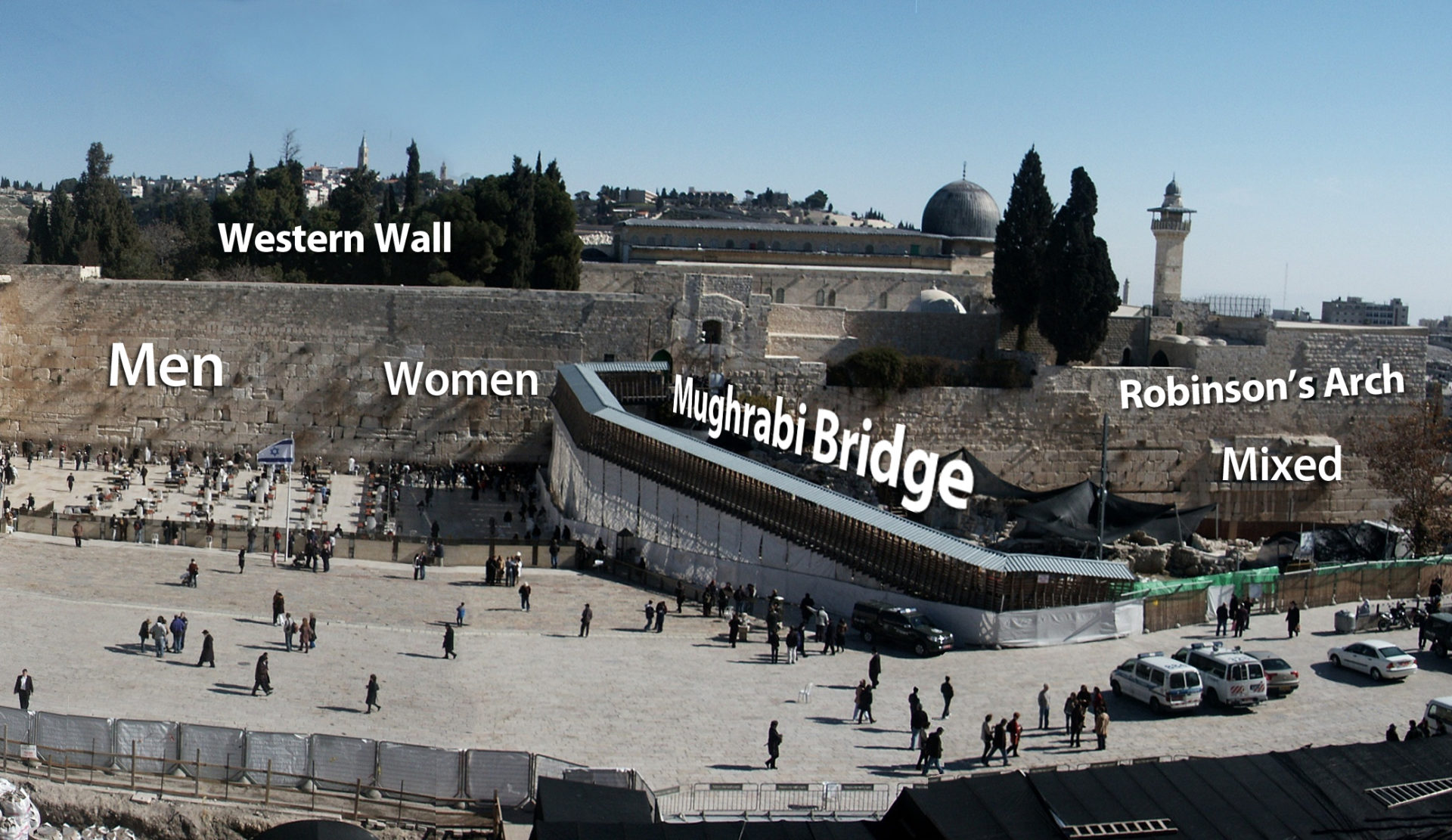
The Unifying Wall That Divides

Image from tcjewfolk.com
A decision by the Israeli government not to approve the construction of an egalitarian prayer area at the Kotel, the Western Wall of the Temple Compound in Jerusalem and Judaism's holiest site, has opened wounds between the Israeli government and the American Jewish community.  It is ironic that, only weeks after celebrating the 50th anniversary of the return of the Kotel to Jewish hands, this iconic landmark and holy site is giving rise to huge divisions between different groups of Jews.  How differently the Kotel is being viewed now, as opposed to 50 years ago when Jews around the world were rejoicing in unison at the prospects of being able to visit and pray at this site.

Things have clearly changed over the past 50 years that we are fighting amongst ourselves over this matter.  Fifty years ago,  Jews would have been happy simply to be able to visit and pray at the Kotel. It would not have mattered if this would have been by a group of men or women on their own, or by mixed groups and families.  After so many years of having been denied the right to visit the site of the Temple, the details of how prayers would be offered there were unimportant.

Fast-forward fifty years, and the Kotel Plaza has been developed to allow and encourage Jews to visit the site for historical and religious reasons.  It was developed according to the tenets of Jewish religious law as befits a site of prayer.  This means that men and women have been provided with separate prayer areas.  This separation is not a new or alien concept amongst Orthodox and traditional Jews.  It is something that is expected at holy sites and areas of prayer.  And while Orthodox or traditional strands of Judaism are dominant in Israel amongst those who wish to identify with the Jewish religion, the same is not true outside of Israel.  There, the Reform and Conservative strands of Judaism are more popular.  These strands follow a somewhat less stringent interpretation of the Orthodox Jewish laws, either because followers have studied the laws and rejected some of the stringencies arising from Rabbinical interpretations and pronouncements over the years, or because it is simply easier to follow.  In a world where the rate of assimilation amongst Jewish communities around the world is running at alarmingly high levels, any form of identification with Judaism can be considered to be positive.  It is for this reason that the Reform and Conservative communities, particularly those in the USA, have gathered enormous power as they manage to stem some of the massive flows of Jews away from the faith.

The battle lines between Orthodox and Reform/Conservative Jews have long been drawn.  The Orthodox communities have done all that they can to reject the dilutions that are inherent with the Reform/Conservative view on the Jewish world.  They have worked to discredit and delegitimise them, even accusing them of not being Jews.  The Reform and Conservative communities, particularly those in the US that command power and have access to large sums of money, have used this to fight back against the Orthodox world view.  The battle over the Kotel is simply an extension of this power struggle between the different groups.  The Reform/Conservative strand believes that their followers (and other non-religious people) would prefer to visit and pray at the Kotel in an area that is mixed with men and women - an egalitarian area.  This would also allow families to enjoy this experience together.  The Orthodox are absolutely opposed to this, claiming that the Kotel is a religious place of prayer that requires separation of the sexes according to the traditional Jewish Law.

The State of Israel has set out not to distinguish between different groups of Jews.  In fact, the Law of Return that grants immediate Israeli citizenship to Jews, has chosen to use Hitler's definition of Jews rather than going by Jewish religious law.  Hitler decided that any person who had one Jewish grandparent would be eligible to be treated inhumanely by his regime, and to be part of his plan of extermination.  The Israeli government decided that if a person was good enough to be exterminated by Hitler, they would be good enough to be granted immediate Israeli citizenship.  This means that some of those who have been granted immediate citizenship under this law, are not Jewish according to Jewish Law.  This demonstrates the extent to which the State of Israel has opened its arms to many different groups of Jews - and even to some non-Jews.  Under the circumstances, it seems as though the government would be sympathetic to the claims of the non-Orthodox groups at the Kotel.

Even though the government would probably wish to be more accommodating to the demands of the non-Orthodox lobby, and even previously agreed to their demands for an egalitarian prayer area at the Kotel, politics always seems to come first.  The current government coalition can only exist with the support of the ultra-Orthodox parties in the Knesset.  Upon hearing of the government's plan to accommodate an egalitarian prayer area at the Kotel, the ultra-Orthodox parties flexed their muscles and threatened to bring the government down if the plan was implemented.  Prime Minister Netanyahu went into survival mode, even at the expense of his relationship with US Jews, and acquiesced to the demands of his coalition partners.  At least for now.  American Jews responded in disgust by withdrawing their support for the Israeli government.

Does the Reform/Conservative lobby have a valid case in declaring open warfare on the Israeli government as a result of this decision?  The Israeli government has said that an egalitarian prayer area does already exist, but it is just not in the premier Kotel Plaza area.  The non-Orthodox lobby claims that this is not good enough, and effectively treats some Jews as second-class.  Their demand is to have the egalitarian area front and centre alongside the other prayer areas in the Kotel Plaza.  The battle is one of power and of wills. This is a battle between different groups of Jews, each of whom demands that their way is accepted, and with the Israeli government being called upon to act as referee.

Is the Kotel a Jewish national asset that should be required to accommodate all groups of Jews in a way that is to their liking?  Or is it an asset that belongs to the religious, as the holiest religious site in Judaism?  Does creating an egalitarian prayer area alongside the other areas serve to dilute its importance and religious status?  Is this issue important enough to be worth creating a rift amongst different groups of Jews?

I don't have answers to any of these questions.  And even if I did, I feel sure that the warring parties would not consider my point of view in formulating their reactions to the situation.  Of course, the Israeli government will always act in way that promotes its own best interests.  At the moment, that requires it to take the side of the ultra-Orthodox parties and freeze the egalitarian prayer area.

In my opinion, the situation requires tolerance and understanding by all parties.  It is natural to expect that the holiest site in Judaism should have some of the most stringent rules attached to it, and that Orthodox Jewish law should apply.  We live at a time, however, when Jews around the world should find reasons to unite, and not reasons to be in conflict with each other, especially over a site as central as the Kotel.  The ultra-Orthodox parties are not generally known for making efforts to unify different strands of Judaism, but it is never too late.  They should know that no man is in a position to judge another one, nor judge his interpretation of the religion.  So they should be taking the moral high ground on this matter in an attempt to accommodate the requests of the non-Orthodox groups.  Surely accommodating an egalitarian space could be acceptable, as long as they continue to have their separated areas?  The situation now requires unity and not conflict.  It is incumbent upon the parties to sit down, and find a compromise that will be acceptable to all.  Is this too much to expect?

Sunday, 5 June 2016

Staying Unified

Picture from aicvideo
Today is the day in the Jewish calendar that Israelis (and others) celebrate the reunification of the holy city of Jerusalem 49 years ago.  Jerusalem Day is celebrated widely, and nowhere more enthusiastically than in the city itself.

Not only is Jerusalem one of the oldest cities in the world, it is undoubtedly the most controversial city in history.  According to Wikipedia, the city has been destroyed twice, besieged 23 times, attacked 52 times, and captured and recaptured 44 times.  And these numbers do not include internal strife, intifadas and terror attacks which persist in the city until today.  Although these events have taken place over approximately 5,000 years, it still seems a great deal for any city to endure, and there are many who wonder why it is that one city should be so sought after that people are prepared to go to such extraordinary lengths to secure control over the city.

For the Jewish people, the answer is quite clear.  The belief is that the creation of the world emanated from the Foundation Stone on Mount Moriah.  This is also the same place that Jacob was ordered to sacrifice Isaac (and then stopped from doing so), and also coincides with the location of of the famous dream of Jacob's ladder.  So it comes as no surprise that King David chose this place to erect his City of David in approximately 1,000 BCE, and that Solomon's Temple was built on Mount Moriah soon after this.  From the moment that Solomon's Temple stood at this site (and possibly even from long before), it took on the undisputed position as the holiest place on earth to all Jews.  The city of Jerusalem is mentioned by name more than 600 times in the Jewish biblical texts, and thousands more times by other names and references.  The centrality of this location and this city to Jews is without rival.  It is highly likely that this centrality is the reason why Jesus, a Jewish boy from Nazareth, found himself in Jerusalem where he was crucified.  This established Jerusalem as a holy city for his followers, later to be known as Christians.  The holiness of Jerusalem to the third monotheistic religion, Islam, stems from an event that took place more than 600 years later.  The Quran tells us that the Prophet Mohammad was taken by Buraq to visit the "furthest mosque" (believed to mean the Al Aqsa Mosque in Jerusalem), from where Mohammad was taken to heaven.  This reference is the sole claim that Muslims have to Jerusalem as a holy city (although still not quite as holy as Mecca and Medina), and Jerusalem is not mentioned by name once in the entire Quran.  The scene was set for conflict, disagreement, war, death and destruction surrounding the control of this city, holy to three religions.

Today we celebrate 49 years of freedom of the city of Jerusalem.  This freedom extends not only to Jews and Israelis who have administrative control over the city.  It extends to all from the three religions, and others, who come in peace to worship, learn the history and pay respects to the holy city.  But this was not always the case, and is never taken for granted in this conflict-filled city.  Even as recently as 50 years ago, Jews were prevented from entering the Old City of Jerusalem, and approaching the holy site of the Western Wall.  This fact alone is justification for Israel to continue to exert control over the city and its holy sites.

Over the past few years, Jerusalem has put on an annual festival of light as part of the Jerusalem Day festivities.  It is highly symbolic that the city, with such a dark history, has a festival of light to emphasize all that is positive about the city.  I had the good fortune to participate in the festival this year, and it is an experience that has left an impression that will remain with me for a long time to come.  Not only were each of the exhibits creative and interesting, the atmosphere that could be felt around all parts of the city was electrifying (no pun intended).  Thousands of people formed a human chain following the different coloured tracks around the streets of the Old City, and around the walls.  People were drawn to parts of the Old City that they had never visited, perhaps because they were afraid or perhaps just because they were off the beaten track and unfamiliar.  I could not help noticing that people came from all parts of the country, from all walks of life and from all ethnic backgrounds.  Muslims joined with Christians and Jews in celebrating the light of this intriguing city.  I silently wondered as I walked around the thronging alleyways whether the Muslims were not enjoying more freedom now since the Old City is in Jewish hands, than they did when it was ruled by Jordan.  It could only happen under Jewish leadership that the King of Jordan, the same Jordan that denied Jews the right to access its holiest site for 19 long years years, is now the head of the Waqf religious council that has jurisdiction over Muslim holy sites in the city of Jerusalem.

Despite the conflicts and violence that continue in Jerusalem at the current time, the city of Jerusalem has undergone probably one of its most dramatic reconstruction periods in its history over the past 49 years.  While the integrity and the character of the original city has been preserved, the construction of infrastructure and residential and commercial buildings has been astonishing.  The light rail trundles over ancient cobblestones, and modern buildings are built in the Jerusalem stone in keeping with the rest of the architecture of the city, blending in with the ancient walls of the Old City.

Jews have maintained a continuous presence in the Jewish Quarter of the Old City of Jerusalem since the 8th century BCE, with the exception of the period between 1948 and 1967 when Jordan brutally forced Jews out.  There were periods when being Jewish in the Jewish Quarter was not easy, but Jews were never willing to give up on this despite any hardship.  The same tenacious spirit is in evidence today.  Jews will not give up on the presence in the Jewish Quarter, and Jews will not give up on the united city of Jerusalem as the capital of Israel.

Each time I visit Jerusalem, I wonder what my grandparents and great-grandparents would feel if they saw the ease with which I am able to visit the holiest city in Judaism, and its holiest site, the Western Wall.  I wonder what they would think to see me driving freely around the streets, walking in the market and viewing the Knesset building.  We are indeed a privileged generation to have the immense good fortune to live at this time when we are able to do the things that our forefathers prayed fervently to have the right to do, and who died fighting to do.  When we say Lshana habaa B'Yerushalayim at the end of the Pesach seder, it is not a pipe dream.  It is something that is absolutely achievable.

If the history of Jerusalem is anything to go by, we will be forced to continue to fight to retain Jerusalem as our eternal capital.  It is a fight that most Israelis are prepared to undertake, and a fight that many have already died for.  But this makes us stronger rather than weaker, and our resolve to retain Jerusalem will never diminish.  For now, we bask in the glory of Jerusalem, and we rejoice in our ability to be free as Jews in our holy city.

Saturday, 7 May 2016

Remembrance Day Reflections

When lighting the candle or listening to the siren on the day that commemorates the six million who were killed, and the heroes who survived the greatest genocide known to mankind, I find myself reflecting on so many different thoughts.  We are afforded a few minutes to think about what was, what is and what could be.

Amongst other thoughts, today I was struck by some of the similarities between Pesach and remembering the Shoah.  Jewish texts and prayers are littered with references to the exodus from Egypt, and the obligation on the Jewish people to remember it.  It is found necessary to remind Jews to remember this through the generations, despite it being regarded as probably the greatest miracle ever to happen to the Jewish people.  Memories can apparently be short, even when it comes to recalling miracles.  This is also reflected in the central mitzvah of the Pesach Seder, to tell one's children of the miracle of the exodus from Egypt.  In fact, the Haggadah tells us that, in each generation, we should immerse ourselves into the exodus from Egypt so deeply, that we should imagine that we actually experienced it ourselves.

In many ways, this is exactly what Holocaust Remembrance Day in Israel is about.  It is about never forgetting.  It is about being immersed in the events that led to the annihilation of 6 million of our people.  It is about recognising the bravery of those who stood up to the murderers despite the odds.  It is about standing to support and strengthen the survivors.  It is about never forgetting how evil people can be, and how Jews can be hated for no apparent reason.  It is about celebrating the survival of our people, and celebrating he Jewish state.  And it is about ensuring that the next generations know all of this so they will never forget.  Most of all, it is about preserving the State of Israel which is the only way to ensure that this never happens again.

In the months and years following the genocide, people could not believe that such an event had been allowed to take place without the intervention of the international community.  And yet, more than 70 years later, it is easy to see how it could have happened.  The United Nations organisation that was set up in the aftermath of the Second World War and the Shoa to ensure that it does not happen again, is exactly the organisation that gives a platform to those who wish for it to happen again.  Many of the events that precipitated the murder of millions of our people, and the thoughts, sentiments, views and actions are dangerously repeating themselves in our day.  It has become politically correct, acceptable and even desirable to be anti-Semitic, dressed up as being anti-Zionist or anti-Israeli.  The BDS movement is at the forefront of what could be likened to the Nazi Party in Germany in the early 1930s.  While they stop short of calling for the annihilation of the Jews, they are actively working to indelibly damage the State of Israel.  They realise, as many of us do, that a world without Israel is a smokescreen for a world without Jews.

While we unbelievably continue to witness the hatred towards Israel and Jews that was such a hallmark of the lead-up to the Shoa, there are a few things that have changed since then.  With the access that we have to news and events around the world brought about by the Internet and social media, nobody will be able to say that they were not aware that this was happening.  Some are in denial about the true intentions of the Palestinians, of BDS and of other anti-Israel activists.  There are those, many of them Jews, who think that this is ok in our democratic world.  It is their view that Israel deserves to be criticised and castigated for actions to defend her existence and that of her citizens and Jews around the world.  But they will never be able to deny that these events took place.

Perhaps the most important difference between then and now, is the existence of the State of Israel.  It is not only the existence of the state, but also the existence of leadership which is prepared to take the difficult decisions required to ensure our continued survival.  When considering this, along with a population of young and old who are willing to give all that they have to defend our rightful existence in our homeland, I am convinced that even the most determined anti-Semite will have no prospect of repeating the horrendous events of the Shoa.  The State of Israel and the proud Jews who live there are our strength that is insurmountable to all those who wish harm upon the Jews.

It has been amazing to see the evolution of the nervous, fearful yellow star into the strong, proud and determined blue star.  The same star, but two different worlds.  Whereas the yellow star was worn with shame and trepidation, the blue star stands for democracy, innovation, pride, determination and an attitude that will do everything to ensure that we never again return to the yellow star.

We mourn those millions who were lost in the Shoa, but we bask in the glory of the State of Israel, the victory that this represents over those who wished to destroy us.  We will never forget, and we will never return to those days.  Never again.

Am Yisrael Chai.

Sunday, 10 May 2015

Converting the Missionaries

It may come as a surprise to some that missionary groups are alive and very active in Israel.  Groups like the Jehovah's Witnesses have been operating in Israel for some time, as they have operated all around the world for many years.  It is their belief that they should make every effort to convert as many people to their way of thinking as possible.  And their reason for being in Israel is entirely understandable.  When seeking out potential converts, it is known that the Jehovah's Witnesses consider the conversion of Jews is of much greater value than converting anyone else.  Now that Israel houses the largest community of Jews in the world, Israel is an obvious target for them.

The issue has become very public over the past few weeks, with the Jehovah's Witnesses trying to hire a hall in the city of Ra'anana for their meeting.  Some have labelled the meeting as an annual conference or convention, and others have described it as a baptism for some of their recent converts.  The Municipality of Ra'anana initially declined the request for a municipal hall to be hired to them, and then acceded to their request.  Their agreement to rent out the hall was challenged in a district court by those opposed to the municipality allowing such a group to hold a meeting in its hall.  The court decided that Israeli democracy is the primary issue at stake here, and that the Jehovah's Witnesses are as entitled as anybody else to rent a municipal facility, and have their right to freedom of speech, religion and expression.  An appeal lodged with the Supreme Court of Israel upheld this decision, and the event was allowed to go ahead.

Many hundreds of Orthodox Jews turned out to protest against the event, and held prayers outside the hall in which the meeting took place.  There were even sporadic outbreaks of violence against the Jehovah's Witnesses and their supporters when they arrived at the hall.  While such an event being held in the midst of a Jewish city certainly represents a provocation to those living within the proximity of the event and in the city of Ra'anana, the Supreme Court of Israel has made its decision regarding the important issue of democracy and how this ought to be applied in our country.  It is, of course, the democratic right of all those who oppose this, to voice their opposition.  This should, however, be undertaken within the confines of what the law allows.  If that was not enough, members of the religious community in the city have turned on each other to make scapegoats out of those who are held responsible for allowing such an event to take place.

For me, the question was not about the work that the Jehovah's Witnesses are doing to try to convert Jews to their belief system, or about the municipality for allowing their meeting to take place here.  They are fully within their rights to do this, even though many are affronted by their efforts.  The greater question is why so many Jews feel that they are forced to find their spiritual fulfilment with the Jehovah's Witnesses.  Nobody observed any Jews being forced against their will to convert to the Jehovah's Witness belief system.  This indicates that these Jews are doing so out of their own choice.  It also indicates that they have rejected the possibility of finding their spiritual home within Judaism.  Instead of protesting against the work that the Jehovah's Witnesses are doing to convert Jews, the religious community should be asking themselves why Orthodox Judaism does not provide this home to its own people?

It seemed to me not to be coincidental that these events took place in the same week as the United Torah Judaism Party signed a coalition with the Likud to enter the new government.  This coalition agreement is sprinkled with concessions that the new government will make to give religious Jews certain rights that other citizens of Israel do not have.  There are also agreements that will ensure that government funding is allocated to religious groups and institutions at the expense of others.  When considering that Israel is currently experience a period of austerity when the government does not have funding available for additional requirements, and when considering the relatively small amount that Haredi Jews contribute to government coffers, this agreement is highly controversial amongst many Israelis.  To make matters worse, the agreement requires the reversal of legislation that was recently passed in the Knesset in an attempt to bring the treatment of ultra-Orthodox Israelis in line with everybody else.  It seems little wonder that there is such a large stigma attached to the notion of secular Israelis reconnecting with their religious roots when seeking spiritual fulfilment.  The behaviour of those who are the public face of these religious roots is so unattractive and opposite to anything that good, law-abiding people consider to be acceptable, that they would not wish to be associated with anything that these people represent.

It would appear as though the success of the Jehovah's Witnesses in Israel has little to do with the authorities permitting them to operate here, or decisions made by the Supreme Court.  If there was no public need or desire to listen to the alternatives that they offer, they would have left these shores a long time ago.  The fact that they continue to be successful in Israel says more about the religious alternatives that Judaism offers, than it says about those public officials who allow them to hold meetings in our municipal facilities.

Judaism certainly offers attractive alternatives to those who wish to seek it out.  In order to attract people to seek this out, people need to be attracted to those who practise this Judaism as much as they are attracted to the Judaism itself.  It is extremely unfortunate that the lie of the religious land in Israel favours the ultra-Orthodox community at the expense of the secular and modern Orthodox Jews.  And as much as Jewry offers many different strands for those who are interested to choose from, the headlines that are attracted by the negative activities of the ultra-Orthodox serve to drown out the good aspects that Judaism can offer.  The storm created by the Jehovah's Witness event is an easy scapegoat for the failure of Judaism to make itself attractive to its own people.  This is a classic case of throwing the baby out with the bathwater.

  of proselytising has raised its head again in Israel following attempts by a group known as

Sunday, 12 May 2013

War Against Women of the Wall

The group known as "Women of the Wall" have elevated themselves onto the front pages of the Israeli press in recent times.  They have clashed with police in Jerusalem over their desire to have the right to pray at the Kotel, the Western Wall, in their own way and style.  For them, their way and style means wearing a talit (prayer shawls) and tefilin (phylacteries), and undertaking other prayer-related activities which are usually the preserve of males in Orthodox Judaism.  Their mission says, "........ our central mission is to achieve the social and legal recognition of our right, to wear prayer shawls, pray, and read from the Torah collectively and out loud at the Western Wall".  Why does this lead them to become criminals in the eyes of the Israeli justice system?

Some of these actions on the part of the Women of the Wall have attracted attention from Jerusalem police officers, and even led to some of the women being arrested.  The legal system has relied on the law in Israel that requires respect for "local custom" at the site, which in this case refers to the Kotel.  The police have been called to arrest Women of the Wall on the basis that their actions do not respect local custom.  Clearly, the "local custom" is determined by what the Orthodox establishment demand.  Such arrests have been made on more than one occasion.

While we understand that, in most Orthodox Jewish custom, women do not wear prayer shawls and do not read from the Torah in public, the question is whether there is any actual prohibition on women doing these things?  It seems as though the customs of women not undertaking these activities stems from the fact that, in Orthodox Jewish law, women are not obliged to fulfil them in the way that men are.  In the case of the talit and tefilin, these are precepts (mitzvot) that are time-bound.  This means that there are certain times that the mitzva should be undertaken, and other times when it should not.  As a general rule, such time-bound mitzvot are not required to be undertaken by women in terms of Talmudic law.  It is not exactly clear why this is this case, but there are views that it is because women have a higher spiritual wisdom (bina) than men, and this exempts them from time-bound mitzvot.  Others contend that it is a more pragmatic issue of women having so many other household chores to take care of, that they can be exempted from time-bound mitzvot.  Our Talmudic sages are divided as to whether women are prohibited from performing mitzvot from which they are exempt.  The Rambam, one of the most famous of the Talmudic sages seems to accept that there is no prohibition on women performing mitzvot that they are not obliged to perform, and chooses instead to discuss whether women should pronounce the blessing which states that they are obliged to perform the mitzva before actually performing it.  He is supported in this discourse by Rabbi Yosef Karo and others.  This seems to give sufficient doubt to indicate that women are not entirely without justification when choosing to perform such mitzvot, and there is a strong case which supports women being free to carry them out.

Jewish Agency Chairman Natan Sharansky was drafted in by the government to try to help the situation. The actions to prevent the Women of the Wall from expressing themselves during prayer have served to alienate many US Jews from Israel.  The US community, which is notoriously heterogeneous in its interpretation of Judaism and which values pluralism in Jewish thought and practice, has reacted extremely negatively to the standoff at the Kotel.  It was hoped that Sharansky will be able to use his balanced approach to suggest a compromise solution, and that he can use his links with the US Jewish community to heal the rift which has developed.  Sharansky recommended allowing the Women of the Wall to use a separate section of the wall, known as Robinson's Arch, to allow the Women of the Wall to express themselves and carry out their practices without others being offended.  While this was originally accepted as a possible compromise by the Women of the Wall, their position has hardened recently and they are now rejecting this solution.

The hardening of their position coincided with the ruling by an Israeli court a few weeks ago, which decided that these actions by the Women of the Wall do not actually constitute disrespect for local custom at the site.  This reinforces the lack of agreement by the Talmudic sages.  This court ruling means that their actions no longer constitute an offence for which women can be arrested.  The Women of the Wall were emboldened in their view that their actions are entirely acceptable, and decided that there is much less justification in accepting a compromise solution that means they are forced to pray hidden from general sight.

The influence of the ultra-Orthodox in Israel has been substantial over the past few years, particularly during the years that successive governments owed their continued existence to the support of the ultra-Orthodox parties in the Knesset.  The ultra-Orthodox influence has pervaded many aspects of Israeli society.  Numerous concessions have been granted to the ultra-Orthodox community to keep them supporting the government, the most famous of which is the exemption of young ultra-Orthodox boys and girls from serving in the IDF.  This has granted disproportionate power to ultra-Orthodox groups.  With the construction of Prime Minister Netanyahu's most recent government that excludes the ultra-Orthodox parties for the first time in many years, ultra-Orthodox power has been substantially reduced.  Many in Israel are happy about this, as the influence of the ultra-Orthodox has permeated the lives of so many individual Israelisl.  Perhaps the drama at the wall is an attempt for the ultra-Orthodox establishment to exert their power where they can.

Even though the ultra-Orthodox establishment has been given control over the Western Wall, and Chief Rabbi of the Wall Shmuel Rabinovitz has rabbinic jurisdiction over this site, it should be understood that the Western Wall is a public asset for Jews in Israel and around the world.  As such, decisions such as those affecting the Women of the Wall should not be taken lightly.  It is not as in an individual synagogue where congregants are free to move elsewhere in the event that they do not wish to accept the rules pertaining to the synagogue.  The Western Wall has no alternative in Judaism.  To the extent that there is even the slightest doubt about the interpretation of a particular element of Jewish law, as is the case here, the rabbi has a responsibility to consider the national and international ramifications of his decision.

I salute the Women of the Wall for standing by their convictions, and for being prepared to take on the ultra-Orthodox establishment.  This is not an easy decision, and life has been made extremely for them as a result.  Ultimately, I believe that they will prevail, and that they will be granted the right to pray as they wish.  In reality, anybody who does not like this is not obliged to be present at the Kotel when the women are there.  Until now, the Women of the Wall have conducted their prayers monthly on rosh chodesh at a time known in advance.  This allows plenty of alternative opportunities for those who wish to attend the wall, without being forced to endure anything that they do not wish to see.  This simply demands a little tolerance and understanding by all parties, something that is unfortunately in short supply in Israel, especially in the ultra-Orthodox establishment.

The time has come for the government to exercise its control over the Kotel, and ensure that all who wish to pray there are able to do so.  It is ironic that the IDF, without the support of the ultra-Orthodox youth, was responsible for liberating this holy site during the Six Day War, only for the site to then be turned over to the control of the ultra-Orthodox.  This is a national holy site, and all Jews should have the right to worship there.  Bravo Women of the Wall.

Sunday, 20 May 2012

Keeping Jerusalem Unified

Today, Sunday 20th May, we celebrate 45 years since Jerusalem was reunified in the Six Day War according to the Hebrew calendar.  These have been 45 eventful but happy years, which have seen the holy city of Jerusalem quickly regain its central place in Israeli and Jewish life.  After 2,000 years of exile from the Land of Israel and the city of Jerusalem, and a further 19 years of being denied access to the holiest sites in Judaism, Jews around the world celebrated when the IDF paratroopers finally reached the Kotel and Motta Gur announced the famous words, "The Temple Mount is in our hands".  That moment is being savoured and celebrated today on Jerusalem Day.

The important place that Jerusalem occupies for Israelis and for Jewish people all around the world has strengthened over the past 45 years.  Once again, we have had the merit and the joy to be able to visit the holiest site in Judaism.  It is impossible to consider a possibility that Jerusalem would not remain unified in the future, and that Jews could be denied access to visit the holy sites in the way that we were forced to experience in the past.  This is almost certainly one of the reasons why discussions on the final status of Jerusalem in the peace talks with the Palestinians are so fraught.  It seems as though the Palestinians understand the strength of feeling that we have for Jerusalem, and continue to demand it for themselves.  This may enable them to extract major compromises in return for giving up on Jerusalem in the final agreement.

There can be no escape from the centrality of Jerusalem in Judaism.  Even those who wish to prevent Jews from having access to Jerusalem would struggle to the deny strong links that Jews and Judaism have to this holy city.  The holy nature of the city was arguably only established during the time of David and Solomon when the temple was built.  It is no mere coincidence, however, that the temple was built in this city and on Mount Moriah.  This is the site of the dream of Jacob's ladder, the site of the almost-sacrifice of Isaac and possibly even the site from which the which the world was created.  Whether or not one believes in these biblical links, it is simple to refer to Jewish texts that have been written and passed down over thousands of years, and which bear testimony to the close links that Jews have to the city.

Over the past 45 years, the city of Jerusalem has developed and grown in a way that makes it unrecognisable from the city that was reunified 45 years ago.  The Kotel (the Western Wall), the only remnant of the remains of the temple, was quickly transformed into an area that could be host to the many millions of visitors that wish to visit the heart of Judaism.  It is believed in Judaism that the divine presence emanates from Jerusalem.  In order, however, for the divine presence to be felt, it is required that there will be those to receive and bask in its glory.  The Kotel has truly fulfilled that purpose.  It plays host to state and military ceremonies of great importance and significance.  It also hosts all manner of religious worship, celebration and heartbreak.  The Kotel plaza is often filled with tens of thousands of people as they cram themselves in to take part in the merit that our generation enjoys to have free access to this place.  The surrounding parts of the Old City, and stretching out well beyond into the new city and further, have seen a renewal and redevelopment that has transformed the face of Jerusalem, without changing its character.  The modern Chords Bridge at the entrance to the city, numerous luxury hotels and the sight of the Jerusalem light rail show the face of a contemporary city keeping up with the times, while allowing residents and visitors to get close to its historical roots.

Over the years, conquerors of Jerusalem have denied access to other religions as a punishment, and as a sign of their supremacy over the city.  It is, after all, a city that is holy to all three monotheistic religions.  Contrary to this trend, it is interesting that Israel decided to allow all religions access to their holy sites in the city.  Rather than weaken Israel's grip on the city, I feel that it has served to strengthen Israel's position in Jerusalem.  I believe that most Israelis are proud that this is the case, as much as they are determined to ensure that Israel's rule over the city continues well into the future.

The truth is that it is difficult to try to predict what the future holds for the holy city.  There seems to be no real reason for the Palestinians to wish to rule over the city.  While it is a city that is holy to Muslims, it ranks only third in its holiness to the cities of Mecca and Medina.  Muslims have access to, and complete control over all Muslim holy sites in the city through the Waqf.  This stretches even to having control over the Temple Mount and the Al Aqsa mosque, despite this also being the site of the holy Jewish temple.  I imagine that the only benefit that can be gained from ruling over Jerusalem, or parts of the city, is that it may give them the right to deny access by others to these areas.  We can never risk this situation coming to fruition.

Despite the fact that a great deal of thought has been given to the possibility of creating Jerusalem into something of an international city that is owned by everyone, but nobody in particular, there is no real precedent for a successful implementation of such a model.  This gives rise to a great deal of scepticism, and suspicion as to what the true intentions of the Palestinians may be with regard to Jerusalem.

For now, the united city of Jerusalem is the capital of the State of Israel, and the centre of the Jewish world.  It also plays host to Muslims, Christians and members of other faiths that may wish to visit, live and study in the city.  There seems little wrong with this model, and no individual is denied any rights that he may wish to have.

It is my hope and prayer that Jerusalem will continue to play its role as a central part of so many faiths, and that all faiths will continue to have free access to all corners of this ancient and fascinating city.

If I forget thee, O Jerusalem, let my right hand forget her skill.
                                                                (Psalm 137)


Monday, 2 April 2012

Unspeakable Tragedies

I did write a blog last week, which I was unable to post due to technical problems incurred while I was travelling.  It covered the hideous story of the murder of the innocent victims, particularly young children, at the Jewish school in Toulouse.  It is my conclusion from this event, and from a series of events in which Islamic radicals have killed innocent men, women and children, that the strength of anti-Jewish and anti-western sentiments within the Islamic radical movement are at dangerously high levels.  They are reminiscent of the anti-Semitism that was in evidence prior to the Holocaust, the worst example  of genocide known to man.  There can be no doubt that the program of legitimising the hatred of Jews on an institutional, national and international level that the the Nazis embarked upon, was a key driver in the murder of millions of Jews without any meaningful opposition being raised.  There is clearly an attempt by radical Islamists to recreate this legitimisation, and the UN and other international bodies are still unwilling or unable to do anything to oppose this in any substantial way.

Since that tragedy, a further tragedy has befallen a Jewish family.  This time, the disaster took place in the Israeli city of Rehovot where a father and five children were killed in a house fire.  Perhaps one of the most dramatic parts of this disaster, is the fact that the mother of the family is the only survivor.  Avivit Shaer has been left a devastated and broken woman after losing her husband and five children in the space of a few deadly minutes, when an electric short destroyed her world.  How she is able to survive such misfortune is beyond my comprehension.  There is a view that she may have been better off to have perished along with her family, rather than haiving to deal with the after-effects of this terrible loss.  Only a few days before, she had completed the seven day "shiva" period of mourning for her brother who died of cancer.  She is now sitting shiva for her husband and their five children.

In an emotional scene, Eva Sandler, whose husband and two children were murdered in Toulouse, paid a condolence call on Avivit.  There was no dry eye in sight as the two women comforted each other for their losses, and did all that they can to provide the other with reinforcement for their faith.  Both religious women, they are trying to maintain their belief that this tragedy has happened for the best, and that G-d has good reasons for putting them through such suffering.  Avivit explained that she believes that she may never understand why this tragedy has befallen her, as humans have limited ability to believe G-d's actions and intentions.  This is immense faith coming from a woman who has suffered such extreme heartbreak.  In a show of some of the inner turmoil that her emotions are suffering, Avivit told Eva that at least her family died "al kidush Hashem" - in the sanctification of G-d's name - rather than as the victims of negligence that was the case with her own family.  This is reference to the fact that the Sandler family was murdered simply because they were Jewish, and for no other reason.

Despite the fact that Avivit Shaer feels that being murdered for being Jewish is a more justified and honourable way for a family to meet their demise rather than because of negligence involved in a house fire, it is horrifying that such acts of discrimination are still taking place in a so-called enlightened world.  This type of behaviour is reminiscent of the Dark Ages, when uneducated masses took every word of their leaders at face value and followed their instructions without thought.  The problem is that modern anti-Semitism is not based on lack of education, or blindly following orders as was frequently the case in Nazi Germany.  Mohamed Mehra was clearly influenced and trained by groups like Al-Qaeda before going on his killing spree in Toulouse.  His actions, however, seem to have been undertaken of his own volition, and following his own instinct rather than following orders from others.  This can be more dangerous than the masses following orders of a few leaders.  Under the modern scenario, the source of a racist attack can come from any quarter in a manner that is entirely unpredictable.  This is how young children can be murdered in cold blood in their school ground by a gunmen with the same nationality, and living in the same town.

The fact that such virulent anti-Semitism is in evidence shows some type of failure in society, following the undertakings at the end of the Holocaust.  The establishment of the UN was, amongst other things, designed to prevent events like the Holocaust from recurring.  Despite this, the international community has systematically failed to prevent this in places such as Rwanda, Bosnia and many other locations.  It has also failed to prevent anti-Semitism and anti-Israel sentiments that have slowly risen to boiling point.  This failure to stem the increase of hatred, racism and discrimination spells trouble for the future.  Racist behaviour leads to further hatred and violence, all of which means that genocides are more likely in the future.

Even though Avivit Shaer has a feeling that losing family members to anti-Semitism is more honourable than loss of life due to negligence, I hold the opposite view.  Of course, I understand that she wishes the members of her family to be remembered for being prepared to stand up for their beliefs and their religion, even at the risk of death, in the way that Rabbi Yonatan Sandler and his children were gunned down.  She may, however, draw some strength that her family had the honour and privilege to exercise their faith and beliefs in the Jewish state before their lives were so cruelly cut short.  The State of Israel is surely the biggest miracle to have occurred in Jewish history, and the Shaer family was a part of this miracle.  It is only through a strong Israel that we can be assured that the interests and safety of Jews around the world will be taken care of.  Unfortunately, even this was not enough to save the Toulouse victims.  Eva Sandler is considering the possibility of moving to Israel to secure a future for herself, her surviving daughter and unborn child.  Unfortunately for the rest of the Sandler family, this comes a few weeks too late.  Avivit Shaer was doing all that she could to encourage Eva to bring her family to Israel.

Our heartfelt condolences go to both families, as well as to the family of 8 year-old Miriam Monsonego who was killed in Toulouse.  May the memories of the departed be for a blessing.

Sunday, 11 March 2012

A Modern-Day Purim Story

Last week we celebrated the Jewish festival of Purim.  It is a classic Jewish festival which involves bad guys who wanted to murder the Jews.  Somehow, we managed to survive against the odds and a festival was created to celebrate this fact with the addition of delicious food.  As a child growing up, I remember thinking how unrealistic these stories sounded.  Could it really have been the case that the evil Haman was trying to influence the king of Persia to annihilate the Jews?  What reason could he have had for wishing to do this?  After all, most of the Jews that I knew were decent upstanding citizens and quite nice people as well.  So why would somebody have wanted to kill them?

For those of my parents' and grandparents' generation, this story would have been a very real one.  They were unfortunate enough to have witnessed the horrors of the Holocaust.  This was a repeat of the Purim story except, in this story, millions of innocent people were slaughtered.  Only now, 60 years later, can the State of Israel boast a population that equals the number that were murdered during the most barbaric human-cleansing exercise in history.  Despite the fact that the Jews have survived and made a strong comeback, we have not quite decided upon a festival with delicious food to celebrate Hitler's failure.  Perhaps we will have one in the future.  This should, however, not allow our eyes to be taken off the ball.  The Haggadah that we read on Pesach tells us that, "In each and every generation they rise up against us to destroy us. And The Holy One, blessed be He, rescues us from their hands."  We are also instructed to remember how Amalek attacked the Israelites soon after the crossing of the Red Sea following the exodus from Egypt.  Each year, we read the portion known as "Zachor" (remember) on the Shabbat preceding Purim to be reminded of the evil of Amalek, who is traditionally believed to be a descendant of the evil Haman from the Purim story.  The need to read this each year and remember, arises from the fact that we are required to be vigilant to prevent it from happening again.  Now, in 2012, there are strong indications that it is happening again.

The irony of the Purim story cannot be lost on us as we hurtle headlong into an inevitable conflict with Iran.  The Purim story took place in Persia, and we now return to the scene of the crime approximately 2,400 years later to confront Ahmadinejad, the modern-day Iranian Haman.  As far as I can make out, the Jews and Israel have caused no damage nor present any threat to Iran or Ahmadinejad.  Despite this fact, Ahmadinejad has made Israel-bashing the cornerstone of his foreign policy platform.  He has not missed an opportunity to threaten Israel or to predict her demise whenever he has had the ears and eyes of the world trained on him.  He has been good to his word in practice as well, channelling millions of dollars into terror organisations like Hezbollah and Hamas which have indiscriminately attacked Jewish and Israeli targets.  When adding his duplicitous dealings with the Iranian nuclear program, it is clear that this situation cannot be allowed to continue unchecked.  This is the reincarnation of Amalek, of Haman and of Hitler.  This is exactly the sort of person that we are warned against.

Experience that the Jewish people have accumulated over the years, shows that they cannot rely on others to do the right thing to protect them.  Whether it was the failure to bomb Auschwitz, or the criticism over the destruction of nuclear reactors in Iraq and Syria, the international community has shown itself unwilling or unable to take action at the required moment in order to prevent a disaster.  Viewing things with the benefit of hindsight is too late, and the lessons are somehow never learned.  The Jewish nation have been forced to ensure that they can take care of themselves.

Fortunately, one important thing has changed since the days of Haman and Hitler.  We now have a Jewish army.  This is probably the most substantial element of the equation in the current scenario with Ahmadinejad.  The fact that thousands of Iranians missiles are trained on Israel, and waiting for the first strike on Iran, does not intimidate the Israeli army.  This is simply another danger to be considered, alongside the others, when taking on the significant threat that Iran poses under Ahmadinejad's leadership.  The fight will be ugly and there will be casualties, but there is no choice for the Israeli army in the imperative to put a stop to this threat as soon as possible.

For parents like myself whose children are the soldiers who will be called upon to fight this fight, the prospects are chilling.  We would certainly prefer not to be in this situation, and we would not choose for our children to be placed in harm's way as they battle to protect Israel and the Jewish people.  Ultimately, however, we realise the importance of having an army like the IDF, and we are forced to stand helplessly by as our children willingly fulfil their obligation to protect their land and their people.  This is the only way that we can be assured that the likes of Haman, Hitler and Ahmadinejad will never be allowed to carry out their evil plans to destroy our state and our nation.  These soldiers, our children, are the heroes of this part of the story of survival.

As the situation escalates and the prospects of an armed conflict with Iran grow with each passing day, it is our prayer that our army and our children will succeed in doing their job safely and securely.  We pray that they will return to their families, sound in body and mind, having completed their task that they have been called upon to do.  We stand behind them, fearful for their well-being, but immensely proud of their sacrifice.  May Hashem protect them in all that they do.

Image by Deputado Bruno Covas

Monday, 27 February 2012

To Run Buses on Shabbat or Not?

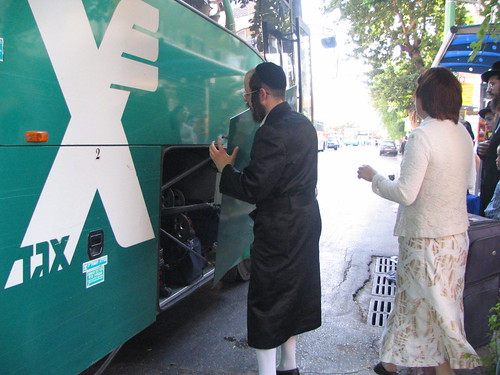
The Tel Aviv City Council decided last week to recommend the operation of a bus services in the city on Shabbat.  The decision, which was passed by a majority of 13 to 7, threatens to change the "status quo" that has existed in the city and around the country since before the founding of the State of Israel nearly 64 years ago.  It was first Prime Minister David Ben-Gurion who agreed to implement public observance of Shabbat in Israel, a situation that has endured across the country except for Eilat and Haifa until this day.  This has meant that public buses have not operated on the streets of Tel Aviv between sunset on Friday until after sunset on Saturday, and on religious holidays.

Israel is one of the few countries in the world that has succeeded in maintaining a public day of rest.  These days, most countries operate shops, restaurants and other places of entertainment as well as public transportation seven days a week.  The fact that many parts of Israel still manage to observe Shabbat, creates a fairly unique atmosphere on the day of rest.  This is something that is noticed immediately by visitors to Israel from abroad who observe Shabbat, and who are not accustomed to see entire cities literally shut down for the day of rest.  There are even those who are not observant who like the different atmosphere that Shabbat observance brings to towns and cities across Israel.  Besides bringing a public face to the commandment not to work on the Sabbath day, this practice also means that employees working in these establishments will not be called upon to violate their weekend.  This must surely bring an advantage in a day and age when shift work is commonplace to feed our demands to have services on tap 24/7.  This culture comes at the expense of a stable family life for those workers who are called upon to work odd hours when their families wait for them at home.  In Israel, keeping Saturday special by not operating commercial activities has endured as a result of the "status quo", and due to the pressure exerted by the religious groups who are very vocal when it comes to violating Shabbat.

The fact that children attend school 6 days a week from Sunday to Friday in Israel means that families wishing to undertake family trips or other activities can only really do so on Shabbat.  This fact has caused many to oppose the "status quo", as this prevents many families from undertaking activities that they can only do on Shabbat.  This has further  fuelled the argument that commercial activities should be allowed, and even encouraged, on Shabbat.  Compromise solutions have been found in some towns and cities in order to satisfy all constituencies.  I am aware of some places where Shabbat commercial activities are permitted in areas which are slightly removed from the central areas of the city.  This means that those who observe Shabbat, will be able to experience the tranquillity of the Shabbat without interruption.  Those wishing to take advantage of Shabbat to shop or be entertained, can leave the city centre area and head to the outskirts where these activities are available.  This works well for those who have their own private transportation.  For those relying on public transport to seek out Shabbat activities, it is not quite so convenient due to the fact that regular public transportation does not run on Shabbat.

Those who oppose the implementation of full public transport services on Shabbat in Tel Aviv, point to the fact that the "monit sherut" (a type of minicab operating along established bus routes) offers an alternative service and for a similar price to buses.  It is argued that this is enough of a service for those requiring public transport, while not encroaching on the sanctity of the Shabbat in the city centre in the way that buses would do.

Tel Aviv, as Israel's main commercial city, enjoys a special status in Israeli society.  It is also held up as being a bastion of secular freedom in a country that many believe to be dominated by religious extremists.  Although only a minority of Israelis (42%) define themselves as secular, it is clear that Tel Aviv has a majority of secular citizens.  Tel Aviv is also Israel's capital for secular entertainment such as bars, clubs, restaurants and cinemas that remain open over Shabbat.  It comes as little surprise to some observers that the "status quo" is being challenged in Tel Aviv, and that it has taken so long for this challenge to be made.

Even though the Tel Aviv City Council still has a long way to go before it can implement its decision to operate public transport on Shabbat, it seems quite determined to do so.  The government ministry of transportation will need to agree to this, and there are indications that the ministry is not inclined to support a change to the "status quo".  In response, the city council has threatened to operate its own private transportation if the ministry is not agreeable to running the existing public bus companies on Shabbat.  Those Tel Aviv residents who sense a change is imminent, may be disappointed in the short-term as this decision is likely to take some time to implement.  If the city is successful in bringing buses onto the streets on Shabbat, this will surely indicate a turning point for Tel Aviv, and for Israeli society as a whole.

Image by yanec.

Sunday, 2 October 2011

New Year's Dreams

With the Jewish New Year occurring immediately after the UN General Assembly meeting in New York as it just did, it made me take stock of Israel's current situation compared to last year (which seems like only yesterday).  In particular, I thought about where we were in our attempts to make peace with our Palestinian neighbours at this time last year, and the year before that.  As is the custom at the time of the new year, I thought about the future and what could realistically be achieved over the course of the next year.

The truth is that the peacemaking efforts have remained stagnant for many years.  Israeli leaders have come and gone, and a Palestinian leader has gone and another one come.  We have tried peace conferences in Madrid, Oslo, Camp David, Wye Plantation, Ramallah and Jerusalem.  And yet, the obstacles have not moved even one iota.  We are suffering with precisely the same issues as we have suffered with over the years, some of which seem to be beyond solution.

I heard a good piece of advice from our local Rabbi over the new year period about how to set behaviour patterns for the forthcoming year.  He said that we should close our eyes, and dream of where we wish to be in a year's time from now.  We should think about the things that we would wish to achieve by then, and then think about the stage that precedes that achievement.  By continuing to think about the step which precedes each stage, we can finally return back to our present situation with a roadmap of how to reach our goal.  Although this sounds good in theory and a little more difficult to implement in practice, the concept is a good one.  It is important to close your eyes and dream a little, and to set objectives which can serve to guide you in your work and private life.

While thinking about all of this, I spent a few moments considering whether Mahmoud Abbas may have done some of his own dreaming for the Palestinian people which he leads.  Maybe the time of the Jewish New Year is not exactly when you would expect him to be considering this matter, but perhaps he would do so after Ramadan or on Ras as-Sana al-Hijreya, the Islamic New Year which falls at the end of November this year.  If he was to close his eyes and dream of what he would like to see for himself and his people at the same time next year, what would this be?  If we are to believe his public statements, this would be an independent Palestinian state.  Clearly there are details such as the borders and capital of this state, but the "big picture" dream, we are told, is the Palestinian state.  This is what he left us believing following his actions and speech at the United Nations.  If this is true, the answer is in his hands.  The Israeli government has agreed to it, and the sponsors in the form of the US and other members of the Quartet have also accepted this point.  All that is required for him to get there, is for him to make a few concessions and to compromise by dropping the detailed demands that he is making, in return for which the Palestinian state will be his.

The problem is that the details seem to be more important than the big picture objective.  He will not accept a Palestinian state unless its borders comply with specific conditions, or until Jerusalem is handed to him as its capital amongst some of his demands.  Although the Jewish people have prayed for more than 2,000 years for their return to Zion, to Jerusalem as the holiest city in the religion, the Jewish state existed for 19 years with Jewish access to only the western side of the city.  This meant that the holiest sites, including that upon which the holy temple once stood, were out of bounds to Jews.  This fact (and the small issue of being attacked on all sides by Arab countries in the region) did not deter the Jews from establishing Israel as the Jewish state.  The truth is that the objective of having an independent Jewish homeland was bigger than any of the details, no matter how important.  I do not get the same feeling that the Palestinians have the same objective.  Somehow, the details are playing a more important role than the headline objective.

My new hope is that his experiences at the UN a couple of weeks ago would somehow change Abbas's approach to the peace negotiations.  Maybe, by some miracle, Abbas may decide that he needs to acknowledge Israel's position as a Jewish country in order to make progress with his own objectives?  I am sure that he understands the need to make this concession, and how this may give him the state that he claims to yearn for.  His refusal to acknowledge this critical point is extremely concerning.  Is it possible that holding on to his position is more important than getting his independent state?

There is a real danger that the inhabitants of the Middle East have forgotten how to dream, and are forced to be reactive in confronting daily emergencies.  This would a great pity.  In the case of Mahmoud Abbas, it is not clear whether he has stopped dreaming, or whether the dreams that he is communicating to the outside world are not the same ones as the those that he is dreaming.  Under the current circumstances, his dreams will not be fulfilled, no matter what they are.  

My new year’s dream is that Gilad Shalit will be with us and his family, for him to celebrate the new year in freedom next year.  I also dream that Mahmoud Abbas may change his dreams to create the possibility for real peace, although this may be expecting too much.  It is my wish that you will all realise your dreams in the new year, and that our nation's dream of living in peace alongside our neighbours with mutual respect will be realised.  Shana Tova.

Sunday, 20 March 2011

Being Happy on Purim

Today is the day that Jews around the world celebrate the festival of Purim. The festival celebrates the victory of the Jews of Persia over the anti-Semitic Haman, who sought to have them all annihalated. It was only through the actions of Queen Esther and her uncle, the righteous Mordechai, that the king was convinced to save the Jews and to execute his trusted adviser Haman instead. To mark this miraculous event, Jewish law requires that Jews be happy on Purim. In fulfillment of this commandment, it is customary for adults and children to dress in fancy dress, and for adults to consume copious amounts of alcohol. A rabinnic ruling says that people should revel on Purim until "they cannot tell the difference between the evil Haman and the saintly Mordechai".

But how can we be happy on Purim when, only one week earlier, 5 members of the Fogel family have been ruthlessly murdered in their beds? And how can we feel safe on Purim when communities near to the Gaza Strip had to endure 50 rockets being fired by the Palestinians randomly towards Jewish homes in a short space of 40 minutes yesterday? How can we celebrate the festival when the memory of the 8 young boys who were murdered 3 years ago while sitting in the library of the Mercaz Harav religious school in Jerusalem is still so fresh in our minds? How can we revel in the miracle of Purim when Gilad Shalit remains in captitivity for the 6th year, without his basic humanitarian needs being taken care of? Does Gilad even know that today is Purim? These events and others make it difficult to celebrate Purim and feel genuine happiness from the bottom of our hearts. Despite this, we are obliged to feel happiness and joy on this festival.

It seems unusual to be commanded to have an emotional feeling as part of one's obligations on a festival. And yet, this is the situation on Purim. Our rabbis draw a link between Purim and Yom Kippurim (Yom Kippur, also translated as "a day like Purim"), which is Judaism's most solemn day. They make the point that observant Jews would not consider the possibility of not fasting on Yom Kippur if they do not feel like it. By the same token, we are expected to feel happy on Purim even if we don't particularly feel happy. This is part of our commitment to G-d and the blind fulfillment of His commandments.

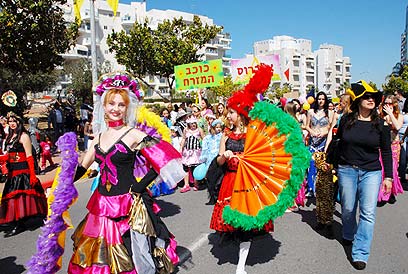
In spite of the sadness that many parts of Israel are feeling, Purim was celebrated today as usual and as in previous years. The parades in towns and cities went ahead to the sounds of blaring music and accompanied by adults and children dressed up in all manner of outfits. Young children fulfilled their fantasies of dressing up as princesses, superheros and movie characters. Gifts of food were given by people to their friends, and donations made to the needy to allow all to partake in the traditional Purim feast. The story of Purim (the Megilah of Esther) was recited for all to hear, and Haman's name was drowned out by boos and graggers in the traditional way. Dressing up parties continued into the early hours. In particular, in the settlement of Itamar, a special effort was made to be happy on Purim. The fact that we were able to be happy on Purim against the background of all the other events, is a great achievement and serves to honour G-d's commandment to an even greater extent.

Wouldn't it be good if we can wake up on the day after Purim, and feel the same happiness in evidence? Unfortunately, reality will come back to roost and we will be back to dealing with our daily threats, issues and feelings of loss. All these tragic events that we continue to suffer embroider the blanket of Jewish history in much the same way as the Purim events that took place in Persia all those years ago. In some ways, things have not changed at all. As much as I hope that we will be able to work through the everpresent threats and reach a situation where we can live in peace without anybody having the intention to harm or kill us, that time has not yet come.

Just as the Jews of Persia took it upon themselves to do all that they could to secure the future of the Jewish people, we do the same today. On this, the happiest day in the Jewish calendar, we feel particularly close to those who have to make the maximum effort to be happy today. We think about the surviving members of the Fogel family, and we think about the Shalit family who fight tirelessly to return their son and brother home. We think about all the survivors of the Holocaust, and we think about those families who have lost loved ones in war or terror incidents over the past 63 years and more. We thank them for making such an effort to be happy on Purim even if there is deep pain in their hearts. This is a sign of strength and resilience that the Jewish people have, and that we are not ready to give up on this battle for survival.

Chag Purim sameach. Happy Purim.

Sunday, 19 December 2010

Playing Politics With the IDF Conversion Bill

With so many important matters confronting our government, I often feel really frustrated at the amount of time that seems to be wasted by politicians in playing needless political games. This is exactly the feeling that I have now watching the amount of time, effort and money that is being wasted in bringing the so-called IDF Conversion Bill through the Knesset.

The background to the story begins with what seems to be one of the great anomalies of the modern State of Israel. The Law of Return was enacted soon after the independence of Israel. This law is designed to give Jews an automatic right to take up citizenship in Israel without any need for a period of naturalisation. This was a particularly urgent need in the years following the Holocaust when so many Jews were displaced without being a citizen of any country, or who were citizens of countries that they were eager to escape from. The Law of Return grants the right to immediate citizenship of Israel to those who have one Jewish grandparent. The definition of those who have entitlement under the law, comes from the one that Hitler applied to those who he decided should be put to death under the "Final Solution". The definition is, however, at odds with the definition of a Jew under Jewish law. Under Jewish law (halacha), any person who has a Jewish mother is Jewish. This results in thousands of Israeli citizens, who have obtained citizenship under the Law of Return, who are not Jewish according to halacha.

This phenomenon particularly affects many of the immigrants who came from the countries of the former Soviet Union, and who increasingly found themselves hitting their heads against a bureaucratic brick wall as a result of their status as non-Jewish Israeli citizens. To them, it seems absurd that they are granted citizenship of a country, only to find that they are not treated as "full Jews" under the law. The great melting pot of Israeli society is the Israel Defence Force (IDF) and, as the IDF has seen more and more of these people coming through their ranks, they have decided to implement a program to allow those who wish to convert to Judaism during the course of their military training. Over the past eight to ten years, almost 5,000 soldiers have been converted to Judaism under the auspices of the IDF and its Chief Rabbi.

Recently, these conversions were brought into question by Israel's Chief Rabbinate, in its capacity as the national authority over all conversions to Judaism in Israel. This means that all those who were converted to Judaism during their military service, may find themselves being declared not "properly" Jewish if this is what the Chief Rabbinate decides. The status of 5,000 people is suddenly brought into question, and their lives thrown into turmoil. It seems that the reason for the Chief Rabbinate questioning the conversions has nothing to do with the process followed or the way in which the conversions were undertaken. We are told that they have found this all to be entirely kosher ! The reason for reopening these cases is seemingly all about power. The Chief Rabbinate needs to exercise the power which it has been granted on these issues, to ensure that the IDF Rabbinate does not exceed its own powers. The lives of the individuals concerned is nothing when compared to the necessity for these organisations to assert their power and authority.

The issue was brought to the Knesset when the Yisrael Beiteinu party,which has many of the IDF converts in its constituency of supporters, introduced a bill that will legally confirm these conversions and not allow them to be reopened by the Chief Rabbinate. Although I can fully associate with the party and its desire to represent the interests of its voters, the truth is that this issue should never need to be raised by the Knesset. This is an issue which can easily be sorted out between the Chief Rabbinate and the IDF, without Israel's legislature being forced to intervene. What makes things worse is the fact that the Shas party actually opposed the bill. The Shas opposition arises from the desire to strengthen Israel's Sephardi Chief Rabbi, who is also head of the conversion court. It seems as though the introduction of this bill is seen to be weakening his authority on this matter.

The Knesset battle is all about power. On the one hand, the converts and Yisrael Beiteinu are seeking to undermine the powers vested in the Chief Rabbinate, while Shas and its supporters are desperately working to strengthen them. Caught in the middle of this all is Prime Minister Netanyahu who has been forced to intervene, as the two parties opposing each other on the matter are both members of his governing coalition. A serious split on this seemingly insignificant issue could bring down the narrow coalition, and the government with it.

Irrespective of how the Knesset ultimately votes on this matter, it is shameful that precious government and parliament time needs to be devoted to this power struggle. While it may be true that the Chief Rabbinate formally has a power of veto on matters relating to conversions, there seems to be no logical reason why they could not come to an arrangement with the IDF to ease the path and future lives of the converts in question. Reopening conversions going back ten years seems to be a price that is too high to pay for the benefit of reinforcing the power of the Chief Rabbinate. The decision to do this has clearly been the wrong one. This is a classic case of power incorrectly exercised for personal gain.

For the record, the prime minister agreed not to enforce the coalition agreement (which binds members of government to vote in the way that the prime minister prescribes) for the purpose of voting on the IDF Conversion Bill, and allowed all members of the coalition to vote according to their conscience. The preliminary Knesset reading of the bill was passed by a large majority of 74 votes to 18. The significant issue of wasting valuable Knesset time has, however, not yet debated.

The largest issue at stake is the lives of 5,000 converts and their families. These are individuals who have come to Israel as new immigrants, and who have served the country with distinction by serving in the armed forces. This is the army that defends not only Israelis, but Jews around the world. It is right that those who have converted to Judaism according to the rules laid down, should be allowed to be secure in the knowledge that they are fully accepted within the Jewish fold. With so many Jews being lost to assimilation around the world, we can ill afford to disrespect and disregard those who choose to join the ranks, and who are prepared to put their lives on the line in the defence of the Jewish state. Jewish law requires us to respect converts to Judaism even more than those who were born Jewish. These converts deserve the greatest respect that we can give them.

Monday, 25 October 2010

The Issues Surrounding the Loyalty Oath

The decision by the Israeli cabinet to approve an amendment to the loyalty oath for new immigrants to Israel has created a great deal of controversy, and occupied newspaper columns all over the world. It is the timing of its proposal, the proposed wording of the oath as well as the fact that it currently only applies to some immigrants while not applying to others which has generated the interest and criticism.

A loyalty oath in itself is not a strange or unusual concept. Many countries around the world, including the USA, require new citizens to pledge their loyalty to their adopted country. Until now, Israel required some of its new citizens to pledge loyalty to the state. The main reason for this is the fact that the bulk of the new immigrants have taken up their citizenship under the Law of Return, and they are not required to make the loyalty oath. The Law of Return allows anybody with one Jewish grandparent to immediately claim citizenship of Israel without any naturalisation requirement. So why was it deemed necessary to suddenly amend the loyalty oath at this time?

It is clear that every country has the right to make changes as circumstances demand them. It is interesting to study how America's "Pledge of Allegiance" was initially introduced more than 100 years after the country's independence, and how its wording has been changed four times over the years. So, the idea of amending a loyalty oath is not unique. Like with most things in the Middle East, however, the timing is not coincidental. In Israel's case, the amendment to the loyalty oath has come out of the latest events in the peace negotiations with the Palestinians.

The proposed amendment to the loyalty oath will require new immigrants to pledge loyalty to the "Jewish and democratic State of Israel". The reference to a Jewish state has been added as part of the currently proposed amendment. The issue of recognising Israel as a Jewish state has become a central issue in the ongoing peace talks. Prime minister Netanyahu has insisted that the Palestinians not only acknowledge Israel's right to exist, but recognise her right to exist as a Jewish state as part of the peace agreement. The Palestinians have skirted around this issue for many years, and continue to show an unwillingness to give an undertaking in this form.

The concept of Israel being a Jewish state is not entirely new. Both the Balfour Declaration in 1917 and the UN Partition Plan adopted in 1947 called for the establishment of a homeland for the Jewish people. The Declaration of Independence in 1948 also declared the establishment of a Jewish state in Eretz Yisrael, the State of Israel. Surely nothing could have been clearer than this.

Since independence, Israel has continued to operate as a Jewish state, and as a homeland for the Jewish people. Israel's laws relating to marriage and divorce are based upon Jewish religious law. The working week is Sunday to Friday in line with the commandments in the Torah, the Jewish holy bible. There can be absolutely no doubt that the intention continues to be the same as the one expressed at independence i.e. that Israel will be a Jewish state.

So why the attempts to deny this on the part of the Palestinians? It seems as if being prepared to make this "concession" may harm their negotiating position on the return to Israel of the thousands of Palestinian refugees whose predecessors fled their homes upon Israel's independence in 1948. These people continue to be housed in refugee camps in Lebanon, Jordan, Syria, in the West Bank and in Gaza on the promise that they will be allowed to return to Israel to reclaim their homes when a peace agreement is reached. The act of recognising Israel as being a Jewish state means that there can never be an agreement to house millions of non-Jews in Israel who may challenge the Jewish majority.

By proposing a change to the loyalty oath, Netanyahu has tried to utilise all the tools at his disposal to demonstrate to the Palestinians how seriously he takes the issue of Israel being recognised as a Jewish state. Even though this tactic seems to be fairly extreme and has been interpreted by many to be racist, the prime minister has the support of a large section of the population. Finally, a prime minister of Israel has been prepared to stand up in front of the people who have attempted to annihilate the Jews for so many years and drive us into the sea. Finally, he is prepared to say that if you wish to be recognised for what you are, you need to recognise us and our country for what we are. Nothing less will do. The reluctance on the part of the Palestinians says it all.

The amended loyalty oath will probably never be adopted. It seems not to have the support of the majority of the Knesset, and perhaps it is just as well. Despite debates about whether it should, in its revised form, apply to Jews as well as non-Jews, the truth is that this act will probably not bring the recognition nor the peace that we wish for. By raising this issue into the public domain in such a visible way, however, it has brought focus on Israel's continued desire to be acknowledged as a Jewish state more than 62 years after world voted in favour of this at the UN.

Then like now, the Arab nations are not prepared to accept this fact. They pursued war on that occasion in the belief that the Jews could be driven out. Now they sit at the negotiating table in the begrudging knowledge that the Jews are here to stay. Somehow, they can still not find it in themselves to openly admit and acknowledge the right of the Jewish state to exist alongside their own state. They would rather not have a state than be forced to concede to this. But this is what peace agreements are made of, and peace is not possible when you refuse to acknowledge the nature and character of the other party. Denial has brought war. Only acknowledgement can lay the basis for peace.