Showing posts with label Peace Process. Show all posts

Tuesday, 27 November 2018

Putting the Cart Before the Horse

There is a growing trend among Jews around the world, particularly within the younger generation, to feel some sort of lack of comfort and embarrassment about Israel's policy towards the Palestinians, and even towards Arab Israelis in general.  Their feeling stems from a view that Israel is responsible for human rights violations against the Palestinians, and they have not been shy to air their protest.  The recent "taking a knee" action by students at Herzliya School in Cape Town, South Africa, during the singing of Hatikva, is just the latest in a long line of incidents where Jewish youth have felt the need to to express the freedom of their choice to openly criticise Israel.  Other incidents have included the Palestinian flag being flown at a Jewish youth camp and the wearing of a "keffiya" Palestinian scarf to make a public protest.  Statistics show that Jewish youth in the US are feeling less connected with Israel than before, and that this disconnection is growing.  I find this a sad and unfortunate phenomenon, and have tried to understand the causes of it.

When the idea of the creation of the Jewish state was discussed and voted upon at the UN back in 1947, there was surprise in certain camps that the UN passed the resolution that effectively created Israel.  While there was clearly political motivation in the votes of some countries and financial motivation that drove others, there was almost certainly a sympathy factor that came into consideration.  In the wake of the Shoah that saw the annihilation of 6 million Jews, the Jewish people at that time were considered helpless victims.  Victims always seem to garner sympathy, no matter how it is that they became victims.  So the Jews were viewed as the victims, and the world did show some short-lived sympathy at that time.  Moreover, the world Jewish community was highly supportive of the Jews living in Israel.  Not only did Jews around the world give their unwavering support to Israel, Israel also allowed Jews around the world to feel a little more pride in being Jewish.

Israel and the Jews living in Israel were determined to shake off their label as victims as soon as possible.  The idea of being supported because of sympathy, rather being respected as equals, never sat comfortably with the Jewish culture.  Instead of waiting for Arabs and anti-Semites to attack and then being forced to respond, there was a determination to build a nation of proud people who were not simply going to wait for the enemy to attack and risk further annihilation.  Instead of a band of amateurs who relied upon the sympathy of others, Israel has built a professional army and built the country into one of the strongest and most respected.  No more victims, no more sympathy votes.  Now, a powerful army and a powerful country that could take on and beat the strongest.  And with it, we have managed to escape the label of victims.  We never wished to garner sympathy as victims.  Instead, we wanted to plant fear in the hearts of those who dare to attack us.  We have finally succeeded in this quest.

Unfortunately, the world seems to view situations in binary terms where conflicts are concerned.  Either you are the victim, or you are the perpetrator and the bully.  So, as we managed to escape the label of downtrodden victim, we have increasingly been painted as the bully.  This is in spite of the situation remaining essentially unchanged in that the same Arabs and anti-Semites are still trying to wipe us out only because we are Jews.  The fact that there would be no battle or conflict if they were prepared to live side-by-side in peace instead of trying to wipe us out, seems not to diminish our newly-acquired status as the bully.  And, even though our military activities are solely designed to protect us to allow our people live in peace, this seems not to help to present the situation in its truest light.  The real bullies are now considered to be the victims, even though they are the ones trying to drive the Jews into the sea.  And the real victims are now painted as bullies, even though their only wish is to live in peace and build a positive future for their children.

In order to offer maximum protection to Israelis and to secure the future of the Jewish state, Israel has been forced to be proactive in preventing terrorist activities being perpetrated.  Part of this involves sealing Gaza to prevent terror equipment from entering the area that presents a risk to the survival of Israel.  At the time that Israel withdrew from Gaza, the intention was to allow Gazans to get along with building a positive future for themselves.  Instead, Gaza has devoted its time to finding ways to destroy Israel.  The Israeli government cannot simply stand by and watch this happen, hence the "blockade" that has been imposed on Gaza.  Conveniently, the rhetoric has been twisted to reflect that Gaza justifiably launches attacks against Israel to protest against the blockade.  Apparently, according to a view accepted in international circles, launching hundreds of missiles randomly into populated areas is entirely justified by the need to break free from the "blockade".  The cart has truly been put before the horse.

Just as the world at large views the situation in a binary way, so our fellow Jews around the world are influenced to do the same.  Now, instead of Jews hanging their heads for fear of being singled out and attacked for being Jews, they choose to hang their heads in shame at Israel for being labelled as a bully and transgressor of human rights.  And they insist upon showing their shame in public places in order to be allowed to exercise their right to object to Israel and her policies.  The irony is that this shame is really imposed upon us by outsiders who view Israel as the transgressor, and has been absorbed by Jews who wish to fit in comfortably to their local environments,  Moreover, this view appears to have been adopted by many Jewish educational institutions around the world that have been blinded into accepting the contrary twisted rhetoric about Israel's position in the conflict.

I find it not only unfortunate that the story has been twisted to such a degree that the protagonists have switched roles, it hurts that diaspora Jews find it necessary to be so vocal and public in their criticism of Israel.  While I do not expect that all Jews should blindly support Israel under any circumstances, I do hope that they will express their criticism in a manner that is constructive and useful.  Just as in Israel where each person has more than one opinion on most subjects, I expect that diaspora Jews will also hold a variety of opinions of Israel, not all of them positive.  This is entirely within the realms of what is acceptable.  I don't accept, however, that "taking a knee" is constructive or useful.  And I don't believe that flying a Palestinian flag is constructive or useful.  Instead, it is important to promote the notion that Israel is fighting for its right to exist as a Jewish state, and to protect Jews around the world.  Support for Israel's tactics to survive, wherever it may come from, is welcome.

It may come as a great surprise to many to hear that most Israelis strongly support the idea of a creation of a Palestinian state alongside Israel.  And that most Israelis are very sensitive to the issue of acting humanely and the issue of human rights.  Most Israelis wish to see Palestinians living constructive lives with a great deal of hope for the future.  There is, however, a condition attached to the support for the Palestinians.  The condition is that the Palestinian state will promote peaceful co-existence with Israel, and allow Israel to survive as a Jewish state along the border of the Palestinian state.  Unfortunately, this condition has yet to be acknowledged and agreed upon.  In the absence of this acknowledgement, it is understood that the objective is to destroy Israel and the Jews.  Until this is agreed, Israel will continue to protect herself and the Jews.  Inevitably, the international community will conveniently use this to promote their criticism of Israel as a violator of human rights.  We should not be sucked into their point of view that is entirely without justification.


We cannot expect Israel's enemies and anti-Semites around the world to ensure that the rhetoric that they are promoting places the horse before the cart.  Their agenda means that this does not serve their purpose.  It would be welcome, however, if at least Jews around the world help to place the story in its correct order, without pandering to the views of those who wish to destroy us.

Monday, 18 December 2017

How Important is Trump's Recognition of Jerusalem?

President Donald Trump's announcement to recognise Jerusalem as Israel's capital, and his decision to instruct the US embassy to be moved to Jerusalem, have dominated world headlines in recent weeks.  Many have analysed what lies behind his decision, and why he chose to take these steps now.  Amidst the speculation about these points, there appear to be no clear answers to these questions.

The reaction from around the world has been almost universally critically.  Except, of course, Israel's reaction where Prime Minister Netanyahu has lauded Trump's announcement as courageous, just and historic.  It is interesting to understand why western countries have been so opposed to this announcement, and why so many countries have responded in criticising Israel when Israel was not party to this action at all.  Not to speak of the anger shown by the Arab world with riots being held in many countries.  And the launching of missiles towards Israel in a way that one may have viewed Israel to be the offending party here.

Why has there been such a huge reaction to this announcement?  Previous American presidents, most notably Democratic Presidents Clinton and Obama, are on record stating the Jerusalem is the capital of Israel. The Jerusalem Embassy Act has been on the US statue books since 1995, and dictates that the US embassy should be moved to Jerusalem.  In reality, Trump has said and done nothing new.  He has simply followed in the footsteps of others before him by reiterating the obvious. 

The fact that Jerusalem is Israel's capital cannot be disputed.  The decision as to which city is the capital city of any country, is one that is taken by the country itself.  It is almost unheard of for any country's choice of a capital city not to be recognised or respected by members of the international community.  Israel declared Jerusalem to be her capital in 1948, a fact that was entrenched in the Basic Law in Israel in 1980 with the Jerusalem Law.  The Knesset sits in Jerusalem as do all government ministries.  Both the prime minister and the president have their offices and residences in Jerusalem, and foreign dignitaries are received in Jerusalem as the nation's capital.  Trump's announcement, or lack of announcement, makes no difference at all to the situation.  The fact that Jerusalem functions as the country's capital cannot be denied even by the most anti-Israeli person.

So why the furore over Trump's announcement?  It stems back to 1947 when the Arabs refused to accept the UN Partition Plan for Palestine that envisaged the sharing of Palestine, as it was, between Jewish and Arab states.  It also envisaged Jerusalem being a city under international control that would be shared between the Jews and the Arabs.  When the Arabs rejected this plan and grabbed whatever they could for themselves (including East Jerusalem), one would have thought that the UN plan was effectively rejected and binned.  Following a number of wars in the intervening period which saw the Arabs trying to grab more for themselves, but ultimately losing ground, the Arabs ironically still reject this plan as being not enough for them.  Perhaps this is because the Arabs continue to plot for the takeover of the entire city of Jerusalem, and the expulsion of the Jews from all parts of it.  In spite of all of the history, the international community has continued to pressurise Israel to honour the plan, even though it was formally rejected by the Arabs.  In this context, the international community refuses to recognise Jerusalem as Israel's capital, believing instead that the Arabs have some right to it.  They continue to demand a piece of Jerusalem for an Arab country, that seems unlikely to arise in the near future.  What has suddenly changed since 1947 when the Arabs rejected the plan to share Palestine and Jerusalem?  I don't think that anything has changed since then, and I suspect that the same plan would be rejected today by the Arabs as it was then.

For those who continue to insist that the Arabs have some rights to Jerusalem, Trump's announcement has been interpreted as reducing the possibility of this becoming reality.  They consider that Trump effectively took Jerusalem off the table from any peace talks that may take place.  If they were more honest, I believe that they would acknowledge the fact that the Arabs have no current plan or intention to sit down in peace talks anytime soon.  In my view, this means that Jerusalem was never really on the table at all.

Jerusalem has never been freer, than since the city was unified under Israeli rule in 1967.  All religions are free to worship at their holy sites, providing that they come with intention of behaving respectfully and peacefully.  While Jews were denied the right to visit the holiest site in Judaism when it was under Arab rule, Muslims have been assured the rights to their holy sites under Israeli rule.  The Israeli government has rebuilt the city of Jerusalem, improved its infrastructure and made it more desirable for all those who wish to live in and visit the city.  This should surely be something that influences the views of the international community regarding the most appropriate entity to rule over Jerusalem.  The argument that many of the citizens of Jerusalem, particularly in East Jerusalem, are Arabs who have no desire to be citizens of Israel is also used as reason why this area of the city should be ruled by a future Palestinian state.  It should be known that these residents were offered the right to Israeli citizenship, and have many rights as permanent residents of Jerusalem and Israel in spite of their rejection.  Just because entire neighbourhoods of Paris are dominated by Muslim residents, does not mean that these neighbourhoods should form part of an Arab state. Why is this different in Jerusalem?

The Trump announcement is not a trailblazer, and changes nothing in reality.  It is essentially an insignificant act for Israelis, Arabs and the international community.  Israelis may appreciate the statements of support for the Jewish right to Israel and Jerusalem, but are essentially indifferent to Trump's announcement.  They care little about what was said, and would have cared the same if it was not said.  Israelis are determined that the united city of Jerusalem be the capital of Israel, and nothing has changed.

There can be no doubt that the announcement by Trump has been seized upon by those who are determined to destroy Israel.  They have taken the opportunity to further their aim of ultimately ridding Jerusalem and Israel of Jews.  Trump's announcement is being used to justify this in a manner that is politically correct.  It seems entirely acceptable to launch rockets into Israel, to attack Israeli soldiers and to riot in Bangladesh in response to the Trump announcement.  The announcement itself was of no consequence, and nothing has changed.  Jerusalem will continue to be the capital of Israel whether the world accepts this or not.  Perhaps this is what Trump came to realise.

Friday, 2 June 2017

Trump - Saviour or Poison Chalice

The visit to Israel by US President Donald Trump has come and gone, and the analysts will undoubtedly still spend some time considering their verdicts dissecting each aspect of the visit.  At first glance, the visit appears to have been filled with symbolism but short on substance.  Following a turbulent first few months in office for the US president, there are many who wonder whether his support for Israel is welcome, or whether it is turning out to be more of a poison chalice than a helping hand.

Trump has been openly and publicly supportive of Israel's position, even from before he was elected.  His high profile campaign promise to move the US embassy from Tel Aviv to Jerusalem has been the subject of much debate and controversy.  When his victory in the presidential election was revealed, the Israeli government (and many other Israelis) welcomed his election with the hope and expectation that this would change the anti-Israel bias within the US government and elsewhere that was such a feature of the Obama administration.  And changes have certainly been felt since his election.

The current atmosphere at the United Nations is entirely different from the one that ruled during 2016 and before.  Part of this change can be attributed to new UN Secretary General António Guterres, who is much less inclined to entertain the constant barrage of anti-Israel sentiment that prevailed under Ban Ki Moon.  Much of the change is, however, thanks to new US ambassador to the UN Nikki Haley and the change in policy that she represents.  She has imposed the Trump administration's support for Israel at the UN in the strongest possible terms.  The days of raising frivolous anti-Israel resolutions at the UN Security Council are over for now.  The international community has understood that these will be vetoed by the US, and that there is little point in raising them under the current administration.  Haley has been vociferous in her condemnation of the constant attempts to paint Israel in a negative light.  There can be little doubt that the changes at the UN have a great deal to do with the new man in the White House.

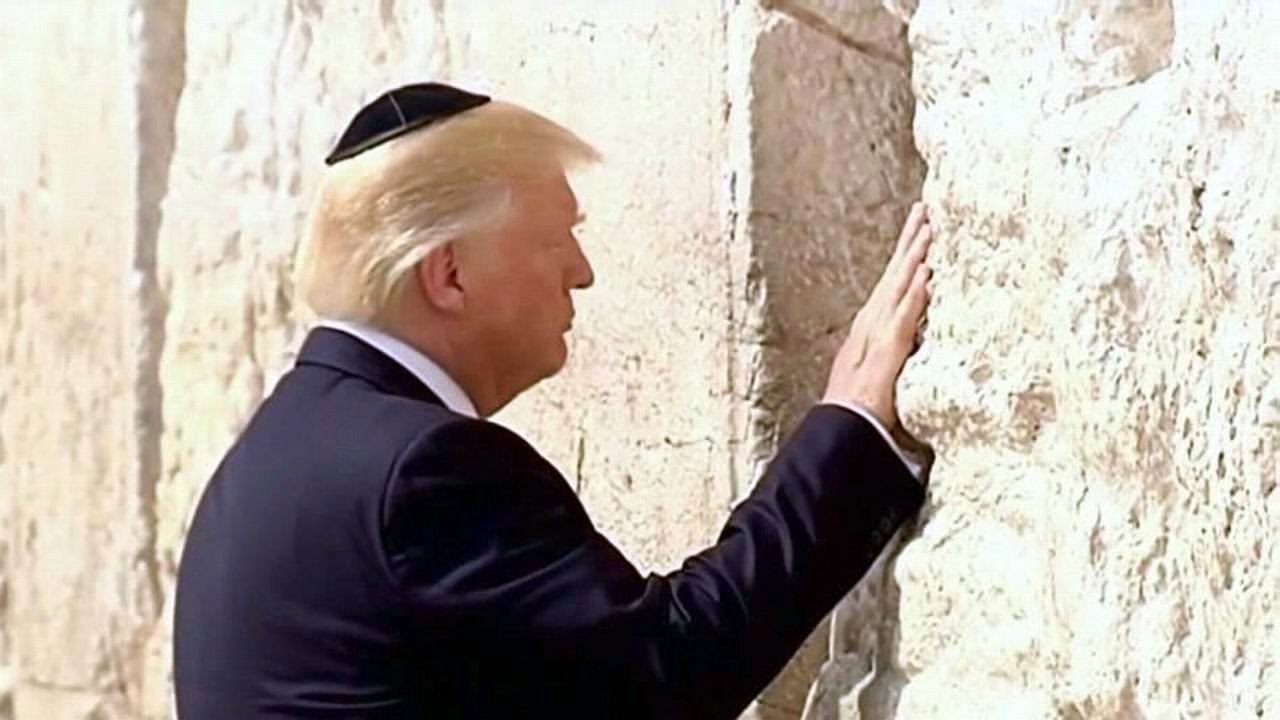
President Trump's visit to Israel was highly symbolic.  He made Israel one of the stops on his maiden foreign tour since becoming president.  He visited the Western Wall in Jerusalem during his visit, becoming the first US president to make this visit while in office.  He emphasized to Palestinian Authority President Mahmoud Abbas that funding terror is not acceptable.  He reinforced the support that Israel will always enjoy from his administration.  In spite of this, he stayed clear of the key substantive issues confronting Israel and the region now.  He did not raise the move of the US embassy to Jerusalem.  No mention was made of the constant accusations against Israel regarding construction in Judea and Samaria.  Nothing was said about Palestinian claims to Jerusalem, or accusations regarding Israel's claims to Jerusalem as its capital.  His outward shows of support were all seized upon, recognised and appreciated by the majority of Israelis.  The lack of meaningful progress in getting Israelis and Palestinians to sit down around the peace table is what the international community has seized upon.

The issue that Israel needs to consider is Trump's overall standing within the USA and further afield.  It was clear before he arrived in Israel that Trump has many enemies at home, and that they are determined to keep him on the back foot by levelling all types of accusations against him.  Trump's own conduct in defending these accusations has certainly not helped his cause.  And Israel was dragged into the crossfire when Trump was accused of sharing secret intelligence received from Israel with Russia.  If true, this would be a serious violation of trust, and norms associated  with the sharing of intelligence information.

Distrust for Trump appears to be spreading rapidly within the international community as well.  Trump's recent appearances at the G7 and NATO meetings did not show him to be in accord with any of the other western leaders.  On the contrary, there are indications that Trump is being sidelined from the key international organisations.

Winston Churchill famously said, “Diplomacy is the art of telling people to go to hell in such a way that they ask for directions.”  This is an art that Trump has clearly not yet mastered.  Even though Trump frequently says things that many people are thinking, he has not yet discovered how to say it in a way that does not create enemies.  While Israel has no particular issue with Trump's popularity (or lack of it) in the international community, there is a danger that Israel will be tarred with the same negative brush if she is seen to be too closely associated with Trump.

There is no doubt that Israel has already gained a great deal from the change of administration in the White House.  Trump's influence over US domestic and international policy towards Israel, and his influence over proceedings at the UN cannot be under-estimated.  Israel will certainly wish to see more of that in the future.  There is a danger, however, that the association with Trump could prove to be negative in Israel's relationships with other countries around the world.  If Trump continues to completely ignore the accepted rules of international engagement while representing his contrary views, he will quickly became a pariah in the international community.  And, even if Israel wishes to stay close to Trump to benefit from his supportive views and actions, the association with him may proved negative. 

The prime minister and the Israeli government has a tough job to navigate a careful path to take advantage of the emerging situation, without losing too much in the process.  Will Trump prove to be the good things for Israel that were predicted, or a poison chalice?  Only time will tell.

Sunday, 25 December 2016

Obama's Final Act of Betrayal

Image courtesy of www.politico.com
After weeks of speculation as to how the US will vote at the UN Security Council when presented with the resolution condemning Israel's policy regarding the so-called "settlements", we now have a clear and unequivocal answer.  In the vote held on Friday, Barack Obama instructed his ambassador to the UN to abstain from the vote at the Security Council.  This action allowed the motion to be carried, with 14 countries voting in favour and 1 country (the USA) abstaining.  Had Obama decided to vote against the resolution, it would not have been carried despite the majority voting in favour.  Because the USA has a veto right at the UN Security Council, it had the power to defeat the motion on its own.  This veto right was not exercised on Friday.

The decision by the USA delegation to abstain from Friday's vote flies in the face of USA policy at the UN Security Council in recent years on the subject of resolutions condemning Israel.  In the words of outgoing UN Secretary-General Ban Ki Moon, Israel has been the victim of a disproportionate number of resolutions condemning her actions at the hands of various UN organisations.  One could interpret this to mean that Israel has been unfairly targeted by the UN, and unjustifiably singled out for constant criticism and condemnation.  The USA has somewhat redressed this imbalance by exercising its right of veto at the Security Council over the years, and has ensured that the unfair condemnations of Israel are not allowed to stand, at least in that forum.  The most recent example of this was in 2011, when the Obama administration vetoed a resolution that condemned Israel's settlement activity.  The resolution on that occasion was remarkably similar to the one passed by the Security Council on Friday by virtue of the US abstention.  So what has changed in 5 short years, that justified the US turning its back on Israel at this time?

In 2011, there was a great deal more at stake for President Obama.  He had been in office for approximately 3 years, and was already eyeing his re-election with the hope of returning to the White House for 4 more years.  His decision to veto the resolution on that occasion was all about serving his interest at that time, rather than showing what he genuinely felt and believed.  Fast-forward 5 years, and Obama has no political capital to win or lose from the Security Council vote.  He will vacate the Oval Office in less than a month, and this vote has no bearing on his future whatsoever.  The only reason that he would vote in one direction or another, is to reflect his genuine view on the matter.  This view is shown loudly and clearly in a resolution that is one-sided and false in its depiction of the reality.  This is the legacy that Obama and Kerry are leaving on their peace-making efforts over the years, that were presented as being fair and even-handed.

This act puts an entire 8 year presidency into context.  There were many conspiracy theories about what Obama's true position on Israel was.  Was he influenced by the fact that he comes from Muslim heritage?  Was he genuinely sympathetic to Israel's struggle for survival?  Did he understand that the obstacles to peace are numerous, and not only the fault of one party or the other?  He tried to cloud the answers to these questions, and presented himself as a friend of Israel throughout his term in office.  This single act at the end of his presidency, however, has clarified all that has gone before.    While Israel would never wish to oppose the possibility of reaching a genuine agreement with the Palestinians, it has always been important to Israel that any agreement be reached on the basis of mutual respect and recognition between the parties.  This respect and recognition has been sorely missing from the Palestinian side.

The only real purpose that this resolution serves, is to continue to perpetrate the view that Israel is solely to blame for the lack of progress towards peace.  And Israel's policy on settlements is an easy scapegoat to use to illustrate why Israel should be blamed.  If it was true that the settlements are the main obstacle to peace, why was peace not achieved in the period from 1948 to 1967, when there were no settlements to blame.  Not only was peace not achieved, the Arabs were hell-bent on destroying Israel at any and every opportunity.  But now, the settlements are being presented as the only reason for the lack of a peace agreement.  Where is the criticism of the fact that the Palestinians refuse to recognise Israel as a Jewish state, that has a right to live in peace and security?  Or of the fact that the PLO charter continues to call for the destruction of the State of Israel?  Or the continuous terror attacks that Israelis are forced to endure?  These were conveniently ommitted from the UN Security Council resolution, and this emphasizes how one-sided how this resolution really is.

If the resolution served to somehow move the peace process forward or to make a positive contribution the situation, I would be able to understand Obama's decision to allow it to stand on the record.  Unfortunately, this is not the case.  Instead, it is a pointless finger-pointing exercise that makes little contribution to the creation of a positive environment for peace-making.  And now, it is clearer as to who is pointing at whom.  Obama, your true colours have been revealed.  Shame on you.

Saturday, 10 December 2016

The Real Obstacle to Peace

If one believes all that is written in the international media about the current state of the Middle East conflict, it would be easy to reach the conclusion that there is only one obstacle to peace - Israel's policy on the so-called settlements.  According to these accounts, if Israel agreed to uproot its citizens who are living in the disputed areas of Judea and Samaria,  peace would magically break out in the Middle East.  Nothing could be further from the truth.  And the fact that outgoing US Secretary of State John Kerry (amongst others) constantly uses the line that the Israeli policy on settlements is the obstacle to peace, is a shameful inaccurate depiction of the situation.

Before suggesting what I think the real obstacle to peace is, it is worth understanding the true legal standing of this disputed land.  Until 1948, the land in Judea and Samaria was under a British mandate in terms of the San Remo conference of 1920.  In 1947, the United Nations adopted a resolution to support the establishment of an Arab state and a Jewish state in the land under British mandate, then known as Palestine.  The Arab world rejected this idea, chiefly because they objected to the establishment of a Jewish state.  Ultimately, the Jewish state was established, and the Arab world declared war on it.  In the aftermath of this war, the area of Judea and Samara came under the rulership of the Jordanian government.  It remained like this for 19 years.  During the course of the Six Day War in 1967, Israel captured this land and put it under Israeli military rule.  This situation continued until 1982, when a semi-civil authority was appointed to oversee rulership of this area under the auspices of the Israeli ministry of defence.  This is the situation until the present day.  What is clear from history, is that Arabs were handed the opportunity to rule over this land on a golden platter in the UN partition plan for Palestine in 1947.  It was rejected by them.  Had it not been rejected, we would not still be arguing over ownership issues today.  In addition, had the Arab world not plotted to try to wipe Israel off the map in 1967, the land would probably still be under Jordanian control.  So now, that Israel has responded to protect the existence of the Israeli state, the complaints are too little, too late.

There is no doubt in my mind that the Arab world is using all at its disposal to bring Israel's name into disrepute in the international community, and to take advantage of the easiest argument to convince others that Israel is the evil ogre in the story.  This, it seems, is the argument of Israel's settlement policy which, according to the current rhetoric, is designed to scupper the prospects of peace ever being established in the region.  Memories are, however, short.  It is already long forgotten that it was the Arabs who rejected the opportunity of two states for two peoples in 1947, and it seems strange that questions are not being asked about why that was.

In my view, the real obstacle to peace is the same one that existed in 1947 when the Arab world rejected the UN partition plan, and the same obstacle that existed for many years before that.  The obstacle is the existence of the Jews, and now, the existence of the Jewish state.  Until this "problem" is resolved, there will never be peace in the Middle East.  And, judging by some of the things that are happening in Syria, there is unlikely to be peace in the Middle East even if the Arab world would succeed in removing Israel.  All actions that are undertaken by the Arabs in the context of "peace" discussions, are done with the intention of weakening Israel's position to the point of destroying her.  This is clearly evidenced by the response to Israel's unilateral withdrawal from Gaza.  Until that moment, Israel's rulership over Gaza was held up as an obstacle to peace.  Since Israel withdrew from Gaza, the area has become less peaceful than it was before.  Now it is being used as a springboard to launch further attacks into Israel.  As far as progress towards peace is concerned, nothing was achieved by withdrawing from Gaza.  So why should we believe that withdrawal from settlements in Judea and Samaria will be any different?  The truth is that most Israelis do not believe this, even though the desire by Israelis to achieve peace remains as strong as ever.

Over the years, Israel has made numerous unilateral gestures in an attempt to further the prospects for peace.  Terrorists have been released from prison, money has been paid to the Palestinian Authority, borders have been opened and concessions granted, all in the interests of showing goodwill and positive intention to reach a peace agreement.  In return, Israelis have been killed in terror attacks and Israel has had to fight numerous wars and protect her citizens from ongoing missile attacks.  No meaningful progress has been made towards achieving a peace, or towards peaceful co-existence.  It seems no wonder that the Israeli government is hesitant to make further concessions.  They seem to achieve nothing other than further weakening Israel's ability to protect her right to peaceful existence.

The time has come for the world to stop allowing the Arabs to hide behind the rhetoric that Israel's settlement policy is the obstacle to peace.  More than that, the time has come for the international community to stop repeating and validating this ridiculous position.  I feel sure that, if somebody could give a cast iron guarantee that reversing the settlement policy would allow peace to be reached, Israel would agree to it almost immediately.  It is clear to all concerned, however, even to most of those repeating this line in the international community, that Israel's settlement policy is only being used as an excuse to justify why there is no peace.  It is far from the obstacle that, if overcome, would allow peace to be achieved.

The peace agenda contains numerous points that require resolution before a peace can be achieved.  These include land borders, the rights of Palestinian refugees, the status of Jerusalem, the arming of a future Palestinian state and many others.  In my view,  however, there is only one point that is of any real significance in this discussion, and this is the recognition by the Arab world of Israel's right to exist as a Jewish state.  Until this is resolved, there is nothing further to talk about.

Friday, 30 September 2016

Open Letter to Maria

Dear Maria,

I have read what you wrote to Amnon when he sought to be your guest via airbnb.  I think that you have really lost a great opportunity to expand your knowledge and understanding of the issues that currently exist between Israel and the Palestinians.  I am sure that hosting Amnon would have been an eye-opener for you.  I wish to take the liberty to explain here what Amnon may have told you if you had been open-minded enough to have him as your guest.

Having followed the activities of the BDS movement over a number of years, I wonder whether the movement’s supporters like yourself really understand what BDS is about.  People like you appear to support BDS in the belief that isolating Israel will promote a peaceful solution between Israel and the Palestinians.  Even though your objective is honourable, you are bound to be disappointed by the achievements of BDS.  The BDS movement and its activities are first and foremost directed towards hurting and destroying Israel.  The BDS idea was originally to protest Israel’s presence in Judea and Samaria (the so-called “West Bank”) by exposing and boycotting Israeli products produced in these areas.  Instead, the organisation has been hijacked by anti-Israel and anti-Semitic individuals, who try to convince people like you that BDS is an honourable cause that promotes peace.  And this can be achieved by behaving in an anti-Semitic way, just like you did on airbnb.  But all that they are really doing is trying to promote anti-Semitism and hate towards Israel in a politically acceptable manner.

If you are prepared to examine the issue in greater depth, you will discover that the main obstacle to peace is the unwillingness of the Palestinians to recognise Israel’s right to exist as a Jewish state.  This is demonstrated by their refusal to remove from their charter, the objective to destroy the Jewish state. So, if BDS was really an organisation that promoted the idea of peace between Israel and the Palestinians, it would protest against the Palestinians’ stated objective, and against their continued attempts to destroy Jews and the Jewish state.

If you are looking for activists working towards a peaceful solution, you will find that the majority of Jews in Israel are activists working towards a peaceful solution.  There are few Israelis who do not yearn for a more peaceful environment to raise their children, and to find a peaceful way to co-exist with our neighbours.  Don’t forget that Israelis are happy to welcome Arabs, even so-called Palestinian Arabs, into their towns and cities to sit alongside them in coffee shops and restaurants.  As long as they come in peace.  You will find Arabs in every Israeli town and city, in malls up and down the country and working in Israeli businesses.  The same cannot be said for finding Jews in the Palestinian Authority area.  Their areas are “Judenfrei”.  And it is this type of behaviour that the international community and BDS reward by criticising and castigating Israel at every opportunity.  If you are indeed ready to make an exception for activists working for a peaceful solution, Amnon is probably the person that you should make your exception for.  Or any other Israeli who wishes to be your guest.  We all dream about peace, and are prepared to give a great deal to achieve it.

Don’t forget, however, that Israelis are not prepared to seek out peace at any price.  They are not prepared to do it in a way that ultimately ends up destroying the Jewish state.  After all, this is hardly peace.  If the Palestinians were prepared to recognise Israel’s right to exist as a Jewish state, they will find willing partners in Israelis to shake their hands and to find ways to co-exist in peace.  If not, Israelis are unafraid to fight for their rights and for their survival.  We are a tough bunch of people who never give up.

It is unfortunate that BDS has managed to convince people like you that it is fighting for peace, and to cause you to become anti-Semitic in your actions.  The people who are really fighting for peace are not the Palestinians, and not the BDS activists.  They are the Israelis.  If you give them a chance to prove it, you will never be disappointed.  I am sure that you will have the chance to discover this first-hand if you host Amnon as your guest.  And even though you may have been influenced by BDS and by the media in your thoughts and actions, you do need to take some responsibility for the way in which you have treated Amnon.  It is anti-Semitic, bigoted and unacceptable.

Regards
Anthony

Wednesday, 18 May 2016

Lies, Damn Lies and Deligitimisation

"The creation of the State of Israel was fundamentally wrong,  because there had been a Palestinian community there for 2000 years".

"The creation of the State of Israel was a great catastrophe.  We should have absorbed the post World War II Jewish refugees in Britain and America".

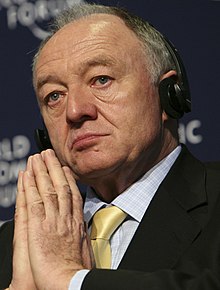
These are the words of former London mayor and UK Labour Party member and activist, Ken Livingstone in a recent interview that he conducted with Arabic station Al Ghad Al Arabi.  The fact that Livingstone, or "Red Ken" as he is known by the British establishment, is anti-Israel and anti-Semitic is not new to most of us.  His own Labour Party recently suspended him on accusations of anti-Semitism, along with more than 50 other members of the party.   What is surprising is the fact that a former mayor of a capital city of one of the world's leading and progressive nations, can utter such factual inaccuracies in support of his anti-Semitic rant.  What is perhaps even more astonishing is that so many around the world accept these inaccuracies as fact. and find his open anti-Semitism (dressed up as anti-Zionism) to be perfectly acceptable.

Even though Red Ken was only a babe at the time that the State of Israel came into existence and will probably not be able to remember its details, it is incumbent on a man in his position and who is as outspoken as he is, to get the facts right before taking strong public positions.  Instead, he is using inaccuracies to justify his bias.  If he had learnt the facts, he would know that there was no Palestinian community in 1948, and so there could not have been a Palestinian community for 2000 years.  The concept of a "Palestinian people" or community only arose after the 1967 Six Day War when the Arab countries lost control of the West Bank, Gaza Strip, Golan Heights and East Jerusalem after trying to drive the Jews into the sea once more.  After they realised that they had little chance of defeating Israel militarily in order to gain control over the land held by the Jews, the notion of a "Palestinian people" was born as a tactic to beguile the world into feeling sympathy for their cause.  This has now translated into an "occupation" of their land, a misconception believed by a vast majority of the world's citizens and used endlessly at the UN and other international bodies to criticise Israel.

It is ironic that he makes a statement that the creation of the State of Israel was a catastrophe.  Why a catastrophe?  Does he believe that peace would have prevailed in this region had the State of Israel not come into being?  In the same interview, Livingstone refers to Libya and Iraq.  In those cases, he tries to blame western intervention for the conflicts that arose in those, and other Middle Eastern countries.  He claims that the west is equally to blame for the rise of Islamic terrorism, which has come about because of western double standards in the Middle East in Livingstone's opinion.  According to him, this is what has been encouraging angry youth to fight alongside ISIS and other terror groups.  Even he is smart enough to recognise that Arab and Muslim groups have fought amongst each other for hundreds of years., and that western intervention was not required to trigger terrorist activities.  We only need to witness the most basic split between Sunni and Shia Muslims to understand this, not to speak of the numerous tribal and political splits in evidence around the Middle East.  Does Livingstone believe that the Middle East would have been more enlightened and more developed without the existence of the State of Israel?  Once again, we have numerous examples to cite where Muslims have failed to capitalise on opportunities to enlighten and develop their countries and their people.  Should this be blamed on Israel?  Can we blame the terror state that has been constructed in Gaza, and funded by foreign aid, on Israel?  The catastrophe that Ken talks about is the same catastrophe that the Palestinians speak about.  It is the catastrophe of the Jews have a free homeland in which they can find self-determination.

It is ironic that Mr. Livingstone thinks that Britain and America should have absorbed all the post World War II Jewish refugees, and their failure to do so caused the "catastrophe" of the creation of the State of Israel.  In reality, it was exactly because of bigoted anti-Semites like Red Ken, that these countries and others refused to accept Jewish refugees, both during the war (when they really needed place to go) and in its aftermath.  Even those who were allowed to escape to western countries were made to feel like they were "guests", who may be sent out at any moment.  The exposure of endemic anti-Semitism in the Labour Party in Britain is not as a result of a recent development.  This manifests itself as a result of decades of institutionalised anti-Semitism in many areas of British society.  Who would believe that, even as recently as the 1980's, some large government-owned companies in the UK had a policy of not employing Jews?  This anti-Semitism has been cleansed by the political acceptability of being anti-Israel.  The anti-Semites finally found a legitimate cause that allows them to openly express their anti-Semitism in the public arena.  Even if they claim to oppose Israel's actions and policies while being Jew lovers.  

It should be clear that anybody who denies the right of the State of Israel to exist, or supports groups who seek Israel's destruction, is an anti-Semite.  This has little to do with the so-called occupation or the rights of the Palestinian people.  There are millions of Palestinians in refugee camps in the region, whose human rights are being denied in a much more systematic way than anything that Israel has ever done.  No criticism is issued about these human rights abuses, or about the abuses by the Palestinian leadership of its own people.  Instead, this has everything to do with the right of the Jews to be masters of their own destiny, and to have the right to protect themselves and their  Jewish homeland.  It can be dressed up as anti-Zionism or support for the Palestinian people, but the real root cause is well understood, and will not hidden from sight.

UK Labour leader Jeremy Corbyn is on record calling Hamas and Hezbollah his friends.  And he is the one who has suspended more than 50 members of his party for their anti-Semitic behaviour.  This is evidence of how deep the anti-Semitism in the Labour Party runs.  The fact that those who support groups calling for Israel's destruction are the ones suspending the anti-Semites is ironic.  The anti-Semites have succeeded in galvanising support for hating the Jews and Israel around the issue of human rights abuses against the Palestinians.  This has filtered into the left-wing arm of the Jewish community, giving even greater strength to the mantra that being anti-Israel does not necessarily equal being anti-Jewish.  Each meeting of the UNHRC is forced to discuss agenda item 7 covering human rights violations by Israel.  How does it transpire that, amongst all human rights violators in the world (of which there are many), Israel is the one and only country that is forced to endure a torrent of criticism and abuse at each and every UNHRC meeting?  My contention is that it is rooted in institutionalised anti-Semitism at this organisation, and many others.

Although Red Ken is a classic example of anti-Semitism in its ugliest form, he is unfortunately not the only example.  And he is sufficiently unashamed to be prepared to make public statements in support of his argument that are factually inaccurate and incorrect.  The problem is that, when senior leaders like Livingstone make such statements and contentions, many of their followers believe it without any doubt and this perpetuates the unbridled hatred without cause.

When Livingstone refers to the "catastrophe", we understand what he truly means.  It has nothing to do with the so-called "nakba" or catastrophe that has befallen the Palestinian people.  This could easily have been avoided if they had accepted the Palestine Partition Plan agreed by the UN in 1947, instead of choosing to try to destroy the Jews.  The two-state solution that we continue to fight over today, could already have been implemented at that time.  If this is indeed what the true desire is.  Instead, Livingstone is referring to the catastrophe of the Jews having their right to independence and self-determination, and how much this has served to strengthen the cause and the presence of Jews around the world.  I imagine that he may have described it as an even greater catastrophe had the UK absorbed more Jews in the period after the Shoa as he suggests, and had a greater presence and influence in the UK today.  The mix of strong Jewish presence and influence, along with virulent anti-Semitism was exactly the recipe that brought the Nazis to power, and led to the Shoa and the massacre of 6 million people.  So, while I don't tolerate this form of bigotry from Livingstone and I am happy that there is a State of Israel to call him out and provide protection to Jews against his ilk, I still prefer this form of a catastrophe to the alternatives that Livingstone suggests.

Saturday, 17 October 2015

Palestinian Actions Speaking as Loudly as Words

Israeli Prime Minister Benjamin Netanyahu  delivered  another triumphant speech at the United Nations General Assembly meeting.  He seems to be at his best when standing at the UN podium and presenting Israel's case to the world.  His speech came only a day after the one delivered by Palestinian Authority President Mahmoud Abbas, and it was noticeable how Netanyahu's speech contained much optimism in stark contrast to Abbas's words.  Since these speeches were delivered, a number of innocent Israelis have been murdered and many more injured in Palestinian terror attacks in the city of Jerusalem, in the West Bank and elsewhere in Israel.  It frequently seems as though nobody in the UN General Assembly is really listening to the speeches, as most people come there with their positions firmly entrenched.  The speeches are heard by audiences outside of the General Assembly chamber in New York, particularly by the electorate of the leader concerned.  Abbas's speech appears to have been very much directed at the Palestinian people.  There also seems to be a strong link between the tone of the messages delivered, and the actions that have taken place on the ground in Israel since the speech.

Those close to Abbas had warned for many months prior to this UN General Assembly meeting, that Abbas's speech was going to contain a "bombshell".  This expectation was set, not only amongst the international community, but also amongst the Palestinians who are looking to Abbas for leadership.  There was speculation about what it could be.  Most of the ideas that were put forward as possibilities were along a negative theme.  Some thought that Abbas would resign or dismantle the Palestinian Authority.  Those people who were hoping for something positive that could somehow contribute to the situation in the Middle East, and possibly move the peace process forward, were drowned out.  After the speech, the so-called "bombshell" was described by one Israeli newspaper as more of a stink bomb than a bombshell.  There was nothing dramatic that one could point to in his speech that could be termed a "bombshell".  Perhaps, more importantly, there was certainly no hint of anything positive to give one a feeling that a way forward can be found.  Instead, there was evidence of frustration that the Palestinian issue has been replaced on the front pages of the international press by the ISIS threat and by the Syrian refugee crisis.  There was an appeal for governments around the world not to forget that they should continue to pursue foreign policies that criticise Israel's behaviour and actions, while heaping sympathy on the Palestinian "victims" in the conflict.  The message, however, was received loudly by the Palestinian people, while not registering any response on the agendas of foreign governments.  The clear message sent by Abbas and received by the Palestinians, was one of hopelessness and lack of optimism for the future.

It should, therefore, come as no surprise that the Palestinians have heard the message from the UN, and have embarked upon a spree of terror attacks across Israel that have killed and injured innocent people.  In the process, children have been orphaned, parents have lost children, and wives have lost their husbands.  Even though the wave of violence has been blamed by Palestinian leaders on events that have recently taken place on the Temple Mount in Jerusalem, the violence cannot be attributed to these events in any way.  The events on the Temple Mount are simply part of this violence that we have seen elsewhere, rather than a cause of it.  The cause of the violence can be traced back to the words in the UN General Assembly Hall that reflect the general message that has been in evidence for the Palestinians for some time.  A lack of hope and optimism, and a feeling that there is little to lose, can cause people to behave in extreme and sometimes illogical ways.  This is clearly the case with Palestinian people right now.  It is too simplistic to explain the current events as simply arising spontaneously out of a lack of hope.

It is frequently the case that the actions of the government serve to give their people the optimism that drives them to feel motivated or not.  Actions by a national government can easily trigger a positive feeling and spirit amongst its populace, and equally cause it to dry up as a result of actions that drain their mood.  This can sometimes be triggered by relatively mall things that are of greater concern to people. It seems to me that the spirit of the Palestinian people has been drained by the negative actions of Mahmoud Abbas.  How can a nation feel motivated when your leader stands up in front of the international community and expresses views that are completely devoid of any optimism for the future?

The Palestinian Authority is not only guilty of milking their people of any optimism to the point that they have effectively given cause to this cycle of violence, they are also guilty of inciting them to continue this violence.  The word "intifada" has been mentioned many times in relation to this cycle of violence.  For those of us who lived through the previous 2 intifadas, this cycle of violence looks remarkably like an intifada.  We are told, however, that this is not an intifada.  The most commonly quoted reason is that the previous 2 intifadas were actively supported by the Palestinian Authority, with weapons, money and specific instructions being given by the authority.  On this occasion, according to what we are being told, the authority is not actively supporting the violence.  It is noticeable, however, that they are also not speaking out against this violence in any way.  This can surely be considered and interpreted to be support.  Those who are not speaking out against this wave of violence, are clearly seen to support it.  In my view, and according to the official definition, this is an intifada.

The involvement of the Palestinian Authority in previous intifadas was described as a "guiding hand" behind the scenes.  The Israeli government is telling us that, on this occasion, there is no guiding hand.  Having said that, there are some hallmarks of the current wave of violence that seem to be part of an orchestrated strategy.  The fact that the weapons of choice being used in the current round of attacks are stones that are being thrown, and knives being used for stabbing attacks, is different from intifadas in the past.  And it is also noticeable that many of those involved in attacks in the current wave of violence are youths and minors.  This certainly tells a better story for putting on social media.  Minors are clearly problematic from a prosecution perspective under Israel law, when the perpetrators are arrested.  They cannot be treated in the same way as adults are treated under the law, and this may be one of the reasons why this strategy is being employed.  As much as we are being told that the violent attacks are spontaneous actions by individuals on the ground, it seems that the attacks are coordinated and part of a strategy.

A recent development in the wave of violence, is the involvement of Israeli Arabs.   Some of the attacks carried out in Jerusalem, have been undertaken by Arabs who are citizens of Israel.  Over the past few days, protests have been seen in Israeli Arab cities up and down Israel.  These are protests in support of the wave of violence directed against Jewish Israelis.  The involvement of Israeli Arabs is a dangerous development, and creates a dilemma for the Israeli government.  The interior minister has threatened to withdraw Israeli citizenship from any Israeli found to be involved in the violence.  Even this is more of a knee-jerk response, and not necessarily a longer-term solution.

The responsibility for this wave of violence falls directly on the Palestinian Authority.  And this is not only because of their responses (or lack of responses) over the past few weeks.  This responsibility goes back many years during the time that they have educated their children for conflict and violence against Israel and Jews.  Such education takes a long time to undo, perhaps even a number of generations.  Of course, this is not aided by staying silent when their people carry out heinous attacks on innocent people, and by blaming Israel for a change in status on the Temple Mount.  This is an outrageous accusation, that is simply designed to get support from fellow Muslims around the world, and to return the Palestinian issue back to the front pages of the newspapers.

Despite the fact that the support and the "guiding hand" of the Palestinian Authority is different from what it has been in the past, this is an intifada in definition and action.  The authority has adopted a policy of maintaining a feeling of hopelessness amongst its people, in order to build hatred and despondency that is being channelled against Israel and Israelis.  It continues to educate its children for hatred, war and conflict rather than education for peace and coexistence.  The speeches at the United Nations showed clearly that Israel stands for all that is positive and optimistic, while the Palestinian Authority stands for the opposite.  Until this is rectified, there can never be peaceful coexistence in this land.

Sunday, 15 March 2015

Netanyahu's True Colours

An interesting document has been published by Israel's Yediot Achronot and its on line publication, Ynet.  It is claimed that the document was prepared by officials in Prime Minister Netanyahu's government, something that the prime minister vehemently denies.  The document, which is addressed to Palestinian Authority President Mahmoud Abbas, purports to offer huge concessions on the part of the Israeli government in the search for a peace agreement.  Netanyahu claims that he would never have offered the things that were contained in the document, and accuses the newspaper's editor, the Moses family, of trying to play a dirty political trick to discredit him.  Another journalist, who claims to have investigated the matter of this document, says that the document is genuine but was developed by the US administration rather than by the Israeli government.  Another theory that has been put forward is that Israeli ambassador to the US, Ron Dermer, was involved in putting together the document with Netanyahu's blessing.

Whatever you wish to believe about the source of the document, it does contain some interesting information.  The document is formulated in the style of an offer to the Palestinians, which sets out major concessions on the part of the Israeli government.  The document was developed in August 2013 as part of the ill-fated peace talks under the sponsorship and auspices of US Secretary of State, John Kerry.  The concessions incorporated in the document include a proposal for Israel to revert back to the 1967 land borders with certain land swaps, a deal on allowing a Palestinian state a part of Jerusalem as its capital, and even a concession to allow the return of some Palestinian refugees.  One version of the story suggests that they were presented by Prime Minister Netanyahu's personal representative Yitzchak Molcho to Hussein Agha, affiliate of Palestinian Authority President Mahmoud Abbas, soon after the talks were initiated in July 2013.  If this is to be believed, these concessions represent possible compromise solutions to the main sticking points that the Palestinians continue to present as being the key reasons for the ongoing lack of agreement between themselves and Israel.

It is not clear whether or not the document was presented to the Palestinians, but it seems inconceivable that they were not at least aware of it.  It is interesting that there was never public comment made on their part about it.  Some would hold this up as evidence of the fact that Palestinian Authority President Mahmoud Abbas is not negotiating in good faith.  If he had been negotiating in good faith, and had received a proposal that provided a reasonable response to the main outstanding sticking points or was at least aware of it, it seems likely that he would have referred to it.  So is this an indication of bad faith?  It feels almost like the revelations that came out of Camp David in 2000 when then Palestinian Authority President Yasser Arafat is reported to have turned down major concessions offered by Ehud Barak, specifically on the matter of a solution to share Jerusalem.  There was shock that Barak had made such a far-reaching offer, and even greater shock that it was rejected.  This "outed" Yasser Arafat as negotiating in bad faith, and having no intention of reaching a peace agreement with Israel.  Is this also true of Mahmoud Abbas?

Even though there is a strong argument that the reason behind Abbas not being prepared to refer publicly to the offer is because he is negotiating in bad faith, I am not sure that this is the whole story.  I contend that he would have reason to jump on such a proposal even if he was not negotiating in good faith.  After all, gaining access to such substantial concessions on Israel's part, even if he never had any intention to stand by undertakings given in return, would represent greater possession for the Palestinians.  It could be argued that this would be major progress for them if their unholy quest is to destroy the Jews and take over Israel for themselves.  So why not try to promote it publicly?

It seems to me that Abbas is determined to remain a "struggle leader".  Unlike Nelson Mandela who led the struggle in order to transform society so that he could be a leader of a legitimate majority-rule democracy, Abbas does not see him or his people in this legitimate role.  Instead, they prefer to be in a state of "struggle" on an ongoing basis.  It seems as though the advantage of the international sympathy and support that the Palestinians are enjoying, could all be lost in the event that they become a full-fledged member of the international community.  The only explanation that I can offer for Abbas not jumping on the concessions that were set out in the letter, is because he wishes to remain the leader of a struggle.  The Palestinian leadership has demonstrated on numerous occasions that it is unable to fulfil the role of legitimate leaders who have the objective of guiding a country to fill its place among the nations, and be prepared to abide by all rights and obligations that come with that.  Perhaps Abbas fears that accepting the concessions would result in the Americans forcing him and his Palestinian Authority to become responsible leaders as required in the international arena.  The way in which the Palestinian leadership has dealt with refugees over the years, the way in which aid from the international community has been skimmed off for their own private consumption and the ongoing sponsorship of terror and wars against Israel represent only some of the evidence of their unwillingness to become a legitimate leadership, government and country.   It seems more convenient to be regarded as the downtrodden underdog of the world, with all the international support and sympathy that is associated with that.

There can be no doubt that the Palestinians are playing an extremely shrewd political game in achieving their objectives.  I have no doubt that the objectives of the leadership are not the same as their published objectives as laid down before the international community.  The so-called "occupation" that Israel is constantly accused of is without foundation, and their stated quest to set up a Palestinian state could have been achieved ages ago with a little political will.  It is a well documented fact that the State of Israel was established in 1948 with far less than has been offered to the Palestinians for their state.

It is also interesting for me to try to understand why Netanyahu has been so sensitive about the attribution of this document to him.  He was quick to say that he would never offer parts of Jerusalem as a capital of a Palestinian state, or agree to return to the 1967 borders.  This is all despite the fact that he has publicly accepted the establishment of a Palestinian state.  Was he concerned of a right-wing backlash against him in the days leading up to the election?  It may perversely serve to assist him in his election campaign, to show up the Palestinian leadership for what they are by acknowledging some association with the document.

Middle East politics is certainly a strange beast.  The only thing that one can be sure of, is that all is never what it seems.

Monday, 14 April 2014

Carrying the Blame for the Breakdown of the Peace Talks

I am not too bothered that Israel has been blamed for the breakdown of the peace talks with the Palestinians.  I don't believe that Prime Minister Netanyahu will be overly concerned about this either.  Despite US Secretary of State John Kerry's denials that he is blaming Israel for the breakdown of the talks, he is quoted as saying that the peace talks broke down because Israel was not prepared to release the final group of 26 Palestinian prisoners.  When referring to the unilateral action taken by the Palestinian Authority to apply to 15 international organisations and treaties for membership, Kerry said that this is a response to the breakdown of the talks.  Maybe he did not mention the specific words that Israel is to blame, but his references seem quite clear where he is laying the responsibility.

There are a few reasons why I am unconcerned about the inappropriate attribution of blame.  Firstly, we have witnessed over the years that the stigma that may be associated with blame of this type, does not necessarily stick for too long.  We saw the openly hostile and dissenting attitude displayed by former Palestinian leader Yasser Arafat at Camp David, where he rejected any form of compromise agreement out of hand.  He later managed to turn this situation around in a such a way, that it was difficult to believe that he had torpedoed the talks.  He succeeded in convincing the subsequent American administrations that he was genuinely seeking peace, despite having shown in no uncertain terms that this was not his intention.  All was quickly forgotten.  We are currently witnessing this form of political amnesia with the events in Crimea.  It was only a few weeks ago that the US, NATO and other western countries were up in arms over Russia's invasion of Crimea.  Now, despite ongoing criticism of Russia's belligerent behaviour on the Ukrainian eastern border, the world seems to have completely forgotten Crimea.  The Russian invasion is a fait accompli.

It is my view that Prime Minister Netanyahu acted exactly correctly in refusing to release the final group of prisoners.  If this means that Israel has to carry the blame, then so be it.  I think that Netanyahu was correct to embark upon the path to try to seek out a peace arrangement with the Palestinians, despite all indications that this was likely to be a futile exercises.  I think that he was correct to split the prisoner release into 4 separate stages, even though I question whether he was correct to agree the unilateral release of prisoners without any tangible equivalent steps on the part of the Palestinians.  Having insisted upon splitting the prisoner release into 4 stages, the prime minister was obliged to consider at each stage whether proceeding with that stage was in the best interests of Israel and her people.  All things considered, I would already have stopped things at the third stage.  The fact that he stood up to the international community and refused to release the fourth group, however, restored some of my confidence in him.

The prime minister has the obligation, on behalf of Israel and the Jewish people, to seek out any possible way to peace that he can find.  In that sense, when John Kerry showed serious intention of finding a way to peace despite the conditions and circumstances not looking quite right, Netanyahu took the gamble.  He even agreed to the highly controversial step of releasing prisoners with blood on their hands, something that not everybody concurred with.  He went the extra mile to show intent and goodwill, in the interests of granting the gift of peace to our children and grandchildren.  The mistake in taking this step, was that the US interlocutors somehow did not value this step in the same way as Israel did.  For the country that has detained prisoners without trial in Guantanamo Bay for years, it seems strange that this demand was taken so for granted by the US.  I feel sure that the US would never have agreed to a similar step, perhaps not even in the pursuit of the elusive peace that we seek.  The decision for Israel to release prisoners who have been tried and found guilty of murder and terror acts, is not an easy one.  When it became clear that the peace talks were not progressing in a positive direction, Netanyahu did the right thing by cutting his losses.

History will yet judge Netanyahu's decision in entering into the peace talks, in releasing 78 prisoners, in insisting that he maintains some control over the process by continuing to approve construction in the West Bank, and in refusing to release the final group of 26.  It will also judge his attitude towards the substance of the talks, as well as judging the actions taken by the Palestinians.  I believe that trying and failing, is better than not trying at all.  This is especially true when it comes to matters of strategic national interest such as the peace talks.  I trust that history will judge him accurately, and not concur with the Kerry version of laying the blame.

Chag Pesach sameach.

Wednesday, 2 April 2014

Recognising Israel as a Jewish State

In the context of the on-again off-again peace discussions between Israel and the Palestinians, one of the most public issues of disagreement surrounds the insistence by Israel that the Palestinians recognise Israel as Jewish state, and the Jewish homeland.  Is this a valid demand, or is Prime Minister Netanyahu simply using this demand as an excuse to create a roadblock in the process?  What advantage would such a recognition bring to Israel, and to its relationship with a future Palestinian state?

There seems to be much public disagreement over this demand, with most Israelis supporting the prime minister's insistence that our neighbours (and those around the world) be prepared to publicly acknowledge Israel as a Jewish state.  But how justified is Israel to demand that the international community should recognise it as a Jewish state.  Most countries around the world are happy to be simply recognised as a country by their name, with some adding the nature of the country's government to its name such as kingdom or republic.  Despite the opposition voiced by the Palestinians, there is a precedent for countries adding the predominant religion to their names as in "The Islamic Republic of Iran" or "The Islamic Republic of Pakistan".  Even though the international community has not always liked the activities of these Islamic republics, there has never been a question about recognising them as Islamic republics.  So why should there be any problem with recognising Israel as a Jewish state, even without adding this to its name?

The nature of Israel as a Jewish state has been a public matter since even before the State of Israel was established.  The Balfour Declaration, in which the British government ackowledged in 1917 that it viewed "with favour the establishment of Palestine as a national home for the Jewish people", was only one of many public statements made about the nature of Israel as a Jewish state.  Of course, the "Palestine" referred to by Balfour is modern-day Israel, Gaza, the West Bank and even includes Jordan.  UN General Assembly Resolution 181 was passed in November 1947, and includes reference in Part I A3 to independent Arab and Jewish states coming into existence in the area formerly known as Palestine.  Israel's Declaration of Independence was unequivocal in declaring Israel as the Jewish state  when it says, "... declare the establishment of a Jewish State in Eretz-Israel, to be known as The State of Israel".  It could not be much clearer.  So, what drives the Palestinians need to deny this, and what gives them the right to change a decades-old reality?

The Palestinians have never admitted publicly why they wish to deny Israel's right to exist as a Jewish state, but I speculate that it is connected to the issue of the return of the refugees.  This is a highly controversial matter that continues to be one of the points for discussion in the peace talks.  During the War of Independence in 1948, approximately 700,000 Arab residents of the nascent State of Israel fled their homes.  This was despite the invitation by the new Jewish government of the state for them to remain in their homes, and take up citizenship of the new state.  Those who chose to stay have enjoyed a relatively comfortable existence as citizens of Israel, with all democratic rights that flow from that.  Those who fled, on advice from the Arab leadership, were advised that they would have the opportunity to return triumphantly to reclaim their properties and to reclaim all the land which is the State of Israel.  That triumphant moment never came, and the refugees remain cooped up in refugee camps in countries on Israel's borders to this day.  Of the original generation of refugees, approximately 20,000 to 30,000 still remain.  The descendants of the refugees now number around 5 million.  They have been kept in these camps as a form of pressure on Israel and the international community to allow the refugees to return to their original homes.  With 5 million people now part of the discussion, there is clearly no prospect that Israel will admit them as citizens of the State of Israel.  There is a discussion, however, about how this problem will be resolved such that these people will be given permanent homes and citizenship.  It is likely to be a combination of some moving to the West Bank, with others being naturalised in the countries in which they currently live, and in which most of them were born.  The connection between this issue and the issue of recognising Israel as a Jewish state, is that the act of recognising Israel as a Jewish state effectively means that the Palestinians will give up on any claim to move refugees of any significant number into Israel itself to return to the  homes in which they once lived.  The Palestinian leadership does not seem to be ready for this yet.

There are those who ask why Israel continues to insist that the Palestinians formally recognise the right of Israel to exist as a Jewish state, when this same requirement did not form any part of the peace agreements with Jordan and Egypt.  I believe that the answer to this is that the Jordanians and the Egyptians never doubted this.  The reason why they were at war with Israel is because it is a Jewish state, and the reason that they were finally prepared to reach a peace agreement with Israel was because they were prepared to accept this fact.  The recognition of the Jewish nature of Israel was the fundamental basis of the peace agreements.  The agreement with the Palestinians is much more complex, and is based on many other substantial points that are yet to be agreed.  The reason why Prime Minister Netanyahu is making a big issue out of recognising Israel as a Jewish state, is exactly because the Palestinians deny it.  I believe that most citizens of Israel would support the position that he takes.

When countries are founded and nations created, there is usually a common bond that connects the people in that country.  The common thread that connects Israelis who have come from all four corners of the earth over the past 66 years, is the fact that they are Jewish.  The majority of the citizens in Israel identify themselves as Jewish, and there is no way of denying this.  This is the will of most of the citizens, and any national agreement entered into with a party that denies this fact will not have the support of the citizens of Israel.   Now that this issue has such a high public profile, with the Palestinians continuing to be ambiguous about their recognition of Israel's Jewish character, many citizens of Israel would demand that the Palestinians unequivocally acknowledge Israel as a Jewish state before any agreement is signed.

The issue of recognising Israel as a Jewish state has been brought to the forefront of the peace talks.  The reason for this is really not clear, as the Palestinians have not explained why they object to this recognition.  For Israelis, the fact that they are objecting is cause for concern, and reason to insist that no peace deal can be signed without it.  This is surely the most basic requirement for any neighbour of Israel which wishes to respect Israel's existence according to the will of the majority of her citizens.

Tuesday, 22 January 2013

To Vote or Not to Vote? That is the Question.

The polls have now closed in the election for the 19th Knesset, and predictions of a low voter turnout have proved to be incorrect.  Even though it was claimed that the election campaign failed to capture the imagination of the electorate,  initial information is that this is the highest voter turnout since the 1999 election.  When the votes have all been counted, it is expected that more than 70% of those entitled to vote will have cast a ballot.  The positive trend even applies to the Arab Israeli sector, which traditionally has a much lower turnout than Jewish Israelis.  Overall, this is good for Israel's democracy, and shows that Israeli voters are less apathetic than was originally thought.  It is entirely logical for Israel to have high voter turnout.  Jews were forced to suffer many years of being denied the right to determine their own destiny.  This should drive people to flood polling stations to vote in order to influence how Jewish life in Israel will be conducted over the next parliament.  There remain decisions to be taken which are of substantial political significance to Israelis concerning the future of the country, and the how to achieve peace in the promised land.  Some may say that these are life and death decisions, and seem important enough to convince most to exercise their democratic right.

Despite the obvious compelling issues that drive Israelis to the polls in significant numbers, there are those who do so somewhat reluctantly.  This is mainly because of the general disillusionment with politicians and the political system.  Gone are the days when people stood for the Knesset purely for the purpose of serving Israelis and improving Israeli society.  The concept of selfless service of our society seems to be a historical dinosaur in Israel, and indeed elsewhere around the world.  While I am not suggesting that people should agree to serve in the Knesset or in government for free or without adequate reward, it is a pity that the reward has become more of the issue than the service.  This has led to increased corruption, and much less trust in politicians and the system that governs the country.  The fact that financial rewards can be extracted has the effect of attracting a certain type of person to stand for the Knesset.  In my view, the public is justified in feeling negative towards politicians, particularly when it is considered that these are the people who will be determining our destiny.

The second reason why people may be reluctant to vote, is the feeling that there will not be any change to the current status quo.  If this is so, why bother turning up to vote?  It has been predicted throughout the election campaign that Netanyahu will be returned as prime minister.  The person who is elected to lead the government is the most important issue at stake in the election.  The rest is in the details.  The fact that Netanyahu has continued to hold a seemingly unassailable advantage gives the feeling that votes cannot, and will not influence anything of any significance.

The government-sponsored advertising to encourage people to turn up to vote has been quite creative and entertaining.  This can claim a great deal of credit for the high voter turnout.  Unfortunately, not the same can be said for the party election broadcasts, and the party election campaigns.  They have been uninspiring, and have not provoked much interest at all.  Better campaigns would, almost certainly, have inspired undecided voters to come out to exercise their votes.

Only a few years ago, Israel had a voter turnout rate of over 80%, and was in the top 25 countries of vote turnout at general elections.  The last three elections before today have shown a dramatic reduction in the number of voters  turning out, to below 65%.  The challenges facing Israel, and the importance of the decisions, are no less than those that Israel was forced to confront at the time of independence in 1948.  Israelis are all required to serve in the army in defense of the country, and this reality should surely encourage people to vote in their droves. Casting a vote for the right option could literally save people's lives if a peace agreement can be reached with the Palestinians.  For this reason, it is appropriate and pleasing that people have decided to exercise their vote today.

Initial exit polls show that the split between the left and the right-wing in the new Knesset will be very narrow.  This reflects that huge dilemma facing Israelis with regard to the direction that should be taken in dealing with Palestinian issue.  Can we trust that there is a way of agreeing a way to survive harmoniously side-by-side with a Palestinian state, or do we take statements at face value which threaten that the Palestinians will not rest until Israel is entirely destroyed?  Most Israelis really wish to believe that there is a solution to give us the peace that we yearn for.  Many believe that this is not achievable right now, due to the Palestinians taking each concession and using it as ammunition to destroy Israel further.  Israelis are also split on the issue of how to deal with the social justice reforms that are being sought for the economy.  How can we give the weaker members of our society the help that they need, without being irresponsible with the economy?  These are extremely heavy and important issues, for which there are no easy answers. The country seems to be split almost down the middle on these matters.

Irrespective of who will ultimately occupy the prime minister's office, and who will sit in the Knesset, this day has been a great victory for democracy in our country.  Many countries that achieve voter turnout in excess of 70%, are those where it is a criminal offence not to vote in the election.  In Israel, such a law is not required in order to convince people to come to the ballots.  We are extremely fortunate to have a Jewish state of our own, and to have the opportunity to vote in elections to participate in the determination of the destiny of our country and our people.  This was finally achieved after many years of being denied the right to vote, and being denied the right to determine our destiny.  The turnout today is a vote of thanks to the many heroes who fought so hard to get us to this position,  and a tribute to the memories of so many lives which were lost in the process.

Sunday, 2 December 2012

The Meaning of the UN Vote on Palestine

The UN General Assembly voted on Thursday by a large majority to upgrade the status of the Palestinian Authority to that of a non-member state.  The issue at stake has nothing to do with the upgraded status that the Palestinian Authority managed to achieve at the UN.  I believe that there are few around the world, including in Israel, who would have a problem with this.  The main issue in this vote is the inclusion of the word "state" in the resolution.  By passing this resolution, the UN has effectively recognised the Palestinian Authority area as a state, something that has not been done before.

Israel fought hard, against the tide of world support, to prevent the vote coming to the UN.  When it became clear that the vote was to be held, Israel did all she could to convince UN General Assembly members to vote against it.  The problem is that there were two different issues at play in the vote.  The reason that Israel was trying to convince member countries to vote against the motion was completely different than the reason why they wanted to vote in favour.  Inevitably, the two issues became intertwined and intermingled, causing a great deal of confusion.

For many in the international community, the vote at the UN was all about recognising the idea of "two states for two peoples".    This idea says that Israel will have the right to exist in peace and security for Israelis, and a Palestinian state will be formed for the Palestinian people.  This has been recognised by the Israeli government, and has been formally supported by Prime Minister Netanyahu.  So why was Netanyahu intent on opposing the UN vote when he has not objected to the idea of a Palestinian state?  It has been accepted that the recognition of a Palestinian state should be done on the basis of mutual understanding, respect and recognition between the Israelis and the Palestinians.  The main barrier which has prevented Israel from wishing to continue peace talks with the Palestinians, is their unwillingness to acknowledge Israel's right to exist as a Jewish state.  This recognition of Israel as a Jewish state does not threaten any peace and harmony that could exist between Israel and a future Palestinian state.  A neighbouring country has no right to dictate the main religion or key identifying characteristics of the country that exists along its borders in peace and mutual respect.  So why is it that the Palestinians refuse to give recognition of this fact to Israel?  There is a feeling that the Palestinians may have ulterior motives by trying to prescribe to Israel what sort of country she is allowed to be.  Is there an attempt to scupper any hopes of reaching a peace with Israel, and then somehow blame the deadlock on Israel?  Or perhaps that is some other hidden agenda?

Having reached an impasse because of the unwillingness of the Palestinians to give Israel the basic recognition it seeks as a Jewish state, the Palestinians have spent a great deal of time and effort to find a way to circumvent the peace process that has been laid down by the international community.  Instead of negotiating with Israel and being forced to make compromises in return for the concessions that they will receive, they been working on unilateral actions that will give them what they seek without having to give in return.  This is effectively what they have achieved by the vote at the UN, and what Israel was so vehemently opposed to.  It seems somehow unjust that the Palestinians would be granted some of their demands via the UN, without them having to give anything in return.  This explains clearly why Israel and the USA were opposed to the unilateral action taken by the Palestinians at the UN last week.  Despite the fact that it has cemented the agreed "two states for two peoples" concept, it has granted unfair advantage to one of the peoples which has created in imbalance in the current situation.

The Israeli government reacted quickly to try to rebalance the situation, by approving the construction of 3,000 housing units in parts of the West Bank and East Jerusalem.  This action, while being roundly condemned by the Palestinians and other members of the international community (including the USA), is not as extreme as it is presented in the international media.  The construction of these units has been approved by the Israeli government in areas of the West Bank and East Jerusalem which are heavily populated by Jewish Israelis, and areas which have already been tentatively agreed to exclude from any future Palestinian state.  As such, these additional construction approvals do not present such a significant departure from the current status quo.  It is certainly not a point that is substantial enough to present is a deal-breaker to the peace process as has been suggested by the Palestinians.  It also masks the fact that the current Israeli government has acted on a number of occasions to dismantle the illegal construction of new settlements that could  have interrupted the status quo.  It is unfortunate that very little recognition of these actions has been seen in the international media, or from the Palestinians.

While it is true that the concept of a "Palestinian" people is a new invention by the Arabs since the establishment of the State of Israel, and has been presented by many as another tactic to try to remove the Jews from Israel, there is a related point that is difficult to deny.  This is the fact that the group of people who have united under the banner of "Palestinians" really have no other nationality that they can claim as their own.  It has been said that the Palestinians are made up of people who are really Jordanians and/or Egyptians and/or Lebanese or some other nationality.  On the contrary, the "Palestinians" are largely despised by the Arab countries around the Middle East, and these countries do all that they can to deny granting their nationality to the Palestinians.  It should be recalled that it was a Palestinian who assassinated King Abdullah I of Jordan, great-grandfather of the current Jordanian King.  There is certainly no love lost between the Jordanians and the Palestinians (even though current Queen Rania comes from a Palestinian family).  The main reason that Arab countries have supported the Palestinian cause so vigorously, is simply to remove the "Palestinian problem" and related threat from their own doorsteps.

The world, by voting for a Palestinian state, has rewarded the Palestinians for bad behaviour.  Israel, despite supporting two states for two peoples, could never have supported a unilateral move on the part of the Palestinians in the way that it happened at the UN last week.  None of this, however, changes the facts on the ground in any substantial way.  The state that has now been recognised still has borders that are not clearly defined, and they remain unchanged from the week before the vote.  If anything, it has created more uncertainty and more conflict than was the case before.  The level of distrust is higher than before, and the prospects of returning to the negotiating table are remoter than was the case previously.  It is also suggested that it gives the Palestinians reason to believe that the way to achieve their aspirations of an independent state, is not via the negotiating table.  Instead, they can manipulate the international community to get what they want, without any cost to them.

While the world may have had good intentions in supporting the Palestinian cause at the UN, it has done irreparable harm to the peace process.  If they thought that this would advance the cause of peace, they clearly have misunderstood politics in the Middle East.  They message sent to the Palestinians is entirely the wrong message, and will simply push any possible peace further and further away.  Israel is unfortunately extremely experienced in coping with negative UN resolutions.  For a country whose population numbers barely 7 million, and which occupies such a tiny area of the earth, there have been more negative resolutions adopted by the UN against Israel than any other country.  This reflects how absurd  the UN's obsession with Israel has been over the years.  As before, Israel will be forced to cope with the latest UN resolution and move forward.  Things could have been much easier had the countries of the world paused to try to understand the full implications of their do-good resolutions.