Showing posts with label Elections. Show all posts

Tuesday, 23 July 2019

Netanyahu Breaks the Record

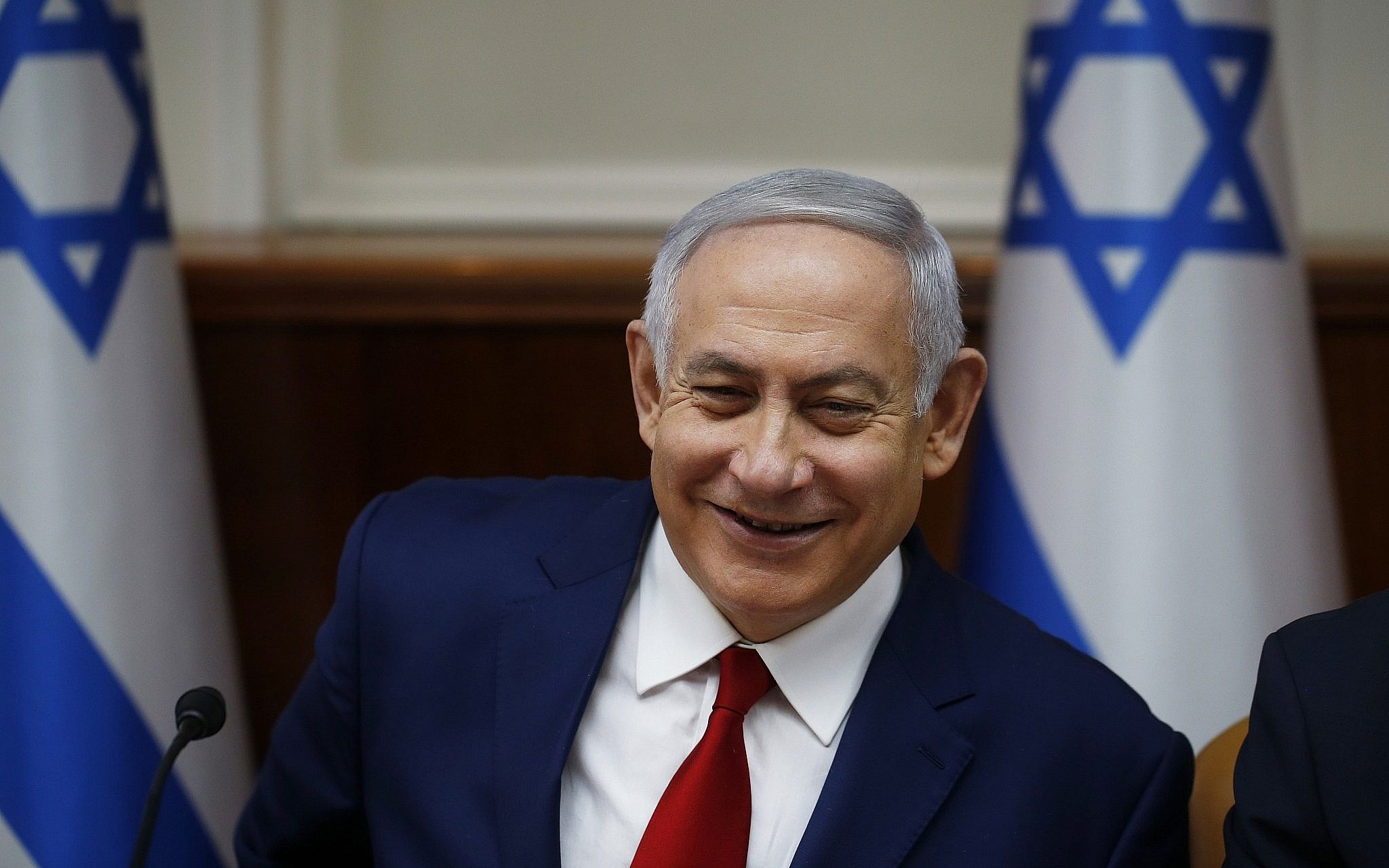
Over the weekend, Prime Minister Netanyahu officially became Israel's longest-serving prime minister since the state was created in 1948.  And he could not have reached this historical milestone under stranger circumstances.

Netanyahu has achieved this notable record while currently governing the country without a mandate.  In spite of having been democratically elected to continue to rule the country in the elections in 2015, the most recent round of elections earlier this year did not produce any winners who could secure a mandate to rule.  A such, Netanyahu has remained in office as a caretaker prime minister until the next round of elections take place in September.  Without the support of the majority as required by our democracy.  And it is in this role as caretaker prime minister that he has overtaken David Ben Gurion's previous record of having ruled over Israel for 13 years and 127 days, in spite of the heavy cloud that hangs over his head.  He also holds the record as the prime minister to have the longest uninterrupted term as prime minister (10 years and 110 days and counting).

There can be no doubt or argument that Netanyahu has devoted much of his life in the service of the State of Israel.  Nor can there be any doubt about some of his significant achievements during this period.  Credit needs to be given for this.  As can be anticipated with any leader and public official, he has had his notable failures too.  And, as much as he would like to achieve the legacy of having been the protector of Israel during his term in office, it seems that he is likely to be remembered for the scandal that currently surrounds him, irrespective of how it ultimately turns out.  This is a real pity for the longest-serving prime minister in Israel's history.

Along with this record, come many unwelcome and undesirable effects of the length of time that Netanyahu has been in office.  "Power tends to corrupt, and absolute power corrupts absolutely. Great men are almost always bad men."  This quotation by Lord Acton from 1887 seems as relevant now as it was then, and can easily be applied to Netanyahu in recent years.  He has behaved in a manner that indicates his sense of invincibility, that has only been strengthened by success that he has enjoyed at the polls.  The people gave him the power, but it seems as though this has been taken for granted as a result of it lasting for too long.  The feeling that he will have enough public support to rule irrespective of how he behaves, has led him to really test this out with behaviour by him and members of his family that is way beyond what could reasonably be tolerated from an elected leader.  It is no coincidence that other democracies, such as the USA, put a limit on how long the elected leader is allowed to be in office for.  I believe that such a limit is healthy and much-needed in Israel.

In addition to the promotion of unlawful behaviour, the lack of limit on time in office promotes another unwelcome consequence.  This is the lack of incentive to groom new young leaders to assume the senior positions.  In Netanyahu's case, he has done everything in his power to ensure that there are no pretenders to the throne who could possibly cause a threat to his continued rule.  He has no interest at all to ensure that a new generation of leaders is prepared to take over from him when he finally leaves office.  There is a huge chasm in his party and in the country at the moment between the current prime minister and those who may take over from him.  This is surely undesirable and unhealthy.

As a result of his extended term in office and the anti feeling that this has generated against Netanyahu, the upcoming election will ignore the main issues of the day that face Israel.  Instead of focusing on security, economy, education or health care, the election will be all about how to keep Netanyahu in office or, more likely, how to remove him.  The country is currently divided into three camps; those who support Netanyahu at any price, those who would vote for Mickey Mouse if he was a candidate only to remove Netanyahu, and those who feel forced to vote for Netanyahu simply because there is no alternative credible candidate.  This is surely not what our democracy is about.

Now that the record has been achieved and past, and Prime Minister Netanyahu has become Israel's longest- ruling prime minister, the time has come to change the laws to prevent anybody else from surpassing this record.  Democracy is not only about holding elections, it is also about ensuring that the best quality candidates are encouraged to come forward and have an equal chance of being elected on merit.  Our democracy is sorely missing this right now.

Saturday, 13 April 2019

Crash But Not Burn

It felt a little like déjà vu on Thursday night.  My mind was transported back to February 2003 when the whole of Israel waited with baited breath as the Space Shuttle Columbia re-entered the earth's atmosphere with the very first ever Israeli astronaut Ilan Ramon on board.  Despite feeling immense pride at the amazing achievements made by a tiny country and its first astronaut, the day was not to end well.  The space shuttle burned up during its re-entry to the atmosphere killing all on board in the process.  Ilan Ramon's memory remains a folk legend in Israel.  And so, too, there was disaster last night as Beresheet, Israel's first ever lunar craft, made its final approach to the Sea of Serenity.  Unfortunately another failure along Israel's route to becoming a superstar country in the area of space travel and exploration.  The quest to become only the world's fourth country to safely land a craft on the moon was not achieved yesterday by the Israeli lunar lander.

In spite of another setback for Israel in the field of space exploration, there were so many positive things that came out of Beresheet's trip to the moon that it is really difficult to see it as a failure at all.  Coming at the end of a week that also saw a general election that proved to be very divisive in many respects, it was heart-warming to see how the country and the Jewish world united in support of Beresheet.  Willing it to safely land on the surface of the moon.  Willing Israel to take up an important place as one of the handful of nations to achieve this.  This unified support was in such contrast to the previous few days over the period of the election, and would have seemed impossible only two or three days earlier.  This extended not only to those in Israel, but to Jews around the world.  We could feel a real sense of support from Jews around the world during the time of this project, something that is not taken for granted at all.

The fact that Israel became only the seventh nation on earth to send a spacecraft into orbit around the moon, is a huge achievement in itself.  And this was the very first project not sponsored by a national government, making the achievement quite unique.  This is a great response to those who use every opportunity to criticise Israel and to those who wish to destroy her.  This is the way to answer those who accuse Israel of being an apartheid state, and to demonstrate to BDS and its supporters that there is tremendous depth to Israeli ingenuity and huge desire to develop, to build and to make a real difference in science, technology and other fields.  This is the way to show that the Israel that is seen on BBC and CNN and that is castigated at the UNHRC, is not the real face of Israel.  Beresheet is a much truer face and a fairer reflection of what Israel really stands for and what she is truly about.  This shows Israel to be a nation that builds rather than destroying, and this stands in stark contrast to the lack of any positive achievements by many of Israel's enemies.

The attention that this project has drawn to the field of space travel and space exploration in Israel is almost on the scale of the attention drawn to it by Ilan Ramon and his exploits.  Surely, the interest of the next generation is almost assured in the process.  In spite of the slip-up at the final hurdle, young Israelis have been excited by this story sufficiently to ensure that they will be seeking ways of succeeding where Beresheet failed.  In the same way that we did not hear the last of Ilan Ramon when Columbia disintegrated and  he went on to become a household name and a legend, I am sure that we have not heard the end of an Israeli lunar landing.  It seems not to be coincidental that the name chosen for the spacecraft was Beresheet, the first word in the Torah with the meaning of "in the beginning".  Just as the name signifies, this seems to be just the beginning of great things to come.

Huge credit needs to go to the SpaceIL team, to sponsor and president Morris Kahn and to all those involved in the project.  They gave Israel and Israelis a dream and something around which to unite and feel proud.  And they gave thousands of Israeli children the little flame to ignite their interest and their desire and determination to ultimately succeed in the quest to have Israel successfully land on the moon.  This is a huge achievement and a very positive island in a huge sea of negativity that often surrounds Israel.

The Israeli flag and the Torah are on the moon.  They landed there with a crash rather than in the elegant way that we would have preferred.  But they are there to stay.  They may have crashed, but they did not burn.  A marker has been established, and this is certainly not the last that we will hear of Israeli ventures in space.  It is just the beginning.

Monday, 14 November 2016

Does Israel Really Care That Trump Was Elected?

The US presidential election is thankfully finally over.  The American people have spoken, and Donald Trump will be the next US president.  Now it is time for the Democrats in the US to accept the result and the way in which US democracy works, and to get on with living the next four years as positively as possible.

Many around the world have taken an interest in the election.  Some people have been involved in this almost to the extent that they are involved in their own local elections.  Such is the extent of the global influence exerted by the US and its leader.  Israel has been no exception, with media continually carrying the latest US election stories and Israelis following the stories very closely.  In Israel's case, it is understandable that individual Israelis have an interest in the outcome of the election.  The US is Israel's most important international ally, which is helpful for a country that continues to fight an international battle against those who call for her destruction.  There are many Israelis who believe that the views of the US president could be a great influence on  the safety and the security of the State of Israel.  But how much of a difference does it really make to Israel as to who is sitting in the Oval Office?  Is it possible that Trump could be so much better for Israel's interests than Hillary would have been?  Would Hillary really have been such a disaster for Israel's interests if she had been elected, as many Israelis believe?

Because it is true that Republican presidents have historically been more understanding of Israel's security challenges over the years and have been more supportive of Israel's position, many Israelis assume that a Republican president will automatically be better for Israel than a president representing the Democrat party.  There is certainly some justification to that point of view.  But I am not convinced that one president can really be so much better for the interests of the State of Israel than another.  While I feel that Trump may be a more understanding president for Israel, I am tempering my expectations about how the extent to which he will really be able to help Israel's cause.  In the same way, I am not convinced that Hillary would have been so terrible for Israel, in the way that some of her detractors like to present.

There is no doubt that Donald Trump made some remarks during his election campaign that were pleasing to the ears of many Israelis.  His desire to move the US embassy to Jerusalem would finally bring some international recognition of Israel's rights to Jerusalem as her capital.  His desire to build a wall along the US border with Mexico shows some understanding of Israel's construction of a safety wall in some parts of the country to reduce terrorist attacks.  His comments about keeping tighter controls over Iran have come in contrast to US policy pursued to date, and stand out in criticism of Iran's antagonistic position towards Israel.  But these, and other positive comments, were all simply electioneering rhetoric.  I am sure that Trump understood that many Jews in the US were Hillary supporters, and he wanted to find a way to convince at least some of them to vote for him.  US policy on Israel is a sure-fire way to get US Jews to think twice about who they wish to support in the election, and it is quite conceivable that Trump was using this lever to try to win support.  It is not obvious that any of these desires will come to fruition during his term as president, despite the best will in the world.  Making small things happen takes a huge effort, even if you are president of the US.  There is a constant battle against interest groups and bureaucracy, and President Trump will have his work cut out to make things happen.  We can expect that he will give up on pushing through legislation that he has no particular interest to pursue, especially if the headwinds are strong.  I suspect that the move of the US embassy from Tel Aviv to Jerusalem falls into this category.

The Obama presidency is regarded by many Israelis to have been one of the toughest for Israel.  President Obama and Prime Minister Netanyahu did not get along on a personal level, and this relationship characterised the period during which Obama was in office.  The agreement with Iran, which worked against Israel's national interest, is surely a result of his personal lobbying.  Despite this, many positive things were achieved for Israel during Obama's presidency.  The only veto cast by the US at the UN Security Council during Obama's presidency was on a resolution condemning Israel.  The US opposed attempts by the Palestinian Authority to gain membership of international organisations, even during the Obama presidency.  The US supplied Israel with sorely-needed weapons during Operation Protective Edge, and the defence loan guarantee agreement, providing millions of dollars of military aid to Israel, was renewed.  Despite Obama and his criticisms of Israel, Israel somehow succeeded in doing all that was required to protect her national security and to enjoy eight years of growth and relative prosperity.

This all indicates that the presidency, and the relationship between the two countries, is larger than one individual.  It all about national interests and priorities, and these do not change substantially when a new president takes office.  Israel will continue to be the only democracy in the Middle East and, therefore, of major importance to the US's national interests in a highly volatile part of the world.  And the US will continue to be a source of huge support to Israel's economic and defence needs.  Sometimes the relationship will be slightly closer, and at other times less so.  But it will always be important, at least for the foreseeable future.  This is in spite of anybody who may be resident in the White House.  What Israel really cares about is that the US continues to occupy its position of dominance in the international community.

I am sure that President Trump and Prime Minister Netanyahu will have a closer relationship than the one that existed between Obama and Netanyahu.  This will be good news.  I am sure that Israel will find an ear that is prepared to listen when talking to the Trump administration, so that is also good news.  I am equally sure that Trump will not have a free hand to carry out all of his election promises, so expectations should be tempered.  Overall, indications are good, but we should be cautious to judge things only by results.  Predicting how things will be ahead of time is dangerous. 

If the Obama presidency was bad for Israel, and Israel survived it relatively unscathed, it is fair to assume that Israel can survive almost any president and situation.  I think that Hillary would probably have been better than Obama for Israel, and it may be the case that Trump will be better than both of them.  But Israel will survive and prosper irrespective of who rules the Oval Office.  Israel is simply too important of an ally to the US for any US president to neglect the US relationship with Israel.

It is my hope that Trump will live up to the expectations of those who believe that he will do well for the US and for Israel.  And I hope that all his detractors will be pleasantly surprised as time goes by.  Mainly, I hope that he will maintain the US's position on the global stage.  We will only really be able to judge this in four years time.

Friday, 29 May 2015

Starting on the Wrong Foot

The entire process that led to the forming of Israel's 34th government in 68 years of independence was filled with drama and unexpected events.

Opinion polls in the weeks leading up to the election predicted that the two largest parties, the Likud and the Zionist Union (formed out of a pact between the Labour and Hatnua parties), would be fighting each other off to form the new government.  The feeling was that one or two seats would separate the parties.  Even the election's exit polls did not predict the extent to which voters ultimately favoured the Likud over Zionist Union.  When the election result was announced showing that the Likud won 6 seats more than the Zionist Union, it took everybody in the country by surprise.  Even the members of the Likud were shocked at the size of the victory, especially in view of the earlier predictions.

The pendulum of expectation swung in the opposite direction.  All of a sudden, there was the expectation that Prime Minister Netanyahu would form a broad-based, strong, right-wing coalition government in double quick time.  As it turned out, the formation of the government took way longer than expected, is the narrowest possible government and is not nearly as strong as people thought and hoped it would be.   With these fluctations came swings in the public's expectation about how long this government can reasonably survive, and whether it has the ability to govern and make the changes that are so needed in Israeli society.

If the lead-up to the new government contained its fair share of surprises, the process of forming the government has also been less than inspiring.  The prime minister has been forced to compromise on many fundamental ideas that his electorate stand opposed to, in the interests of attracting coalition partners into the government.  For example, he has been forced to go back on legislation, that was put in place during the previous government, to force ultra-Orthodox yeshivah boys to undertake military or national service like all others of their age.  He has also been forced to redirect huge sums of money to the ultra-Orthodox sector, at a time when the Israeli government has implemented large budget cuts as part of an austerity plan.  Many Likud voters are horrified at these and other concessions.

One of the persistent rumours that refuses to go away concerns the reported approach that Prime Minister Netanyahu made to Labour leader Isaac Herzog to join the coalition.  The prime minister is reported to have approached Herzog on condition that he agrees to abandon his pact with Tzipi Livni, and bring only the Labour faction into the new government while leaving Livni and her Hatnua members out of the coalition.  Herzog refused, thereby turning down the opportunity to be part of a national unity government, and provide Israel with a much more stable coalition.  Has he spited the people of Israel by preferring to see Prime Minister Netanyahu fail in his endeavours?  There are many who believe that he has chosen the egotistical path, rather than setting his ego aside in the interests of serving the Israeli electorate.

The make-up of the new cabinet is also not a huge source of inspiration.  For starters, there are a total of 21 ministers in the new government, surpassing the 18 ministers that were recently legislated as being the maximum allowed in any government.  Netanyahu was forced to pass an amendment law through the Knesset to allow him to appoint 21 ministers to have sufficient jobs to dish out to all coalition partners.  The important job of foreign minister has been left vacant and has been assumed by the prime minister.  He has also retained the communications ministry, ministry of health and ministry of regional cooperation for himself.  It seems as though Netanyahu may be reserving these in case he is able to convince Lieberman or others to join the coalition in the future.

Aryeh Deri, head of Shas, is the new economics minister.  He has recently served a jail sentence and now come out of an exclusion period, during which he could not serve in a public position, as a result of having been found guilty of taking bribes while a government minister.  Yoav Galant is the minister of construction.  This is highly controversial seeing as Galant was prevented from taking up his appointment as the IDF Chief of General Staff due to irregularities found in the construction of his personal residence on public property.  Miri Regev is the new minster for culture and sport, despite having made it quite clear that she really wanted to have the welfare portfolio.  Habayit Hayehudi's Ayelet Shaked is probably the most surprising and high profile appointment to the new government, having been appointed as the minister of justice.  In this position, she has a huge influence over the appointment of judges to the supreme court, as well as many other aspects of Israel's judicial policy and justice system.  She has also secured herself a seat in the security cabinet, the narrow inner cabinet that is responsible for formulating and implementing Israel's security, defense and foreign policy on a daily basis.  At 39 years-old, she is considered an extremely young appointment to a critical position, despite clearly being very capable.  It is reported that Likud old-timer Benny Begin only knew of his appointment to the cabinet, as minister without portfolio, at the moment that it was announced in the Knesset.

The Knesset session to present the new government was held on Thursday 14 May.  The session epitomised a circus more than a meeting of Israel's legislature.  At first, Arab members of Knesset created an intentional and sustained disruption during the prime minister's address, that resulted in  a number of them being evicted from the chamber.  A few other Arab members decided to leave of their own accord in sympathy, although they did return during the address by the leader of the opposition.  Miri Regev was also issued a warning for heckling and disruptive behaviour, although managed to survive without being ejected.  Leader of the opposition, Isaac Herzog, delivered a stinging rebuke and criticism of the prime minister and his new government.  He was heckled by members from the religious parties, who were also issued with warnings.  While the job of the official opposition (and its leader) is to ensure that the government is held to account, there are times when it is appropriate for the opposition to support the government and to show some unity in helping with its efforts.  There are many who feel that this occasion was the perfect opportunity to show some unity and support.

The inconspicuous start to the new government continued further with a reshuffle coming less than 10 days into the life of the new government.  Likud number 2, Gilad Erdan, decided that he would be better off working within the new government rather than from the back benches.  While his disagreement with Prime Minister Netanyahu has not been resolved, Erdan finally agreed to accept the ministries of public security, strategic affairs and public diplomacy.  Despite him trying to put a spin on why he changed his mind to justify his actions, it is clear to all that this is a big U-turn on Erdan's party.  Netanyahu was happy to reshuffle his new government in order to accommodate Erdan.  Benny Begin, who was asked to resign his position as minister without portfolio to accommodate Erdan joining the cabinet, was not happy to comply with the request.

Despite the problematic manner in which the government has finally come into office, it does not detract from the fact that new government has a lot of important work to do.  Israel is under much pressure on the international diplomatic front to move forward to a peace agreeement with the Palestinians.  It also has to maintain firm security against those who are determined to destroy her and her people while also addressing the social and welfare needs for the weakest members of society in a tough economic climate.  All of this needs to achieved in a climate of lower levels of government spending to manage the economy responsibly.  Israel needs a firm, stable and decisive government that can make the difficult decisions that confront it.  Even though the manner in which the new government has started out life does not seem to bode well for the future, we all hope that we will be confounded by the extent to which the government is able to achieve great things.  We wish them much success.

Saturday, 28 March 2015

The People of Israel Have Spoken

The ballots have been counted in Israel's election 2015, and people have recovered from the surprise of a result which has deviated substantially from the opinion polls and exit polls.  I believe that the surprise comes, not from the result itself, but because of the extent to which people's expectations were inaccurately set by the polls in the media.  The people of Israel have spoken, and they have spoken loud and clear.
 
It is possible to draw a number of conclusions from the comprehensive and unexpected manner in which Prime Minister Netanyahu and his Likud party have been returned to power.

1.  Security issues are at the top of the national agenda.
Prime Minister Netanyahu's election platform was based upon security issues, and the nature of the threat that exists against the State of Israel.  Some have called it scare-mongering people to believe that Israel is under an existential threat, in order to convince people to vote for him.  He even appeared in front of the American Congress during the latter stages of the election campaign,  in an attempt to reinforce this point for the Israeli public, the American public and the world at large.  With the strength of anti-Israel feeling evident within the international community, within the United Nations and evident from individuals around the world, it hardly comes as a surprise that the Israeli people believe him when he is says that Israel is under threat.  And when considering the rhetoric coming from countries like Iran and countries along Israel's borders, it is easy to understand why this feeling is so great.  When adding the growing levels of anti-Semitism, much of it dressed up as anti-Israel views, I don't believe that this threat arises from paranoia.  It is true to say that Israel is not on the verge of being wiped out, as was the case a few times in the past.  The Israeli army is certainly strong enough to stand up to any physical threat to our country.  This does not, however, diminish the threat and the desires of Israel's enemies to destroy her.  The majority of the Israeli electorate believe that Israel is under a substantial international threat, and have good reason to believe this.

2.  Peace with the Palestinians is not a priority.
It is noticeable that the issue of peace with the Palestinians played no role in the election campaigns of any of the parties.  The left-wing parties did not seek election on the strength of promises to bring compromises in the interests of reaching peace with the Palestinians, and the right-wing parties did not seek election on the basis that they would not be prepared to enter into peace with the Palestinians.  It would appear as though the Israeli public has understood that peace is unattainable with people who are not prepared to recognise that Israel is a Jewish country.  This is despite the fact that it is a most basic Israeli aspiration to seek a just and equitable peace.  The realisation that the Palestinians are not willing or ready to agree upon the compromises that are necessary to reach a peace, has not been easy to understand.  It is tough to accept that the Palestinian leadership has no intention of entering into a peace agreement at all.  It is unfortunate that the international community continues to try to squeeze a square peg into a round hole, and to insist that now is the time to force the parties to negotiate to reach a peace agreement.  It is even more unfortunate that the international community places the blame on Israel for the lack of progress towards peace.

3.  Tzipi Livni is unelectable.
Isaac Herzog sought out Tzipi Livni to join him at the head of the Zionist Union list.  The combined list was regarded as greater than the sum of its component parts, and this was borne out by the election result.  It seems unlikely that Labour and Hatnua could have secured 24 seats if they had run as separate lists.  When agreeing to form the Zionist Union list, Herzog and Livni also agreed to rotate the position of prime minister between the two of them in the event that their list should win the election.  There were many in the Labour Party and across the country who wondered why Herzog had agreed to conceed such a strong position to Livni, when her power to bring support to the Zionist Union was questionable.  Only one day before the election, Tzipi Livni announced that she was giving up on her right to be prime minister in the rotation agreement.  This was widely interpreted as the Zionist Union acknowledging that more people would be inclined to vote for them if they knew that Livni would not be prime minister.  The act was also seen as an immense act of weakness on the part of the tough lady.  It was also the final word in confirming that Tzipi Livni is unelectable as prime minister.  She lost credibility while she migrated from the Likud, across Kadima and Hatnua to ultimately team up with Labour at the opposite end of the political spectrum.  She was unable to form a government in 2009, despite her Kadima party won the highest number of seats in the general election.  This act of her giving up her right to be prime minister is the final nail in her prime ministerial ambitions.  It also opens a broad debate about whether Isaac Herzog is electable as prime minster.

4.  Toughness by Israel's leaders on the international stage is desirable and respected.
Prime Minister Netanyahu has always been a master at presenting Israel's case on the international stage, and showing toughness and being unashamed and uncompromising in doing so.  He is the new type of Jew that Jabotinsky could only dream of during the years of the pogroms in Eastern Europe.  Despite the fact that a number of generations have come and gone since Jabotinsky's time when he dreamed of this Jew, it seems as though Israelis continue to like, respect and desire this quality that Netanyahu possesses.  At a time when attacks on Israel in the international community  are at an unprecedented high and when anti-Semitism around the world is rising to levels that are unknown since the Shoah, there is something appealing to Israeli eyes and ears in a leader who is prepared to confront and beat these attacks by facing them head-on.  The sight of him addressing the US Congress just before the election will have confirmed Netanyahu's ability and willingness to do this for any Israeli who doubted it.

5.  Bias in the media counts for nothing.
There can be no doubt that the Israeli media waged a campaign against Prime Minister Netanyahu in order to remove him from the prime minister's residence.  He tried calling out the Yediot Haachronot and its online version Ynet during the course of the election campaign, by accusing the editor Noni Moses of publishing untruths in an attempt to discredit him.  Israel's media, and its lack of independence and editorial integrity, has come under scrutiny in recent months.  It is not only the anti-Netanyahu camp that stands accused, but equally Sheldon Adelson's Yisrael Hayom, and its unashamed support for Netanyahu.  The Israeli people have shown that, despite the vicious and overwhelming anti-Netanyahu sentiments published in many Israel printed and online newspapers, they have been able to make up their minds independently about who they wish to lead the country over the next 4 years.  Even the opinion polls, that did not even get close to the election result at any point, could not influence the electorate.  Since the election result has been made known, the anti-Netanyahu lobby has not given up and continues to castigate Israelis for making the wrong choice in the election.  They make an even greater laughing stock of themselves by doing this.

6.  Even Obama cannot unseat Netanyahu.
US President Barack Obama refused to meet with Prime Minister Netanyahu during his recent trip to address the US Congress in Washington.  The reason given for him not meeting with Netanyahu was that he did not wish to influence Israel's election result in any way.  When looking at Obama's actions in the period leading up to the election, and particularly his response to the election result, it seems that nothing could be further from the truth.  There is no secret that Obama has no time or patience for Prime Minister Netanyahu.  There is no secret that Obama would have been much happier if somebody else, anybody, would have been elected as the prime minister in the election.  There were strong rumours that Obama was somehow behind funding the V15 group that rose up in Israel prior to the election in attempt to unseat Netanyahu almost at any price.  The slogan of this group, and also much of the rhetoric behind the Zionist Union's election campaign, was anti-Netanyahu.  They were encouraging people to vote against Netanyahu, as opposed to enticing people to make a positive choice and to vote for something that they do want.  My interpretation of Obama's decision not to meet Netanyahu prior to the election, was a real attempt to influence people to vote against him, and not to stay neutral as he was trying to get us to believe.  Perhaps he was concerned that a meeting may have helped to convince people to vote for a man that he would like to see consigned to the dustbin of history.  The Israeli people have shown that even the most powerful politician in the world cannot influence their choice.  This is not a happy moment for Obama, and his concerted campaign against Netanyahu and Israel since the election has demonstrated that he is a very sore loser.   It seems inconceivable that US foreign policy in the Middle East can suddenly change as a result of an election result and a few statements from Netanyahu.  Obama's message that "this is not personal" has shown to be completely false.  Ultimately, the vote of the Israeli people is stronger, even than Obama.

Israelis are notoriously independent in their views and actions, and have a reputation for being steadfast and stubborn.  This has come through very loudly in the 2015 election.  And all of this with a turnout of voters in excess of 70%, the highest number since 1999.  Even the number of Arab voters was more than 60%, the highest number in history.  Despite numerous attempts to influence against the re-election of Prime Minister Netanyahu, he has returned to power with a stronger mandate than before.  He is on the verge of becoming Israel's longest-serving prime minister in history.  Israel is held up as the only real democracy in the Middle East, and the democratic process has spoken.  The time has come for those who preferred a different result, and who would have liked to see Herzog as prime minster, to rally around and accept the result that Israeli democracy has selected.  Continuing to fight against it does not serve a purpose.  This is not to say that those who justifiably oppose Netanyahu's policies should be silent and not express their views.  There is, however, a democratic way of doing this.  This does not include intervention from the US president, or unjustified attacks from the media.  Democracy is alive and well in Israel, and the people have spoken.

Tuesday, 17 March 2015

The Arabs Hold the Key to Israel's Next Government

The polls are open, and Israelis are flocking to the polling stations to elect the next Knesset and government.  While the opinion polls are all suggesting that the left-wing "Zionist Union" grouping that comprises the Labour and Hatnua parties in a joint list will receiving the most votes, the country is on tenterhooks as to who will form the next government and who the next prime minister of Israel will be.  The reason for the uncertainty is down to the complexity of Israeli politics, and the number of parties that sit in the Knesset.  No single party has ever achieved an outright majority in an election in the history of Israel.  No single party has even come close to achieving this.  As a result, Israeli governments have always been a conglomerate of political rivals that somehow reach a compromise to get into the ruling coalition.  And this is exactly how the next government will also be made up.  Not an ideal recipe for political stability.

The position of the Arab citizens of Israel has always represented a controversial point in our democracy.  They represent a substantial minority (1.7 million out of a total population of 8.3 million, or 20% of the population), despite the fact that their representation in the Knesset has been approximately half of the proportion that they represent in society.  The Israeli Arabs also represent the sum total of all Arabs with full democratic rights in the Middle East, a fact that is often overlooked.  Despite this and the relatively good life that Israeli Arabs enjoy, they have struggled to fully find and assert their identity in Israel.  Much of this emanates from the criticism that they have been forced to endure from neighbouring Arab countries, which have accused them of colluding with the Jews by remaining in Israel.  This has been reflected in their reluctance to vote, and greater reluctance to support Arabs sitting in the Jewish parliament.  It has also called into doubt their loyalty towards Israel, the country that provides them with their livelihood and existence, particularly when members of the Arab community (even those sitting in the Knesset) have publicly shown support for terrorists and for those who seek to destroy the State of Israel.  Some of this behaviour can be regarded as treasonous.

Many Jews have questioned the logic of extending full democratic rights to the Arabs living in Israel.  The decision for this was made many years ago, however, when first Prime Minister David Ben Gurion called upon the Arabs living in Israel to stay and share in the new-found democracy.  With population growth in the Arab sector greater than that in the Jewish sector, there is a fear that the Arabs will outnumber the Jews in the future.  This essentially spells the end of a Jewish homeland where Jews have the right to self-determination.  While it is generally expected that this will happen when the Arab population outnumbers the Jewish the population, I suggest that we have already reached the moment when the Arabs essentially hold the key to determine who will govern the Jewish homeland, and who will be its prime minister.

Out of the Knesset of 120 seats, the coalition requires 61 seats to govern and more in order to establish a more stable government.  When totting up the seats that the right-wing group (Likud, Habayit Hayehudi, Yisrael Beiteinu and Kulanu) is likely to achieve (according to the most recent opinion polls), indications are that they will have approximately 47 seats.  A similar count  for the left-wing group (Zionist Union, Meretz and Yesh Atid) gives approximately 42 seats.  The religious parties together are likely to garner 18 seats, which they would probably contribute to any bloc that will give in to their specific demands to service the religious electorate.  Even if the left-wing group succeeds in recruiting the religious parties, they still do not have a majority and certainly not a majority that can govern the country.  The missing element is the Joint Arab List, that will command approximately 13 seats in the next Knesset.  If Labour leader Isaac Herzog is prepared to bring an Arab party into the left-wing ruling coalition for the first time in the history of the State of Israel, he could be the next prime minister.  If not, he will almost certainly not be.

The decision to include the Arab list into the coalition is not a simple one.  Israel has had Arab members of government, and even Arab ministers before.  Arabs hold senior civic positions in the High Court of Justice, and in many other governmental and municipal bodies.  All of this has been accepted by the Jewish public.  With the background of the ongoing controversy surrounding the true loyalty of Arab citizens of Israel to the state, however, and especially with attention having been drawn to this by Arab member of Knesset Hanin Zouabi who stands accused of treachery and treason, it is my sense that having an Arab party in  the governing coalition may be a step too far for the Israeli public.  The problem for Herzog is that he is damned if he does, and is damned if he doesn't.  He is likely not to lead the next government if he does not include the Arab party in his coalition, and he is likely to have a real battle against public feeling and emotion if he does.  This is not an easy situation for a leader who wishes to be the next prime minister almost at any price.

Some noises coming from the Arab Joint List may help to resolve this situation for Herzog without him needing to decide.  The leader of the Arab party has indicated that they would be unwilling to sit in a coalition with the Zionist Union.  The reason is that the Zionist Union is a Zionist party, something that the Joint Arab List opposes in principle.  We have previously experienced many examples of parties not being prepared to join coalitions on the day before the election, and then joining that same coalition on the day after the election.  So I would not necessarily accept all of the comments made by the Joint Arab List at face value.

It seems that even those who predicted that the Arabs would hold influence over the Jews in their own homeland, could not have anticipated that the influence would come in this way and at this time.  This situation arises partially from the law change to the minimum threshold required to get into the Knesset which forced the smaller Arab parties to unite into one list, and partially from the style of Israeli politics that gives undue power to the smaller parties.  And while I predict that the Arab party will not be in the government and that Herzog will not be prime minister, it does give immense food for thought about how this will play out in future elections.  These are probably nearer than we would like them to be.

Sunday, 15 March 2015

Netanyahu's True Colours

An interesting document has been published by Israel's Yediot Achronot and its on line publication, Ynet.  It is claimed that the document was prepared by officials in Prime Minister Netanyahu's government, something that the prime minister vehemently denies.  The document, which is addressed to Palestinian Authority President Mahmoud Abbas, purports to offer huge concessions on the part of the Israeli government in the search for a peace agreement.  Netanyahu claims that he would never have offered the things that were contained in the document, and accuses the newspaper's editor, the Moses family, of trying to play a dirty political trick to discredit him.  Another journalist, who claims to have investigated the matter of this document, says that the document is genuine but was developed by the US administration rather than by the Israeli government.  Another theory that has been put forward is that Israeli ambassador to the US, Ron Dermer, was involved in putting together the document with Netanyahu's blessing.

Whatever you wish to believe about the source of the document, it does contain some interesting information.  The document is formulated in the style of an offer to the Palestinians, which sets out major concessions on the part of the Israeli government.  The document was developed in August 2013 as part of the ill-fated peace talks under the sponsorship and auspices of US Secretary of State, John Kerry.  The concessions incorporated in the document include a proposal for Israel to revert back to the 1967 land borders with certain land swaps, a deal on allowing a Palestinian state a part of Jerusalem as its capital, and even a concession to allow the return of some Palestinian refugees.  One version of the story suggests that they were presented by Prime Minister Netanyahu's personal representative Yitzchak Molcho to Hussein Agha, affiliate of Palestinian Authority President Mahmoud Abbas, soon after the talks were initiated in July 2013.  If this is to be believed, these concessions represent possible compromise solutions to the main sticking points that the Palestinians continue to present as being the key reasons for the ongoing lack of agreement between themselves and Israel.

It is not clear whether or not the document was presented to the Palestinians, but it seems inconceivable that they were not at least aware of it.  It is interesting that there was never public comment made on their part about it.  Some would hold this up as evidence of the fact that Palestinian Authority President Mahmoud Abbas is not negotiating in good faith.  If he had been negotiating in good faith, and had received a proposal that provided a reasonable response to the main outstanding sticking points or was at least aware of it, it seems likely that he would have referred to it.  So is this an indication of bad faith?  It feels almost like the revelations that came out of Camp David in 2000 when then Palestinian Authority President Yasser Arafat is reported to have turned down major concessions offered by Ehud Barak, specifically on the matter of a solution to share Jerusalem.  There was shock that Barak had made such a far-reaching offer, and even greater shock that it was rejected.  This "outed" Yasser Arafat as negotiating in bad faith, and having no intention of reaching a peace agreement with Israel.  Is this also true of Mahmoud Abbas?

Even though there is a strong argument that the reason behind Abbas not being prepared to refer publicly to the offer is because he is negotiating in bad faith, I am not sure that this is the whole story.  I contend that he would have reason to jump on such a proposal even if he was not negotiating in good faith.  After all, gaining access to such substantial concessions on Israel's part, even if he never had any intention to stand by undertakings given in return, would represent greater possession for the Palestinians.  It could be argued that this would be major progress for them if their unholy quest is to destroy the Jews and take over Israel for themselves.  So why not try to promote it publicly?

It seems to me that Abbas is determined to remain a "struggle leader".  Unlike Nelson Mandela who led the struggle in order to transform society so that he could be a leader of a legitimate majority-rule democracy, Abbas does not see him or his people in this legitimate role.  Instead, they prefer to be in a state of "struggle" on an ongoing basis.  It seems as though the advantage of the international sympathy and support that the Palestinians are enjoying, could all be lost in the event that they become a full-fledged member of the international community.  The only explanation that I can offer for Abbas not jumping on the concessions that were set out in the letter, is because he wishes to remain the leader of a struggle.  The Palestinian leadership has demonstrated on numerous occasions that it is unable to fulfil the role of legitimate leaders who have the objective of guiding a country to fill its place among the nations, and be prepared to abide by all rights and obligations that come with that.  Perhaps Abbas fears that accepting the concessions would result in the Americans forcing him and his Palestinian Authority to become responsible leaders as required in the international arena.  The way in which the Palestinian leadership has dealt with refugees over the years, the way in which aid from the international community has been skimmed off for their own private consumption and the ongoing sponsorship of terror and wars against Israel represent only some of the evidence of their unwillingness to become a legitimate leadership, government and country.   It seems more convenient to be regarded as the downtrodden underdog of the world, with all the international support and sympathy that is associated with that.

There can be no doubt that the Palestinians are playing an extremely shrewd political game in achieving their objectives.  I have no doubt that the objectives of the leadership are not the same as their published objectives as laid down before the international community.  The so-called "occupation" that Israel is constantly accused of is without foundation, and their stated quest to set up a Palestinian state could have been achieved ages ago with a little political will.  It is a well documented fact that the State of Israel was established in 1948 with far less than has been offered to the Palestinians for their state.

It is also interesting for me to try to understand why Netanyahu has been so sensitive about the attribution of this document to him.  He was quick to say that he would never offer parts of Jerusalem as a capital of a Palestinian state, or agree to return to the 1967 borders.  This is all despite the fact that he has publicly accepted the establishment of a Palestinian state.  Was he concerned of a right-wing backlash against him in the days leading up to the election?  It may perversely serve to assist him in his election campaign, to show up the Palestinian leadership for what they are by acknowledging some association with the document.

Middle East politics is certainly a strange beast.  The only thing that one can be sure of, is that all is never what it seems.

Monday, 2 March 2015

A Storm in a Teacup, or Diplomatic Snub?

Prime Minister Benjamin Netanyahu is on his way to Washington this week to present his case on Iran to a joint session of Congress on 3 March.  This is despite huge pressure that was put on him, both in the USA and in Israel not to go ahead, or at least to postpone his trip to Capitol Hill.  Having accepted House of Representatives Speaker John Boehner's invitation to make the address, it always seemed unlikely that Netanyahu would change his mind.  Many Israelis seem undecided as to whether this is a good or bad thing, and whether this is likely to do more harm than good to already troubled relations between the US and Israel.

The prime minister was certainly justified in accepting what appeared to be a genuine invitation from a legitimate source.  House Speaker Boehner is within his rights to invite guests to address Congress, and Boehner's office has issued a statement confirming that the invitation was already well on its way to Netanyahu before the Israeli election date was set early in December 2014.  The prime minister has used every possible opportunity to make known his (and Israel's) opposition to the agreement currently under negotiation between Iran and the P5+1 countries, and it would have come as no surprise to anybody that Bibi was quick to jump at this opportunity as well.  The timing of the invitation was particularly attractive, to address the US lawmakers just prior to the date that was set for the finalisation of the agreement.  Where the discussions with Iran are concerned, Boehner and Netanyahu are on the same side of the fence in opposing US President Barack Obama's seemingly single-minded intention to come to an agreement with Iran almost at any price.  If Boehner wished to find a like-minded international leader to address the US Congress on this matter, Netanyahu was the most obvious person to turn to.  Like Netanyahu, Boehner fears that giving Iran the green light to enrich Uranium with an official international stamp of approval, even at low levels of enrichment, would destabilise the balance of power in the Middle East and the world.  Obama's desire to establish a legacy before leaving the White House next year, could leave a most dangerous problem for Israel and the western world following his departure.

It is easy to be suspicious about Obama's reaction to Netanyahu's visit to Washington, and his his true intentions behind the reaction.  We know that Obama has little time or respect for Netanyahu, and this visit to Washington, coming as it does at the invitation of Obama's arch-rival in the Congress, is a perfect opportunity for Obama to make his negative feelings for Bibi more public.  The White House has accused Netanyahu of not following protocol by not advising them of his visit to Washington.  The prime minister's office says that the same protocol was followed this time as for previous visits.  John Boehner has admitted not following protocol on his part, and he purposefully did not advise the White House of Netanyahu's upcoming visit.  He says that the reason for this, was the fear that the White House would make every effort to undermine the visit in an attempt to prevent the visit from going ahead.  This is precisely what we saw happening when details of the visit were made known in the press.  The administration moved immediately to say that no meetings would be accommodated between the prime minister and administration officials.  Obama went further by hiding behind the fact that the administration has a policy of not meeting with foreign visitors in the weeks leading up to a general election.  The Obama administration also announced that they would no longer provide updates to Israeli government officials about the progress of the talks with Iran.  This laid the groundwork for Secretary of State John Kerry to accuse  Netanyahu of having no knowledge of what is happening in the talks with Iran, and therfore having no right to make comments about the terms of the agreement.

The reactions all reek of a combination of anti-Netanyahu behaviour, and US party politics.  The Obama-led Democrats seem hell-bent on reaching an agreement with Iran, while the Republicans are doing all that they can to scupper the deal from proceeding.  Throwing Netanyahu into the centre of this battle is an ideal plan, particularly for Obama's Democrats.

For Netanyahu, even if the visit to Washington was not originally designed as an attempt to strengthen his position just before the election, it still presents an ideal opportunity to do so.  Netanyahu's election platform is based almost entirely upon foreign relations and security issues.  As opposed to candidates like Yair Lapid and others who focus more on  the economy and internal matters, Netanyahu's plan of attack plays to his personal strength of international diplomacy.  There is nobody in Israeli politics who can represent Israel on the international stage as Netanyahu can, and those voters who have forgotten or overlooked this are about to be reminded in this week's speech to Congress.  Israeli TV has decided that they will broadcast Netanyahu's speech to Congress live, except for a short delay to allow it to remove any election-specific comments that they be included in the speech.

The local and international press has come out in strong criticism of Netanyahu for cynically using an opportunity to promote himself before the election.  There seems equally to be a case against Obama for using the opportunity to try to put Netanyahu down to ensure that he is not re-elected, and for using this to promote the deal with Iran. 

The matter that has been lost in the crossfire, is the agreement with Iran.  It is of grave concern that Iran may be granted the right by the international community to have the capability of producing a nuclear bomb, or coming very close to it.  The highly aggressive language that Iran uses in public against Israel, and the acknowledged military threat that Iran presents to Israel, make this possibility a frightening prospect.  Coupled with the increasing anti-Semitism around thw world, much of it tied to vehement anti-Israel attacks, there seems to be a strong case in favour of Netanyahu using every opportunity to present Israel's case where he can.  While politicians play little political games in Washington and do all that they can to discredit individuals, the door is left open for Iran to freely pursue its contruction of a threat that could put future generations of Jews and Israelis in grave danger.  This danger is not unique to Jews and Israelis, but ultimately extends to all of the Middle East and the western world.  President Obama seems somehow to have lost sight of this, but perhaps it concerns him less than his own personal battles and legacy.

Prime Minister Netanyahu has his weak points, and has been known to behave to promote his own interests on numerous occasions.  There can be no doubt that he is fighting for his political survival, as the opinion polls show he is struggling to gain any advantage over his political rivals ahead of the upcoming election.  There are, however, some international issues that are above party politics and that don't wait for elections.  The Iran problem is surely one of these.

Tuesday, 27 January 2015

Freedom of Speech?

Disagreements between Jews are not new.  This is largely driven by the fact that many Jews are highly opinionated, and are not shy to share their opinions with all who care to listen.  Major disagreements have even taken place in Torah study over the years, the most famous of which is the disagreement between the Houses of Hillel and Shamai more than 2,000 years ago.  Any good Torah scholar knows how to answer a question when presented with two possible alternative solutions.  The answer is usually "machloket" or "disagreement", indicating that learned scholars have issued strong support for both possible solutions to the question.  In the modern State of Israel, it is common for people to refer to the fact that there are frequently three (or more) views and opinions expressed when two people get together to discuss matters.  While this can frequently indicate a healthy ability to see many different sides to the same issue, there are times when these disagreements can be undesirable and even destructive.

In recent weeks, we have seen disagreements arise amongst Israelis, which are less desirable in their nature.  One example of such a disagreement is the criticism that has been expressed for Prime Minister Netanyahu's recent visit to Paris to join the protest, following the terror attacks by the Muslim extremists.  Some Israelis, including senior politicians, have chosen to criticise every aspect of Netanyahu's visit to Paris, calling it a ploy designed to gain him personal support ahead of the upcoming general election.  He has been castigated for going to Paris at all, given the short notice and the huge cost of mounting the required security operation that travels with the prime minister at all times.  There was much written about the French government not really wanting him to be there, and being forced to ensure that Palestinian Authority President Mahmoud Abbas was also in the front row of the march in order to create political balance.  Some found it distasteful that Netanyahu supposedly pushed his way to the front row of the protest march.  He was accused of forcing his way onto the bus that was used to transport French President François Hollande to the march.  There were others who found his style of waving to the crowds during the march shameful.  Many newspaper columns were taken up explaining why the whole episode brought shame to Netanyahu and to Israel.

Last week, an attack was carried out in southern Syria that killed a number of Hezbollah operatives, and a few Iranian senior military men who were with them.  Although refusing to give any official response to the story, Israel has been accused of carrying out the attack.  This has given rise to all manner of response from Israelis.  Some have accused Netanyahu of using this military strike for election gain.  Others have accused Netanyahu and Israel of being too militaristic and too aggressive, while hiding behind the guise of looking after its security needs.  They argue that Mugniyeh and his compatriots who were killed did not represent a "ticking bomb" (the term used for somebody who is on the verge of carrying out an immediate attack on Israel) and should, therefore, not have been attacked by the IDF.  They further argue that the death of the Iranians (which some unnamed official sources claim was unintended) brings further unwanted tension to the already-tense relationship between Israel and Iran.

The most recent furore created by Netanyahu, is the announcement of a visit to the USA planned for the beginning of March, less than two weeks before the Israeli general election.  He has been invited to address a joint session of Congress, now dominated by the Republicans.  It is expected that Netanyahu will speak out strongly against reaching any deal with Iran, and will warn again of the threat presented by a nuclear Iran.  The White House has moved quickly to issue a statement saying that neither President Obama nor Secretary of State Kerry will meet with Netanyahu during this visit.  While the statement gives the explanation that the president has a policy of not meeting with political leaders so soon before a general election, we all know that there is a great deal of antagonism in the relationship between Obama and Netanyahu.  The fact that Netanyahu is in the USA at the invitation of Obama's rival party will not help the situation.  Israeli politicians and journalists alike have jumped up to accuse Netanyahu of endangering the sensitive relationship that Israel has with the USA by accepting the Republican invitation.  Perhaps they would care to consider the possibility that a Republican may occupy the White House after the upcoming presidential election at the end of 2016?

In a country that values free speech for people who sometimes hold more than one opinion on a subject, there is a valid question as to whether these criticisms cross the boundary where free speech becomes libellous or contrary to the best interests of the country.  While democracy in Israel is of paramount importance, including the right to think and speak your mind, there are times when this democratic right is used in a misdirected and unacceptable way.  People who take advantage of freedom of speech simply to cause damage or to attack individuals should be denied this valuable right.  Our democracy should not tolerate those who abuse their democratic rights.

How should we regard the actions of 43 reserve soldiers from an elite intelligence unit who decided to speak out against the intelligence work conducted by their unit?  Not only did they speak out against this work in the form of a strongly-worded letter to Prime Minister Netanyahu, they also disobeyed orders and the law of the land by refusing undertake their reserve duty.  Is this an exercise of their democratic rights, or did they cross the red line in terms of what is democratically acceptable?  They have all been dismissed from their military positions, probably the outcome that they were hoping for despite the fact that it is regarded as a punishment.  The case does, however, bring into sharp focus the issue of the right to free speech, and where the line should be drawn.  In the case of these soldiers, an existing process is made available for all soldiers to express their views and voice their objections.  The manner used by these soldiers was clearly designed to damage the State of Israel, and could threaten her security.  This cannot be tolerated.

There is clearly a very thin line between being allowed to exercise democratic rights and freedom of speech, as opposed to abusing this right in order to cause harm.  Anybody exercising their freedom to say what they wish, also has the obligation to do this responsibly.  This obligation, it seems, is frequently ignored in the interests of brazenly saying whatever is on the heart.  Democracy can be a dangerous tool when put in the wrong hands, or in the hands of those who do not exercise it responsibly.  Those who overstep the line should be dealt with decisively, particularly those who choose to threaten the security of the state and her citizens.

Ultimately, a democratic country like Israel should be able to withstand abuse of these democratic rights, and should have a process of dealing with the culprits accordingly.  Denying people their democratic rights is not a solution to the problem.   It is also important to provide better education regarding the obligations that flow from a democracy.  It is hoped that such education will bring a balanced assessment of the appropriate moments to say what you are thinking and feeling, and the best moments to keep quiet.  The democracy should never tolerate people who hide behind the right to free speech, with the intention of causing harm.

Sunday, 11 January 2015

Elections - Threat or Opportunity?

Israel is headed towards another general election, a little more than 2 years after the last elections.  The fact that Prime Minister Netanyahu's government was unable to complete even half of its scheduled 4 years in office, is clear indication of the difficulties that continue to plague governing the Jewish state.  It also shows the lack of agreement that exists among the population in dealing with the key issues.  Problems relating to security, to the economy and to the Palestinian issue are top of the agenda, and are also the most divisive issues.  The prime minister was simply unable to keep his disparate coalition functioning as a government, as each party in the coalition pursued its own special interests and agendas.

Most vocal in protesting against the actions and policies of the government have been Finance Minister Yair Lapid and Justice Minister Tzipi Livni.  Prime Minister Netanyahu effectively announced his inability to manage his coalition by firing both ministers from his government, and giving a clear signal that elections would be his only alternative.  Once the election was formally announced, the prime minister acknowledged that he had been forced into the coalition with Livni and Lapid after the last election, and that his coalition was unmanageable almost from the beginning of its term.  This statement surprised many voters, and brought into sharp focus the almost impossible situation that Israeli politics finds itself in.  The issues that form the base of the election platforms are substantial, and some are even life-threatening in the determination of the future safety of the State of Israel.  The opinions on each issue are as diverse as the issues themselves.  While a split of voter opinion is a fairly standard occurrence in many western democracies, in most cases the split seems not to disrupt the effective governing of the country by the chosen government.  While it is well-known that coalition governments are notoriously less stable than governments that are comprised of a single party, this should not necessarily result in a total inability to govern.  For some reason, the combination of issues that Israelis are forced to confront, along with a total split of opinion as to how to deal with them, results in an ungovernable situation.  Not only is this situation enormously frustrating for the average voter, it also creates lack of stability in the government and comes at huge financial cost to the country.  Israel has had 33 governments in its 66-year history

Having resigned ourselves to the fact that an election is now unavoidable, the question is whether this election can be used as an opportunity to somehow improve the situation in which Israel finds herself.  Does this election present a real chance for change, or are we likely to get more of the same?  And is there anything that the new prime minister and new government will be able to do to change the status quo?  Most Israelis are seeking for an election result that can change the situation, particularly the security situation.  Along with the security threat that the country faces, there is huge frustration over the economy and over the issue of Israel's standing in the international community, where Israel is increasingly isolated.

When considering the political parties in the Knesset and the way in which the public views them, it is difficult to see any dramatic changes coming about in the next election.  Prime Minister Netanyahu is seeking a fourth term in office, and is currently looking like the only electable candidate for the office of prime minister.  Labour leader Isaac Herzog is doing all that he can to present himself as a viable alternative, but opinion polls show that he has been unsuccessful so far in reaching the Netanyahu's level despite these efforts.  He has little to show for his term as leader of the opposition during the last Knesset, and voters are sceptical about his ability to achieve anything as prime minister.  He is being roundly criticised for the concessions that he made to attract Tzipi Livni and her Hatnua party into a joint list with Labour, given that opinion polls showed that Livni was running the risk of not gaining even one seat in the next Knesset.  The question is being asked as to what concessions Herzog might make on behalf of the State of Israel if this is how he behaved with Livni?

The only political leader who has really enhanced his reputation and his standing in the last Knesset session was Naftali Bennett, leader of the Bayit Hayehudi (the Jewish Home)  Party.  Bennett succeeded in securing 12 seats in the Knesset in 2013 as a new party, which was a significant achievement.  Since then, he has presented himself as a voice of the people - somebody who is prepared to say out loud the things that many people are thinking but not saying.  He was, however, not really fully tested in the last Knesset session.  As Minister of the Economy, Bennett had the opportunity to make his views known without having a responsibility for which the public held him accountable.  It is expected that he is likely to increase his number of seats in the Knesset at the next election, and will have a position with greater responsibility in the next government that is likely to test him to a much greater extent than was the case until now.  For the upcoming election, Bennett is not presenting himself as a prime ministerial candidate.  It seems that he is setting the scene to be a possible prime minister following the next election, providing he can continue his ascent on the political ladder.

The three Arab parties that sat in the Knesset during the last session find themselves at an interesting crossroad.  In total, the Arab parties secured 11 out of the 120 Knesset seats.  This is despite the fact that Arabs represent around 20% of the Israeli population.  Even more concerning for Arab Israelis is the fact that two of the three Arab parties will not sit in the next Knesset if they don't increase the number of votes that they attract.  While they exceeded the election threshold of 2% that was set for the last election, they are well below the threshold of 3.25% that has been set for the 2015 elections.  This has driven the Arab parties to hold talks about the possibility of combining their lists in order to continue to secure at least the number of seats that they have held until now.  The Arab parties represent different constituencies of voters, each of whom believes in a different way of responding to the split identity that they have.  They wish to find a balance in supporting their rights as Israeli citizens, as well as responding to the Palestinian issue and Palestinian terror against Israel.  The different opinions on these key issues for them are also what is making it difficult for them to combine their lists.

The increase of the election threshold from 2% to 3.25% for the 2015 election is an attempt to somehow reduce the number of parties in the Knesset, and thereby also increase the stability of future governments.  There were a total of 12 parties represented in the last Knesset, and 13 if you split out the combined Likud - Yisrael Beiteinu list.  There were more than 30 parties who contested the elections, showing just how diverse Israeli views are and how many special-interest issues there are to be considered.  While this allows democracy to work in a more idealistic manner, it also creates great instability in the government.  Any reduction in the number of parties that this brings about will not be enough, however, to avoid the need to construct a coalition to rule after the election.  Prime Minister Netanyahu has recommended further amendments to create greater governing stability moving forward, but none of these will be in operation after the next election.  It seems doubtful as to whether greater could be achieved even after implementing the changes.

While the election issues are interesting, and some are critical for Israel's future security, safety and survival, there is no evidence that we will have greater governing stability during the course of the next Knesset, or even thereafter.  Some parties will come and some will go, but the main issues confronting Israel and its system of government seem to be with us to stay for now.  It seems that we will also have to live with the system that contributes to instability in the government, and accept that even the next government is unlikely to last the full distance under these circumstances.  The fact that there are so many special-interest groups and parties contesting the election, and substantial numbers of people to support them seem to point to more of the same in Israeli politics for now.

Israeli politics has never had a dull moment in 66 years, and the upcoming elections will be no exception.  At this juncture, there are many citizens of Israel seeking a little boredom in politics rather than more excitement.  If boredom spells stability, both in the government and in the security of the state, this would be preferred by many of the voters.  It seems, however, that more excitement lies ahead.
Sunday, 8 June 2014

Is the Presidency Worth It?

The vote to elect the 10th president of the State of Israel is due to take place in a few days' time.  President Shimon Peres is nearing the end of his seven-year term, and the Basic Law that governs the term and responsibilities of the president dictates that there is no possibility to re-elect the president once he has completed his term.  For Peres, who is now 91 years old, perhaps this may finally force him into retirement.  It is easy to believe that Peres would seek re-election for a further seven-year term, if the law allowed for it, even at his advanced age.

The election campaign has attracted public attention for all the wrong reasons.  With the vote for the president granted only to the members of the Knesset, the Israeli public has no direct vote in this election and is relegated to being a mere spectator as the campaigns of the candidates play themselves out.  The public is a spectator with a huge vested interested, as the successful candidate will represent the State of Israel and the general public on the domestic and international stage for the next seven years.  The most recent unfortunate event, is the withdrawal by Benyamin Ben-Eliezer of his name from the list of candidates competing for the coveted office.  He decided to withdraw following the announcement by the attorney-general that an investigation would be launched into allegations that Ben-Eliezer has received illicit funds.  The timing of the allegations were clearly timed to damage his bid for the presidency, an objective that was achieved.  But this was not the only controversy during the lead-up to the election.

Before the final list of candidates was even confirmed, Minister of Regional Development Silvan Shalom suffered a similar public allegation.  He was accused of sex crimes dating back a number of years.  The attorney-general immediately launched an investigation into the allegations, and decided to close the case without taking any further action.  Shalom was effectively cleared of the allegations, but the public damage had been done.  He decided that he could not pursue his candidacy for the office of president under the circumstances.

There has also been controversy surrounding the candidate who currently leads the opinion polls, Reuven Rivlin.  He is the candidate from the ruling Likud party, and the one that you would expect to receive the natural backing of the prime minister and members of the government.  Due to personal clashes in the past, Prime Minister Netanyahu was extremely reluctant to publicly declare support for Rivlin. Only once the final list of candidates was published, and it was clear that the prime minister could not justify supporting any of the candidates, did he finally pledge his support for Rivlin.  This support, hesitant and begrudging as it was, had an unhealthy smell about it.  There are those who believe that the prime minister saw the writing on the wall in terms of an inevitable Rivlin victory, and realised that he could make his life in the future extremely difficult if a president is elected who did not receive his support.  Rather than suffer this situation, he understood that it would be better to publicly support Rivlin.

These allegations and controversies serve to taint the office of president, and not for the first time.  We have the unbelievable situation where a former president is currently serving a jail sentence after being found guilt of rape and other sex offences, some of them committed in the president's residence.  The office of president is considered to be above politics, and that of an elder statesman who keeps himself above the dirt and sleaze that has been associated with politics and public life in recent times.  Apparently, even this is not beyond the presidential office.  If any of the allegations made of the candidates have even the slightest basis of truth, the office of president is tainted.  And if the allegations are entirely without foundation, the office of president is tainted by the fact that people feel justified in using dirty tactics to prevent individuals from attaining the position.

When considering the role that president plays in Israeli society, it makes me wonder whether it is worth having the position at all in light of these shenanigans.  It is a position that is expected to be filled be a squeaky clean individual who is entirely trustworthy, and can proudly represent Israel on the public stage.  This image is being blackened more and more, but those who try to falsely fill the position, and by those who falsely try to prevent people from filling the position.  Even President Peres, who has very high public recognition as having done a good job as president, has come under criticism for being overly political in the job.  Does a person exist in Israel who can truly and honestly fill the position?  I am not sure.

The president has two key powers under the Basic Law.  The first is to call upon the leader of the winning party in a general election to form a government.  The second power is to pardon or commute the sentences of both soldiers and civilians.  The latter power is usually only exercised upon strong advice from a special committee set up to consider the matter.  The president also ceremonially signs bills into law (except those affecting the powers and responsibilities of the president), and has a number of other ceremonial roles, including the appointment of judges to courts and the receipt of credentials from ambassadors posted to serve in Israel.  The ceremonial roles are undertaken on the advice of others, and do not require the president to exercise his judgement or executive powers.  In my view, the role of president could be removed without a great loss to Israeli society or to its democratic nature.  It could also serve to save the treasury a few million Shekels a year in salary and running costs of the office and residence of the president.

It seems as though the type of person that was envisaged as the president of Israel may no longer exist.  The notion of a thoroughly clean and upstanding individual who represents each and every citizen of our country seems now to be only an illusion.  The mere fact that most of the candidates for president are current or former politicians tells a story of its own.  So do we push forward with electing somebody to the office who seems unable to fit the expectation, on the understanding that it is the best we can do?  Or do we abolish an office which seems to have little importance to the daily functioning of the country in our modern day?  It is a question that may be asked about monarchs across Europe, and non-executive presidents in other countries as well.  My vote would be to abolish the office, and clean up the dirty tricks that surround it.

Wednesday, 30 January 2013

Lapid Becomes Kingmaker

The election is over, the votes are in and the results are final.  Despite this, we still don’t really know where we stand.  The coalition negotiations are yet to take place, which will probably add most spice to the process.  The big story coming out of the election is the way in which Yair Lapid managed to propel his Yesh Atid (there is a future) party into second place by capturing 19 seats in the Knesset.  None of the opinion polls ahead of the election gave any indication that Yesh Atid was on the verge of such a significant achievement in its first election.  Many are wondering how Yesh Atid managed to sneak in under the radar in this way, and what the future holds for Yair Lapid and his new party.

It seems as though Lapid managed to pace his election campaign perfectly.  He peaked just as people were heading to the polls, still undecided about whose ticket they would place in their voting envelope.  An exit poll of Yesh Atid voters revealed that as many as 30% decided to vote for Lapid’s party in the last 4 days before the election.  This is an astonishing statistic, and reveals how little previously established voting preferences counted for in this election.  I also think that the combination of right of centre diplomatic polices, centre social policies and the insistence that all groups in society bear the burden equally, proved to be a popular platform for voters.  In particular, the idea that concessions should be given neither to the super-wealthy nor to the ultra-Orthodox, reflects a sense of fairness and equality that most Israelis can identify with.  Additionally, Lapid’s view that civil and social issues should have a higher priority on the new government’s agenda than diplomatic issues, has enjoyed a great deal of support.  Without minimising the threat to Israel or the level of its importance, many Israelis are tired of hearing the prime minister spend most of his time talking about Iran.  They would prefer to hear about how he will strengthen the economy, and make it easier for people to earn a decent living.  Lapid sensed this, and managed to incorporate these views into his platform.

Although the son of long-time politician Tommy Lapid, Yair Lapid has no political experience at all.  He is well-known in Israel as a journalist and TV anchor-man, a fact that clearly assisted him in his campaign.  He needs to use the next few years to accumulate as much political experience as he can if he is truly going to be able to take on the job of leading a government in the future, something he claims to have ambitions to do.  This also means that he has little choice but to join the coalition government that Benjamin Netanyahu is currently constructing.  Acting as leader of the opposition cannot be compared to taking on a senior cabinet role in government.  If Lapid is to progress towards his ambition of being a future prime minister of Israel, he will join the coalition at almost any price.

Despite having stood on a platform that opposed many of the outgoing government’s policies, Lapid and Netanyahu are politically not too far apart.  On paper, Lapid and Netanyahu have remarkably similar diplomatic policies.  Lapid appears more determined to create an environment that will encourage direct talks with the Palestinians than Netanyahu has shown himself to be.  Despite this, Lapid ‘s platform is clear in that it does not advocate the splitting of Jerusalem or giving up on the large settlement blocs in the West Bank in pursuit of a two-state solution.  The main difference between Lapid and Netanyahu becomes more obvious when looking at civil and economic policies.  Lapid is determined to pursue a responsible economic policy, which is also satisfies the calls for social justice.  Lapid’s interpretation of this means that he wishes to ensure that the social burden is equalised across all groups in society.  For the most part, this will manifest itself by reducing or withdrawing the special advantages that the ultra-Orthodox groups have enjoyed over many years.  In practice, Lapid aims to ensure that there is no wide-ranging exemption for the ultra-Orthodox from military service (or some form of national service), and he will be seeking to reduce or withdraw the special government grants that are paid to ultra-Orthodox men who are studying in yeshivot (religious learning institutions).  These two aspects have proved to be a drain on Israeli coffers, and have been the cause of great conflict and anger in Israeli society.

The difference between Lapid and Netanyahu is not because they have different basic convictions on the social and economic issues.  On the contrary, I believe that their basic beliefs are extremely similar.  The issue is that Netanyahu has been forced to accommodate the requirements of the ultra-Orthodox bloc in order to secure his position as prime minister.  He has played to the religious voters who support Likud, as well as to the ultra-Orthodox parties who he has been forced to share a coalition table with in the past.  This has meant allocating vast sums of money to maintain and support the stipends being paid to yeshiva students, and perpetuating their exemption from military service.  Both of these measures are extremely unpopular with the non-religious electorate, and contribute in a measurable way to lack of equality in Israeli society.  The decision earlier in 2012 by the High Court of Justice that the exemption from military service granted to ultra-Orthodox men is unconstitutional, has pushed the government into a corner to force it to make some changes to this policy.  If Netanyahu is able to structure a coalition to exclude the ultra-Orthodox parties, there is a greater likelihood that the required changes on the military exemption will be enacted in spite of the protests on the part of the religious groups.

The ultra-Orthodox parties have sensed the danger to their power base, and have decided to create single bloc out of the seats that were won by the two partes – Shas with 11 seats and the United Torah Judaism party with 7 seats.  Their 18 seats is a counter-balance to Lapid’s 19 seats, and forces Netanyahu to make a choice between one or the other.  It is almost inconceivable that Lapid would sit in a government with the religious parties, and vice versa.  It is my expectation that, after all the  negotiations are completed, Lapid will be in the government and the religious bloc will not.

As far as I can tell, Yair Lapid’s longer-term outlook looks more tenuous.  He has successfully created a political party that bases most of its strength on him as the leader.  Aside from himself, the members of the Yesh Atid list are relatively unknown, and much lower profile.  His platform of policies is not very unique, but rather borrows policies from many others, and packages them in a slightly different way.  His ability to continue to present this package in a unique way is key to determining whether Yesh Atid is a one-hit wonder, or whether it will be around in the future.  Political parties that were built around the fame and personality of their leader, have a poor track record in Israel.  Yair’s own father led the Shinui party, a party that no longer exists.  Similarly, Kadima that was built by Ariel Sharon, is in the process of dying.  There are many other examples of this, and I predict that Tzipi Livni’s Hatnua party will go the same way.  Perhaps Lapid has achieved what he needs from Yesh Atid.  His strategy may be to continue to lead the party in the current Knesset to his advantage, and then to fold into one of the established parties, probably Likud.  This is probably the best solution for Lapid to ensure his long-term survival in politics.

The tens of thousands of people who voted for Lapid are hoping that he will succeed in converting his written manifesto into policies on the ground, to make a real difference to Israeli society.  If he is able to achieve even a small fraction of what he set out to do, the kingmaker may go on to become a king in his own right.  Failure to do so my relegate him to the political trash pile.  The question is whether he is ready to take on the realities of Israeli politics, and to make them work to his advantage.  The challenge is a tough one.