Showing posts with label Economy. Show all posts

Friday, 15 January 2016

Reflections of 2015

As we take the first few tentatives steps into 2016, it is a natural instinct to take a look back on the year that has just passed, and to assess its events.  It was an action-packed year, not always in the positive sense of the word, and some of these occurrences are likely to accompany us for some years into the future.  As I see things, 2015 will be remembered for two key happenings.  The first of which is the signing of the deal with Iran by the P5+1 countries, led strongly by the US.  The second happening is the campaign of terror that has swept across Israel over the past few months.

The signing of the nuclear deal with Iran in July 2015 is of significance for a number of reasons, none of them favourable to Israel.  After many years of operating a nuclear enrichment program in secret, Iran's nuclear program was given an official stamp of authority and approval by the international community upon the signing of the agreement.  The fact that the program was run under cover for so long, brings into question the real intentions of this program.  While Iran claims that the purpose of the nuclear enrichment program has always been for the purpose of producing electricity for domestic consumption (and indeed some of the enriched Uranium has been used for this purpose), this can surely not explain why it was operated in secret away from the prying eyes of the international community for all those years.   Israeli intelligence tells us that Iran has been enriching Uranium to produce nuclear weapons, and the intelligence has found secret sites housed in underground bunkers where this has been happening for some time.  The international community acknowledges this in its agreement with Iran.  If there was no intention on the part of the Iranians to produce nuclear weapons, I guess that the convoluted agreement with Iran limiting its rights to enrich Uranium would not have been necessary.  The fact that the negotiations took so long and involved brinkmanship right until the last moment, is clear indication that the objectives of the international community were not aligned with those of Iran.  Now, it is claimed that Iran's nuclear program will be under constant supervision to ensure that it cannot produce nuclear weapons.  This statement seems to ignore the fact that Iran successfully ran a secret program of producing nuclear weapons for so long, and is highly likely to continue to do so now in the same was as before, after the agreement has been concluded and implemented.

The most astonishing revelation for me, is the fact that the international community is willing to negotiate and reach agreement with a country that constantly threatens the annihilation of another member of the international community.  This simply legitimises bad behaviour that is contrary to the spirit and rules of the United Nations.  Instead of castigating and isolating the country involved until such time as it amends its bad behaviour, this country is rewarded with an agreement that accepts its nuclear program (that was clearly intended for non-peaceful purposes) and lifts the sanctions that were designed to punish it.  I see the signing of this agreement as one of the great historical mistakes of the international community, and one that will have a substantial negative impact on peace and safety of the Middle East for many years ahead.  By signing this agreement, and by legitimising Iran's nuclear program that is at best highly questionable, the international community effectively becomes a party to the threats and the terrorist activities that Iran perpetrates and funds against Israel.

The second notable event of 2015 in my eyes, is the cycle of violence that has taken hold of Israel.  What ostensibly started out as a few "lone wolves" venting their frustration against Israel and Jews, has taken hold as a cycle supported by the usual terror organisations, as well as the Palestinian Authority. (PA)  At first, it seemed as though the isolated stabbing of an innocent civilian, or the odd "accident" in which pedestrians were being run over by vehicles would pass quickly.  But it has expanded further into what some are calling the third intifada or the "stabbing intifada".  The term "intifada" is one that indicates that the uprising is being supported by the PA, something that the Israeli government goes out of is way to deny.  When the only action that the PA is seen to take in the wake of these attacks is to justify them on the grounds of the fact that Palestinians are feeling frustrated by the so-called "occupation", there can be no doubt of their complicity.  Complicity does not necessarily come in the form of supplying arms and specifically sending terrorists into action.  Their complicity comes in the form of tacit consent.

But there is more to it than this.  The PA's contribution to the uprising that we see now runs longer and deeper.  It begins with the messages that are being sent to children in schools about the Jewish enemy, and about how the Palestinians will not rest until they ultimately conquer all the land that currently forms part of the Jewish state.  It continues with the premeditated act of maintaining squalid living conditions for their citizens, and deflecting the blame for this onto the "occupation".  This builds further animosity and hatred, and is not at all accurate.  There seems to be no accounting for the billions of dollars of international aid money given to the PA over the years, earmarked for assisting economic development for its citizens.  Instead, much of it has been syphoned into the personal bank accounts of the PA leadership, who all enjoy luxurious standards of living.  Some of the money is being paid to the families of "shahids", those who have been killed while carrying out terror attacks against Israeli soldiers and civilians. Some of these shahids are from the current "stabbing intifada" wave of violence, giving further credence to their support of the current uprising.  The PA is not at all as sweet and innocent as they would wish the international community to believe.

While it may be possible to quell the cycle of violence with a firm hand from Israeli security and military personnel, it will leave its footprint in the same way as other violence has done.  People are being killed unnecessarily on both sides of the divide.  These deaths simply generate further animosity and calls for revenge.  They radicalise people who see these deaths as just another attempt to destroy one people or another, or deny an entire nation or people the right to exist in peace and security.  Surely the time has come for the PA to be held to account for its actions, and for its role in the violence that we have seen, not only now, but over many years?

In spite of these and other challenges that the State of Israel has had to deal with during 2015, it is remarkable to note the progress that it has made in parallel.  The Israeli economy continued to grow at more than 2% pa during 2015, had the lowest levels of unemployment ever, had the lowest interest rates in history and also had negative inflation.  The Shekel ended 2015 as the currency with strongest growth against the US Dollar for the year.  Israel absorbed more than 30,000 Jews from other countries, many of whom were running from the threats of ever-increasing anti-Semitism.  Many of these achievements could not be matched by countries that do not have to deal with big threats and issues that Israel deals with daily.  It shows the resilience and the resourcefulness of Israel and her people.

So, while we tentatively step into 2016 expecting more of the same from 2015, there remains an air of optimism about what can be achieved this year.  Imagine what could be done if there was not so much time, energy and money being devoted to fighting negative forces.

Sunday, 11 January 2015

Elections - Threat or Opportunity?

Israel is headed towards another general election, a little more than 2 years after the last elections.  The fact that Prime Minister Netanyahu's government was unable to complete even half of its scheduled 4 years in office, is clear indication of the difficulties that continue to plague governing the Jewish state.  It also shows the lack of agreement that exists among the population in dealing with the key issues.  Problems relating to security, to the economy and to the Palestinian issue are top of the agenda, and are also the most divisive issues.  The prime minister was simply unable to keep his disparate coalition functioning as a government, as each party in the coalition pursued its own special interests and agendas.

Most vocal in protesting against the actions and policies of the government have been Finance Minister Yair Lapid and Justice Minister Tzipi Livni.  Prime Minister Netanyahu effectively announced his inability to manage his coalition by firing both ministers from his government, and giving a clear signal that elections would be his only alternative.  Once the election was formally announced, the prime minister acknowledged that he had been forced into the coalition with Livni and Lapid after the last election, and that his coalition was unmanageable almost from the beginning of its term.  This statement surprised many voters, and brought into sharp focus the almost impossible situation that Israeli politics finds itself in.  The issues that form the base of the election platforms are substantial, and some are even life-threatening in the determination of the future safety of the State of Israel.  The opinions on each issue are as diverse as the issues themselves.  While a split of voter opinion is a fairly standard occurrence in many western democracies, in most cases the split seems not to disrupt the effective governing of the country by the chosen government.  While it is well-known that coalition governments are notoriously less stable than governments that are comprised of a single party, this should not necessarily result in a total inability to govern.  For some reason, the combination of issues that Israelis are forced to confront, along with a total split of opinion as to how to deal with them, results in an ungovernable situation.  Not only is this situation enormously frustrating for the average voter, it also creates lack of stability in the government and comes at huge financial cost to the country.  Israel has had 33 governments in its 66-year history

Having resigned ourselves to the fact that an election is now unavoidable, the question is whether this election can be used as an opportunity to somehow improve the situation in which Israel finds herself.  Does this election present a real chance for change, or are we likely to get more of the same?  And is there anything that the new prime minister and new government will be able to do to change the status quo?  Most Israelis are seeking for an election result that can change the situation, particularly the security situation.  Along with the security threat that the country faces, there is huge frustration over the economy and over the issue of Israel's standing in the international community, where Israel is increasingly isolated.

When considering the political parties in the Knesset and the way in which the public views them, it is difficult to see any dramatic changes coming about in the next election.  Prime Minister Netanyahu is seeking a fourth term in office, and is currently looking like the only electable candidate for the office of prime minister.  Labour leader Isaac Herzog is doing all that he can to present himself as a viable alternative, but opinion polls show that he has been unsuccessful so far in reaching the Netanyahu's level despite these efforts.  He has little to show for his term as leader of the opposition during the last Knesset, and voters are sceptical about his ability to achieve anything as prime minister.  He is being roundly criticised for the concessions that he made to attract Tzipi Livni and her Hatnua party into a joint list with Labour, given that opinion polls showed that Livni was running the risk of not gaining even one seat in the next Knesset.  The question is being asked as to what concessions Herzog might make on behalf of the State of Israel if this is how he behaved with Livni?

The only political leader who has really enhanced his reputation and his standing in the last Knesset session was Naftali Bennett, leader of the Bayit Hayehudi (the Jewish Home)  Party.  Bennett succeeded in securing 12 seats in the Knesset in 2013 as a new party, which was a significant achievement.  Since then, he has presented himself as a voice of the people - somebody who is prepared to say out loud the things that many people are thinking but not saying.  He was, however, not really fully tested in the last Knesset session.  As Minister of the Economy, Bennett had the opportunity to make his views known without having a responsibility for which the public held him accountable.  It is expected that he is likely to increase his number of seats in the Knesset at the next election, and will have a position with greater responsibility in the next government that is likely to test him to a much greater extent than was the case until now.  For the upcoming election, Bennett is not presenting himself as a prime ministerial candidate.  It seems that he is setting the scene to be a possible prime minister following the next election, providing he can continue his ascent on the political ladder.

The three Arab parties that sat in the Knesset during the last session find themselves at an interesting crossroad.  In total, the Arab parties secured 11 out of the 120 Knesset seats.  This is despite the fact that Arabs represent around 20% of the Israeli population.  Even more concerning for Arab Israelis is the fact that two of the three Arab parties will not sit in the next Knesset if they don't increase the number of votes that they attract.  While they exceeded the election threshold of 2% that was set for the last election, they are well below the threshold of 3.25% that has been set for the 2015 elections.  This has driven the Arab parties to hold talks about the possibility of combining their lists in order to continue to secure at least the number of seats that they have held until now.  The Arab parties represent different constituencies of voters, each of whom believes in a different way of responding to the split identity that they have.  They wish to find a balance in supporting their rights as Israeli citizens, as well as responding to the Palestinian issue and Palestinian terror against Israel.  The different opinions on these key issues for them are also what is making it difficult for them to combine their lists.

The increase of the election threshold from 2% to 3.25% for the 2015 election is an attempt to somehow reduce the number of parties in the Knesset, and thereby also increase the stability of future governments.  There were a total of 12 parties represented in the last Knesset, and 13 if you split out the combined Likud - Yisrael Beiteinu list.  There were more than 30 parties who contested the elections, showing just how diverse Israeli views are and how many special-interest issues there are to be considered.  While this allows democracy to work in a more idealistic manner, it also creates great instability in the government.  Any reduction in the number of parties that this brings about will not be enough, however, to avoid the need to construct a coalition to rule after the election.  Prime Minister Netanyahu has recommended further amendments to create greater governing stability moving forward, but none of these will be in operation after the next election.  It seems doubtful as to whether greater could be achieved even after implementing the changes.

While the election issues are interesting, and some are critical for Israel's future security, safety and survival, there is no evidence that we will have greater governing stability during the course of the next Knesset, or even thereafter.  Some parties will come and some will go, but the main issues confronting Israel and its system of government seem to be with us to stay for now.  It seems that we will also have to live with the system that contributes to instability in the government, and accept that even the next government is unlikely to last the full distance under these circumstances.  The fact that there are so many special-interest groups and parties contesting the election, and substantial numbers of people to support them seem to point to more of the same in Israeli politics for now.

Israeli politics has never had a dull moment in 66 years, and the upcoming elections will be no exception.  At this juncture, there are many citizens of Israel seeking a little boredom in politics rather than more excitement.  If boredom spells stability, both in the government and in the security of the state, this would be preferred by many of the voters.  It seems, however, that more excitement lies ahead.

Sunday, 3 August 2014

Tunnels of Terror

Operation Protective Edge is already into its 27th day of operations, and the ground operation has continued for more than two weeks.  Israel has lost more than 60 if its soldiers in battles with Hamas, and three civilians as a result of rocket fire into towns and cities.  The Palestinians are reporting that more than 1,500 of their citizens have been killed, including many Hamas operatives and terrorists.

In an operation that has held its fair share of surprises and some really positive reactions from Israeli society, there have been two stand-out features for which the operation is likely to be remembered.  The first feature is the unbelievable protection that has been offered to the Israeli home front by the Iron Dome anti-missile system.  Not only have hundreds, perhaps thousands, of lives been saved by this miraculous Israeli invention, it has offered the Israeli military commanders and political leaders the luxury of time to make rational and clear-headed decisions in the knowledge that much of Israel continues to go about its daily life in the meantime.  Let us not be lulled into a false understanding that Israeli life has continued without any interruption over the course of this operation.  Despite this fact, Iron Dome has allowed much of the economy to continue to function, and has allowed people to live their daily lives in relative safety.  This has been a true blessing, and the public recognition that has been in evidence for the Iron Dome units and the work that they are doing, is fully justified.

The second stand-out feature of this operation is the tunnels that have been discovered running beneath the Gazan towns, cities and fields, stretching into Israeli territory beneath the border fence.  While we have heard about Gazan tunnels extensively before today, the references to the tunnels have mostly been in connection with smuggling tunnels under the Egyptian border.  These tunnels, we are told, are the lifeline to the Gaza terror organisation and have allowed Hamas to be armed to the teeth in anticipation of an operation like this one.  We also understand that these tunnels have been the source for the incessant rocket fire that Israeli civilians have had to tolerate over many years.  The tunnels from Egypty have provided large quantities of arms and ammunition to Gaza.  Operation Protective Edge has revealed a new type of tunnel.  This is a tunnel that reaches from Gaza into the back gardens of kindergartens, and this is a tunnel that allows those who are intent on attacking civilians to reach their target undetected and in the most frightening and direct way.  Citizens of the south of Israel, hardened after many years of constant rocket fire from Gaza, now have a new fear to confront in the form of tunnel shafts that have been discovered a few hundred metres from the kibbutz where they live.  The reason for this fear is obvious.  These are tunnels that have no possible positive angle to them, and they are designed solely for the purpose attacking innocent men, women and children who simply wish to go about their daily lives.  These are tunnels of terror.

When Israel unilaterally disengaged from Gaza in 2006, there was some hope that this would signal the moment that the Palestinians living there could take control of their lives in the way that they had been claiming to desire for so long.  The terror campaign that had been waged until that moment was justified by the desire for Gaza to be independent of Israeli control and influence, to allow the Gazan population to be masters of their own destiny.  The decision made by then-prime minister Arik Sharon to give the residents of Gaza the opportunity to fulfil this desire, came at a very high price to citizens of Israel, and came against warnings by many of those who believed that Israel was taking the wrong action.  Although I personally still believe that the action of withdrawing from Gaza was the correct one, it is clear that those who warned that this would simply begin a new war in which the citizens of Gaza would advance to lay claim to the rest of the State of Israel, were correct.  The claims that Palestinians wished only for an independent Gaza were proven to be wholly incorrect.  The moment that they had full control over Gaza, they turned their attention to their next target to try to gain control of Jerusalem, Tel Aviv and the rest of Israel.

The terror tunnels represent a microcosm of the ongoing conflict between Israel and the Palestinians.  While Israel is spending huge resources on developing systems that will defend its citizens,  that will allow them to go about their daily chores even when missiles are raining down, Hamas is spending its resources on building infrastructure for the purpose of attacking and terrorising Israeli civilians.  While Israelis are spending their time, effort and money building a country and an economy that will give a good future for their children and grandchildren, Hamas is forcing its children to protect missiles that are to be used for attacking Israel and Israelis.  It seems inconceivable that a national government is abusing its population in order to pursue a policy of hatred and negativity.  The attacks that it carries out on Israelis will not advance its people in any way.  Gaza may well be a small and densely populated area, but it still represents a piece of land which the Palestinians can use to prove to the world that they have the intention and the ability to build a positive future for its people.  Israel had a similar challenge in 1948 when the UN agreed the partition plan for Palestine.  The land granted to the Jews was small and almost indefensible.  Despite this fact, the Jews have turned Israel into one of the most dynamic countries in the world, and have succeeded in developing an economy and an army that is admired by many around the world.  It provides a vision and a future for the next generation of Israelis, a vision and future that Palestinians do not have.

Hamas claims that the reason for carrying out terror attacks, is because of the "occupation".  They claim that Israel's actions are the reason for their aggression against Israel, and for the lack of hope and future for its younger generation.  Israelis will disagree with this.  There is nothing that Israelis want more, than to live in peace and security with its neighbours.  They would like to give respect to those who live around us, in return for respect being given in return.  Israel took the first step in granting the Palestinians their desire to rule over Gaza.  In return, they have fired thousands of missiles onto Israeli populated areas, and have dug tunnels to be used for the purpose of attacking innocent civilians.  Despite this situation, Israel continues to invest in building a future for its next generation.  Hamas uses its future generations to promote its murderous attacks, and to defend its terror infrastructure.  Turning children into a "shahid' (hero) that is so revered by Hamas and its Muslim extremist colleagues, is contrary to any concept of building a future.

The tunnels are being destroyed, whereafter Israeli troops will probably depart the scene to give Hamas another chance to show its humanity, and build a future for its children.  We live under no illusions that they will seize this opportunity, where they have failed to do so before.  Instead of building tunnels, it is our hope that Hamas will build homes, hospitals, schools and promote economic growth to create a vision and future for its children.  And we hope that this will promote a love and respect for their children, that will exceed the hate that they feel for Israel.

Monday, 3 June 2013

Poacher Turned Gamekeeper

New Israeli finance minister Yair Lapid is learning that it is much easier to be criticising from the sidelines, than it is to be taking action from within the government.  Having spent much of his life as a journalist and TV presenter which had him criticising governments and government policy, his switch into politics has given him the opportunity to prove his own credentials.  The poacher turned gamekeeper is discovering that life in the political goldfish bowl is not quite as easy when he is having to fend off the arrows, as it was when he was shooting them.

Lapid has finally presented his budget for 2013-2014 for government approval.  When he was playing politics from outside governmental circles as a journalist, he was mostly focused on what the government was doing to improve social equality, and to address the needs of the weakest elements of Israel's society.  In his position as the minister of finance, he now knows that this nut is a tough one to crack.  How does a responsible government work to improve social equality, while also working to close the huge budget deficit and finance the mountain of government debt all at the same time?  The resulting budget prepared by Lapid and approved by the Knesset is much more about fiscal responsibility, than it is about helping the poor and the weak in Israeli society.  It includes increased tax rates, increased VAT, increased taxes on alcohol, tobacco and other luxury goods, and huge swathes cut from government spending.  Even the hallowed defense budget had three billion Shekels cut from it.  The result of this is that Lapid's popularity has dropped dramatically since he assumed his job as minister of defense.  In mid-April, Lapid was the most popular politician in Israel, topping even Prime Minister Netanyahu.  By the time May rolled around, Lapid found himself the target of anti-government street protests promoting social equality.  His popularity has steadily plummeted in the process.

The job of Israeli finance minister is something of a thankless task.  This is especially true for a finance minister who wishes both to promote economic stability and growth, while also helping the weak and vulnerable.  The difficulty was emphasised by reports that were published recently about key aspects of Israel's economy.  A report published by the Organisation for Economic Cooperation and Development (OECD) has placed Israel first in poverty rate amongst developed nations.  The report said that one in five Israelis live in poverty, and one in three Israeli children live in poverty.  Israel's State Revenue Administration of the ministry of finance published its own report which showed that half of Israeli wage-earners do not earn enough to pay tax.  Given that the tax threshold in Israel is NIS 4,700 (less than US$ 1,300) per month, this is a sad statement about the conditions that people are forced to work in.  When considering that unemployment in Israel is at a relatively low 6.9%, there is not a great deal of hope that the economic situation can improve dramatically by some miraculous boost to the number of people in work.  The Boston Consulting Group published a statistic of its own when it said that Israel has the 10th highest number of millionaires in the world, when measured as a percentage of households.  Fully 3.8% of Israeli households are millionaires.  This simply reinforces the huge gap between rich and poor in this country.

Many point to the huge military burden that Israel has had to carry over the years as the main contributing factor to the current economic challenges.  It is true that with a defense budget of NIS 50 billion (approximately US$ 13.5 billion) and making up around 6% of GDP, Israel does indeed carry a huge defense spending burden.  This is exacerbated by the fact that the ultra-Orthodox and Arab sectors have significantly lower employment than other sectors of society, and earn substantially less than other groups.  This places a heavy burden on the social services for these population groups, who boast larger families and much lower income.  While addressing the earning power of the ultra-Orthodox and the Arabs will not be a magical solution to heal all Israel's economic woes, this must certainly be one of the actions to help the economy back to full health.

There is no easy fix to the Israeli economy that will give an answer to all the questions in the short-term.  The solution is longer-term austerity and responsible fiscal policy.  Even this will not answer all the economic questions that are being asked of our finance minister, but it is important to create an environment for economic growth.  This will give the best possible platform to provide as many possible answers to the numerous questions being asked.

In 65 short years, Israel has built its economy from zero to one which is now in the elite club of the most developed economies in the world in the OECD.  This is nothing short of a miracle, and has been constructed with no help from natural resources, and with maximum exploitation of human capital.  The enormous economic growth and success that Israel has experienced can be attributed in no small way to the hard work and innovation of the average Israeli.  The time has now come to re-examine this approach, and to reinvent it in order to move forward with the new set of realities.  Israel stands on the verge of a natural gas boom which is set to provide noticeable impetus to the economy.  The ultra-Orthodox community once numbered a few tens of thousands, but is now 10% of the population and growing.  The model adopted by the modern Orthodox community, that allows them to live a traditional Jewish life and work to contribute economically, needs to be expanded to the ultra-Orthodox community as well.  Attention needs to be paid to the growing Arab sector to ensure that it makes its fair contribution to the economy.  Weaker people in our society need help, and those who spend their days working to make a living should be entitled to make a living from the work that they do.  The country needs to be able to continue to protect itself, without the defense budget crippling the economy.  These are only a few of the enormous challenges that need urgent addressing.

With all of this in mind, there are some who wonder why Yair Lapid was so eager to take on the role as minister of finance.  Is he really up to this enormous task, and can he make a real difference?  Time will only tell.

Tuesday, 22 January 2013

To Vote or Not to Vote? That is the Question.

The polls have now closed in the election for the 19th Knesset, and predictions of a low voter turnout have proved to be incorrect.  Even though it was claimed that the election campaign failed to capture the imagination of the electorate,  initial information is that this is the highest voter turnout since the 1999 election.  When the votes have all been counted, it is expected that more than 70% of those entitled to vote will have cast a ballot.  The positive trend even applies to the Arab Israeli sector, which traditionally has a much lower turnout than Jewish Israelis.  Overall, this is good for Israel's democracy, and shows that Israeli voters are less apathetic than was originally thought.  It is entirely logical for Israel to have high voter turnout.  Jews were forced to suffer many years of being denied the right to determine their own destiny.  This should drive people to flood polling stations to vote in order to influence how Jewish life in Israel will be conducted over the next parliament.  There remain decisions to be taken which are of substantial political significance to Israelis concerning the future of the country, and the how to achieve peace in the promised land.  Some may say that these are life and death decisions, and seem important enough to convince most to exercise their democratic right.

Despite the obvious compelling issues that drive Israelis to the polls in significant numbers, there are those who do so somewhat reluctantly.  This is mainly because of the general disillusionment with politicians and the political system.  Gone are the days when people stood for the Knesset purely for the purpose of serving Israelis and improving Israeli society.  The concept of selfless service of our society seems to be a historical dinosaur in Israel, and indeed elsewhere around the world.  While I am not suggesting that people should agree to serve in the Knesset or in government for free or without adequate reward, it is a pity that the reward has become more of the issue than the service.  This has led to increased corruption, and much less trust in politicians and the system that governs the country.  The fact that financial rewards can be extracted has the effect of attracting a certain type of person to stand for the Knesset.  In my view, the public is justified in feeling negative towards politicians, particularly when it is considered that these are the people who will be determining our destiny.

The second reason why people may be reluctant to vote, is the feeling that there will not be any change to the current status quo.  If this is so, why bother turning up to vote?  It has been predicted throughout the election campaign that Netanyahu will be returned as prime minister.  The person who is elected to lead the government is the most important issue at stake in the election.  The rest is in the details.  The fact that Netanyahu has continued to hold a seemingly unassailable advantage gives the feeling that votes cannot, and will not influence anything of any significance.

The government-sponsored advertising to encourage people to turn up to vote has been quite creative and entertaining.  This can claim a great deal of credit for the high voter turnout.  Unfortunately, not the same can be said for the party election broadcasts, and the party election campaigns.  They have been uninspiring, and have not provoked much interest at all.  Better campaigns would, almost certainly, have inspired undecided voters to come out to exercise their votes.

Only a few years ago, Israel had a voter turnout rate of over 80%, and was in the top 25 countries of vote turnout at general elections.  The last three elections before today have shown a dramatic reduction in the number of voters  turning out, to below 65%.  The challenges facing Israel, and the importance of the decisions, are no less than those that Israel was forced to confront at the time of independence in 1948.  Israelis are all required to serve in the army in defense of the country, and this reality should surely encourage people to vote in their droves. Casting a vote for the right option could literally save people's lives if a peace agreement can be reached with the Palestinians.  For this reason, it is appropriate and pleasing that people have decided to exercise their vote today.

Initial exit polls show that the split between the left and the right-wing in the new Knesset will be very narrow.  This reflects that huge dilemma facing Israelis with regard to the direction that should be taken in dealing with Palestinian issue.  Can we trust that there is a way of agreeing a way to survive harmoniously side-by-side with a Palestinian state, or do we take statements at face value which threaten that the Palestinians will not rest until Israel is entirely destroyed?  Most Israelis really wish to believe that there is a solution to give us the peace that we yearn for.  Many believe that this is not achievable right now, due to the Palestinians taking each concession and using it as ammunition to destroy Israel further.  Israelis are also split on the issue of how to deal with the social justice reforms that are being sought for the economy.  How can we give the weaker members of our society the help that they need, without being irresponsible with the economy?  These are extremely heavy and important issues, for which there are no easy answers. The country seems to be split almost down the middle on these matters.

Irrespective of who will ultimately occupy the prime minister's office, and who will sit in the Knesset, this day has been a great victory for democracy in our country.  Many countries that achieve voter turnout in excess of 70%, are those where it is a criminal offence not to vote in the election.  In Israel, such a law is not required in order to convince people to come to the ballots.  We are extremely fortunate to have a Jewish state of our own, and to have the opportunity to vote in elections to participate in the determination of the destiny of our country and our people.  This was finally achieved after many years of being denied the right to vote, and being denied the right to determine our destiny.  The turnout today is a vote of thanks to the many heroes who fought so hard to get us to this position,  and a tribute to the memories of so many lives which were lost in the process.

Sunday, 11 November 2012

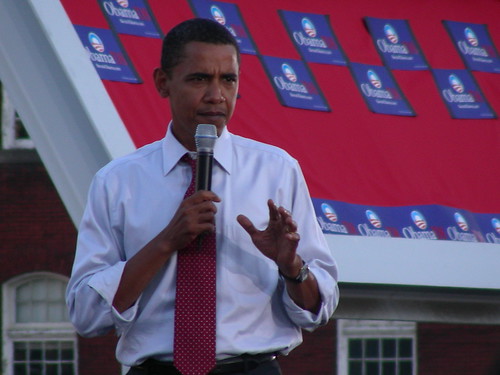
Barack is Back - The Aftermath for Israel

While half of America celebrates the results of the presidential election, many Israelis will be feeling quite depressed about the results.  It would be safe to say that most of Israel was rooting for Romney (or whoever would have opposed Barack Obama).  In four short years, Obama succeeded in alienating much of the Israeli public, and there is a fairly flat feeling about the prospect of Obama continuing similar Middle East policies over the next four years.

Of course, it is true that Israelis have very different interests than Americans have when viewing the presidential election.  Americans are justifiably mostly concerned about economic issues, and about domestic issues such as universal health care.  These are issues which are of much less interest to the average Israeli, even though the man on the street in Tel Aviv or Jerusalem still cares a great deal about who will govern from the White House.  The reason for this is quite simple.  The White House has historically had a substantial impact on events in the Middle East in the past, and this is likely to continue for the foreseeable future.  People are clearly hoping that this influence will be exerted to help the security of the Jewish people in Israel, and also to advance the cause of peace in the Middle East.  The experience of how this influence has been exerted over the past four years does not engender any feeling of confidence that the current status quo is likely to change, or that the current situation will move in a positive direction over the next four years.  Even though life for Jews in Israel has been far worse in the past, people continue to live in hope that it will be a lot better with the help and influence of the White House in the future.

When Barack Obama came to power four years ago, there was a great deal of scepticism in Israel about how a president with such close family links to Islam, could be good for the Jews in Israel.  The euphoria and excitement that swept through the USA, however, convinced many to give Obama the benefit of the doubt and the chance to prove himself one way or the other.  Now, four years later, many believe that he has proved himself, and that their initial scepticism was fully justified.  In President Obama's first presidential visit to the Middle East, he made a point of stopping in Egypt to lay out his policy for the region.  Since then, he has not stepped foot in Israel nor shown himself to be particularly engaged in Middle Eastern issues.  He has waged a battle against policies that Prime Minister Netanyahu has pursued to secure the safety of Israel as a Jewish state, and has allowed Iran to reach the verge of producing a nuclear weapon by not being prepared to support the required military action to remove this threat.  Even though not all Israelis are supporters of Netanyahu and his policies, Obama's opposition to these policies have been viewed as unhelpful to Israel's cause and her security.  Obama has not been sufficiently willing to speak out against the continued missile fire under which so many communities in the south of Israel have been forced to live under, and to make clear to the perpetrators of these attacks how unacceptable this situation is.

Obama's predecessor, George W. Bush was the one who coined the phrase "if they are not with us, they are against us", in the context of the war on terror following the 9/11 attacks.  Israel has been fighting a war on terror for much longer than this, and understands very well the fact that there can be no "abstentions" in this important issue.  Those who do not strongly support the fight and help to take steps to assist in eradicating terror, effectively enable it by their lack of action.  Those who do not actively work to eradicate the nuclear threat from Iran, are those who enable it.  Responsibility for this extremely worrying situation will fall to all of those who were happy to be spectators while it was clear that a nuclear weapon was being constructed by a rogue regime with full knowledge and in full sight of the world.  The UN was set up in the wake of the Second World War with a brief of preventing conflicts and avoid future wars.  This type of activity is surely exactly what the UN has been set up to act against.  Even though the clear understanding is that Iran's nuclear program has the worst of intentions, it is being allowed by the world, and by Barack Obama in particular, to proceed almost unimpeded.

With this background, it is hardly surprising that Obama doesn't have a place in the hearts of many Israelis.  There are those who claim that the Obama administration has done more than any other US administration to provide arms and funding for weapons to Israel.  It is also clear that a strong US economy is good for Israel's economy in many respects.  So, action taken by Obama to strengthen the US economy is good and extremely important for Israel's continued well-being.  But these are indirect, and often invisible to the Israeli eye.  The most public and obvious matters, being the Iran nuclear issue and the continued conflict with the Palestinians, particularly Hamas in Gaza, are always going to be the issues that grab the headlines.  These are also the things that will capture the attention of the Israeli public, and by which Obama's success and failure with regard to his policy on Israel will be measured.

What remains unclear, is the extent to which the personal lack of agreement between Netanyahu and Obama may affect Obama's Israel policy.  Netanyahu is reported to have got on the wrong side of Obama on more than one previous occasion, and was extremely clear in his support for Romney in the presidential election campaign.  Indications from the White House are, that this will not influence Obama's attitude towards Israel, but this remains to be seen.  Despite the lurch towards democracy by some Middle Eastern countries as a result of the Arab Spring, Israel is still the only truly democratic country in the Middle East that the US can truly rely upon as an ally.  Their partnership in the war on terror is also a critical for both the US and Israel.

Perhaps its a good thing that Israelis have a very low expectation of the support that Israel will get from the new Obama administration.  At least, this means that the chances for disappointment are much lower than was the case four years ago when he took office for the first time.  Of course, we would all like to be pleasantly surprised, but there is no expectation that this will be the case.  The real fear is that we will wake up one day during the course of the next few years, and find that Iran has a nuclear bomb.  This will change the shape of the Middle East, and of the world.  It is our hope that Obama will at least take action to prevent this nightmare becoming reality.  Even though Israel is known for acting independently where required, and is not bound to US agreement or support on these matters in any way, the problem is a global one and not one which is only a threat to Israel.  While Israel is clearly one of the main targets of the Iranian aggression, this issue should not be left entirely to Israel to take care of.  The US and other countries around the world have a clear share of responsibility.  The time to act is now.

Thursday, 5 July 2012

The Social Protest Risks Self-Destruction

The social protest movement has been making a come-back over the past few weeks, after capturing the imagination of the citizens of Israel during their summer demonstrations in 2011.  Having decided that the progress made by the government over the past 12 months has not been sufficient to satisfy the demands made a year ago, the protest movement has taken to the streets once again.  But things are very different now than they were a year ago, and this summer’s protest can never be the same as the one that was held last year.  This creates a risk for the protestors that they will not be able to continue to carry the support of the general public with them.

The biggest difference this year when compared to last year, is that the government and the authorities are ready for the protest.  This means that they will not allow the establishment of the tent cities that sprang up in towns and cities across Israel in the summer of 2011.  These served as constant reminders to the general public of the ongoing protest.  This act, more than anything else, captured the hearts and minds of Israelis and succeeded in gaining the vital support of the press pack.  In order to keep the protest in the public eye this year, more ingenuity will be required to replace the constant reminder that the tent cities represented.  The protestors will also have to continuously outfox the authorities, who are determined to avoid having the constant irritation that the government was forced to endure last year.

The first clashes have already taken place, and have not necessarily helped the protest movement in the eye of the general public.  A small group of protestors took to the streets of Tel Aviv on a busy Friday morning.  Police were quickly on the scene to force the demonstrators off the streets.  Some protestors who refused to cooperate were arrested, and the press was filled with pictures depicting aggressive police arresting peaceful demonstrators.   These scenes mobilised other protestors to take to the streets of Tel Aviv on Saturday evening.  This time, the demonstrations were not only focused against the government’s economic policies, they also vented anger against treatment received by the protestors at the hands of police and officials of the city of Tel Aviv.  Illegal demonstrations turned into sit-down protests in various locations in Tel Aviv, disrupting traffic and causing general chaos.  Once again, police and city officials removed protestors by force.  Some protestors also vented their rage at banks in the street near to the protest location, and rocks were hurled into bank windows causing damage to property.  The stand-off between the parties escalated further when sympathisers of the protest movement decided to disrupt activities in Tel Aviv’s “White Night” annual street party.  These attempts were only partially successful, with “White Night” proving to be a success albeit with a few less activities than were originally planned.  By this stage, however, the press started losing their positive spin on this story and the general public were displaying less sympathy for the cause.  It seems as though the protestors may have scored an own-goal through their actions, by losing the support of their greatest group of supporters.

Around the time that these events were taking place, the Minister of Finance announced that the government decided to increase the budget deficit in 2013 from the previous target of 1.5% of GDP to 3%.  This is in addition to tax increases that are anticipated next year.  The extra money is required to fund some of the concessions that have been granted in response to the social protests.  Bank of Israel Governor, Stanley Fisher, came out immediately in opposition to these steps.  It is predicted that the increase in the budget deficit will cause interest rates to rise and will weaken the Shekel even further.  The general public is not enthusiastic at all about these measures, and has realised that the social concessions do not come without cost.  These measures will hit the average person in the pocket in no uncertain terms.  Suddenly the social protest movement is having to bear responsibility for this cost, causing it to look increasingly isolated.

One of the greatest successes of the social protests in the summer of 2012, was the extent to which the general public supported their action.  Demands for cheaper housing, tax and welfare improvements and cheaper prices for consumer goods seemed to strike a chord with all members of the public.  This was true as long as the price of these concessions was not yet been factored into the public’s considerations.  Now that there is a realisation that there is a price to pay, the public is regarding the concessions with much less enthusiasm and the social protestors are carrying the responsibility for the costs involved.

The combination of the violent protests and the economic measures introduced by the government has certainly caused damage to the protest movement.  The press is not nearly as supportive of their efforts as they were last year, and the general public is scrutinising the protests with a much keener eye.  Further damage to the protest movement’s cause was done when it became obvious that many of the demonstrators were not quite sure what they were protesting against.  When asked for details of the cause and its objectives, some of the demonstrators seemed to be participating for reasons not remotely linked to the main social cause.  They were made to look more like rent-a-crowd than a unified group of people with a common objective.

Israel’s economy is sending out mixed messages.  Things seem to be very stable at a macro-economic level.  The banking system has held up well while the banks in countries all around have collapsed or required public funding to stay afloat.  Israel is the only country to have its credit rating raised (to A+) by S&P in the past year.  Germany is the only western country which has a lower budget deficit than Israel.  For individuals within the economy, however, things don’t look so rosy.  Approximately half of the citizens of Israel live on or below the bread line.  Despite the fact that employment is currently at one of its highest levels in recent years (meaning that whoever wishes to work has a job), families are still not managing to cover their ever-increasing costs.  This is almost worse than people not being able to make a living because they are out of work.  It is clear that attention is required to correct this situation.

The social protest movement has done a good job of bringing the issue of social justice to the top of the public agenda.  Now, the protest leaders will have a tough path to navigate in encouraging the government to implement the changes without losing the public’s support.  In addition, the protest movement will need to continue to take the moral high ground, and not allow its organisation to be hijacked by those with unrelated causes, and those intent on causing chaos, disruption and damage.  Indications are that they are not succeeding.

Tuesday, 29 May 2012

The African Migrant Problem Needs to be Solved Quickly

Israel has become inundated with African migrants, and this has raised some very difficult questions for the government about how to deal with them.  The problem started out as a humanitarian one.  Individuals and groups of people began turning up along Israel's southern border with Egypt.  They were filled with horrifying stories about the countries that they had run away from, and the murder and destruction that was taking place there as part of the series of ongoing civil wars that are plaguing the African continent.  The experiences that these individuals were forced to endure along their route to Israel was equally as horrendous.  Marauding groups of thugs in the deserts and soldiers from national armies, most notably the Egyptian army, stripped these poor people of the few belongings that they had, and raped and murdered many of those with them.

The Israeli authorities remembered too well the experiences that Jews were forced to endure during the Holocaust, when few nations were prepared to accept Jewish refugees who had nowhere to go to escape the evil Nazi extermination camps.  The African migrants were admitted across the border, given food shelter and basic medical treatment.  They were also allowed to seek out employment despite their exact status being unsure.  Children were sent to local schools, and policies regarding how to deal with this new phenomenon were being established on the fly.  It is astonishing how quickly the desert telephone works.  Word soon got back to Sudan and to Eritrea that the pot at the end of the rainbow is buried somewhere between Eilat and Tel Aviv.  Within no time at all, thousands of migrants were clambering across the border in search of the pot of gold.  Although they were running from horrendous situations in their home countries, these people could be classified more as economic migrants than as asylum seekers.

Fast-forward a few years to the current time, and the situation is extremely complicated.  In some areas like Southern Sudan, the civil war is over, a new country has been established and Israel was one of the first to move to recognise the new country.  Despite this fact, the citizens of Southern Sudan seem to have no intention of leaving Israel and returning to their newly-established homeland.  Instead, more and more seem to be arriving at the borders.  They have established communities of their own in towns and cities around Israel.  They are working in hotels, running coffee shops, Internet cafes, bars, restaurants and market stalls and their children are attending Israeli schools.  Their presence is becoming increasingly permanent in spite of the fact that the government has still yet to determine their legal status.  Suddenly, the African migrant community numbers 60,000 people and is beginning to make its presence felt in Israeli society in every possible way.

An undercurrent of dissatisfaction has been building below the surface about the newest of Israel's immigrant communities.  Economic times are tough, and there is a feeling amongst the weaker members of Israeli society that the African migrant community is receiving resources that should be channelled towards Israeli citizens instead.  Many charities have decided to route their efforts to help African migrants, often at the expense of Israeli citizens.  Cheap housing units are occupied by African migrants and often lead to price rises, making it difficult for others around.  There are accusations that school places that should be available to Israeli children, are being occupied by African children.  The character of some of Tel Aviv's oldest neighbourhoods is reported to have changed dramatically to reflect the increasing number of Africans living there.

The situation came to a head in the past few weeks with a number of incidents of violence having been blamed on African migrants.  A few rape accusations have been made against Africans, while reports have surfaced from areas where they live accusing them of burglary and other violent crimes.  While none of these accusations have yet been proven, it has allowed the undercurrent of dissatisfaction amongst some Israelis to boil over into full-blown rage.  Protests have taken place across Israel to demonstrate against the continued presence of African migrants, and the government is now being forced to take a stand.  Unfortunately, the protests have turned violent showing a really ugly side to Israeli society.  African migrants and their businesses and homes have been attacked as part of these protests, some of which were also attended by members of Knesset and other politicians.

In the first instance, the violence against others living in Israel should not be tolerated.  It is right that the police have arrested some of the perpetrators of this violence, and that they should be prosecuted under the law.  In the second place, it is right that the government should be held to account for the lack of policy on the migrants.  While the migrants had no alternative safe haven, it was acceptable and desirable for Israel to give them shelter.  Now, however, they have place to return to, and Israel should insist that they do so.  No visitor to Israel should be allowed to outstay their welcome, particularly if they will be utilising scarce resources that should be made available to the weakest in Israeli society.  The fact that the economic and social conditions in Southern Sudan or Eritrea are not quite up to the same level in the State of Israel is not the consideration.  If they are able to return in a manner that does not risk their personal safety, this should be enough to justify their repatriation.

Over the years, Israel has been forced to deal with a number of migrant communities.  There are thousands of Filipinos working to look after the elderly and the weak who require close care.  There are also thousands of Chinese workings employed in agriculture and construction.  Once these people have lived and worked here for a few years, and even had families here, the decision to deport them becomes much more difficult.

I feel really proud that Israel was willing and able to open its doors to people in desperate need, and in immense physical danger.  This reflects our empathy as a nation for the homeless and the weak in the world.  Now that the job has been done and the charity administered, the migrants should return home to allow Israel to put her own house in order.  After all, we wish to be there again should the need arise in the future.  By sending the migrants to their places of origin, it will mean that Israelis will be able and willing to help again if required.  By allowing them to remain indefinitely, it puts this help at grave risk, and risks a great deal in our own society.

Wednesday, 16 May 2012

Bibi Does Election U-Turn

Within the space of three short days, early elections were on and then off again.  The timescale of this U-turn was quite astonishing.  On Sunday evening, Prime Minister Netanyahu announced to his Likud party convention that early elections would be held.  On Monday morning, the first reading of the bill to dissolve the Knesset was passed.  In the early hours of Tuesday morning, the new coalition agreement was signed with Shaul Mofaz and the Kadima Party, and early elections were cancelled.  By bringing Kadima into the coalition, Bibi has almost created a government of national unity.  The only main party which is now outside of the coalition is the Labour Party, and its new leader Shelly Yachimovich becomes the leader of the official opposition.

There are a number of people, both within political circles and outside, who feel that Bibi's conduct on the issue of the elections has been less than fair and honest.  It transpires that he was holding coalition discussions with Shaul Mofaz for at least a week before the announcement that an agreement had been reached.  This begs the question why Bibi decided to make a public announcement about early elections and allow the Knesset to debate the first reading of the dissolution bill, when he was on the verge of concluding a new coalition agreement?  Was this a negotiating tactic to force Mofaz to make the final concession?  The formal announcement that an early election would take place certainly put the cat amongst the pigeons.  No sooner had electioneering got into full force, when it was all frozen.

Even though the way in which it was done raises big questions, I believe that the act of delaying the election is probably more beneficial for the State of Israel and its citizens than proceeding to early elections.  Israel is currently confronting a number of critical issues, and there was a huge danger of these issues becoming too wrapped up with a general election.  Despite the international focus having been moved away from Iran over the past few months, this issue probably remains Israel's largest challenge in the short to medium term.  Some parties are taking a much more aggressive approach advising Israel to take military action against Iran.  Others are advising a more cautious and conciliatory approach.  Even former heads of intelligence have weighed in with their "words of wisdom", only in an attempt to exact political revenge on those that they don't like.  This is a fraught subject that has major implications for Israel and her citizens.  A decision taken by a stable almost-unity government is surely better than airing this issue in election platforms.

There is also the controversial issue of the replacement to the Tal Law.  This is an issue which is split down party political lines as the religious parties are doing their utmost to convince lawmakers to enact a replacement law that will still allow yeshivah boys to be exempt from military service.  Opponents wish to see at least some minimum form of national service which will apply to all of Israel's citizens, without exceptions.  This is a messy political hot potato that is best kept out of election platform politics.

The passing of the new budget is almost always held to ransom by coalition negotiations.  Parties negotiating possible inclusion in the coalition frequently predicate their support of the budget on receiving key concessions in the coalition agreement.  At a time when the economic stability of many countries in the world is so much under threat, economic high jinks cannot be afforded in Israel.  It would be good to get the budget approved without the need to bow to parties looking to extract value from the coalition negotiations.

For Kadima, the extension of the Knesset term has saved it from election decimation.  There is little doubt that a general election at this time would have substantially reduced its Knesset faction.  At the same time the new coalition agreement has raised doubts in the minds of many Kadima members, particularly those who came from parties on the left of the political spectrum, about whether this is a first step towards uniting with the Likud.  The most senior of these doubters, Kadima council chairman Haim Ramon, immediately tendered his resignation from the party.  He was followed by many grass-roots members of the party in a move which threatens to split the party, even before a single ballot is cast in a general election.

The big winner in this move is Prime Minister Netanyahu.  He has shown himself to be a shrewd political player, even though he has trodden on more than a few toes in the process.  The upshot of all of his political manoeuvring is that Bibi is king of Israel, just as his supporters like to chant at public gatherings.  He currently holds all the cards in his hands, and has a very strong political position to see him through to the end of the Knesset session and into the next general election.  He will need to see out at least one more summer, which is promising to be a summer with greater social protest than we saw last summer.  This is certainly a threat to him, but the electorate has little or no alternative choices to select from.  Opposition parties to the Likud are disparate and decimated.

The electorate has been spared an election this summer.  This will save a substantial sum of money, and will delay the inevitable filthy negative politics associated with election campaigns for at least another year.  I hope that, by the time we reach the start of the next campaign in a year or 18 months from now, many of the critical issues mentioned above that urgently require attention will have been dealt with.

Sunday, 6 May 2012

A Little Election Excitement

Despite the fact that Prime Minister Netanyahu has been out of circulation as he has been sitting shiva following the death of his father, the Likud machine is working hard to arrange the next general election.  According to the law, the election could be called anytime until November 2013.  The prime minister and his advisers, however,  have decided to accelerate the date to September this year.

A bill to dissolve parliament ahead of the next election is due to be discussed in the Knesset today (Sunday 6th May) which could see the Knesset dissolved in one week’s time.  Even before the Knesset has been dissolved, I notice that campaigning has begun.  Advertisements have already been plastered onto buses and primary campaigns have sprung into action.  The election campaign has gained such rapid momentum that it is difficult to believe that only two weeks ago, there was no official speak of an election at all.

The prime minister has decided to call an election now because he is obviously riding something of a wave of popularity right now.  He has had a fairly stable term in office without any major ups and downs.  He has done nothing remarkable, but has also not really put a foot wrong.  His popularity seems largely to have depended on the things that have been happening in the other parties rather than actions of his government.  The other parties have been very helpful in assisting Netanyahu’s fortunes over the term of this Knesset.  The contest for the leadership of the Labour Party resulted in considerable damage to the party as the two main rivals bitterly vied for the top position.  Since then, the new leader, Shelly Yachimovich, has not really asserted herself in any major way in the public eye.  Now that there is talk of an early general election, she has suddenly made a public statement saying that Labour could defeat Likud in the election.  This is nothing more than wishful thinking.  Tzipi Livni’s defeat as leader of Kadima and her subsequent resignation from the Knesset have left the party languishing.  Opinion polls suggest that Kadima could be demoted from the largest party to the fifth largest after the next election.

In addition, the prime minister would have been dreading another summer of social protests.  He managed, somehow, to cling on last summer during the height of the tent protest when his government was being held responsible for the constant and dramatic increases in the cost of living.  He certainly would not wish to repeat that experience if he can possibly avoid it.  The election campaign over the summer months is, I think, partially designed to divert attention away from the social protests and bring other parties into play in the economic discussion.

It will take the Israeli public a little more time to get enthusiastic about the election.  The truth is that it would be very surprising if Netanyahu is not reelected as prime minister.  Most people have already resigned themselves to this outcome, and have moved on.  So what is there to be excited about in an election that is not expected to deliver anything new?  Many will be voting for Netanyahu to register a protest vote against the others, who all seem unelectable.  Even Ehud Barak, who is a previous prime minister, seems a million miles away from the prime minister’s residence in Jerusalem’s Balfour Street in the eyes of most voters.  The minor details of whether the Likud gains 31 seats in place of its current 27 seats, or if Kadima is the largest or the smallest party in the Knesset all seem unimportant in the grand scheme of things.  Voters may be tempted to vote for one of the smaller parties if they believe that strengthening this party’s position within a coalition government may help to promote certain policies or legislation.  This been proven to be effective by the Yisrael Beiteinu party in the existing coalition, which has been prepared to vigorously pursue issues that are of unique interest only to its voting constituency.  It has enjoyed some success where this is concerned, and this fact is likely to secure it a similarly strong position in the next Knesset.

Despite the fact that the election seems not to inspire much excitement amongst the Israeli voting public, especially at this stage of the campaign, there are many reasons why Israelis should be excited and motivated by the election.  We need always to bear in mind that this is the only true democracy in the Middle East, a fact for us all to be proud of.  The election campaign is the greatest example of this democracy at work.  This is also, uniquely, a Jewish democracy.  This gives the chance to debate and vote on issues that are particular to us as Jews, and especially issues that concern our ongoing safety and security within the family of nations.  In this respect, the Israeli elections have an impact on Jews living outside of Israel as well as within her borders.  The more democratic the outcome of the election, the greater is our security and the more secure our future as Jews in the world.  We should remember that the Arab citizens of Israel are also voters, and have their own parties which will send representatives to the Knesset as they have done since Israel was founded.

This democracy is not only important to Israelis and Jews, but is also important to the free world.  Israel is a beacon of light in a dark Middle Eastern ocean that supports and finances Muslim extremism and terrorism in all corners of the earth.  The fact that Israel contributes to a first line of defense against the threats of Iranian nuclear plans, Syrian government violence and Hamas and Hezbollah terrorism amongst others things, will always be a source of comfort and relief to many in the free world.

Unfortunately, democracy does not always deliver the right or the desired result.  There are times that it could be argued that democracy has got things wrong.  The best thing about democracy, however, is that it ensures the people the right to have their say again within a few years, and to hopefully put the wrongs right.  This is certainly the character of Israel’s democracy, and is a cause for celebration.  For so many years, Jews were denied the right to vote in the countries of their residence, and yearned for the opportunity to control their own destiny even in the smallest way.  With the birth of the democratic State of Israel, Jews have been granted the opportunity to exercise this right under the Law of Return.  It requires simply to prove that you are the grandchild of a Jew, and to turn up at the immigration desk at Ben Gurion Airport.

So, while Israelis consider who will deliver the best economic solution for them for the next four years or who will give them the best religious or ecological answers, we should not lose sight of the big picture that this election represents for Jews within and outside of Israel.  Many generations of Jews would have been astonished and grateful for the little things that we take for granted.  We are living their dream.  Long live democracy in the State of Israel.

Monday, 30 April 2012

A Peek Into The Future

Over the past few weeks, we have been occupied with looking back.  We celebrated the exodus from Egypt and the miracle of the crossing of the Red Sea.  We stood in silence to commemorate the 6 million killed at the hands of the Nazis, and we stood in silence to commemorate the 23,000 who have given their lives for the modern State of Israel.  We celebrated 64 years of independence of the State of Israel, and considered the remarkable and miraculous events that allowed us to reach this point in time.  Come to think about it, Jews seem to spend a disproportionate amount of time looking back and commemorating the past.  I decided to pause for a moment, and try to imagine what things could look like in 50 years' time.  Not only to imagine this, but perhaps also to dream about how things could be.  I have tried to dream about a world where my children are grandparents, and to try to put Israel into that context.

I think that there is one major piece of the puzzle which is missing in current-day Israel, and which most Israelis yearn for in the future.  This is the missing peace and, with it, the recognition of the right of Israel to exist as a Jewish state among the nations.  A state of peace and security would bring so many advantages to the State of Israel, and could change the nature of this small country in a most dramatic way.  Most importantly, it would save hundreds, if not thousands of lives a year.  Not only the lives of soldiers would be saved, but also the lives of innocent women and children would be spared if we could create a situation where Qassam and Grad missiles are not being fired into civilian neighbourhoods, and where suicide bombers are not trying to detonate their explosives in crowded restaurants, coffee shops and buses.  It would also spare valuable government money that could be spent on education and infrastructure instead of the acquisition of military hardware and ammunition.  A state of peace would also free up our most valuable resource, the 18 to 21 year-olds, who would be free to make their contribution to Israel's economy rather than be forced to serve in the military to protect their country from constant attack.

A peace arrangement would also create a completely different dynamic with Israel's neighbours.  I can imagine a situation where Israeli citizens could spend their holidays in Beirut, which is only a few hours' drive from the central part of Israel.  Perhaps Syrian tourists would be a major source of foreign revenue for Israel's hotels and restaurants.  I can dream about Israeli irrigation technology being used to make deserts in Jordan and Syria green.

In my dream world, there is harmony and co-existence between religious and secular communities.  Somehow, the religious will find a way to make their contribution to Israeli society, as a result of which the secular communities are able to respect the religious communities and their way of life.  This, in turn, paves the way for understanding and exchange of ideas between the two communities.

In my imaginary world, members of the Knesset are there to serve the wider community rather than primarily their own interests.  While being paid a reasonable salary, they will do all that they can to save the country unnecessary expense.  Their conduct on the floor of the Knesset will be exemplary, and send a positive message to the younger generation about the way in which people should conduct themselves in public.

In the new and improved Israel, customer service will be of primary importance when dealing with companies and shops, and hotel, restaurant and coffee shop staff will give the utmost respect to their patrons.  This is a world where drivers will give way to other drivers wishing to enter into the flow of traffic, and hooters will only be sounded when danger exists on the road.  Cellphones will be silenced in elevators and other public places, and people will not resort to screaming at others in order to get their own way.

I guess that my wish list can go on forever, but it is important to dream in order to somehow improve our society.  It is critical for us to be able to continuously develop and progress with the next generation, who seem to be hungrier for information and technology than ever before.

When I think about it, the "negative" things mentioned above also have their positive sides.  There is no doubt that our young men and women who are forced to serve in the military, learn skills and behaviours which help them in the future.  The responsibility of protecting Israel's borders, and survival skills that they learn with this are great tools in their future lives.  The tenacity and attitude of never giving up are certainly traits that are instilled in our children during their military service.  In Israeli living, sometimes even shouting at people represents a form of communication that is preferable to not talking at all.  The madness of Israeli society forces people to adapt themselves in ways which lends itself to the survival of a people and a nation.  Perhaps a more orderly society would have less survival skills.

When I come to think about things, I would certainly be happier for my family to live our lives in peace and security.  I would also be happier to have greater understanding and respect between different parts of Israeli society.  This would, however,  undoubtedly come at a price which I am unable to identify or quantify now.  Perhaps this price would be too high for me?  Maybe it is better to give thanks for what we have, and to do all we can to protect it.  This must be part of the logic of spending so much time looking back.  We are really able to value and appreciate what we have now.  This is more than our grandparents could have dreamt of when they had their dreams.  Am Yisrael Chai.

Sunday, 12 February 2012

A Worthwhile Strike

Israel is back on strike after an announcement last week by the main workers' union, the Histadrut, that it has ordered its workers to stay home.  The Histadrut is an umbrella organisation for hundreds of thousands of workers across Israel, and a strike by its members has the ability to paralyse the Israeli economy.  It is estimated that this strike is costing the economy more than NIS 300 million a day, the equivalent of almost US$100m.

For the average Israeli who is not a member of the Histadrut and is trying to get on with his daily life, the strike is a gross inconvenience.  Banks, public transport, government ministries, municipal services and Ben Gurion airport are all suffering closures, disruptions and delays arising from this strike.  Prime Minister Netanyahu is on record calling upon the Histadrut to cancel the strike, and has said that he believes that it is possible to find a responsible and just solution to the problem.  I believe that he is right that a solution is within the hands of the relevant authorities.  But who has the responsibility to take the first steps in finding the solution?  Despite the fact that many people on the streets of Israel blame the strikers for inconveniencing their lives, are the strikers the ones at fault in this case?

The strike revolves around the terms and conditions upon which temporary workers in the public sector are employed.  There are an estimated 250,000 temporary workers whose working conditions are under the spotlight in this strike, many of whom fulfil roles as cleaners and security guards at their places of employment.  It is common practise for these types of workers to be "temporary workers" on a permanent basis.  The employees are usually provided by agencies, which are hired by the government and other companies to provide appropriate staff.  Even though there is often an attempt to rotate staff between different locations, it is quite common for individuals to serve in the same job at the same location for many years - essentially acting in the capacity as a permanent member of staff.  The only difference between these individuals and permanent members of staff, is the fact that the agency staff continue to earn their money on an hourly basis for indefinite periods of time.  Not only does this affect their rights to take sick leave or to go on holiday without having go be concerned about paying their rent, it also has a substantial impact on their social benefits during the time that they are working and when they finally leave their positions.  The main beneficiary of this combination deal is the government, which is by far the largest employer of these temporary workers.

This is not the first time that the Histadrut has raised this issue.  A short-lived strike was already held during the middle of last year.  This strike was called off on the promise that the issue would be resolved.  Needless to say, no substantial progress has been made towards rectifying the status and the rights attached to these workers.  Although I am not a great supporter of all actions taken by the Histadrut in the past, it is my view that the union would not be fulfilling its obligation towards its members if it did not take a strong stand on this issue.  If the Histadrut does not act strongly where this is concerned, what is its main role in our society?

Naturally and unsurprisingly, there are ulterior motives at play which serve to partially cloud the matter.  The temporary workers are not actually members of the union.  This is one of the rights that is denied them in their capacity as temporary workers.  If the Histadrut is able to succeed in convincing the government to change the status of these employees to give them a permanent contract, the Histadrut stands to gain a substantial number of new members.  Additionally members bring additional membership fees through the coffers of the union, and additional strength in the political arena.  Whereas the Histadrut is presenting its actions as entirely altruistic in the interests of the temporary workers, there is another side to their actions which needs to be considered.

Israel's "summer of discontent" saw strikes and protests against increasing economic hardship for the average Israeli.  The cost of living continues to soar, while earnings levels fail to keep pace with these increases.  Ironically, the main group of protestors who camped for months in public areas across Israel come from the middle class.  The main population of lower paid workers were not well represented at all in these protests.  The reasons are clear.  Many of them are new immigrants, coming from countries where this type of social protest is unheard of, and runs the risk of being rounded up by government authorities who will not tolerate public protest.  Most of all, they are unable to take even one day off work to protest, for fear of not being able to feed their children at the end of the month.  The message from the social protest movement to the government is that Israelis of all levels are finding the already tough economic conditions increasingly unmanageable.  When unscrambling the myriad of messages that the government received from the social protests, the key message relates to the weakest members of society, particularly those who could not even afford to be involved to express their hardship and suffering.  I see the latest strike as representing these people.

One of the messages of humility that I have learned since moving to Israel, has come from watching people strive to make ends meet.  Watching people who are accustomed to living in sprawling comfortable homes in their countries of origin choosing to adjust their lives to live in small apartments and work unbelievably long hours for little pay, shows an incredible level of commitment to this country.  Equally, seeing people who are highly educated unable to find jobs in their own professions and willing to take on menial low-paying tasks to feed children and assure their education, has been a life-lesson for me.  These people, many of whom don't even have a moment to raise their heads in order to protest for fear of foregoing an hour which can produce a little more family income, need every protection that our society can offer them.  This is why I do support the strike that is currently causing enormous economic damage to our country.

Prime Minister Netanyahu should make his haughty statements about causing economic damage into a nearby mirror, for he is the one who should be taking further action to bring the strike to an end.  In so doing, he should be taking active steps to help and protect our society's most vulnerable people.  We all understand and appreciate the fact that the government is under immense pressure to reduce its spending, and that cuts need to be made across the board.  These cuts should also be felt by those interest groups who Netanyahu is trying to court in anticipation of a general election later in the year.  The message from the country is clear.  The correct solution is not to spend more, but to spend more responsibly.  Take money that is being diverted to electioneering, and help those who really need it.

If the social protest movement really believes in the message that it has been sending to the government, most Israelis will support this strike.  Although there is always a political undercurrent to social actions, this strike could bring about substantial and sorely-needed changes to those who really need it.  It is for this reason that I am willing, albeit reluctantly, to suffer the consequences of the strike.  It is my hope that others will join in this view.

Postscript:  Not long after this blog was written, the strike was called off.  No details are yet available of the deal that was agreed upon.  Despite this fact, I feel that the statements made in the blog are still worthwhile publishing.

Monday, 2 January 2012

The Best and Worst of 2011

As we welcome 2012, it gives the opportunity to reflect on the best and worst parts of 2011.  In Israel, 2011 was an eventful year, including a number of interesting and challenging events.  For some, it was a year that they would prefer to forget.  Despite many negative aspects to the year, I think that Israelis will regard 2011 as having been a year that was more positive than negative.  Here are the main reasons why I think that this was the case.

The best story coming out of 2011 was the release of captured Israeli soldier, Gilad Shalit.  It is not only the fact that Gilad was returned safely to the arms of his family that makes this story good.  The fact that the Israeli government was finally able to agree and execute this deal sends some amazingly strong and positive statements to all Israelis.  For me, this is a classic story where the right thing finally triumphed.  Like all good stories, this has a negative side to it as well.  I really cannot blame all of those who opposed the deal due to the "price" that had to be paid in terms of the number of Palestinian prisoners who were released, even those who have murdered Israelis.  I also know how paranoid the Israel Defense Force (IDF) is about the possibility of soldiers being kidnapped in the future, and the measures that have been put in place to try to avoid this at any price.  I feel that working to avoid future kidnappings is a better reaction than leaving Gilad in captivity under the conditions that he was held.  This was, by far, the highlight of the year in my view.

Another good story of 2011 was that of the social protests.  Hundreds of thousands of people took to the streets to demonstrate against lack of social justice, and of the dramatic increases in the cost of living without commensurate increases in earnings.  This was a great story for a number of reasons.  It was good to see the Israeli public having the time and energy to devote to social issues, and behaving in a manner that most "normal" countries behave.  In the 63 years since Israel's independence, most of the time has been spent worrying about an existential threat.  Wars have been fought, terror attacks overcome and many people have been left dead and injured.  This allows little time or energy to give even a fleeting thought to daily social issues.  The fact that hundreds of thousands of Israelis were able to come out into the street to protest social issues gives some indication that the existential threat is not quite at the same level as it has been in the past.  It also shows what Israelis really care about, and shows the real democracy that exists in Israel.  On all of these levels, the protests were extremely encouraging.  These good points, however, should not cause us to lose sight of the core issue of these protests - the economic inequality and hardships that many people are suffering.  Unfortunately, the government has not responded sufficiently to the message of the protest marches, and this issue is likely to plague us for some time yet.

A further good story for 2011 was the extent to which the economy succeeded in holding up during the year.  Even though this seems to be at odds with the message brought by the social protest movement, more Israelis were in employment during 2011 than at any other time in Israel's history.  In addition, while economies around the world were floundering and suffering all types of economic problems, Israel somehow managed to keep its economy on track.  This does not mean that the year translated into a boom year for Israel.  It does, however, continue the theme of displaying a real underlying strength to Israel's economy that was shown during 2008 when the credit crunch hit many economies so hard.  Once again in 2011, Israel's economy has performed admirably.  Along with the good things, come some very difficult questions.  Why are so many Israelis struggling financially when the economy is at almost full employment?  This is clearly something that needs to be addressed as part of the social equality agenda.

The major regional story this year was the unfolding of the Arab Spring in countries in the Middle East and North Africa.  The way in which the Arab Spring has swept through the region could never have been predicted.  Even though this is great news for democracy in the Middle East, it has created an instability that is proving to be negative for Israel, and many countries in the western world.  While the free world has an obligation to support the move towards democracy in principle, there is a real problem about whether these countries are really ready to embrace democracy.  In many respects, stability in the Arab world is more important than democracy.  As things seem at the moment, the two don't seem to be able to live side by side.  The change of regime in Egypt is particularly concerning, with the increasing popularity of the Muslim Brotherhood.  The protest movement in Syria also promises some dramatic changes to regional politics, and they are not necessarily all going to be positive.

The second major regional story surrounds Iran's development of nuclear weapons.  2011 can be characterised as a year of confirmation and inaction where this is concerned.  The international community were presented with irrefutable evidence of Iran's development of nuclear missiles.  Even the International Atomic Energy Agency were forced to accept that Israel's representations about Iran's nuclear program have been correct all along.  Having had this fact confirmed, the best that the international community could muster up, were a few ineffectual sanctions.  It has become clear that Iran is not only setting out to threaten Israel.  The events over the past few days in the Straits of Hormuz are a clear challenge to the US.  The military exercise on this occasion closed the straights for only a short period of time.  The next time could be for longer, precipitating a potential military conflict with the USA.

Despite the fact that 2011 was a hugely eventful year, it seems only to have set the scene for what awaits us in 2012.  Israel's social justice movement is likely to be more vociferous, particularly if the economy suffers more than it did in 2011.  The government will need to be prepared to commit to spend more money on social issues, and to see these promises through.  This is an issue that is no less imporant than Israel's security challenges.

The Arab Spring will come to a head in Syria.  It seems as though the Sunni Muslims, who represent over 70% of the population, are likely to gain the ascendancy after having been ruled by the minority Alawites for many years.  The Spring could yet spread to other countries in the region, and this could present a greater threat to Israel as more of her neighbours became destabilised by these events. 

I expect that 2012 will also see the Iranian nuclear issue come to a head, as Iran continues to intimidate and provoke Israel, the USA and other western countries.  All of this adds up to 2012 looking to be a tough year.

In between the pessimistic expectations are a few rays of light.  Even though I expect a great deal of instability during 2012, it is my hope that this will then bring a period of greater stability as is often the case.  I also hope that the unfolding Arab Spring can create a new, more compromising, reality with the Palestinians to allow moves towards a genuine peace based on mutual recognition and respect.

It is my hope and prayer that 2012 holds only great things for all of you.  Happy new year!!