Tuesday, 28 August 2012

Non-Aligned, But Extremely Maligned

Iran is playing host to the meeting of the Non-Aligned Movement (NAM) during the course of this week.  The meeting sees 120 developing nations of the world attend, with special attendance by the UN Secretary-General, Ban Ki Moon.  Although the original intention of the NAM was to provide a home for countries who were not formally aligned with or against any major power bloc, it has always represented something of a political hot potato.  This is because its membership includes the so-called "axis of evil" countries, and many other pariah states of the world.  The NAM has, perhaps unwittingly, acted as a club for countries that are persona non grata in the developed world.  The best example is the the host of the 16th meeting of the NAM this week, Iran.

Since the NAM was established in 1961, a great deal has changed in the make-up of the world's power blocs.  Despite this fact, it seems as though many of the original members of the NAM remain members to this day.  The changes in the political power blocs have not succeeded in changing  the countries that are aligned with them.  The term "non-aligned", while accurately reflecting the fact that the member countries are not part of any major international power bloc, conceals the fact that many of the member states are aligned with each other in different ways.  It seems as though being non-aligned is not sufficiently compelling to link the NAM countries.  Even these countries need a common cause to create a more substantial link between themselves.  Iran has succeeded in creating a common issue for the NAM countries to rally around, and this is the issue of hating Israel and bringing into question her right to continue to exist.

Iran's policy of publicly humiliating and deligitimising Israel is already not a new phenomenon.  Iranian President Ahmadinejad has been allowed to get away with behaving like a thug on this issue for many years.  He has stood at international gatherings at every opportunity, and ranted against Israel's right to existence amongst the family of nations.  The international community has silently sat back and watched the spectacle without taking action.  This has even been the case when Ahmadinejad has had the audacity to stand up at the United Nations General Assembly, the place that is supposed to protect the rights of nations to exist in peace and harmony, and spew vitriol about the destruction of Israel.   Once again, the UN stands accused of failing to protect the basic rights of member nations by allowing UN Secretary-General Ban Kim Moon to travel to Tehran to attend the NAM.  In so doing, he has legimitised the attendance of all the other countries at the meeting, all of whom will be subject to tirades promoting the destruction of the State of Israel in the usual Iranian way.

Surely, this enough to convince the world of Iran's ban intentions regarding its nuclear program?  The evidence that Iran intends to construct a nuclear weapon is irrefutable.  The subject of Iran's wrath and aggression is equally irrefutable.  The fact that the world allows Iran to threaten Israel in every public forum in the most unashamed manner, is now supported by the world's unwillingness to take tougher action against the nuclear program.  Instead, the world has decided to hide behind the sanctions to defer action on this matter.  It has been clear for some time that the sanctions will neither prevent the countries of the world from buying oil from Iran, nor prevent Iran from continuing to build a nuclear bomb.  Once again, it seems as though it will be left to Israel to take on the world's responsibility in acting against a tyrant.  It is true that Israel is at the front of the line of countries at risk by Iran's aggression, but it is also true that Israel is not the only country at risk.  It is clear that any action by Iran to construct a nuclear weapon will place all of the western world, and beyond, in the firing line.  Perhaps the threat to these countries is not sufficiently pressing now to force them into action.  As has been the case a few times in the past, it will be Israeli soldiers whose lives will be risked to clean up the mess that others are not prepared to take care of.

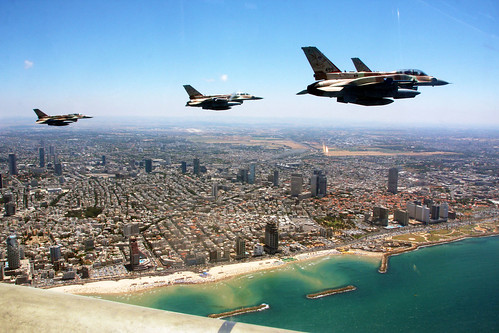
Israel has acted in the past without the blessing of its allies to take care of problems.  Twice before, Israeli aircraft have destroyed nuclear reactors under construction.  It was notable that the US government opposed Israeli action against both the Iraqi reactor and the Syrian one under construction.  We now know that Israeli action saved some extremely nasty situations from arising, and history books could have looked extremely different had the timely and brave action not been taken in the nick of time.  Fortunately, all Israeli soldiers and equipment was returned to base safely on both previous occasions.  Where Iran is concerned, the operation looks to be infinitely more complicated and risky.  This is partially because the world has failed to take timely action to destroy the threat at a much earlier stage.  Any operation that Israel will mount against Iran is likely to be extremely risky, and will almost certainly result in Israeli loss of life.

In the interests of international diplomacy and world peace, the UN Secretary-General will appear alongside the world's thugs including Ahmadinejad, Zimbabwe's President Mugabe and others.  Instead of protecting the interests and the freedom of the democratic world, he has chosen to legitimise the unacceptable behaviour of those countries who present the greatest threat to world peace.

The NAM conference has given Ahmadinejad the perfect opportunity to stand up in front of the non-aligned, and malign them against Israel and the west.  In a few weeks' time, we will expect to see another of his tirades at the UN General Assembly in New York.  All of the actions that turn a blind eye to Ahmadinejad's bad behaviour, simply empower him even further.  He understands that the world does not set any limits in terms of acceptable behaviour, and will exploit this to the maximum extent possible.  As before, it will be left to Israel to draw the line and to take the required action.  It is my hope and prayer that our soldiers and our civilians will not be endangered in the process.

Thursday, 23 August 2012

A Damaging Debate

The debate about whether Israel should or should not attack Iran's nuclear facilities has broken out into the public arena in the strangest possible way.  Over last weekend, the press reported a disagreement between the prime minister and the president over whether attacking Iran at this time is the correct course of action.

Indications are that Prime Minister Netanyahu is one of two lone voices calling for Israel to take military action to stop Iran building a nuclear bomb.  Ironically, his only supporter is Defense Minister Ehud Barak.  This is ironic due to the completely opposite ends of the political spectrum that these two politicians come from.  At the moment, however, they are bedfellows in calling for the IDF to act in the near future to strike at Iran's nuclear facilities.  President Shimon Peres is advocating a completely different approach.  He would prefer to allow America to take the lead, and is currently trusting President Barack Obama's approach in waiting to see whether the sanctions will bring the desired result.  Ultimately, Peres is opposed to Israel acting unilaterally against Iran.  Peres, always a dove in his approach over many years, was also opposed to the strike that Israel carried out on the Iraqi nuclear reactor in1981.  We know how crucial that operation ultimately proved to be.

Peres is not alone in Israel in his opposition to an attack on Iran.  From recent press reports, it is understood that the military leadership in the IDF is also opposed to such an attack.  This does not mean that they are not prepared to carry out such an attack, or that they would not do so if the government decided that this is the correct approach.  It is just that military leaders, in their individual and professional capacities, believe that this would not be the best approach.  In addition to this, it is reported from surveys undertaken, that most Israelis also do not support military action.  The Israeli public seems concerned about the safety of the home front in the event of an attack on Iran.  It is well understood that Iran will almost certainly take retaliatory action in the event that there are strikes on her nuclear facilities.  This puts the Israeli public at risk, as Iran's Shihab missiles are armed and ready to fire towards Israeli territory.  Clearly, this nervousness is influencing the view of the general public such that they are opposed to attacking Iran, even if this is by a slim majority.  Some Israelis feel so strongly that we should not be attacking Iran, that an online petition has been launched imploring Israeli air force pilots to reject orders to strike Iran if called upon to do so.  While the prospect of Israel's pilots not carrying out orders is something we could not contemplate, I guess that it does show the strength of the feelings.

The fact that this entire debate is being conducted via the press and in the public, is not positive.  While democratic principles are important in our society, and especially maintaining the right to freedom of speech, I believe that certain discussions are much better held out of the public domain.  This particularly refers to matters of national security, which this clearly is.  It may be true that President Peres should not be interfering in government business, and that he has previously made incorrect calls on whether the IDF should attack targets or not.  I feel, however, that these points should be made directly to him rather via articles in the weekend newspapers.  My choosing to use the media to canvass internal support for their respective positions, the prime minister and the president may have forgotten that our enemies (including Iran) have intelligence officers who are scrutinising every article that is published.  What sort of message are we sending to them?  I believe that sending a message which shows a lack of unity in our government potentially weakens our situation in  the eyes of the Iranians.  If we cannot even agree on the fundamental issue of whether we should be taking military action to protect Israeli sovereignty for ourselves and future generations, how are we expected to agree on more substantial matters?  Iran has reacted as we would expect, by making fun of our internal squabble, and by continuing at full steam to develop a nuclear weapon.

It is a good thing that we have an environment which supports internal debates and disagreements, and that we have the freedom to be able to express ourselves openly in the national media.  Better decisions are often made when there is a minority that disagrees, and that is strong enough to bring the majority to consider their view before the final decision is made.  Where issues relating to how we deal with Iran are concerned, the debate should be held in the well-secured hallowed halls of government and the IDF, and not in the press.  Although we are very used to playing out party political agreements in the media, there are times when this approach is not appropriate.  This is clearly one of those times, and the national security of the country must surely take preference over all other matters.

Sunday, 12 August 2012

The Second Time Around Simply Doubles the Pride

It seems like only yesterday that we were on our way to the IDF recruitment base to deliver our elder son to begin his military service.  Ten months have since passed, and he has thankfully found his path in the military jungle.  He continues to seek out ways to make his service as meaningful and effective as possible, in order to allow the State of Israel to get the best out of him that he can offer.  I now find myself back  in a similar situation, and on my way to deliver my younger son for the start of his military service.

The fact that I now have a slightly better understanding of the military, does not make the second time around any easier.  I feel the same fears, concerns and trepidations now that I felt on the first occasion.  I am still worried for his well-being, and concerned that he will find his way to ensure that he can make his contribution to his country and to his people in the best possible way.  The thing that has changed on this second occasion, is the level of pride that I feel.  This has now been doubled.

I feel immense pride in my sons for the way in which they have approached their military obligation.  They have understood the importance of every Israeli boy and girl being recruited to defend their country and their people.  Together with their friends, these young men have decided that they will fulfil the obligation to serve their country, and have decided to do it willingly and to the best of their ability.  Thousands of young men and women will be joining the military over the course of the next few weeks, and will give their time and energy to ensure the well-being of the State of Israel.  All of these young people have witnessed the threats that the State of Israel has been forced to live under in recent times, and understand the importance of having a strong army to counter these threats.  Many of them have visited concentration camps such as Auschwitz, that bear testament to the consequences of not having a strong Jewish army to defend our people.  They have resolved not to allow these events to repeat themselves while we have the ability to defend ourselves with a strong army.

Israelis and Jews around the world are indeed fortunate to have a young generation of the type that Israel has.  These young people are not only seeking ways to fulfil their obligation in a minimalist way.  They are happy to volunteer to be members of elite units, and to take on the toughest and most dangerous of jobs in maintaining freedom for Israelis and Jews.  These jobs require training that is extremely demanding, and frequently put our young men and women in harm's way.  This does not deter them from agreeing to these conditions, and even frequently signing up to serve for more time than the law requires if this is what it takes.

For you, my son, today is a day that will change your life.  The time that lies ahead of you will ask the most difficult questions of your physical and mental strength.  I know that you are up to the task, and I have every confidence in you.  I know that you and your friends will do a great job in defending our land and our people.  You understand the consequences are of not having our own army, and you will keep this in the back of your mind when you are having hard days.  All I can offer is to be there for you in every way I can.  I will be available to you at all times of the day and night, and I will be ready to do anything and everything in order to give you the support that you need.  We will eagerly await every moment that you will be allowed to spend time with us at home.

I wish you a successful period of service that will contribute to your personal growth, and that will give you a sense that you have made your contribution to your country and your people.  May Hashem protect you in all that you do, wherever you are.  You are true heroes for Israelis and for Jews around the world.

Even though the level of my anxiety is doubled today with the start of your service, my pride is equally doubled.  Go well, and return home safely.

Tuesday, 7 August 2012

Remembering the Munich 11

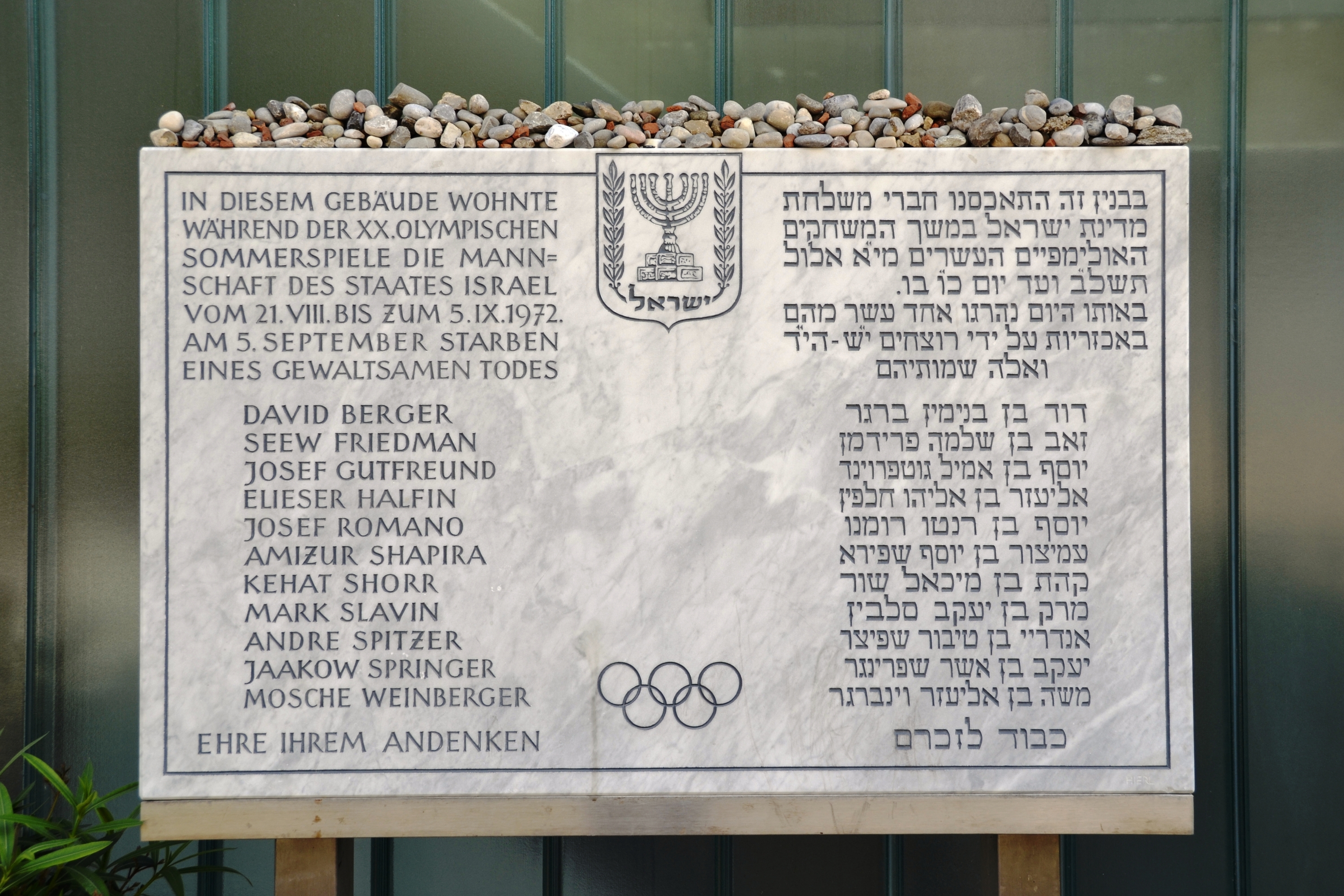
The start of the 2012 London Olympic Games has arrived with great excitement and expectation for thousands of athletes and coaches, and for millions of viewers around the world.  For some, however, the Olympic Games represents negative feelings and bad memories.  Chief amongst those are the families of the 11 Israelis who were killed 40 years ago at the Munich.  For these people, the Olympic Games will always represent a reminder of the cruel way in which innocent lives were cut short in their prime.

With the passing of 40 years since those tragic events, has come a concerted effort by the bereaved families of the athletes and coaching staff to hold a formal commemoration at the London Olympic Games in memory of the victims.  These efforts have been formally supported by millions around the world, including a number of national governments.  Special resolutions and requests to hold a minute's silence at the London opening ceremony were adopted by governments in Australia, Canada and the USA amongst others.  It is astonishing that the International Olympic Committee (IOC) and the London Organising Committee of the Olympic Games have opposed these efforts, and decided against holding a minute's silence in memory of the murdered athletes and coaches as well as the German police officer who was also killed by the terrorists.

This decision is almost tantamount to the  IOC denying the link between the cruel loss of life, and the Olympic movement.  There can be no denying that the athletes and coaches were in Munich, in the Olympic village, only for the purpose of competing in the games.  They were kidnapped and killed on the watch of the IOC and the organising committee of the Munich Games.  Nothing would be more appropriate, than for a minute's silence to be held at the biggest event of the games, which is undoubtedly the opening ceremony.  This would allow the IOC to acknowledge the tragedy that was allowed to take place when the IOC was on duty, and also to memorialise the names of the innocent victims in the tragedy. The act of opposing a formal memorial at the opening ceremony is a way of denying responsibility for the event, and also serves to reduce the significance of this tragedy.

In response to the decision by the London organisers not to hold a formal memorial ceremony, chairman of the Palestinian Olympic Committee  Jibril Rajoub has written to the IOC President to thank him.  He wrote, "Sport is a bridge for love, unification and for spreading peace among the nations.  It must not be a cause for divisiveness and for the spreading of racism'".  Perhaps Mr Rajoub conveniently forgot that it was terrorists linked to his own organisation who carried out the heinous crime,  murdering 11 innocent sportsmen and a police officer in cold blood.  It is clear that Mr Rajoub didn't wish to miss an opportunity to make a fool of himself in writing such a ridiculous letter.  It is fair to say, however, that the IOC invited such a response by behaving in a way that can be interpreted as denying the importance of such a commemoration.

Various commemorations which have been held on the fringe of the games, one at the Olympic village and one hosted by the Israeli ambassador to the UK, do not go far enough to formally respect the memories of innocent people who should have been protected by the IOC and games organisers.  They were let down by these people who allowed them to be kidnapped from the campus of the games.  The only crime that they committed which resulted in them being given the death sentence, was that they were Jews and Israelis.  Surely, the least that the IOC can do is to allow their memories to be formally commemorated?

The English Football Association has provided a great example for the IOC in the way that the Hillsborough disaster, and the 96 Liverpool fans killed in 1989, continue to be commemorated.  A minute's silence is held at every football ground across the country on the date that is the anniversary of this tragedy.  This includes grounds which have nothing to do with either of the teams in the game on the day, or the ground where the game was held.  It is a true mark of respect when even those unrelated to the event are able to stand silent for a minute in memory of the victims.  It remains unclear to me why this was not possible at the opening ceremony.

While the memories of those who were killed will never be forgotten by their families and the people of Israel, the time has come for the IOC to memorialise the names as well.  A minute's silence at the opening ceremony is the respectable and respectful way to do this.

Until such time as the victims get the public recognition that they deserve, we can each play our part in ensuring that their memories are not forgotten.  The Chief Rabbi of the United Hebrew Congregations of the Commonwealth has written a prayer to commemorate the victims.  This can be found using the following link.  Please do read it, and encourage those around you to do the same.

May the memories of the 11 be for a blessing for their families, and for all Israeli sportsmen and women.


Tuesday, 24 July 2012

Burgas - A Deadly Reminder

It is easy to be lulled into a false sense of security that bad things have disappeared when things go a little better.  In Israel, that translates into a false sense of security that perhaps the threat of terrorism may have subsided. or may even have gone away.  Despite the many notifications that are constantly issued to Israelis warning of threats to their safety and well-being both within Israel and outside of the country, these threats often seem exaggerated.  This is particularly true when we are fortunate enough to experience extended periods during which no attacks take place.   Unfortunately, all too soon, the silence is shattered as was the case last week on Bulgaria's Black Sea coast.

The bomb that was detonated on a bus outside the terminal building in the town of Burgas in Bulgaria clearly targeted the Israeli group that had just arrived.  It is no secret that resorts on the Black Sea in Bulgaria have become increasingly popular for Israelis over the past few years.  Package deal holidays have been directed particularly towards younger Israelis, including high school and university students.  Due to political tensions, Turkey is no longer a viable option for those seeking reasonably-priced pacakage deal holidays.  Bulgaria's Black Sea coast has become one of the new hotspots to replace Turkey as a holiday destination.  It would not take sophisticated intelligence work by terror organisations and other enemies of Israel to figure this out, and to lay some sort of a trap.  Israeli intelligence is obviously tuned into this fact as well, and had met with Bulgarian security officials only one month prior to last week's attack.  The truth is that countries like Bulgaria, Thailand, Nepal and other holiday destinations favoured by the travelling Israeli public, are not sufficiently equipped themselves to provide effective security to prevent such attacks being perpetrated against the large groups of Israeli tourists.  The Mossad extends its surveillance and prevention activities to these countries in order to protect the travelling Israelis.  The security establishments of countries like Bulgaria are usually happy to cooperate with the Mossad in the interests of keeping the tourist dollars flowing into their economy, while providing the necessary protection to its tourists.  Obviously, there was some lapse in the intelligence work last week.

In the period following the Mumbai terror attack which took place nearly 4 years ago, Israelis have certainly been lulled into a false sense of security.  This is despite failed attacks having taken place in Georgia and India in the intervening period, and reports of attacks having been thwarted in Thailand, Kenya and Cyprus to name but a few of the countries.  In a way, the better the job that is done by the Mossad to intercept and prevent such attacks, the less vigilant people become.  It is ironic that vigilance only increases when the terrorists succeed in their missions, and lives are lost.

Warnings are continually being issued to the travelling Israeli public to be cautious.  The foreign ministry has advised Israelis to place their passports in covers so that they cannot be easily identified when abroad.  They have also advised tourists not to speak Hebrew loudly in public places, and have disclosed the traits that terrorists may look out for in their attempts to identify Israelis in the streets.  The foreign office is trying to encourage Israelis to lay low and be as inconspicuous as possible when travelling around the world, in order to avoid any possible attack against them.  By behaving in this way, the security services believe that lives may be saved by Israelis being more difficult to identify.

The problem is that the current generation of Jew is not shy or self-conscious about being Jewish or Israeli.  He is proud to be a Jew and an Israeli, and is happy to announce this to all that he meets when travelling abroad.  He is the type of Jew that Zionist leader Zeev Jabotinsky dreamt about when he lived during the period when being Jewish was a source of shame and humiliation.  It is somewhat ironic that, having achieved this wonderful pride which can be found in many Jews, the government is forced to encourage Israelis to conceal their identity.  This pride was shown so clearly when two Israeli air force planes with emergency and medical teams were dispatched to Bulgaria to assist the wounded, and to provide fitting respect to the deceased.  Many of the survivors of the attack refused to leave the airport building until the Israeli assistance arrived.  Israeli soldiers and medical teams were given a rapturous round of applause when entering the airport building to take care of survivors.  For Israelis and Jews, the IDF uniform is the ultimate symbol of safety and security, no matter where they are in the world.

The attack in Burgas is about as bad as any that one can find.  Innocent civilians were targeted without regard, as has been the case so many times in past terror attacks.  Israeli Prime Minister Netanyahu has attacked Iran as being behind this attack.  I presume that he has intelligence evidence to support this accusation, and I expect that he has some plans up his sleeves about how to avenge the attack.  It is very seldom that attacks like this are allowed to proceed without some justice being sought in the name of those who died so unnecessarily.

For the rest of us, we are forced to mourn yet more innocent victims of terror.  It also is a stark reminder of the constant danger that Israelis and Jews find themselves in around the world.  This is the reminder for us that we need to be vigilant at all times, even when things are perhaps looking up and when we have a break from attacks for any period of time.  We can ill afford to be lulled into a false sense of security.

May the memories of the deceased be for a blessing, and may their families be comforted amongst the mourners of Zion.

Tuesday, 17 July 2012

Olmert is Found Innocent

The events that took place in the Jerusalem District Court last week were quite extraordinary.  For the first time in the history of the State of Israel, a former prime minister was in the dock to answer charges of corruption alleged to have taken place in a period before he became prime minister.  On this occasion, the court found that fomer Prime Minister Ehud Olmert is innocent of the main corruption charges against him.  Even though this decision sounds to be the end of a story, in many ways it is only the beginning of this story.

The headline that Olmert is innocent conceals the most important aspects of the story.  A sitting prime minister was forced to resign his office, accused of corruption when in a former public office.  Now, more than 3 years later, a court has decided that all he is guilty of is a relatively minor offence of breach of trust.  It is for this that a prime minister was driven from office at a time when the country was fighting wars on a number of fronts, and facing a major economic crisis.  Not only this.  During the intervening 3 year period while the prosecution gathered its evidence, interviewed high profile individuals under subpoena and brought the case to trial, the press found Olmert guilty and publicly castigated him at every opportunity.   In one of the most dramatic U-turns seen in the modern press, it took 2 days after the verdict exonerating Olmert, for the newspapers to publish the results of a new public opinion poll.  This poll shows that Olmert would muster more seats than current Prime Minister Bibi Netanyahu in the next year's general election.  This "zig zag" (as such political about-turns are known in Hebrew) seems quite astonishing.  Has Olmert suddenly become the blue-eyed boy of the press after suffering such horrendous treatment at its hannds?

State prosecutors have been forced to explain their actions in bringing this case to trial.  There was more than a sniff of political motivation in evidence at the time that they announced their intention to indict Olmert three years ago.  Now that they have lost the gamble, the country is rightly asking questions about what drove them to make allegations against a prime minister, which could ultimately not be made to stick.  While the prosecution continue to defend their decision to bring this case to trial,  they admit that the verdict will create great difficulty for future corruption charges against high profile figures, in the event that these need to be brought.  Even though our political landscape is far from perfect and seems to be riddled with bad behaviour and questionable judgement, there is perhaps no harm in forcing prosecuting lawyers to think 100 times before bringing about the downfall of public figures.  Although I feel proud that Israeli democracy is strong enough to see even a sitting prime minister indicted, democracy also requires that the consequences of an acquittal be considered.  This is particularly true of high profile public figures.

The judges in the Olmert trial, while finding him not guilty, confirmed that unacceptable practices were taking place in his office.  His bureau chief, Shula Zaken, was found guilty on corruption charges even though her boss was acquitted.  The basis of his acquittal was simply the fact that the prosecution was unable to prove that he knew what was going on, rather than the fact that it did not happen.  This serves to reinforce that practices of public officials in Israel leave a great deal to be desired.  There can be no doubt that the questionable and corruptive practices which were proven to have taken place in Olmert's office when he was the Mayor of Jerusalem, are practices that are established in public life and occur in numerous public offices up and down the country.  The message that such behaviour is unacceptable and needs to be stamped out was unfortunately completely drowned out by the headlines of Olmert's acquittal.

Although Olmert has escaped from this sorry saga, he still faces corruption charges in the so-called "Holyland Affair" in a Tel Aviv court.  Prosecution officials have already begun to re-examine the file of charges against him in this case, for fear that the charges could go the same way as the previous case.  They are well aware of the enormous damage that they would suffer if they lose this case as well.

Olmert seems happy to escape the public glare for now, and slip into the background.  There is no doubt, however, that this will not be allowed to continue for long - this is a man who has spent so many years in the public arena, that it seems unlikely that he will quietly fade away.  Olmert has said he has no interest in returning to politics, but it is difficult to take these words at face value for now.  The acquittal could not have come at a better time for the Kadima party.  The party runs the risk of disbanding at the next election due to its poor showings.  The prospect of Olmert returning to politics and heading up the party has created a great deal of interest, and even some expectation.  There are those who see Olmert beating Bibi to become prime minister at the head of a Kadima government.  The most recent opinion polls seem to support this. I find it difficult to see this euphoria lasting until the next election, and I still predict that Netanyahu will keep the hot seat.  I do think that Kadima could be saved if Olmert returns to head up the party.  If not, I believe it will be consigned to the dustbin filled with failed political parties

Thursday, 5 July 2012

The Social Protest Risks Self-Destruction

The social protest movement has been making a come-back over the past few weeks, after capturing the imagination of the citizens of Israel during their summer demonstrations in 2011.  Having decided that the progress made by the government over the past 12 months has not been sufficient to satisfy the demands made a year ago, the protest movement has taken to the streets once again.  But things are very different now than they were a year ago, and this summer’s protest can never be the same as the one that was held last year.  This creates a risk for the protestors that they will not be able to continue to carry the support of the general public with them.

The biggest difference this year when compared to last year, is that the government and the authorities are ready for the protest.  This means that they will not allow the establishment of the tent cities that sprang up in towns and cities across Israel in the summer of 2011.  These served as constant reminders to the general public of the ongoing protest.  This act, more than anything else, captured the hearts and minds of Israelis and succeeded in gaining the vital support of the press pack.  In order to keep the protest in the public eye this year, more ingenuity will be required to replace the constant reminder that the tent cities represented.  The protestors will also have to continuously outfox the authorities, who are determined to avoid having the constant irritation that the government was forced to endure last year.

The first clashes have already taken place, and have not necessarily helped the protest movement in the eye of the general public.  A small group of protestors took to the streets of Tel Aviv on a busy Friday morning.  Police were quickly on the scene to force the demonstrators off the streets.  Some protestors who refused to cooperate were arrested, and the press was filled with pictures depicting aggressive police arresting peaceful demonstrators.   These scenes mobilised other protestors to take to the streets of Tel Aviv on Saturday evening.  This time, the demonstrations were not only focused against the government’s economic policies, they also vented anger against treatment received by the protestors at the hands of police and officials of the city of Tel Aviv.  Illegal demonstrations turned into sit-down protests in various locations in Tel Aviv, disrupting traffic and causing general chaos.  Once again, police and city officials removed protestors by force.  Some protestors also vented their rage at banks in the street near to the protest location, and rocks were hurled into bank windows causing damage to property.  The stand-off between the parties escalated further when sympathisers of the protest movement decided to disrupt activities in Tel Aviv’s “White Night” annual street party.  These attempts were only partially successful, with “White Night” proving to be a success albeit with a few less activities than were originally planned.  By this stage, however, the press started losing their positive spin on this story and the general public were displaying less sympathy for the cause.  It seems as though the protestors may have scored an own-goal through their actions, by losing the support of their greatest group of supporters.

Around the time that these events were taking place, the Minister of Finance announced that the government decided to increase the budget deficit in 2013 from the previous target of 1.5% of GDP to 3%.  This is in addition to tax increases that are anticipated next year.  The extra money is required to fund some of the concessions that have been granted in response to the social protests.  Bank of Israel Governor, Stanley Fisher, came out immediately in opposition to these steps.  It is predicted that the increase in the budget deficit will cause interest rates to rise and will weaken the Shekel even further.  The general public is not enthusiastic at all about these measures, and has realised that the social concessions do not come without cost.  These measures will hit the average person in the pocket in no uncertain terms.  Suddenly the social protest movement is having to bear responsibility for this cost, causing it to look increasingly isolated.

One of the greatest successes of the social protests in the summer of 2012, was the extent to which the general public supported their action.  Demands for cheaper housing, tax and welfare improvements and cheaper prices for consumer goods seemed to strike a chord with all members of the public.  This was true as long as the price of these concessions was not yet been factored into the public’s considerations.  Now that there is a realisation that there is a price to pay, the public is regarding the concessions with much less enthusiasm and the social protestors are carrying the responsibility for the costs involved.

The combination of the violent protests and the economic measures introduced by the government has certainly caused damage to the protest movement.  The press is not nearly as supportive of their efforts as they were last year, and the general public is scrutinising the protests with a much keener eye.  Further damage to the protest movement’s cause was done when it became obvious that many of the demonstrators were not quite sure what they were protesting against.  When asked for details of the cause and its objectives, some of the demonstrators seemed to be participating for reasons not remotely linked to the main social cause.  They were made to look more like rent-a-crowd than a unified group of people with a common objective.

Israel’s economy is sending out mixed messages.  Things seem to be very stable at a macro-economic level.  The banking system has held up well while the banks in countries all around have collapsed or required public funding to stay afloat.  Israel is the only country to have its credit rating raised (to A+) by S&P in the past year.  Germany is the only western country which has a lower budget deficit than Israel.  For individuals within the economy, however, things don’t look so rosy.  Approximately half of the citizens of Israel live on or below the bread line.  Despite the fact that employment is currently at one of its highest levels in recent years (meaning that whoever wishes to work has a job), families are still not managing to cover their ever-increasing costs.  This is almost worse than people not being able to make a living because they are out of work.  It is clear that attention is required to correct this situation.

The social protest movement has done a good job of bringing the issue of social justice to the top of the public agenda.  Now, the protest leaders will have a tough path to navigate in encouraging the government to implement the changes without losing the public’s support.  In addition, the protest movement will need to continue to take the moral high ground, and not allow its organisation to be hijacked by those with unrelated causes, and those intent on causing chaos, disruption and damage.  Indications are that they are not succeeding.