Monday, 16 November 2015

The New Type of Jew is Here

The resilience and the toughness of the Israeli people never ceases to astonish me.  Even though I know that it exists and I have seen it many times before, I still feel a sense of surprise when it comes to the fore as has been the case over the past few months.

Zeev Jabotinsky wrote about the "new type of Jew" that he dreamed of seeing.  He was tired of witnessing the abuse that Jews in Europe were subjected to in the period prior to the Shoah, particularly in Europe.  He hoped to see a situation where Jews would walk with their heads held high, proud to be Jews and willing and able to stand up for their rights as Jews.  He wanted Jews to be more in the mould of Joseph Trumpeldor, after whom he also called his youth movement, Betar.  Jabotinsky hoped that those coming through the ranks of the movement, would emulate Trumpeldor's example of being proud, tough and willing to stand up for their rights.

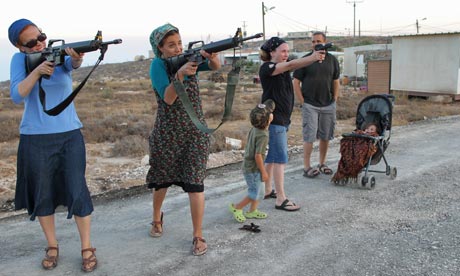
When looking around Israel today, I frequently wonder what Trumpeldor and Jabotinsky would think of the type of Jew that this country has produced.  I wonder if they could have envisaged in their wildest dreams, the Jews that one sees in Israel today.  It is true to say that Israel is a mixing pot of Jews (and others) from all countries around the world.  Each person comes with their own unique character and style, which mixes into the pot to create many different types of people.  There are, however, some common characteristics that we see in the people living in Israel,  which have come out very strongly and positively during this period of violence that we are currently experiencing.  If adversity is what brings out the true character of the Jew, this true character has much to celebrate.

Despite the fact that the terror attacks have been carried out in a random and unexpected manner, the people of Israel are unafraid.  Not only are people unafraid, they are willing to stand up for their rights and for their safety.  The level of pride and resilience that we see coming out at this difficult time, is truly heart-warming.  It comes out from all types of people across the country, and often in the most unexpected ways.  The determination shown by our security services acts as a true example to the people of our country, and Jews around the world.  When the call went out for reservist border policemen to report for service to augment those who are doing their compulsory military service, there were more respondents to this call than ever before in the past.  The reserve community dropped what they were doing, and left their families and their home lives in order to come to the assistance of the Jewish state and her citizens.  All of this despite the obvious dangers that they are forced to confront every day while on duty.  The same can be said for all our IDF soldiers and private security guards.  They do their duty with full understanding of how important it is for the safety of our country.  They know that, while in uniform, they are the main target of the terrorists' knives, firebombs and of the vehicles that are being used to mow down pedestrians. This does not deter them, or stop from them from carrying out their important work.

This fighting spirit filters through to the civilians on the streets of Israel.  Everybody understands that Israel is under a concerted attack that could rear itself at any place and time.  And yet, people continue to go about their daily business, with the determination not to allow this to disrupt their lives in any way.  It is true that people are more cautious, perhaps even afraid of what can happen.  But this does not dilute their determination.  Instead of staying home in fear, they prefer to arm themselves with whatever they can in order to be ready for any eventuality.  Many women have purchased pepper spray and other personal protective devices in case they are attacked.  Some people are arming themselves with firearms, or simply walking around with a baseball bat to be ready for any situation. The picture shown here of a lady on a bus carrying a rolling pin in her bag has caused many people to
laugh, but it demonstrates the resilience shown by the new type of Jew.  Even this older lady will not be deterred from going about her business.  She has decided to take whatever she can find at home, that will help to protect her if she needs it.  This is her way of holding her head up high, being proud and not allowing anything or anybody to stand in her way.  We are proud of her, and of the wonderful example that she sets to those around her.  More importantly, she sends the clearest possible message to our enemies.  Our people will not be frightened off protecting and building our country.  Not even our senior citizens.

The expulsion of the Jews from their homeland in 70 CE was followed by almost 2,000 years during which Jews were forced to keep their heads down, and pander to their hosts around the world.  This engendered a general impression that Jews were timid, afraid and unable to stand up and fight for themselves.  Since the independence of the State of Israel in 1948, we have seen the creation of a new type of Jew.  The transformation has been led by our brave IDF soldiers, who have shown themselves willing to do all that it takes to defend their homeland and their people.  Regular civilians have followed their lead, and we see an amazing level pride and patriotism coming out of all citizens in Israel.

Some of the fighting spirit and determination to survive is sometimes interpreted as undesirable, particularly by those who do not know and understand the Israeli character.  They have a tough exterior that is, at times,  considered to be rude and inconsiderate.  There is a level of intolerance and impatience that is regarded by some to be synonymous with Israelis.  In reality, this is simply the external manifestation of the resilience and the fortitude that come with being as determined and proud as most Israelis are.  For those who are prepared to peel back the tough outer shell that so many Israelis have, they will be lucky to discover kind, considerate and caring people who are willing to look after their fellow-man as part of their survival instinct.  This the where the "sabra" or prickly pear label comes from, that describes Israelis.  Hard and resilient on the outside, but soft and sweet on the inside.

Perhaps more than being resilient and tough, Israelis are immensely patriotic and proud of their country.  Even while feeling dissatisfied with political leaders, and perhaps not agreeing with their policies and behaviour, Israelis are incredibly proud of Israel.  Finally, Jews have a place that they can truly call home, and nothing can break the bond that they have with their homeland, and the pride that they feel for Israel.  Nothing will stop Israelis from fighting for this.  Am Yisrael Chai!

Saturday, 17 October 2015

Palestinian Actions Speaking as Loudly as Words

Israeli Prime Minister Benjamin Netanyahu  delivered  another triumphant speech at the United Nations General Assembly meeting.  He seems to be at his best when standing at the UN podium and presenting Israel's case to the world.  His speech came only a day after the one delivered by Palestinian Authority President Mahmoud Abbas, and it was noticeable how Netanyahu's speech contained much optimism in stark contrast to Abbas's words.  Since these speeches were delivered, a number of innocent Israelis have been murdered and many more injured in Palestinian terror attacks in the city of Jerusalem, in the West Bank and elsewhere in Israel.  It frequently seems as though nobody in the UN General Assembly is really listening to the speeches, as most people come there with their positions firmly entrenched.  The speeches are heard by audiences outside of the General Assembly chamber in New York, particularly by the electorate of the leader concerned.  Abbas's speech appears to have been very much directed at the Palestinian people.  There also seems to be a strong link between the tone of the messages delivered, and the actions that have taken place on the ground in Israel since the speech.

Those close to Abbas had warned for many months prior to this UN General Assembly meeting, that Abbas's speech was going to contain a "bombshell".  This expectation was set, not only amongst the international community, but also amongst the Palestinians who are looking to Abbas for leadership.  There was speculation about what it could be.  Most of the ideas that were put forward as possibilities were along a negative theme.  Some thought that Abbas would resign or dismantle the Palestinian Authority.  Those people who were hoping for something positive that could somehow contribute to the situation in the Middle East, and possibly move the peace process forward, were drowned out.  After the speech, the so-called "bombshell" was described by one Israeli newspaper as more of a stink bomb than a bombshell.  There was nothing dramatic that one could point to in his speech that could be termed a "bombshell".  Perhaps, more importantly, there was certainly no hint of anything positive to give one a feeling that a way forward can be found.  Instead, there was evidence of frustration that the Palestinian issue has been replaced on the front pages of the international press by the ISIS threat and by the Syrian refugee crisis.  There was an appeal for governments around the world not to forget that they should continue to pursue foreign policies that criticise Israel's behaviour and actions, while heaping sympathy on the Palestinian "victims" in the conflict.  The message, however, was received loudly by the Palestinian people, while not registering any response on the agendas of foreign governments.  The clear message sent by Abbas and received by the Palestinians, was one of hopelessness and lack of optimism for the future.

It should, therefore, come as no surprise that the Palestinians have heard the message from the UN, and have embarked upon a spree of terror attacks across Israel that have killed and injured innocent people.  In the process, children have been orphaned, parents have lost children, and wives have lost their husbands.  Even though the wave of violence has been blamed by Palestinian leaders on events that have recently taken place on the Temple Mount in Jerusalem, the violence cannot be attributed to these events in any way.  The events on the Temple Mount are simply part of this violence that we have seen elsewhere, rather than a cause of it.  The cause of the violence can be traced back to the words in the UN General Assembly Hall that reflect the general message that has been in evidence for the Palestinians for some time.  A lack of hope and optimism, and a feeling that there is little to lose, can cause people to behave in extreme and sometimes illogical ways.  This is clearly the case with Palestinian people right now.  It is too simplistic to explain the current events as simply arising spontaneously out of a lack of hope.

It is frequently the case that the actions of the government serve to give their people the optimism that drives them to feel motivated or not.  Actions by a national government can easily trigger a positive feeling and spirit amongst its populace, and equally cause it to dry up as a result of actions that drain their mood.  This can sometimes be triggered by relatively mall things that are of greater concern to people. It seems to me that the spirit of the Palestinian people has been drained by the negative actions of Mahmoud Abbas.  How can a nation feel motivated when your leader stands up in front of the international community and expresses views that are completely devoid of any optimism for the future?

The Palestinian Authority is not only guilty of milking their people of any optimism to the point that they have effectively given cause to this cycle of violence, they are also guilty of inciting them to continue this violence.  The word "intifada" has been mentioned many times in relation to this cycle of violence.  For those of us who lived through the previous 2 intifadas, this cycle of violence looks remarkably like an intifada.  We are told, however, that this is not an intifada.  The most commonly quoted reason is that the previous 2 intifadas were actively supported by the Palestinian Authority, with weapons, money and specific instructions being given by the authority.  On this occasion, according to what we are being told, the authority is not actively supporting the violence.  It is noticeable, however, that they are also not speaking out against this violence in any way.  This can surely be considered and interpreted to be support.  Those who are not speaking out against this wave of violence, are clearly seen to support it.  In my view, and according to the official definition, this is an intifada.

The involvement of the Palestinian Authority in previous intifadas was described as a "guiding hand" behind the scenes.  The Israeli government is telling us that, on this occasion, there is no guiding hand.  Having said that, there are some hallmarks of the current wave of violence that seem to be part of an orchestrated strategy.  The fact that the weapons of choice being used in the current round of attacks are stones that are being thrown, and knives being used for stabbing attacks, is different from intifadas in the past.  And it is also noticeable that many of those involved in attacks in the current wave of violence are youths and minors.  This certainly tells a better story for putting on social media.  Minors are clearly problematic from a prosecution perspective under Israel law, when the perpetrators are arrested.  They cannot be treated in the same way as adults are treated under the law, and this may be one of the reasons why this strategy is being employed.  As much as we are being told that the violent attacks are spontaneous actions by individuals on the ground, it seems that the attacks are coordinated and part of a strategy.

A recent development in the wave of violence, is the involvement of Israeli Arabs.   Some of the attacks carried out in Jerusalem, have been undertaken by Arabs who are citizens of Israel.  Over the past few days, protests have been seen in Israeli Arab cities up and down Israel.  These are protests in support of the wave of violence directed against Jewish Israelis.  The involvement of Israeli Arabs is a dangerous development, and creates a dilemma for the Israeli government.  The interior minister has threatened to withdraw Israeli citizenship from any Israeli found to be involved in the violence.  Even this is more of a knee-jerk response, and not necessarily a longer-term solution.

The responsibility for this wave of violence falls directly on the Palestinian Authority.  And this is not only because of their responses (or lack of responses) over the past few weeks.  This responsibility goes back many years during the time that they have educated their children for conflict and violence against Israel and Jews.  Such education takes a long time to undo, perhaps even a number of generations.  Of course, this is not aided by staying silent when their people carry out heinous attacks on innocent people, and by blaming Israel for a change in status on the Temple Mount.  This is an outrageous accusation, that is simply designed to get support from fellow Muslims around the world, and to return the Palestinian issue back to the front pages of the newspapers.

Despite the fact that the support and the "guiding hand" of the Palestinian Authority is different from what it has been in the past, this is an intifada in definition and action.  The authority has adopted a policy of maintaining a feeling of hopelessness amongst its people, in order to build hatred and despondency that is being channelled against Israel and Israelis.  It continues to educate its children for hatred, war and conflict rather than education for peace and coexistence.  The speeches at the United Nations showed clearly that Israel stands for all that is positive and optimistic, while the Palestinian Authority stands for the opposite.  Until this is rectified, there can never be peaceful coexistence in this land.

Sunday, 13 September 2015

The Pendulum Swings

It is noticeable how the relationships between Jews and their host countries fluctuate over the years.  Who would believe that the Jewish community in Germany would be increasing in numbers today after all that happened in the Holocaust, or that Jews would return to live in Spain and Portugal after the inquisition?  The wave of anti-Semitism that is currently being seen in Europe and around the world comes as something of a surprise to those who thought that the world has become  more tolerant towards Jews.  The rate of assimilation of Jews around the world shows that Jews continue to wish to be less identifiable in their host countries, partially as a result of the threat that they feel by being identifiably Jewish.  It is also noticeable that the relationship between Diaspora Jews and Israel goes through its ups and downs.  Israel had the unwavering support of Diaspora Jews at the time of independence, and during the Six Day and Yom Kippur Wars.  In more recent times, however, Jews from around the world have been some of Israel's fiercest critics.

The swing of the pendulum has been particularly noticeable in South Africa in recent times.  The Jews of South Africa have traditionally been regarded as loyal South African citizens, while also being considered strong Zionists and supporters of Israel.  This community has not been without its fair share of contradictions and controversies over the years.  The community was split during the apartheid era between those who supported the struggle for democracy, and those who preferred to maintain a lower profile and show loyalty to the regime of the day.  The community has also, at times, shown contradictory behaviour towards Israel over the years.  Despite being regarded as one of the most Zionist communities in the world, it is also true that the majority of Jewish South Africans who decided to leave South Africa over the years, did not choose to make Israel their home.  The highly regarded South African Jewish education system and Zionist youth movements have recently produced graduates who seem more concerned about criticising Israel for the plight of innocent Palestinians, while choosing to ignore the role played by the Palestinian leadership in getting their innocent citizens to this situation, and also ignoring the constant attacks by the same "innocent" Palestinians that Israel is continuously forced to protect herself against.  None of this detracts from the support that the South African community has shown to Israel over the years.

Since the release of Nelson Mandela and the ascendence of the African National Congress (ANC) to government, the existence by Jews in South Africa has been like walking a tightrope.  It is well understood that the ANC is a great friend of the PLO and the Palestinian Authority, and not a supporter of Israel.  This goes back to the days of the struggle against apartheid, when the ANC and PLO were "brothers-in-arms" supporting each other in fighting their respective "struggles".  This close relationship has been reinforced over the past 21 years since the ANC has been in government.  And while the ANC has not quite come out in an open revolt against the Jews living under its regime, it has used every possible opportunity to come out in opposition to Israel, its policies and its actions.  Although this opposition is directed against Israel, it is understood as an attack on the local Jewish community by the community, and intended as such by those launching the attack.  This has, in effect, been a slow but sure sign to the Jews in South Africa that its government is pursuing a policy that will ultimately cause them to question where their true allegiance lies.  It has been noticeable how the South African Jewish leadership, with Chief Rabbi Warren Goldstein at the helm, has done all in its power to transmit the communication to the government that Jews are loyal to South Africa and its government.  While being careful always to emphasize that they are proud Jews (and supporters of Israel in the most part), the Jewish community has sent a message of "South African first".  The message from the government in return, has been one of tolerance of the Jews rather than one of welcome with open arms.

There are signs that this uneasy status quo may be on the verge of changing.  A recent announcement by an ANC official that the government may seek to review the dual nationality law, could represent the tipping point.  The reason given for the possible review of this law, is the fact that a number of South African Jews have joined the ranks of the Israel Defense Force (IDF) as lone soldiers.  The thinking seems to be that, by revoking the right to dual citizenship, Jews will be forced to choose between being a South African, or enlisting with the IDF.  In effect, the community will need to choose between its allegiance to South Africa and its allegiance to Israel (along with their Jewish identity).  In order to put this into its correct perspective, it is worth noting that the latest information I have for lone soldiers serving in the IDF reflects that there are fewer than 50 South Africans in this number.   While it is true that there are others serving in the IDF who also carry South African citizenship (largely as a result of their parents originating from South Africa), it is clear that we are talking about a tiny number of people who are in reality being targeted by this new provision.  The real, and perhaps hidden, target is the Jewish community in South Africa as a group.  The fact that many thousands of non-Jews of all creeds and cultures may be affected by a review of the dual citizenship laws in South Africa, seems to be completely lost.  It seems as though the action directed against the Jews is more important than the widespread consequences to others.  It is a classic case of the tail wagging the dog.

The matter of South African nationals serving in the IDF has been a bone of contention for some time.  The South African government has previously threatened to arrest South Africans who have served in conflicts fought by the IDF, with the intention of extraditing them to The Hague to answer accusations of war crimes.  There has been much discussion about the fact that it is illegal for South Africans to serve in the IDF at all.  Former Minister of Home Affairs, and serving member of parliament and leader of the Inkatha Freedom Party, Prince Mangusuthu Buthelezi MP, helped to clarify this point.  In response to the announcement by the ANC of the possible review of dual citizenship, Buthelezi put out a statement during a visit that he was making to Israel.  He said that the law makes it illegal for South Africans to serve in the army of a foreign country, only if this country is at war with South Africa.  With the countries having formal diplomatic relations, including the exchange of ambassadors, there can be no possible interpretation that Israel and South Africa are at war.  As such, there is nothing illegal about South Africans serving in the IDF,

Chief Rabbi Goldstein's forceful response to the announcement of a possible review, recognises the change that this announcement represents for the Jews of South Africa.  While his video still reinforces his traditional message of the loyalty of the Jews to South Africa, he emphasizes the deep insult and hurt that the announcement of this review is causing to the Jews of South Africa.  He also makes abundantly clear the close link that the Jews in South Africa have to the State of Israel.  Rather than attempting to play down the dual loyalty that Jews in South Africa feel, both to their host country and to the Jewish homeland, he plays this up.  The purpose of him reinforcing the dual loyalty seems to issue a warning to the ANC and the South African government that the Jews may ultimately choose to prefer their links to Israel over their loyalty to South Africa, if pressed to make a selection.  The underlying message being sent seems to be for the ANC not to test this loyalty.  Despite all of this, the writing appears to be on the wall.

South Africa is commonly held up as a shining example of a country that has succeeded in achieving a peaceful revolution, to transform a discriminatory society into a democracy.  Much credit must be given to those on all sides of society for the creation of the "rainbow nation".  It seems, however, that despite 21 years having passed since this landmark transformation, the revolution is not yet over.  It seems as though affirmative action is giving way to more open discrimination against Whites, with Jews at the front of the line.  While a review of the dual nationality laws may require the Jews to make their choices about which side of the fence that they prefer to choose, it is also likely to require a similar choice for many other South African citizens with dual nationality.  Even though a government official has attempted to calm the stormy waters by stating that the government has no current intention to change the dual nationality laws, it gives clear indication of some of the thoughts circulating within the ruling party.

Historically, Jews have been forced to pander to their host countries, even in the wake of extreme discrimination, for fear that they would have nowhere else to go.  This is no longer the case, thanks to the existence of the State of Israel.  And while Diaspora Jews don't necessarily always agree with the Israeli government, and frequently publicly criticise its actions, Israel will always be there to accept Jews.  This gives the Jews in South Africa a power and a strength to make their choice, when called upon to do so.  There can be no doubt that the pendulum continues to swing.

Shana tova.

Thursday, 10 September 2015

Another Refugee Crisis

The latest refugee crisis has succeeded in stirring the emotions of many around the world.  The same is true for those  in Israel and Jews around the world.   The sight of the men, women and children moving across land and sea in unrelenting conditions to escape the disaster that has fallen upon them as a result of a civil war of human making, can only bring out the most heartfelt sympathies in anybody who has seen the pictures on TV and social media.  Some are calling this the worst refugee crisis since the Second World War.

The emotions of the Jewish community are particularly affected, because it was precisely this type of disaster that befell our ancestors 75 short years ago.  It will never be forgotten that, as a result of the world failing to mobilise to accept refugees who were running from the disaster of war and genocide in Europe, and failing to act to stop those who were carrying out the genocide, 6 million of our people were systematically annihilated.  Jewish sympathy is no less than that of others around the world, despite the fact that many of the refugees come from countries that seek the destruction of the State of Israel, and the death of the Jews.

Israel has already provided a great deal of assistance to victims of the Syrian war over the past few years, despite the fact that Syria has no diplomatic relations with Israel and despite the fact that Syria has formally been at war with Israel for the past 67 years with the intention of wiping Israel off the map.  Thousands of victims of the Syrian civil war have streamed across the border from Syria into Israel seeking medical and humanitarian assistance.  The IDF has provided first aid assistance to many of these victims via mobile medical units along the Syrian border, and supplied them with humanitarian aid.  Irrespective of which side of the conflict they have come from.  Hundreds of others have been admitted to Israeli hospitals for medical treatment, some undergoing complex life-saving surgery to nurse them back to health.  All of these services have been provided courtesy of the Israeli tax-payer, and nobody has been denied humanitarian assistance on the grounds of opposing political or religious views, or any other grounds.  This humanitarian work has been undertaken without fanfare, desire for recognition or international headlines.

But now, the the floodgates to Europe have finally opened.  Instead of seeking medical attention across the Israeli border, the eyes of the war victims have stretched further afield.  Thousands of refugees are swarming across the Mediterranean to seek shelter in the calmer waters of Europe.  European leaders have been caught somewhat off guard at the suddenness of the developing situation.  Some leaders mumble phrases about the Shengen Agreement and the Dublin Regulation, which are designed to secure and protect the borders of European countries.  Despite their mumblings, they seem to have no real clue as to how the provisions of these agreements can possibly be applied under the current circumstances.  Some countries seem resigned to accept the refugees that turn up on their borders, while others are doing all that they can to re-route their flood of humanity or pass them on to other neighbouring countries to get rid of their problem.  The humanitarian nature of the citizens of many European countries is demanding that their leaders relax provisions in order to accept a share of responsibility for rehousing the refugees, while others are concerned about what this may mean in the longer term for the makeup, nature and culture of their country.

Without detracting from the immediate humanitarian disaster that needs a short-term solution, European and world leaders can be justified in asking a few searching questions as longer-term solutions will need to be considered once the refugees have been clothed, fed, treated and housed in the near-term.  Some of the questions, to which I have not found answers yet, are the following:
  1. What happened that the refugee problem has suddenly arisen at this time?  The Syrian civil war and the conflicts in Iran and Afghanistan have been ongoing for some time already.  Tens, if not hundreds, of thousands have been killed, and many more injured and displaced.  Why did these refugees not run and seek shelter in Europe some time ago?  What was the real trigger to the sudden flight that we see now?  Is this related in any way to the more public involvement of ISIS, and the realisation of what an ISIS caliphate will mean to them?
  2. How many of the refugees are really economic migrants?  In recent years, there has been a distinction drawn between those who seek asylum as refugees, and those who do so in order to improve their economic situation.  Many countries try to do their best to make this distinction clearer, in order to provide required assistance to refugees while rejecting economic migrants who do not qualify for naturalisation.  The migrants naturally do all that they can to confuse those trying to separate the refugees from the economic migrants, in order to secure themselves the best possible chance of being accepted to a new country and a new life.  It is clear that many of the current wave of refugees are escaping war-torn countries and situations in which it is impossible to survive.  Amongst them, however, are more than a few who are truly economic migrants and who are merely jumping on the bandwagon to take advantage of a situation.
  3. Where are their Arab brethren in assisting the refugees?  All of the refugees in the current crisis are Arabs.  Some are Christian Arabs, but the vast majority are Moslem Arabs.  Most of them are Sunni Moslems, who made up some 74% of the Syrian population prior to the civil war.  With countries like Saudi Arabia and the United Arab Emirates being majority Sunni Moslem, there is surely enough money and space to accommodate the  refugees within the Sunni Arab world quite easily?  And yet, there seems to be a thundering silence from the Arab world at a time when their brethren are desperate for help.
  4. Is this a ploy to gain a greater Muslim foothold in Europe?  The words of Hungarian Prime Minister, Viktor Orbán, cannot be ignored entirely.  He said that Europeans risk becoming a minority on their own continent.  This is an interesting concept, particularly when there is no such thing as a "European" nationality.  The European continent has historically been split, divided and conflicted by many different interests, nationalities and religious strains.  In the face of a threat to the continued existence of these nationalities in their current form, however, a European nation has suddenly and unexpectedly arisen.  There are those who contend that this refugee crisis is a conspiracy on the part of Muslim leaders to allow Muslims to infiltrate in Europe in a manner greater than has been the case until now.   There is much evidence of the effects of the Islamisation of Europe.  Muslims have made attempts to set up enclaves of Sharia law in the UK and France (in addition to what they achieved in some African countries).  The sight of British and French-born Muslims leaving their homes to join the ranks of ISIS has shocked many.
  5. What is the role of ISIS in the crisis?  An ISIS announcement in the midst of the building refugee crisis in Europe said that hundreds of ISIS activists are scattered amongst the refugees claiming asylum in Europe.  It is difficult not to notice the disproportionate number of young men among the refugees.  While the announcement by ISIS may simply be opportunistic rather than an action that was pre-planned, it is something that cannot be completely ignored.
The question arises as to whether Europe has learned the lesson of wars and refugees to extend a helping hand (in some cases) to the current refugees?  Or has the Internet and social media forced their hand due to public demand, such that they have no choice but to help the refugees?  Never before has a refugee crisis of this magnitude been such a social media sensation.  It is reported that many of the Syrian refugees are buying SIM cards in their new European host countries even before buying food, to ensure that their predicament can be on Facebook as soon as possible.  This has certainly proven itself to be a powerful tool in their hands.  Previous crises of this magnitude have not enjoyed the same level of European and western response before.  We can only think back to the crises during the Holocaust and those in the former Yugoslavia and in Rwanda, to name but a few, where the response was much less enthusiastic and resulted in the deaths of millions of victims.

War is never a pleasant event, and our generation seems to experience more than its fair share of conflict.  It is pleasing that there are countries who are prepared to come to the short-term aid of the refugees.  But does this present a longer-term problem for these countries?  These are questions that only time can answer.

Friday, 29 May 2015

Starting on the Wrong Foot

The entire process that led to the forming of Israel's 34th government in 68 years of independence was filled with drama and unexpected events.

Opinion polls in the weeks leading up to the election predicted that the two largest parties, the Likud and the Zionist Union (formed out of a pact between the Labour and Hatnua parties), would be fighting each other off to form the new government.  The feeling was that one or two seats would separate the parties.  Even the election's exit polls did not predict the extent to which voters ultimately favoured the Likud over Zionist Union.  When the election result was announced showing that the Likud won 6 seats more than the Zionist Union, it took everybody in the country by surprise.  Even the members of the Likud were shocked at the size of the victory, especially in view of the earlier predictions.

The pendulum of expectation swung in the opposite direction.  All of a sudden, there was the expectation that Prime Minister Netanyahu would form a broad-based, strong, right-wing coalition government in double quick time.  As it turned out, the formation of the government took way longer than expected, is the narrowest possible government and is not nearly as strong as people thought and hoped it would be.   With these fluctations came swings in the public's expectation about how long this government can reasonably survive, and whether it has the ability to govern and make the changes that are so needed in Israeli society.

If the lead-up to the new government contained its fair share of surprises, the process of forming the government has also been less than inspiring.  The prime minister has been forced to compromise on many fundamental ideas that his electorate stand opposed to, in the interests of attracting coalition partners into the government.  For example, he has been forced to go back on legislation, that was put in place during the previous government, to force ultra-Orthodox yeshivah boys to undertake military or national service like all others of their age.  He has also been forced to redirect huge sums of money to the ultra-Orthodox sector, at a time when the Israeli government has implemented large budget cuts as part of an austerity plan.  Many Likud voters are horrified at these and other concessions.

One of the persistent rumours that refuses to go away concerns the reported approach that Prime Minister Netanyahu made to Labour leader Isaac Herzog to join the coalition.  The prime minister is reported to have approached Herzog on condition that he agrees to abandon his pact with Tzipi Livni, and bring only the Labour faction into the new government while leaving Livni and her Hatnua members out of the coalition.  Herzog refused, thereby turning down the opportunity to be part of a national unity government, and provide Israel with a much more stable coalition.  Has he spited the people of Israel by preferring to see Prime Minister Netanyahu fail in his endeavours?  There are many who believe that he has chosen the egotistical path, rather than setting his ego aside in the interests of serving the Israeli electorate.

The make-up of the new cabinet is also not a huge source of inspiration.  For starters, there are a total of 21 ministers in the new government, surpassing the 18 ministers that were recently legislated as being the maximum allowed in any government.  Netanyahu was forced to pass an amendment law through the Knesset to allow him to appoint 21 ministers to have sufficient jobs to dish out to all coalition partners.  The important job of foreign minister has been left vacant and has been assumed by the prime minister.  He has also retained the communications ministry, ministry of health and ministry of regional cooperation for himself.  It seems as though Netanyahu may be reserving these in case he is able to convince Lieberman or others to join the coalition in the future.

Aryeh Deri, head of Shas, is the new economics minister.  He has recently served a jail sentence and now come out of an exclusion period, during which he could not serve in a public position, as a result of having been found guilty of taking bribes while a government minister.  Yoav Galant is the minister of construction.  This is highly controversial seeing as Galant was prevented from taking up his appointment as the IDF Chief of General Staff due to irregularities found in the construction of his personal residence on public property.  Miri Regev is the new minster for culture and sport, despite having made it quite clear that she really wanted to have the welfare portfolio.  Habayit Hayehudi's Ayelet Shaked is probably the most surprising and high profile appointment to the new government, having been appointed as the minister of justice.  In this position, she has a huge influence over the appointment of judges to the supreme court, as well as many other aspects of Israel's judicial policy and justice system.  She has also secured herself a seat in the security cabinet, the narrow inner cabinet that is responsible for formulating and implementing Israel's security, defense and foreign policy on a daily basis.  At 39 years-old, she is considered an extremely young appointment to a critical position, despite clearly being very capable.  It is reported that Likud old-timer Benny Begin only knew of his appointment to the cabinet, as minister without portfolio, at the moment that it was announced in the Knesset.

The Knesset session to present the new government was held on Thursday 14 May.  The session epitomised a circus more than a meeting of Israel's legislature.  At first, Arab members of Knesset created an intentional and sustained disruption during the prime minister's address, that resulted in  a number of them being evicted from the chamber.  A few other Arab members decided to leave of their own accord in sympathy, although they did return during the address by the leader of the opposition.  Miri Regev was also issued a warning for heckling and disruptive behaviour, although managed to survive without being ejected.  Leader of the opposition, Isaac Herzog, delivered a stinging rebuke and criticism of the prime minister and his new government.  He was heckled by members from the religious parties, who were also issued with warnings.  While the job of the official opposition (and its leader) is to ensure that the government is held to account, there are times when it is appropriate for the opposition to support the government and to show some unity in helping with its efforts.  There are many who feel that this occasion was the perfect opportunity to show some unity and support.

The inconspicuous start to the new government continued further with a reshuffle coming less than 10 days into the life of the new government.  Likud number 2, Gilad Erdan, decided that he would be better off working within the new government rather than from the back benches.  While his disagreement with Prime Minister Netanyahu has not been resolved, Erdan finally agreed to accept the ministries of public security, strategic affairs and public diplomacy.  Despite him trying to put a spin on why he changed his mind to justify his actions, it is clear to all that this is a big U-turn on Erdan's party.  Netanyahu was happy to reshuffle his new government in order to accommodate Erdan.  Benny Begin, who was asked to resign his position as minister without portfolio to accommodate Erdan joining the cabinet, was not happy to comply with the request.

Despite the problematic manner in which the government has finally come into office, it does not detract from the fact that new government has a lot of important work to do.  Israel is under much pressure on the international diplomatic front to move forward to a peace agreeement with the Palestinians.  It also has to maintain firm security against those who are determined to destroy her and her people while also addressing the social and welfare needs for the weakest members of society in a tough economic climate.  All of this needs to achieved in a climate of lower levels of government spending to manage the economy responsibly.  Israel needs a firm, stable and decisive government that can make the difficult decisions that confront it.  Even though the manner in which the new government has started out life does not seem to bode well for the future, we all hope that we will be confounded by the extent to which the government is able to achieve great things.  We wish them much success.

Thursday, 21 May 2015

Is this Really Racism?

Demonstrations have taken to the streets of Israeli cities in recent weeks.  While demonstrations in Israel are not new, these demonstrations were different and unique.  For the first time since the first Ethiopian Jews were airlifted to Israel in Operation Moses in 1984 and in  Operation Solomon in 1991, Ethiopian Jews have demonstrated against their plight in Israel.  The images of black-skinned Israeli Jews battling against mostly white-skinned Israeli policemen that were displayed across much of the media in Israel and abroad, were perfect to fuel those who accuse Israel of racism and even apartheid.  But nothing could be further from the truth.

While the treatment of the Ethiopians in Israel leaves much to be desired in many instances, the underlying reason for the treatment that they have been forced to endure has nothing to do with racism.  Instead, this a story of a cultural chasm between two groups of Jews that has left one group greatly disadvantaged.  It is a story of natural human behaviour and survival instinct, and it is a story of the integration into society of a minority group to the point that they finally find their voices to stand up for themselves.

The story of the immigration of the Ethiopian Jews to Israel is uplifting and depressing in equal parts.  They were rescued from the African desert out of the jaws of starvation and anti-Semitic genocide.  They had suffered from the severe famine that had affected the African continent for years, and had been subjected to horrendous anti-Semitic discrimination by their fellow country people.  After much deliberation, the Israeli government accepted their claims to be Jewish, and sent planes to airlift them to safety, shelter and nourishment.  The stories of thousands of people crammed onto aeroplanes, many of them seated on the floor, are now part of the legend of tales that are told about this phenomenal rescue mission.  The truth was, however, tough to confront.  Not only had most of these Ethiopians never seen an aeroplane before, they had no idea what a toilet was or how to operate any electrical appliance.  They were literally lifted from one existence to something completely alien to them.  This culture shock upon landing in Israel led to a huge change in their natural, nomadic, male-dominated lifestyle.  In many instances, the patriarchal head of the family was no longer able to fulfil this role and to provide for the family.  The role of the women in the family was elevated as many of them went out to work to earn the basic necessities.  Social breakdown in the society followed quickly, accompanied with domestic violence, substance abuse and petty crime.  Family murders within the Ethiopian community continue to be common due to the upheaval that family life has been forced to endure.  All of this is despite the fact that the community has now been housed within its Israeli culture for more than 20 years.  The process of adjusting to a culture and existence totally alien to theirs has exacted a very high price on the Ethiopian community.

Due to the criminal activities that have become commonplace amongst Ethiopians, they have become well-known to the police authorities.  In turn, the police have placed the most common offenders, and the community as a whole, under close supervision.  The relationship between the Ethiopian community and the police has become strained.  The repetitive nature of the unlawful behaviour on the part of the Ethiopians has frustrated the police.  The police have been charged with unacceptable behaviour towards the Ethiopian community.  Many of these charges are justified.  Even if they are frustrated, there can be no doubt that the police are always expected to adhere to the highest standards.  In this regard, they have failed.

Israel is a country where those who scream loudest get the most.  This unfortunate cultural trait has deep historical roots, and can be traced back to the difficulties that Jews experienced when living as second class citizens during the Holocaust in Europe, or during their persecution in Middle Eastern countries.  All of a sudden, Jews found a voice for themselves after having been denied this right in other countries for so long.  This voice continues to be used extremely loudly, and in competition to many others who are also trying to get their voice heard at the same time.  Visitors and more recent immigrants to Israel find this cultural trait to be rude and intolerable, despite the fact that it is not intended in a rude way at all.  For the Ethiopian community, the loud voice was even more extreme when compared to their upbringing and background.  The Ethiopians have a very gentle and withdrawn nature, that is at complete odds with the aggressive style of the rest of Israeli society.  Any sign of standard Israeli screaming and shouting results in the Ethiopians withdrawing in surprise.  As a result, they are less likely to get what they want and what they need.  Those who are more aggressive and shout louder are given higher priority at their expense.  This situation has led to immense frustration within the Ethiopian community, and an overall feeling of disadvantage on their part.  The fact that their leaders do not shout loudly means that their community gets a lower share of the budget allocations than they deserve to receive, and they get less attention than is deserved.

The change that has happened recently is that the new generation of Ethiopians has finally come of age.  The young adults in the Ethiopian community have either been born in Israel, or have grown up for most of their formative years in Israel.  As such, they are more versed and more comfortable with the Israeli culture than are their parents and grandparents who remain in some type of culture shock.  Despite the fact that the new generation is growing up with the influence of their elders who still carry with them the old timid Ethiopian culture, the new kids have learnt the tricks of surviving in their Israeli reality.  These are the kids who are comfortable with raising their voices to make them heard, and with mounting demonstrations in order to express their disgust and disdain at the bad treatment that their community has received.  We are now seeing the effects of this new generation who look like Ethiopians, but speak good Hebrew and have Israeli culture and chutzpah.  They are finally standing up for what their parents and grandparents have been denied over the years.

While the demonstrations look like a story of racism in their imagery, this is not a story about racism.  Israelis are not inherently racist, but are people who know how to fight for their rights and what is due to them.  For too many years, Jews were denied these as they survived amongst the nations.  Now, they have found the voices and will fight for their rights in the most determined way.  This also means that the quieter and more timid amongst others, whether they are Ethiopians or other cultures, get drowned out.  But our Ethiopian brethren have discovered their role in Israeli society.  We are immensely proud of how a community, which started from such a different and unsophisticated beginning point, is finding its place in our society. I feel immense pride when seeing Ethiopian soldiers in IDF uniforms, Ethiopian students at our universities, and Ethiopians who are members of Knesset, TV presenters, doctors, lawyers and those who fill many other roles in society.   I like the fact that the Ethiopian Jewish festival of Sigd has widespread recognition in Israel along with Pesach and Mimouna.  I am delighted that the Ethiopian community religious leaders, the Kessim, have recognition and respect alongside our Ashkenazi and Sephardi Rabbis and scholars.

If anything, this is a sign that our society ultimately presents equal opportunities for all its members, and I feel sure that the Ethiopians will continue to take their place in society over time.  This includes being on the front lines of demonstrations to secure the rights richly deserved by members of their community who are less comfortable to assert themselves.  This is the reason why I support their demonstration, and I feel extremely comfortable with the fact that they are causing disruption in the streets of Israeli towns and cities.

Sunday, 10 May 2015

Converting the Missionaries

It may come as a surprise to some that missionary groups are alive and very active in Israel.  Groups like the Jehovah's Witnesses have been operating in Israel for some time, as they have operated all around the world for many years.  It is their belief that they should make every effort to convert as many people to their way of thinking as possible.  And their reason for being in Israel is entirely understandable.  When seeking out potential converts, it is known that the Jehovah's Witnesses consider the conversion of Jews is of much greater value than converting anyone else.  Now that Israel houses the largest community of Jews in the world, Israel is an obvious target for them.

The issue has become very public over the past few weeks, with the Jehovah's Witnesses trying to hire a hall in the city of Ra'anana for their meeting.  Some have labelled the meeting as an annual conference or convention, and others have described it as a baptism for some of their recent converts.  The Municipality of Ra'anana initially declined the request for a municipal hall to be hired to them, and then acceded to their request.  Their agreement to rent out the hall was challenged in a district court by those opposed to the municipality allowing such a group to hold a meeting in its hall.  The court decided that Israeli democracy is the primary issue at stake here, and that the Jehovah's Witnesses are as entitled as anybody else to rent a municipal facility, and have their right to freedom of speech, religion and expression.  An appeal lodged with the Supreme Court of Israel upheld this decision, and the event was allowed to go ahead.

Many hundreds of Orthodox Jews turned out to protest against the event, and held prayers outside the hall in which the meeting took place.  There were even sporadic outbreaks of violence against the Jehovah's Witnesses and their supporters when they arrived at the hall.  While such an event being held in the midst of a Jewish city certainly represents a provocation to those living within the proximity of the event and in the city of Ra'anana, the Supreme Court of Israel has made its decision regarding the important issue of democracy and how this ought to be applied in our country.  It is, of course, the democratic right of all those who oppose this, to voice their opposition.  This should, however, be undertaken within the confines of what the law allows.  If that was not enough, members of the religious community in the city have turned on each other to make scapegoats out of those who are held responsible for allowing such an event to take place.

For me, the question was not about the work that the Jehovah's Witnesses are doing to try to convert Jews to their belief system, or about the municipality for allowing their meeting to take place here.  They are fully within their rights to do this, even though many are affronted by their efforts.  The greater question is why so many Jews feel that they are forced to find their spiritual fulfilment with the Jehovah's Witnesses.  Nobody observed any Jews being forced against their will to convert to the Jehovah's Witness belief system.  This indicates that these Jews are doing so out of their own choice.  It also indicates that they have rejected the possibility of finding their spiritual home within Judaism.  Instead of protesting against the work that the Jehovah's Witnesses are doing to convert Jews, the religious community should be asking themselves why Orthodox Judaism does not provide this home to its own people?

It seemed to me not to be coincidental that these events took place in the same week as the United Torah Judaism Party signed a coalition with the Likud to enter the new government.  This coalition agreement is sprinkled with concessions that the new government will make to give religious Jews certain rights that other citizens of Israel do not have.  There are also agreements that will ensure that government funding is allocated to religious groups and institutions at the expense of others.  When considering that Israel is currently experience a period of austerity when the government does not have funding available for additional requirements, and when considering the relatively small amount that Haredi Jews contribute to government coffers, this agreement is highly controversial amongst many Israelis.  To make matters worse, the agreement requires the reversal of legislation that was recently passed in the Knesset in an attempt to bring the treatment of ultra-Orthodox Israelis in line with everybody else.  It seems little wonder that there is such a large stigma attached to the notion of secular Israelis reconnecting with their religious roots when seeking spiritual fulfilment.  The behaviour of those who are the public face of these religious roots is so unattractive and opposite to anything that good, law-abiding people consider to be acceptable, that they would not wish to be associated with anything that these people represent.

It would appear as though the success of the Jehovah's Witnesses in Israel has little to do with the authorities permitting them to operate here, or decisions made by the Supreme Court.  If there was no public need or desire to listen to the alternatives that they offer, they would have left these shores a long time ago.  The fact that they continue to be successful in Israel says more about the religious alternatives that Judaism offers, than it says about those public officials who allow them to hold meetings in our municipal facilities.

Judaism certainly offers attractive alternatives to those who wish to seek it out.  In order to attract people to seek this out, people need to be attracted to those who practise this Judaism as much as they are attracted to the Judaism itself.  It is extremely unfortunate that the lie of the religious land in Israel favours the ultra-Orthodox community at the expense of the secular and modern Orthodox Jews.  And as much as Jewry offers many different strands for those who are interested to choose from, the headlines that are attracted by the negative activities of the ultra-Orthodox serve to drown out the good aspects that Judaism can offer.  The storm created by the Jehovah's Witness event is an easy scapegoat for the failure of Judaism to make itself attractive to its own people.  This is a classic case of throwing the baby out with the bathwater.

  of proselytising has raised its head again in Israel following attempts by a group known as