It may be my imagination, but it seems to me that the security situation in Israel somehow seems to heat up when the weather gets hotter. Many of the wars that Israel has had to fight in recent times have taken place during the summer months. Somehow, as soon as the summer is in full glow, the security threats appear to escalate. I was doing a mental assessment of Israel's current security situation. The truth of the matter is that the situation is not brilliant. If I was the chief of general staff or head of the national security council, this is the type of assessment I would be making at this time.
The southern border with Egypt is probably facing its least secure time since the signing of the peace treaty with Egypt in 1979. A number of attacks have been made on Israel from the Sinai Peninsula, and we know that the Egyptian police force has been unwilling to secure this area, in the way that they did during the Mubarak years. This has resulted in the Sinai becoming like the Wild West. Arms shipments are crossing the Sinai towards Gaza in massive convoys, and with alarming frequency. Most of these arms come from the "terrorist godfather" Iran, while others are coming from the stock of munitions that was looted from Libya when Gaddafi was overthrown. The freedom with which these convoys are reaching Gaza via Egyptian territory is concerning.
More than this, a number of recent attacks have been launched into Israel from Sinai. For the first time ever, Israel's southern resort of Eilat has joined the list of Israeli cities that are susceptible to a terror attack. The attacks are not necessarily being carried out by militants themselves, because they have succeeded in recruiting Bedouins in the Sinai to act as their proxy in the battle against Israel. Suddenly, they are the ones launching rockets into Israeli territory on behalf of their Gaza benefactors. The Israeli government has moved to reinforce security along the Sinai border, and is constructing a security barrier fence along the length of the border. This only takes care of part of the problem of the lawlessness in the Sinai, and then only to a certain extent. It will be impossible to completely eradicate the threat of missiles being launched from Sinai into Israel, or the threat of infiltrations along this border. The security barrier and increased security activity will go a long way towards achieving this, but it will be impossible to do away with it completely. The lack of law and order in the Sinai also means that the gas pipeline that travels through this area, and carries urgently needed natural gas from Egypt to Israel, will continue to be under constant attack. It has already been exploded 13 times in the past year. This gas is critical to Israel's economy, at least until gas begins to flow from Israel's own gas fields in the next year or two.
The ongoing political turmoil in Egypt does not add anything to the safety of the southern border. There is a part of me that says that it would probably be better to have the Muslim Brotherhood candidate installed as president of Egypt, rather than the current situation where there is no president at all. Social unrest is building along with the lack of trust in the interim military rulers to hand power over to the elected candidate. Social unrest is a highly destabilising force which Israel would prefer to avoid at all costs.
The situation along the Syrian border is also very concerning. Assad continues his crackdown on opposition forces, in spite of the fact that there is practically no way for him to emerge from this uprising in control of Syria. His forces continue to murder and maim militants and civilians alike in the lead-up to his deposal. There is no indication what sort of regime will eventually replace Assad when the time comes for him to leave office. The lack of stability that this situation creates for Israel stretches far beyond the Syrian border. Hezbollah has already been observed looting missiles from the Syrian arms stores. Some of these missiles have the capability to reach Tel Aviv. They have been relocated onto the Lebanese side of the border, something that does nothing to help Israel's security in this area. If Hezbollah is taking missiles, it is not impossible that weapons and missiles are falling into the hands of other anti-Israel groups. This adds to the lack of stability in the area, and in the wider region.
The instability along the Gazan border also continues. More than 100 rockets were fired from Gaza into Israel last week. Fortunately, most of them fell harmlessly into open areas causing no injury or damage. There were a few, however, that did damage to buildings and caused injury to individuals. It will not take long before one rocket hits its target causing risk to life and limb. This concern is even greater now that schoolchildren have begun their summer vacation, and will no longer spend a significant part of their day in the more protected environs of the school buildings. The IDF and its Iron Dome batteries are doing a great job to protect those in harm's way. This will, however, not be enough under the current circumstances and the rocket fire must be stopped as soon as possible.
Judging by the above, the overall security assessment is pretty grim. Threats abound from all sides, and this is not to mention the continuous challenges of policing the borders to the Palestinian Authority areas in the West Bank, and keeping Jerusalem secure. We can also not forget the ongoing threats posed by Iran's nuclear weapons program, and the way in which Turkey has become hostile to Israel in recent times. In addition, the growing social protest movement in Israel has been strengthened, and is set for another summer of demonstrations against rising costs and economic hardships being suffered by so many.
Many countries would be plunged into depression and despair by the security and economic challenges faced by Israeli people. And yet, this is certainly not the feeling in Israel. People are gearing up for the long hot summer as usual. Families are preparing for their summer vacations, high school students are getting summer jobs and tourists are gracing us with their presence in ever-increasing numbers. Roaming around the streets of Tel Aviv or Jerusalem, it is easy to think that you are in a country that has not a care in the world. The overall mood is good, and people are going about their daily lives with a very positive outlook. I am not sure if this is people trying to kid themselves into a false sense of security, or whether it is the sign of Israelis continuing to build their country against all the odds. just as they have done for the past 64 years. One thing is clear to all Israel's enemies, near and far. It will take a great deal more than this to break the spirit of the average Israeli, and of our peoplel and our nation. We are built of stronger stuff, and this comes out loudly and clearly in days like these when there is so much to be concerned about, and seemingly not much to smile about. The smiles continue to grace our faces, and our optimism never seems to wane. This is the enormous strength of Israel and her people.
Wishing everybody a happy and safe summer.
Monday, 25 June 2012
Tuesday, 19 June 2012
Airing the Dirty Laundry in Public
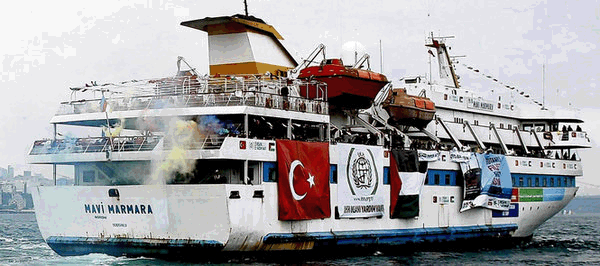
During the course of last week, the Israeli State Comptroller published his report into the events that took place when the IDF halted the entry of the Gaza Flotilla into Israeli territorial waters in May 2010. The State Comptroller is answerable only to the Knesset, and has the responsibility to supervise and review government policies and operations. He has looked at the Gaza Flotilla incident by examining the planning and decision-making by the government and the defence establishment in the period leading up to the incident. The actual military operation mounted, and the unfortunate events that took place on that fateful day when an IDF boarding party was lynched by the activists on the Mavi Marmara, did not form part of the report. The resulting defensive actions taken by the IDF soldiers on the ship resulted in the deaths of nine Turkish activists. These events have been the subject of investigations and well-documented reports published by the United Nations, by Turkey and by the IDF itself. The State Comptroller has a free hand in Israel to examine and report on all actions taken by the government, and related organisations, and the report into the Gaza Flotilla incident is an excellent example of the extent to which this free hand is exercised.
The report is filled with criticisms of the way in which the Israeli government handled the incident. Although the actual decision to board the ships to stop them entering Israeli waters is not specifically addressed or criticised, the way in which the decision was reached comes in for a great deal of condemnation. Even the prime minister is not beyond reproach in the report. Amongst its many criticisms, the report mainly criticises the prime minister. He is taken to task for holding informal and undocumented meetings that discussed how to deal with the flotilla in the period leading up to the incident. It is reported that government officials who should have attended these meetings were frequently not in attendance. Special mention is made of the fact that the National Security Council, a body established by the government especially to deal with situations like this, was essentially kept in the dark in the lead-up to the incident. The report is quite clear in holding the prime minister responsible for these failings. He was personally involved in many of the discussions and much of the planning surrounding the incident, and the buck stops with him as far as overseeing legal and effective preparations for events like these. No punches are spared in the 153 page report. Every misstep in the process is laid out in black and white, and has been extensively reported in the international press.
It is common knowledge that Israel has come in for much international criticism regarding the events of the Gaza Flotilla. International relations between Israel and Turkey are at a low point, and Turkey is determined to extract an official apology from Israel for the deaths of the 9 activists. Israel has expressed regret for their deaths, but is refusing to issue an official apology. Israeli soldiers have been cited in a Turkish court action, charging with them crimes relating to the deaths. In light of these and other international condemnations of Israel, there is a real question as to why the Israeli government has permitted the State Comptroller and the international press to publicise the severe criticism of the senior government officials? Surely, this can only fan the flames of the international disapproval that Israel continues to experience in relation to this issue. It may even strengthen any legal cases in Turkish law courts or other international law courts against individual Israelis who were involved in the events. What is the value of airing all Israel's dirty laundry in public?
The answer to these questions lies in Israel's democracy and democratic process. As the only democracy in the Middle East, Israel often finds herself behaving in ways that are alien to those countries that surround her. This even applies to Turkey, which was held out for a long time as the only Muslim democracy in the world. We have yet to see a state comptroller's report into the actions of Turkish Prime Minister Recep Tayyip Erdogan prior to the Gaza Flotilla, and we are also highly unlikely to ever see one. In Israel's democracy, however, this is standard practice. The public demands to know the truth about the behaviour of politicians and leaders, and holds them accountable for their actions. The role of the State Comptroller is to provide the public with the information that it needs for its evaluation. This information could potentially be vital ahead of general elections now slated for later during 2013 (the truth is that I don't believe that the criticism of the prime minister has done his election prospects any damage at all). Although the state's national security is of paramount importance and there are numerous laws that prevent publication of sensitive information, this cannot and does not come at the expense of Israel's democracy. This is a pillar of strength in the State of Israel in that it is vital for citizens to know that bad leaders and leadership will be publicly identified, and we need only wait until the next general election for them to be jettisoned. The price of this democracy is that we may be forced to air our dirty laundry in public from time to time.
If there is any consolation for the Israeli voting public, it is that the examples of poor governance displayed by Netanyahu and his colleagues and discussed in the report, seem not to be uncommon elsewhere in the democratic western world. In an article published in the Jerusalem Post over the weekend, former White House deputy national security advisor Elliott Abrams revealed that similar problems exist in the hallowed halls and corridors of power in the USA. He said that some of the best meetings held in the White House were informal and not documented. On the other hand, a formal decision-making process that complies with all governance requirements does not necessarily result in the correct decision being taken. He used the example of the decision taken by former US President George W. Bush not to take any decisive military action against the Syrian nuclear reactor. He claims that the wrong decision was taken despite impeccable reports and intelligence having been presented, and all the correct procedural steps having been followed. In this case, Israel was left to destroy the Srian nuclear reactor, an act which is particularly apprecicated these days during the unrest in Syria. Abrams claims that the most important thing in such situations, is having the right decision-maker, and not relying too much on the process.
The case against any Israelis relating to the nine Turkish activists will surely firstly need to examine the role played by the Turkish prime minister in allowing the flotilla to set out from Turkish ports. The Greek government demonstrated in a subsequent attempt to convene a flotilla from Greek ports, that it was possible to prevent the flotilla from sailing and avoid confrontation. Once the boats were already on the water and approaching Israeli territorial waters with hostile intentions, the Israeli government's only decision was how to stop them from proceeding rather than whether to stop them from continuing. The combination of boats approaching Israel, hostile activists on board armed with all manner of weapons and the IDF determined not to allow the flotilla to enter Israeli waters was always going to be recipe for disaster. One did not need any special intelligence to work this out, and the Turkish prime minister must surely have known this. Prime Minister Netanyahu made reference to this fact by saying that, despite the extensive preparations made by the Israeli government and the IDF for the arrival of the flotilla, he was convinced that the Turkish prime minister would not allow the ships to set sail. He was wrong, and the rest is now history.
As a concerned citizen of Israel, I feel assured by the State Comptroller's report, and by the fact that this has been made public. We have a right to know, even if we decide not to punish the guilty parties. Those who have erred also know that they will be held to public account in all that they do. This is an important tool of a democratic state. We will need to overcome the public humiliation of the dirty laundry having been aired, but this is a small price to pay for the defence of our democratic rights. Well done to the State Comptroller.
Tuesday, 12 June 2012
Gay Pride in the Holy Land
Last week was Gay Pride Week in Tel Aviv, which culminated on Friday in a huge parade through the streets of the city and along the beach front. Gay pride flags were proudly flying from street lights across the city in anticipation of the event, and it has become a major attraction on the city's calendar of events.
The whole idea of homosexuality in the Holy Land seems to be a contradiction in terms. For countries which have a strong religious base, the idea of free acceptance of gay rights seems a paradox. It would be difficult to imagine gay pride parades in the Vatican City or Islamabad. Many people put Israel into this category, and not without justification. The sight of the ultra-Orthodox Jew, either with a big black hat or with a crocheted kippa (skullcap) and flowing side locks, is the one that many associate with Israeli society. This is, after all, a Jewish country. The Tel Aviv gay pride parade, and the Tel Aviv gay scene in general, shows a completely different side to Tel Aviv, to Israel and to Jewish people. It is also a side that conjures up much emotion and controversy.
Many may be surprised to learn of the extensive gay scene in Tel Aviv. The city was voted "Best Gay City of 2011" by readers of a well-known gay website. With its fantastic climate, wonderful beaches, numerous restaurants and crazy night scene, Tel Aviv is an ideal destination for gay tourists. The Tel Aviv municipality and Israeli Ministry of Tourism have recognised the value of gay tourism, and have spent a good slice of their budgets in promoting Tel Aviv to the international gay community. Gay tourists are regarded as high quality tourists who are willing to spend money when on their holidays. Tel Aviv draws tens of thousands of gay visitors to the city each year, and this has boosted the tourist industry substantially. This seems to sit fairly easily with the persona of Tel Aviv, which is known to be the liberal centre of Israel. There seems to be little opposition from Tel Aviv residents to the gay branding of Tel Aviv, and this somehow seems to contribute to the cosmopolitan face of the city.
Attempts to replicate the gay pride parade in Jerusalem have been less successful. The city's gay pride parades have inevitably been accompanied by opposition and violence from the ultra-Orthodox community, which is not prepared to tolerate such an activity in the Holy City. The parades held in the city have been a cat-and-mouse game in getting the city council (dominated by ultra-Orthodox councillors) to approve the parade, and then allowing it to go ahead without intervention by groups and individuals opposed to it. Although the number of participants is substantially smaller, the statement that it makes is much larger.
While the issue of homosexuality is highly contentious and has much opposition within the religious community, it is also a subject that is becoming a greater part of the religious community. It is reported that more and more members of the religious community are coming out of the closet as gays, despite the fact that it is a concept that is completely taboo within the community. A number of Orthodox rabbis have publicly announced that they are gay, and this includes some who were openly involved in the Tel Aviv gay pride parade. For the majority of Orthodox Jews, the gay lifestyle is regarded as contrary to Jewish law and its practices are totally rejected. Despite this fact, it seems to me that the community is forced to at least recognise the existence of gays and their lifestyle. This is, in itself, a major change from the attitudes that we seen until now.
In addition to giving a voice to an alienated sector of the religious community, the gay scene and gay pride parade in Tel Aviv also gives an outlet to Arab gays. Most gays in the Arab community are forced to leave their families and their homes if they come out of the closet. The Tel Aviv gay scene is happy to accept these people into their midst, and gives them the opportunity to live the life that they cannot live in their home environment.
As much as there are still those who are opposed to open expressions of homosexuality such as the gay pride parades, the city of Tel Aviv has really embraced the parade and the people that come with it. It is an event like any other, which caters for a different sector of the population. Not only does it attract much-needed foreign tourists, it is also makes a statement about the tolerant and accepting atmosphere in the city. In the same way that the religious communities are allowed to live their lifestyle in the areas in which they have chosen to live, so it is true of the gay community of the city. I think that this is a great advert for the city of Tel Aviv, and for the State of Israel.
Monday, 4 June 2012
Ramping Up the Cyber Warfare
The discovery last week of the latest weapon in the war being fought in cyberspace, has confirmed to me the fact that the war against Iran began some time ago. Flame is the latest in a series of computer viruses that have been found to have infected computers in Iran's nuclear industry. Despite Iran's consistent protests that its nuclear program is intended only for domestic purposes, the fact that it has denied access for inspectors from the International Atomic Energy Agency to see some of its facilities is clear indication that there is something to hide. This was reinforced last week when images were released by the US showing frantic work on the part of the Iranians to erase evidence of certain activities.
Out of all the types of warfare being undertaken, the development of nuclear weapons is one which plays into the hands of the computer experts the most. The nuclear industry is highly dependent on computerised systems for the control of the reactors, for the operation of the centrifuges and for much of the process that enriches Uranium to levels that allows for it to be used in nuclear weapons. For Israel, this comes as a something of a relief as few countries around the world have the same level of expertise in software and hardware as the Israelis. Israeli engineers have established a name for themselves in developing a number of products and features in the software arena which are "firsts" in the world. These same skills have allowed Israel to tap into much of what is happening in the Iranian nuclear industry, and to cause disruption to retard or damage the process.
Israel embraced the need to conduct cyber warfare some time ago. It is believed that unit 8200, which was established in the 1950s as an intelligence-gathering unit using the most sophisticated electronic technologies, was the first facility deployed to use its technological capabilities to wage cyber warfare. Since then, it is known that specialised units for this purpose have been set up by the IDF, the latest of which is addressing new media, including social networks. Not only is the IDF focusing on attacking enemy networks and computer systems, there is a great deal of work being done to ensure that its own systems adhere to the highest standards of security.
The latest Flame virus was discovered by Russian anti-virus company Kaspersky. Some reports suggest that Flame may have operated undetected for as long as 5 years, and succeeded in evading 43 anti-virus systems deployed on Iranian computers. During the time that it operated on individual computers, Flame was able to send copies of data stored on the computer back to its controllers. It was also able to take screen shots of the computer, as was as activate the computer microphone to allow eavesdropping on nearby conversations. If it infected 1,000 computers over a period of 5 years, a great deal of information could have been collected.
Flame comes hot on the heels of the Stuxnet virus which is reported to have destroyed centrifuges that were in use in Iranian nuclear plants. Stuxnet was discovered much more quickly because it infected many more computers and, therefore, came to the attention of the anti-virus systems much more quickly. There can be little doubt that for every virus we hear about, there are many more that go unpublicised.
Computer systems are in use in every aspect of a modern military environment. They are used for simple tasks like administration and data storage, as well as for more sophisticated tasks such as the command and control of the most sensitive and most destructive weapons systems. This gives massive opportunity for those who are able to use cyber warfare effectively, to infiltrate every corner of a country's security establishment. This is the enviable position that Israel finds herself in today. The next war against Iran will also certainly be fought on this basis.
This war has, in fact, already begun, and may have been ongoing for as long as 10 years. It is a war that has no room for the faint-hearted, and has a great deal at stake. Small errors can have huge consequences, and the survival of an entire nation could be resting upon doing everything right. When Israel was found 64 years ago, she was regarded as being at a huge disadvantage because of the small poorly-equipped army that she was able to deploy. Despite this disadvantage, Israel has survived and turned into one of the great military nations of the world. With the advent of cyber warfare, the game has turned very much in Israel's favour. The most unlikely of military powers is now more in the driving seat than ever before. A cyber war seems built to fit the strengths that Israel has. It would be foolish of the Iranians to think that they will be able to triumph in such circumstances.
Tuesday, 29 May 2012
The African Migrant Problem Needs to be Solved Quickly
Israel has become inundated with African migrants, and this has raised some very difficult questions for the government about how to deal with them. The problem started out as a humanitarian one. Individuals and groups of people began turning up along Israel's southern border with Egypt. They were filled with horrifying stories about the countries that they had run away from, and the murder and destruction that was taking place there as part of the series of ongoing civil wars that are plaguing the African continent. The experiences that these individuals were forced to endure along their route to Israel was equally as horrendous. Marauding groups of thugs in the deserts and soldiers from national armies, most notably the Egyptian army, stripped these poor people of the few belongings that they had, and raped and murdered many of those with them.
The Israeli authorities remembered too well the experiences that Jews were forced to endure during the Holocaust, when few nations were prepared to accept Jewish refugees who had nowhere to go to escape the evil Nazi extermination camps. The African migrants were admitted across the border, given food shelter and basic medical treatment. They were also allowed to seek out employment despite their exact status being unsure. Children were sent to local schools, and policies regarding how to deal with this new phenomenon were being established on the fly. It is astonishing how quickly the desert telephone works. Word soon got back to Sudan and to Eritrea that the pot at the end of the rainbow is buried somewhere between Eilat and Tel Aviv. Within no time at all, thousands of migrants were clambering across the border in search of the pot of gold. Although they were running from horrendous situations in their home countries, these people could be classified more as economic migrants than as asylum seekers.
Fast-forward a few years to the current time, and the situation is extremely complicated. In some areas like Southern Sudan, the civil war is over, a new country has been established and Israel was one of the first to move to recognise the new country. Despite this fact, the citizens of Southern Sudan seem to have no intention of leaving Israel and returning to their newly-established homeland. Instead, more and more seem to be arriving at the borders. They have established communities of their own in towns and cities around Israel. They are working in hotels, running coffee shops, Internet cafes, bars, restaurants and market stalls and their children are attending Israeli schools. Their presence is becoming increasingly permanent in spite of the fact that the government has still yet to determine their legal status. Suddenly, the African migrant community numbers 60,000 people and is beginning to make its presence felt in Israeli society in every possible way.
An undercurrent of dissatisfaction has been building below the surface about the newest of Israel's immigrant communities. Economic times are tough, and there is a feeling amongst the weaker members of Israeli society that the African migrant community is receiving resources that should be channelled towards Israeli citizens instead. Many charities have decided to route their efforts to help African migrants, often at the expense of Israeli citizens. Cheap housing units are occupied by African migrants and often lead to price rises, making it difficult for others around. There are accusations that school places that should be available to Israeli children, are being occupied by African children. The character of some of Tel Aviv's oldest neighbourhoods is reported to have changed dramatically to reflect the increasing number of Africans living there.
The situation came to a head in the past few weeks with a number of incidents of violence having been blamed on African migrants. A few rape accusations have been made against Africans, while reports have surfaced from areas where they live accusing them of burglary and other violent crimes. While none of these accusations have yet been proven, it has allowed the undercurrent of dissatisfaction amongst some Israelis to boil over into full-blown rage. Protests have taken place across Israel to demonstrate against the continued presence of African migrants, and the government is now being forced to take a stand. Unfortunately, the protests have turned violent showing a really ugly side to Israeli society. African migrants and their businesses and homes have been attacked as part of these protests, some of which were also attended by members of Knesset and other politicians.
In the first instance, the violence against others living in Israel should not be tolerated. It is right that the police have arrested some of the perpetrators of this violence, and that they should be prosecuted under the law. In the second place, it is right that the government should be held to account for the lack of policy on the migrants. While the migrants had no alternative safe haven, it was acceptable and desirable for Israel to give them shelter. Now, however, they have place to return to, and Israel should insist that they do so. No visitor to Israel should be allowed to outstay their welcome, particularly if they will be utilising scarce resources that should be made available to the weakest in Israeli society. The fact that the economic and social conditions in Southern Sudan or Eritrea are not quite up to the same level in the State of Israel is not the consideration. If they are able to return in a manner that does not risk their personal safety, this should be enough to justify their repatriation.
Over the years, Israel has been forced to deal with a number of migrant communities. There are thousands of Filipinos working to look after the elderly and the weak who require close care. There are also thousands of Chinese workings employed in agriculture and construction. Once these people have lived and worked here for a few years, and even had families here, the decision to deport them becomes much more difficult.
I feel really proud that Israel was willing and able to open its doors to people in desperate need, and in immense physical danger. This reflects our empathy as a nation for the homeless and the weak in the world. Now that the job has been done and the charity administered, the migrants should return home to allow Israel to put her own house in order. After all, we wish to be there again should the need arise in the future. By sending the migrants to their places of origin, it will mean that Israelis will be able and willing to help again if required. By allowing them to remain indefinitely, it puts this help at grave risk, and risks a great deal in our own society.
Sunday, 20 May 2012
Keeping Jerusalem Unified
Today, Sunday 20th May, we celebrate 45 years since Jerusalem was reunified in the Six Day War according to the Hebrew calendar. These have been 45 eventful but happy years, which have seen the holy city of Jerusalem quickly regain its central place in Israeli and Jewish life. After 2,000 years of exile from the Land of Israel and the city of Jerusalem, and a further 19 years of being denied access to the holiest sites in Judaism, Jews around the world celebrated when the IDF paratroopers finally reached the Kotel and Motta Gur announced the famous words, "The Temple Mount is in our hands". That moment is being savoured and celebrated today on Jerusalem Day.
The important place that Jerusalem occupies for Israelis and for Jewish people all around the world has strengthened over the past 45 years. Once again, we have had the merit and the joy to be able to visit the holiest site in Judaism. It is impossible to consider a possibility that Jerusalem would not remain unified in the future, and that Jews could be denied access to visit the holy sites in the way that we were forced to experience in the past. This is almost certainly one of the reasons why discussions on the final status of Jerusalem in the peace talks with the Palestinians are so fraught. It seems as though the Palestinians understand the strength of feeling that we have for Jerusalem, and continue to demand it for themselves. This may enable them to extract major compromises in return for giving up on Jerusalem in the final agreement.
There can be no escape from the centrality of Jerusalem in Judaism. Even those who wish to prevent Jews from having access to Jerusalem would struggle to the deny strong links that Jews and Judaism have to this holy city. The holy nature of the city was arguably only established during the time of David and Solomon when the temple was built. It is no mere coincidence, however, that the temple was built in this city and on Mount Moriah. This is the site of the dream of Jacob's ladder, the site of the almost-sacrifice of Isaac and possibly even the site from which the which the world was created. Whether or not one believes in these biblical links, it is simple to refer to Jewish texts that have been written and passed down over thousands of years, and which bear testimony to the close links that Jews have to the city.
Over the past 45 years, the city of Jerusalem has developed and grown in a way that makes it unrecognisable from the city that was reunified 45 years ago. The Kotel (the Western Wall), the only remnant of the remains of the temple, was quickly transformed into an area that could be host to the many millions of visitors that wish to visit the heart of Judaism. It is believed in Judaism that the divine presence emanates from Jerusalem. In order, however, for the divine presence to be felt, it is required that there will be those to receive and bask in its glory. The Kotel has truly fulfilled that purpose. It plays host to state and military ceremonies of great importance and significance. It also hosts all manner of religious worship, celebration and heartbreak. The Kotel plaza is often filled with tens of thousands of people as they cram themselves in to take part in the merit that our generation enjoys to have free access to this place. The surrounding parts of the Old City, and stretching out well beyond into the new city and further, have seen a renewal and redevelopment that has transformed the face of Jerusalem, without changing its character. The modern Chords Bridge at the entrance to the city, numerous luxury hotels and the sight of the Jerusalem light rail show the face of a contemporary city keeping up with the times, while allowing residents and visitors to get close to its historical roots.
Over the years, conquerors of Jerusalem have denied access to other religions as a punishment, and as a sign of their supremacy over the city. It is, after all, a city that is holy to all three monotheistic religions. Contrary to this trend, it is interesting that Israel decided to allow all religions access to their holy sites in the city. Rather than weaken Israel's grip on the city, I feel that it has served to strengthen Israel's position in Jerusalem. I believe that most Israelis are proud that this is the case, as much as they are determined to ensure that Israel's rule over the city continues well into the future.
The truth is that it is difficult to try to predict what the future holds for the holy city. There seems to be no real reason for the Palestinians to wish to rule over the city. While it is a city that is holy to Muslims, it ranks only third in its holiness to the cities of Mecca and Medina. Muslims have access to, and complete control over all Muslim holy sites in the city through the Waqf. This stretches even to having control over the Temple Mount and the Al Aqsa mosque, despite this also being the site of the holy Jewish temple. I imagine that the only benefit that can be gained from ruling over Jerusalem, or parts of the city, is that it may give them the right to deny access by others to these areas. We can never risk this situation coming to fruition.
Despite the fact that a great deal of thought has been given to the possibility of creating Jerusalem into something of an international city that is owned by everyone, but nobody in particular, there is no real precedent for a successful implementation of such a model. This gives rise to a great deal of scepticism, and suspicion as to what the true intentions of the Palestinians may be with regard to Jerusalem.
For now, the united city of Jerusalem is the capital of the State of Israel, and the centre of the Jewish world. It also plays host to Muslims, Christians and members of other faiths that may wish to visit, live and study in the city. There seems little wrong with this model, and no individual is denied any rights that he may wish to have.
It is my hope and prayer that Jerusalem will continue to play its role as a central part of so many faiths, and that all faiths will continue to have free access to all corners of this ancient and fascinating city.
If I forget thee, O Jerusalem, let my right hand forget her skill.
(Psalm 137)
Wednesday, 16 May 2012
Bibi Does Election U-Turn
Within the space of three short days, early elections were on and
then off again. The timescale of this U-turn was quite astonishing. On
Sunday evening, Prime Minister Netanyahu announced to his Likud party
convention that early elections would be held. On Monday morning, the
first reading of the bill to dissolve the Knesset was passed. In the
early hours of Tuesday morning, the new coalition agreement was signed
with Shaul Mofaz and the Kadima Party, and early elections were
cancelled. By bringing Kadima into the coalition, Bibi has almost
created a government of national unity. The only main party which is
now outside of the coalition is the Labour Party, and its new leader
Shelly Yachimovich becomes the leader of the official opposition.
There are a number of people, both within political circles and outside, who feel that Bibi's conduct on the issue of the elections has been less than fair and honest. It transpires that he was holding coalition discussions with Shaul Mofaz for at least a week before the announcement that an agreement had been reached. This begs the question why Bibi decided to make a public announcement about early elections and allow the Knesset to debate the first reading of the dissolution bill, when he was on the verge of concluding a new coalition agreement? Was this a negotiating tactic to force Mofaz to make the final concession? The formal announcement that an early election would take place certainly put the cat amongst the pigeons. No sooner had electioneering got into full force, when it was all frozen.
Even though the way in which it was done raises big questions, I believe that the act of delaying the election is probably more beneficial for the State of Israel and its citizens than proceeding to early elections. Israel is currently confronting a number of critical issues, and there was a huge danger of these issues becoming too wrapped up with a general election. Despite the international focus having been moved away from Iran over the past few months, this issue probably remains Israel's largest challenge in the short to medium term. Some parties are taking a much more aggressive approach advising Israel to take military action against Iran. Others are advising a more cautious and conciliatory approach. Even former heads of intelligence have weighed in with their "words of wisdom", only in an attempt to exact political revenge on those that they don't like. This is a fraught subject that has major implications for Israel and her citizens. A decision taken by a stable almost-unity government is surely better than airing this issue in election platforms.
There is also the controversial issue of the replacement to the Tal Law. This is an issue which is split down party political lines as the religious parties are doing their utmost to convince lawmakers to enact a replacement law that will still allow yeshivah boys to be exempt from military service. Opponents wish to see at least some minimum form of national service which will apply to all of Israel's citizens, without exceptions. This is a messy political hot potato that is best kept out of election platform politics.
The passing of the new budget is almost always held to ransom by coalition negotiations. Parties negotiating possible inclusion in the coalition frequently predicate their support of the budget on receiving key concessions in the coalition agreement. At a time when the economic stability of many countries in the world is so much under threat, economic high jinks cannot be afforded in Israel. It would be good to get the budget approved without the need to bow to parties looking to extract value from the coalition negotiations.
For Kadima, the extension of the Knesset term has saved it from election decimation. There is little doubt that a general election at this time would have substantially reduced its Knesset faction. At the same time the new coalition agreement has raised doubts in the minds of many Kadima members, particularly those who came from parties on the left of the political spectrum, about whether this is a first step towards uniting with the Likud. The most senior of these doubters, Kadima council chairman Haim Ramon, immediately tendered his resignation from the party. He was followed by many grass-roots members of the party in a move which threatens to split the party, even before a single ballot is cast in a general election.
The big winner in this move is Prime Minister Netanyahu. He has shown himself to be a shrewd political player, even though he has trodden on more than a few toes in the process. The upshot of all of his political manoeuvring is that Bibi is king of Israel, just as his supporters like to chant at public gatherings. He currently holds all the cards in his hands, and has a very strong political position to see him through to the end of the Knesset session and into the next general election. He will need to see out at least one more summer, which is promising to be a summer with greater social protest than we saw last summer. This is certainly a threat to him, but the electorate has little or no alternative choices to select from. Opposition parties to the Likud are disparate and decimated.
The electorate has been spared an election this summer. This will save a substantial sum of money, and will delay the inevitable filthy negative politics associated with election campaigns for at least another year. I hope that, by the time we reach the start of the next campaign in a year or 18 months from now, many of the critical issues mentioned above that urgently require attention will have been dealt with.
Subscribe to:
Posts (Atom)